

Friday, September 30, 2005
Cool Weather Chinese Greens: Gai Lan
 Autumn has crept into the kitchen, and brought with her succulent cool-weather greens. They tease and entice with a peppery tang or deep sweetness, and their colors range from the aventurine-pale to creamy jade to the deep verdant emerald of a forest in high summer.
Kale and collards, turnip and mustard greens are all the ones I grew up eating from the first whisper of a chill wind in September through the frosts of November and beyond into winter, but my favorite autumnal greens in recent years have been the ones originating in Asia.
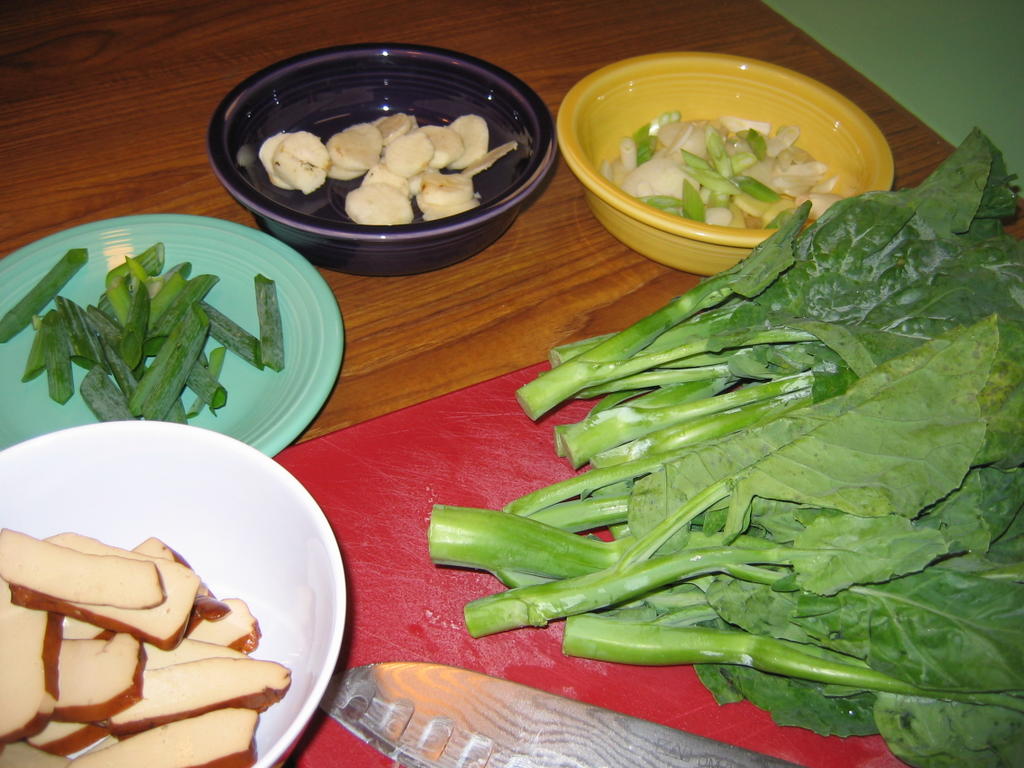 My favorite of them all is gai lan, also known as Chinese broccoli.
Gai lan is a thick-stemmed green with branches ending in wide ovoid dark-green leaves that wilt to a delicious velvety texture in the heat of a wok. The stems, when cooked properly, retain a great deal of crunch without being woody or stringy in the least, and the flavor of them is sweeter than any western-style broccoli I have ever tasted.

The truth is, I don't much like most western broccoli--and when I have to eat it, I tend to eschew the blossom ends that most people like and eat the peeled thick stems which are crisp and juicy and taste almost as good as gai lan. To my taste, gai lan is superior in every way to the usual broccoli, and in addition, it is as filled with vitamins A, B, C and K, and it has high levels of folic acid, magnesium and calcium.
All in all, it is a great addition to one's diet, and its mild, peppery-sweet flavor makes it easy to pair with other foods in stir fry dishes.

A classic Cantonese dish featuring gai lan is stir fried beef with gai lan--on most American Chinese restaurant menus, the variant is called Beef with Broccoli. Utilizing the more familiar broccoli, the Americanized version, is less interesting in flavor, relying heavily on oyster sauce, onion and sugar to make the thick, gloppy brown sauce that seems to go on anything with red meat on it in bad take-out places.
Using the more interesting gai lan brings life back to the dish; the sweetness of the stalks calls for the use Shao Hsing wine or sherry, while the tangier leaves beg to be paired with stong flavors like ginger or fermented black beans.
Oyster sauce, when used judiciously, adds a complexity to the dish that is lacking if it is left out; garlic complements the mustardy tinge to the greens well, and just a dash of sesame oil rounds everything out with a sublime fragrance.
 There is, of course, a problem with cooking gai lan--the lower stalks are very thick--about as thick as my thumb, while the leaf stalks and leaves are much thinner. If you cook the stalks long enough, the leaves have turned into droopy goo, and if you cook the leaves just until they have wilted into a velvety richness, the stalks are still on the overly crunchy side.
I solve this problem by cutting the smaller stalks with the leaves off of the larger stalks, and then cut the lower stalks on the bias into bite-sized pieces, as pictured above. Then, as I cook, I put the lower stalk pieces in long before I throw in the thinner leaf stalks. In this way, both parts of the green come out cooked to perfection: the thick stalks are still crunchy, but not tough, and the leaves are meltingly tender.
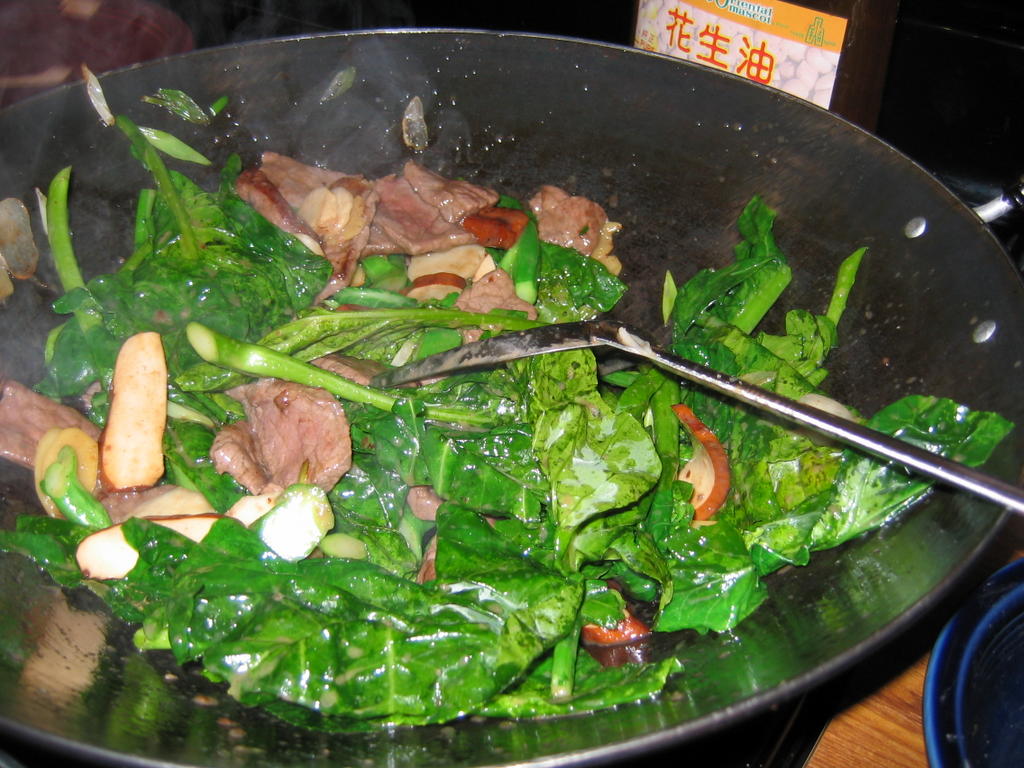 There are many choices of what to add into the dish for textural interest and added nutrition: carrots would add great color contrast and boost the sweetness of the jade-colored stalks. I like to use fresh water chestnuts when I can get them, however--they perform much the same function as carrots would, but have an even more unique texture and flavor. In some restaurants, the chefs add black mushrooms that have been rehydrated in a combination of water and wine--this adds a deep, dark richness to the dish that contrasts with the sharper flavor of the greens, while the unctious texture of the mushrooms contrasts with the tender chew of the beef.
Since I like to make the dish with more gai lan than beef, but I also have a growing girl in the house, I sometimes like to add slices of pressed, sliced tofu to the dish to give it another protein source without adding any fat or an obtrusive flavor. I just put it in right after the beef, and cook them together so that the beef flavor marries with the tofu.
There are probably as many different ways to put this dish together as there are Chinese cooks--the above mentioned ones are just a few thoughts to give people inspirations. The recipe I give is not definitive--it is the one that my family and I like, and is cobbled together from various sources--mostly, from my remembrances of the way in which the dish is cooked in my two favorite Chinese restaurants ever. I probably will use some fermented black beans the next time I cook it, and some onion slices instead of scallions, but until then, I am satisfied with this way of cooking one of the most delicious greens of the early autumn season.
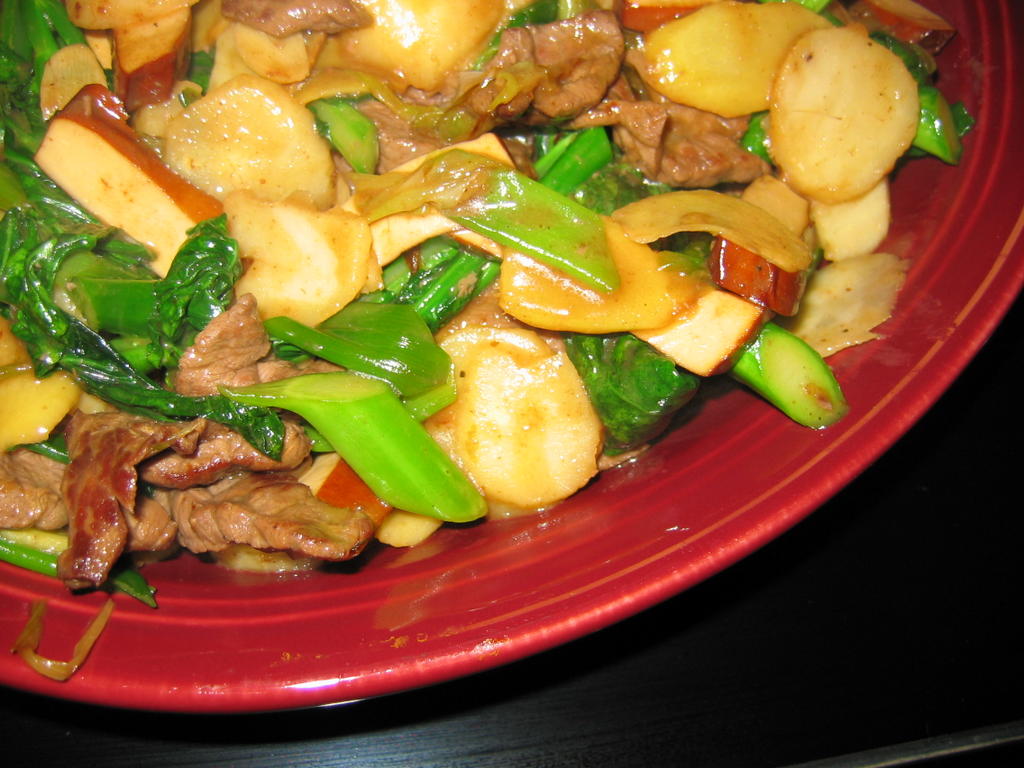 Gai Lan with Beef
Ingredients:
3/4 pound tender, lean beef steak, like top sirloin, cut against the grain into 1"X2" strips, 1/4" thick
1/4 teaspoon freshly ground black pepper (optional)
1 teaspoon light soy sauce
2 tablespoon Shao Hsing wine or dry sherry
2 tablespoons cornstarch
3 tablespoons peanut or canola oil
2 cloves garlic, peeled and sliced thinly
3 scallions (white and light green parts) sliced thinly on the bias
1 1/2" cube fresh ginger, peeled and sliced thinly
3 ounces spiced dry tofu, cut into thin slices about the same size as the beef
1 1/2 pounds gai lan, bottoms of stalks trimmed off, thick stalks cut into bite sized pieces (leave thin stalks and leaves whole, and reserve)
on the bias
1/2 teaspoon-1 teaspoon sugar (optional)
5 fresh water chestnuts, peeled and sliced thinly (optional)
3 scallion tops, cut on the bias into 1" lengths
the leaves and thin stalks of the gai lan
1/4 cup chicken broth
1 teaspoon soy sauce
2 tablespoons oyster sauce
1/4 teaspoon sesame oil
Method:
Mix together beef, pepper, soy sauce, wine and cornstarch, and allow to marinate at least twenty minutes--I like to do this while I prepare the rest of the ingredients.
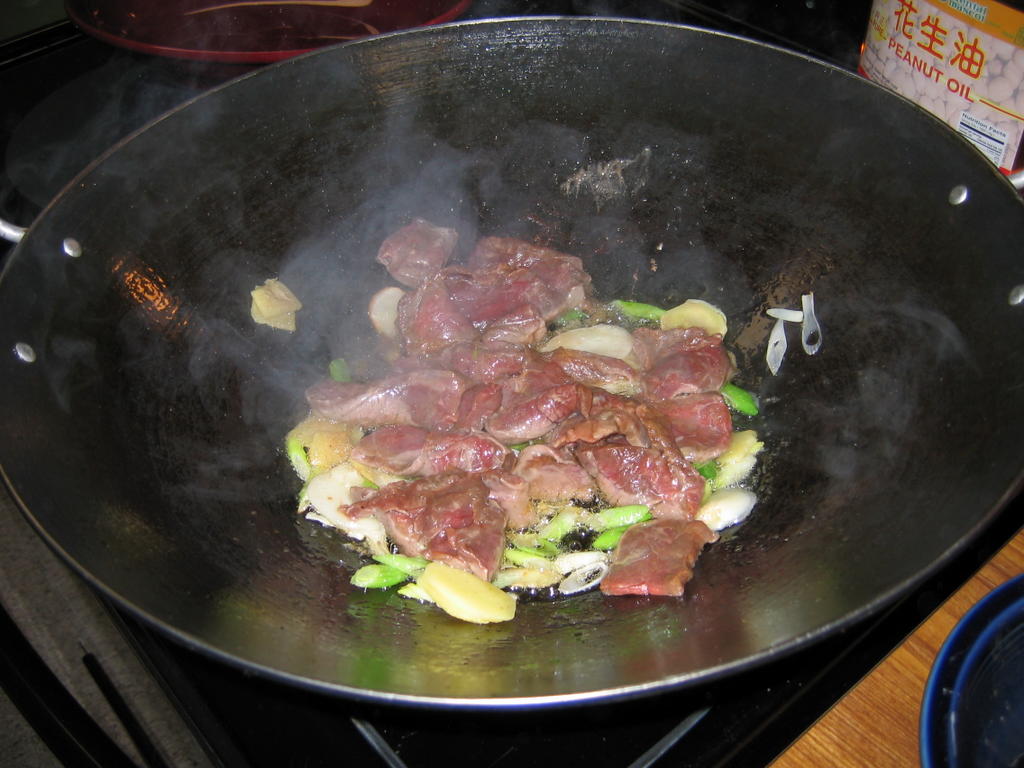
Heat wok until it smokes, add oil, and heat until it bubbles. Add garlic, scallions and ginger, and stir fry until quite fragrant--about forty seconds. Add beef, reserving any liquid marinade left in the bowl, and spread into a single layer in the bottom of the wok. Add the tofu on top, and leave the meat undisturbed for about a minute, allowing it to brown well on the bottom, then stir fry briskly.
When most of the red is gone from the beef, add the thick gai lan stalk pieces and stir fry about one minute, sprinkling the sugar over all, if you use it.
Add the water chestnuts and the scallion tops, then the gai lan leaves. Stir to combine, then pour the broth over the leaves, and stir briskly, letting the combination of boiling broth, steam and hot oil begin the process of wilting the leaves. Keep stirring--and be patient--the leaves take about two minutes to fully wilt.
After the leaves have begun wilting, add soy sauce, oyster sauce and any reserved marinade. Stir and fry until the leaves have become tender, but are not completely limp and yucky-looking. Remove from the heat, and stir in the sesame oil.
Thursday, September 29, 2005
And So, It Begins
 That's a pretty dramatic opening, isn't it?
Well, it is a pretty dramatic moment.
We are redoing our kitchen, and today, this very afternoon, the first tentative bangs and experimental crashes will begin on the destruction of the current edifices in place.
The only things in these photographs you see that will be the same by the time we are done are the windows and the tile floor, which we had installed before we moved in.
The rest will be gone, and made totally anew.
The cabinets are not very strong, and are not built according to what we need to store in them. We have heavy Fiestaware dishes (which are now currently taking up the upstairs kitchen that one day, hopefully quite soon, will become the Tigers and Strawberries Culinary Dojo) which have begun to cause the upper cabinets to sag away from the wall. This is not good. Therefore, we decided to go ahead and redo the kitchen sooner rather than later.
 The cabinets, countertop, sink and dishwasher are going to our good friends Dan and Heather who are hopefully buying a house this year and want to remodel their kitchen. As they have not managed to accumulate such estravagent amounts of culinary equipment over the years as I have, these cabinets will be perfect for them, and they will look so much nicer in their kitchen than the current older metal models.
Our new cabinets will be oak, done in moss glaze and honey-toned stain. Our first shipment of them comes in on October 7, so we are going to be cleaning out our garage in a frenzy this week.
The new stove will be ordered sometime in this coming week. It is a monster--a beautiful, amazing culinary machine--with one of its six burners capable of pouring out 20, 500BTUs of cooking power. A far cry from the wok stoves I have used professionally that are like volcanoes spewing 300, 000 BTU's, but still--for a home range, that is the upper range of heat, and will make awesome stir fries full of wok hay.
 Some people say that if you love a woman, you give her pearls.
I say, if you love this woman, you give her BTU's.
The current refrigerator is an older model Sub-Zero, which i do love, but which takes up huge amounts of space in the kitchen--space that could be better used for equipment storage.
We are replacing it with a more normal-sized counterdepth Kitchenaid, but we are keeping the Sub-Z--we are just going to put it over in the utility room and plug it in there. That way, when I do personal chef and catering work, or throw parties, I will have plenty of storage space for extra food.
The design is very pretty, and will very much maximize the space we have without being overly extravagent. We are also using the style of cabinets and colors to tie into the oak floors in the rest of our house and the Mission/Arts and Crafts/Asian styles we are using as the guiding principles of our decor.
 The main cabinet color--oak with honey spice stain--will call to mind the golden colors of the oak floors throughout the house. The moss-glazed pieces, British Racing Green stove, and green paint on the walls will call the green from the trees in the view out the window inside and carry over the theme of nature and earth into the room. The terra-cotta tile floor will be echoed in the tile backsplash behind the stove, and the speckles in the stone countertops. The drawer pulls and knobs will all be in copper, further extending the warm red tones of the tile, and we are going to go for a black sink, and black appliances (except for the stove) in order to echo the streaks of black that are in the tiles and the countertop. Black also will make the appliances other than the stove recede into the background, thus allowing the stove to take center stage.
 As the destruction and construction take place, I will post further updates as they occur here--the trials and travails of having our kitchen redone should result in some amusing situations for all, I am certain.
Wednesday, September 28, 2005
Culinary Cross-Pollination
This morning, after putting a final coat of paint on the door to my upstairs teaching kitchen (I was painting yesterday--hence--no post), I came downstairs to read the New York Times, and found this lovely article in the food section about kugel.
For those who are not familiar with kugel, it is a Jewish casserole that is from the Eastern European tradition, which is most often made with noodles or potatoes. It can be sweet and dairy-based, with creamy cheese, raisins and cinnamon, or it can be savory, with onions and black pepper. In kosher homes, it depends upon whether it is being served with a meat or milk meal--if it is a meat meal, then no dairy products are used in it; instead the kugel is bound with eggs. In non-kosher Jewish homes, however, dairy-based noodle kugels are often served at Rosh Hashana along with meat in a celebration of gustatory goodness that often includes matzoh ball soup, chopped chicken liver and smoked fish pate.
I first tasted kugel knowingly at my in-law's home a couple of years ago at Rosh Hashana, and found it to be delightful--a lightly sweet, creamy noodle casserole or baked pudding that was intensely satisfying. However, I think that years and years before, during lunch at school, I had tasted some that a Jewish friend had brought in her lunchbox. She offered me a bite, and when I reacted favorably and asked what it was, she said, "It is just the way my Mom makes noodle casserole."
The only noodle casseroles I had tasted before were the scary ones that involved tuna and canned cream of something or another soup, so I could really get behind the way Sally's mother made noodle casserole. I wish she had told me it was kugel, though--then, I would have known what to order when I went into Jewish delis in later years.
What I found most interesting about the article, however, was the little fact that the legendary Mama Dip, the doyenne of southern soul food cookery, made several different kinds of kugel and served it to her family at holidays. Not only that, but she was going to include recipes for it in her new cookbook.
She had tasted kugel at interfaith suppers and so liked it that she asked how to make it. Then, she went home and started riffing off of it in her own kitchen, producing for her family a dish that no doubt will be passed down through the generations and become rooted in her grandchildren's culture.
That is just beautiful to me.
We are very lucky to live in a free society that is made up of such a myriad of vibrant cultures and ethnicities, where people of different faiths and national origins can sit down and share meals together. When we eat dishes cooked from different cultures, we are sharing, viscerally, each other's very selves, and in that way, bonds between people are created. The "us" and "them" mentality begins to vanish as we taste the product of each other's work and ways of life. Boundaries are erased; differences become a joy of discovery, not a reason to mistrust.
At the table, we become one people.
"E pluribus unum."
From many, one.
I am reminded of the Hungarian dishes that my Grandma whose family was a mixture of Germanic, Scots-Irish and Cherokee, used to make. She often served goulash and chicken paprikas at holiday dinners, along with the usual turkey, ham and roast duck or beef.
I remember asking her one time where she learned to make these dishes if no one in her family was of Hungarian descent.
She told me that during the war, there was a Hungarian immigrant family who had the farm next to Grandpa's up in New York. And the husband worked in the munitions factories with Grandpa, and like Grandma and the kids, it was up to the mother and children to run the farm. She and Grandma, like many farm wives, met, and became friends. A morning or two a week, they would share coffee and cake after the children were on the schoolbus and the morning chores were done.
While they chatted, which was difficult at first, because the Hungarian lady didn't know much English, they shared recipes. And the ones that Grandma liked best and remembered were for goulash and paprikas.
I asked Grandma what she taught her friend in return.
Yorkshire pudding and hot cross buns--two staples from British culinary tradition that had been taught to Grandma by her Welsh mother-in-law. Apparently, the Hungarian family loved those dishes and they entered their own family traditions, the way goulash and paprikas became part of our food traditions.
And so it goes--culinary cross-pollination. Cultures meet at the table, and bits of tradition go skipping off into other families; flavors born of distant lands weaving their way into the the lives and memories of those who once had been strangers, but now are friends and brothers.
It is yet another illustration of my central philosophy--food is love made manifest, and the more that we share it with one another, the more understanding and gentleness there will be in the world.
Peace is created at the table.
I feel very priviledged to live in a time and a place where sharing of food from different cultures can happen so easily; in an open society like the United States, we are very lucky to have neighbors from across the globe. In welcoming them and embracing them as our own, we are strengthening ourselves, our country and all of mankind.
We are truly becoming, from many tribes, one people.
Monday, September 26, 2005
Teaching Tarka
 My daughter, Morganna, is taking a class called "World Foods," which is not surprising, because she aspires to follow in my footsteps and go into culinary arts as a career. The class, as near as I can tell, is a way to get kids to take Home Economics and learn about other cultures at the same time. It is a pretty hip and happenin' kind of concept--you teach an important life skill--cooking--with emphasis on food safety and measurements and all those important things, while keeping kids interested by teaching them about the foods and cultures from around the world.
Anyway, each student in the class picks a country and then does a final research project on the cuisines of that country. They have to write a paper on the culture and cuisines, with emphasis on the history of the cuisine, how it developed, the holidays celebrated in that country and what foods are eaten on those holidays. They have to do an oral presentation as well, and cook a representative recipe from the country which everyone in the class gets to sample.
Morganna chose India, and so she has been reading my Indian cookbooks, and we started working together on teaching her about the spices and cooking traditions of the various regions.
Yesterday, I taught her the important technique of making a tarka, which is also spelled tadka.
A tarka is vegetable oil or ghee (butter which is clarified--in the clarification process, the milk solids are allowed to brown, imparting to the clarified butter a distinctive nutty aroma and flavor) which has been flavored with spices and aromatics, and which is poured, hot, into a dish. It is most often used in raitas and dals (raita is a yogurt-based relish dish; dal is a legume dish--both are staples in many Indian regional cuisines), but I have seen it used to flavor chicken recipes as well. As we all know, many spices and aromatic substances have constituents which are oil-soluable, and so not only does the fat add its own flavor and richness into whatever dish into which it is stirred, it also imparts incredible fragrance from the spices bathed within it.
 I think of tarka in a lot of ways as an Indian version of the Cajun roux--of course roux is primarily a thickening agent, but in the country cookery of the Cajuns it is a fat-based flavoring agent which adds depth and richness to every dish in which it is used. Unlike the Cajun recipes, however, which start out with the direction, "Well, first, you make a roux," tarka is made at the last minute, right before the dish is served.
The operation of making a tarka is simple.
In a frying pan or wok, you melt a quantity of ghee or heat vegetable oil. Or, you can mix them. Not surprisingly, I prefer ghee, though I will admit that I generally mix it with vegetable oil in order to lower the amount of saturated fat in the recipe.
Then, you add onions, if you are using them, and cook them until they are golden brown. At that point, you may add whatever other aromatics, such as garlic, chiles and ginger, and whole spices. You continue cooking, stirring the entire time, until the onions are a deep reddish brown and smell quite nutty.
At that point, you simply scrape the contents of the pan into the pot where your other dish is cooking or waiting, and stir, then serve it forth.
It is a very simple way to create an extremely flavorful dal, and depending on what spices or aromatics you use, you can change the taste infinitely. For some dals, I use only mustard seed and whole cumin. For others, I might add fennel seed or ajwan. Most of the time, I use the onions, but sometimes I prefer to use only ginger. I always use chiles, but others never do.
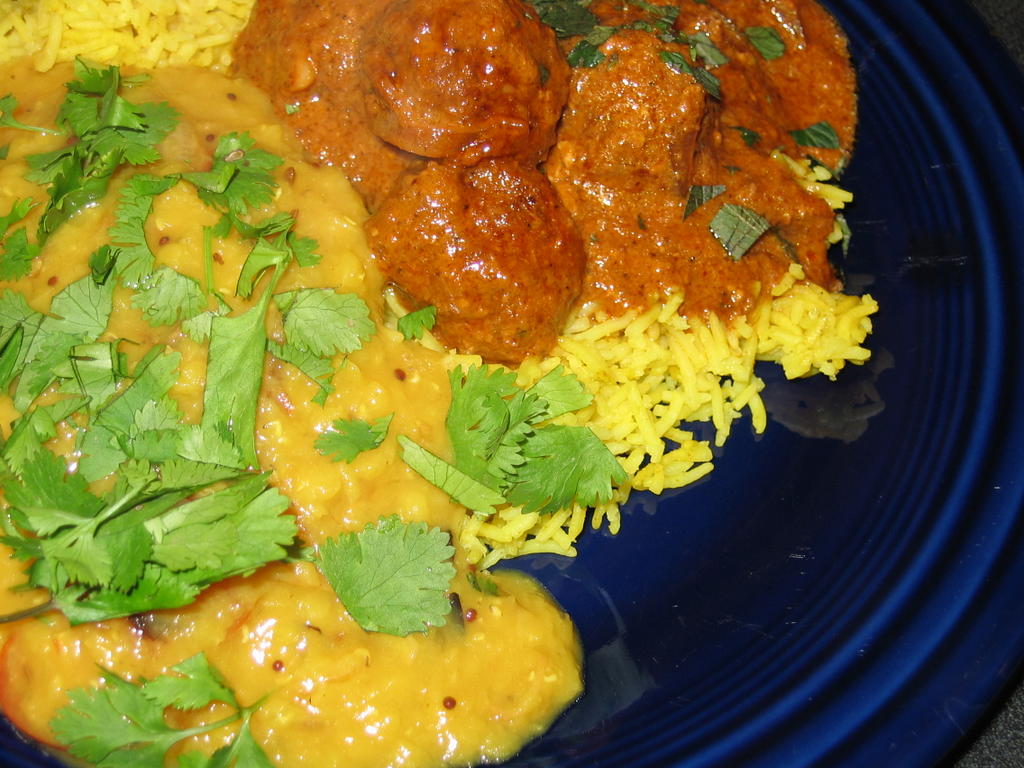
Here is a very simple recipe for masoor dal--those are the pretty red-orange split, skinned lentils--that gets most of its flavor from tarka. I used to cook this one for my Pakistani clients all the time, and would change around the vegetables I added to the lentils. They enjoyed the variety and surprise of seeing which vegetables I used, but they always insisted that I use the same tarka, because they liked it so much.
 Masoor Dal Tarka with Tomatoes
Ingredients:
1 1/2 cups masoor dal, picked over and rinsed
water (or vegetable broth) to cover lentils
generous pinch asafoetida
salt to taste
1 cup very ripe cherry tomatoes, halved
1/4 cup ghee or vegetable oil or a combination of the two
1 large yellow onion, sliced very thinly
1-3 chile peppers (I used very ripe and hot jalapenos) thinly sliced
1" cube fresh ginger, cut into fine julienne
4-6 cloves garlic, thinly sliced
1 tablespoon mustard seeds
1/2 tablespoon cumin seeds
handful roughly chopped cilantro
Method:
In a large saucepan, put masoor dal and enough water or vegetable broth to cover it by about three inches. Bring to a boil, turn down and simmer, uncovered. Add pinch of asafoetida and simmer until the lentils are cooked and the water has mostly boiled away. You should be left with a thick, moderately liquid yellow puree.
Add salt to taste. Stir in the tomatoes, and keep the lentils warm.
In a wok or frying pan, melt ghee over medium high heat. When it is hot, add onions, and cook, stirring, until they turn a nice golden brown. At this point, add the chiles, ginger, garlic and spices, and cook, stirring constantly, until the onions are reddish brown and the mustard seeds start to sizzle and pop. (Yes, they pop--kind of like miniature popcorn kernels.)
At this point, stir the tarka into the dal, and serve immediately, garnished with cilantro.
Notes:
Asafoetida is a spice traditionally used in the cooking of legumes in India. It is a resin, and to some, it has a foul odor. I find it to be pleasantly pungent, however, and do not see why others might be offended. It smells rather like browned onions in oil, and is, in fact, used by the Brahmin caste to flavor thier foods in lieu of garlic and onions, two foods which they feel ignite the baser passions of the body, and are thus not pure. I am not a Brahmin, so I use all asafoetida, onions and garlic, which may be overkill, but it sure does taste good.
Instead of, or in addition to tomatoes, you can use string beans, eggplant, mushrooms or summer squash. If you use summer squash, you can add it to the tarka, thinly sliced and browned to a deep color--this adds further flavor to the dish. Or, you can use shredded greens or spinach instead.
Vegetable broth adds a lot of flavor to this dish in a subtle way. Chicken broth is also good, and in fact, I used to add browned cubes of chicken to the dish to make a one-dish lunch for my client while I worked on other meals. She used to put basmati rice in the cooker, and then made me sit down and have lunch with her while curries simmered away on every burner of her stove, and casseroles and meatloaf baked in the oven. It really did make a very nice lunch, though I think I had as much fun with her company as I did with the food.
Sunday, September 25, 2005
Herbs de Provence
 I don't tend to use a lot of different spice blends; I tend to make my own, particularly when it comes to Indian, Mexican, Chinese and Thai foods.
But, sometimes I pick something up at Penzey's because I like the smell of it, or it seems appealing in some way, or I end up getting it free with an order.
Herbs de Provence is one of those blends I picked up because I liked the way it smelled.
And because I do very little French style cookery, I was somewhat slow in using up the tiny jar I had of it.
Which is a shame, because it really is a nice blend of the sorts of herbs which are often used in southern French cookery: marjoram, summer savory, rosemary, thyme, fennel seeds, basil and lavender. It is full of fragrance that brings to mind fields of sunwarmed flowers--it smells green and golden, all at the same time.
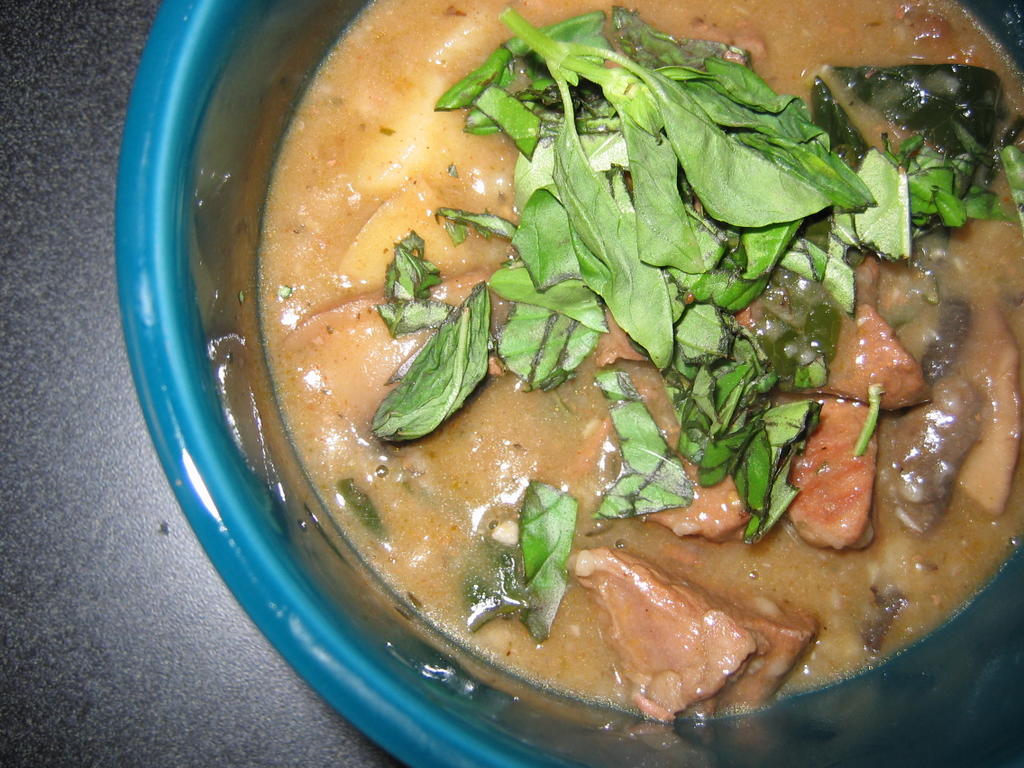
I made up for my underutilization of the herbs de Provence jar last week when Zak's Dad and Grandpa were visiting; Grandpa cannot eat very spicy foods, so I took it upon myself to cook in a more European fashion than I generally do. I had two packages of lamb stew meat in the freezer, and pulled them out, determining to make a nice lamb stew.
Since our friend Kendra had mentioned coming to visit and she is allergic to onions, I determined to use elephant garlic, which looks like garlic, but is milder and is very closely related to leeks, and garlic as the main aromatic flavoring components. I had the last of a bottle of dry red wine, and on a whim, I pulled out the nearly empty jar of Herbs de Provence along with tarragon, celery seed, lavender, basil and half-sweet Hungarian paprika. From the garden, I brought fresh rosemary, basil and thyme.
I discovered that the combination of tarragon and lamb is absolutely heavenly--and a little dried tarragon goes a long way. It reinforced the fennel seed in the herbs mixture, and it helped boost the similar licorice-like flavor of the fresh basil. Its very green freshness really cut through the rich lamb broth and meat.
I also discovered that using thyme, rosemary and lavender together accentuates the similar flavors in those three herbs--that tangy, medicinal quality that I find to be so haunting. The dry red wine synergized with those herbs and the black pepper I added in copious amounts to the dish, and added a complex layer of fragrance to the broth.
No one missed the onions.
It really was a simply made dish: I browned the lamb in olive oil in my stewpot, and then added the minced up elephant garlic and garlic. As the alliums began to turn golden, I added the first round of dried herbs: Herbs de Provence, lavender, tarragon, basil and celery seed. As the color of the garlic deepened toward brown, I deglazed the pot with about a cup and a half of the dry red wine, and then added minced fresh thyme and rosemary (about a tablespoon of each) and the paprika and black pepper. After most of the alcohol boiled away, I added some chicken and vegetable broths and half-covered the pot, turned the heat down and allowed it to simmer and reduce for a couple of hours. Before I walked away, I threw in a couple of big handfuls of mixed sliced mushrooms--shiitake, portabello and white mushrooms, mostly, to simmer in the stew.
When the meat was fork tender, I added red and white baby potatoes that I scrubbed and cut into quarters and baby carrots, and allowed them to cook until the potatoes were meltingly soft and the carrots still had the tiniest bit of a crunch to them.
At which point, I made a roux from flour and olive oil, allowed it to brown slightly and thickened the broth with that, and roughly chopped a large handful of fresh basil leaves and blossoms.
After thickening it, I added about twelve leaves of lacinato kale, which I cut into thick ribbons, and allowed them to wilt into the stew.
I served the stew with a generous garnish of the fresh basil, and it really punched up the flavor; the stew was by turns tender and sweet, rich and dark and full of mysterious, flowery-herbal fragrance.
I will have to make it again--and this time, pay enough attention to how much of what I put in so I can write the recipe down more properly, as both Zak and his Dad said I had to make it again.
Next time, though, I think I will add some baby turnips to the vegetable mixture. Their sweetness will really go well with the fresh basil.
Friday, September 23, 2005
More Food, More News
 Chinese Food Gets Hyphenated
Everyone loves Chinese food, and now that sophisticated diners have gobbled their way through the regions of that vast country and had their fill of Cantonese, Sichuan, Hunan and Shanghaiese foods, folks are prowling, chopsticks at the ready, looking for something new.
And that something new is Chinese food with a hyphen.
Second-generation restaurants from within the Chinese diaspora are opening up in New York City which feature dishes influenced by the cuisines where immigrant Chinese settled and adapted thier cookery to local ingredients and flavors. Chinese-Indian restaurants feature chicken drumette lollipops fried pakora style; Chinese-West Indies restaurants star lo mein with spicy jerk chicken.
These cuisines all developed in the same way that Chinese-American food developed: when Chinese men, most of them not professional cooks, immigrated from Guangdong in the 19th century, they improvised Chinese style foods out of local ingredients.
It just so happens that a lot of these hyphenated hybrid dishes seem to have come from more fertile culinary traditions than the rather stale cookery of the 19th century US, so you end up with foods that sound more hip, more spicy and more interesting.
Hmmm.
Seems like a trip up to New York may be in my future. That jerk-chicken lo mein business sounds pretty darned good. (But before I go there, I really should head out to LA, where my brother in law tells me the best Chinese food--including Muslim Chinese food--in the world lives. He has promised me an eating tour of amazing LA Chinese eateries.)
More Schools Improve Lunch
The trend on presenting locally grown, vegetable-heavy menus in schools seems to be growing. In order to combat poor dietary choices that are leading to rising rates of obesity among youngsters, more elementary schools are lining up to get behind the ideals presented by chefs Alice Waters and Ann Cooper in the US and Jamie Oliver in the UK.
The Promise Acadamy, a small elementary school in Harlem, has changed the lunch menu from tater tots and burgers to swiss chard and whole wheat pasta, and the kids are liking it. The school is also offering cooking classes for kids and parents and a makeshift farmer's market where parents can purchase fresh produce items that their kids have been eating at school.
Sustainable Table reports on schools in California, Washington, and Wisconsin which are beginning to feature healthier, locally grown menu items at lunch.
Good Nutrition Helps Promote Good Behavior?
This is the conclusion that a few researchers are coming to as they track the eating habits of troubled young people and prison inmates and note positive changes in behavior after nutrition is improved.
Any parent who has seen the effect sugar laden snacks and drinks have on placid kids, turning them into screaming wee beasties, should not be surprised.
And anyone who knows anything about brain chemistry and how many nutrients it takes to run the human brain (that big organ sucks up a great deal of our daily caloric intake to keep it running right) shouldn't be surrpised, either.
Reports on such behavoral changes should lend support to the movement to help improve the foods served in typical American public schools. It shouldn't be only about feeding as many kids as possible as cheaply as possible. The system should not serve the economics--the economics should serve the system.
It should be about feeding as many kids as well as possible, economically.
Besides, if these researchers are right--we could save a lot of money in law enforcement and prison facilities, if we just saw to feeding people well in the first place.
New Cattle Feed Rules to be Added by FDA
Y'all just knew I couldn't do some food in the news without saying something about BSE. And well, since every time I check out BSE on Google News, there is at least some item listed, I feel justified in continuing my coverage.
Apparently, the FDA has gotten enough flack from the media and the public for their lackadaisical approach to curbing the possible spread of BSE to sluggishly move toward implimenting rules which closely follow the more stringent Canadian and European cattle feed regulations.
All I have to say about this is--what took you guys so bloody long? Geez.
Thursday, September 22, 2005
Naturally Sweet Apple Pie
 When I was a kid, apple pie was my least favorite fruit pie.
Sounds blasphemous, doesn't it?
It is positively unpatriotic to not like apple pie. It is like hating your mother, or burning a flag or admitting to having atheistic thoughts while sitting in front of the baptismal font.
It just isn't often done, certainly not back in the day. It might have led to one being investigated by the House Unamerican Activities Committee or something.
But, the fact is--I really didn't love apple pie. I always thought it was kind of insipid, boring and way, way, way too sweet.
Besides, way too many people made apple pies with that godforsaken canned colorless glop that was mostly sugar and apples that apparently came from places where apples had no flavor.
It wasn't until I was older that I began to appreciate the goodness of a well-made apple pie.
Grandma used to tell me that the best apple pies are made with more than one kind of apples; she always liked to use Jonathans, Grimes Golden and nice tart McIntoshes. I remember her telling me to limit the McIntoshes to one or two to a pie, because when they are cooked, they break down completely into a pulp; she liked that quality because it helped thicken the pie filling so she didn't have to use too much flour and blunt the apple flavor.
 But even Grandma's apple pies were too sweet for my taste, generally, because Grandpa liked really sweet desserts. I remember she used to put from three-quarters to one cup of brown sugar in her apple pies, and I always thought that it weakened the complex flavors of the apples themselves.
I still think that most apple pie recipes use way too much sugar, so I decided that I would experiment with using as little sweetener as possible and still make a really good apple pie.
I had read in Ken Haedrick's excellent book, Pie, that one could use apple cider in order to really add a lot of apple flavor to the filling of apple pie; since I add cider to my fried apples in lieu of a lot of sugar, I wondered if I could reduce the sweetening in a pie using the same technique. Haedrick's recipe called for cooking the apples lightly in cider and three quarters of a cup of sugar before draining them and putting them in the pie crust. The reserved cider and juices were them to be reduced down to about one-quarter cup and poured over the apples.
 I wasn't sure about cooking the apples, but since I had just read about doing the same thing in the most recent issue of Cook's Illustrated, I decided to give it a go, and see what happened.
But, instead of following the recipe to the letter, I changed it significantly, in order to make an apple pie that more truly suited my taste. Instead of sugar, I used honey, and used only one third of the amount called for. I added crystallized ginger, powdered ginger and golden raisins to the filling, and instead of the all butter crust both the Haedrick and CI recipes called for, I used my typical half-lard, half-butter crust. (And I used utterly magnificent locally produced lard from Harmony Hollow Farms--it was softer than the lard I had been buying from Bluescreek Farms, and very rich. This made it difficult to work with, but the crust was gorgeous--shatteringly crisp and flaky with a voluptuous flavor. I will buy all of the lard I use from Harmony Hollow from now on.)
The resulting pie was quite phenominal. The crust was exceptional, and the filling, which contained four kinds of apples: Ginger Gold, Molly Delicious, Paula Red and McIntosh, was complex and very fragrant. It was both sweet and tart; the honey lent it depth and a lovely golden color and the cider, which was cooked down to a thick jelly, combined with the McIntosh pulp to create a gloriously thick juice that required only a modicum of flour to bind it.
 Honey and Cider Sweetened Apple Pie
Ingredients:
Pastry for double crust pie
9 1/2 cups of peeled, sliced apples (use at least three different kinds of apples, and include two McIntoshes in the mixture)
3/4 cup apple cider
1/4 cup honey
1 tablespoon minced crystallized ginger
1/2 cup golden raisins
2 tablespoons all purpose flour
1/2 teaspoon ground dry ginger
1/2 teaspoon ground cinnamon
pinch cardamom
pinch salt
Method:
Preheat oven to 375 degrees F.
Prepare pastry dough as directed and while it is resting in the refrigerator prior to rolling it out, begin the apple filling.
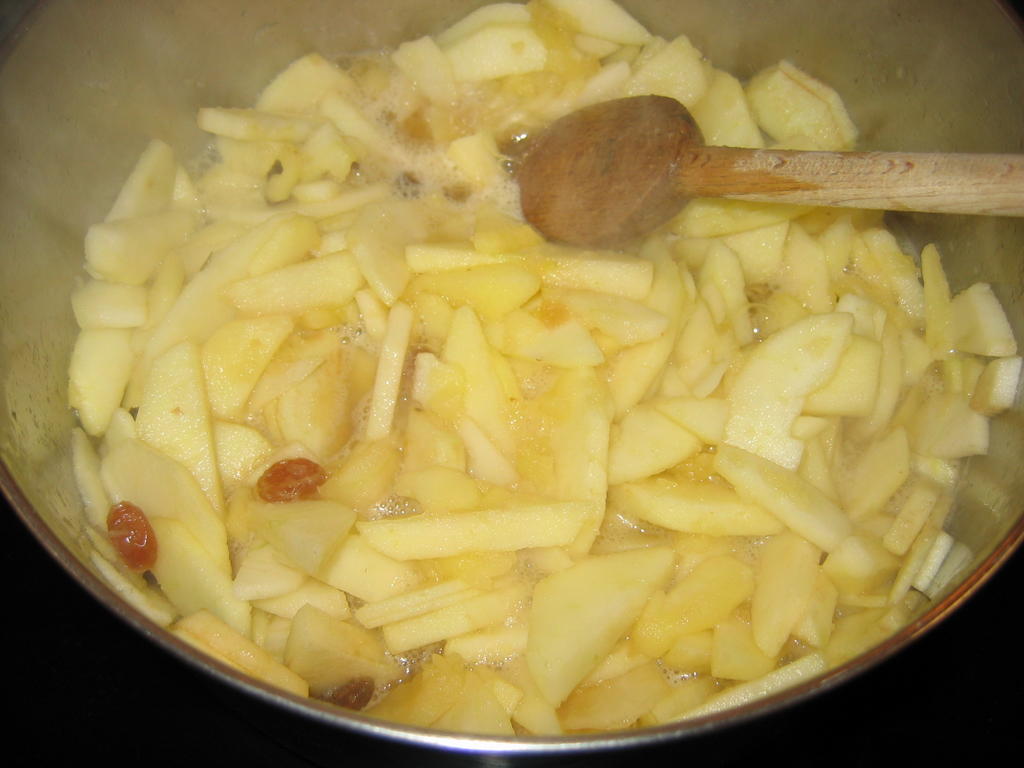
Combine the apples, cider, honey, crystallized ginger, and golden raisins in a large pot and over medium high heat, bring to a boil and cook, stirring for about five minutes. (The McIntoshes will begin to break down immediately.)
Put strainer over a smaller saucepan and drain apples, allowing cider, honey and juices to fall into pan. Set aside apples.
Cook, stirring, over medium high heat, until liquid reduces to 1/4 cup and thickens to a syrup that will coat your spoon. You will notice at this time that as soon as you remove the syrup from the heat and allow it to begin to cool, it will gel. This is what it is supposed to do.
Put apples in a bowl, and pour syrup over and stir together thoroughly. Add remaining ingredients and stir to combine.
Roll out dough as directed, and line a 9" pie pan with the bottom crust. Pour apple filling in and top with second crust, as directed in pastry crust recipe.
Place in oven on center rack and bake for thirty minutes, then rotate pie pan 180 degrees. Continue to bake until crust is golden brown and the juices that eminate from the steam vents is thick and tawny gold in color--this will take anywhere from 35-45 minutes.
When pie is done, remove from oven and place on wire rack, and allow to cool to room temperature (or nearly so) before eating.
Wednesday, September 21, 2005
Birthday Waffle Breakfast
 Most people get cake to celebrate a birthday.
Not Zak.
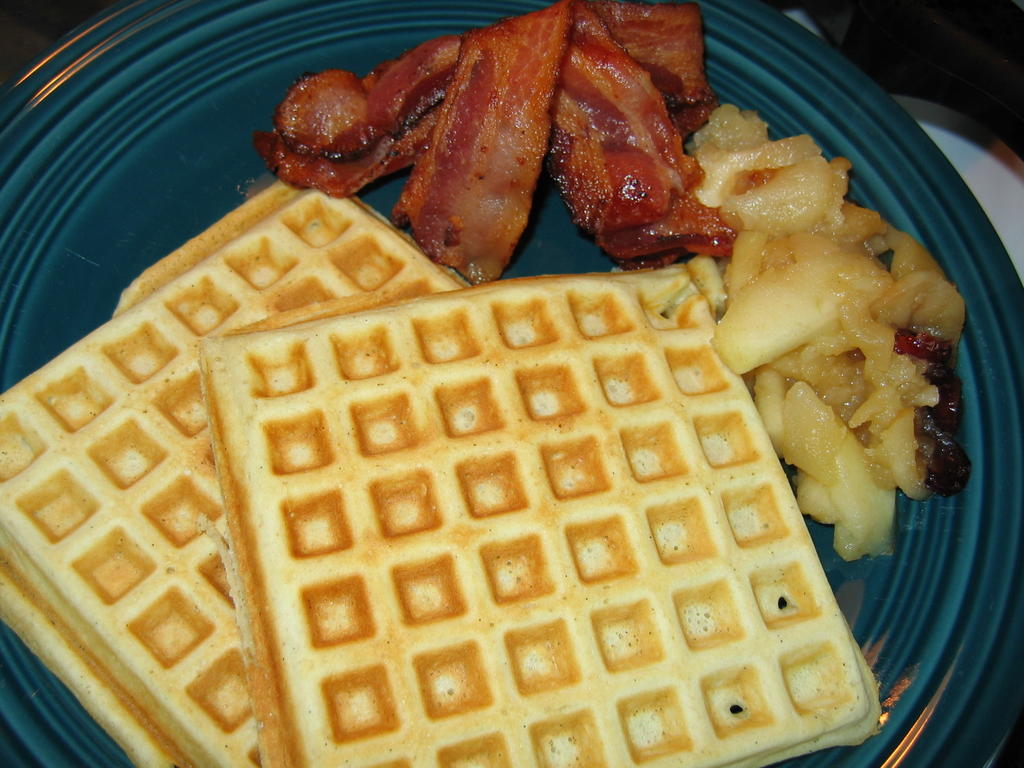
He wanted waffles and bacon.
And, because I am a good wife, that is what I got up early this morning and made for himself, his Dad and Grandpa.
Oh, and I had some, too. (And I made fried apples, because I insist that everyone eat a fruit or a vegetable of some sort at every meal.)
Yes, I recycled this photograph from an earlier post about waffles, but that is because, while I used a new and improved waffle recipe, the breakfasts looked entirely the same.
They just tasted vastly different.
I found the ultimate waffle recipe--that is, if you don't want to make yeast-raised waffles, which is an entirely different animal than what most of us think of as waffles.
So, here is a link to the article and recipe that I used, though I changed the flavorings a bit (I used double strength vanilla extract and added the scrapings of vanilla bean and a pinch of cardamom--surprise, surprise).
It was originally printed in Fine Cooking Magazine, which is my favorite cooking magazine and is the only one to which I subscribe. Pam Anderson, (not Pamela Anderson--I doubt she cooks much) the genius who came up with this recipe, has never failed me--her recipes always work as advertised. She uses cornstarch in order to help crisp up the waffles, and does the intelligent thing of using the sugar to stabilize the eggwhite foam which also helps make the waffles light and fluffy.
Since the article and recipe (you have to click on the "next" at the bottom of the article to get to the recipe) are beautifully illustrated, I decided to just cook this morning and not bother with detailed photographs.
It was all done pre-coffee, after all.
So--if you have a waffle iron, copy this recipe and enjoy--and write back to let me know how it went.
I am going off with the birthday boy to enjoy the rest of our day.
More on Zak's birthday pie, later.
Tuesday, September 20, 2005
Layers of Love
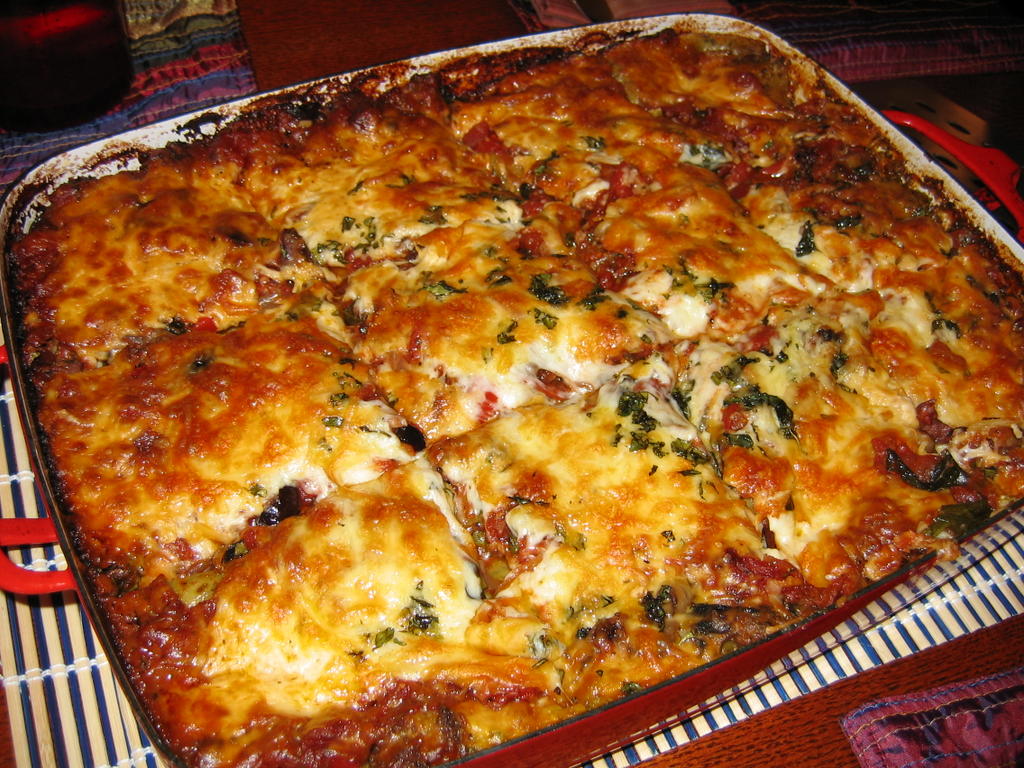 Lasagne is just one of those universally comforting foods. Everyone likes it, and no matter who makes it, lasagne is nearly always at least good, if not phenominal.
Even bad lasagne manages to be pretty tasty.
I have no idea of the derivation or history of lasagne, nor do I know when it became such a part of American cookery that everyone's mother, whether of Italian descent or not, has a recipe for it that is beloved among friends and family.
What I do know is that if you make it, people will come to the table in droves, and feast until they are filled with noodles, sauce and cheesey lusciousness, almost to the point of bursting.
I enjoy making lasagne, and I seldom make it the same way twice. My ignorance of the original provenance of the dish gives me license to be creative and to work with whatever seasonal produce is at hand to create any number of variations on the dish, all of which are quite flavorful. Lasagne is an empty canvas upon which I can project my own imagination and culinary creativity.
The problem usually comes when people ask for the recipe.
At which point, I am usually stuck with going, "Uh--yeah. I don't have one. I just make it."
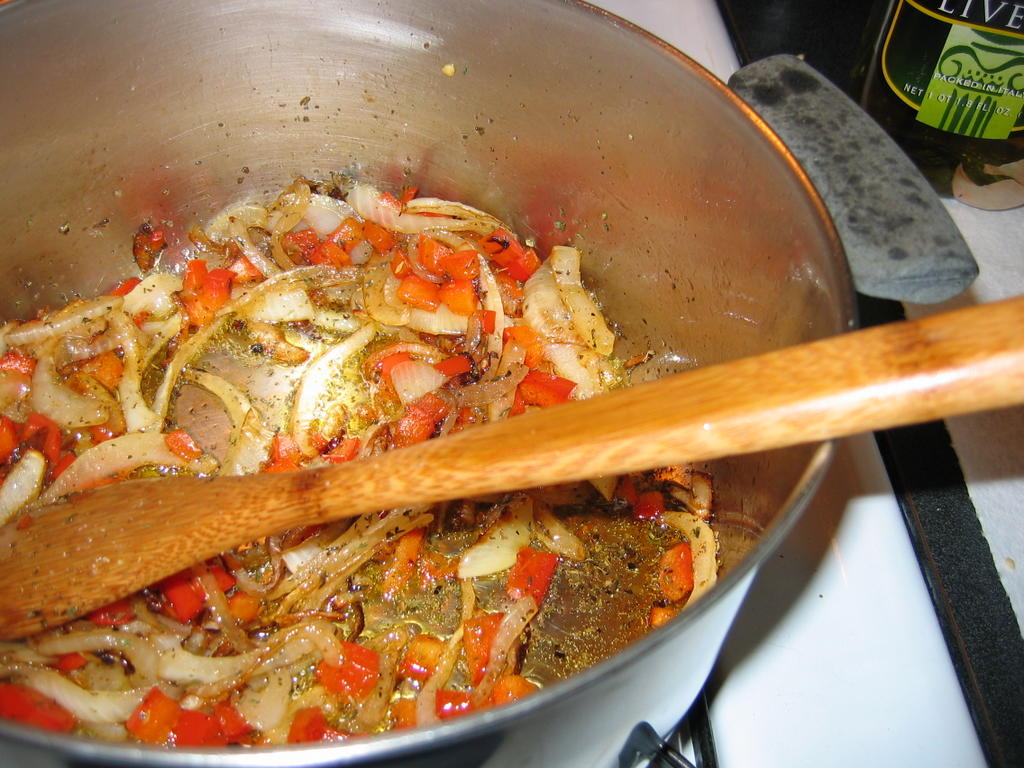 This is frustrating to a lot of folks, but, well, I have never bothered to write any of it down, and since I change fillings every time, it is rather foolish to try and write down the quintessential "Barbara" version of lasagne.
Because, there is no quintessential "Barbara" version of lasagne.
Would I count the pans of lasagne I made and froze for my sister in law while she was pregnant with her first child, so she could reheat them for a quick supper after the baby was born? (That one had roasted red peppers, fried zucchini and sauteed mushroom filling in a chunky bolognaise sauce.) Would it be the version I made in culinary school filled with roasted vegetables and sauced with a gorgonzola bechemel? Or what about the version I made to wish Heather a bon voyage when she went to Indonesia for the summer? (Homemade beef Italian sausage, pesto ricotta filling and mushroom-wine sauce.)
I do know it wouldn't be the vegan version I made with luscious faux bechemel and beautiful fresh tomato marinara and roasted vegetables that was utterly ruined by the tofu-cheese crap that my clients insisted I put on it. The stuff turned to rubber and smelled funny and made a perfectly respectable lasagne utterly repulsive. I had even managed to make a divine version of "ricotta"-spinach filling using silken tofu, spinach, sauteed mushrooms and a dab of shiro miso to give it a bit of a cheesy flavor. (White miso, when used judiciously and sneakily, can oddly enough manage to taste rather akin to parmesan cheese. That is a weird, but true food fact that I learned through much trial and error.)
Actually, if I had been allowed to make and serve it without the tofucheez, the vegan lasagne was quite flavorful, and would have been a decent addition to my own cooking resume.
But, I digress. The point is, that with the exception of the funky foot-stinky rubberized tofu, all of my versions of lasagne are good, even if I never repeat them more than twice in my life.
Since I don't feel constrained by tradition, I can change lasagne to suit the temperment or dietary restrictions of those who are eating it; each layered pan of noodles, sauces and fillings is a labor of love. I like to think of the wide, long noodles as comfy sheets and the fillings as pillows that I am tucking into bed as I construct the dish; there is something inherently nurturing about a dish that is put together the way a mother tucks in her children at night.
I like the flavors of my lasagne to be distinct and separate and to wrap and enfold themselves around the diner's tastebuds in a dancing embrace. I like to think of those eating my lasagne as being wrapped in patchwork quilts made up as many flavors, textures and colors that I stitch together into one cohesive dish.
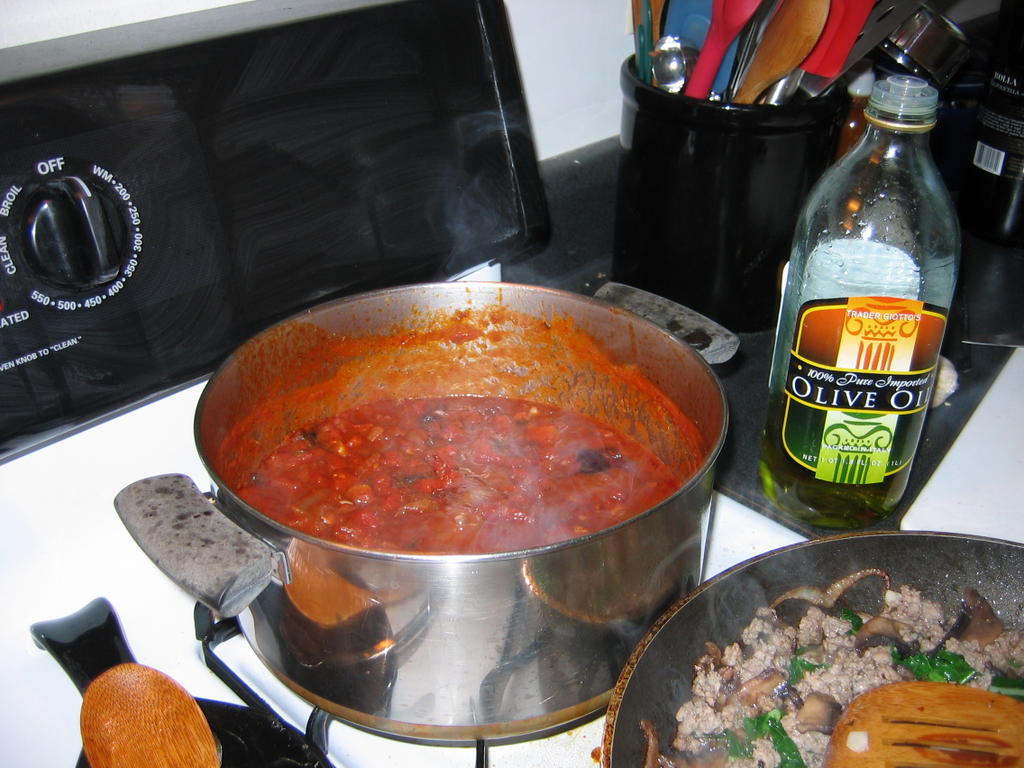 When I determined to make lasagne yesterday, I had a crisper drawer full of roma tomatoes from the CSA--heavy with juice and sugar from the long, hot dry summer. Zak's Dad and Grandpa were coming to visit, and I had fresh mushrooms, peppers and a wedding-bouquet sized bunch of basil.
I could have made any number of pasta dishes for them, but lasagne never fails to please anyone. Besides, I seldom make the dish unless we have guests or we are going to a potluck--it is quite simply too difficult to make only a small amount of it.
The sauce started with the peeled and seeded fresh tomatoes: this task sounds more difficult than it is. You simply score an "X" on the pointed end of the tomato, and plunge it into boiling water. Tongs are good for this operation; bare hands, not so much. I usually blanch them for about forty to sixty seconds, then pluck them out and dunk them into a bowl of ice water. While
I blanch the rest of the tomatoes, I leave the first ones in the ice water bath.
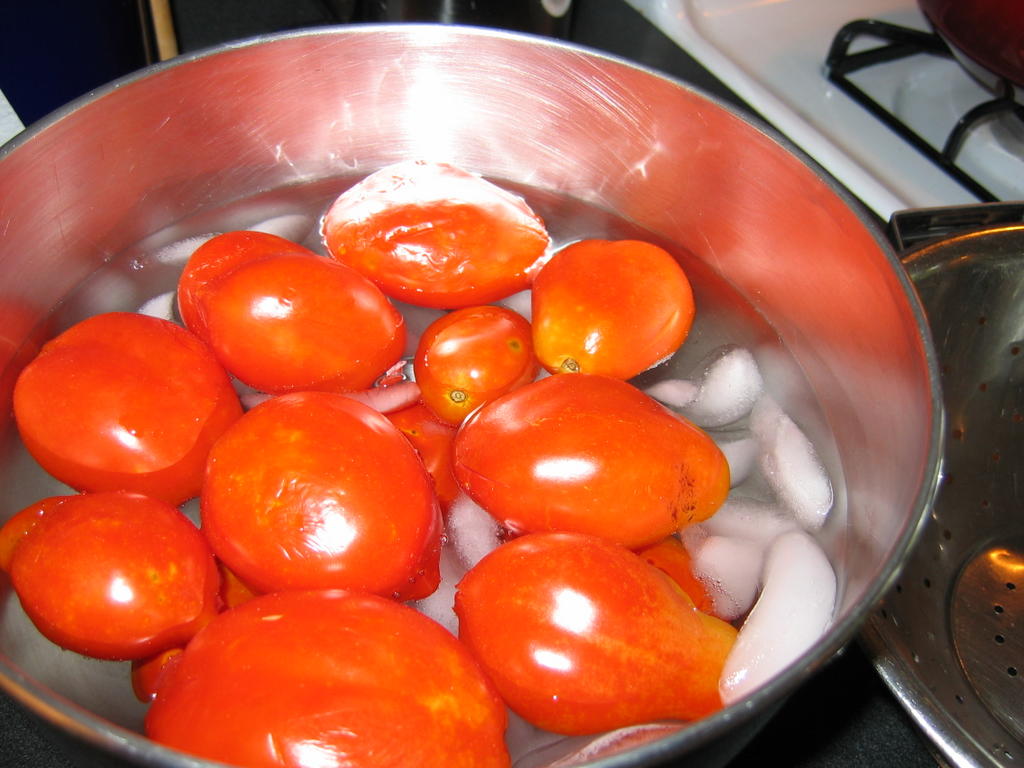
When they are finished with the spa treatment, the tomatoes a cinch to peel. Just go to where you scored them, pick up a flap of skin and pull. They slither out of thier skins like shimmying strippers slipping off crimson spandex. The next step is to core them--the tip of a paring knife makes short work of that operation.
Finally, I seed them by cutting the tomatoes in half across the middle, and scooping out the seeds with my fingers.
At this point, I cut them into large chunks and they are ready to go.
Of course, they are more work than just opening up a can of tomatoes, already peeled, seeded and diced. But they taste wonderful when they are perfectly ripe and fresh. It is well worth the small amount of extra effort to start with perfect roma tomatoes.
I had no Italian sausage, so I made some out of Bluescreek Farms' ground pork and a melange of Italian seasonings--I used a combination of fresh and dried fennel seeds, fennel leaves, basil, salt, pepper, oregano, thyme garlic and rosemary, with just a tiny hint of chile pepper. (This is out of deference to Grandpa who cannot handle hot spices anymore.) I decided to cook the sausage filling with a caramelized onion, some garlic, of course, sliced portabello mushrooms, red wine and shredded fresh lacinato kale. (The kale adds a bitter complexity to the mixture that complements the slightly sweet spices of the pork beautifully.)
And then, Morganna and I made the ricotta filling together.
Ricotta is a wonderful, soft fresh farmer's cheese--and contrary to some people's belief, it is cheese. It is just not pressed into a form, nor left to age, but it is a cheese nonetheless. It is made with milk, rennet and salt, just as other cheeses are. I love the classic ricotta filling with egg, spinach and parmesan cheese, and used that filling for many years. But when you have a wedding-bouquet sized bunch of basil in the house, you -have- to do something with it. Besides, just like everyone loves lasagne, everyone loves pesto, too.
So, Morganna made pesto and then stirred it, along with chopped spinach and egg, into the ricotta cheese, and there was the filling.
With that, we come to the noodles.
I have always used the traditional wavy-edged, classic American "you-gotta-cook-em-before-you-layer-em" noodles. But Morganna and Zak brought home Rossi Pasta "no-bake-em" noodles, so I felt honor-bound to try them.
Putting the lasagne together was less like tucking the fillings into bed and more like layering planks over pillows, but true to Rossi's instructions, the dish turned out very tasty. The texture of the noodles after they have cooked (you add a mere 3/4 cup of water to the dish to cook the pasta while the lasagne bakes) was fantastic with one exception: the first layer was crisp and browned excessively on the bottom. I think that the next time I make the dish using these noodles, I will put water into the bottom of the dish and a heavier layer of sauce.
So, I guess by now, you all want the recipe.
I hate to say it--but too bad.
I have no real idea quite how I put it all together, except as I described it to you.
So, here is the deal--make a nice sauce from fresh tomatoes, or if it is winter, used canned tomatoes. Use a lot of caramelized onions and sweet bell peppers in it. Make two kinds of filling: one of some combination of roasted or sauteed vegetables, with or without meat-and one based on something creamy like ricotta cheese. (Or if you are vegan--tofu with veggies and a dab of miso.)
Have some good quality Italian cheese like parmesan, which is nice and nutty, and good melting cheeses like mozzerella and provolone, and shred them up.
And either cook up some noodles, make some fresh, or use the "no-bake-ems."
Layer it all together lovingly in a pan, starting with a spray of olive oil and a splash of sauce, then the first noodles, and ending with a big blanket of melty cheese. Then bake it for about an hour. For about half of that time, leave the pan tightly covered with foil. Then uncover it so the cheese can brown into that wonderful chewy crust that certain people fight over.
When it is mostly done baking, mince up a double handful of fresh herbs like basil and oregano, and sprinkle them over the gooey cheese, then bake it for ten more minutes.
Turn the oven down to 170 degrees, and let it sit for as long as you can manage. Ten minutes in the oven and then ten minutes out will ensure that you are more likely to serve it without it falling apart into a puddle of weirdness.
Ten minutes out of the oven will make it so that the mess that happens when you serve it is at least somewhat appetizing looking.
Serving it straight out of the oven results in absolute glop, and burnt mouths.
But, even when glop and burnt mouths are in the offing, for some reason the folks eating it are happy.
That is because lasagne is nothing more than love made manifest.
Monday, September 19, 2005
Stretching Dinner
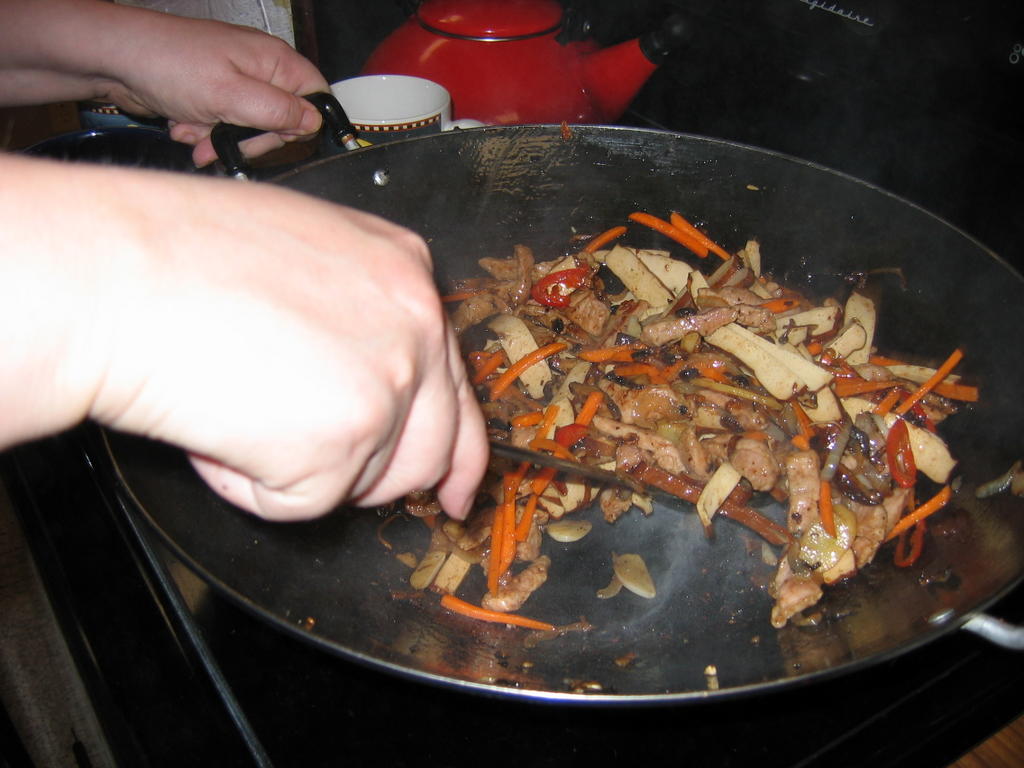 Sometimes at my house, an unexpected guest arrives around dinner time; I notice that this happens more often now that Morganna is living with us.
This is not a bad thing at all--in fact, I am convinced that it is a good thing to have friends dropping by. It forces a degree of spontenaeity in the kitchen which can lead to new and exciting variations on tried and true recipes.
Saturday night, for example, I had planned to make Shredded Pork with Pressed Tofu, which is one of Morganna's favorite dishes. Since Dan and she had been out being pixie-led (for those unfamiliar with fairy lore, "pixie-led" is a term that one uses to describe being so lost that you end up going in circles) in the woods all day, and since Heather was going over to some friends' home to eat, of course, Morganna asked if Dan could come to dinner.
I had thawed out enough pork for three people, but not four, and I only had one package of the spiced dry tofu.
However, I did not let this get in the way of saying "Yes." (Besides, I know how much Dan likes pork and how, since he is married to a Muslim, seldom he gets to eat it.)
 I just decided to add various vegetables to the traditional, minimalist recipe, and change the seasonings to create a new dish.
I had considered adding bitter melon, but neither Zak nor Morganna thought it was a good idea, and after tasting the finished dish, I concur--the bitterness of the melon would not have gone well with the flavor of the pressed tofu--it would have overwhelmed it. I ended up adding shredded onions, carrots, sweet peppers and Chinese black mushrooms to the dish to great effect. The mushrooms, in particular, added a wonderful meaty quality to the dish and added a great deal of fragrance and flavor to the completed sauce. I also added fermented black beans, in order to change the sauce a bit more; the saltiness, musky quality of the beans offset the sweetness of the pepper and carrot.
What we ended up with was a totally different recipe that was flavorful and new, that helped stretch two fairly small pork chops and a small package of tofu to feed four people. (Along with big bowls of steamed rice, of course!) It tasted good to eat again, so I will immortalize it with a name to commemorate Dan and his day:
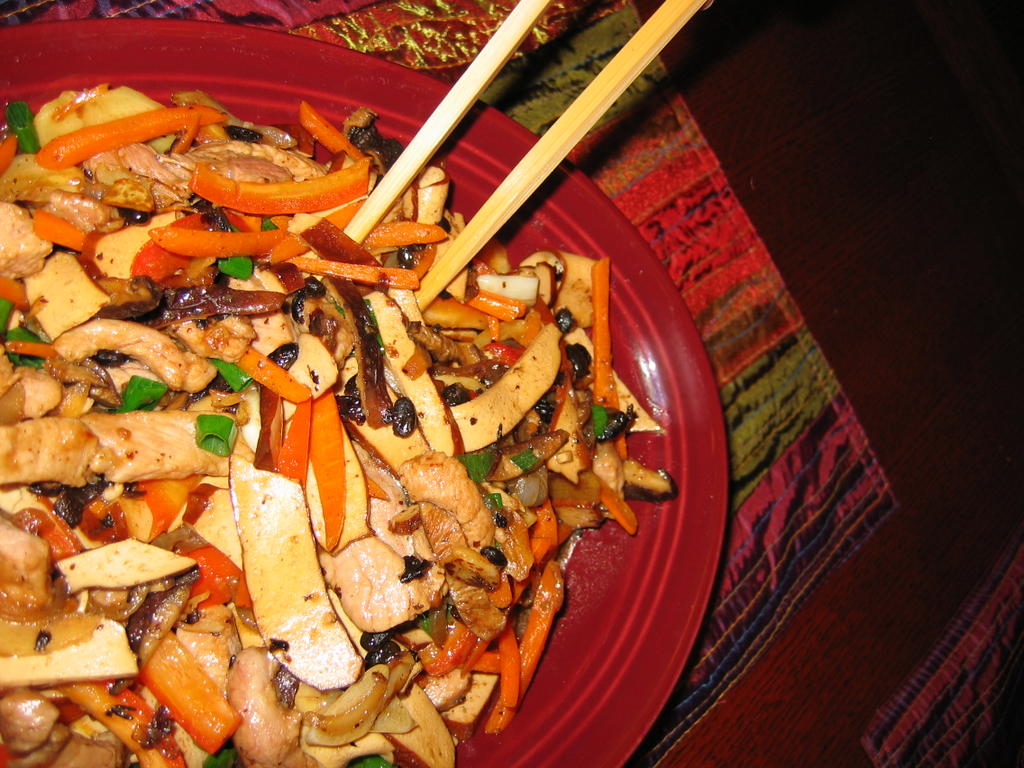 Dan's Pixie-Led Pork
Ingredients:
8 ounces pork loin chops, shredded into 1"x1/4" pieces
1/4 cup Shao Hsing wine
2 tablespoons cornstarch
3 tablespoons peanut oil
1 medium onion, cut in half longways and cut into thin slices
2" piece of ginger, peeled and sliced thinly
6 cloves garlic, peeled and sliced thinly
2 ripe jalapeno peppers, thinly sliced diagonally
2 tablespoons fermented black beans, lightly crushed
1 6 ounce package pressed spiced dry tofu, shredded in pieces about the size of the pork
5 Chinese black mushrooms, soaked in hot water and Shao Hsing wine, stems removed and caps shredded
2 tablespoons thin soy sauce
2 tablespoons mushroom soaking water
1 tablespoon Shao Hsing wine
1/2 cup carrots, peeled and shredded
1 small sweet red pepper, shredded
3 scallion tops, shredded or thinly sliced on the diagonal
1 teaspoon sesame oil
Method:
Marinate pork shreds in wine and cornstarch while preparing other ingredients.
Heat wok until it smokes. Add oil and heat until very hot. Add onion and stir and fry until the onion begins to turn lightly golden brown. Add ginger, garlic, chile and fermented black beans. Continue stir frying until the mixture is very fragrant--about one minute or so.
Add meat to wok; reserve any liquid marinade left in the bowl. Spread meat out onto bottom of wok and allow to brown on bottom about one minute, then stir and fry vigorously. Add tofu and mushrooms and continue to stir fry until meat is very nearly done. Add soy sauce, mushroom soaking water and wine, then add carrots. Stir fry about forty seconds, then add sweet pepper shreds.
At this point, add any liquid marinade, and stir and fry until sauce thickens and clings to the components of the dish. Add scallions, stir and fry about ten seconds, and then drizzle with sesame oil.
Serve with steamed rice.
Note:
This, stir fried with additional scallions, leftover cold steamed rice and a couple of eggs makes a fantastic fried rice. Especially if you add a little bit of oyster sauce and chile sauce at the end.
Saturday, September 17, 2005
Weekend Cat Blogging: Kitten Has a Brand New Name
 Indrid the Kitten is still with us, though he did catch a bit of a sniffly-virus and had to go to the vet. Now, he is breathing easier, and is back to his merry japes and larks and kittenesque games.
However, he is such a sweet-tempered little fellow, that Morganna decided that "Indrid," which comes from a creepy telepathic alien thing from John Keel's book, The Mothman Prophesies, was an awful name for him.
So, she decided instead to name him after a different alien--the good-natured ever-helpful and caring Minbari diplomatic assistant, Lennier from the television show "Babylon 5."
Here you can see Lennier playing on the steps that go down to the front door from the kitchen. I think he looks rather like some sort of Chinese Foo beastie in this picture, what with the contorted pose and wild eyes.
I would write more, but I have to run upstairs and finish painting the ceiling in our bedroom, and then work on changing faucets in the bathroom. I promise to post more on food and fun in the next couple of days, after all of this rennovation work is finished.
And sometime soon, I will have to post before pictures of the main kitchen and talk about the remodelling that will soon be happening there, too! (Wait 'til you see the stove!)
For more listings of weekend cat bloggers, visit Clare and Kiri at Eatstuff, and check out her listing of all the weekend cat bloggers posts there.
Thursday, September 15, 2005
Duck Sauce Cookies?
 It all started one Yule eve, many years ago (okay, only five years ago) when I had made about six batches of different kinds of cookies that day.
And it was late, but I felt that I had one more batch of cookies in me, so I eyed my ingredients store, and cast about for ideas.
Butter, eggs, sugar and flour were plentiful. Being as those are the backbone of any cookie recipe, I felt confident that I could, indeed, make another different batch of cookies to make it a total of seven.
I had made espresso chocolate toffee chip, Cakes of Aphrodite, raspberry almond bars, Clifford Tea Cookies (a brown sugar and pecan refrigerator cookie), Snickerdoodles and Irish Cream brownies. I didn't want to make anything else with chocolate, nor did I want to make plain sugar cookies. I didn't have it in me to make gingerbread and roll it out and cut, bake and decorate the resulting dark cookies--besides, I had no molasses. (That little fact becomes important later.) I wanted to make another drop cookie--one that was preferably chewy and kind of heavy.
I realized I wanted to make oatmeal cookies.
But I had no oatmeal.
What I did have, however, was Ginger-Cashew granola from Trader Joe's that had chunks of crystallized ginger in it.
"Granola is made from oats", said I to myself. I pulled out the granola and set it down.
I don't like brown raisins in cookies. Actually, in all honestly, I don't much care for the darned things at all. There is a funny taste to them that reminds me of the prune juice I was forced to drink as a child to, ah, keep things moving in my innards, as it were. That hideous black stuff kept me from liking many sorts of dried fruit for years.
But what I do like are golden raisins--they are sweeter and more delicate in flavor. They also are a more attractive color, being as they are not oxidized, so they don't look like rat droppings.
I pulled out the yellow box of golden raisins and set them beside the granola. And, for good measure, because they were right next to the raisins on the shelf, I pulled out the dried cranberries. And, because they were there, some sliced almonds, and the crystallized ginger. With the ginger, I remember saying aloud, "If some is good, more is better."
 I went to my cookbook shelf, and dragged out my cookie books, and dug about to look for a likely oatmeal cookie recipe to adapt.
It was then that I found out that most oatmeal cookie recipes have molasses in them, to add moisture and rich flavor to what has the potential to be a terribly dry, crumbly and somewhat bland cookie. Being as I am one of those folks who believes in moist and chewy oatmeal cookies, which are endowed with a deep flavor, I was not happy to realize that I had no molasses.
So, I figured, "I know--I will substitute honey," thinking that the flavor wouldn't be as dark, but the lighter flavor would go well with the crystallized ginger. So, I dove back into the cupboard and rummaged around until I found the honey jar, which had maybe a teaspoon of the golden fluid smeared to the bottom and sides of the glass.
Not nearly enough.
I could have gone to the store which was just up the road, but I knew it would be filled with last minute shoppers, and at this point, I was too stubborn to consider it. I had to have something that would work to substitute for the molasses. If not honey, then something else. Maple syrup?
A grand idea. Into the refrigerator I peeked, then peered, then dug, with both hands, pushing aside bottles, jars, plastic containers of leftovers and cartons of milk.
There was barely a teaspoon of maple syrup to be found. I briefly thought of combining the remaining honey with the syrup, but realized that in no way would I come up with the three tablespoons required by the recipe. Cursing my frugal nature which leads to me saving every last droplet of whatever commodity graced a jar, I shoved the syrup back to the back of the fridge, and began muttering.
I seemed to recall that I had bought apple jelly a few months earlier which I had used to glaze a fruit tart, but in all of my excavations, I hadn't found it. As I frantically spun jars in the refrigerator door with my flailing hands, I saw no jar of apple jelly, but many jars of strawberry, cherry, raspberry and blackberry preserves. Rejecting all of them because I knew that their fruit flavors would overwhelm the cookies and quite likely give them an odd pinkish or purple cast, I sighed.
Then, I saw something that looked sort of like orange marmalade or apricot preserves. Either one would be good, though I couldn't recall having bought anything resembling either option in the past two years. But it didn't matter. I was desperate.
I grabbed the jar and turned it around to read the label, which cleared the mystery right up.
"Duck Sauce," it read, quite clearly.
Then, I remembered. I had bought it for a dim sum class where I made spring rolls. Some students insist upon dipping perfectly delicious and innocent spring rolls into duck sauce before dipping them in hot mustard in order to eat them, so I had bought some to present on the side.
I put the jar down, frowning, then picked it up again, and read the ingredients.
"High fructose corn syrup (no big surprise there), peaches, pineapple, peach juice, modified food starch, water...."
I began to feel pretty good. It was sweet, fruity, but not overwhelmingly so, and the high fructose corn syrup would make the cookies really hydroscopic--meaning moist, and apt to draw moisture from the air, rather than drying out and becoming stale as soon as they were breathed on.
Then, I read further:
"...Soy sauce, garlic, ginger, vinegar, chiles and salt. No preservatives, no MSG."
Soy sauce? Garlic? The ginger didn't bother me much--after all, I had already dragged out dried powdered ginger, granola that featured crystallized ginger bits as well as a bag of nothing but crystallized ginger to go into the cookies. Vinegar didn't bug me much because after all, it is used in strudel dough to relax the gluten structure to allow the baker to stretch it into paper-thinness.
But soy sauce. And garlic?
So, I opened the jar and tasted it.
Not bad. Mostly fruity and sweet with some tanginess from the vinegar. The salt from the soy sauce was noticable, but heck, cookies have salt in them, right? There was also a definate garlic undertone, but as I was distinctly lacking in options, I decided that no one would know if I didn't tell them. The chiles--eh--I could barely taste them in the sauce on my finger, so I reckoned that if it was in cookies with bunches of granola, nuts, ginger and fruit in it all jostling about for the eater's attention, no one would be the wiser.
So, out came the jar, and it was plopped down beside the other ingredients, and I made the cookies.
And lo, they were good. Very good, in fact. The duck sauce gave them a mysterious, wonderful flavor that no one could place. When they inevitably asked what it was, I always flashed a gunshot grin and said, "Duck sauce."
Which inevitably gave rise to the question, "Why in the world would you think to put duck sauce into cookies?"
Well, now you know.
Desperation.
BTW--the official name of these cookies, given to them by Zak, is rather, uh, not family-oriented. He called them the F---ing Duck Sauce Cookies, with the alternate title, F---a Duck Cookies.
But, in the interest of not being too offensive, for the blog, I just call them
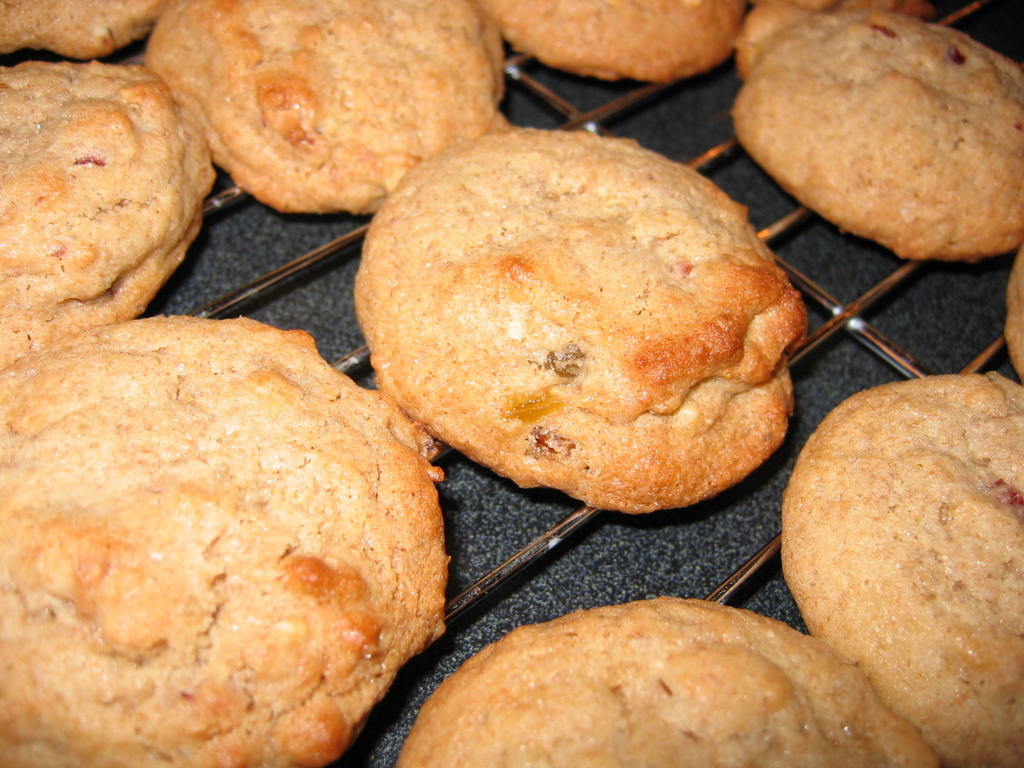 Duck Sauce Cookies?
Ingredients:
1 cup butter, softened
1 cup raw sugar
1 cup firmly packed brown sugar
1/2 teaspoon ground dried ginger
1/2 teaspoon cinnamon
2 eggs
3 tablespoons duck sauce
1 teaspoon vanilla extract
1 1/2 cups all purpose flour
1 1/2 cups whole wheat flour
1/2 teaspoon baking soda
1/2 teaspoon salt
1 3/4 cups granola
1/3 cup golden raisins
1/3 cup dried cranberries (unsweetened are best)
1/2 cup crystallized ginger, cut finely
1/2 cup sliced almonds
Method:
Preheat oven to 375 degrees F.
In a standing mixer, cream butter and sugars until light and fluffy. Add eggs, duck sauce and vanilla, and beat until fully incorporated.
In another bowl, combine flours, soda and salt, and mix thoroughly. Add flour, a little at a time, to dough, beating well and scraping down sides of bowl. Mix together remaining ingredients in a bowl, and if your mixer is a heavy-duty model, slowly incorporate them into the dough, mixing thoroughly. If your mixer is too wimpy to handle a dough that stiff, mix them in by hand with a wooden spoon. (This is great exercise for your forearm muscles.)
Using a small cookie scoop, drop by rounded teaspoonsful onto ungreased cookie sheets.
Bake 8-10 minutes, or until golden brown on the edges and slightly browned on the tops. Allow to cool for a minute or two on the sheets, then transfer to wire rack to finish cooling.
Makes about 55 cookies.
Wednesday, September 14, 2005
I Dunno, Lad, But It's Green....
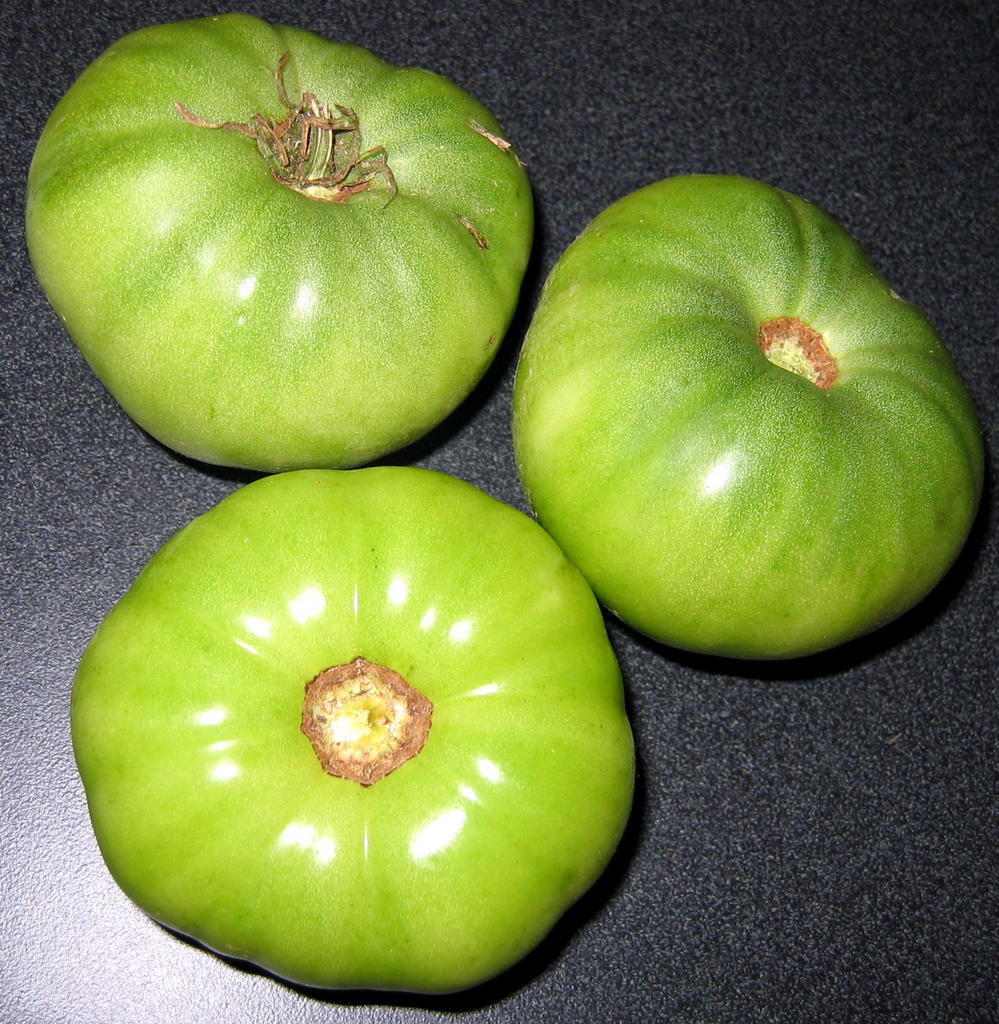 Every time my Mom visits me and 'tis the season, I cook her up a pan of fried green tomatoes (green as in unripe, not green as in a tomato that is green when ripe)--yet another classic southern dish that gives away my hillbilly Applachian heritage. But I do it, because both she and I love the darned things, and no one else we know does.
Now, I can't rightly figure that out. They are tangy on the inside, and crispy, crunchy and full of browned goodness on the outside, so what is not to like? I don't get why it is anyone would -not- like them. I mean, okay, if a person just plain old doesn't like tomatoes in the first place, well, I can forgive them for being afraid of them fried and green, but hell, for the rest of the world who looks upon them with distaste, I have this to say:
They are fried! How can you argue with that?
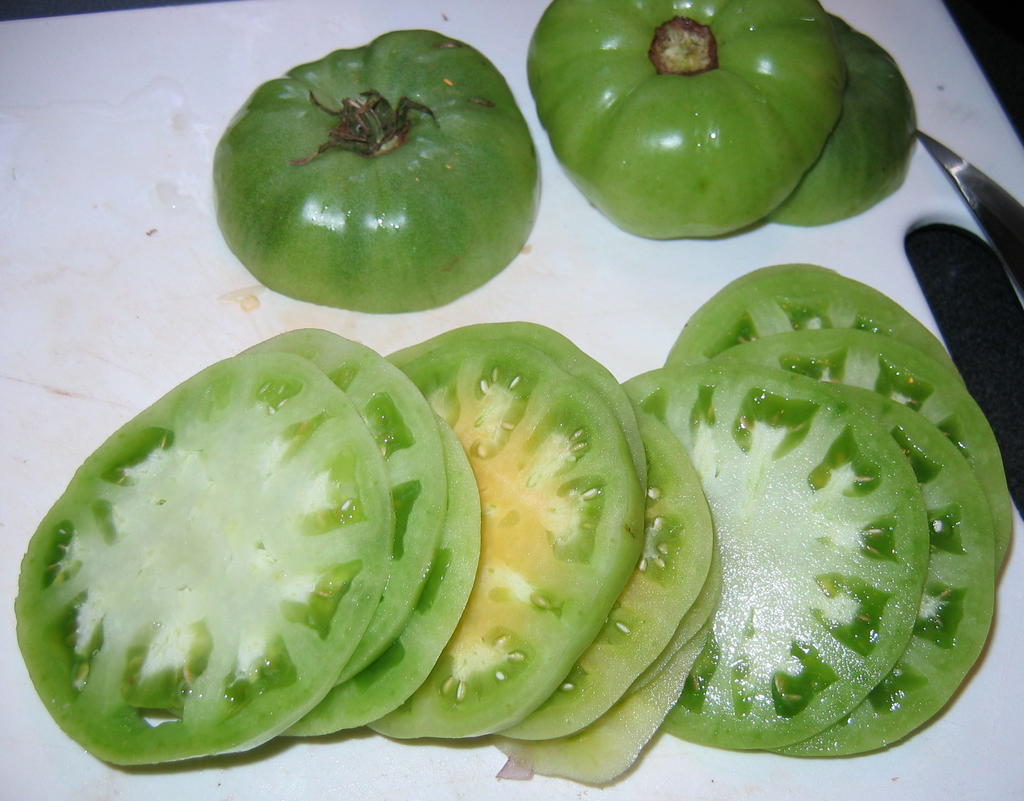 In truth, I have to admit to being fearful of them when I was a small child. They just looked odd on the plate to me. I loved ripe tomatoes, and would gulp down slices of beefsteaks at every meal once the season started, and in fact, would eat them to the exclusion of all other food if I could get away with it. But the green ones, for all that the color was compellingly beautiful--like transluescent jade shaded with hints of white and gold--smelled funny to me. There was an acrid scent to them that made my youthful tastebuds wary, and it wasn't until I was much older that I mustered up the courage to try them.
Once I did, it was all over, and the gene that in southern folks makes us up and bread any innocent edible thing and fry it up in bacon fat and consume it with much gusto was activated, and I haven't looked back since.
Which is good, because hell, if I looked back, I might see the size of my backside which has billowed with the consumption of all that bacon-grease fried goodness.
Because here is the deal--you don't fry them in olive oil, or canola oil or any damned fancified cold pressed walnut oil business. No. That is just not the right and proper way to fry green tomatoes. Do you think Fannie Flagg would approve? Well, I bet she wouldn't, and I know that no one in my family would approve, either.
It is bacon grease or nothin' when it comes to the green tomato frying. If you are a vegetarian--okay, use the olive oil, and I will forgive you. Or if you are Muslim, okay. But for the rest of y'all, use the bacon grease, and stop snivelling. Live a bit, and eat something that tastes really damned good. No, of course these are not health food--but not everything has to be health food. Just eat a plate of them once a year and relish them, and let them give your tongue and stomach great joy.
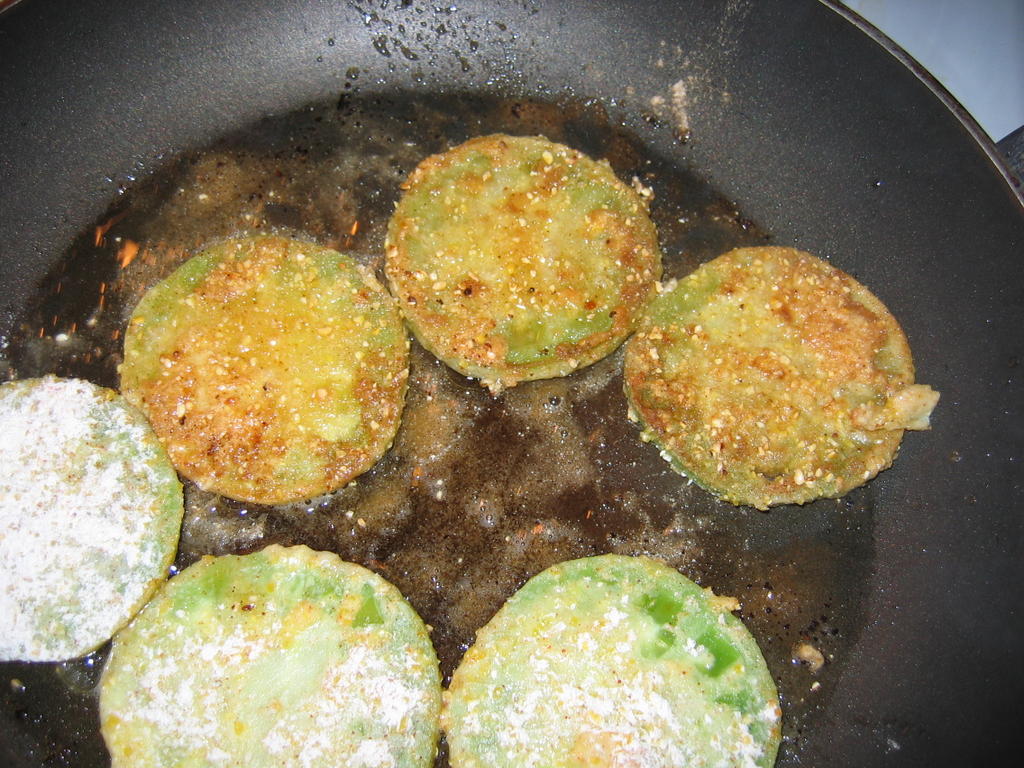 How do you fry 'em?
Well, it is easy.
Get some green tomatoes, cut them into thin slices with serrated knife, and then follow my recipe. I give the breading mixture in proportions--because I don't have any idea how many tomatoes you are going to be frying, so you can scale the recipe yourself. Just keep the ratios of the ingredients the same, okay?
Oh, and fry them in small batches and eat them hot, as soon as you get them out of the pan, preferably. Don't try the trick of putting them in a warm oven to hold them. You lose the incomparable crispness that is part of their delectability--the whole point is to contrast the tangy tenderness of the tomato flesh with the crisp brown crunchiness of the crust. The best way to do this is to make a panful, then sit down and eat, and if you want more, get up and cook another panful.
Repeat as necessary.
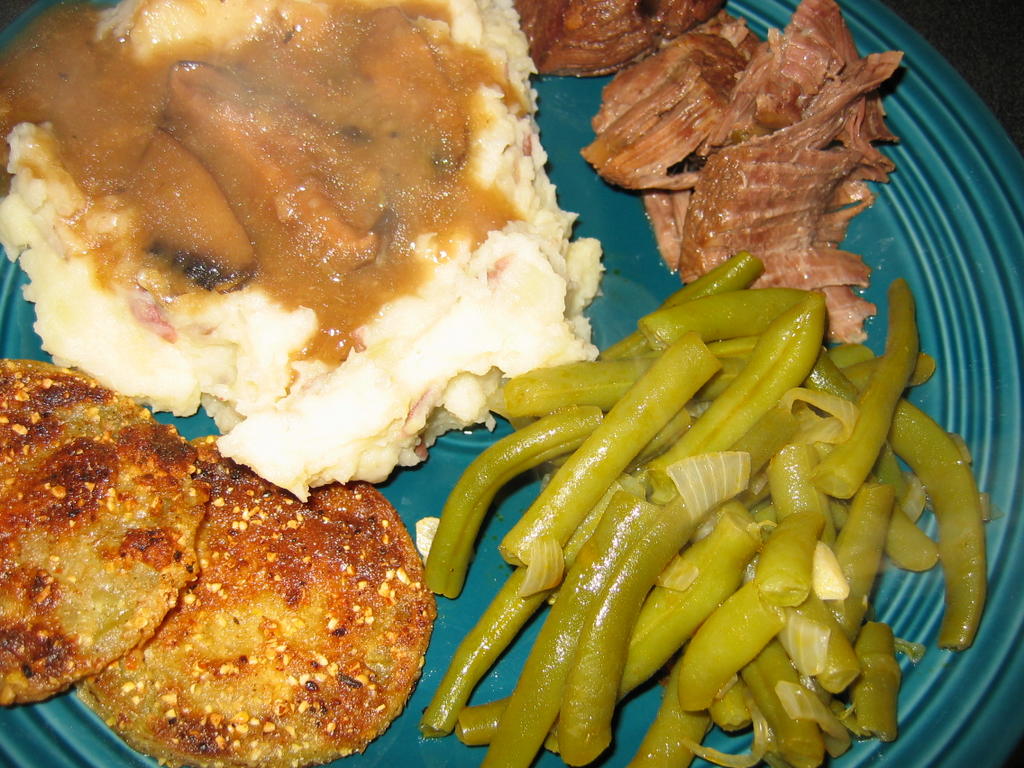 Fried Green Tomatoes
Ingredients:
1 part stone ground yellow cornmeal
1 part masa harina or corn flour
1 1/2 parts all purpose flour
salt and pepper to taste
ground dried chipotle to taste
Spanish smoked paprika to taste
bacon grease as needed (About one tablespoonful per 12" skillet's worth of tomatoes)
Green (unripe) tomatoes, cored and cut into very thin slices
beaten eggs as needed
Method:
Mix up dry ingredients in a shallow bowl or on a plate.
Melt bacon grease in a skillet on medium high heat.
Take your very thinly sliced (1/8" is ideal) green tomatoes, and dip in beaten egg to coat. Shake off excess, then dredge in dry ingredients, liberally coating both sides in the stuff that will magically turn into something wonderful when you put it in the hot fat.
Immediately place the tomato slice into the hot fat, and repeat with as many tomato slices as will fit in the pan comfortably without crowding them, all in one single layer.
Fry until brown on the bottom, then flip each slice carefully so as to lose as little of the fragile coating as possible. (It takes about a minute to brown the tomatoes on the first side.) Cook until the other side is just as golden brown as the first, and flip onto a paper-towel lined plate to drain for a few seconds, then put onto a serving plate and eat up.
Notes:
Hot sauce is great on these.
Salsa is also beautiful.
A sprinkling of freshly minced herbs is nothing to sneeze at, either.
You can add any dried herb or spice to the dredging mixture, but you do not want to go too far overboard and lose the native tartness of the tomatoes.
I bet these would kick butt as the base for some sort of canape thing, but I haven't been able to resist eating them as soon as they come out of the pan so I can experiment with them.
Tuesday, September 13, 2005
A Note from the Blog Administrator: Comment Spam
Once you get a certain amount of readership on a blog, comment spam will ensue.
Until a few days ago, Tigers & Strawberries had been blissfully untouched by the phenomina, but that has changed.
This morning, I awoke to twenty-seven bogus comments from a variety of "commenters," all advertising for a culinary school blog which has a sum total of two content-free posts.
So here is a free clue to all of the identities that add up to the same person who wants people to desperately read his or her blog:
Emily, jordan, sara, trinity, jasmine, anna, natalie, amber and anonymous--if you want people to read your blog, please put some content up there worth reading. If you did so, other bloggers might promote you for free, without you having to send a spambot out to plaster links to your blog all over other people's comments.
Comment spam, even when it includes the words, "Your blog is great, I have bookmarked it (no shit--I kinda figured that out when I got twenty-seven comment notifications in my email, dumbass), and will return to it again and again," is still rude, annoying and irritating. The kind words ring very false when it is obvious that all you are doing in making a comment is shilling for your own blog.
Another clue: if you post a comment to another blog that has something incisive and interesting to say that is in context to the blog post in question, then people will read it and click on the link to your profile or blog and read what you have to say there. Lots of readers here have found me in that way.
And if you have employed a spambot or two to plaster your link all over my blog--I have employed the option of word-verification in order to thwart that possibility.
So, to regular readers and commentors, I apologize for the inconvenience of the extra step you have to take to post your words to my blog. As for spammers--this way, at least, you have to work for your ill-gotten gains.
That said, hopefully, I won't have to make such a post again.
Lingering Scents
 It is good to wake up to the lingering mingled scents of last night's stir fry. Since I have two kitchens, and currently the upstairs kitchen has the more powerful stove, I do all of my stir-frying upstairs. There is inadequate ventilation, so if what I cook is strongly-scented, it hangs around at least until early morning.
Apparently, a lot of people object to cooking smells in their homes. I didn't realize this until I worked as a personal chef and people would exhort me to use their noisy ventilation hoods to "get rid of the cooking smells." I always thought that was odd; to me, kitchen smells are homey and inviting, but then, I grew up in kitchens, so maybe I am biased. Even when I complied with the request to turn on the vent hoods and put up with the grinding noises the fans made, some clients would burn Yankee Candles (which I kindly refer to as "Stankee Candles," though not to my clients, of course) all over the house.
Me, I preferred the natural food smells to the vile chemical concoctions of Stankee, but they were paying me, so I held my breath and cooked.
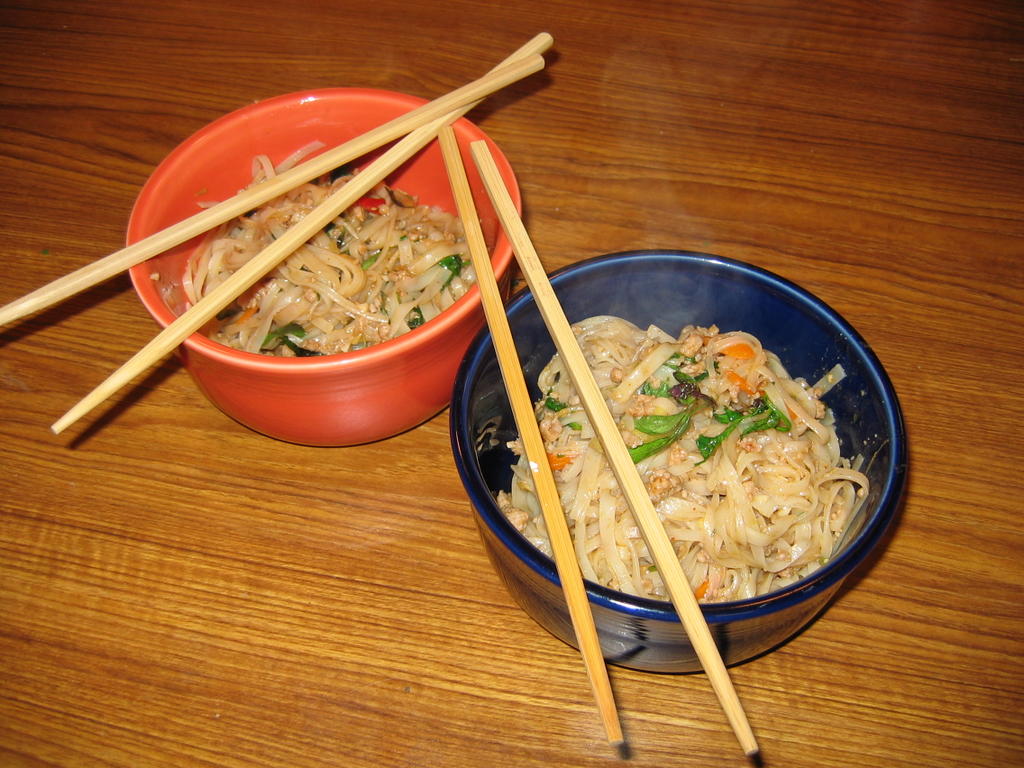
This morning I awoke to the heavenly melange of Thai Basil, shallots and garlic with just a hint of chile and of course, fish sauce. Some might object to the fish sauce smell, but really, it was mostly overpowered by the first three scents, and besides, as I mentioned recently, the stuff grows on you.
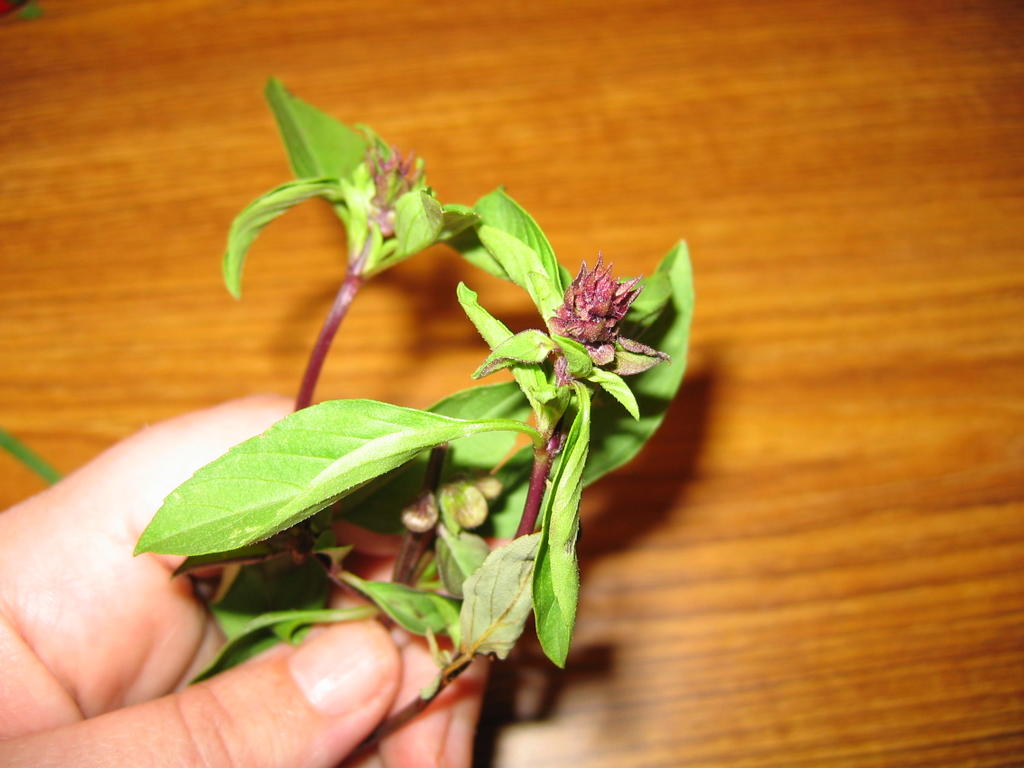
The spicy-sweet smell of the Thai basil is particularly potent; I took two bunches of it from my CSA at the farmer's market on Saturday, and then over the past two days, have stir fried two highly-flavored dishes with it. On Sunday, I made Spicy Basil Chicken and yesterday evening, I made Drunken Noodles, so I probably have two day's worth of stir-fried basil smell wafting through my upstairs.
Thai basil is a lovely plant, with violet-green square stems, and deep royal purple colored blooms. The leaves are dark green, sometimes shaded with purple, and are gracefully almond-shaped. They do smell somewhat like the more familiar Italian basils, but the licorice-green scent is nearly overpowered by the strong cinnamon and lemon overtones. There is a medicinal tang to the aroma of freshly plucked Thai basil that I find to be quite compelling, and like Pavlov's dog, I need only get a whiff of it to start drooling. (Unlike Pavlov's dog, I can wipe my mouth on a napkin, kleenex or sleeve in order to avoid public embarrassment. Thumbs are very cool.)
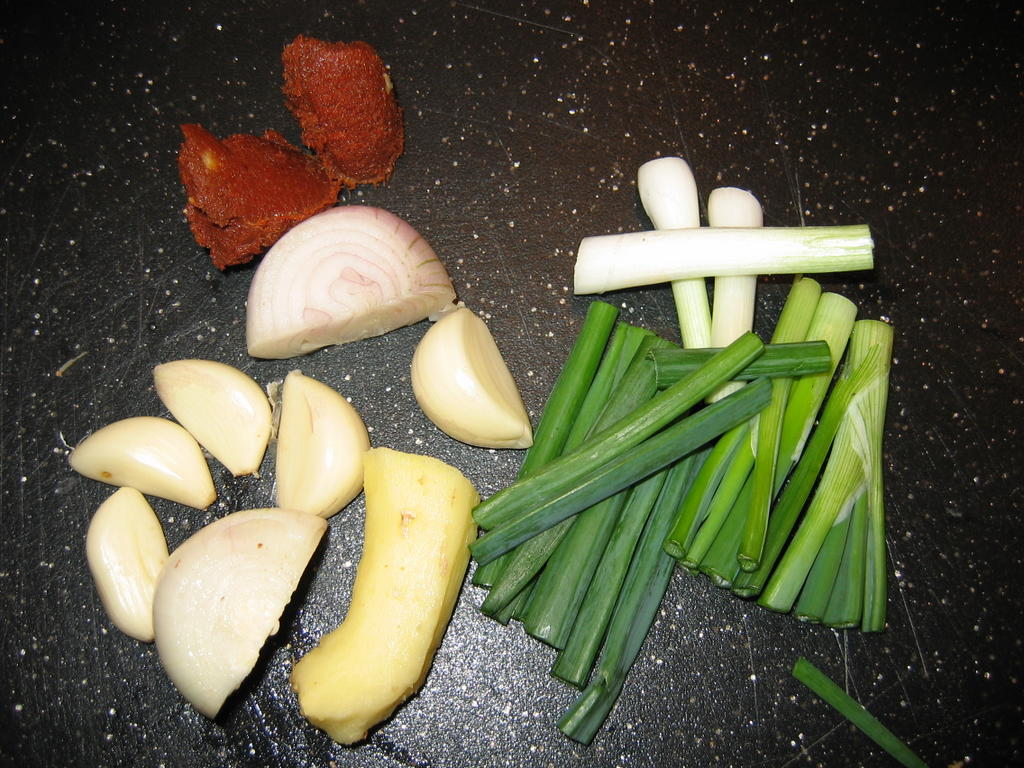 I cannot fathom quite why anyone who loves good food (and presumably anyone who would hire a personal chef would fall into this category) could not abide cooking smells in thier home. To me, the scent of food is just as important as the flavor of it; in fact, the two go hand in hand.
We only have taste buds that discern sour, salty, sweet and bitter. That is it, though there are some scientists who say that our tongues can also taste the meaty, complex flavor which that Japanese call "umami," but the jury is still out on whether that is a singular flavor or a complex of several flavors that is picked up not only by the tongue but also the olfactory organs in our nose.
Speaking of the allmighty olfactory organs, our nose plays as much part as our tongues in the enjoyment of food, and it is through scent that we learn distinctions between different flavors. If you notice, I described the differences between Italian basil and Thai basil in terms of smells; that is because most of their flavor profile is based in their scents. That is why herbs, spices, garlic, ginger, chiles, citrus zest and onions are collectively referred to as "aromatics" in culinary parlance.
 Aromatics are used to flavor foods and to give each dish its own distinctive character.
These seasonings also are the main culprits when it comes to smells which hang about in the nooks and crannies of the kitchen. Seafoods, particularly fish, shrimp and squid, will linger on in the kitchen for a time, as will the scent of meat and vegetables of the brassica family: cabbage, kale, collards and broccoli, for example.
If you do a lot of stir-frying, as I do, the combination of very hot oil and highly scented ingredients leads to aerosolized essential oils; once the basil, ginger, garlic or chiles hits the wok, their essences leak into the cooking oil which is then dispersed into tiny droplets throughout the air. These droplets settle eventually, leaving a bit of a film that a lazy housekeeper might miss in her cleanup efforts, thus leading to the lingering cooking smells that so many have issues with. Steam also carries cooking smells, probably farther than the afformentioned nearly-microscopic oil droplets, and is likely the reason that I can wake up down the hall from the kitchen in my bedroom and be greeted by the delectable fragrance of Thai basil, shallots and garlic from last night's stir fry.
I love that.
By late morning, the smell will disappear, and it is up to me to cook up another lingering aroma for tomorrow.
 Drunken Noodles
Ingredients:
1 pound narrow rice noodles (not the thread-shaped ones, but the narrow ribbon kind)
1 whole chicken breast, boned, skinned and trimmed
¼ cup Shao Hsing wine or dry sherry
2 tbsp. cornstarch
3 whole scallions, trimmed
5 large cloves garlic, peeled
1” cube fresh ginger, peeled and sliced
2 tsp. chili garlic paste
1 small shallot, peeled
3 Thai bird chilis, sliced thinly (optional)
Peanut oil as needed for stir frying
4 tbsp. fish sauce or to taste
1 can thinly sliced bamboo shoots, drained, rinsed, and drained again
½ cup julienne sliced carrots
¼ cup julienne sliced red sweet pepper
½ cup fresh pineapple cut into small chunks
¼ cup fresh pineapple juice
¼ cup chicken broth
4 tbsp. oyster sauce or as needed
1 tsp. thick Thai soy sauce (optional)
1 cup mixed fresh herbs--cilantro, mint and Thai basil, in any proportion or combination you like
zest of one lime
freshly squeezed lime juice to taste
Method:
Soak rice noodles in warm water until they become white and pliable. Drain well in a colander, and set aside.
Using two-cleaver method, or one chef’s knife, mince the chicken breast finely. I do not recommend using a food processor or using ground chicken from the store, as the texture of the chicken should be irregular, with some pieces larger than others, to give more textural interest to the dish. When minced, toss with wine and cornstarch and set aside.
Using a mini food processor, grind up scallions, garlic, ginger and shallot.
Heat oil in wok, and add ground up aromatics along with optional bird chili slices. Stir and cook for one minute, until very fragrant. Add chicken, reserving as much of the wine as possible, and stir and fry until nearly done, about two minutes. Add fish sauce. Add vegetables and fruits and stir fry one more minute.
Add noodles, then pour in juice and chicken broth, and vigorously turn and stir the noodles to combine with the meat and vegetables, as well as to let them soften and cook in the combined liquid and oil. Keep stirring! If you stop, the noodles will try and stick to the bottom of the pan, and some of them will get soft and some will stay chewy. Cook until noodles are uniformly soft, then pull off of heat.
Add herbs and stir to wilt.
Add oyster sauce and soy sauce, stirring and turning noodles over and over to combine ingredients. Add lime zest and juice to taste and serve immediately.
Notes:
I learned to make this dish when I was in culinary school in Providence, RI. The Thai restaurant where I always used to eat, Siam Square, had a great chef and a wonderful waiter, who went very far in educating my palate to the subtleties of Thai food, and between them, I learned a great deal about cooking Thai food. Mostly by eating and asking roundabout questions; the waiter would never tell me straight on what was in a dish. He would only let me guess, and would tell me if I was right. It became a game, then, to see if I could learn how to cook my favorite dishes. I am happy to say, that eventually, I was successful, though I admit to adding the pineapple to this dish as my own touch.
According to Kasma Loha Unchit, author of my favorite Thai cookbook, It Rains Fishes, drunken noodles are so named because they are so spicy that they are used either to cure hangovers, or they are so hot that they induce diners to drink a lot of beer to quench the fire. In either case, I have to say this: they are good, and while the version I learned used minced chicken, Kasma's version uses mixed seafood instead. She also uses fresh wide rice noodles instead of the narrow dried rice sticks.
The version I made last night that is pictured here, lacked the bamboo shoots as my cupboard was oddly bereft of them, and since I had no chicken, I used ground pork instead. I also dispensed with the soy sauce, as I had none handy, so the noodles turned out paler than usual. I used five very spicy Thai chiles grown here in Athens, along with the curry paste, and probably two and a half cups of Thai basil along with a half cup of cilantro, because they needed to be used up before going wilting into utter disreputability.
The verdict is thus: the soy sauce was not missed, the pork is loved even more than the chicken, the chiles were grand and the excessive use of herbs was fantastic. The three of us ate most of that pound of noodles, with only enough left over for Morganna to take to school for lunch tomorrow.
Sunday, September 11, 2005
Seasonal Sunday Morning
 Late summer used to be one of the saddest times of year for me.
In the middle of the orgiastic harvest, when the fields are knee-deep in ripe tomatoes, when melons are heavy on the vine, and are so sweet that you can smell them from two rows away, when corn and beans and squash are ready by the bushel to be picked and preserved, I would have to go back to school.
As soon as the apples start to ripen, and my Grandpa would trade out some of his tomatoes for the first baskets of McIntoshes from a neighbor's orchard, and it was time to make gallons of applesauce and can it for winter, I'd be stuck in a classroom.
And it wasn't even that I disliked school.
I was one of those mutant children who loved it.
But it was horrible, having to leave Grandma and Grandpa's house and trudge back to the city, do my back to school clothes shopping, buy up notebooks and pencils and pens, and then sit in a stuffy hot classroom and know that back on the farm all sorts of interesting things were happening. Grandma would be canning tomatoes, or pickling beets or making corn relish, and there I would be, declining Latin verbs or memorizing the periodic table of the elements.
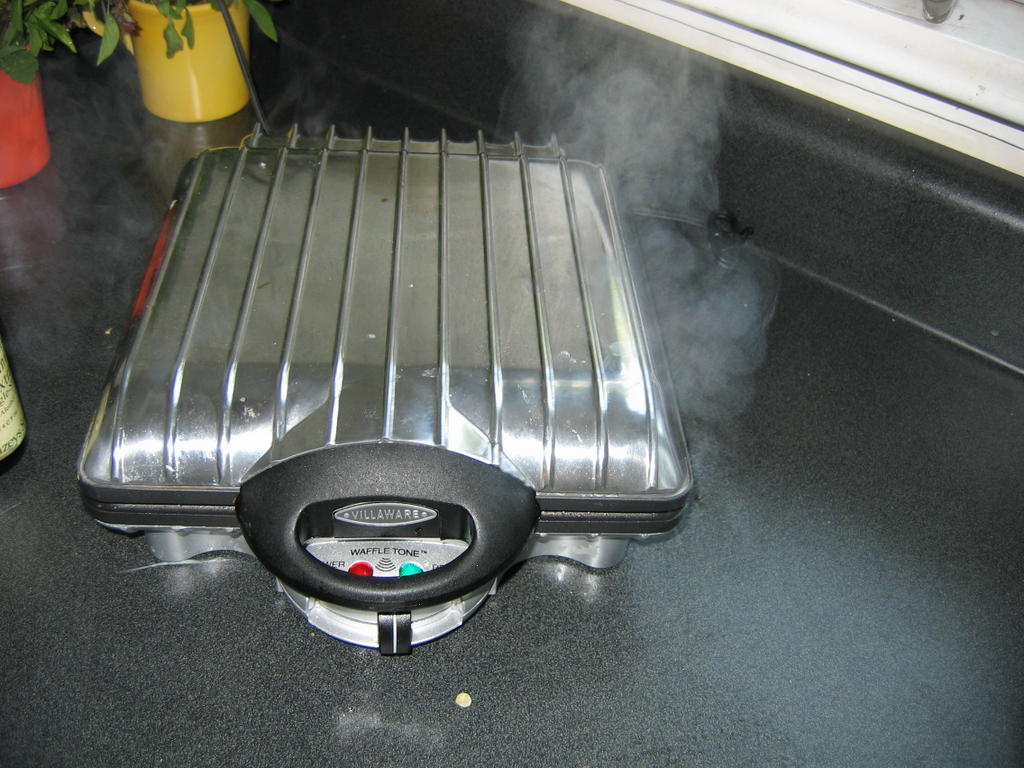 And the weather wouldn't even have the good grace to cool down; no, the late August, early September classrooms were always beastly hot, and the sun was always out, and the sky was always blue, and I -knew- that miles away, there were apples fresh from the tree or melon straight off the vine, cool and full of icy sweet juice, and I was nowhere near them.
That is what I always think about when I see the first McIntosh apples of the season, and now I smile--the dying of summer is no longer so depressing to me as once it was. The turning of seasons is a glad thing, a sweet dance of time which we all must take part in.
Now, McIntosh apples remind me of the first time I convinced Zak to taste one, fresh from the tree at the local orchard. He had sworn for years that he didn't like apples, but it turned out that he had only had ones from the grocery store in Miami, Florida before. Miami is the place to go to eat citrus or tropical fruit, but not so much apples. But he had only had Red Delicious--a fruit which is certainly red, but I think that their deliciousness is debatable.
I had just bought a basket of McIntoshes and several gallons of fresh cider from Lynd's Fruit Farm in Pataskala, Ohio, and unable to wait until we were home, had bitten into one. The skin snapped beneath my teeth, and the floriforous juice trickled into my mouth, and its scent filled the air. Of course I moaned, being as I am not inhibited about expressing my appreciation for incredible flavors.
"Sounds like it is pretty good," he said. "Smells pretty good, too."
"Try a bite?" I said, handing him the apple casually. I declined to make any Eve jokes as he took the apple and bit into it while holding the steering wheel in the other hand.
I never got that apple back. Which was okay--there were plenty more where that one came from.
So late August and early September now are joyful times for me--times when the first apples come ripe and I can indulge my passion for fried apples.
 Fried apples are an Appalachian dish, and they aren't supposed to be very healthy. The original version I grew up with was sliced apples cooked in either butter or a bit of bacon fat, to which a good bit of sugar and some cinnamon was added. The only other things permissible ingredients were a pinch or two of some other apple pie spices like nutmeg or cloves, and that was it.
You melt the butter or bacon grease in a saucepan or frying pan, and add some thinly sliced apples. Once they start bubbling and hissing a bit, you add sugar, which draws out the apple juices, and you turn the fire down. Then, as they begin to soften and "cook down," or release their juices, you add a little bit of cinnamon, and then cook until they are glazed with butter, reduced juice and melted sugar.
They are delicious on biscuits, on the side of pork chops, with breakfast sausage, or next to fried chicken.
I like them with waffles.
Now, I am not going to give you a waffle recipe here. I am still working at perfecting one--the ones I had this Sunday had the scrapings of a vanilla bean and some cardamom in them, and they tasted divine, but the texture was still not right. I wanted them to be crisper on the outside and lighter on the inside. I heard tell that a bit of cornstarch with the flour will help with that, so the next time I pull out that waffle iron, and I'm going to give that a try.
When I have gotten really good at this waffle thing, I will post the recipe.
But, until then, let me give you my lighter on the butter and sugar version of fried apples to which you can add dried fruit and nuts as you like.
I like these with waffles, or mixed in with steel-cut oats or with french toast or on top of pancakes. McIntosh apples fall apart when cooked, so if you make these, only use one MacIntosh and use an apple that cooks firmer for the rest of them. I used two Ginger Golds and one McIntosh, and the batch turned out perfectly. The Ginger Golds kept their shape, and were nice and tart with a tangy flavor that is quite distinctive. The McIntosh fell apart and thickened the glaze, and added its flowery essence to the mixture.
I use apple cider to make up for the lack of sugar--it adds moisture and natural apple sweetness without all of the sugar that the traditional dish required.
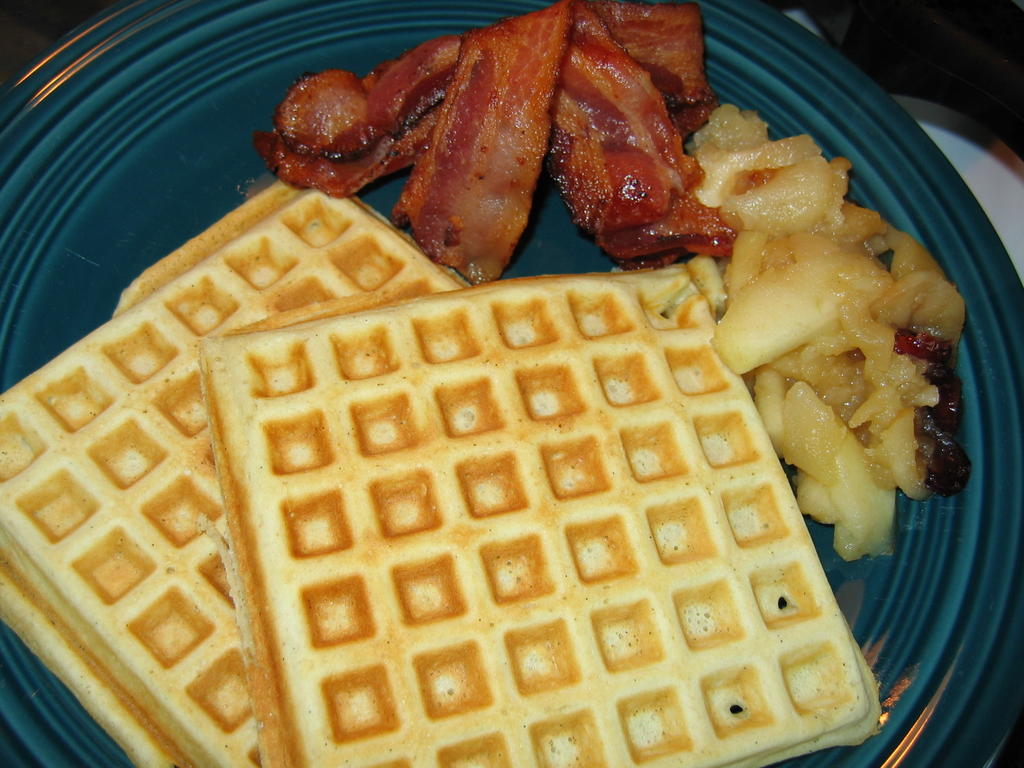 Gingery Fried Apples and Cranberries
Ingredients:
1 1/2 teaspoons butter
1 MacIntosh apple, peeled, cored and sliced thinly
2 Ginger Gold apples, peeled, cored and sliced thinly
1 tablespoon crystallized ginger, minced
1 teaspoon sugar
1/2 cup fresh apple cider
1/4 cup dried cranberries
1/4 teaspoon powdered ginger
1/8 teaspoon cinnamon
Method:
Melt butter in a saucepan and add apples and ginger, and bring to a simmer, stirring gently. Sprinkle sugar over the apples, and cook stirring frequently, until a bit of juice begins to cook out of the apples.
Add cider, cranberries and spices and cook, stirring now and then, until the apples are soft and some of them have broken down into a thick sauce. Make certain to allow most of the cider to boil away, and allow the cranberries to plump and soften somewhat.
Serve immediately, while still quite hot.
Notes:
Sliced almonds are good added just as the cider is almost boiled away. Golden raisins are also a good addition.
For a sinful topping for french toast, add a tablespoon or so of cream cheese and a teaspoon of Irish Cream liquor.
A shot of rum is also delicious.
Friday, September 09, 2005
Eating Together
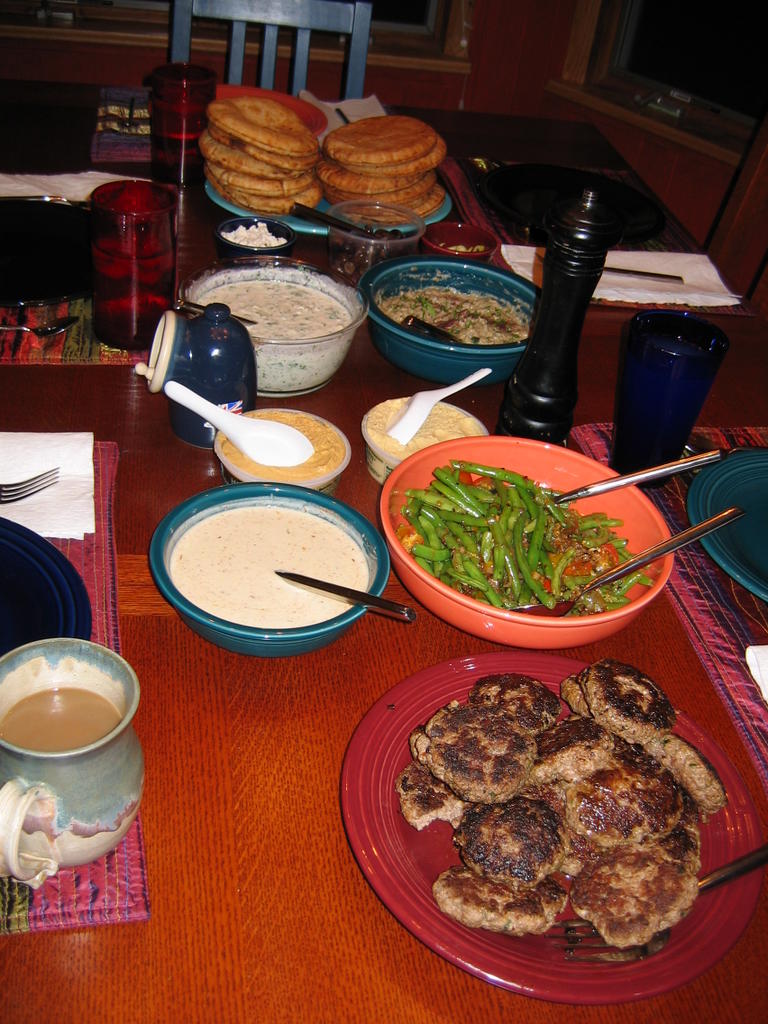 Reading about the benefits that accrue to children who eat often with their families gladdens my heart, amuses me and saddens me all at the same time.
It makes me happy to know that there are researchers working in the fields of nutrition, child psychology and sociology who are willing and able to do design studies that confirm what many parents have suspected all along: that meals do not just fuel a child's body, but sustains their minds and souls as well. This is also true for adults, of course, not just kids; food has never just been about calories and nutrients, but has always been part of the social fabric that holds people together in good times and in bad.
It pleases me to see that there are those who feel that research in this area is important enough to pursue and publish; and I am given heart every time I see mention of these studies in major media outlets.
I am amused, of course, because when I read these news snippets, I always say to myself, "Well, gee, duh--I could have -told- you that."
Partly this comes about because the idea of eating together is one of those elusive "traditional family values" which supposedly Americans have left behind in a rush toward individual personal satisfaction, longer workdays and decadent lifestyles. It know there are some Americans who are so selfish that they pursue their own desires to the detriment of their children, just as there are workaholics out there who would rather work overtime than spend time with their families. As for those decadent lifestyles: the most dedicated partiers I have known have not had children because thankfully, they have known that it would really put a damper on thier chosen way of interacting with the world.
There are exceptions, of course, but I think that nearly everyone in the United States holds the ideal in their hearts that families should sit down and eat at least one meal a day together. And why not--we have been essentially programmed to see family meals as a social norm. Television sitcoms and series films alike show families around the table; it is a situation that is rich with both comedic and emotionally tense possibilities. (This isn't just an American phenomina; one of my favorite films of all time is Ang Lee's "Eat, Drink, Man, Woman--" a film which focuses on the interactions of one Taiwanese family around the Sunday family feast.) Our holidays, particularly Thanksgiving, Christmas and Easter, center around large family dinners, and everywhere in our culture, from holiday cards to advertisements, we see images of happy families sitting around the table sharing copious amounts of food.
But when I read these news stories on the benefits of family meals, I am also saddened by the statistics that show how many families are not eating together. Depending on which set of numbers one choses to believe, roughly half (48%) or two-thirds (66.6%) of American families do not partake in regular family meals. That is a lot of people who do not have the time or do not take it, to eat together as a family.
I am not going to start on a rant here about how the United States is going to go to hell in a handbasket because low income families with two parents working twelve hours a day in order to afford to buy thier kids shoes and food don't take the time to eat with their kids. In fact, I cut a lot of lower income families a lot more slack than I do those who are solidly middle class to upper class. Is that classist of me? I suppose an argument could be made that it is, however, I prefer to see it as me having a realistic idea of what it means to be poor.
I am not going to berate people who are doing their best to make ends meet and try to guilt them into eating with thier kids. Most of them would like to eat together as a family, but because Mom and/or Dad (many of these households involve a single parent) are working their butts off most of the time, they can't, and they probably feel pretty guilty about it already.
As for those households where there is plenty of money and the reason that the family seldom get together to eat is that the kids all have a bazillion extracurricular activities and Mom and Dad have their own activities: I am not going to guilt them, either.
I just have this to say: slow down. Let your kids be kids and stop micromanaging every second of their lives. Let them have some free time to just lay around dreaming or run around like little screaming maniacs in the yard in unconstructed play. Please? I am not against soccer or ballet lessons or horseback riding or art classes; on the contrary--I'd have liked to have had some or all of those when I was a kid, too. (I did have the horseback riding, and it was great fun.) But does one kid have to do all of them to be a good, well-rounded kid? And if you multiply those lessons, sports and activities by several kids--it is no wonder Mom and Dad don't think that there is time to sit down and have dinner more than once a week.
Again--slow down. Spend time with the kids: parents are more than shuttle services to and from activities. They are the primary role models kids have for acceptable adult behavior, and that is more important than cramming a kid's life with every educational opportunity that money can buy.
Educational opportunities bloom around children and in a household, and kids learn by watching and doing what their parents do. If they see parents primarily as a means to an end--that is how they will treat them (and that's how they will treat others, as well.) If they see parents as involved, caring and fully present in the moment--they will learn to be that way, too. Eating with kids gives them a chance to learn table manners, how to converse on matters great and small, how to interact with peers and non-peers, how to laugh and how to enjoy food. Parents can become great arbiters of taste; what parents eat, kids are likely to eat as well, though with some children, it may take exposure to a strange food ten or fifteen times before they try it.
Cooking with kids gives them a chance to learn not only a useful life skill (how to feed oneself and others is a skill which never becomes unstylish--a good cook always has many friends), but also to learn scientific and mathematical principles. A parent can make math real by teaching a kid how to scale a recipe up or down while keeping the ratio and proportions between the ingredients the same. Conductivity can be explained while setting a pot on the stove to boil. Showing how baking powder makes muffins rise gives a practical knowledge of chemistry. Cutting apart a chicken gives an anatomy lesson.
Even more important than manners, communication skills, science and math, however, are the spiritual lessons that the family table can give.
Eating together is a spiritual act: not only on holidays or feast days, but every day.
When we sit down together to break bread, to eat, we are sharing not only food, conversation and drink, but we are creating an emotional bond with those seated around the table. We are sharing love, peace, friendship and kinship. We are giving of each other, to each other. We are saying, "you are important," to each other, and as we take in physical nourishment from the food, we also absorb emotional energy from each other.
I know this sounds mystical, and maybe a little "woo-woo-out-there." But, it is true.
Think about the times people have eaten together and had an argument at the dinner table. Was the food enjoyable? Can you even remember what it tasted like? Did the flavor of the food change as the emotions churned around the diners? How did your stomach feel as you ate a meal while surrounded by discord, tension and anger?
You most likely didn't feel very good, and if the food started out tasting good, it probably turned to ash in your mouth. I know the few times angry words flew around the dinner table when I was a kid, the food lost its savor, and I could no longer eat.
But when there is fellowship, love and laughter around the table, the food cannot help but taste divine, and when we gather as families in this way, we give gifts beyond words to our children.
I suppose that is why I am always feeding people. I grew up with lots of family meals; I ate at home every night with Mom and Dad, and if not at home, then generally with Gram and Pappa or Grandma and Grandpa. On the weekends, we often went to Aunt Nancy's and there are many memorable meals that Aunt Judy or Aunt Sis cooked for us. In fact, one of the main things my family did when they got together numbers large or small, was eat, together, in a spirit of sharing and love.
Even when things were tense in my teen years, mealtimes were most often pleasant. I can only remember one or two meals where there was an argument; our family tended to make certain that disagreement stayed out of the kitchen and dining room at mealtimes. There was always time before and after a meal to squabble--the table was for eating and sharing.
I remember that my friends came over to eat a lot, but I never went to their houses to eat, because they didn't have family meals. So, Mom and Dad had them over and we shared with them; in later years, as we grew up, my friends realized what had been shared with them, and they thanked Mom, because for some of them, those dinners were some of the only "normal" family interactions that they had.
Now my own daughter lives with me, and we eat together every night, and most often we have breakfast together, too, before she goes to school, even if it is only a bagel and cream cheese or toast and coffee. On weekends, she helps me cook more elaborate breakfasts: steel cut oats with fried apples, cranberries and raisins, blueberry pancakes with bacon, waffles scented with vanilla beans and fruit, or German pancakes drizzled with lemon juice and dusted with powdered sugar.
She revels in the weekend dinners when family and friends gather, and she takes great pride in helping me cook for them. As she has grown stronger and more confident in the kitchen, she has taken over more tasks; she can handle the large Cantonese iron wok now, without hurting her wrists, and she can cook a mean chicken with fermented black beans and bitter melon.
Food, cooking and sharing have become a thread that binds our family together. It is a tradition that I have taken from my own childhood and have gratefully passed it down to my daughter. When we cook together and share meals, I can tell her about her great grandmothers, one of whom she never met, and pass down their memory as we slice onions and string beans.
More than anything, these memories are sacred. They weave the past into the future in a way that is as real and tangible as the food we share.
I am proud to give them to my daughter, and hope that in other homes, in other kitchens, around other tables, similar threads are being spun and woven into the fabric of people's lives.
-
Thursday, September 08, 2005
Food News Flash
According to the New York Times, this Friday, Chef Paul Prudhomme plans to lead a caravan of trucks from Alabama to his offices in Elmwood, Louisinana, where he intends to cook (in the parking lot, if he has to) for "anyone who needs it."
"We've got generators, food and trailers, and we'll cook for anyone who needs it," he said, adding with a shout, "We're going home, baby!"
In addition, The Council of Independant Restaurants of America, has set up a job bank for displaced workers at their website.
In the Miami Herald, a food writer muses on the fate of New Orleans' food culture.
Meanwhile, Americans are warned that food prices are likely to rise as a consequence of the hurricane damage. The Washington Post reports that coffee, bananas, chicken and seafood prices are bound to rise in the coming weeks, citing transportation difficulties, fuel prices and lack of water and electricity in slaughterhouses and farm buildings as the root causes.
Wednesday, September 07, 2005
In Praise of Pressure
 Not many people enjoy pressure, though I would say that plenty of folks work better under pressure than others. In fact, I would say that I am one of those people; I tend to do my best writing when under deadline pressure, and some of my best cooking is done when there is a time limit involved in the exercise.
I actually think that a lot of busy people who cook could do with a bit more pressure in their kitchens. I bet every harried twenty-first century reader who struggles to juggle job, family and homelife probably has decided that I am off my nut to say so, but I am not talking about the kind of pressure that makes a person run around in circles hooting like Daffy Duck and pulling at her hair.
I am talking about the kind of pressure that gives you time, rather than taking it away.
I am talking about a pressure cooker.
Oh! The lightbulb flashes and realization dawns! I am not advocating the ideal of driving oneself mad with over-work. I am promoting a kitchen tool that really does help make life easier, and gives folks who really don't have all day to spend in the kitchen a way to make all of those homey, happy long-cooked comfort foods like stews, braises, curries, soups, chilis and mashed potatoes in less time than it takes to order a delivery pizza. (Depending on how fast your pizza people are. Mine here in Athens can be slower than molasses in January.)
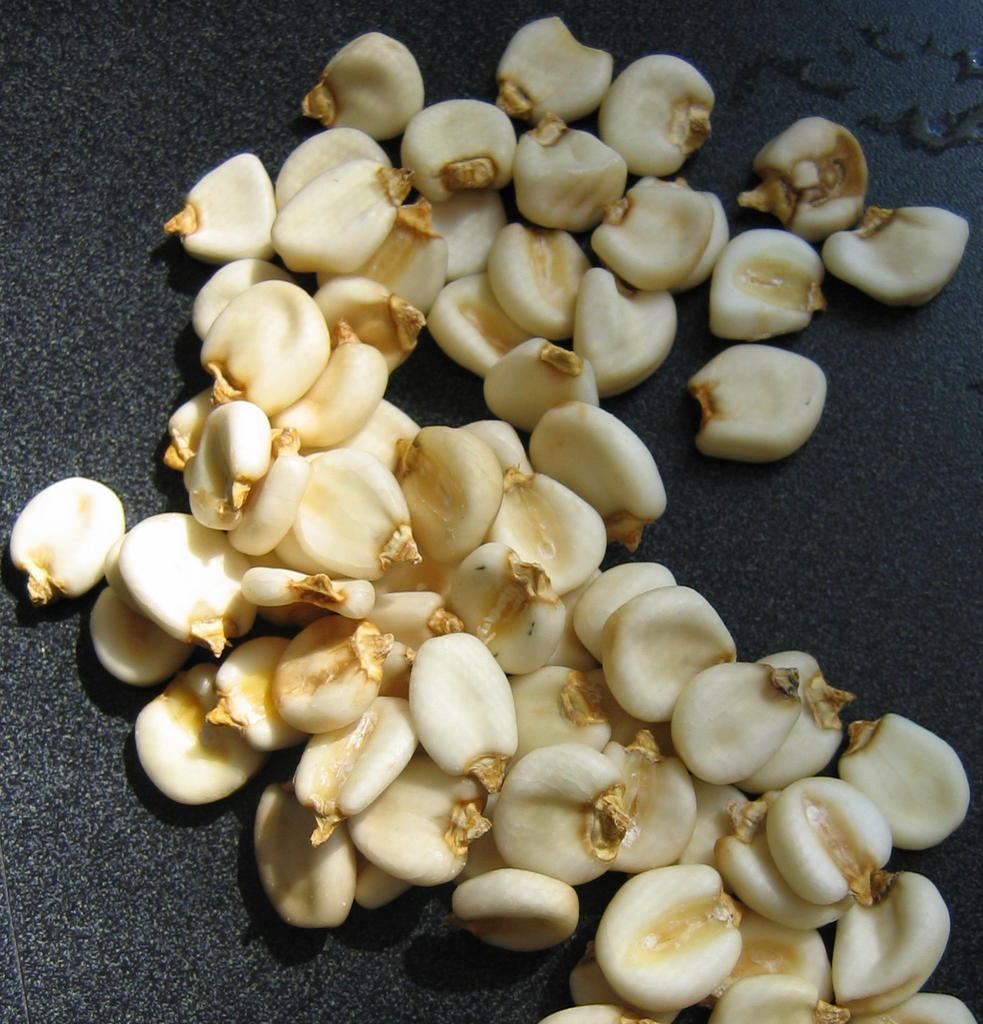 Imagine this: boiling potatoes in about eight minutes or so, resulting in mashed potatoes in ten minutes. Or collard greens that take all of fifteen minutes to prep and cook. Or a pot roast in forty-five minutes. Or a stew in fifteen.
Or a pot of savory pinto beans in ten minutes, ready to be mashed and fried with onions and garlic, or to be turned into soup beans.
Just about anything that takes all day to cook can be cooked in less than an hour with a pressure cooker. Imagine that. Less than an hour. And it tastes long cooked, too. Often, in fact, meats are more meltingly tender and moist coming out of a pressure cooker than they are if they are braised or stewed using classical methods, because the extra pressure involved dissolves the fat and gelatins in the connective tissue even more efficiently than simply simmering the meat does.
They work very simply: liquid is brought to a boil in the cooker, along with whatever food items are to be cooked therein. The cook puts the lid on the cooker, which has a gasket in it to seal it completely, locks it down in several ways, then brings the cooker up to full pressure--usually around 15 psi. Then the heat is turned down to low, and the food is left to cook for the necessary amount of time until it is done. Then, pressure can be released in two ways.
The quick release method, which is best used for vegetables and some meats, but never beef, is to simply open the pressure valve and let the steam out. Flick a button, (make sure the steam valve is pointed away from you and anyone you love) and in a great hiss, the steam comes jetting out. (If there are any cats under my feet when I perform this operation, they teleport themselves instantly elsewhere, because the sound of steam escaping the little vent is apparently the same sound as the Great God of Cats hissing His displeasure.) The other way to release the pressure is called the "natural release," which takes fifteen to twenty minutes. Basically, all you do is put the cooker off heat and let it cool down on its own. This is the method to use with beef; if you use the quick release method on beef, its will toughen because of the quick temperature and pressure inversion. (This isn't a problem with other kinds of meat, though I tend to let the pressure on lamb, venison or bison drop naturally, too.)
I know, I know. Everyone is scared of pressure cookers, and everyone knows a story about somebody's neighbor's Aunt Tillie who was making spaghetti sauce in her pressure cooker and it exploded, sending a geyser of boiling steam and scarlet napalm lava all over the kitchen ceiling where it showered down and gave cousin Bubba third degree burns and killed the Avery the cat with shrapnel.
Well, I am here to put the Aunt Tillie myth to rest along with Avery the cat (God rest his feline soul). The modern pressure cookers have a whole passel of safety measures built into them to keep the geyser and shrapnel scenario from occuring. The new pressure valves have failsafe devices built into them; in some brands, if the vent is clogged and the pressure rises above safe limits, there is a second pressure valve that will open to release the steam that builds the pressure. In other brands, a failsafe valve opens because a metal alloy that will melt at the precise temperature and pressure of a cooker about to go into the danger zone melts, opening the valve. The downside of one of those cookers is that you then have to replace the pressure valve.
My favorite brands are the Fagor and Kuhn Rikon, though I find the latter to be unreasonably pricey. My current cooker is a Fagor, and I am quite happy with it, and have been using it to death for the past several years with no problem.
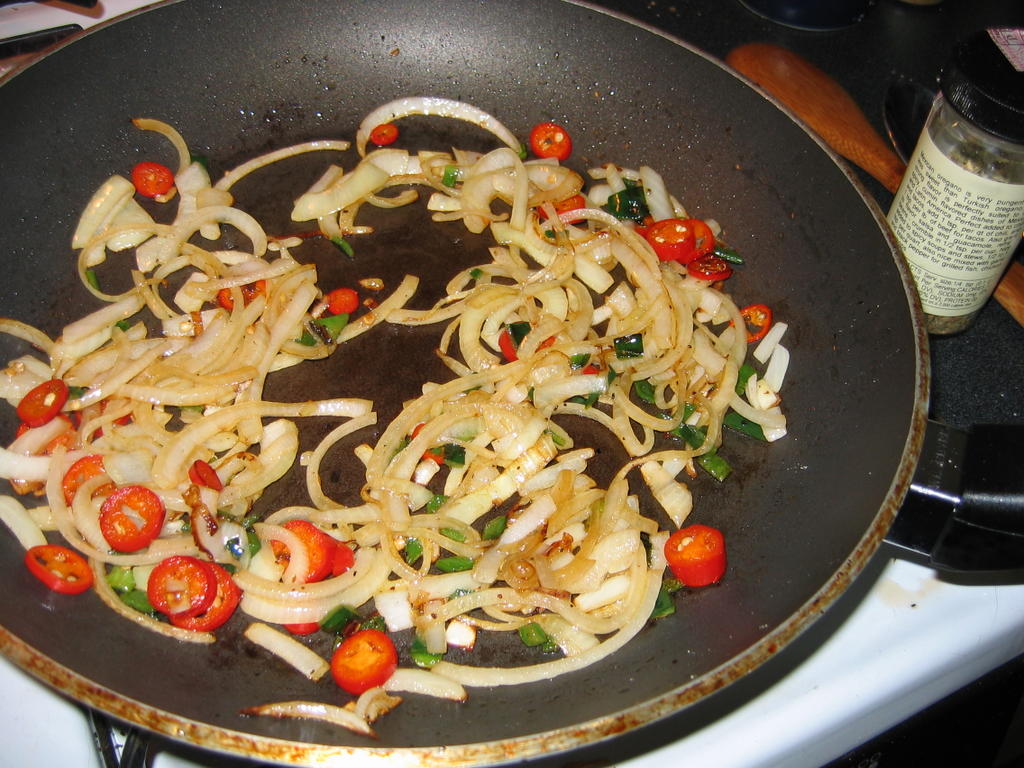 Cooking with a pressure cooker requires some finesse and practice, however. (At this point, some readers are probably thinking, "Well, why not use a crockpot--you just throw stuff in and walk away. Well, no you don't, not if you want good food to come out of it, anyway--there is finesse involved in crockpot cooking, too.) Mixed stews, in particular, require some forethought and planning; different ingredients cook at different times in the pressure cooker, so you may have to cook in stages.
Take, for example, posole.
Posole, for those who do not know, is a form of corn that has been treated with lime (the mineral, not the fruit) so that its hull can be removed. Then, the hull is washed away. At this point, the posole can be cooked up nice and pretty, ground up into fresh masa dough, or dried again, so that it can be stored and cooked another day. This is a Native American staple food of the desert Southwestern US and northern Mexico.
Southerners may be more familiar with it as hominy. Hominy is made the same way, though I suspect the corn varieites are slightly different. Hominy can be ground up into grits--the quintessential Southern comfort food, or it can be cooked whole, and it is often canned, and in a pinch, one can use canned hominy to make posole stew, but I think that the texture and flavor of the dried corn product is much superior.
Anyway, dried posole takes a long time to cook. You are supposed to soak it overnight (or you can use the quick-soak method--bring a half pound of it to a boil in three cups of water, boil it for three minutes and then set aside to soak off heat, covered for an hour), and then cook it for a couple of hours until it is tender. Well, I don't always remember to soak it overnight, and I don't always want to sit around and nursemade a pot on the stove for several hours, nor do I think far enough ahead to use the crock pot, so, I turn to my pressure cooker, which cranks out perfectly cooked posole in forty-five minutes every time.
But, seldom do I make just posole. I like to make posole stew with pork and pinto beans. (I am told that the pork was brought by the Spaniards, and the pinto beans are a Sonoran variant. And here I thought the beans were my own hillbilly innovation.)
But, unsoaked pinto beans take fifteen minutes to cook, and cubes of pork shoulder or butt take about eight to twelve minutes to cook. What to do?
Well, it is simple enough. Saute some of the onions, garlic and chiles (Barbara's Hillbilly Holy Trinity) in some bacon grease or olive oil until the onions brown, then throw in your posole and a good bit of chicken broth. Bring to a boil, slap the lid on, and bring up to pressure, then turn it down and let it cook for thirty minutes while you prepare the pork.
 To prepare the pork, take your other half of the Holy Trinity, get those onions about halfway to brown, and then dump in the pork that you have dredged in seasoned flour and brown it all up nice and and lovely. Add some herbs. When the onions are caramelized and the meat has a nice, reddish brown crust on it, use some beer to deglaze the frying pan, and then reduce the beer. Scrape everything from that frying pan into a bowl, or heck, just leave it in the pan, covered, off heat, to wait.
At that point, the timer goes off, you quick release the pressure, add the beans, bring to a boil, put the lid on and bring back up to pressure and cook for seven minutes. Quick release the pressure and then throw in the pork, and the tomatillos, and bring back up to pressure, and cook for about eight to twelve minutes.
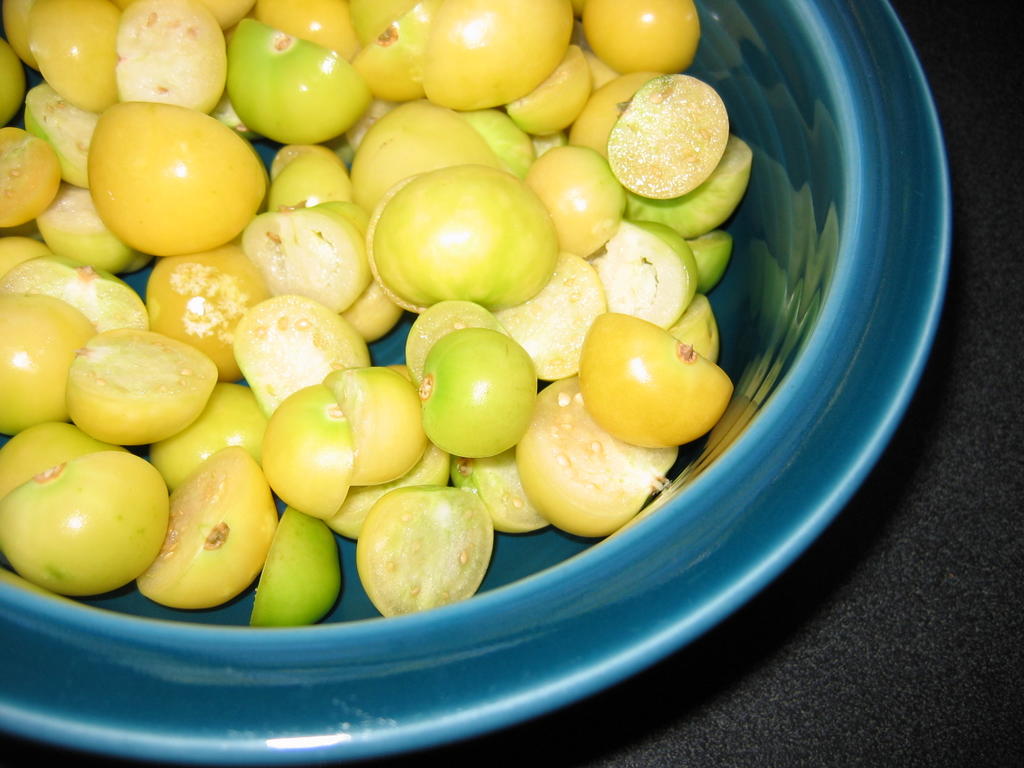 It is all a matter of timing. You end up with a savory stew in about forty-five minutes, and it tastes really, really good, especially if you have sweet, ripe tomatillos to add to it. If you don't have tomatillos, you can add fresh tomatoes (I bet those really fresh cherry tomatoes would be perfect), but I like the tomatillos better, because they add a honey sweetness along with a bit of a tang to the dish.
And while the final cooking is going on, you just slice up some scallion tops and fresh chiles, and roughly chop some cilantro for a garnish. If you want, you can grate up some queso blanco or jack cheese, too. A bit of cheese never hurt anyone. And if you want the broth to be thicker, just cook up a tablespoon of oil with a tablespoon of flour until it is smooth and bubbly, and add it to the boiling stew.
And that is it. Simple, almost sinfully so, and fast, but it tastes like you cooked it all day.
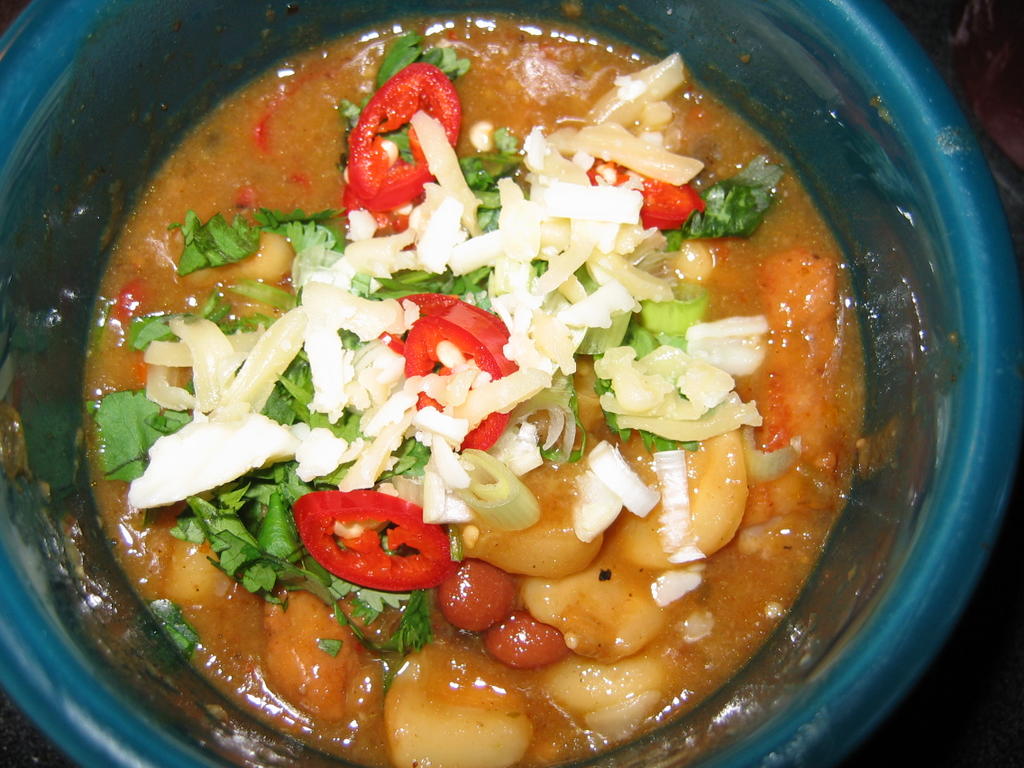 Pressure Cooker Posole and Pork Stew
Ingredients:
1/2 pound dried posole, rinsed, soaked overnight
2 large onions, sliced thinly
3-5 ripe serrano chiles, sliced thinly
1 poblano chile, finely diced
6 cloves garlic, sliced thinly
1 tablespoon bacon grease or olive oil
2 teaspoons adobo seasoning
1 teaspoon smoked Spanish paprika
1 pinch Mexican oregano
1 1/2 quarts chicken broth or vegetable broth
1 pound boned cubed pork butt or shoulder
2 tablespoons flour seasoned with salt, pepper, adobo and smoked paprika
1 1/2 tablespoons bacon grease or olive oil
6 ounces of lager beer (drink the rest yourself, or save it for something else, or rinse your hair with it--it makes it shiny)
1 cup pinto beans, rinsed and soaked or unsoaked
1 pint fresh, preferably really ripe tomatillos
3 scallion tops, thinly sliced
1 ripe serrano chile, thinly sliced
1 handful cilantro leaves, rinsed and roughly chopped
handful of grated cheese (optional)
Method:
Drain the posole, rinse and drain again.
Divide your Holy Trinity ingredients into halves, setting one set of them aside.
In pressure cooker, melt bacon fat or heat olive oil on high heat. Add onions and chiles, and saute until onions turn medium brown. Add garlic, and cook until onions caramelize. Add seasonings, chicken broth and posole. Bring to a boil, put the lid on, lock it down and bring up to full pressure. When full pressure is achieved, turn down heat and set timer for thirty minutes.
In a frying or saute pan on high heat, heat bacon grease or olive oil, then cook onions and chile until onions are golden brown, then add garlic. Lower heat slightly and continue cooking. Dredge pork in seasoned flour, and when the onions are medium brown, turn heat back up, and add meat to pan. Allow meat to brown, stirring frequently, until onions are a mahogany color and the meat has a reddish crust on it.
Deglaze the pan with beer, and cook down until liquid reduces to a thick syrup. Turn off heat and set aside.
When timer goes off, quick release the pressure and open the cooker. Add drained and rinsed beans, and bring to a boil, lock lid in place and bring to full pressure. Turn down heat to low and set timer for eight minutes.
While beans are cooking, take the papery outer covering of the tomatillos off and rinse the fruits. Cut them all into halves if they are small, quarters if they are large.
When timer goes off, quick release the pressure, put pork and all juices from the pan in, dump in the tomatillos, bring to a boil, lock lid down, and bring to full pressure again. Turn down heat, set the timer for about eight minutes, and allow to cook. When timer goes off, quick release pressure and open cooker. Test all ingredients--the meat should be fork tender, the beans should be tender (blow on one in a spoon--if the skin splits under your breath, it is done) and the corn should be tender-chewy. If everything is done to your satisfaction, then great, you are done (unless you want to thicken the broth.) If something still needs cooking, bring it to a boil, lock down the lid, and bring up to pressure and cook about five minutes more. Repeat as necessary. (As you gain experience using a pressure cooker, you will begin to have a better feel for how long things take to cook.)
To thicken the stew, in the frying pan, melt one tablespoon of bacon grease or heat olive oil on high heat. Add one tablespoon of flour (use up what is left from dredging the meat) and stir into the hot fat. Cook, stirring, until thick and bubbly, then add to the boiling stew, and stir until thickened.
Top with garnishes and serve.
Notes:
If you want your posole to "bloom," that is, if you want the endosperm to explode into flower-shaped balls as it cooks, you must remove the pointed tip cap from the seed after it has soaked. If you leave it intact, the corn kernel will stay in its shape even as it cooks fully. I am too lazy to remove the tip caps, so my posole never looks like "underwater popcorn," as I have heard it aptly described by a child.
I used Goya's Giant White Corn posole in this recipe, but there are many other kinds of posole available. When I have used up what I have, I want to try this red posole, and maybe some blue posole.
If you do not eat pork, you can substitute lamb in this recipe and it is utterly delicious.
If you do not eat meat, you can substitute a nice firm mushroom for the meat, or just make a corn and bean stew. In New Mexico, meatless versions of the dish are often used as a side dish for holidays.
You can use whatever chiles you want with the dish; I just happened to have poblanos and ripe serranos. I liked the sweetness the ripe serranos added.
You can add about a teaspoon of honey to bring out the natural sweetness of the pork. Just add it at the same time you add the pork. (You can use sherry or broth instead of the beer for the deglazing operation as well.)
You can add sweet bell peppers to the dish if you like, along with the chiles. I think ripe ones taste better than green ones in this dish, however.
You can leave out the beans, or add different beans if you like. Cannelini beans are very nice, though if you use white corn posole, there is no color variation. Black beans might be fun.
To learn more about pressure cookers, I suggest Lorna's Sass' books, Cooking Under Pressure and Great Vegetarian Cooking Under Pressure. While I have never used her recipes as written, I have found that the general information in her books is very good, and the cooking time chart for dried beans in the latter book is the best thing since sliced bread. She is very methodical and her instructions are approachable, and I have used her recipes as a jumping off point for constructing my own pressure cooker specialties for several years.
Tuesday, September 06, 2005
Food in the News, Again
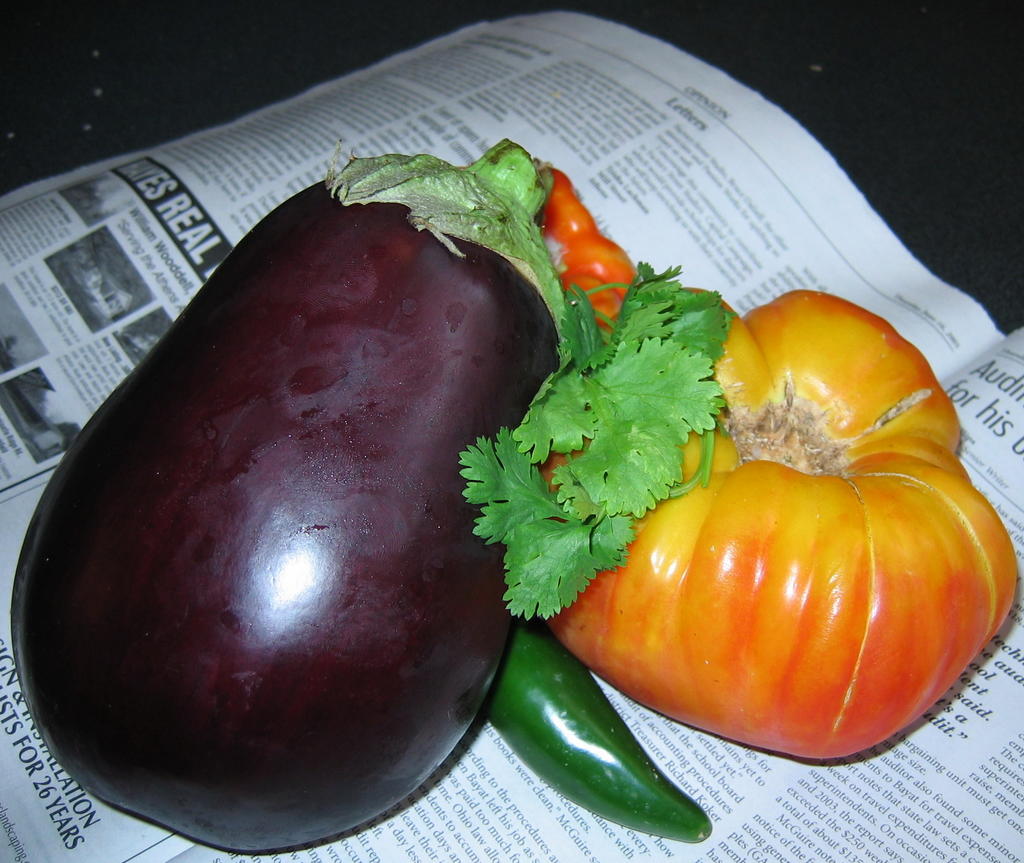 Family Meals Good for Kids
That may seem like a "well, duh!" sort of declaration, but apparently lots of researchers have been studying the idea that families who dine together produce healthier, happier, more successful children.
This research supports the conclusion that family meals are important to close familal communication and bonding and leads kids to model the behavior (and eating habits) of their parents.
The Columbus Dispatch reports on the recent studies linking family meals with lowered rates of drug use and higher grade point averages; however the story also notes that only 52% of US families eat dinner together regularly, even though three quarters of respondants felt that it was important to have family meals.
The June/July 2005 Eating Well Magazine claims that only one third of American families eat together regularly, however, many benefits await the lucky kids who do eat with their parents seven or more times weekly.
"With pressures on parents to churn out high-achieving kids by loading them up with extracurriculars, says Doherty, opting out of these activities in favor of family dinner “means going against the norm.” In fact, national surveys suggest that only about a third of American families usually eat dinner together.
Ironically, family meals might do more for children’s well-being and achievement than any soccer program or French-immersion class. When Doherty’s colleagues at the university’s Center for Adolescent Health and Development surveyed 4,746 Minneapolis/St. Paul middle school and high school students for Project EAT (Eating Among Teens), they found that the kids who sat down to meals most often with their families—seven or more times weekly—tended to have higher grade-point averages and were more well-adjusted in general than those who ate the fewest family meals (two or fewer per week). They were less likely to feel depressed or suicidal, to smoke cigarettes or use alcohol or marijuana—even when the researchers factored out issues like race, family structure and social class. “Family meals were a potentially protective factor in these kids’ lives almost across the board,” declares epidemiologist and study co-author Diane Neumark-Sztainer.
What’s more, children who eat regular meals with their families also eat more healthfully, according to Project EAT and other studies—in general, taking in more fruits and vegetables and calcium-rich foods, fewer soft drinks and snack foods. They may also have a lower risk of disordered eating: Neumark-Sztainer and her colleagues noted fewer reports of extreme weight-loss diets or binge eating in kids whose families placed a high priority on regular family meals. “The associations were especially strong among girls,” she noted."
So what is the moral of these two stories?
If you have kids, eat with them. Preferably cook with them. Stop with the bazillions of after-school hyperfocused extracurricular activities, and sit your butts down for at least one meal a day together. Your kids will turn out better for it, and who knows?
Maybe you will turn out better for it, too.
(I am betting that you will.)
The Restaurants of New Orleans
When I was cooking the nam sod on Saturday night, Bry informed me that Cafe du Monde is still standing in New Orleans, which lifted my spirits a bit. I've never been there, but I do love their chicory coffee and have made beignet more than once to have with said caffeinated gloriousness; the knowledge that the font of coffee and fried dough goodness was yet standing made my heart soar. Other landmarks of the French Quarter are yet extant, though of course, damaged, probably because the Quarter stands on fairly high ground.
I've been waiting to hear news of the other famed restaurants of the city, and picked up a couple of leads here and there. In the past day, however, I have come across news stories specific to the fate of some of the jewels in the crown of a great food city.
At Decanter magazine's website, I learned that "New Orleans restaurateurs fear for future of culinary 'Jewel of the South'" With a headline like that, one expects misery and pessimism, but on the whole, the chefs and restaurant owners of New Orleans plan to rebuild. Susan Spicer, of Bayona, probably lost everything in her restaurant including an 8,000 bottle wine collection in the attic. However, she resolved to make certain that the culinary heritage of the region is not lost.
"I have no idea what the future holds for restaurants down there. But I believe that somehow we will band together to keep the food culture alive and well, even if it means feeding emergency, rescue and construction workers on po' boys and red beans for a year or so."
You go, woman. That's a perfect example of the spirit of the South: tenacious and tough, yet gracious and giving, all at the same time.
Decanter also reports that culinary professionals around the US are putting together fundraisers and job information for the displaced restaurant workers of New Orleans.
This morning's New York Times featured an article entitled, "Crawfish Etouffe Goes into Exile."
While the expected dire statistics are quoted liberally (nearly 10 percent of the labor force worked in the 3,400 restaurants that once fed the city), the overall tone of the piece is one of hope and optimism.
"We have been instructed by the matriarchs that we will rebuild," Brad Brennan, of the family that owns the famed Commander's Palace and eight other restaurants, said from his office at Commander's Palace Las Vegas. "There was no hesitation."
The matriarchs are Mr. Brennan's aunt, Ella Brennan, and his mother, Dottie Brennan, who was evacuated to Houston, where the family also has a restaurant.
Mr. Brennan said it was too soon to know the extent of the damage, but all of the 800 employees of the Brennan restaurants were accounted for.
John T. Edge, southern food historian, author and founder of the Southern Foodways Alliance, has been working hard to compile lists of chefs and other members of the alliance who are accounted for. In addition the alliance has partnered with the James Beard Foundation and Open Table, a restaurant service, to contact restauranteurs around the US in order to create a job bank for those put out of work by Katrina. (A link to the job bank is on the home page of the James Beard Foundation website.)
I know the media has really focused on the worst aspects of Katrina: the death, destruction, lawlessness and looting. The scope of the tragedy is terrible, and words cannot really convey them effectively, so it makes sense that the reporters return to these horrific aspects of the ever-unfolding story of Hurricane Katrina. But, at the same time, it is nice to see not only the worst in humanity being brought out by this tragedy, but also the best wualities of human nature also coming to the fore.
Restaurant people are good folks. When you work together in the close confines of a kitchen nearly every day for over eight hours a day with folks, they become your family. You bond with them in ways that you don't bond with coworkers in other professions, and so when something happens, bad or good, you all share in that fortune. This naturally extends to other restauranteurs; in a lot of ways, we are seeing proof that the restauranteurs in the US are one huge family, who give aid and support to each other.
That story made my day.
Eating People Made Cows Mad?
Now, you knew I couldn't do another installment of Food in the News without having something about BSE in here, it being my favorite political hobbyhorse, (hobbycow?) to ride. And really, if it weren't for the fact that there seems to be a new story about BSE coming out every week or so, I wouldn't include it here. But there is always new information coming out and who am I to withhold information?
The Washington Post reported last week that there is a new theory of how BSE came into existence back in the 1980's, and it is a doozy. They picked up the story from the British medical journal, The Lancet, which reported that BSE may have arisen from the practice of feeding British cattle meal ground from bones which had been contaminated by human remains of victims of a human variant of the disease.
Yeah, basically, it may have come about because somebody unknowingly fed some cows Soylent Green and it went all wrong. (Of course, if you take into account the fact that cows don't naturally munch on bones and that maybe they shouldn't have been eating any bones, much less human bones in the first place, well, you know what I am going to say. It was all a dumb idea in the first place.)
The gist of it is this: back in the 1960's and 70's some brilliant person in the UK decided to give cows feed made partially from bones. But there weren't enough bones hanging around in the UK to feed all the cows, so they sent to India to get some more. In India, it is customary to dispose of human remains in the sacred Ganges river. It is also customary for members of the lower castes to make money by collecting bones and animal remains from around the banks of said river to sell for use in fertilizer and animal feed production.
In those decades, apparently lots of bones, bone bits and remains were shipped to the UK from India to be used in cattle feed. A couple of British scientists think that it is possible that human remains of victims of the human form of transmissible spongiform encephalopathy, Creutzfeldt-Jakob disease, may have been mixed in there and thus was eaten by the cows and then led to the rise of BSE, which then was passed on by feeding blood and bone meal from infected cows to other cows.
I am not sure about this theory. It is possible, but CJD is a fairly rare disease; scrappie, the form of the disease that infects sheep is much more common, so I find it more likely that it was diseased sheep remains ground into cattle feed which started the whole Mad Cow ball rolling.
But, it has a kind of science-fiction/horror symmetry that is alluring. Human bodies infected with a human disease are fed to cows who develop a bovine form of the disease, which is then fed to humans who develop a variant on the first disease which started it all.
But whatever started it, I can say this:
If people just recognized that cows are vegetarians and shouldn't be eating meat or bones, we wouldn't be in this mess, now would we?
Okay, and just because I find this story to be too weird to ignore:
Willy Wonka's Nightmare: Nazis Planned to Make Chocolate Bombs
I found this one on slashfood, and it was too freaky to pass up.
ABC News reported yesterday that, newly released files from MI5 reveal that the Nazis had plans to make grenades disguised as chocolate bars. (Talk about a lot of bang for your buck.)
These devices were to be made of steel that was then coated in real chocolate, and would be detonated when an end was broken off.
They also had plans for exploding "Smedley's English Red Plums in Heavy Syrup."
No one apparently knows if any of these explosive confections were ever made, however.
Which is just as well, since I am having visions of some Nazi chocolatier cum mad-bomber cooking up insidious delectables a la the film, "Chocolat."
Only instead of seducing people into throwing off the shackles of conventional behavior and the status quo, these confections would cause widespread death and mayhem.
Like Willy Wonka in jackboots or something.
Okay, I am going to step away from the keyboard for a while and not think of chocolate-making Nazis.
It is hurting my head.
Monday, September 05, 2005
Disaster Relief for New Orleans Hospitality Workers
In light of that, I am happy to see that not only is there a relief fund being set up specifically for the hospitality workers who put their all into making the Big Easy one of the most gracious foodie paradises our country had to offer.
Go to the Commander's Palace website and read about the fund, and maybe throw a donation in that direction. (And while you are at it, don't forget The Red Cross, America's Second Harvest and Noah's Wish.)
Once you are there, you will notice that they have also set up a message board for the restaurant workers affected by Katrina, so people can get in touch with each other and pass information back and forth about who is where, what is happening, and how everyone is doing.
Kudos to the good folks at Commander's Palace for their work on behalf of the entire hospitality community in New Orleans.
Don't Fear the Fish Sauce
 I am continually amazed at how fearful salty fermented fish squeezings can make people.
Every time I have taught a class in Thai cooking (which has been many times over the past five years or so), I have had one or two people hang towards the back of the room, and when I launch into my spiel about how necessary fish sauce is to getting that correct "Thai flavor" in their cooking, one of them puts up a tentative hand, and in a quavery voice asks, "Do you -have- to use fish sauce? I mean, is it -really- necessary?"
I try very hard not to sigh or bark back at them, "What did I just get through telling you? Weren't you listening?"
Instead, I very patiently go over why fish sauce is necessary in the making of Thai food, and how even some Thai vegetarians even use it, but that if it really bothers you or if you are allergic to fish you can use Thai soy sauce, but be aware that your dishes will not taste like the ones you eat out in Thai restaurants, because you will be lacking a crucial ingredient.
This usually causes the fearful ones to settle down until I start doing cooking demonstrations and pour a liberal amount of fish sauce into a hot wok. When the scent of boiling fish hits them in a cloud of steam, the fearful ones usually step back and snivel, their faces screwed up into expressions of disgust and mistrust.
I usually resort to humor at that point, and tell folks that when I cook Thai food for the first time for guests, I always make up a pretext to send them out of the kitchen when it comes time to whip out the fish sauce and throw it in the wok. For instance, I always send my Mom out to the porch for a last cigarrette before dinner is ready. Any number of friends have been sent out on various pretexts: go set the table, feed the dog, look at the garden, oh, wow, there is a deer in the yard, go look--you name it, I have used it.
But that is only for the squeamish and uninitiated, and that was only done years and years ago when I was less confident. These days, my friends and family are old pros and they know, that no matter what smells may issue forth at intervals from my stove, the end result is always divinely edible, so they wait it out in anticipation.
Some of them, like me, have learned to salivate when they smell the fish sauce spashed against a hot wok.
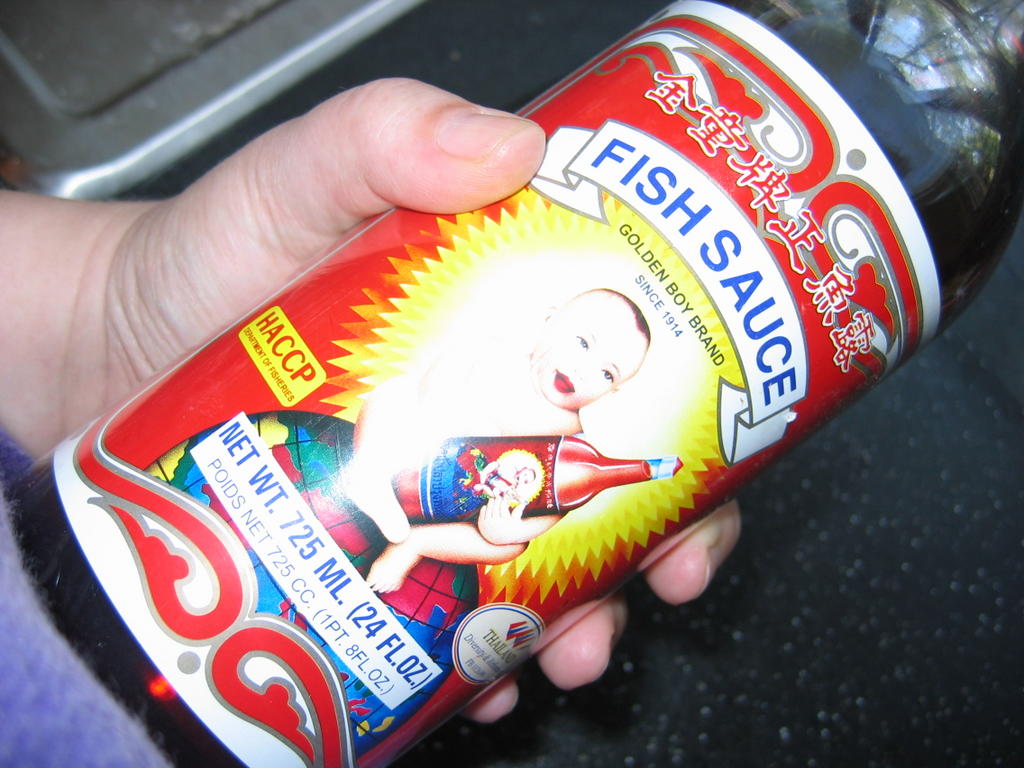 Because here is the deal: fish sauce grows on you. It may not smell to conventional Western tastes, what one would call good, but after a while, it doesn't smell bad, either. And then, as you cook with it more and more, and your palate and nose begin to associate the smell of fish sauce with the delicious results of pad thai, green curry or tom kha gai, you begin to actually like the smell of it. It becomes comforting, homey and appetizing.
Once you start making dipping sauces out of it by combining it with sugar, lime juice and chiles, it starts to smell and taste downright good in its own right.
At that point, my friend, you will know that you have learned to love that which you once feared. And that is a good place to be.
Because fish sauce can then become a secret ingredient in your kitchen arsenal. Of course you will use it in Thai food and Vietnamese food, because you can't make the stuff without it. But after you learn what beautiful, mysterious things it can do to food, you will find yourself bringing it out to use in dishes that never saw southeast Asia, except maybe in a travel brochure.
I have used it to pick up a few Italian sauces that tasted somehow flat. This sounds disgusting and surprising, until you take into account that fish sauce is made from salted, fermented anchovies--a wee fish that is used often to round out the flavors in Italian foods. I have added it to vegetable soups that lacked a savory depth, probably because I didn't use a good soup bone in making them.
I have not gone so far as to add it to any desserts or breads, but you never know. I once added duck sauce to a batch of cookies, and invented a new recipe that people adore, so watch out.
Fish sauce may well appear in a tart someday.
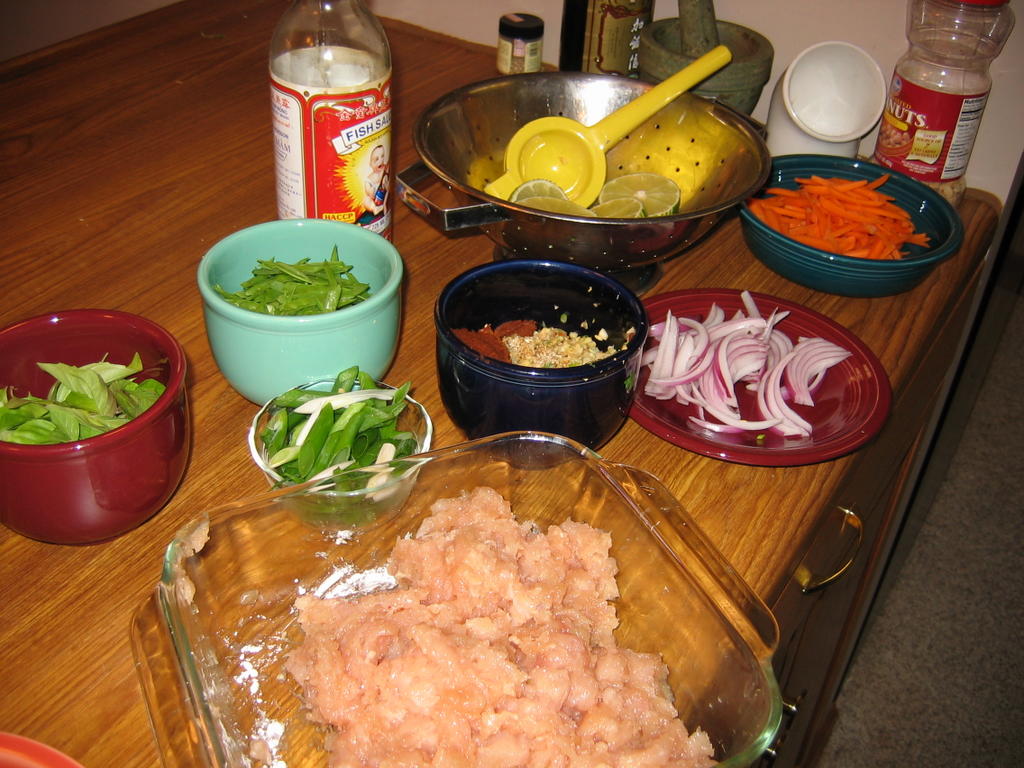 But, for now, I tend to prefer to use fish sauce for its intended purpose, which is to make Thai food addictively, splendiferously, delectable.
This Saturday, I made a little Thai/Chinese supper for the friends; I was supposed to make steamed buns, but after the ordeal of nearly breaking my nose by closing the hatchback of our car in it (I knocked myself out for a few seconds--it was quite exciting--I scared Zak to death and irritated myself because after that, I was not only hobbling with a very bruised foot, I had a cut and a bruise on the bridge of my nose), I could not face playing with bun dough.
But, I found when I awoke on the dirty floor of our garage, with blood coming out of my nose and Zak frantically shaking me, was that I had a sudden craving for nam sod.
Nam sod is a wonderful Thai salad that is supposed to be made out of minced or ground pork. It is also supposed to have only some slivers of red onion, some herbs and minced ginger and chiles in it, and is garnished with crushed peanuts. The dressing is fish sauce and lime juice, though I have had it with sugar added to it, though I prefer the flavor without the sweetness.
My version, however, is made with hand minced chicken breast, julienned snow peas and carrots in addition to the red onion, lots of finely minced ginger, garlic and chiles, and has lots of herbs and sprouts to garnish it. I also discovered on Saturday night that really sweet, ripe cherry tomatoes are absolutely to die for as a garnish.
It tastes good the way I make it, even if it is so different from the original recipe that I shouldn't even call it nam sod. But I wouldn't know what else to call it, so there we are.
Besides, I patterned mine off of the nam sod they had on the menu at Siam Square in Providence, Rhode Island, which to this day, is still my favorite Thai restaurant anywhere, so there is precident for some of my unorthodox presentation. They, too, used minced chicken, which I know they minced by hand, because every time I ordered it, I could hear the chef pounding away at the chicken with two cleavers to mince it up finely and quickly. It wasn't until I was well and truly addicted to it that I found out that it is supposed to be made of pork. When I tried it with pork, I didn't like it, so, here's the deal--you come to my house, I make nam sod--it is made with minced up chicken, and that is the way it is.
The slivers of red onion--that is orthodox nam sod. The slivers of snow peas and baby carrots--that is classic Barbara. The cilantro (and sometimes mint, when I have it) is traditional; the Thai basil and lime peel are my own innovations. The lightly crushed peanuts belong there; the tomatoes came about because they are in season, and shimmer like little gems when cut in half and sprinkled along the dish.
They also taste fantastic.
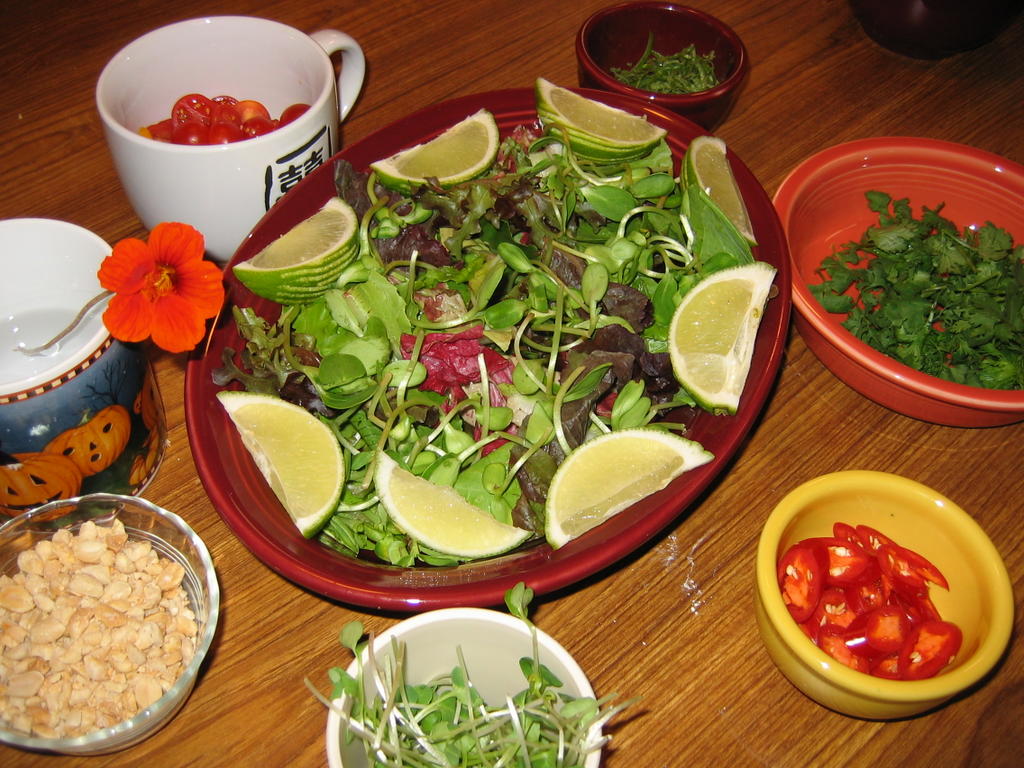 Edible flowers such as nasturtium blossoms are not a necessity to the dish, but they sure do look pretty. Lettuce in some form, however, is required. I like to use a salad mix with as many different colors, textures and flavors of greens as possible. As shown to the left, I have a mixture of leaf lettuces with romaine, radiccio and sunflower sprouts in the serving platter. I edged the platter with lime wedges so diners can snag a wedge and add more lime to the flavor mixture as they like.
I realized as we were eating the nam sod tonight, that this is yet another recipe that I learned at the behest of a friend, who upon visiting Providence while I was in culinary school, tried it at Siam Square and fell in love with it. In order to ensure that she would get to eat it again, she entreated me to learn how to make it, so I ordered it a few times, looked up some recipes and then started experimenting in the kitchen. Eventually, I came up with the version that I make to this day, and she said she liked it better than the one she had at the restaurant.
 At any rate, this is a very simple dish, and it can be dressed up or down with as many garnishes as you like. I loved the serrano chiles and cherry tomatoes in this version, and the radish sprouts really added a nice cooling zing to the moderately spicy dish.
You can also make it as hot and spicy as you like, simply by adding more Thai chiles or red curry paste to the dish. Or, you can add less.
One thing you absolutely must not skimp on is the fish sauce. You must use a lot of it. And use good fish sauce. I prefer Golden Boy brand--you can recognize it by the little laughing Buddha-bellied baby boy on the label. He is a fat, happy little guy, holding a bottle of fish sauce in one hand and giving a thumb-up sign with the other while grinning like a big ole 'possum. You can't miss him. At any rate, that is one of the best fish sauces on the market--it has a very light flavor, and is tangy and salty without being overpoweringly so.
 Nam Sod
 Ingredients:
1 1/2 pounds boneless skinless chicken breast
2 tablespoons fish sauce
1 1/2 tablespoons cornstarch
3 tablespoons peanut oil
5 cloves garlic, minced finely
1 1/2" cube fresh ginger, peeled and minced finely
1-8 Thai chiles, minced finely
1 tablespoon Thai red curry paste
1 tablespoon cilantro stems and roots, washed well and minced finely
1 teaspoon freshly ground white peppercorns
fish sauce, to taste (about 2 tablespoons or so)
1 cup julienned slices carrot
1 cup julienned slices red onion
1 cup julienned slices snow peas (I cut them on the diagonal)
1 cup packed Thai basil leaves
1/4 cup mint leaves (optional)
zest of two limes, in thin strips
juice of two limes
1/2 cup lightly crushed peanuts
5 cups mixed greens, torn into bite sized pieces and laid on a serving platter
1 cup cilantro sprigs, rinsed and dried
3 red ripe serrano chiles, sliced on the diagonal (optional)
1 cup cherry tomato halves (optional)
1 cup radish sprouts (optional)
lime wedges for serving
Hot steamed jasmine rice for serving
Method:
Trim all membranes and most of the fat from the boneless skinless chicken breasts and remove all tendons. Cut the meat into a rough dice, then mince by hand. It should be unevenly done, with some larger pieces and some much finer--this is why it is easiest to do this by hand. Using a food processor or buying ground chicken results in a texture which is too uniform. (In order to see an example of of mincing chicken with two cleavers, there is a reference photograph in my post about minced chicken in lettuce cups.)
Mix chicken in a bowl with fish sauce and cornstarch and set aside in a bowl while prepping the vegetables and garnishes
Heat wok until smoking, add oil. When it is very hot, add minced garlic, ginger, chiles, curry paste, cilantro, and peppercorns and stir fry until very fragrant--about one minute. Add chicken all at once and stir fry, chopping at the chicken with the wok shovel to get it to stop sticking together. When chicken is half done (when roughly half of it is white and half is transluescent pink), add fish sauce.
When chicken is mostly done, add carrots and stir fry about thirty seconds, then add onions and stir fry until chicken is done. Add snow peas, herbs, lime zest and the juice of two limes, and continue stir frying until the herbs begin to wilt--about thirty or forty seconds.
Add half of the peanuts and stir to combine.
Pour contents of wok onto serving platter and mound decoratively. Scatter cilantro sprigs around and over mound.
Garnish with remaining peanuts and whatever garnishes you choose to use.
To serve, flatten a serving of rice on a plate, and scoop up nam sod, being certain to get some of the lettuce leaves, and put on top. Serve with a lettuce wedge on the side.
Notes:
If you do not have homemade curry paste in your freezer (I realize not everyone does), you can use Mae Ploy's red curry paste. It comes in a resealable plastic tub that seems to last forever in the fridge.
You can make this as hot or as mild as you like depending on how many Thai chiles you use, and how much red curry paste you use. This batch was pretty mild--I actually used no Thai chiles whatsoever in making it and use fresh local serranos, which were mild even for serranos, and the curry paste.
Nasturtium blossoms make really stunning garnishes to top this recipe--especially since they taste nice and peppery, which goes well with the dish.
Saturday, September 03, 2005
Weekend Cat Blogging: Animal Rescue Charities
 Grimalkin and Ozy are looking cozy in these photographs we took of them in our old house last year, but that is because they had a house to live in and a big pillow to lay on. (They still have a house, but it is a different one. That pillow, however, is long gone, I am sad to say.)
While I still urge everyone to donate to the American Red Cross and America's Second Harvest to help take care of the thousands of people devastated by Hurricane Katrina, I would also like all the animal lovers out there to remember the displaced pets of that area.
Plenty of cats, dogs and other companion animals are without homes, food or shelter, and are often separated from their families. And many evacuees are traumatized by having to leave their pets behind, as reported on CNN.
So, this week's Cat Blogging post is dedicated to giving links to some charities which are working to help save the pets of New Orleans, Alabama and Mississippi who are in need.
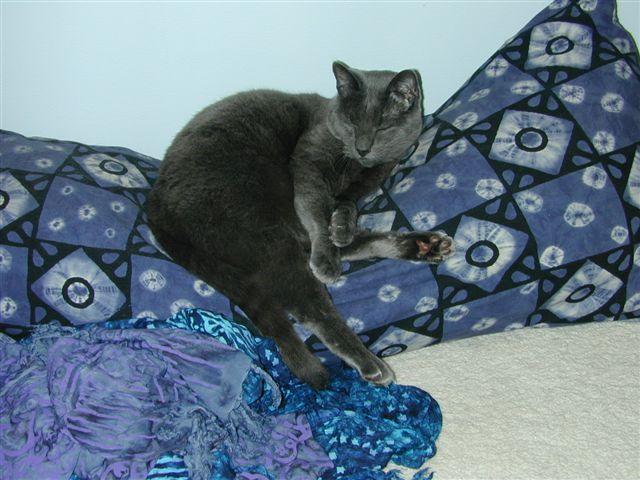 Noah's Wish is an organization dedicated to helping domestic animals who are caught in the middle of natural disasters. Friends of mine tell me that these folks do good work, so take a look at their website and maybe donate a little bit of cash, maybe the amount you would spend on a movie or dinner out.
They have already set up an emergency animal shelter in Louisinana and have an address where individuals can ship or drop off supplies such as food and medicines if you are in that area and want to help. They also offer volunteer training for those who are interested in helping out.
The Humane Society of the US is also working to help out the companion animals affected by Katrina. I don't think I need to tell you who they are--their good works on behalf of domestic and wild animals is well known.
The HSUS also has information on disaster preparedness for your pets with lots of useful tips on how to safely evacuate and house your pets in the case of natural disaster.
You all know who the ASPCA is, or at least, I figure you do. The American Society for the Prevention of Cruelty to Animals also has a disaster relief fund set up to assist organizations and animal shelters who are there for the animals caught in the floodwaters of Katrina.
For more links to more pix of lots of other food bloggers happy, healthy and adorable cats, check out Clare's place and gaze upon her adorable Kiri in a sailor suit.
Thursday, September 01, 2005
Hurricane Relief Funds
Full of history and a unique, life-loving culture, New Orleans is one of the cradles of jazz, and is a place that I always dreamt of visiting from the time I was small. I wanted to walk the square where Marie Laveau put on her Voodoo rituals, and dine on the spicy creole foods that were famous the world over. I wanted to dance to syncopated rhythyms of a blaring trumpet in the French Quarter, and I wanted to have my fortune told by Mambo Miriam at the Rampart Street Voodoo Temple. I wanted to eat beignets and sip bitter chicory coffee, and just watch people as they bustled past, their heads filled with thoughts, dreams and wonders of which I could only imagine.
My girlhood dreams may never come to pass.
And worse than that--the people who cook that glorious food, who play the raucous music, who bare their breasts and party in the streets crying, "Laissez le bon temps rouler!" are suffering. Some are dead and dying, and others are struggling to survive the aftermath of what may turn out to be the greatest natural disaster we have known in the United States.
The conditions in the shelters in New Orleans are horrific; there is very little food, water and medicine available to help those who need help desperately now.
So, that is why I am asking anyone and everyone who reads this blog to take the time to donate to the American Red Cross and America's Second Harvest.
Please, open up your hearts to the thousands of people who have had thier homes, businesses, and jobs taken away.
Thank you.
August Flows into September: Will You Still Eat Locally?
 Well, I meant to talk a bit about the end of the August Local Eating Challenge yesterday, but life, in the form of a possibly broken foot, intervened. I took a tumble in the street yesterday, and have since been keeping my foot on ice, and elevated to no avail. Yes, I will be going to the doctor tomorrow, to have it x-rayed.
But on to more interesting things than my silly foot and its peculiarities.
Yesterday was the last day of August, so technically, the August Local Eating Challenge is at an end.
However, since I try all year around to obtain as much of my family's food from local sources, my adventures in local eating will continue. I am pretty excited by some of the discoveries I made over the month, from the local tofu to the Holmes County, Ohio dairy products, so I am pretty psyched to continue my food sleuthing over the next season.
Also, as the photograph above attests, the Athens Farmer's Market is starting to fill with the bounty of late summer and early autumn: tomatillos, onions, apples, greens, sweet potatoes, serrano chiles, elephant garlic, apples, pears and bitter melons. Yes, bitter melons!
Hopefully, this evening we will have chicken with bitter melon, made from mostly local ingredients. That is, if I am not in the ER having my foot x-rayed. Zak is being insistent that I go today.
At any rate, I'll continue the series, "The Locavore's Bookshelf;" I could only read so many books in one month, and I have several more titles I would like to feature. I never got around to doing my in-depth articles on the Athens Farmer's Market, or on local businesses and farmers; there were too many back to school errands and paperwork bits to carry out for me to do as much writing as I wanted. That is no matter--I will do them as I come to them, throughout the year.
I still am curious to see if I can get a hold of locally grown and ground flour, and I would like to know if anyone around here grows corn that I can treat with lime and grind into my own masa. As the year turns, I will find these things out and report on them.
 My feeling is simple--eating local is not just something that I strive to do for one month out of the year. It is what I do, as naturally as breathing. Sure, it would be simpler if I just did all of our shopping at the local Krogers, but it wouldn't be as much of an adventure, nor would dinner taste as good, nor would I trust it to be as healthy and nutritious as the foods that I find produced locally.
Besides, I feel good every time I visit the farmer's market and "spend the time of day" as they say in the South, with the farmers and vendors. With every visit to the North Market in Columbus, I strengthen the bonds I have with the farmers who raise the beef, pork, goat and lamb we eat. It is good to create community in this way--it feels good knowing the people you buy your food from. It is fun to hear about what is going on in their lives and have them ask after you and your kids.
Human connections are as necessary for us to live and thrive as food is; eating locally satisfies both of those hungers.
I hope that everyone who participated in this challenge will go on to try and eat more local foods not just for one month out of the year, but for the rest of their lives, and in doing so, become a little closer to the folks who grow and produce that food. Anything we do that helps strengthen our bonds of kinship and community to other humans is a blessing.
Anyway, thanks for following along with me on my local foods journey--and I hope that in the months to come, I can uncover some more local food gems to share with you.

