

Wednesday, November 30, 2005
Barbara vs. The Raw Food Fad
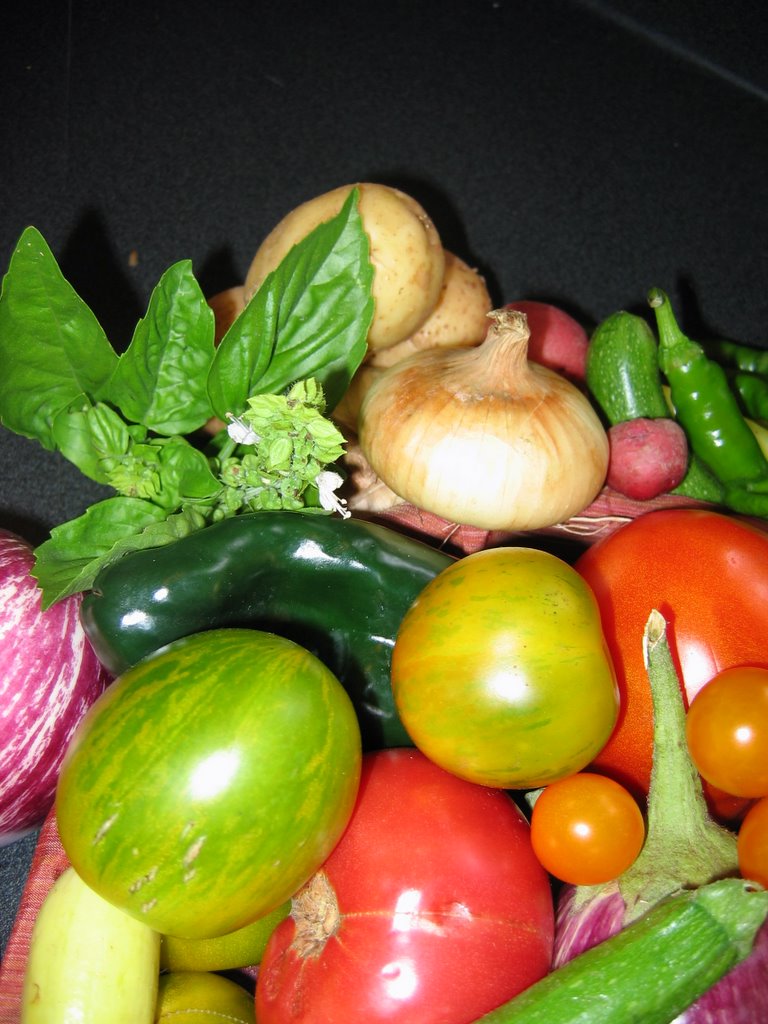 I love vegetables.
In fact, I was just now, not five minutes ago, merrily munching on some raw carrots.
But, the fact is, I cannot stand raw food faddists, or the spurious health claims that they make.
Why is this?
Well, I'll tell you.
I have some experience in raw foods, because when I was a personal chef, a pair of my clients were raw food faddists. And if I had known when they called me up to hire me, how flaky their nutritional ideals and beliefs were, I would never have worked for them.
Because, when they hired me, they told me they were vegans.
Vegans! Great. I love vegans. Vegans are generally very nice people who like tofu and beans and grains and all of those lovely foods that I know how to cook. Vegans, I know from.
But, I should have known, because when the lady called me up for a consultation, she said, "Can you do juicing? We drink a lot of juice."
I had never touched a juicer in my life, but I figured, "How hard can it be to drive one of those bad boys?"
So, I said, "Sure."
The lady paused and then said, "Can you make us raw foods? We are trying to eat a lot of raw foods in our diet, you know they are healthy."
I was a naive little personal chef. I had visions of vegan Vietnamese spring rolls and salads. I love to make salads and wonderful dressings based on pureed fruits. So, I said, "Oh, of course."
I didn't know that what she meant by "We are trying to eat a lot of raw foods," was, "We are True Believers in the Anti-Aging Effects of the One True Faith of Raw Foodism."
You know, if she had spelled it out to me clearly, I would have started babbling in a different language and claim that she had the wrong number and then just never answer the phone when she inevitably called back.
Because losing a client, even a potentially well-paying one, was preferable to my descent into the "Hell of the Wide-Eyed, Unsupported, Unscientific Health Claims of the Flaky Raw Foodists."
It started slowly, innocuously. I started with cooking them fairly standard vegan foods, which they lapped up with great glee. I stir fried tempeh with ginger, garlic and tamari, I made brown basmati pillau, and even vegan lasagne with faux bechamel--though it was ruined by that wretched tofu-cheez nastiness.
I even made vegan sushi. And vegan Vietnamese spring rolls.
And I learned how to drive not one, but two models of juicers, and life was pretty good for a while.
Until the "cookbooks" appeared.
I say "cookbooks," because they all featured uncooked recipes.
And they all featured pictures of the widely-smiling, emaciated authors, on the front or back covers.
And most of the recipes sounded, frankly, vile.
But, they were my clients, and I was infected with the American saying, "The customer is always right."
So, I started "cooking" raw foods for them.
I learned to sprout lentils, wheat and barley.
I ground up perfectly good nuts, seeds and dried fruits into splicky purees.
I used their oven on low to dehydrate various mysterious glops and pastes into faux "baked goods."
I made ersatz "pasta" out of strands of summer sqash that I employed a spiral cutter to create, then dressed it with a sauce made from raw tomatoes, peppers, onions and garlic with a healthy handful of chopped fresh basil.
I made "raw" soups out of winter squashes that tasted like melons, and almond "cheese" dumplings that tasted like neither almonds, nor cheese, nor even dumplings, but they looked okay floating in the orange "soup."
I even made a dessert that still gives me nightmares--raw "brownies."
These consisted of pureed dates and bananas, mixed with shredded fresh coconut meat, carob powder and chopped walnuts. This brown, slimy goop was then shaped into vaguely rectangular form, (they were more like flattened ovoid logs) and put into a very low oven to dry for oh, about twelve hours.
They were among the most unappetizing things I have ever made in my life. They tasted--slithery, and oddly too sweet, and they looked like nothing other than something that an unlucky jogger might step on in the park.
I still get queasy when I think about them, nearly five years later.
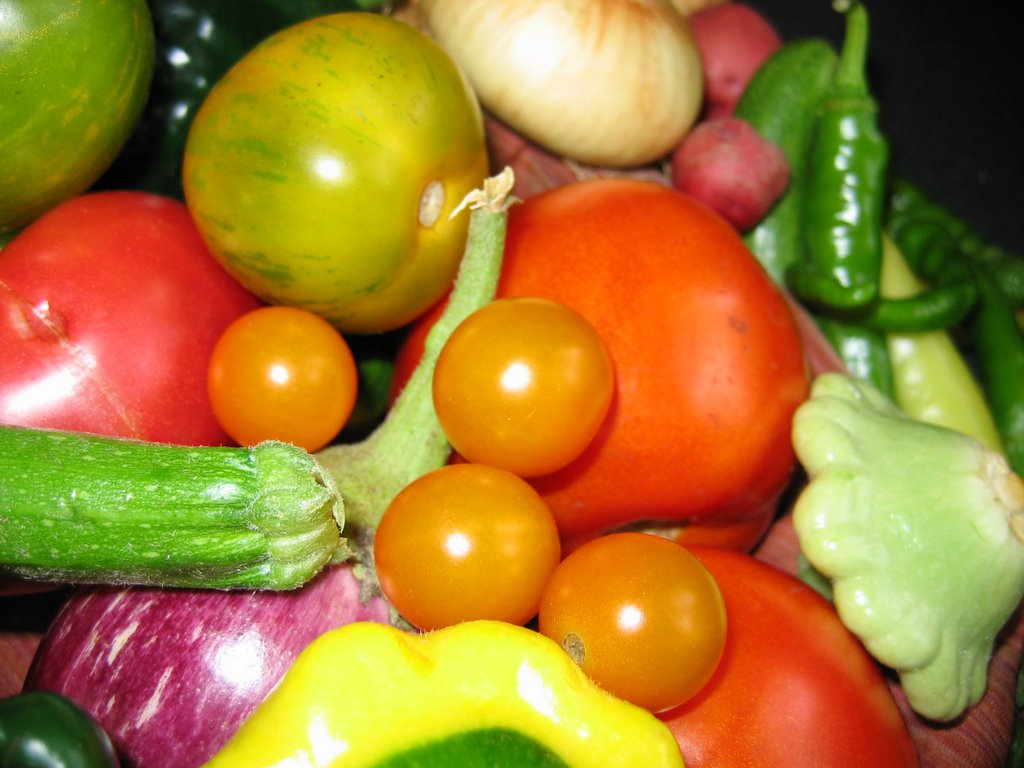 I put my foot down, however, when it came to the "raw pizza." The recipe directed me to take wheat and barley, both of which are high protein items, sprout them, then grind them into yet another unappealing paste, then spread it into thin sheets and dry it in a 110 degree oven for over twelve hours.
I refused.
Proteinous foods like grain mush are perfect hiding places for food-borne bacteria. Bacteria need several things to survive, thrive and breed like mad. Food, moisture and a habitable temperature, preferably between 40 and 140 degrees, are all that bacteria really need to move in and take over.
That crust recipe was a disaster waiting to happen.
So, I explained the reason why I wouldn't make it, and my clients backed down, thankfully, though after that discussion, I found myself on the receiving end of lectures on nutrition, enzymes and raw-foodist philosophy. My employer took on my eating and cooking habits with missionary zeal, and she claimed that cooked food was poison, and that if you cooked foods you destroyed the natural enzymes that were in them, and so our bodies had to use our own enzymes to digest food, and that led to depletion of our life force, disease and old age.
I looked at her.
She was on the far side of middle age, and her face lifts were no longer helping.
She used to be a glamorous woman, but had gained weight, and now was unhappy with her appearance.
And she was entering the twilight of her life, her path leading inexorably towards death.
And she looked to the miracles of raw foods, enzymes and vegetative life force to save her.
At that moment, I pitied her greatly, and hated those smiling scrawny bastards who had written those books and suckered her in with lies, pseudo-science and hype, just so they could play cult-leader and make money off of poor souls like her.
She was afraid of growing old, getting ugly and dying.
And instead of seeing that we all age, true beauty comes from within, and death is a natural endpoint to a life well lived, she retreated from logic and sense, and fell into the waiting arms of true-believing food-faddist predators who just love to soothe the fears of the gullible, while lining their own pockets with money fleeced from their frightened followers.
I ground my teeth in frustration, and the next time she started her preaching to me, I tried a gentle application of logic, sound nutrition and scientific evidence.
To utterly no avail.
I explained to her my credientials. Not only had I been trained in culinary school, and knew a great deal about food in general and cooking in specific, I had taken many nutrition classes as electives. In addition, when I was getting my bachelor's degree, I was for a time a pre-med major, as I wanted to pursue training as a veterinarian, and thus had taken microbiology, biochemistry, anatomy and physiology classes.
I then explained that the enzymes in food are all destroyed by the acidic environment in our stomachs before they can get to the small intestine where digestion takes place. I told her that our body makes our own enzymes out of the food we eat through chemical synthesis, and that so long as we eat a nutritionally sound diet, we will not run out of enzymes. I explained that cooking does destroy some vitamins, but it also makes the proteins and complex carbohydrates in foods more digestible, and that some phytochemicals, such as the cancer-fighting lycopene in tomatoes, was more fully released after cooking.
Her eyes glazed over, and I saw the haze of disbelief pass like a curtain across her mind.
In the end, I was glad that we moved back to Ohio, and I couldn't work for my client anymore.
I just couldn't bear one more moment of fanatical spouting of unscientific, nutritionally unsound claptrap from a woman I had come to care about to the point that I was actually worried for her health. I couldn't bear watching her turn herself into a vegetable-sucking zombie--a woman who had a brain, but refused to use it to test the claims of her raw-foodist gurus.
So there it is--that is why I hate the raw food fad.
Generally, I will cater to whatever diet a person favors--the decision of what to eat and how to eat it is a highly personal one, and I have no business telling other people that they need to eat something else because their diet offends me.
However, I do despise people who promulgate unsupportable, wildly-unbelievable unscientific beliefs such as "cooked food is poison," and "raw is law."
I just want to bonk these numbnuts in the head with fully cooked bone-in leg of lamb and scream, "Human beings have been cooking foods for over 10,000 years! If cooked food were poisonous, we would not be alive to have this stupid conversation you blithering imbecile!" (Of course after bonking them over the head with the lamb, I'd want to then lecture them on food-borne bacteria and how cooking food tends to prevent our ingesting of these nasty bugs and -dying-.)
I cannot abide people who claim that raw food is -the- original, natural human diet--the one our paleolithic ancestors ate, because I know better.
In order to eat these raw diets, one has to use a dehydrator, a food processor, a juicer and various other smaller bits of equipment in order to pre-digest some of the food so it will not just go straight through the gut unabsorbed.
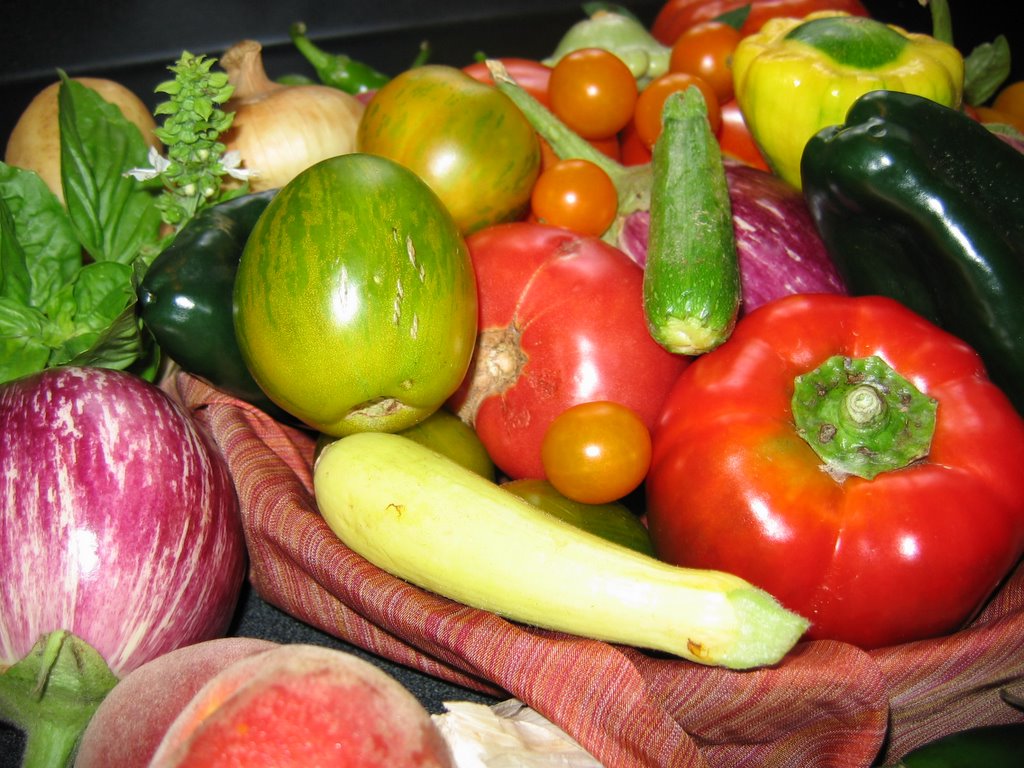 The fact is--if early humans (who, as far as we know, lacked electricity to run their Cuisinarts and VitaMixes) had tried to eat that way, they would have died from caloric deficit. The amount of energy put into preparing a raw food meal without electrical kitchen appliances, with its emphasis on ground up sprouted grains, lentils and nuts, is way more than caloric gain one would get from eating it.
That said, I do not doubt that people should eat some more raw vegetables and fruits, and that some raw food dishes are clever, interesting and tasty. In fact, I learned one stuffed mushroom recipe that utilized soaked, ground barley, that was very tasty.
But there is a difference between making flavorful, healthy food that enhances a varied, balanced diet, and promoting a dogmatic unscientific belief that smacks of dietary religion.
I mistrust fundamentalist behavior and beliefs wherever I find them.
Even in the kitchen.
[food & drink] [raw foods] [vegan] [fad]
Tuesday, November 29, 2005
Kitchen Update: Countertops!
 The countertops have been installed!
Of course, the kitchen now smells of silicone and solvents, but it is beautiful, so the smell--well, I can live with it for a day or two.
To the right you can see the desk, by the door to the kitchen. The kitchen is the first room anyone sees in the house because that is the door everyone comes into.
Below is the color of the engineered quartz countertop--it is Zodiaq from DuPont, and the color is called "Smoky Topaz." If you look on the color chart, the photograph Dupont provides really doesn't do the material justice--it is a mossy green, with reddish bits, black bits, golden brown and grey.
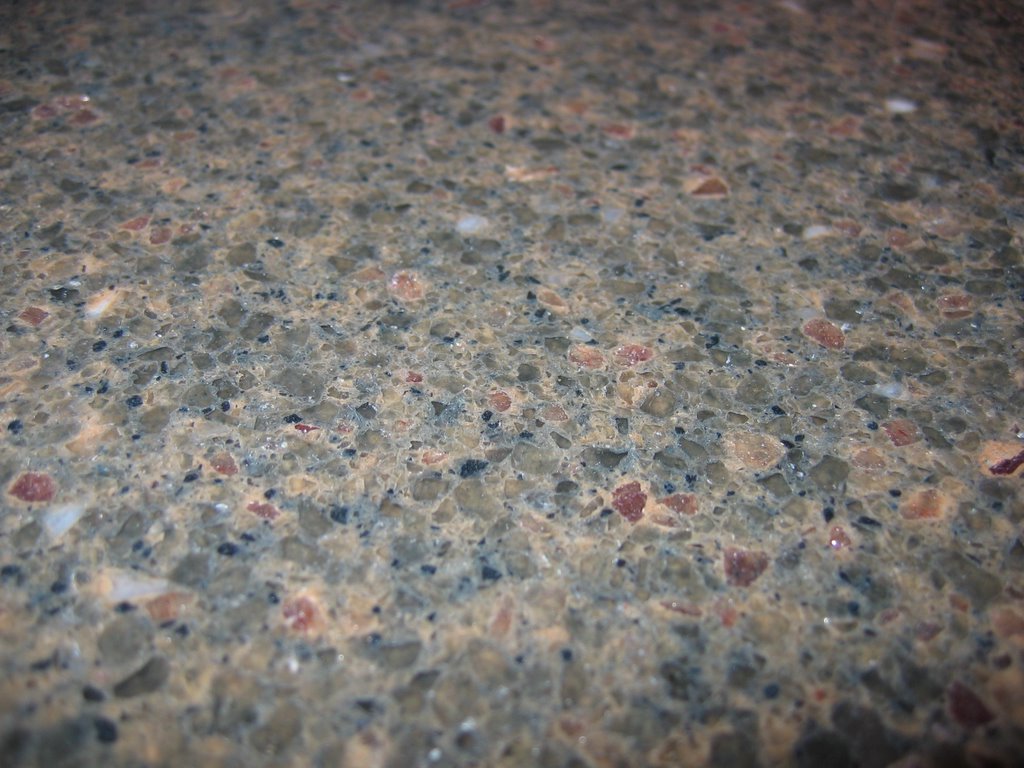 The photograph to the left here is still not really a good representation of of the countertop material, but you get the idea. (The official photo is too dark--this one I took is too light and washed out looking. The actual colors are somewhere between these two extremes.)
What is neat is that it has all of the colors of the kitchen in it--the greens of the cabinetry and walls, the red in the floor tiles, the golden brown of wood (and it brings out the reddish highlights in the oak), and the black that is in the windowframe and that will be in the hood and the appliances. (All of them except for the stove will be black.)
And, I found out that all of the appliances are at Clintonville Electric and are ready to be shipped, so after the tiling is done next Monday or Tuesday (the tile is great--it, like the countertop--echoes all of the colors of the kitchen), we can have the appliances delivered and installed.
 Sometime this week, the plumbing for the sink--which you can see part of in the photograph below--will be done. The faucets are old fashioned-looking and in oil rubbed bronze finish to match the hardware on the cabinetry.
There will be a filtration system for the drinking water and we bought a kick-ass garbage disposal for them to install.
Also the rest of the window frame will be painted this week.
Oh, and I found the perfect lightswitch covers and outlet plates for the room--they echo the Arts and Crafts movement feel to the bronze hardware on the cabinets--they have the same details in the corners.
I'll have to order those tonight so that they can get here in decent time.
 Morganna came home from school and was ecstatic to see the counters--her eyes brightened up, and she danced around. She is very excited to know that we will have our kitchen done by Christmas so we can do baking in it.
She wants to have a Christmas cookie party here--which of course, I cannot help but agree with.
She darted around from place to place on the counter, saying, "We can put one person's work station here, another here and here and here, and then one on the rolling cart, and if we need to, we can sit someone at Mom's desk in the corner!"
I cannot help but share her enthusiasm.
 As more developments occur, have no fear--more pictures will be posted. The sink and painting should be done this week.
And then, it is tiling!
And finally--appliances.
And then! What then? Well, then I can have a party and finally turn forty for honest and for true.
I just have to figure out what kind of food to make for the birthday bash....
Zak says we need to have a Chinese feast.
I think he may be right.
Why Do I Fear Cooking Fish?
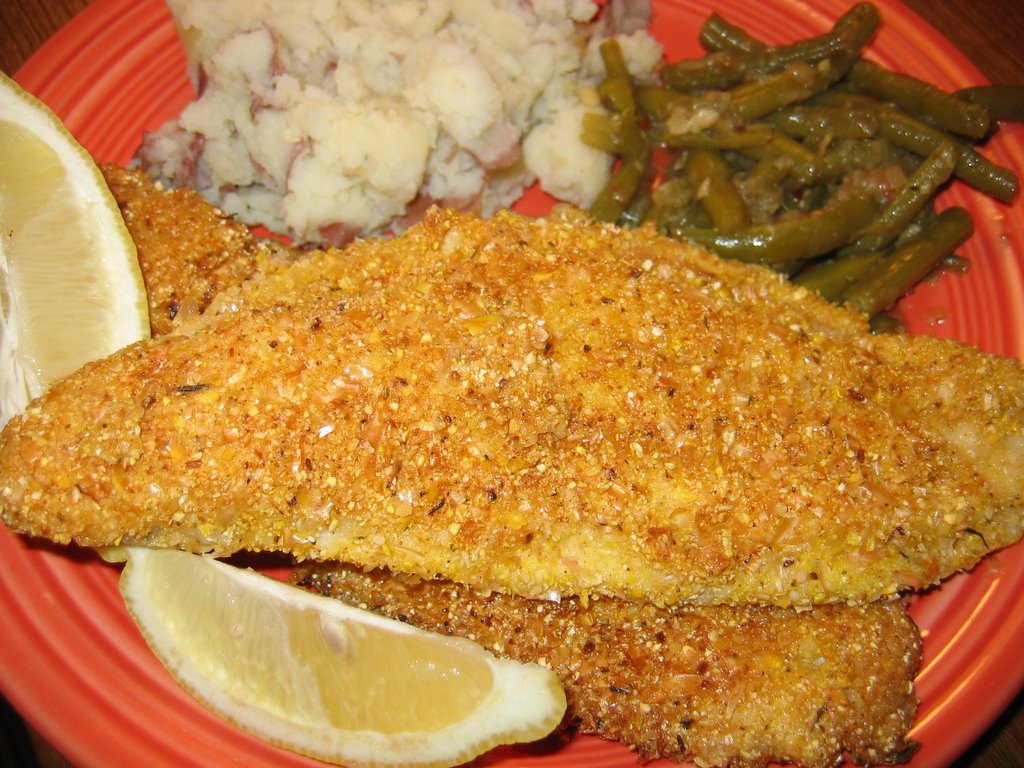 Why do people have cooking phobias?
I had to ask myself that last night, because I pan fried some catfish coated in stoneground cornmeal and spices, to the raptures of Zak and Morganna.
I pan-fried catfish, because Morganna asked me to, because it is one of her favorite dishes, and she wanted something good for supper the night before she went back to school.
And so, even though I was worried I would screw it up in some undefined but horrible way, I bought the catfish filets at Krogers, brought them home and cooked them.
And nothing exploded.
The world did not end.
And the fish tasted phenominally good.
 I cannot determine the root cause of my fear of cooking fish. My terrors involving piecrust and pastry make some sense, as they are finicky and difficult to produce, but fish--it really isn't that hard.
Part of it may be that I grew up only eating fish as a special treat. West Virginia being as landlocked a state as possible, I grew up with no large body of water where edible fish dwelt, waiting to be caught and put on a plate.
Sure, the Kanawha River runs right through the city of Charleston, but in my youth, because of the chemical pollutants, it was advised that no one eat any fish caught in the river. Carbon tetrachloride is apparently not a savory flavoring for carp or gar. (Those were only two kinds of fish I ever saw come out of that august body of water--neither of which are particularly tasty.)
The only time we had fish, other than fish sticks, was when an uncle went trout fishing way up in the clean waters of the Elk River, or when we fished the stocked pond at my grandparents' farm. Or, when I went out to eat--if trout was on the menu, I would order that, it being a favored dish.
 Perhaps it was because my mother hated fish, that I developed some idea in my head that it was difficult to prepare properly. I know she always said, "Well, it is alright if it is cooked right, but otherwise...." Her voice would trail off and she would shudder, rolling her eyes like a frightened horse.
Perhaps I feared it because of my inherent mistrust of the fish department at Krogers--the one here in Athens has no smell, but the one in Pataskala always smelled of fish guts, and that is not a confidence-inspiring odor, nor an appetizing one.
Maybe my mother's hatred of fish or the smell of fish guts, or plain old lack of confidence in cooking something that I didn't grow up cooking are at the root of my fish phobia, but for whatever reason, the thought of cooking fish and doing well has always inspired worry into my usually placid psyche.
That has apparently ended.
Last week, after Morganna left for her visit with her father, I cooked a farmed salmon-trout filet from Canada for Zak and I. (His first choice was catfish, but there was none at the store.) I pan-fried it, as I did the catfish last night, and I followed a procedure that is nigh on foolproof.
 First, for pan-fried fish, you want to have some sort of coating on the filet. Breading is appropriate--batter works better in deep fat frying than it does in shallow pan frying. A crisp coating of crumbly goodness is what is called for--and the crumbs can be just about anything, really. Breadcrumbs, cracker crumbs or matzoh meal all work beautifully, but my favorite and I believe, the absolute best breading material is stoneground cornmeal mixed with herbs and seasonings.
Cornmeal is the obvious choice for anyone whose ancestry derives south of the Mason-Dixon line, but there is good reason besides it being cheap and plentiful, for it to be popular as a coating for fried fish.
Fresh, coarse, wholemeal stoneground cornmeal is amazing crunchy, nutlike and filled with the golden flavor of corn, redolent of sun-warmed fields. Wholemeal cornmeal, which should be kept refrigerated, has the germ of the corn in it, and because of that, it is deliciously full flavored and very nutritious. The coarser grind gives a great toothsome crunch to the coating, which contrasts brilliantly with the tender, sweet fish.
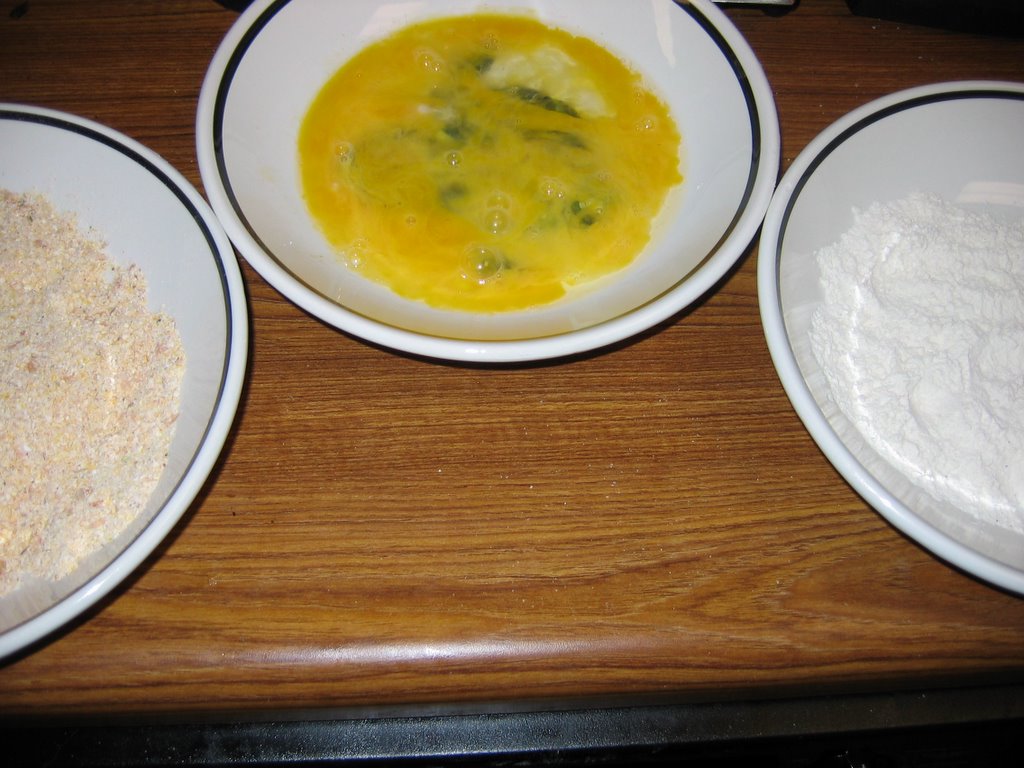
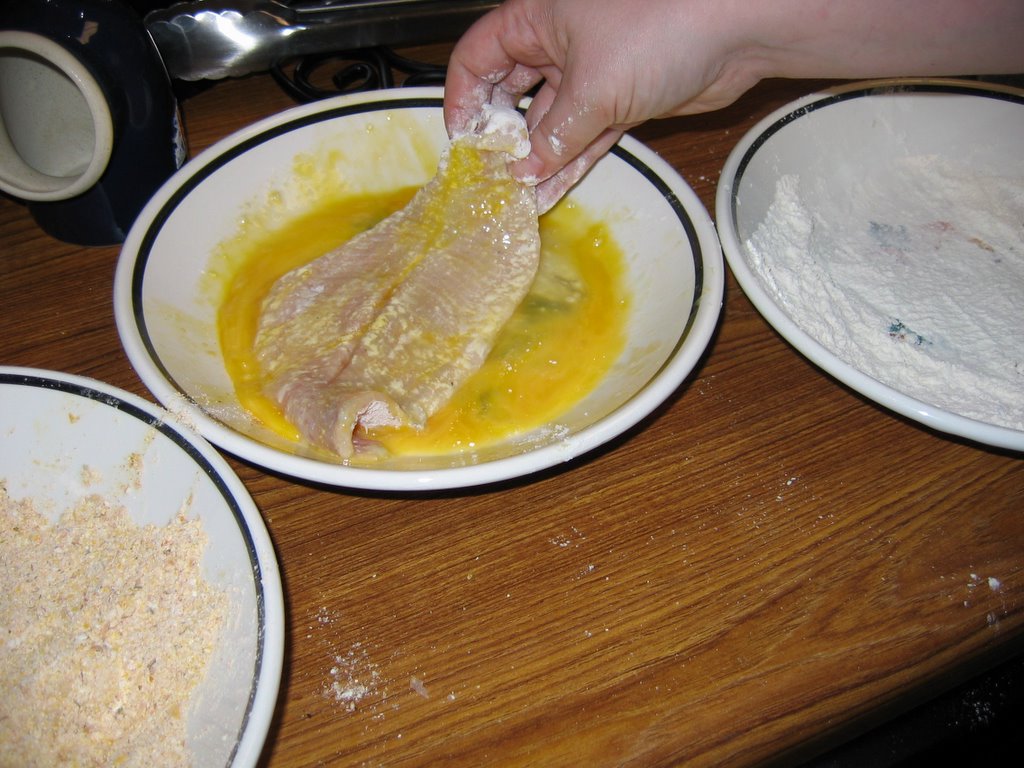
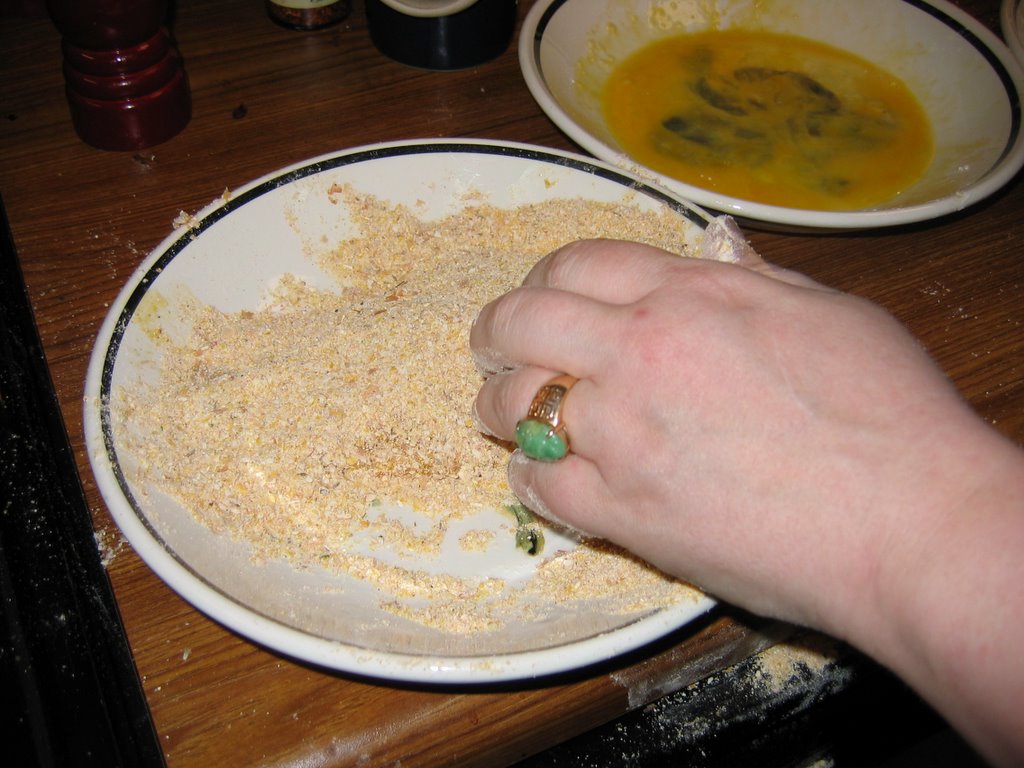 The proper way to go about breading a fish filet is not to just dunk it in egg and then in the cornmeal.
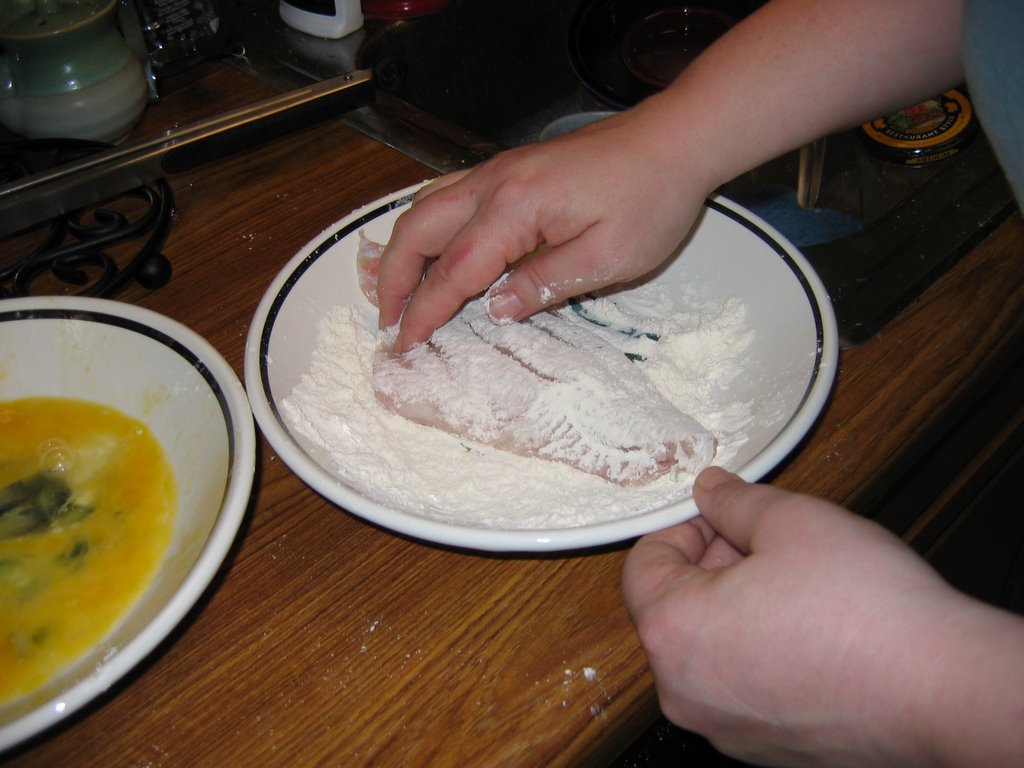
To bread fish or anything else you want to pan fry, first, you dredge the food item in seasoned flour. When I say seasoned, I mean, at least salted and peppered--you want seasoning in it, because it is the first layer of your breading and it touches your food directly. So, season it.
What does the flour do?
It gives the egg something to hold onto.
At Johnson & Wales Culinary, this method of breading was called, "The Standardized Breading Procedure," and it was beaten into every novice chef wannabe's brains, and for all that it was treated like it was just this side of the Gospel According to St. Escoffier, there was a good reason--it worked.
Meat and fish are both slippery, and if you just dunk a cutlet or filet into egg and then into crumbs, you will be lucky if the coating waits until you put it in the hot fat to roll right off leaving the item to be cooked naked as a jaybird. The flour dredge prevents that. Because the meat or fish is already naturally slightly damp, it adheres, and its dry, powdery surface makes the egg glom onto it just like glue. Then, when you put the item into the breading, it latches onto the egg and voila! A breaded cutlet or filet is ready for the pan.
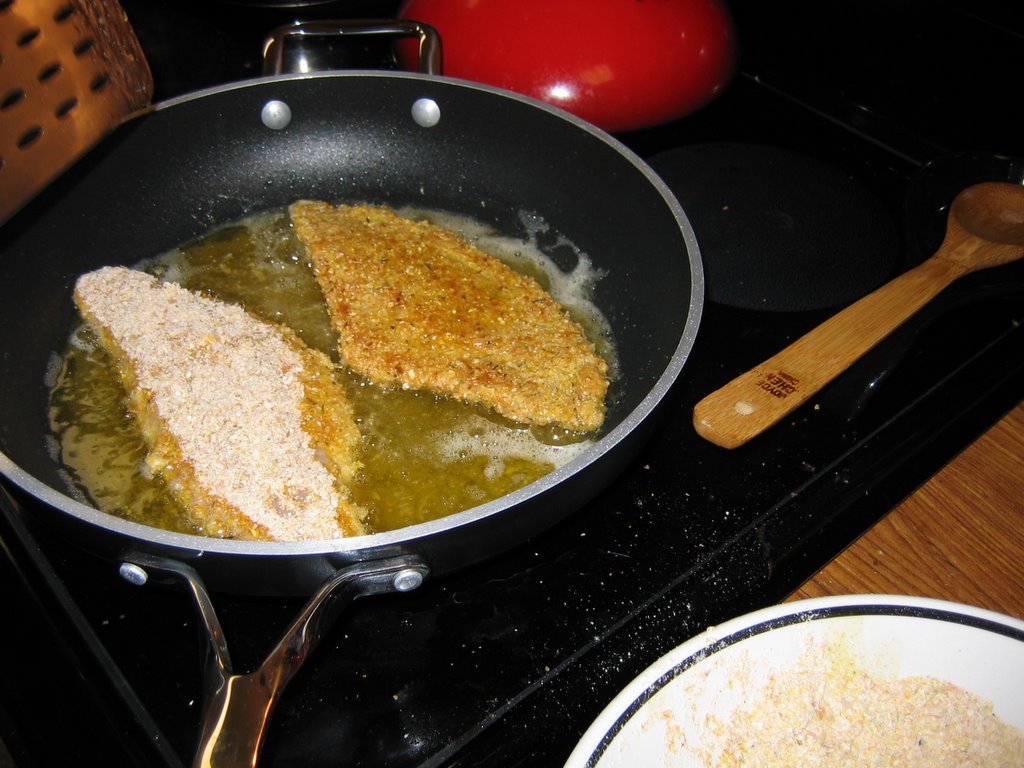 It is almost magical.
The other necessity for pan frying fish is good, hot oil. When I did the salmon trout, I used canola, but for the firmer, sweeter catfish, I used peanut oil, and it was a winner. The flavor of the oil brought out the nutty aroma of the cornmeal.
I used only enough to be about 1/4 of an inch deep in the frying pan, and heated it on medium-high until it was below the smoking point, but still quite hot (here's the old country way to test your oil to see if it is hot enough--sprinkle a little flour in and see if it foams up immediately--if it does, it is ready), and then I slipped the filets gently into the pan, flat side first.
Here is the part that honestly worried me.
The worst thing one can do to a fish is overcook it, and so I was worried that would be the fate of my catfish.
I needn't have worried. The signs of it being done are clear--the fish is ready to turn when the edges look cooked and golden and the breading there has hardened. When that happens, the fish is ready to turn.
When one turns it, one can take note of how the fish's texture is--like chicken, it gives sure signs to its level of doneness--it solidifies a bit and becomes stiffer, while being springy to the touch. Raw fish is soft and a finger poked into it just pushes into the meat. When you pick it up, it droops from your hand or tongs. Fish that is just cooked is firmer, and definately has a "spring" to its touch--when a finger pokes at it, it pushes back slightly. Also, when picked up in tongs, it will not droop, but will lay as flat as it was when cooked.
That was it. I guess I cooked each filet a couple of minutes per side. I only cooked two at a time, to avoid lowering the heat of the oil too much, and I breaded them right before cooking--if you bread ahead of time, you risk having your crumb coating get gloppy and gross. In order to keep the first ones cooked warm, I set them on a paper-towel lined plate in an oven heated 170 degrees.
My next fish project is to pan sear a tuna steak in my cast iron skillet. Since I can pan sear a beef steak in that way with my eyes closed, and come up with beautifully rare meat, I figure I can do the same with tuna.
Wish me luck, and as always, I will report back.
 Country Pan-Fried Catfish
Ingredients:
Catfish filets
Flour, as needed (plan on about 2 tablespoons per filet)
Salt and pepper to taste
1 or 2 eggs, well beaten
Fresh wholemeal stoneground cornmeal, as needed (just like the flour--figure on 2 tablespoons per filet or so)
Dried seasonings as you like--chipotle chile powder, adobo seasoning, thyme, marjoram, Spanish smoked paprika, coarsely ground peppercorns--the possibilities are endless.
Salt and pepper to taste
Peanut oil to cover the bottom of your frying pan to 1/4 inch depth (no, I didn't measure any of this....)
Method:
Check your filets for any obvious bones, and pull them out if you can. You can accomplish this by bending the filets back and forth and noting if any bones pop out. When they do, nab them, and pull them out--especially check at the thinner portion at the tail end.
Season flour lightly with salt and pepper, and put in a bowl or plate big enough to accomodate the filets. Beat eggs well and place them in a similar bowl, on the counter, left of the flour bowl. Stir together the cornmeal and your seasonings of choice, along with salt and pepper, and place it in a third bowl or plate, left of the egg wash. If you want to minimize the possibilities for mess, set this breading station up next to your stove, just to the right of the burner you are going to use.
Heat oven to 170 degrees, and line an oven-safe plate with several layers of paper towels. Set them to the left of the stove and burner. (If you are left handed, do all of this backwards!)
Pour your oil into the pan, and start heating it on medium high. Before coating fish, check to see that the oil is nearly hot enough by sprinkling a little flour into it, and see if it foams. When it foams, start breading the first two filets.
Dredge your first filet in the flour, starting with the flat side. (Cat fish filets are flat on one side and very rounded on the other. Start on the flat side.) Press it down with your fingers to make sure that flour contacts the surface completely. Flip it over and very carefully do the same with the rounded side. Pick it up, examine and make sure that the flour completely coats the rounded side. If it doesn't, lay it back down in the flour and play with it until it does.
Take it out of the flour, shake lightly over the flour to dislodge any loose particles and then carefully and gently, lay it in the bowl with the egg wash--on the flat side first. Now, before you pick that fish out of the egg to flip it over, designate a "wet" hand and a "dry" hand. Whichever one is your wet hand, pick the fish up with, let it drip over the egg bowl, then carefully lay it--flat side down--onto the cornmeal plate.
With your wet hand, gently pat the fish to get it settled into the cornmeal so it coats well on the flat side. With your dry hand, scoop up some cornmeal mixture and pat it onto the surface of the rounded side. Scoop and pat until that side is completely covered. With the wet hand, pick it up, shake it gently, make sure it is completely coated.
Set filet gently in the oil, and then bread the next one. When you place the second filet in the oil, let the two of them cook about two minutes. Turn them over gently with a long, wide spatula or tongs. When they have turned, cook two more minutes. Push gently on the fish that isn't under oil and see if the texture is firm and springy. (If it is overdone, it will feel quite hard and not be as springy--it will feel more brittle.)
Remove from oil and place on towel lined plate, and put plate in warmed oven to hold until all fish is done.
[food] [recipes] [catfish] [cornmeal] [Southern cooking]
Monday, November 28, 2005
Thanksgiving Report: Cooking a Heritage Turkey
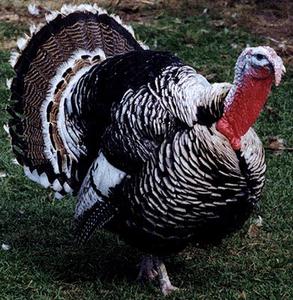 As you may recall, I posted about picking up a heritage breed turkey--more specifically, a Narragansett, from Speckled Hen Farm.
And I promised to give a full report on how I cooked the turkey, how it tasted and any differences that there were between it and the usual free-range Broad-breasted Whites that I have been cooking for the past four years.
The first difference I noted when I took the turkey out of the refrigerator to begin preparing for its brine was morphological in nature. The conformation of the bird was very different than that of a Broad-breasted White. The legs were much longer, and the wings were more well-developed than one is used to seeing in the typical grocery store turkey, or even its free-range counterpart. In addition, the breast was not so oversized, but was more in keeping with the overall size and shape of the bird; it was more balanced, in other words.
This bird was no Dolly Parton.
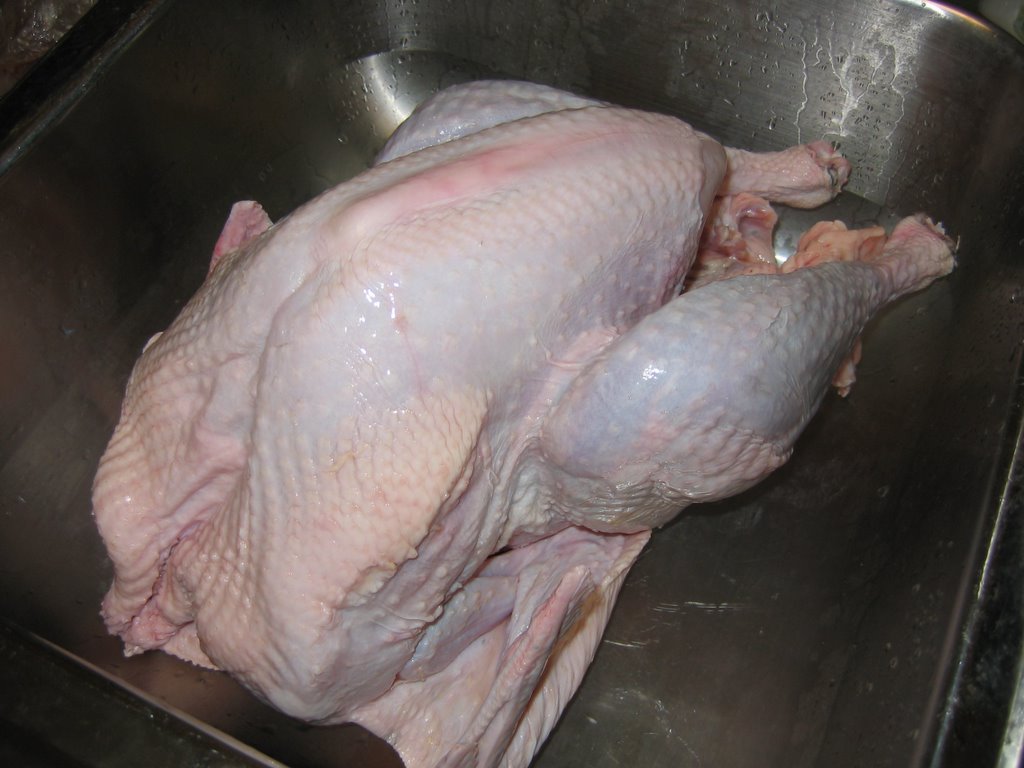 I also noticed that the skin was generally more tightly affixed to the meat and there was a general lack of fat underneath it.
I had read in several places that brining a heritage bird would cover up the flavor; however, I had also read that these birds have more inherent flavor than the Broad-breasted Whites.
This is paradoxical--if it has more flavor, then how exactly would a brine cover that flavor up?
I decided that since I have had enormous success with brining turkeys for the past four years, I would go ahead and do it again this year. Besides--it made sense to cook the bird as I normally would, and that way, I would have a more realistic comparison between two different breeds of free-range turkeys. If I changed my usual cooking method, then I would have no idea if the difference was between the birds or the cooking methods. (When experimenting, it is best to follow the scientific method and change only one variable at a time, otherwise, the resulting data will be meaningless.)
 So, I made my usual brine--one cup of kosher salt per gallon of filtered water, with 1/2 cup of sugar and 1/2 cup maple syrup added for flavoring.
I don't add anything to the brine that will not go into a solution in water, simply because a brine works on the principle of osmosis. The salt in the water is carried across the semi-permeable cell membranes in the flesh because it will naturally go from an area of greater concentration to an area of lesser concentration. The sugar seems to be carried along with the salt water, because it, too, dissolves into a solution, however, most other flavorings that people put into bines are non-soluable particulate matter which does not seem to do much of anything.
Rather than waste peppercorns, herbs and onions in the brine, I save them for the compound butter that I make to put under the loosened skin of the brined and rinsed turkey.
The compound butter idea came about because I grew up with my grandmothers rubbing an entire stick of butter into the turkey skin. They told me that it moistened the breast meat--but after I took some biology classes, I was skeptical of this. I decided to instead of buttering the outside of the bird, butter the inside by loosening the skin with my fingers and hands, , and then packing softened butter to which minced fresh aromatics and wine had been added, directly against the flesh. Since more is better, I also pack this compound butter against the flesh of the legs and thighs--you can see the lumps under the skin of the bird in the photograph above.
You will also notice that I do not stuff my turkeys--there are several reasons for this.
One--they take longer to cook if they are stuffed. Two--I like to start out with very high heat in order to shrink the skin and brown it nicely--this will dry out any stuffing that is near the opening of the bird. And Three--the turkey cooks more evenly if you leave the body cavity essentially open to the hot air of the oven. (The only thing I will stick in the cavity of the turkey is a quartered onion.)
In addition, for the same reasons, I do not truss the turkey. Nor do I set it down inside a roasting pan--instead, I elevate it on a V-shaped roasting rack. All of these techniques lead to perfectly roasted poultry. You will get juicy meat, your dark and light flesh will be done at the same time, your drippings will go into the bottom of the pan and not collect against the skin of the bird, which results in flabby, slimy skin. Instead, the skin of the bird is crisp, golden and delightful.
Oh, and I set it in the rack breast side up. That starting the turkey breast side down and then flipping it upright--that is bogus. Some people swear by it, but if you brine your bird, you don't need to do that. I did it once or twice and only caused myself pain and stress. Stress from fear of dropping the bird on the floor where dogs and cats circled like sharks, and pain from having hot fat drip down my arm while I was in the middle of flipping the bird. (You knew I just had to say that, didn't you?)
And yes, I still butter the outside of the skin--to help it crisp up. I also salt and pepper the skin liberally, even though I brined the bird. The granular salt also helps crisp and dry the skin, as well as flavoring it.
The pepper, I figure is self-explanatory.
It tastes good.
Then, I stick it into a preheated 400 to 450 degree oven (depends on how the oven works as to how high I set the temperature) and roast it for about 20-30 minutes, or until the skin has crisped, browned, and shrank considerably. Then, I turn down the oven to 325 and roast until it is done--
I don't baste the turkey while it roasts, but I do pour wine into the pan to keep the drippings from burning. It also makes for a really flavorful gravy when it is time to sit down to eat.
 Gravy with this roasting method is a simple matter. Drain the drippings that have accumulated in the cavities of the bird by tilting the rack in the pan, and allowing them to drain into the roasting pan.
Remove the V-rack and set the bird aside to rest. You can tilt one end of the V-rack up--tilt it so that the breast is lower than the rest of the bird and it helps the juices flow into the breast. (I forgot to do this this time, and the meat was still juicy and good, so I suspect that the tilting thing is about as bogus as the flipping the turkey while it is half cooked is.)
While the bird is resting and doing its "carry-over cooking" thing, set the roasting pan with the drippings on two burners on the stove, and make gravy--it is easy. If there is a lot of fat, suck most of it up with one of those basting bulb thingies, and discard it. Then, bring the drippings to a simmer, and stir them, reducing them a bit. I like to take the onion that was in the turkey cavity, cut it up (it is usually half cooked by this point) and scatter the slices in the pan with the drippings. Stir, and then add a handful of flour--I am not going to tell you how much, because it depends on how many drippings you have! About the same amount of flour as you have in fatty drippings--and cook, stirring like mad. This will turn into a brown paste--a roux--and then you add turkey or chicken broth, and or wine, and cook, stirring, until it turns into a gravy that is as thick as you like.
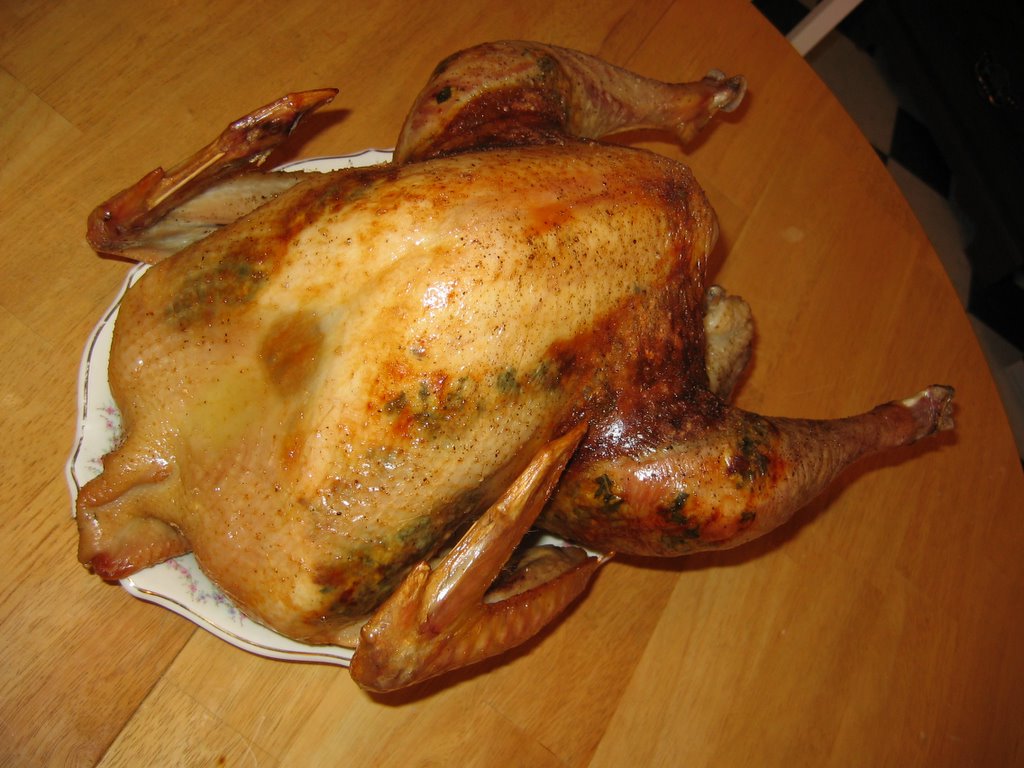 That is it. Those are the secrets to my turkey.
The report on how this turkey stacked up to previous ones?
Well, Zak swore that it was better than the free-range Broad-breasted Whites we have been getting in past years. He is right--it was uncommonly juicy and it was tastier than we are used to. And the brine did not cover the flavor of the bird or make it too salty--it enhanced the natural flavors of the turkey as it is meant to.
Also, I found that the lady at the North Market was right--cooking the breast to an internal temperature of 140 degrees, and then letting it carry over cook (cook under its own heat outside the oven) for ten minutes or so until it came to 150-160 was the way to go. It was supremely juicy and firmly textured cooked that way, and the dark meat was succulent. As is usual, the skin was crackling crisp, and beneath it, the butter melted away, leaving a coating of garlic, shallot, chipotle, rosemary, sage and thyme against the flesh that gives each slice an extra little grace note of flavor.
The only other thing I noticed was that with this 12 pound turkey for four adults and one fifteen year old--we had just enough meat for a good feast, and then enough left over for a sandwitch or two and a batch of turkey jambalaya. There wasn't as much left over as there is with the Broad-breasted White birds--and for me, that is a good thing. Because I tend to get tired of the leftovers long before they are gone, and my dogs end up eating the rest.
I was very pleased--and next year, I believe I will be patronizing Speckled Hen Farm again.
[food] [Thanksgiving] [turkey] [heritage breed] [free-range]
Four Directions Dressing
 I grew up eating fairly typical bread stuffing and dressing for the Thanksgiving and Christmas turkeys. My Mom and Grandma would take white bread, cut into cubes, and toast it in the oven until they were crisp, and then on the day the turkey was cooked, they would mix it with broth in which they had cooked giblets, onions, celery and sage, then use this mixture to stuff the turkey and fill the roasting pan around the bird.
And it was very tasty and good. Nothing wrong with it at all.
But, as I was in the produce aisle of the grocery store about six or years ago, I had an inspiration.
What if I made a cornbread-based dressing and added to it a bunch of ingredients native to the United States? What would it taste like?
And what ingredients would I use?
 Well, I had already decided to use corn. Cranberries came to mind next--and since the new dried "Craisins" had just come out on the market, those are what I picked up. As I had just addicted Zak to chiles--chipotle en adobo seemed a natural choice--especially since it involved both chile and tomato. Two native ingredients in one! What else could I add to the mixture?
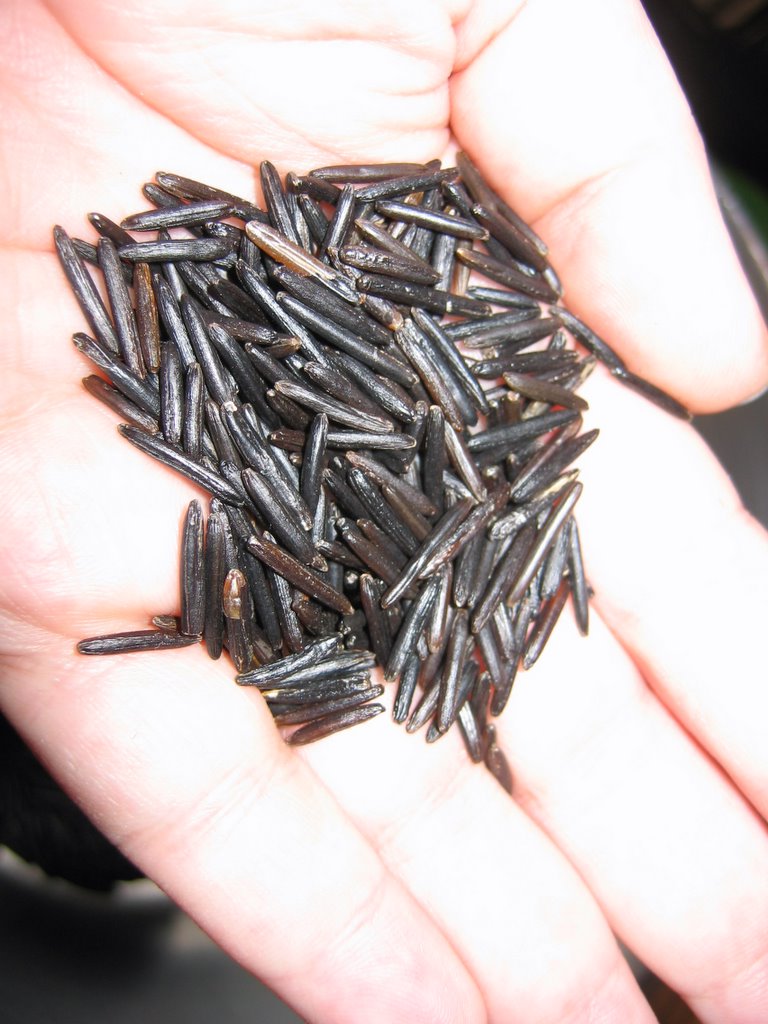
Maple syrup is the native sweetener--and I love the flavor of it with turkey anyway, so of course, in that went. I thought I might want something crunchy, so I added both pecans and black walnuts--both native to these shores. While I was grabbing ingredients, my eye fell upon the long, graceful black quills of wild rice and I nabbed it up, and threw it in the cart. It may not really be rice, but it tasted delightful, and so into the recipe it went.
Wild rice is interesting. It grows on the edges of standing water and in boggy ground up around the Great Lakes region, and was (and still is, in some places) harvested by Native Americans in canoes. One person paddled, steering the canoe alongside stands of the grass, letting the grain-laden stalks droop over the floor fo the canoe, while their partner used sticks to knock the grains into the canoe.
While it isn't really a rice, it can be used like rice. The black, shiny grains are generally cooked in a lot of boiling water--three times as much water as grain--until they are at several levels of doneness. To do a pilaf style rice, it can be cooked al dente. To mix it with white or brown rice, it can be cooked a bit softer (just to the point where the glossy dark seed coat starts to split and show the white interior) then stirred into the rice.
 I have learned over the years that in order to use it with this dressing recipe, it is best to cook the grains fully--until the starch inside the seedcoat bursts and the seed splits entirely, as shown on the left. While I like it best al dente, especially if I am eating it seasoned as a side dish, if you put it in the dressing cooked that way, it dries out in the oven way too much and become crisp and tooth-breakingly hard.
So, I just boil it until it is completely soft, and the black coat has turned to a rich brown and the starch inside is fully exposed. When it bakes in the oven, mixed with all the other ingredients, it takes on a delicious, nutty chewiness that is similar how it tastes al dente.
 I also added sausage, onions, apples, garlic, sage, rosemary and thyme to the mixture. Venison sausage is my first choice--it carrying on the Native American theme beautifully--but regular pork breakfast sausage does just fine as well. Apples--well, they are not native to the United States--they are originally from the steppes near China, and were brought here by British colonists. However, they taste good and all over the country, one can find apple trees from long-forgotten orchards just growing wild in pastures and in thin woodlands, still bearing flowers and fruit.
One could, if one harvests ramps, substitute frozen ones for the onions and garlic and keep to the theme of native foods, but one doesn't have to--I generally only eat ramps fresh myself, as I don't care for how they can stink up an overstuffed freezer. (My freezer is always overstuffed.)
The way the dish goes together is simple. First, a few days before you plan on making the dressing, bake a pan or two of plain cornbread. By plain, I mean nothing overly sweet or fancy, just cornbread. (I will include the recipe that I used below.) After you take it from the oven and cool it completely, break it apart into bite-sized and slightly smaller pieces, and allow it to sit out at room temperature for a couple of days to go nice and crispy stale. Or, you can crisp it in the oven--but I will warn you--if you don't pay attention, you can easily burn it.
Then, you cook up your wild rice, and when it is fully exploded, drain it and refrigerate it. You can do both of these steps two or three days before you cook your feast.
 Then, on the day you are making the dressing, you saute all of the flavoring ingredients together until everything is browned and nicely scented. Then you add the wild rice and fry it a bit longer, then add maple syrup and about a quart or so of chicken or turkey broth.
Then, you pour all of that over your cornbread crumblies and mix that in until everything is nice and moist, with your hands. Then, you pack it in a buttered baking dish, pop butter on top of it and bake it until it is golden brown and dried to your liking.
About drying it to your liking--some people like squishy, wet dressings and stuffings, and some like them dry and toasty and crumbling. This is a matter of personal taste--I like them either way, to tell the truth, but I tend to make this dressing pretty much on the dry side. Wet, gooshy cornbread is not something I am into, so I bake it until you can scoop the dressing out in cohesive lumps, but it isn't so sticky that it has the texture of granular wall paper paste.
If you make this recipe, bake it until the texture is where you like it.
As for the name--it refers to the sacred four directions that many Native American tribes spoke of. Being as many of them deified the land itself, they spoke of the spirits of the North, South, East and West. Since I ended up choosing ingredients that are native to this continent in many directions, I felt that the name was especially appropriate.
Four Directions Dressing
Ingredients for Cornbread:
1 cup stoneground cornmeal
1 cup flour
2 teaspoons sugar
1/2 teaspoon salt
3 teaspoons baking soda
1 cup milk
1 tablespoon oil
2 eggs, lightly beaten
Method:
Preheat oven to 350 degrees. If you are going to bake this in a cast iron skillet heat skillet in oven while preheating.
Mix dry ingredients together in a medium bowl. Mix wet ingredients in a measuring cup or small pitcher until well combined.
Pour the wet into the dry and stir into a nice, thick batter.
If you are using the cast iron skillet, take it out, grease it well, and pour batter into it. Bake for about 20-25 minutes if using preheated skillet. If using a regular baking pan--not preheated--then bake for 25-35 minutes, or until toothpick inserted in center of bread comes out clean.
Cool completely on wire rack, then crumble and break apart into bits.
(I use two pans of this for one 9"X13" pan of dressing.)
Ingredients for Dressing:
2/3 cup wild rice
2 cups water
2 tablespoon olive oil
1 large onion, diced finely
1 apple, peeled and diced
1 teaspoon lightly crushed celery seeds
5 cloves garlic minced
1 or 2 chipotle en adobo, minced
1 pound sage breakfast sausage
3/4 cup dried cranberries, roughly chopped
1/2 cup pecans or black walnuts, roughly chopped
1/4 cup fresh sage, minced
2 tablespoons fresh rosemary, minced
1 tablespoon fresh thyme leaves
1/2-3/4 cups maple syrup (this is to your taste)
1 to 1 1/2 quarts chicken or turkey broth
1 tablespoon butter, cut into small pieces
Method:
Put the wild rice and water in a pan, and bring to a boil. Boil until the grain bursts, then drain and set aside.
Preheat oven to 350 and grease or butter a 9"X13" baking pan.
Heat olive oil in a frying pan or saute pan. Add onions, apple and celery seeds, and cook, stirring, until onions are dark golden. Add garlic, chipotle and sausage--break up the sausage, and continue cooking, until sausage is completely browned. When the sausage is still about halfway pink, add cranberries, nuts, herbs and the drained wild rice.
When sausage is completely done, add maple syrup, and stir in to combine. Add broth and heat until it is warmed through, but not boiling hot.
Pour over the cornbread crumbs, and stir with your hands to moisten and combine everything. Pat mixture into the prepared pan and bake for about 15 minutes. At that time, drop butter pieces onto top of dressing and keep baking until it is as browned and dry as you like it.
[food] [recipes] [turkey] [Thanksgiving] [Native American]
Saturday, November 26, 2005
Southern Thanksgiving Tradition: Sweet Potato Pie
 When it comes to Thanksgiving, my thoughts do not go tripping down to the pumpkin patch; instead, the sweet potato vine beckons.
I gew up with my Grandma making both pies, though in truth, she preferred making the sweet potato pies.
I know why.
Not only do they cook up into a tastier, smoother custard, they are easier to make from scratch.
Contending with a real live pumpkin is a matter far removed from opening a can.
Frankly, it is a pain in the butt.
However, preparing sweet potatoes to be made into a custard for a pie is simplicity itself.
You wash them off, pierce them with a fork a couple of time and roast them in an oven at four hundred degrees until they are completely soft in the middle.
Then you cool them, peel them and mash them.
Pumpkins have seed with stringy icky-poo crap inside of them and then you have to boil out the water--blah. Who has time for that when you have a bunch of other stuff to do.
Besides--sweet potato pie just plain old tastes better than pumpkin pie. There are no possibilities for stringiness, the custard is less watery and the inherent sweet potato flavor is much better--rich, moist and very satisfying.
I proselytize for the sweet potato pie every chance I get--because for some unknown reason a lot of Yankee folks have never had one before.
Well, here is a recipe--the original was published in the New York Times in 2003--Karen Barker is the originator. I have since meddled with it, though, and changed flavorings and the amount of sugar significantly, as well as actually bothering to have instructions on how to make a pie crust for the thing. (Karen assumed we all knew how to make a pie crust and blind bake it. At the time, I had no clue--but I have since learned.)
Anyway--do your tastebuds a favor and bake up a sweet potato pie sometime, and see if I am not right that it beats the hell out of pumpkin pie any day.
 Sweet Potato Pie
Ingredients:
1 1/2 pounds sweet potatoes
3/8 cup heavy cream
6 tablespoons maple syrup
3 tablespoons raw sugar
4 tablespoons melted browned butter
1/4 cup Carolan's Irish Cream liquor (use Baileys if you must...)
3 large eggs
1 egg yolk
1 1/2 teaspoons vanilla extract
1/4 teaspoon salt
1/8 teaspoon nutmeg
1/4 teaspoon cinnamon
1/4 teaspoon ginger
1/4 teaspoon Five Spice Powder (I had some leftover from the cookies....so..well, why not?)
1/8 teaspoon finely ground white pepper
1 pre-baked pie crust made using my lard-butter crust recipe*
Method:
Wash sweet potatoes, pierce several times with a fork and bake in a 400 degree oven for one hour or until completely soft. Remove from oven, allow to cool, peel and mash into a stiff puree. (I use a potato masher and do this by hand--but you can use an immersion blender if you want it to be completely smooth. Tiny lumps do not bother me.) Turn oven down to 325 degrees.
Wisk together sweet potatoes with all other ingredients, and pour into the pie shell. (Don't worry, I am going to tell you how to make the pie shell in a minute. Be patient.)
Put it into the oven, cover the edge of the crust with your pie chakram or some strips of aluminum foil, and bake for 45-50 minutes.
Allow to cool completely on a rack, before covering.
Serve with unsweetened freshly whipped cream.
*How to make a pre-baked pie crust.
Make crust following the instructions for the lard butter crust. Freeze half the dough, and use the other half to line a pie plate. Trim edges so they overhang the pie plate by about 1/2 inch. Tuck edge under itself to make it slightly thicker and press dough together to hold it. Flute edge by whatever means you like to use--I do the thumb and fingers method.
Preheat oven to 400 degrees F. Get a piece of aluminum foil big enough to cover the bottom of the pie crust and then stick up by a few inches. Make a cup out of the foil and lay it in the bottom of the pie crust, and then weight it down with some beans or pie weights or something.
Bake it for fifteen minutes. Take out the foil and the weights, turn the oven down to 375, and bake it another fifteen minutes.
That is it. Not so hard, eh?
food recipes Thanksgiving sweet potatoes pie
Friday, November 25, 2005
Unexpected Flavors Blossom into Cookie Alchemy
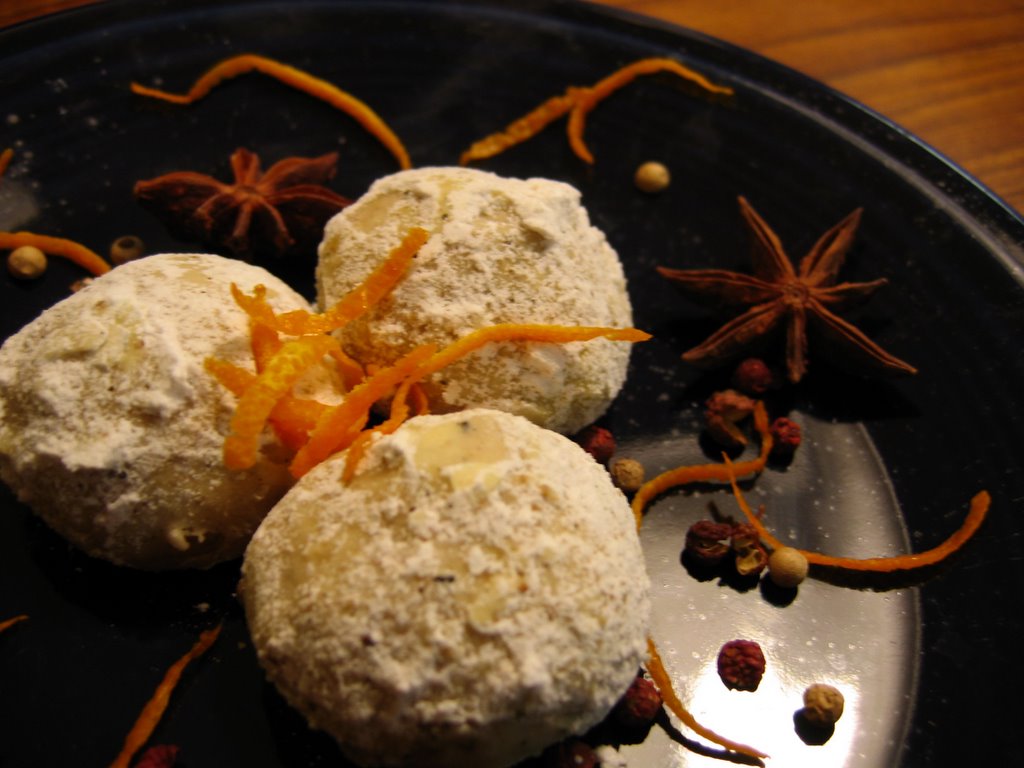 I suppose one could say it is all Zak's fault.
Or rather, his was the inspiration.
You see, for the past two years, at Yuletide, I set out to make one more new and interesting cookie to add to my growing list of sweets that beguile the senses with flavors that one does not expect to encounter in a dessert.
Two years ago, Zak and Morganna served as my inspiration when I made a lavender, almond and cardamom-enriched shortbread that I shaped into leaves and called "Lembas," after the Elvish waybread in Tolkien' s Lord of the Rings. Last year, I decided to make a brownie that Montezuma would have swooned over and came up with extremely moist and fudgy ones flavored with vanilla, chiles, espresso and cinnamon. I called them "Aztec Gold," and proceeded to let them loose among friends and family, where they cut a wide swath of weak-kneed nibblers and chocoholics, many of whom have declared them their favorite brownie ever.
So, I was musing over what I should make for my new Yule goodie this year, when Zak piped up and said, "You know those German cookies with the black pepper in them? You should do those, only, instead of black pepper, put in Sichuan peppercorns."
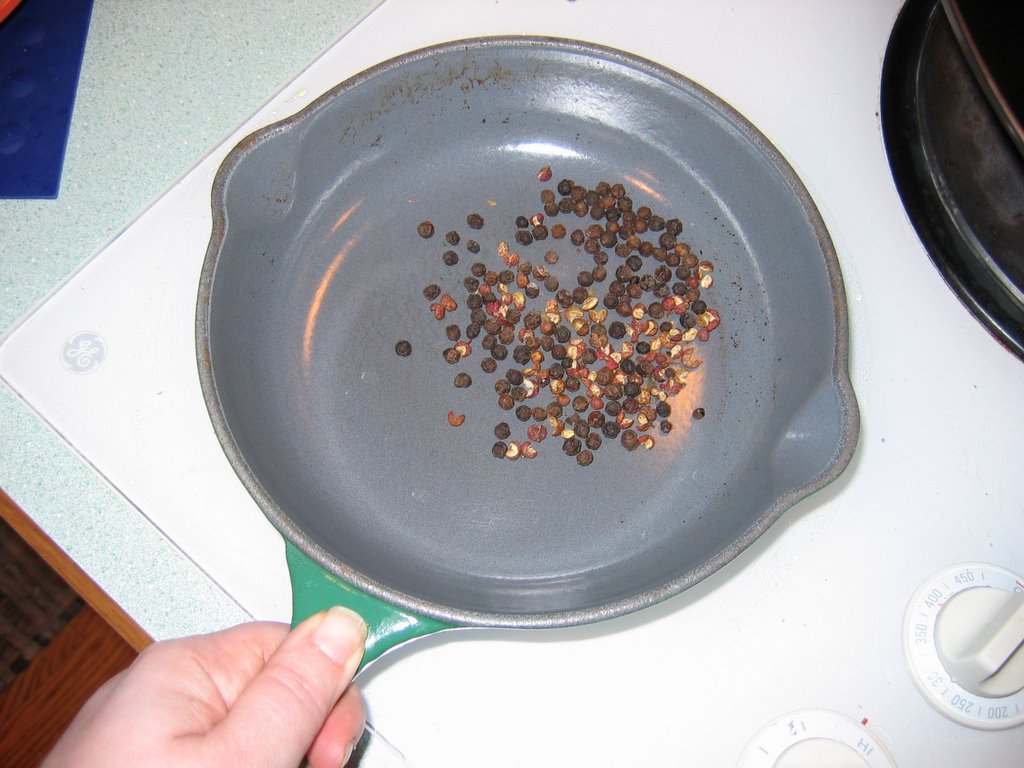 Of course, my eyes widened, and my brows quirked at the wonderous possiblities that such an idea could create. And so, I set forth with the intent of making a Sichuanese version of Pfeffernuesse.
The problem with pfeffernuesse, however, is that I like them much better in theory than in actuality. A German Christmas specialty, "peppernuts" are quite hard, crunchy nuggets of a very dense dough flavored with a number of spices and fruits. The stiff dough is dried overnight--or allowed to mature for weeks--before baking, and the result is a cookie that dentists fear and those with dentures dread.
Being as I am not fond of confections that can chip a tooth, I decided to further tweak Zak's idea. I resolved to look at the flavorings for pfeffernuesse and convert them into distinctly Chinese flavors, and then use a totally different cookie recipe as a basis for the dough.
Mexican Wedding Cookies, another Christmas tradition, became the template for the dough. They are not really a cookie so much as a pastry--the crumbly dough has no egg to hold it together, nor any leavening--it is quite simply a mixture of butter, flour, finely ground almonds and a tiny bit of sugar. All of the sweetness comes from the powdered sugar that the barely warm cookies are rolled in after baking.
Tender and light, the sweet round nuggets nearly melt in the mouth, which as far as I am concerned is about a thousand steps up from cookies make a hobby of chipping incisors.
 When it came to researching pfefferneusse recipes, I ended up using Mimi Sheraton's from her 1968 book, Visions of Sugarplums. This cookbook is a collection of cookies, cakes, candies, breads and pastries that are traditional at Christmastime all over the world. It was probably the third cookbook I bought for myself when I was around the age of thirteen or so, and I remember spending many afternoons reading avidly about all of the different interesting customary Christmas sweets.
I never really baked from it--but I loved reading it.
Well, since Sheraton's pfeffernuesse recipe is unlike any other I have seen, I am not certain how traditional it really is, but since I wasn't actually using it to make real German peppernuts, I didn't overly concern myself with how authentic her ingredients and method were.
I just wanted to use them to give me a launching place for my new cookie recipe.
She called for the grated rind of one lemon, finely minced citron, finely minced candied orange peel, ground almonds, (that was what inspired me to use the Mexican Wedding Cookie recipe as a template for the dough), cinnamon, cloves, allspice, cardamom and black pepper.
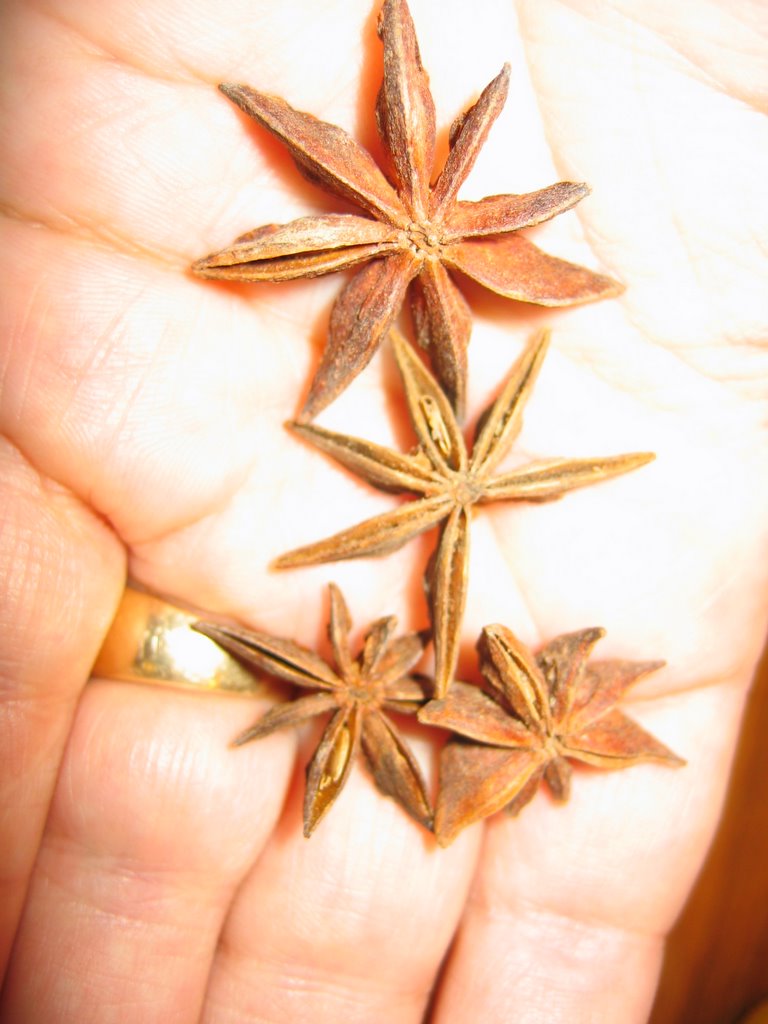
As I looked at the ingredients list, I decided to drop the lemon rind altogether, and exchange crystallized ginger for the citron. In place of the candied orange peel, I used the freshly grated rind of two tangerines-- Chinese cooks have used dried tangerine peel in braised dishes for centuries, and I wanted to echo that tradition. The cinnamon I kept--though I did use Vietnamese cassia--a slightly more delicate version of cinnamon. Instead of cloves, I used freshly toasted and ground star anise, and I replaced the allspice with the Sichuan peppercorns. The cardamom was replaced with dried ground ginger, and the black pepper I exchanged for a mixture of half white pepper and half black pepper, both freshly ground. (Many Chinese chefs prefer white peppercorns to black.)
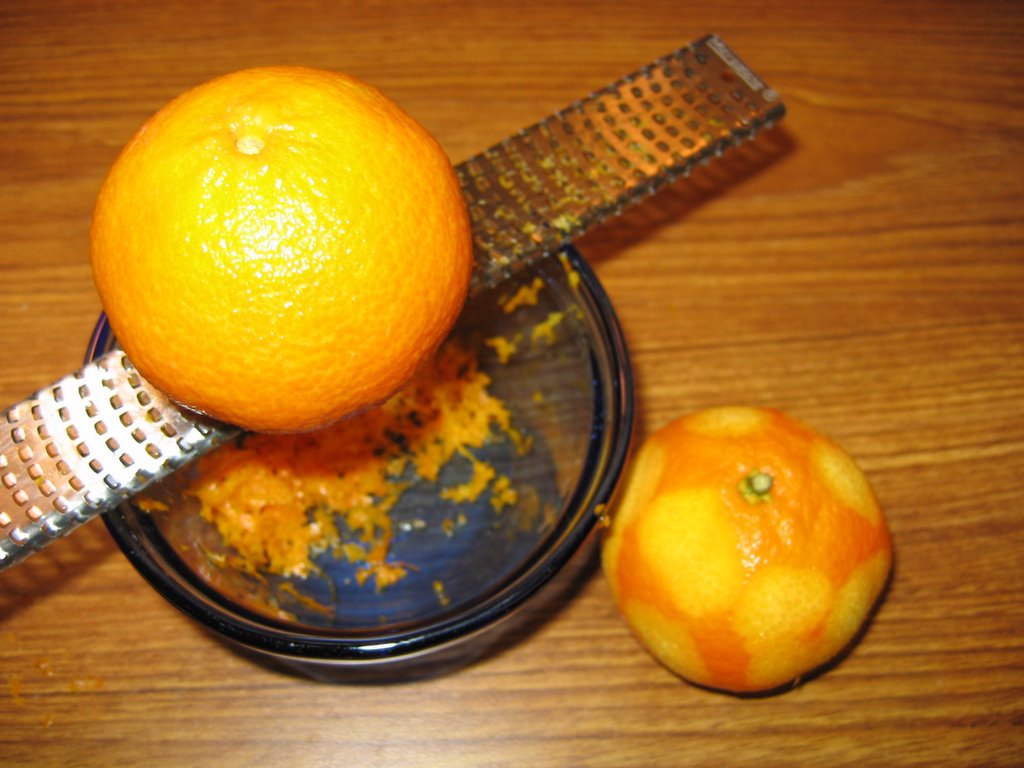 Essentially, since I toasted the peppercorns, Sichuan peppercorns and star anise, then ground them, I made my very own, extremely fresh "Five Spice Powder." Since I ground more spices than I needed for the cookies, I decided to mix them all together and keep them in a tighly covered jar for use in my further experiments in Chinese cookery.
Mixing the dough was simple, even without eggs to hold it together.
It is only a matter of creaming the butter and sugar well, then gradually adding all of the rest of the ingredients, which have previously been mixed together.
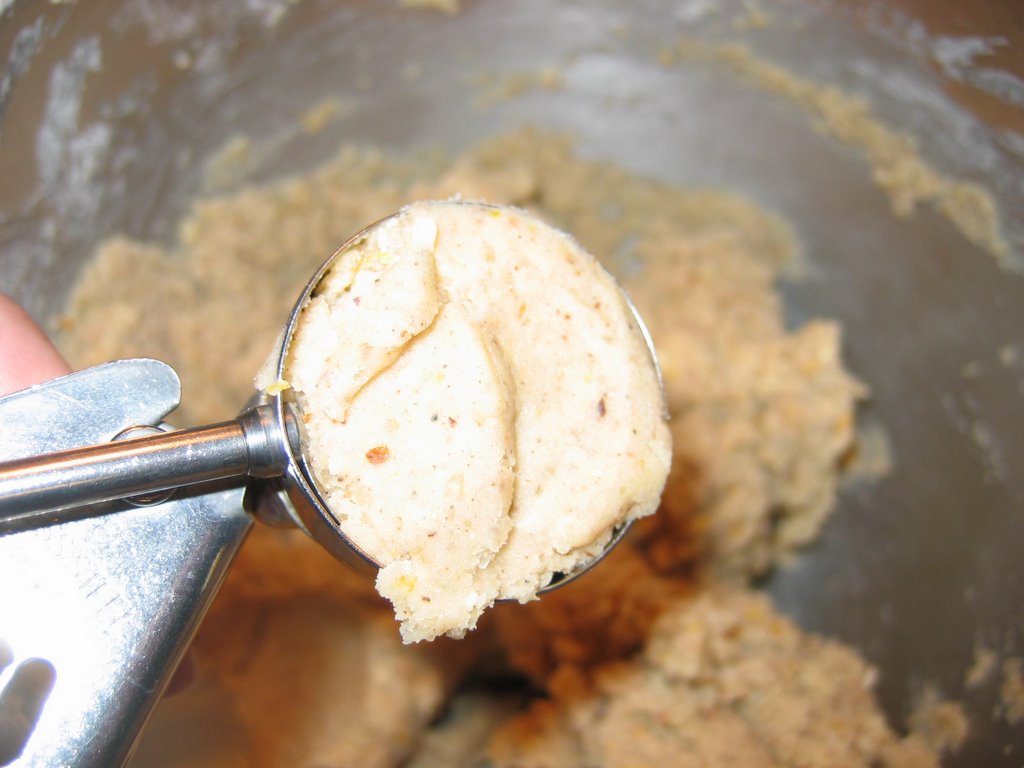 If the butter is properly soft, the dough comes together quickly and easily. Creaming the butter and sugar together instead of cutting the butter into the flour results in a very tender cookie with a very light crumb that nearly melts in the mouth.
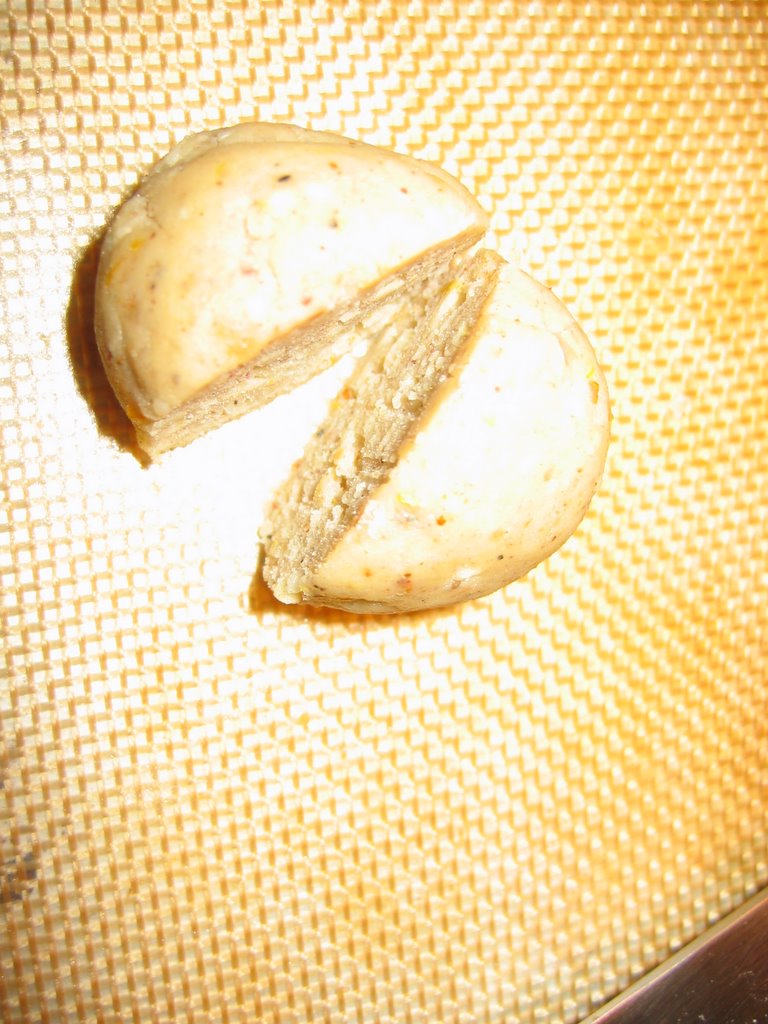
As I always do, I used a cookie scoop to portion the dough--however, even the smallest two-tablespoon scoop that I have made balls to large to bake properly, so as is illustrated below, I cut each ball in half and then rolled the dough into smaller balls, perfectly bite-sized.
 Baking this dough at a reasonably low temperature for a long time--twenty minutes--also results in a very light, soft, crumbly cookie.
As the cookies baked, the air was scented with spices and tangerine essence; it was as if some sort of tropical flowers had bloomed in my steamy kitchen, even as snowflakes drifted past the dark windows.
The final fillip, of course, is the coating of powdered sugar--this is the grace note that makes the recipe special.
I didn't want to cover the inherent fragrance of these little cookies under a cloud of sugar, so instead, I added a teaspoon of the black and white pepper mixture to a cup of confectionary sugar and used that to coat the little speckled tan nuggets of pastry. The secret to a good sugar coating is to put the sugar and pepper in a plastic ziplock bag, and then closing it, shaking it vigorously to thoroughly mix the two. Then, three at a time, take the still slightly warm cookies and shake them in the sugar-pepper mixture, then set them back on the cooling rack until they are down to room temperature.
The still-warm cookies melt the first layer of sugar that touches them. This sticky layer makes the rest of the sugar adhere to the cookie much better than it does if you try and coat them when they are completely cool. However, if you put the cookies in while they are still hot, the sugar becomes a sticky, drizzly mess, and a very ugly cookie is the result.
And no matter how good they taste--cookies should really never be ugly.
All that remained was coming up with a name for my new creation.
Because of the cooling, tingly sensation that the Sichuan peppercorns leave on the lips and tongue after eating these cookies, and because the sugar coating looks like snow, we played with wintery words and concepts. Another strand of thought spun around the floriferous scent of the cookies that enchants and bewitches the consumer, daring him to guess the ingredients that went into its making.
We ended up calling them "Frostflowers," thus capturing a paradoxical name for a cookie born from the widely divergent culinary traditions of several different cultures.
 Frostflowers
Ingredients:
2 pieces star anise
1 tablespoon Sichuan peppercorns
1/2 tablespoon black peppercorns
1/2 tablespoon white peppercorns
3/4 cup ground untoasted, unblanched almonds
1/8 cup crystallized ginger, finely minced
1/8 cup finely grated tangerine peel (the peel of about two small tangerines)
2 cups all purpose flour
1/4 teaspoon salt
1/4 teaspoon all finely ground star anise
1 1/2 teaspoons finely ground Sichuan peppercorns
1/2 teaspoon finely ground black and white pepper mixture
1/8 teaspoon ground dried ginger
1/8 teaspoon cinnamon
1 cup softened butter
1/4 cup raw sugar
1 teaspoon black and white pepper mixture
1 cup confectioner's sugar
Method:
Preheat oven to 350 degrees F.
Pick through Sichuan peppercorns and take out any stems or thorns that you see among the flowerbuds and seeds. Toast whole spices separately in a pan until they are fragrant. Allow to cool, and then grind each into very fine powdered, separately.
Measure out proper amounts of spices--the rest you can use in other cooking projects.
Mix together nuts, ginger, tangerine peel, flour, salt and spices.
Cream butter and sugar together until light and fluffy.
Add flour mixture in thirds, scraping down mixer bowl as needed, and mix until blended into a crumbly, yet still fairly cohesive dough.
Using a two-tablespoon cookie scoop (level the dough in the scoop as illustrated above) make rough balls of dough. Cut each ball in half and then roll into smooth rounds and set on cookie sheets about one inch apart. (There is no baking soda, so they do not spread out.)
Bake in a 350 degree oven for twenty minutes.
While they bake, mix together pepper and confectioner's sugar in a ziplock bag.
Remove cookies when done (they should not brown) and allow to cool one minute on pan. Remove to wire rack and allow to cool until they are still barely above body temperature.
Shake them while still warm, three or so at a time, in the sugar-pepper mixture. Return to rack and allow to cool completely, then store in a tightly sealed container. They will keep for at least a week--that is, if no one eats them first.
food recipes cookies Christmas Sichuan peppercorns spices cookie swap
Thanksgiving, After the Fact
So--I meant to post this actually on Thanksgiving--oops. I missed the deadline!
But I did read a really neat piece in the New York Times today and wanted to share it with y'all.
It is one of those holiday features that is guaranteed to be heartwarming, yet this one managed to slip past my usual cynical facade and touch me. It tells how the children of recent immigrants bring the traditions of Thanksgiving to their families, and how folks from all different cultures are embracing the holiday and celebrating it wholeheartedly once they settle in the United States.
It made me think of some of my friends from Pakistan, and how excited they were to have thier first Thanksgiving feast and cook their first turkey. I remember telling them that Thanksgiving brings out the best in American cooking, and listening to them tell me how they were going to cook thier bird, and comparing it with how I planned to cook mine. They told me about how they made their first cranberry sauce, but they thought of it more as a chutney--and of how they thought it would be good to make pumpkin samosas instead of pie. (I said they could try making pumkin kulfi--ice cream, too--and that thought caused many oohs and ahs and thoughtful musings on how to go about such a plan.)
I am reminded at Thanksgiving that we are all immigrants here--every American, unless they are completely of Native blood, is descended from immigrants. Our ancestors were once strangers, unable to speak the language, dressed differently than everyone else, and perhaps reviled or mistrusted by the Americans among whom they settled. All of us have roots that go back to different places, and every family carries a shadow of the customs, traditions and practices of their ancestral home.
But now--we are Americans--and Thanksgiving is a time to remember that we are not so different than our newest citizens than some might want to think. We should welcome everyone to our shores and our tables with open arms; we should embrace with joy the strength that having a diverse population made of myriad thriving cultures brings.
In the twenty-first century, Americans truly are, "from many, one."
I think that is greatest lesson of Thanksgiving--that we are all one people, no matter where we are from, or what language we speak, or what beliefs we hold dear.
And though I speak of Americans--for Thanksgiving is an American holiday--the truth of that lesson does not only hold true for citizens of the United States.
The truth that I hold most sacred and dear, on Thanksgiving, and every other day is simply this--we are all one people.
I only wish I could build a table big enough for us all.
But I did read a really neat piece in the New York Times today and wanted to share it with y'all.
It is one of those holiday features that is guaranteed to be heartwarming, yet this one managed to slip past my usual cynical facade and touch me. It tells how the children of recent immigrants bring the traditions of Thanksgiving to their families, and how folks from all different cultures are embracing the holiday and celebrating it wholeheartedly once they settle in the United States.
It made me think of some of my friends from Pakistan, and how excited they were to have thier first Thanksgiving feast and cook their first turkey. I remember telling them that Thanksgiving brings out the best in American cooking, and listening to them tell me how they were going to cook thier bird, and comparing it with how I planned to cook mine. They told me about how they made their first cranberry sauce, but they thought of it more as a chutney--and of how they thought it would be good to make pumpkin samosas instead of pie. (I said they could try making pumkin kulfi--ice cream, too--and that thought caused many oohs and ahs and thoughtful musings on how to go about such a plan.)
I am reminded at Thanksgiving that we are all immigrants here--every American, unless they are completely of Native blood, is descended from immigrants. Our ancestors were once strangers, unable to speak the language, dressed differently than everyone else, and perhaps reviled or mistrusted by the Americans among whom they settled. All of us have roots that go back to different places, and every family carries a shadow of the customs, traditions and practices of their ancestral home.
But now--we are Americans--and Thanksgiving is a time to remember that we are not so different than our newest citizens than some might want to think. We should welcome everyone to our shores and our tables with open arms; we should embrace with joy the strength that having a diverse population made of myriad thriving cultures brings.
In the twenty-first century, Americans truly are, "from many, one."
I think that is greatest lesson of Thanksgiving--that we are all one people, no matter where we are from, or what language we speak, or what beliefs we hold dear.
And though I speak of Americans--for Thanksgiving is an American holiday--the truth of that lesson does not only hold true for citizens of the United States.
The truth that I hold most sacred and dear, on Thanksgiving, and every other day is simply this--we are all one people.
I only wish I could build a table big enough for us all.
Thursday, November 24, 2005
I'm Back!
 Welcome to the new, and eventually, improved Tigers & Strawberries.
Yes, the pictures are kind of, well, missing right now, but we're working on that. However, all the important content is here. Expect the pictures to reappear over the next week or so. Zak is working backwards, doing the new pictures first.
I'll post again on Thanksgiving or, maybe, Friday. I have a lot to be thankful for ... my blog didn't explode, like it did the last time we tried to move it.
Wednesday, November 23, 2005
Tigers & Strawberries Notice of Impending Housecleaning
Okay folks, Zak says it is time.
No, not time to sweep the floor and scrub the carpets. (Though it wouldn't hurt if I did that, too.)
No, my 'net-competent and wizardly husband tells me that Thanksgiving is a good time to move my blog to tigersandstrawberries.com.
Regular readers will recall that we tried to do that this summer with great failure--we lost all of the pictures--and so the blog came back here.
But, Zak has a handle on things, and is dead set on packing up the blog and moving it tonight, tomorrow and the next day, while I am cooking in preparation for our Thanksgiving on Saturday, and he is sitting around not doing anything else.
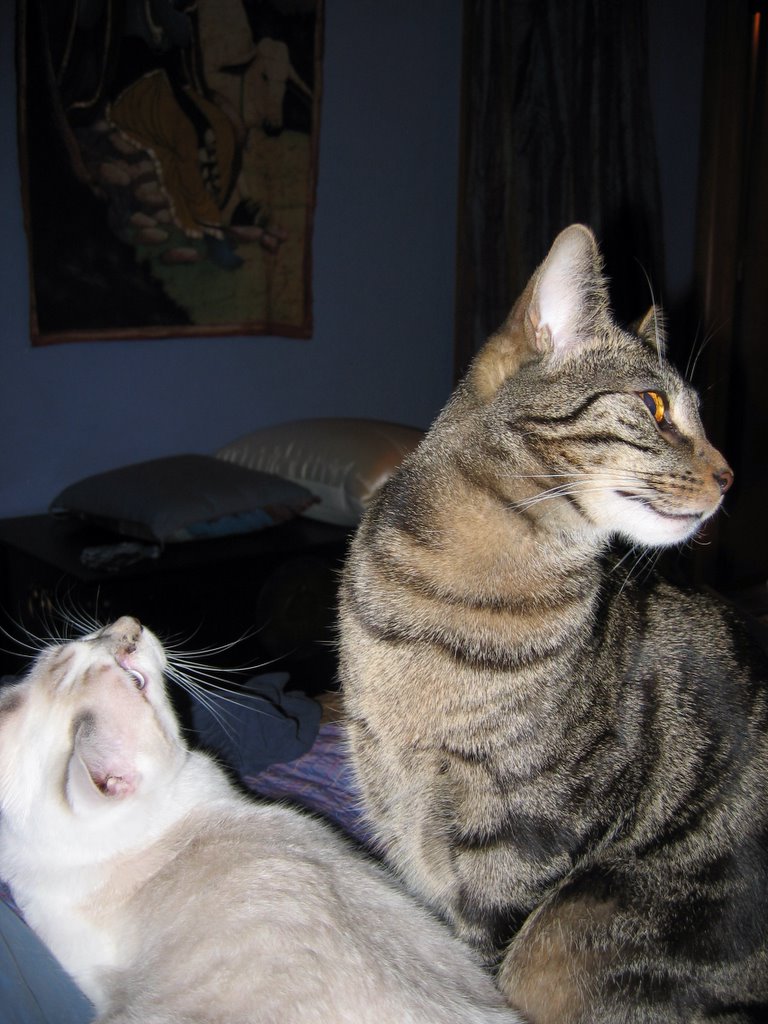
So, if you come by in the next few days and you see no blog, a weird blog, some strange gobbledy-gook instead of words--fear not! It is only Zak breaking things and then fixing them again. So, intead of looking hither and yon, high and low and around and about like Lennier and Gummitch are doing in that picture--just sit tight, and get back with me on Sunday, when I will post and tell you all about my Thanksgiving turkey and the Four Directions Dressing which is based on cornbread, cranberries, black walnuts, wild rice and chiles--all Native American ingredients.
And there will be a post about sweet potato pie, and many other wonderful and delightful good things, sometime in the near future, if the Internet Gods are willing and the creek don't rise.
And if you cannot find me here--type in tigersandstrawberries.com and see what happens.
And if you find me there--then change your bookmarks, and hold on to your hats, because phase II of all the changes will be about to begin. (That would be us changing blog software--which Zak swears to me will be utterly transparent to readers, and will only matter to me...but we will see.)
Wish us luck!
Oh, and for those of you who are enjoying turkey and football tomorrow--Happy Thanksgiving!
See you on Sunday!
(Or, if the Internet Gods will not be appeased, likely on Monday.)
Tuesday, November 22, 2005
Best Food Writing Anthologies And Blogs
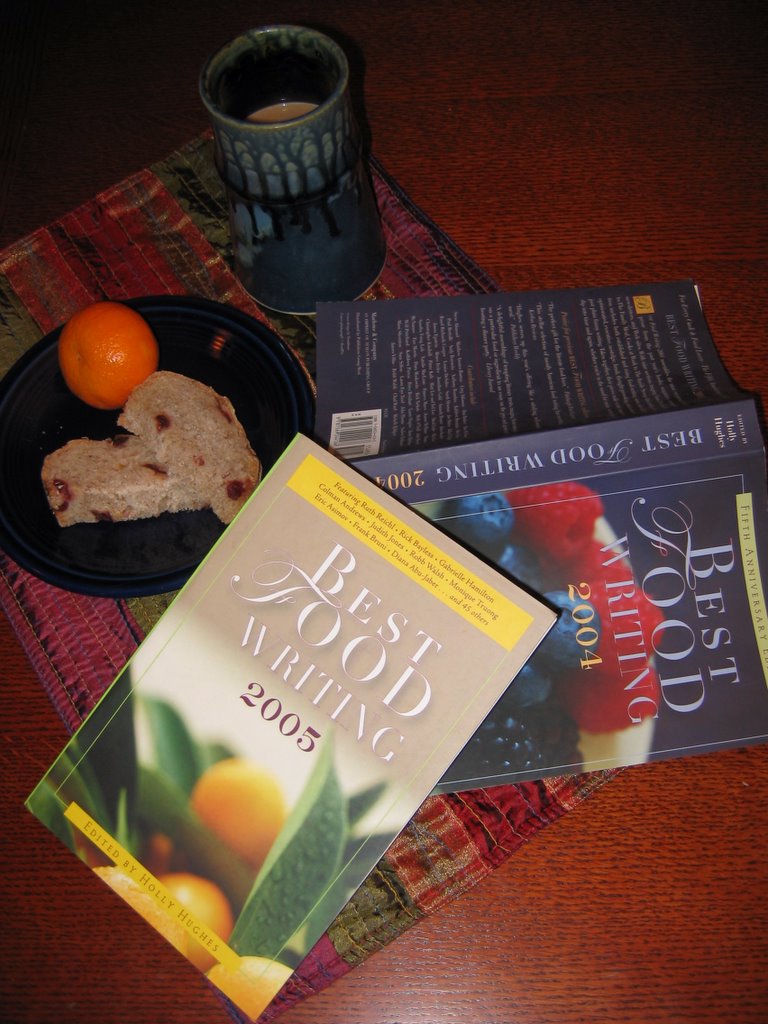 So, of course, I had noticed these anthologies of the Best Food Writing of whatever year, edited by Holly Hugues, when they first appeared annually starting in 2000.
But I hadn't really read any of them until this May when I picked up the fifth anniversary edition, Best Food Writing 2004 while I was in Tennessee tending my aunt while she tended my uncle who was in the hospital.
Whenever I read an anthology, I always read the editor's introduction; over the years, I have found that much of what goes into any given anthology depends upon what is in and on the editor's mind at the time the collection is put together. Thus, an introduction can serve as a quick and dirty overview of the editor's selection processes, preferences and prejudices.
I hadn't read the Holly Hughes' introduction to the 2004 edition in the bookstore--in fact, I didn't browse the book at all--and it is a good thing that I was lax in my usual critical pre-purchase perusal.
Because if I had read the introduction, I would never have bought the book, which would mean that I would miss out on some fine essays and rollicking remembrances.
What was it in the introduction that would cause me to ditch the book, unread, right there in the bookstore?
It was this little jab the editor took at the food bloggers:
"...A plethora of food-themed weblogs have sprung up on the Internet with tempting names like chocolateandzucchini.com, meathenge.com, mylatesupper.com, iwashustreallyveryhungry.com, and nicecupofteaandasitdown.com. They're just what you'd expect from internet writing--sloppy, unflitered, ungrammatical, self-involved prose (folks, don't give up your day jobs)--but all the same, isn't it curious that there's such a large community of people out there who have so much time to think about food?" (pp xiv)
She goes on to ruminate on what a food writer is, what food writing is and why humans like it so much, but the first time I read the introduction, those words were lost on me as my brain had already seized up and slammed into my forehead when it came to that snarky little aside, "(folks, don't give up your day jobs.)"
At that point, I had only been blogging for about three months, but for those months, I had endeavored to put up at least one post a day, for anywhere from five to seven days a week.
That is a lot of writing, for those who don't engage in this sort of thing.
And here was this woman tossing aside all of the work that I had done, and all the work the other bloggers do, with casual wave of her hand and an insult thrown in just to add to the injury.
Ironically, one of the pieces chosen to grace the pages of the anthology was a wry and rather cheeky critique of food magazine's editorial ideas of what makes for a dinner party menu that isn't hell for the typical cook to execute, written by none other than food-blogger turned "real writer," Julie Powell. The piece appeared in the pages of the New York Times--and honestly, I read it long before I knew who Julie Powell was or what her Julie/Julia Project had been, and I remember laughing aloud at the way she satirized the silly fusion menus one can find in some food magazines. Her first person antics as she dashes hither and yon in search of obscure ingredients made me giggle when I read them in the New York Times, but when I saw the piece in Hughes' anthology, I gritted my teeth.
Not at Julie Powell, but at Holly Hughes.
Apparently, because Julie Powell got a book contract, and started writing for the New York Times, that made her a "real writer," worthy of respect and above casual insults.
Yet, the only difference between Powell and say, Clotilde of Chocolate & Zucchini was a book deal. It didn't matter that Clotilde and many other food bloggers had been feted in the media around the world, it didn't matter that Clotilde herself was working on a book proposal at the behest of a New York publisher, what mattered to Hughes was that Powell had "made it" and the rest of the food bloggers "better not quit our day jobs."
That cheap shot nearly kept me from bothering to pick up this year's edition of Best of Food Writing, but seeing that pieces by Robb Walsh and Diana Abu-Jaber were included induced me to take up the book and peek cautiously inside at the introduction.
I wanted to see if Hughes had retained her snippy attitude toward food bloggers.
I found that her frosty disdain for food bloggers had thawed a great deal in the course of a year.
In the last paragraph of her introduction she writes, "This doesn't mean, though, that passionate amateurs shouldn't be invited to the table. At the end of this book, you'll find a sampling of excerpts from various food-oriented Weblogs (a.k.a. blogs) I've found on the Internet. After days and days of browsing through blogs, I can say that there's a lot of sloppy writing out there, but there's also some very good stuff, full of a refreshing curiousity and excitement about food. These people are writing about food--shopping for it, cooking it, eating it--because they love food. And that's what makes all the best food writers such a pleasure to read." (pp xii)
Whoa.
That isn't a complete reversal of opinion, but it is pretty damned close.
Somewhere in the course of a year, food blogs went from being an object of scorn to something worth browsing through because the authors of them -love food.-
What could have caused such a dramatic change of opinion?
I don't know. It could be the knowledge that Powell's blog in book form was coming out this year, with a lot of planned hoopla and fanfare. It could be the continued positive media coverage of the food blogosphere.
Or, it could be a simple softening of an editor's attitude toward "unfiltered" media because she realized that blogs and bloggers were not going to just disappear--in fact--they were rising in popularity.
Let me explain--because "filtered media" is a bit of jargon that not every reader is going to get.
Traditional media--print, radio, film and television, have "filters" in the form of editors, publishers, producers, directors, stations and studios. These "filters" act in different ways to take the creative output of the writer and through successive stages, change it in various ways to improve upon it, change its form, or otherwise make it more "palatable" to the market or audience for which it is intended. Filters are necessary in traditional media, because, like it or not, the truth is, writing is a commodity in the media, and although a writer is the one who produces that commodity without which the media would cease to exist--they are not considered competent to make that commodity fit for public consumption.
That is the job of editors.
Editors (and in television and film, producers) are the first line of defense in the traditional media against a "bad" product. In the print media, that means a product that doesn't sell in the form of books, newspapers or magazines. In the radio and television industry, that is a product that doesn't bring in ad revenuw, and in the film industry, that is a film which sells no tickets.
Do you see where I am going with this?
Blogs, by and large, are unfiltered, in the sense, that they are produced solely by the writer. There is no editor shaping the author's words into a more marketable form, nor is there an ad department doing market analyses and selling ad space.
In the blogosphere--it is all about the writer. The author calls the shots, and she can write about whatever she likes, in whatever way she likes without worrying about what an editor can and will say about it.
That is bound to make an editor feel a tad bit nervous--knowing that there are folks out there who are writing their hearts out on a subject that is her bread and butter--but they don't give a fig what she thinks about what they write.
They aren't writing for her.
They are writing for themselves and their readers--a group which grows by leaps and bounds every day. They are writing because they want to--not because they are getting paid to do it. They are writing for the sheer joy of it, because they love food, they are knowlegeable about it and they have ideas they want to convey to the public.
Perhaps last year, Hughes was confident that blogs were just a fad that would fade, and so she felt comfortable slinging barbs without worrying where they might fall.
But this year, when the food blogging commmunity just kept growing, and more than one food blogger had a book on the way, she rethought her position and realized that perhaps folks who write without worrying about money and what editors thought of them might have something interesting and useful to say, and so she took another look.
It could be any of these reasons, or none of them; I don't really know why Hughes' tune changed so drastically.
But I am glad it did--because next year--she may have quite a few seasoned bloggers--folks who have been writing nearly every day for several years--submitting some polished work for her to review that never saw a "filter," and yet still managed to be passionate, witty, and full of the juice that makes for great food writing and reading.
I think that would be just awesome--the traditional media supporting the new media--and vice versa--working together, rather than against each other.
Because the truth of it is--even professional food writers don't get rich writing about apples, restaurants or sustainable agriculture. The folks who get paid to write about food are primarily doing it because it is what they are passionate about--it is what they love.
They are in the same boat as we bloggers, only they get paid to do it.
It doesn't make them better than us, only different.
Maybe Holly Hughes figured that out.
food & drink books blogs media
Monday, November 21, 2005
How Many Food Magazines Are There?
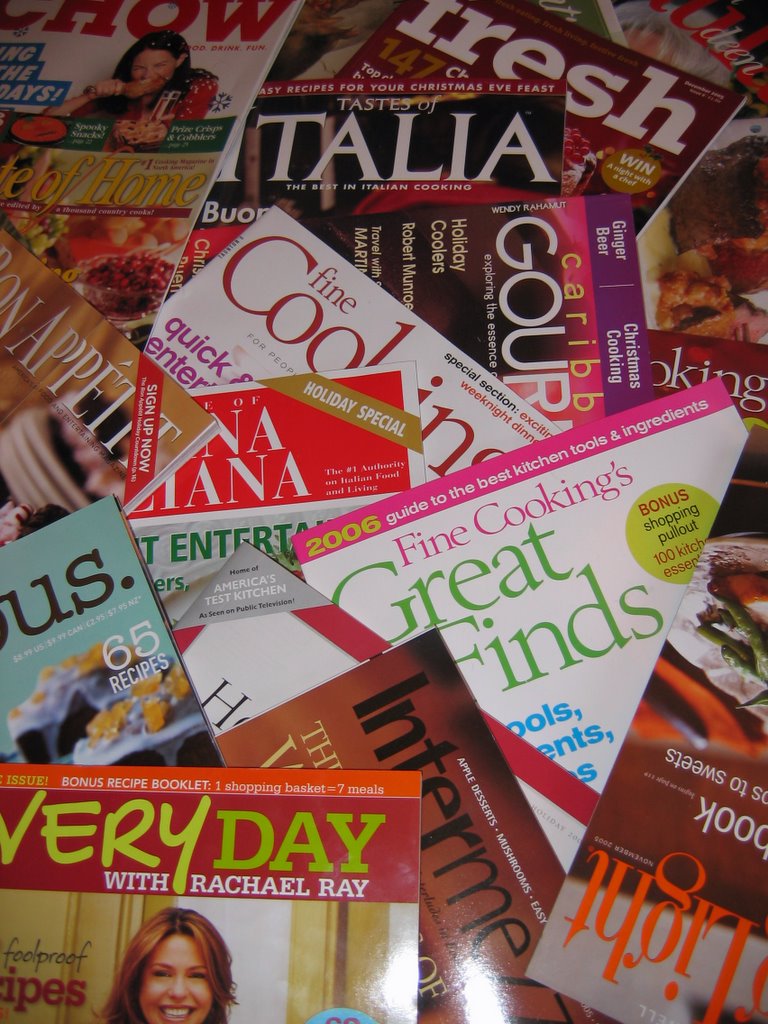 That's a rhetorical question.
I really don't know the answer.
But I do know this--there are a whole bunch of them.
Big ones.
Small ones.
Thick ones.
Thin ones.
This one has a shiny car,
This one has a cookie star,
What a lot of 'zines there are!
(Okay, Dr. Seuss, I am truly sorry for bunging up your brilliant poetry. But the number of food magazines has boggled my mind, and so I plead temporary insanity.)
For reasons which I cannot now disclose, I have been haunting bookstores, newstands and grocery stores, picking up food magazines, and reading them.
And I have come to a few conclusions.
One--just as soon as I think I have found all the food magazines that there are in the United States, I find one or two more I have never heard of. And I sigh, and pick those up, too.
Two--They fall into several categories, of which there are three main ones. Food & Lifestyle magazines appear to be the largest category; these are the publications that not only talk about food, but also travel, place settings, alcoholic beverages, music and entertainment. In addition to beguiling the reader with beautiful food and recipes, they try to sell an image--a fantasty of a way of life the reader can aspire to. (I tend to get irritated by these magazines eventually.) Straight up Food and Cooking Magazines are the ones I tend to like the most, though there is one particular title that I am sure is my own personal kryptonite. When I look at it, I get weak in the knees, nausea strikes, and dizziness nearly overwhelms me. But most of this category I really like and they tend to be the ones I go out of my way to read every month. The third category, which is Everything Else, is a concatenation of speciatly magazines which cover one food-related topic, health-related cooking magazines, seasonal magazines and journals which cover food and culture.
Three--There is bound to be at least one or two food magazines that appeal to every foodie in the world. I don't know this for certain, but the odds are with me. With fifty-plus titles in English, a double handful of which originating outside the US, there is bound to be something for everyone.
Four--There is bound to be at least one or two food magazines that make any given foodie want to hurl. If my theory that there is bound to be one or two magazines that will appeal to any given foodie, the opposite is likely to be the case.
So--I pose a question to my readers--what food magazines do you read? Which ones do you particularly like?
And which ones do you utterly abhor?
And finally, why?
Food Media
Sunday, November 20, 2005
Turkey Aquisition Complete!
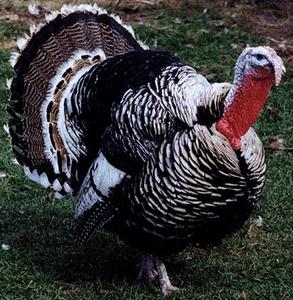 We went to Columbus yesterday to pick up a turkey at the North Market Poultry and Game stall. I didn't call ahead or order one; I did that when we lived in Pataskala, but last year, because we had been focused on looking at houses in Athens, I forgot to order ahead of time, but was still able to just arrive and pick up a fresh, free-range bird.
The folks at North Market Poultry are not only smart enough to order enough turkeys for walk-in customers, but they are also friendly, funny and know their products inside and out. They can rattle cooking instructions off the top of their heads that would make Julia Child proud, and they are happy to tell you where every one of thier products come from. They cook their own turkey stock on site so their customers don't have to, and they go out of their way to sell as many Ohio-raised birds and game animals as possible, including turkeys, rabbits, bison and venison.
Well, anyway, I saw that they had standard free-range Broad-Breasted Whites in their case, as well as some heritage birds.
Heritage turkeys are the big Thanksgiving trend in the foodie world, and I have yet to try one, myself. But, seeing that there were some in the case, and noting the physical differences between the two, I decided to give one a shot.
How different are they? Well, the legs are longer on the heritage birds, and the muscle development is more evident. The breast isn't as overwhelmingly large as the mutant-looking commercial Broad-Breasted Whites (those birds are so deformed that they can barely walk, and instead waddle awkwardly, and some cannot lift their massive breasts to walk at all) and the color of the meat was a more pinkish tone with thinner, more tightly affixed skin.
These birds are of the Narragansett breed, and were raised at Speckled Hen Farm, a poultry farm in Morrow County Ohio, not too far from Columbus. They list on LocalHarvest, and if you click on the link you can go to a great photograph of one of the owner's kids feeding gorgeous huge turkeys some bread. Speckled Hen Farms was featured on the blog Small Farms last month, and was written up in the newsletter for Local Harvest by Tana Butler, the blogger behind Small Farms.
I have to say I am shocked at low lovely the Narragansett turkeys are from a purely aesthetic standpoint--they are very handsome birds. (The picture up above is a Narragansett male.) The males, when they strut about in their display--when they raise their tails, and puff out their feathers--are amazing in their size and color; they look something like the wily wild turkeys that roam the woodlands of Appalachia, foraging in the rolling fields and hills. I cannot help but admire their physical beauty--I did grow up going to county and state livestock shows after all, and developed an appreciation for the beauty of farm animals at an early age.
Historically speaking, the Narragansett turkeys came about when turkeys were brought from England to New England by the Puritans and then were interbred with the native wild turkeys.
I know what you are thinking--turkeys from England? I thought that they were from North America?
They were. When the Spaniards went to Mexico, they found domesticated turkeys there, and brought them back to Europe. Turkeys were among the first North American foodstuffs eagerly adopted by the Europeans, and turkey breeding took off on the continent and in England both. By the sixteenth century, turkeys were a standard part of the typical poultry yard, and so were brought with the Pilgrims, back to the colonies.
Interesting, eh?
At any rate, I am told by the good woman who sold me my very own twelve pound bird, that heritage turkeys should be cooked only to about 140 degrees internal temperature (with the thermometer in the thigh), and allowed to carry-over cook while it sits and rests for about twenty minutes. Otherwise, she said, they will dry out. Though I had heard not to brine a heritage bird, she said she brines hers and that the salt and extra moisture does nothing but enhance the already luscious native flavor of the meat. When I told her that I tend to stuff butter and fresh aromatics under the skin, then rub the skin with butter, salt and pepper, then start my bird on high heat, then turn it down after the skin browns and shrinks, she said that my method should work perfectly well for the Narragansett as well.
So, next Saturday, we shall see if my usual Thanksgiving method of combination high heat mixed with low temperature roasting will work as well with a fancy heritage bird as it does with a free-range broad-breasted white.
food and drink Food
Saturday, November 19, 2005
Weekend Cat Blogging: Are you a Good Cat or a Bad Cat?
 I promised a few more pictures of Dandelion for today's weekend cat blogging, so here are a couple that show the two sides of her personality.
On the left, you see she is alert, sweet-tempered and gentle. Playful and inclined to purr.
 On the right, you see the Cat from Hell.
Actually, on the right you see her yawning again--she makes the most evil faces when she yawns.
In truth, little Dandel, as we often call her, is a very good natured girl cat, full of playful grace and lithe strength. She is getting along with the other cats famously--she plays with the younger boys, Lennier and Gummitch in particular, and with the kitten, Tatter. She is a little afraid of Ozy, because he is so large, but she sniffs noses with him respectfully and lets him pass. Jack has shown no inclination to bother her and when Grimalkin tries to dominate her, Dandel holds her own, sometimes with the help of gallant Gummitch, who is still in love with her and watches her from afar with moon eyes.
For more weekend cat blogging, check in with Claire and Kiri at Eatstuff--she is out of the hospital and recovering nicely, I am happy to say!
Friday, November 18, 2005
Jambalaya Juju
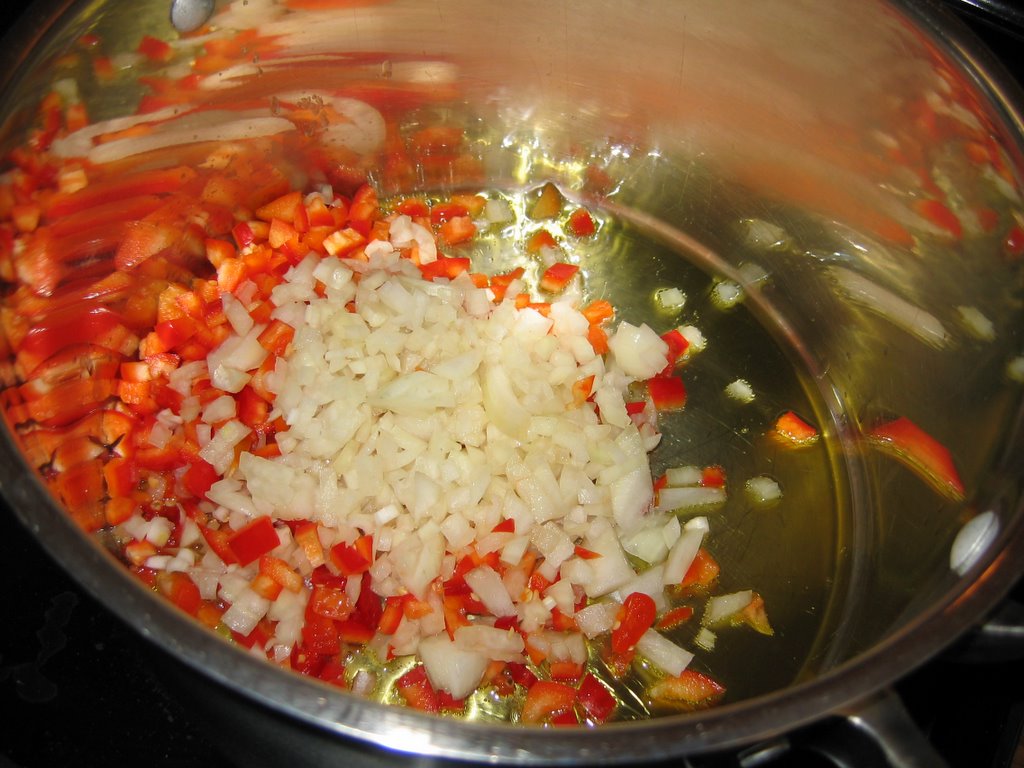 It is spicy.
It involves rice.
It has sausage and ham in it.
Did I mention, it is spicy and involves rice?
Oh, yeah, I did.
Well, you can see why I think jambalaya may be my all-time favorite bit of American Southern Country-Folk food of all time.
Because it is spicy, involves rice and it has sausage and ham in it.
Three of my favorite things, right there--heat, rice and pig.
You cannot possibly go wrong.
Jambalaya is a dish that is claimed both by the Cajuns and the Creoles of south Louisiana, and I have heard credible origin stories from both sides. However, I think that like many of the foods of that region, no one can definitively argue which side is the rightful creator of the dish--it is something that grew organically from the varied ethnic groups who settled Louisiana in successive waves.
It is almost as if, with each wave of immigrants, someone threw something new into the pot which bubbled merrily on the collective kitchen fire, and eventually, what was served forth was jambalaya.
Some say it was inspired by the Spanish dish paella--and one can easily see that comparison. Paella involves rice cooked with spices, aromatics, herbs, sausage and seafood, and jambalaya is based on the same principle, though the practice of using a shallow pan to cook the dish such as the Spaniards use, is absent. The name, "jambalaya," is said to come from the French "jambon" for "ham," with "a la" added as a suffix. And while the sausages in Louisiana all tend to have French names, it is said that the German immigrants really got the sausage-making tradition going when they arrived....you see what I mean when I say that as far as I am concerned, everyone in South Louisiana can lay claim to the origin of the dish, because everyone had a hand in putting something in the pot.
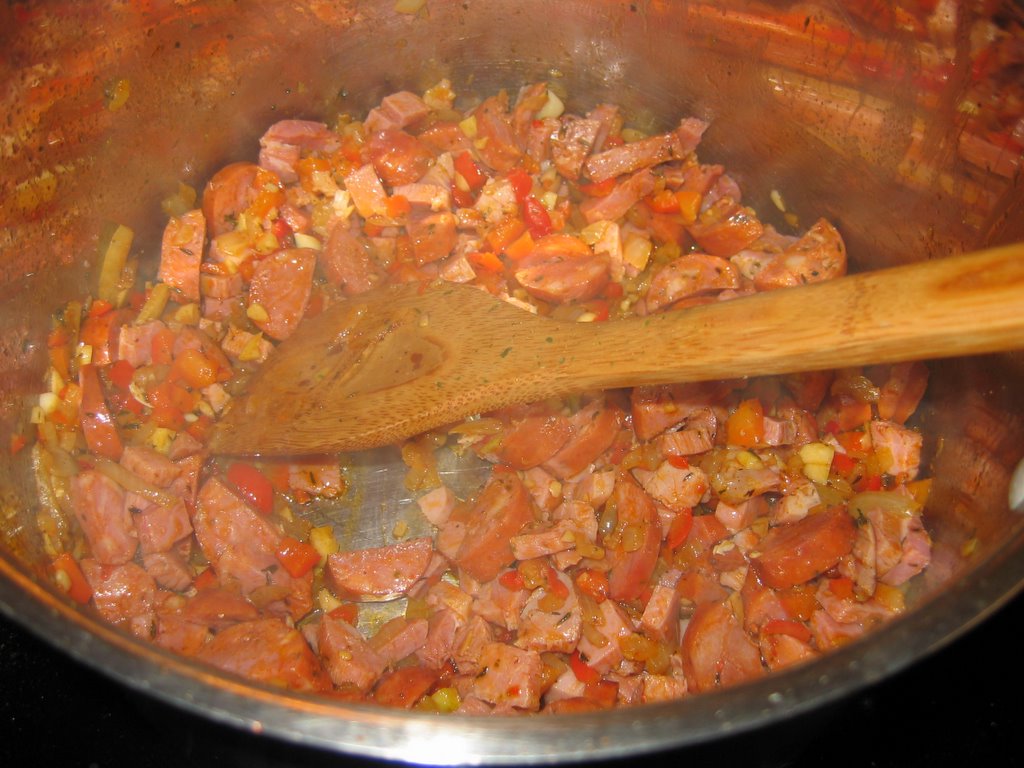 Now, I am not from South Louisiana, I am from West Virginia. We don't grow rice there, no one eats crawfish or "mudbugs," and there aren't too many French speakers there. So, where did I pick up the habit of making jambalaya?
Not from a cookbook, if that is what you are wondering.
Nope--I learned it from several friends, all of whom have family roots sunk deep in South Louisiana and New Orleans. And I met all of them in southeastern Ohio.
Which, now that I think on it, is rather odd, but the world is a very strange place sometimes.
Anyway, it was kismet, because I was destined to bump into jambalaya--and believe me--it was love at first taste. It is a magical dish, full of flavor, fire and festivity. It is a melange of tastes that dance a wild two step on the tongue, leaving you hungry for just another bite, even when you are so full you are like to burst.
After my first taste, I knew I had to learn how to make it, which I did.
My friends are generous with their familes' recipes.
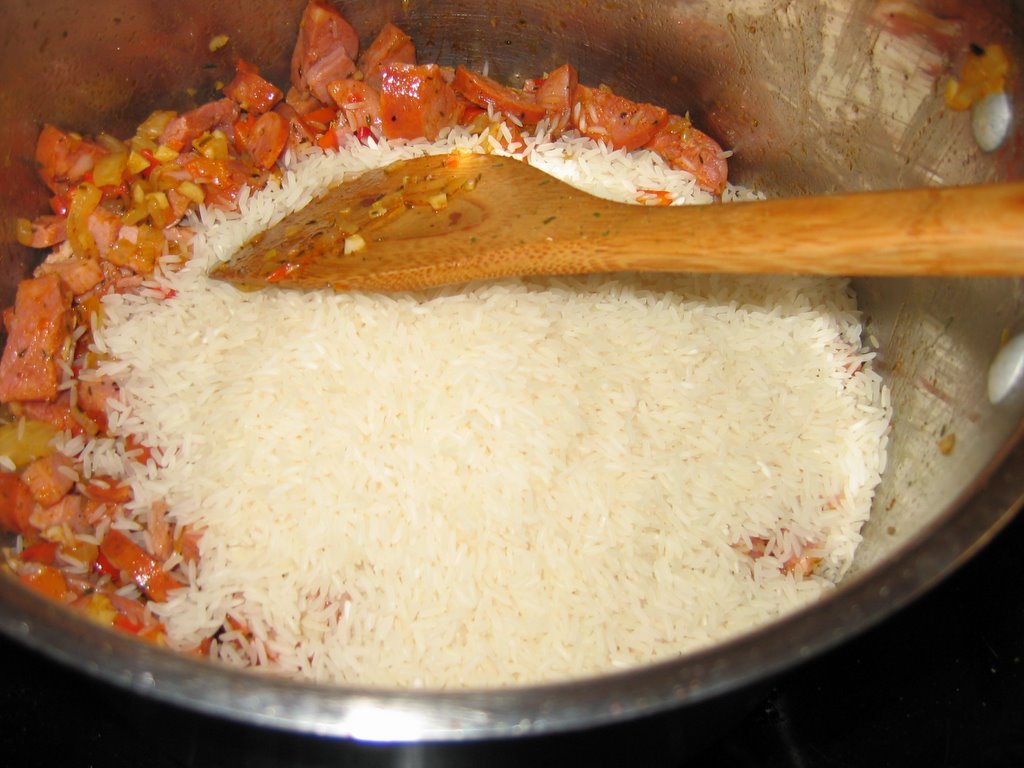 What it comes down to is this--you start with good flavoring ingredients: the holy trinity--onion, bell pepper and garlic, with some celery (or in my case, celery seed--Zak hates the texture of celery.) Then, you add fire, in the form of fresh chiles or dried cayenne--or both. Then, you have at least one pork product--that is, if you don't keep kosher or halal or aren't a vegetarian. In my case, I add two--really good quality ham and andouille sausage. Then, you can add any flesh, fowl or seafood you want--since I live in a land-locked state, this is usually chicken, though venison makes for an amazing jambalaya experience. Then, you have herbs, long-grained rice, wine, broth or stock and some fresh herbs to mix in for green color, fresh flavor and a little crunch.
And that is it. That is how it is made. It is a magical process of layering flavors that you coax out of each ingredient with whatever kitchen wiles you possess. It requires patience and diligence, and a couple of nice big pots, long wooden spoons and just the tiniest smidgen of good old Southern juju to make it come out right.
You will notice in the recipe that I am somewhat inexact about amounts and the like--that is because I was taught to cook this by feel. It is hard to put "by feel" into written instructions, but I tried--I hope it works for y'all.
Oh, you will also notice I said nothing about tomatoes.
I am a no-tomato jambalaya kind of person. Others folks disagree with me on this point, which is fine--that is their perogative. They can make their jambalaya with tomatoes and when I am at their house, I will eat it that way, because it is sinful to turn down a bowl of jambalaya, just plain sinful.
But at my house, no tomatoes are harmed in the production of jambalaya.
I save them for other, even more wicked, enchantments. (Like puttanesca.)
Oh, and one more thing--you can stretch this recipe or shrink it in any direction. Just keep the proportions of rice and broth or stock the same and you will do fine. You can add more or less meats. I don't know if you can do it meatless. I have never tried. I am rather of the opinion that it might be boring that way, but you never know. I figure you can do an all seafood version, however.
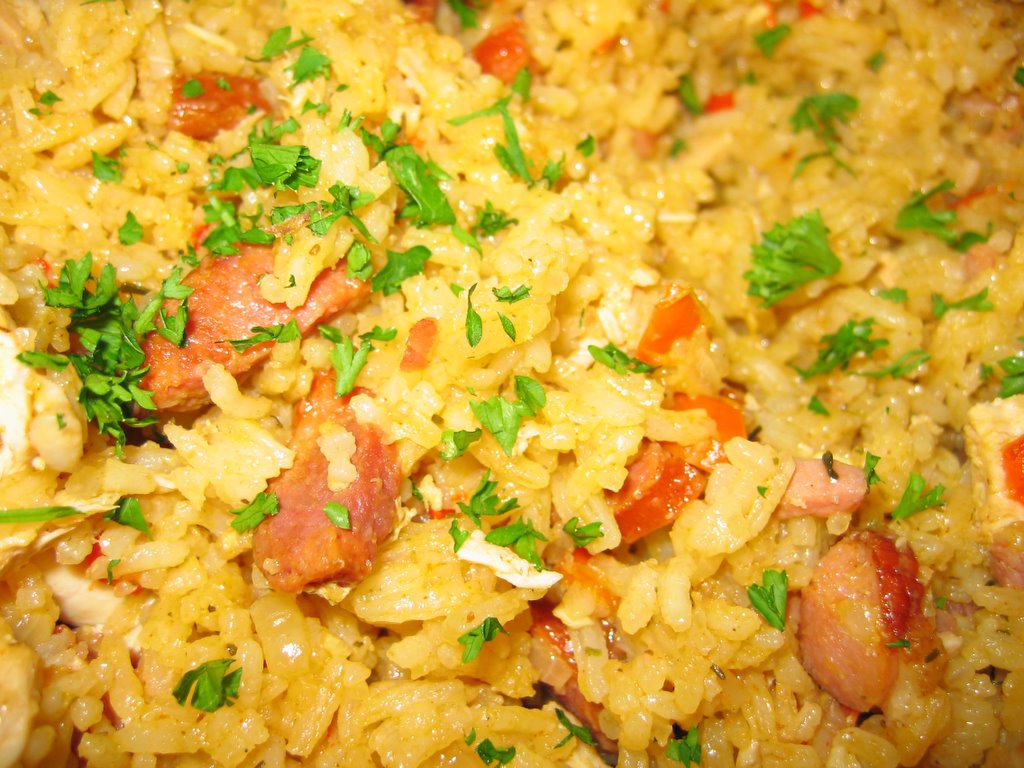 Jambalaya
Ingredients:
Enough olive oil, lard or bacon grease to cover the bottom of your jambalaya pot in a very thin layer (about 4-5 tablespoons)
1 large yellow onion, diced finely
1 fresh red bell pepper, diced finely
1-5 chile peppers (I used 5 serranos) de-seeded if you like and minced
1/2 teaspoon celery seed, lightly crushed (or one stalk celery, diced finely)
1 head garlic, minced
1 bay leaf
2 teaspoons Spanish smoked paprika
1 teaspoon half-hot Hungarian paprika
1/2 teaspoon dried powdered rosemary
1 teaspoon dried thyme
1/4 teaspoon dried rubbed sage
freshly ground pepper to taste
dried ground cayenne pepper to taste (or Cajun Creole seasoning to taste)
1/2 pound really good cooked ham, diced finely
1 pound andouille sausages cut in half lengthwise then cut into thin slices
1/2 cup dry red or white wine
3 cups long grain rice (I used jasmine, because that is what is in the house)
6 cups chicken broth or stock (Depending on your stove and rice, you may need up to a 1/2 cup more.)
2 cups shredded leftover chicken bits
1/2 cup minced fresh parsley
1/2 cup thinly sliced scallion tops
Method:
Get a nice big pot that has a lid and melt or heat your fat of choice in it.
Throw in the onion, sweet pepper, chiles and celery seed or celery, and saute until the onions turn dark golden and start to turn reddish. Add garlic, bay leaf and dried spices and keep cooking, stirring, until the onions really start to caramelize and the garlic is golden and everything smells really, really good. Add the ham and sausage, and cook until they brown lightly.
Deglaze the pan with the wine, and allow most of the liquid to boil off.
Add the rice, and cook, stirring, until all of the rice is coated with the oil and is shiny and somewhat transluscent.
Add the stock or broth, and bring to a boil. Toss the chicken in on top of the rice. Clap the lid on the pot, turn down the heat to low and simmer for 10-20 minutes. Check after ten, and if it is looking done, eat it then. If not, put the lid back on. If the liquid is all gone but the rice is still not quite done, add a little bit more broth or stock, stir and then cover up and cook about five more minutes. This step is variable--because I don't know how low the low on your stove is or how fresh your rice is. When I made this batch pictured here--it cooked in about ten minutes, because my stove was electric and didn't cool as fast as it should, and the rice was super fresh.
Sprinkle with the parsley and scallion tops and stir them in and serve right away with a salad and some nice French bread.
Food Recipes Chiles
Thursday, November 17, 2005
Beijing Stir Fried Lamb, Leeks and Cilantro
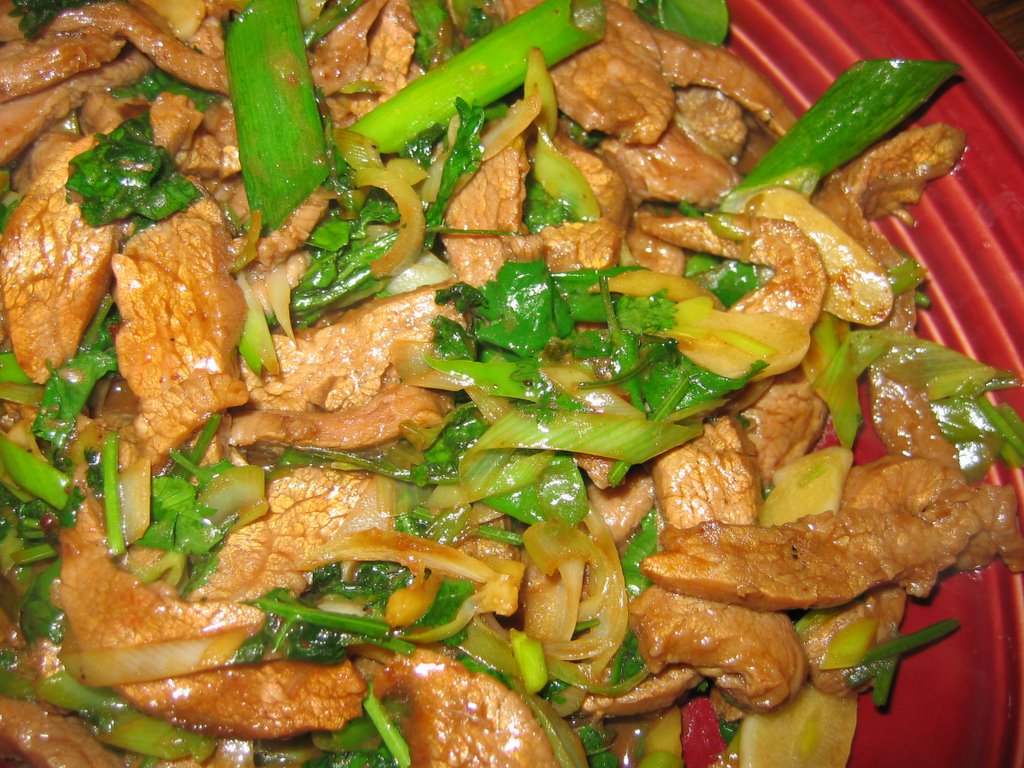 Jump onto the irony train with me here, and let's go travelling north and east, to Beijing, China.
(If you don't know why we are on the irony train, then read the post right before this one. If you've read it, you are up to speed with me, so let's go to the dining car and get comfy, shall we?)
I remember when I got my first tastes of really good, really homestyle Chinese food. It was when I worked at the fabled China Garden Restaurant, way, way back in the day, in Huntington, West Virginia.
Huy, the chef, had made an amazing red-braised dish with pork, and I said to him, "You know, this would be delicious on lamb. Or, maybe venison." And his wife, Mei, shook her head and said, "Lamb? Oh, it is too strong-flavored. You like lamb?"
I nodded. Granted, I was one of the only people I knew growing up who ate lamb who wasn't Greek, but our family, because they had owned a slaughterhouse and meat-market, and were recent European immigrants, had a tradition of eating lamb. By the time I came around, the meat-market and slaughterhouse were long gone, but the tradition and taste for lamb was well-ingrained. "Yeah, I love lamb. We didn't eat it all the time, it was too expensive, but it is my favorite meat."
Mei shook her head and said, "It is too strong--it smells funny. Most Chinese don't like it. "
One of the younger cooks piped up with, "In the north, in Beijing, and farther north, they eat sheep meat. Only there. And in the far west."
I read about it and found that he was correct. In Beijing and the northern parts of the country, because of the influence of the Mongolians and the prevalance of Muslims, mutton and lamb are widely eaten, and in a variety of ways. It is grilled, braised, stir fried and is made into a communal cooking and dining experience known as "Mongolian Hot Pot." It is also used in steamed dumplings and other specialities.
Most folks from southern China, however, really dislike lamb, and do not eat it. My best friend in culinary school, a Singaporan Chinese of Cantonese descent, Nee Wee, really hated lamb. When we had to cook it, he refused to taste it, waving his hand in front of his nose and declaring it to be, "stinky meat." He would wrinkle his face up whenever I tried to get him to eat it, and shudder.
But the memory of Huy's wonderful braised dish and my idea that lamb would taste good cooked Chinese style stuck with me for a very long time. Later, in my cookbook-diving I found a few simple recipes for Beijing style stir-fried lamb, and the idea struck my fancy.
 These recipes called for boneless leg of lamb, but when I mentioned to Cheryl at Bluescreek Farms in the North Market that I wanted lamb to stir fry, she smiled and said, "I have just the thing in the freezer."
She dug around and pulled out lamb flank steaks--pictured to the left.
They are small, of course, being as a lamb is considerably smaller than a cow, but they are the exact same cut of meat, as we see in a beef flank steak. The muscle is structured exactly the same way; it is almost perfectly rectangular, lean, with just a bit of fat on the outside, with muscle fibers making an obvious grain longitudinally. All of the factors that make beef flank steak perfect for stir frying are present in the lamb version, with one big difference.
Because it comes from a younger animal, the meat is that much more tender.
 Of course, I bought several pounds of the little steaks, and stuck them in my freezer to wait until I had decided how I was going to tackle the idea of stir-fried lamb.
This week, I decided that Wednsday was the day to attempt my experiment (long before I heard of Jamie Oliver's lamb kerfluffle), so I thawed the lamb flank steaks overnight in the fridge.
Like their larger beef counterparts, lamb flank steaks come with a bit of silverskin--it is just a membrane, probably made of collagen, over one side of the meat. As you can see to the right, it is quickly and easily removed by just prying it off with your fingers. The larger bits of fat I trimmed off before slicing the steaks carefully-across the grain, not with it-into very thin slices. (This is standard practice in cutting flank steak for stir-fry--always cut it across the grain. If you cut with the grain, the long muscle fibers will be very tough, however if you cross-cut it, the meat turns out to be very tender.)
 As for recipes, I found three to work from, and ended up synthesizing them into one fairly pared-down version. The books I used were Irene Kuo's The Key to Chinese Cooking, Martin Yan's Culinary Journey Through China and the Wei Chuan Cooking School's Chinese Cuisine: Beijing Style by Lee Hwa Lin.
One thing all the recipes had in common was the pairing of lamb with highly-flavored aromatic ingredients, particularly scallions, garlic and Sichuan peppercorns. Both Kuo and Yan remarked that such strong flavorings countered the characteristic very strong native flavor of the lamb itself. I decided to follow in this path, but instead of the scallions, I used very small young leeks, which were fresh and delicious at the farmer's market that morning. In addition, I noted that one recipe in the Wei Chuan book used cilantro and ginger with the lamb, so I incorporated those seasonings to the dish as well.
In order to cut the leeks in a way that was similar to the meat, I cut them into thin slices diagonally, then cut those slices in half longitudinally, as shown above. The garlic I sliced very thinly, and the ginger I cut into thin slices and then jullienned.
 Dark soy sauce was cited by both Kuo and Yan, while Lin simply noted soy sauce. All three recipes used Shaoxing rice wine; I then chose to use dark soy sauce and the wine. Vinegar was present both in Kuo's and Yan's recipes. She stipulated cider vinegar--probably because her book came out in the 1970's before many Chinese ingredients were commonly available in the US, while Yan calls for Chianking vinegar. They both noted that the sour flavor brings out the best in the lamb's nature; knowing that a touch of sour will lighten the richness of meat gravies and braising liquids--a trick I learned from a French chef--I decided to follow their lead and include vinegar.
Yan was the only author to use hoisin sauce and chile garlic sauce--I decided to ditch both of those ingredients, because I feared that they would complicate the sauce too much and add too many layers of flavor and end up muddying it up.
The one ingredient that was used by all three authors that I did not was sesame oil--instead of adding another separate flavor, instead, at the end of cooking, I added a second, small amount of Sichuan peppercorn. Layering one flavor twice kept the recipe even more simple and uncluttered--besides--I really like the fragrance that Sichuan peppercorn imparts to a dish.
I also love sesame oil, but sometimes it can be very overpowering, and instead, I wanted the natural flavors of the lamb to be enhanced and the flowery aroma of the Sichuan peppercorn to "float" over the rich scents of the meat, cilantro and leeks.
In the end, I think that the version I put together captured the spirit of the original recipes, and I have to say, it was damned good. I will be making it again--very little of it was left over after Morganna and Zak and I got to it. Some folks may think that lamb is "stinky meat," but I really believe that when cooked in this recipe, it showcases some of the best of Chinese cookery. It is an essentially simple recipe that relies on fresh ingredients and strong clear flavors. However, the tastes do all mingle in a mysterious way that makes the sauce itself difficult to define. It is not sweet, nor obviously sour, but instead is just sparkling with the natural flavor of the lamb that is beautifully enhanced by the sharpness of the Sichuan peppercorn. The leeks bring out the lamb's sweetness and the cilantro brings a lovely fresh note of green earthiness.
Definately, it was worth the wait to find the lamb flank steaks and to research the recipe.
I cannot wait to make it again!
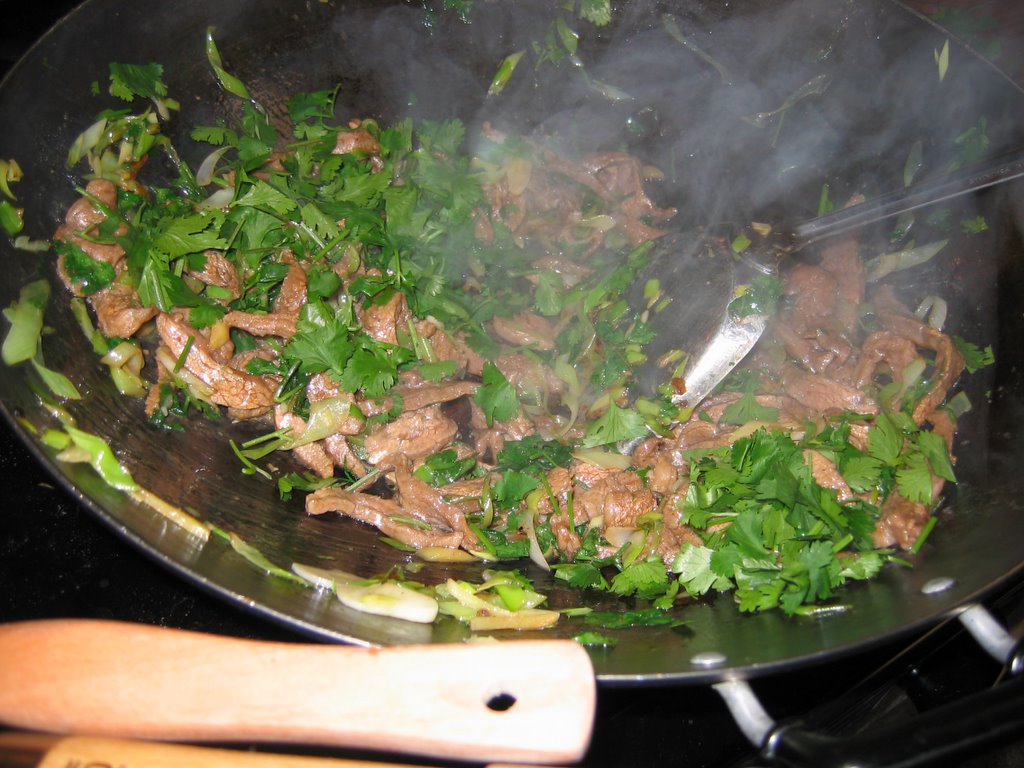 Beijing Stir-Fried Lamb With Leeks and Cilantro
Ingredients:
1 lb. lamb flank steaks, membrane removed and trimmed of excess fat
1 teaspoon roasted ground Sichuan peppercorns
2 tablespoons dark soy sauce
2 tablespoons Shaoxing wine
1 1/2 tablespoons cornstarch
4 small leeks, root ends trimmed, and cleaned then dried
4 cloves garlic, peeled and thinly sliced
1" cube fresh garlic, peeled, and jullienned
1 bunch cilantro, washed, dried and coarsely chopped (optional--if you dislike cilantro, leave it out and use one more leek.)
4 tablespoons peanut or canola oil
1 teaspoon sugar
1 tablespoon dark soy sauce
1 tablespoon Shaoxing wine
1 tablespoon Chianking vinegar (Chinese black vinegar--you can substitute balsamic, if you must)
2 pinches roasted ground Sichuan peppercorns
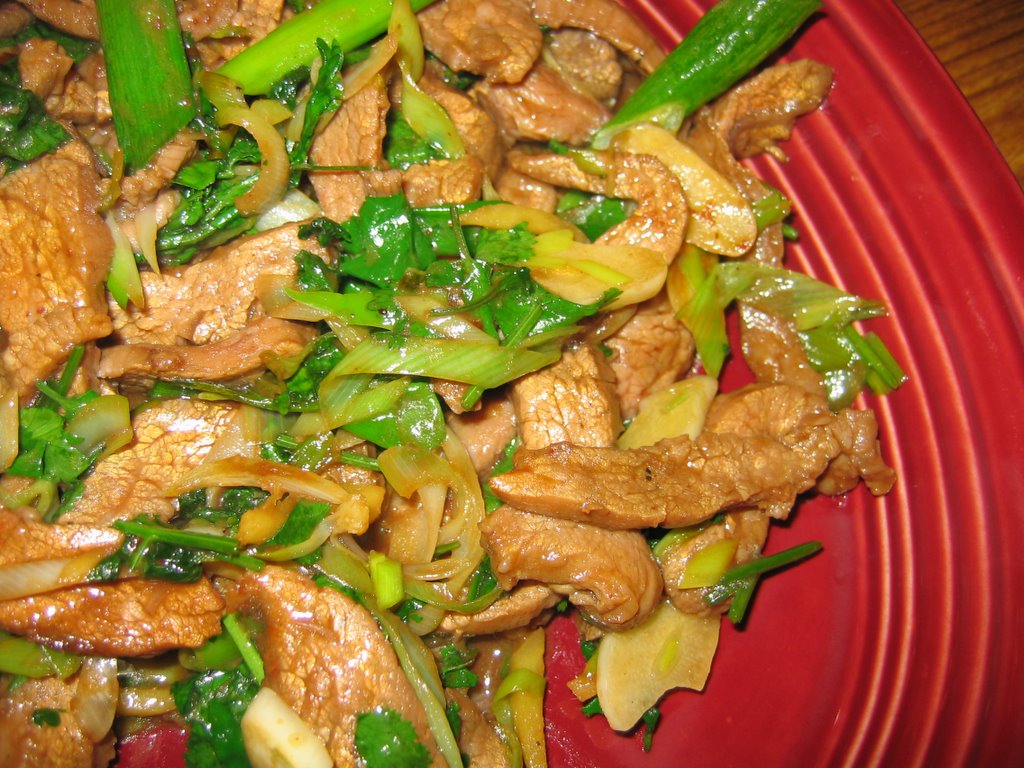 Method:
Cut lamb flank steak into thin slices across the grain.
Toss with the Sichuan peppercorns, soy sauce, wine and cornstarch. Allow to marinate while preparing other ingredients.
Cut the leeks (white and pale green parts only) into thin diagonal slices (about 1/4" thick) and then cut these longitudinally in half to give narrow, curling ribbons of jade green and white. Put in a bowl with the garlic and ginger.
Mix together sugar, soy sauce, wine and vinegar in a small bowl and set aside.
Heat wok until it is smoking, add oil, and heat until it shimmers. Add leeks, garlic and ginger, and stir fry until very fragrant about one minute.
Add strips of lamb, and carefully arrange in a single layer against the bottom of the wok and allow to brown undisturbed--about one and a half or two minutes. Once it starts to brown, start stirring vigorously.
When most of the pink is gone on the meat, add the cilantro, and continue stir frying. As soon as the meat is just about fully browned, add the sauce, and stir fry until it thickens--about thirty seconds.
Pour into heated platter and sprinkle with two pinches of the roasted, ground Sichuan peppercorns.
Serve immediately with steamed rice and some sort of stir fried, braised or steamed greens.
Food Recipes Chinese cooking Lamb
Wednesday, November 16, 2005
Jamie Oliver Spills the Blood of a Lamb, Film at Eleven
 So, Kate of the Accidental Hedonist scooped me on this bit of controversy, but since it is an issue near and dear to my heart, I figured I'd post about the flurry of shock and outrage across the pond over an episode of superstar chef Jamie Oliver's new show where he slaughters a lamb on camera.
This way, instead of boiling into a rant that will have me frothing at the mouth and gibbering incoherently on her blog, I could jump up and down about the stupid hypocrisy of the human race in the comfort of my own damned blog.
Anyway, there is that monster Jamie Oliver, off to the left, in a still from the show (courtesy of Kent News), doing the heinous deed of slitting the wooly critter's throat, with the help of a more experienced sheep-killer--his host and the patriarch of a country Italian farm family who gave Oliver the honor of slaughtering the lamb for a feast.
Note that Mr. Oliver's head is turned away--he is just the picture of the bloodthirsty sort who enjoys frightening children and shocking their mummies and daddies.
It is obvious to me that he did not relish the experience, but he managed it, and I must applaud his brave words before setting out to give Britain a taste of real reality TV. He said, "It's a beautiful creature, but it is tasty and we are top of the food chain. A chef who has cooked 2,000 sheep should kill at least one, otherwise you're a fake."
Not surprisingly, lots of people are het up over the entire issue. The website for the Daily Mail has around 315 comments following their story on Oliver's experience with the lamb. A good many of them are evincing great shock and dismay at this bloody bit of video.
Even though there was a warning of graphic content on the show before it aired, people are complaining that their children are going to be scarred for life because they saw the truth of where their little lamb chops come from. To be fair, the Times ran a signed column by Martin Samuel yesterday that defended Oliver's action, saying that all he did was show a bit of gritty reality to his viewers, and that anyone who is upset by it should check their grocery trolleys to see if there is any meat lurking therein. Because if there is, they are glass house dwellers who might want to set those stones back down.
And though she usually holds little truck with Oliver, Clarissa Dickson-Wright, the yet living member of the infamous "Two Fat Ladies," came out strongly in support of the episode, saying, "If I had my way, it would be shown at 6 pm when as many children as possible were watching."
Now, I am certain that any readers who have been following along with me for a while are going to know where I will be standing in this food-fight.
I am right there next to Oliver, just where any woman who got fed up with whiny meat-eaters and penned an essay entitled, "Meat Comes from Animals, Deal With It Or Eat Vegetables," should be.
I don't see the problem. He participated in a traditional killing of an animal for the purpose of eating it, and broke no laws in doing so. The animal was conscious--well, guess what folks--animals who are killed and made kosher or halal are also conscious when they are killed, because by Judaic and Muslim law, they must be killed by a single clean knife-stroke to the throat, and the heart must still be beating so that the blood can all be pumped out of the body quickly.
You don't like that?
Well, now, saying that people cannot do that is telling them how to worship, isn't it? And here in the United States, we have laws against telling people how to relate to God.
So--if it is alright for Jews and Muslims--why is it wrong for Oliver and his hosts, the friendly farm family in Italy?
In fact--why is it wrong at all to hold an animal down and quickly cut it's throat, but it is okay to string hundreds of them up, stun them with electrical shocks , and then cut their throats? Don't you think that cows that are strung up while still alive aren't terrified and in pain? Believe me--cows are big animals and do not like to be strung up by their hind legs.
Well, guess what? That is how cattle are killed in slaughterhouses all over the world. But because they are "stunned" after they have been strung up--that is more humane?
I have said it before, I will say it again.
If you are going to eat meat--recognize that death is involved, and honor the animals who die for you by recognizing their sacrifice. Look it in the eye. Know what you are doing when you bite into that lambchop.
Or bloody well don't bite into it at all.
Now, I have to go--I have some lamb flank steaks to slice up and marinate for my Beijing Lamb and Leek Stir Fry.
(No, really--that is what is planned for dinner tonight. Coincidence, or fate--you be the judge.)
News Media Jamie Oliver
lamb
Tuesday, November 15, 2005
Confessions on the Subject of Books
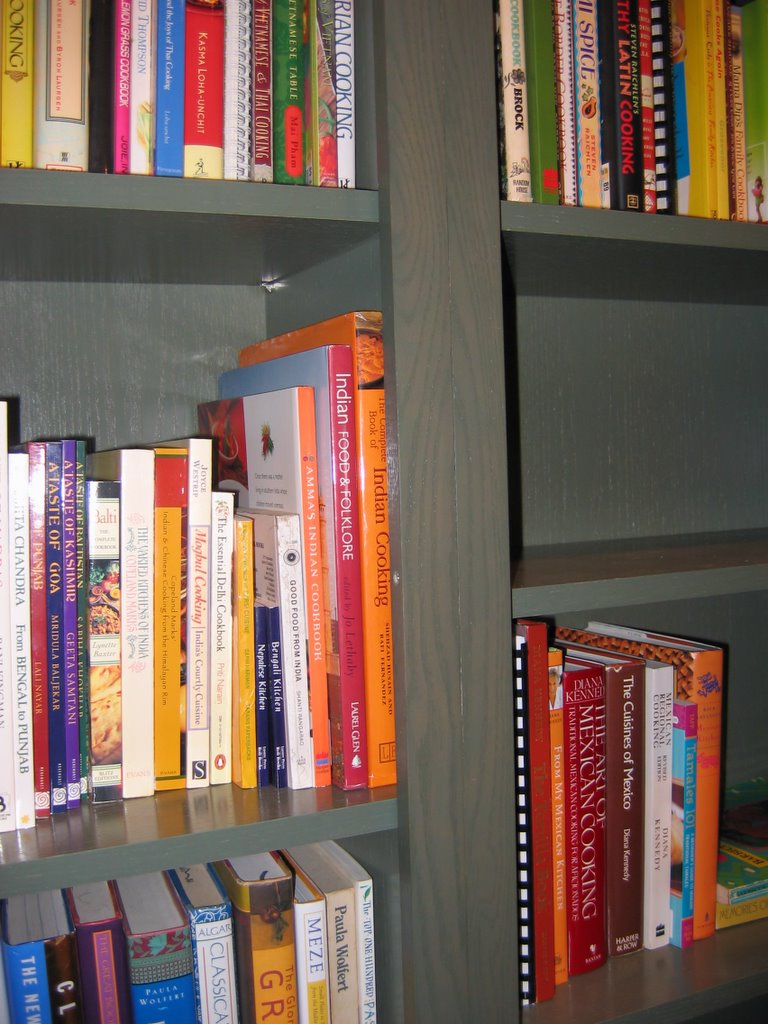 I know that I have already done a post on the subject of Kitchen Confessions, but I suspect that I hardly owned up to half of my oddities, questionable habits, strange tastes, shameful secrets and bizarro beliefs in the realm of all things culinary.
And while, in that post, I did touch upon the fact that I rarely cook directly from a cookbook (meaning, that I cook the recipe as written without changing anything) and when I do there are usually semi-disasterous consequences, I really only touched the surface of my peculiarities involving books.
So, here I am, entering the confessional once more.
I am almost compulsive when it comes to collecting books.
I have a huge number of books, on a great many topics, and I find it hard to get rid of them once I read them. Instead of getting rid of them, I tend to hold onto them, forming a personal reference library that rivals most people's I know.
However, I did do the unthinkable, before we moved into this house, and went through our books, including my cookbooks, and got rid of a huge number of them--about eighteen large boxes full in all ended up at Half-Price Books, along with about eight boxes of assorted CD's, DVD's and videotapes.
But even after being weeded out, I have so many books that a friend once said as she looked at our living room after we had started packing, and said, "Without books, your house looks barren--they are a major decorative theme in your house."
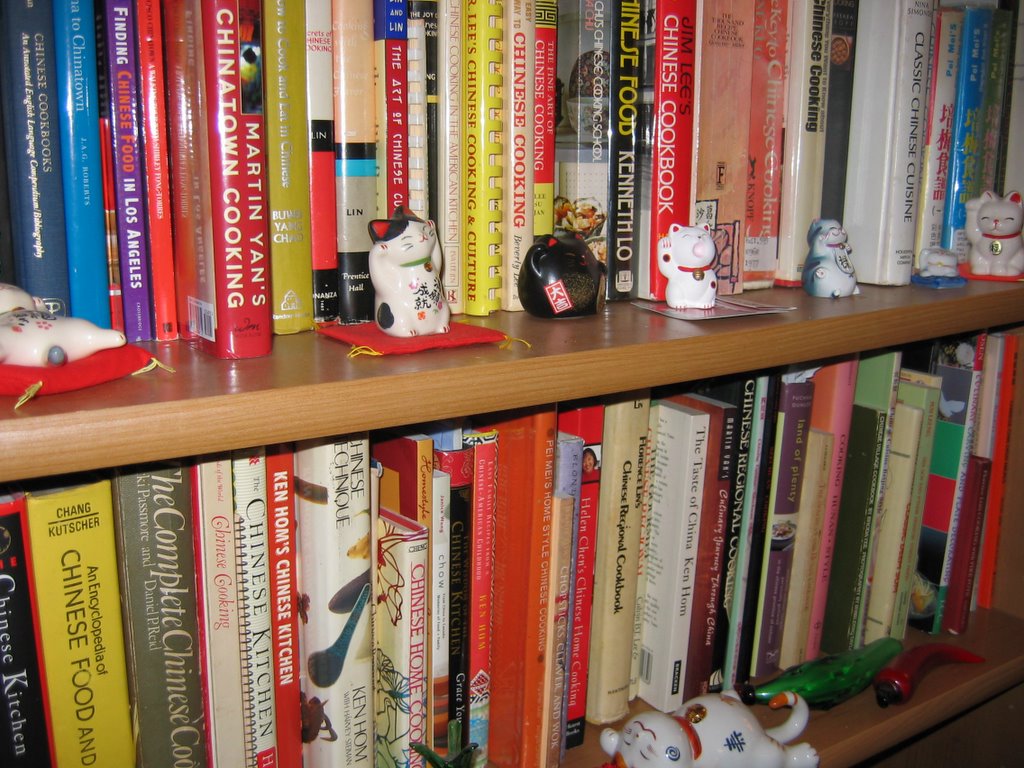 Did this process of finally going through my books and ridding myself of the dross stop me from purchasing more books after we moved?
Not at all. If anything, it has only encouraged my bad habits, as it means I have more room for more books.
No--just yesterday, I received two used books, both on subjects culinary, though neither were cookbooks: one was an anthology on the subject of Chinese food in North America, and the other was a food history book. Then, after lunch downtown, I picked up a bargain book at a bookstore--a biography of T. E. Lawrence--one of my own personal heroes of the past. (I note that just so y'all know that I don't just read about food. If I did just read about food, I would be worried that I suffered from obsessive compulsive disorder, which I don't think I do, though some of my past posts, on the subjects of spices and beans might give steadfast readers ideas to the contrary.)
What do I do with all of these books, one might ask?
Well, the short, rather obvious answer is that I read them.
And I do read them.
Well, most of them, I do read. Some, I skim. Others I pick through, because they are reference books, and some, I am ashamed to say, have only received a cursory glance, because they are part of a completist's collection, and contain very little new information. (There are quite a few of those in the Chinese cookbook collection, but not too many.)
As for the cookbooks--if I cook from very few of them, why are they there?
That is a great question, and one which I do have an answer for.
The short, rather snippy answer is that I read them, which, again, I do, but that is hardly a complete explanation of their pride of place in my kitchen.
I may not cook from them directly, in the ideal sense of following a recipe from beginning to end unchanged, but I do gain a great deal of inspiration from them. I learn from them--if not specific recipes, techniques and ways of doing things that I cannot easily learn in any other way.
For example, I taught myself many years ago how to decorate cakes by reading books on the subject over and over, until by the time I picked up a decorating bag filled with icing, I was already able to see the motions I needed to do with my hands in my head. This meant that I began turning out beautifully piped garlands and flowers much sooner than most people, even though I had never taken a class in the subject.
I also use my cookbooks to help me teach others how to cook.
Seeing how others explain a technique or recipe or bit of food history in prose has given me a better ability to communicate my skills to others in a classroom setting. Julia Child's obsessive grasp of detail and the ability to write about a subject so thoroughly has infinately helped me teach the complexities of Chinese food to students, even though she was writing about French food. It is from her that I learned the value of being conversational and approachable in my writing and speaking, but to also be fluent in noticing details of how food should look, taste, feel and smell so that I can give students these pointers to understanding whatever technique I am teaching. (Even though I cook very little Italian food, Marcella Hazan's very detailed and witty explanations of how things are done have similarly helped me in teaching Asian cuisines to non-Asians.)
In a less rational and sensible way, however, the cookbooks are my friends. They contain the voices of authors whom I may have never met (though I gazed once upon Julia Child from afar and cooked something that she herself ingested while I was in culinary school), but who, through their prose, have become close to me, and meaningful to my kitchen journeys. I feel somewhat better, just knowing that behind me, in the bookcase on the wall, Julia Child is there, watching me work at the stove, and that Grace Zia Chu's words are just a few paces from my fingertips. They are my muses, my angels, my saintly guardians of the temple which is my kitchen.
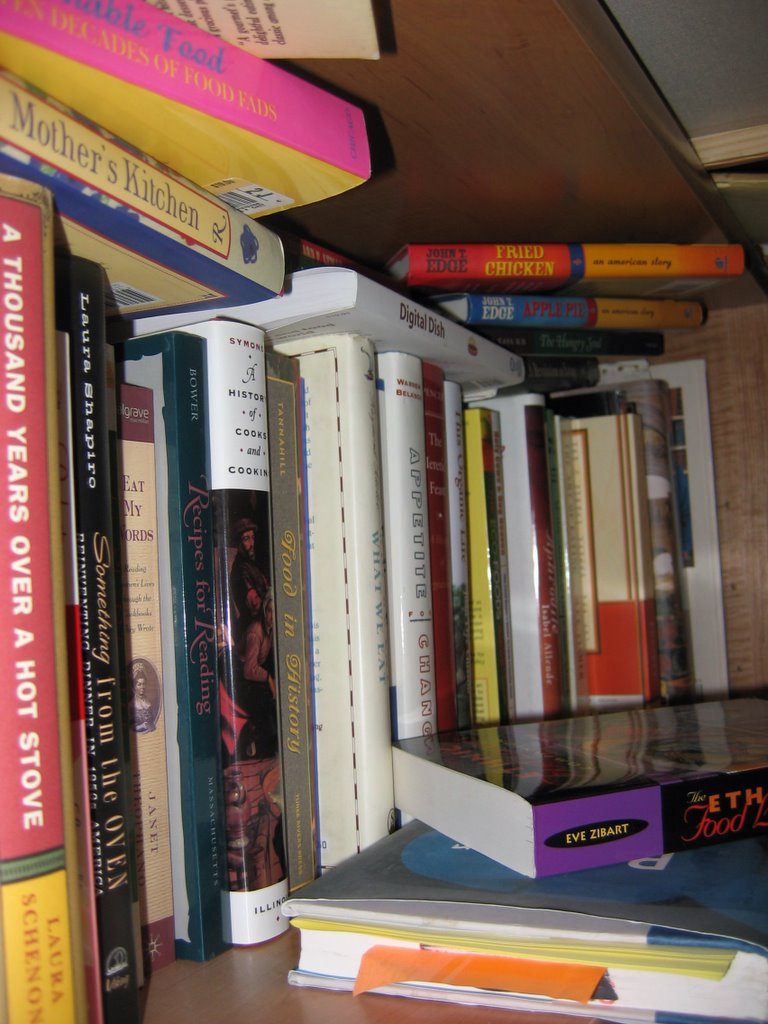 I think that is part of why cookbooks in particular are difficult for me to let go of. They represent the collected knowledge of whole cultures and families, and to turn my head away from that seems like a rejection of values that I find most akin to mine--values of hospitality, sharing, fellowship and love.
I have to confess to having nearly as many food-related non-cookbooks as I have cookbooks, and I value them just as much, or perhaps even more than my cookbooks. These take the form of food memoirs, food histories, sociology, women's history, agricultural histories, socio-political treatises, food politics, and agricultural techniques, and plain old essays on the joys of cookery, eating, food and drink.
The shelves that house this portion of my book collection are overstuffed and sagging, and I have read many more of these tomes than I have reviewed here in my blog.
And this is where I come to another confession: I keep meaning to write more book reviews, and I keep ending up not doing it.
Why?
I am not entirely certain, though it probably has to do with the rather unfocused nature of Tigers & Strawberries. It is a food blog, to be certain, but because of my own eclectic magpie personality (meaning, I like bits and pieces of everything and get caught up in whatever interests me at the moment, and thus that is what I will write about), there is no real focus on what it is all about. I mean, sure I mostly cook Asian foods, so there is an obvious slant in that direction, as I post about various recipes and cookbooks related to Chinese food, with forays now and again into Japanese, Thai and Indian cuisines.
But it isn't just about Asian food, because just when I have gone a couple of weeks of posting about nothing other than Chinese food, I turn around and write about Shepherd's Pie and chocolate chip cookies. It isn't just about recipes, because I write about books. It isn't just about sustainable or organic food, because then I will write about food additives. It isn't just about food news or reviews, because then, I will turn around and write about foraging wild foods or specific ingredients or spices.
I suppose that like my book collection, which is wide-ranging and eclectic in nature, so my blog is a reflection of my own self. I am interested in everything, so everything ends up on my bookshelves and in my blog.
I guess that is fine--I will keep collecting books, and post about them here and there, when I get around to it. I will keep reading and writing and let my kitchen angels in the form of cookbooks watch my back while I go about my culinary adventures, and hopefully, it will all be as interesting to others as it is to me.
That said--has anyone read any good cookbooks lately?
I have a few spaces left on my new shelves....
Kitchen Update: Bookcases!
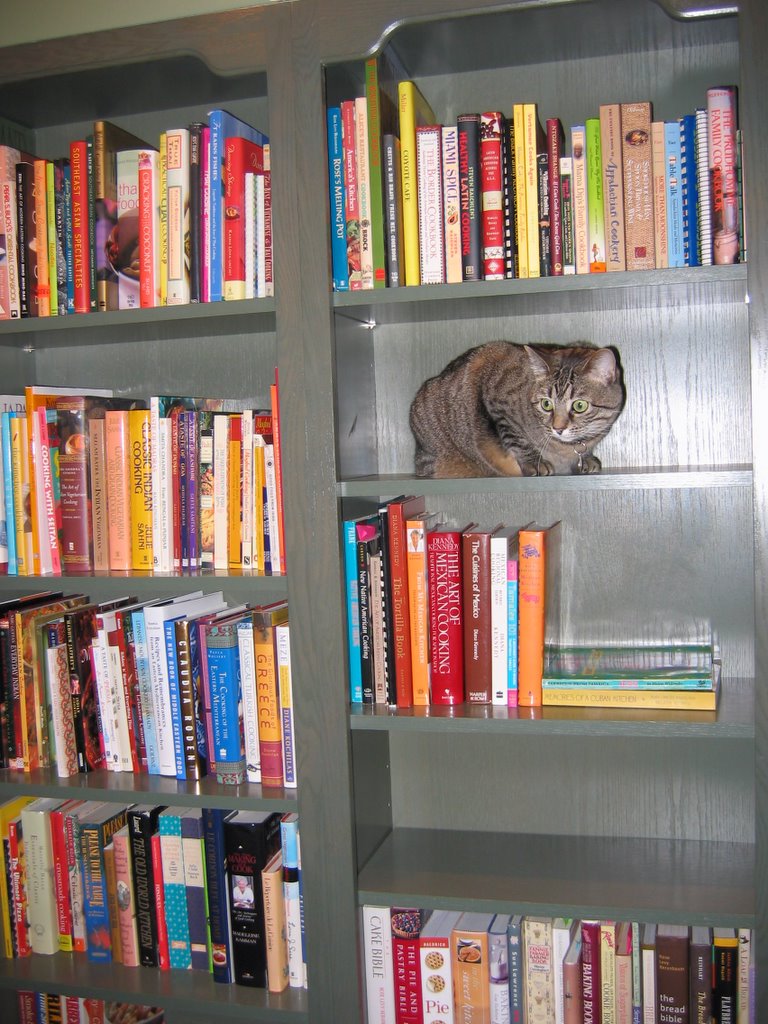 So I have moved the majority of the cookbooks into their new home in the built-in bookshelves in the kitchen.
As you can see, Grimalkin has moved in as well, and approves of the open spaces. I approve of them too, however, for a different reason.
Whereas she is always on the lookout for a new place to occupy, preferably high above the floor where she can survey her domain and choose likely feline targets to dive bomb, I am always thrilled when I can have room for more books.
However, I have to admit that not all of the cookbooks are in those cases, so appearances are decieving.
I still have the culinary reference and food literature books in my office, mainly because they are more often used at my desk than in the kitchen. While Larousse does have recipes, I generally use it to look up details of culinary history or to find out the classical method of producing a certain dish than I use it to cook from. Also, all of my books on food history, some of which may or may not have recipes, are in my office, as they, too, are of more use in my writing than in my cookery.
A second chunk of the collection is in the upstairs kitchen: my entire collection of Chinese cookbooks and books on Chinese food and culture. Since much of what I will be teaching is Chinese food, it makes a great deal fo sense to keep them up there, though they are threatening to overrun the bookcase I have set aside for them. Probably what I will do is bring down a handful of them to the downstairs kitchen--these being the ones I actually cook from, and leave the rest upstairs, but who knows--it may pay to leave them all upstairs.
I haven't decided yet.
While I may be indecisive, Grimmy seems to have the issue well in hand. I am not allowed to fill up all of the shelves, she tells me (in rather definate and plaintive meows) as she has far too much fun lurking in the empty shelves.
I suspect that her lurking will be for a limited time only. Such an avid reader and collector of cookbooks am I that I cannot imagine that she will have shelter there for long.
Monday, November 14, 2005
Shepherd's Pie-It May Be Ugly, But it Tastes Good
 Sometimes when the chill November winds blow, and the sky is a granite grey, the soul simply cries out for the warmth of a classic casserole.
This is especially true when I have a whole bunch of hungry teens in the house who may or may not have patience for my usual offerings of authentic Chinese, Thai or Indian dishes complete with fermented black beans, fiery chiles or bitter melon.
Having Morganna's friends to visit gives me an excuse to whip up something simple from fairly familiar ingredients in a form which is different than the usual.
 Shepherd's pie fits the bill fantastically.
A traditional British dish of either minced lamb or shredded leftover roast in gravy, and topped with mashed potatoes that is then baked in the oven, shepherd's pie is among the plainest of plain foods.
However, at my house, "plain" and "simple" does not mean "bland" and "boring." Other cooks may content themselves with just throwing together some ground meat and making a gravy, then topping it with barely seasoned mashed potatoes and baking it, but I am constitutionally incapable of following such a course. It is not in my nature to take perfectly lovely ingredients such as ground lamb and red potatoes and then toss them into an unseasoned glop and set it before family and friends. I might as well throw it down the drain, or to the dogs, though my dogs, if presented by unseasoned food, would probably turn up their noses and look at me as if I had betrayed them hideously.
There is no reason shepherd's pie cannot be a well-seasoned, delicious dish, and in fact, considering what it ends up looking like--as Morganna so baldly, yet eloquently puts it--"it looks like cat barf"--it absolutely must taste wonderful. (Though when Morganna made her habitual comment about the ugliness of shepherd's pie, one of her friends noted quite sensibly, "It has meat, potatoes and corn. How can it be bad?" He gets invited back to dinner often.)
So, my recipe contains all sorts of things that one will not often find in any traditional recipe. A great number of leeks or onions, and garlic season the meat along with an array of herbs, chipotle chiles and smoked paprika. I boil garlic cloves in with the potatoes, and then mash the two together along with sour cream and butter, then season the mash further with chives and other herbs. Finally, I add vegetables into the minced meat mixture that taste good in a lamb stew--carrots, mushrooms and corn most often, though I have also added kale, parsnips and turnips fairly often to good effect.
The result is a one-dish meal that only requires a salad and beverage to be complete. It is infinately variable--you can put whatever vegetables you like in it, and instead of ground lamb, you can use ground beef (though I am told by my British friends that such a dish is known as "cotter's pie") or even leftover pot roast or braised lamb for the meat filling. You can season it as much or as little as you like; some days when it is cold and snowy, I like to put a lot of chipotle en adobo in the filling, and make it almost like a chili dish.
The one thing I will insist upon, though, is the garlic cloves boiled and mashed with the potatoes. That is necessary, at least at my house. Whether or not you peel your potatoes, or use milk and butter or cream or sour cream or yogurt in the mashing is up to you--but do please try the garlic. Boiling the garlic softens the flavor and makes the garlic cloves very creamy and the flavor of the potatoes is very warm and comforting with the garlic.
 Shepherd's Pie
Ingredients:
3-4 pounds red potatoes, scrubbed
1 head garlic, peeled
1 teaspoon salt
3 tablespoons olive oil
1 large onion, peeled and thinly sliced
6 fresh mushrooms, cleaned and thinly sliced
4 cloves garlic, peeled and minced
1 chipotle en adobo, minced
1 teaspoon dried thyme
1/2 teaspoon dried powdered rosemary
1/2 teaspoon smoked Spanish paprika
1/4 teaspoon celery seed, lightly crushed
1/4 cup dry red wine
salt and freshly ground pepper to taste
1 pound ground lamb
1 cup milk
1/2 quart chicken broth or stock
flour or roux as needed to thicken gravy
3 tablespoons butter
1/4 cup sour cream
fresh chives
fresh or dried chervil or thyme
salt and pepper to taste
Method:
Peel potatoes or not as you wish--if you do not, scrub them extra carefully. Cut them into cubes and boil in pot with the one head of peeled whole garlic cloves and the teaspoon salt. Boil until tender.
Heat olive oil in a heavy frying pan and saute onions until they are golden brown. Add mushrooms, and cook until tender. Add garlic and all seasonings, and stir until quite fragrant. Add wine, boil off alcohol. Add lamb, and milk, and break up lamb. Cook, stirring, until lamb is browned and most of the milk has boiled away. (This is a trick I learned from an Italian chef--you get a very tender, smooth minced meat sauce this way--something about the proteins in the milk combining with the meat helps it break apart very finely.)
When the milk is boiled away, add the chicken broth or stock, and bring to a simmer. (At this point, you can add carrot slices, finely diced turnips and/or frozen corn kernels--cook until the vegetables are as tender as you like them, then go on to the next step.)
Thicken with flour or roux to a nice thick, bubbling gravy. Taste and correct seasoning as needed with salt and pepper. Heat oven to 375 degrees F.
Oil a casserole dish lightly, and pour the thickened meat filling into the bottom of the dish.
Drain the potatoes, and mash with the butter and sour cream. Salt and pepper to taste, then add chives and herbs.
Spoon potatoes over the meat and spread them evenly to the edge of the casserole dish. You can try to make decorative peaks and valleys or something, but really--it is no big deal. (I do know that one can use a piping bag to pipe rosette designs in the mashed potatoes, but I think that is silly. This is a homey dish--we are not cooking for the Queen of England here.)
Put in the oven, uncovered and bake for 20-30 minutes, until the meat filling is bubbly and the potatoes are starting to brown on top. (If you want your potatoes really browned, you can brush them with a bit of egg wash and put under the broiler, but again, that is gilding the lily.)
Notes:
You can make this ahead and cover it and freeze it or put it in the fridge. If you freeze it, do not thaw--just bake for 45-50 minutes, or until done.
Do play with the seasonings. You can add vegetables or not as you see fit. You could do a vegetarian version of this with mixed wild and domestic mushrooms as the main attraction of the filling--portabellos, shiitake, oyster, field mushrooms and dried porcini cooked with leeks, garlic, wine and some nice root vegetables like carrots and parsnips would be lovely. You can make this with ground beef or veal as well. It is an infinately malleable basic recipe.
This reheats fine in either the microwave or the oven.
food recipes lamb British cooking
Sunday, November 13, 2005
Sustainable, Local and Organic Food News
 Local Food New Focus on College Campuses
The number of college campus dining halls featuring locally grown, sustainable foods has grown to the point that even media giants like Time Magazine have started to take notice--in a recent article, Time reports that that 200 universities nationwide have started serving local foods--half of them since 2001.
In addition, 45 campuses have student-run farms that not only provide food to dining halls, but give students valuable experiences in learning how food is planted, grown and harvested.
Many of these new catering decisions seem to be instigated by rising student ecological awareness and demand for sustainable foods that not only are more nutritious, but which taste better and are more environmentally sound.
I think that the activism of younger Americans bodes well for the entire idea of supporting local, sustainable agriculture, and I am pleased to see that the movement has grown to the point where it is even being noticed by Time Magazine. This sort of wide coverage of the local food movement will do a lot to expose the average American to the concepts of eating seasonally and locally.
Organic Milk: What Exactly Does That Mean?
Meanwhile, back at the dairy farm, the New York Times takes on the issue of organic milk.
Apparently, organic milk is the "gateway" for many consumers into the realm of organic food. Lots of parents who won't buy any other form of organic produce will pay a premium for organic milk, even though they may not know what the label "organic" entitles them to.
Apparently, it is this, and only this: "It comes from a cow whose milk production was not prompted by an artificial growth hormone, whose feed was not grown with pesticides and which had "access to pasture," a term so vague it could mean that a cow might spend most of its milk-producing life confined to a feed lot eating grain and not grass."
As for how much time cows spend in the pasture for their milk to still carry the USDA Certified Organic label is currently a topic for much heated discussion at the USDA and elsewhere.
But, while the government, farmers and dairy industry are arguing, Americans are still buying a lot of organic milk products: a 23% growth in the organic dairy industry is predicted in the next year.
That is a lot of milk; one wonders when demand will outstrip supply, driving already high prices even higher.
Director of Iowa State University's Center for Sustainable Agriculture Forced to Resign
Fred Kirschenmann, director of ISU's Leopold Center for Sustainable Agriculture, says he was forced to resign as director and take a lesser staff position because of a philosophical difference of opinion concerning the future of the center. He believed that the center's energies should take on a more national focus, while Wendy Wintersteen, interim dean of the College of Agriculture, believed that the focus should be on helping only Iowa farmers.
The mission of the internationally-known Leopold Center is to study the negative effects of traditional, industrialized argricultural practices and research more ecologically sound alternatives.
A letter-writing campaign protesting this management change is currently being organized by local and national advocates of sustainable agriculture.
Read the full story here.
news media organic food sustainable local food
Saturday, November 12, 2005
Weekend Cat Blogging: A Get-Well Wish for Clare!
Clare, the cat-loving lady behind the delicious blog, eatstuff, was in the hospital all this week after being bitten by her beloved cat, Kiri. The unfortunate incident that led to this hospitalization had to do with a dog running loose who scared Kiri while Clare was holding him; the poor boy was terrified and trying to get away from the dog to defend himself, and ended up hurting his favorite person in the world instead.
And the bites got infected, so, Clare has been laid up for quite some time, eating horrid hospital food and missing her kitty.
My kitties had heard about the theraputic value of laughter, so some of them decided that they should look as silly as possible, in order to make Clare laugh, so she will get better sooner.
So, here they are--at their best:
.jpg) To the left, we have the new girl on the block--Dandelion--which, as we know, is likely to be here temporary name, until we discern more personality and give her a permanent name.
To the left, we have the new girl on the block--Dandelion--which, as we know, is likely to be here temporary name, until we discern more personality and give her a permanent name.
While she looks like she is some sort of minion of the Dark Lord doing her Gene Simmons impersonation in this picture, in truth, she was yawning. She is actually a very sweet and playful little cat who is getting along famously with everyone else, so much so that while we have more cats than we have had before, we also have more peace in the house.
Go figure.
.jpg) Lennier now has a new nesting spot. It is close to the sacred spigot from whence the spring of blessed water flows.
Lennier now has a new nesting spot. It is close to the sacred spigot from whence the spring of blessed water flows.
He lays there and waits for me to turn the water on, and then will let it pour over him.
He fell in the bathtub with me yesterday, and swam around, quite unconcerned, jumped out and then dried himself off, then jumped back up on the side of the tub and watched me finish washing my hair.
He really is an alien in a cat suit, I swear.
.jpg)
Here is Gummitch looking rather inebriated.
However, no catnip was involved in the creation of this picture--he was playing hide and seek with Dandelion, and was coaxed out of his hiding place by yours truly who called him repeatedly, with the camera focused and ready to get the shot.
I am not sure why his eyes look crossed, though. They just do. It may be that he is walking about in a constant daze--I believe that he is in love with Dandelion. He certainly acts smitten--he follows her around, is solicitous of her, he smacked Grimmy when she tried to bully them, and has been doing his best to look handsome and manly when Dandelion is near him. Which she nearly always is, because he is always near her.
Earless, he looks like some sort of long-nosed seal--or maybe a walrus--look at those whiskers.
So, if Gummitch is the Walrus, I guess that makes Lennier the Eggman.
.jpg) And speaking of Lennier, here he is again, taking such tender care of his bestest girlfriend, Tatterdemalion.
And speaking of Lennier, here he is again, taking such tender care of his bestest girlfriend, Tatterdemalion.
Look how gently he washes her.
And he is washing her, not trying to strangle her.
At least, I don't think he is trying to squeeze the life from her.
;-)
For more well-wishing to Clare from cats around the international blogosphere, check in with Foodie Farmgirl at Farmgirl Fare and Boo at Masak-Masak.
They are the generous and delightful hostesses of this very special edition of Weekend Cat Blogging.
So--Clare--my cats and I hope that you got at least a giggle from their antics, and that it will hope you get well soon--we've been worried about you.
And the bites got infected, so, Clare has been laid up for quite some time, eating horrid hospital food and missing her kitty.
My kitties had heard about the theraputic value of laughter, so some of them decided that they should look as silly as possible, in order to make Clare laugh, so she will get better sooner.
So, here they are--at their best:
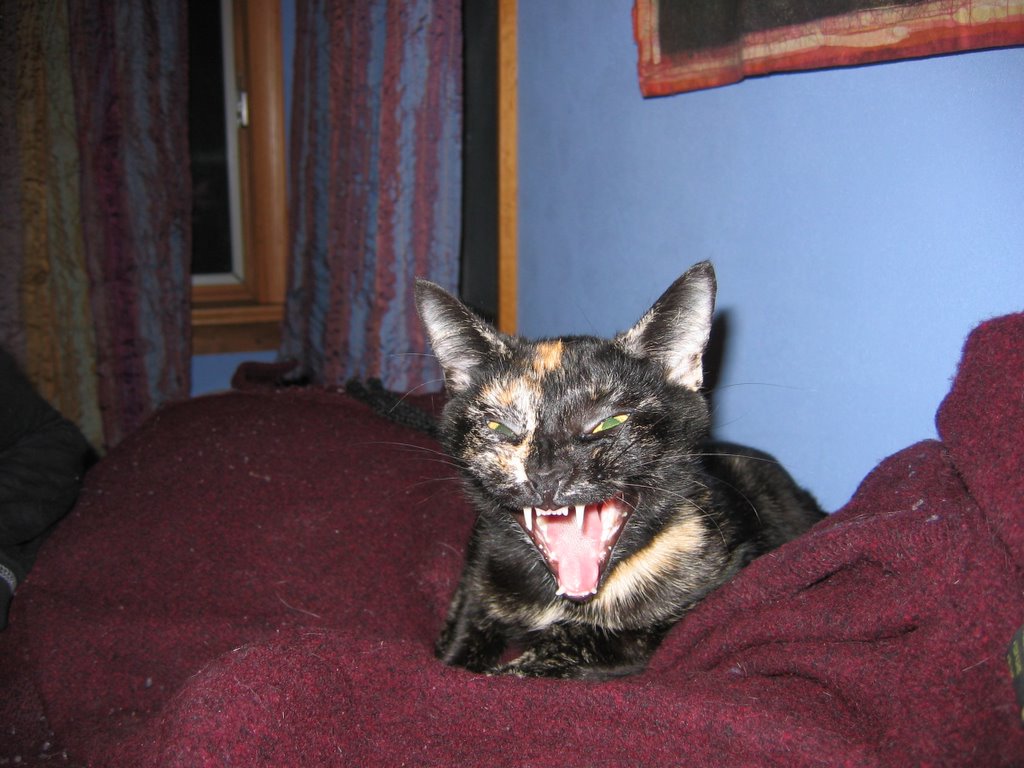 To the left, we have the new girl on the block--Dandelion--which, as we know, is likely to be here temporary name, until we discern more personality and give her a permanent name.
While she looks like she is some sort of minion of the Dark Lord doing her Gene Simmons impersonation in this picture, in truth, she was yawning. She is actually a very sweet and playful little cat who is getting along famously with everyone else, so much so that while we have more cats than we have had before, we also have more peace in the house.
Go figure.
 Lennier now has a new nesting spot. It is close to the sacred spigot from whence the spring of blessed water flows.
He lays there and waits for me to turn the water on, and then will let it pour over him.
He fell in the bathtub with me yesterday, and swam around, quite unconcerned, jumped out and then dried himself off, then jumped back up on the side of the tub and watched me finish washing my hair.
He really is an alien in a cat suit, I swear.
Here is Gummitch looking rather inebriated.
However, no catnip was involved in the creation of this picture--he was playing hide and seek with Dandelion, and was coaxed out of his hiding place by yours truly who called him repeatedly, with the camera focused and ready to get the shot.
I am not sure why his eyes look crossed, though. They just do. It may be that he is walking about in a constant daze--I believe that he is in love with Dandelion. He certainly acts smitten--he follows her around, is solicitous of her, he smacked Grimmy when she tried to bully them, and has been doing his best to look handsome and manly when Dandelion is near him. Which she nearly always is, because he is always near her.
Earless, he looks like some sort of long-nosed seal--or maybe a walrus--look at those whiskers.
So, if Gummitch is the Walrus, I guess that makes Lennier the Eggman.
 And speaking of Lennier, here he is again, taking such tender care of his bestest girlfriend, Tatterdemalion.
Look how gently he washes her.
And he is washing her, not trying to strangle her.
At least, I don't think he is trying to squeeze the life from her.
;-)
For more well-wishing to Clare from cats around the international blogosphere, check in with Foodie Farmgirl at Farmgirl Fare and Boo at Masak-Masak.
They are the generous and delightful hostesses of this very special edition of Weekend Cat Blogging.
So--Clare--my cats and I hope that you got at least a giggle from their antics, and that it will hope you get well soon--we've been worried about you.
Friday, November 11, 2005
Cookies and Friends
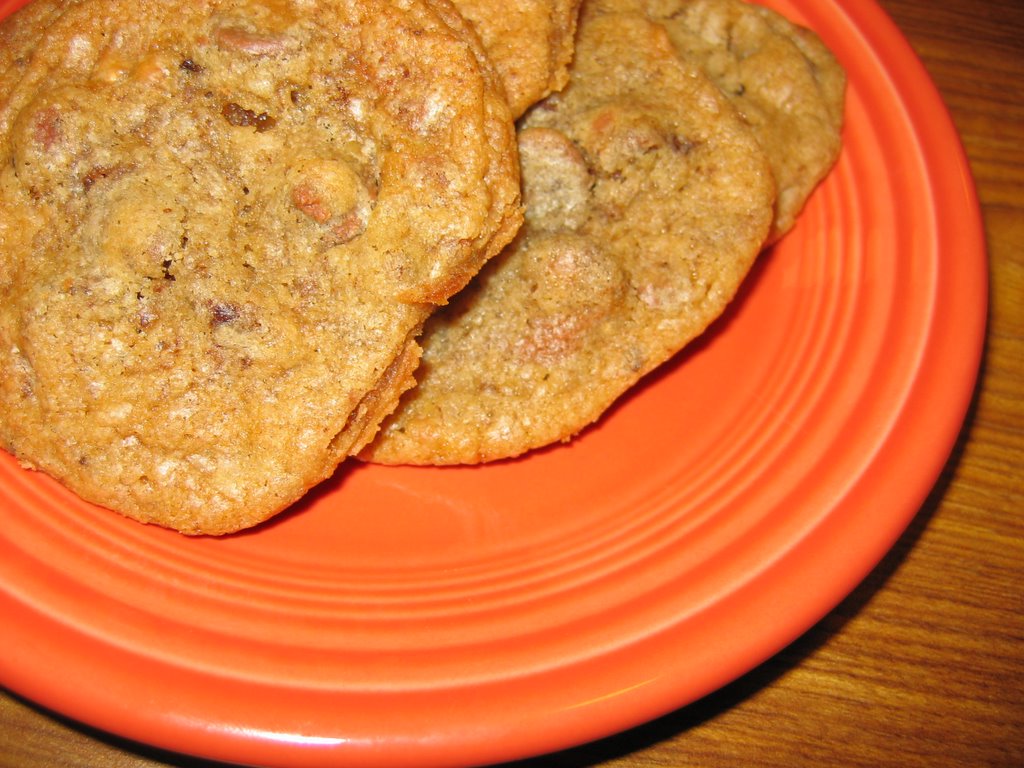 Morganna's friend Emma, the eternally bouncy, hopped up to me this afternoon and said, "We would like to make chocolate chip cookies, please," then flashed a pixie-like smile.
How could I refuse?
Making spur-of-the-moment cookies with my best friend Diane, is one my most cherished memories of middle school and high school. We'd start in the afternoon, or if she was spending the night, after we'd watched umpteen episodes of Star Trek, and would make wretched messes in my mother's kitchen, with much giggling, tasting of raw cookie dough and mismeasured ingredients.
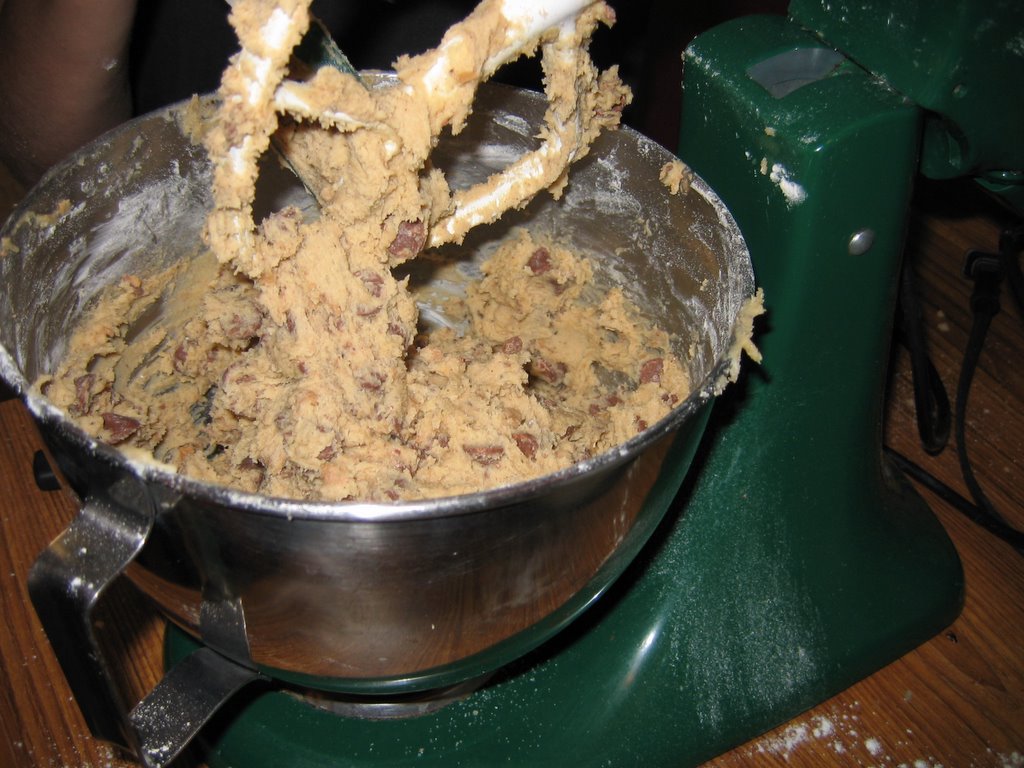 My mother always kept the stuff to make some sort of cookies around, so that Diane and I could dig through her cookbooks and file of hand-written, egg and dough-stained recipes and create something to fill our cravings for something sweet and filling.
Diane had little experience with electric mixers, so the first time we delved into cookie baking without my mother standing over us, she had lifted the beaters from the bowl while they were still running and flung a whirlwind of dough all over the kitchen.
I remember it took us hours to clean up every scrap of dough that night; I was worried Mom would freak out, but since it was Diane's doing and she had never touched a mixer before in her life--well, when Mom saw it, she laughed. Then, we laughed, and spent what seemed like an eternity cleaning it all up.
There were even specks on the ceiling.
Luckily, I have a Kitchenaid, so Morganna and Emma didn't have the chance to fling dough from here to eternity.
But, they certainly did eat their fill of it uncooked; Morganna is of the opinion that this version of chocolate chip cookies tastes just as good raw as it does baked.
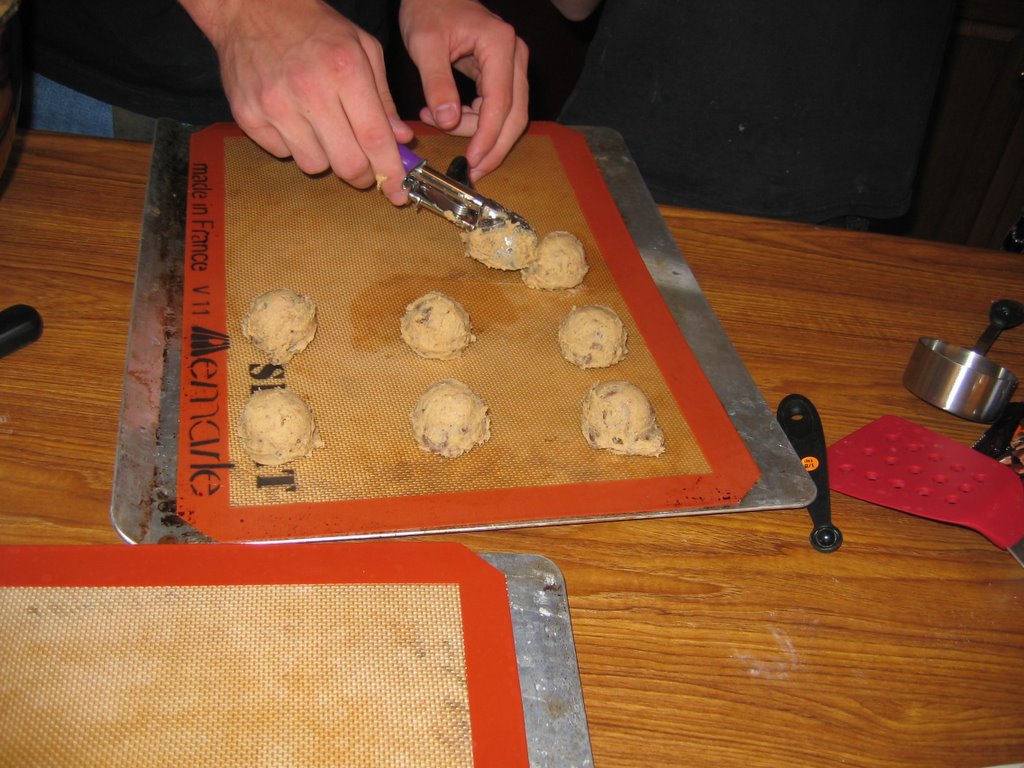 It is an adaptation of the classic Toll House recipe, which of course, is the version I grew up with. I changed it because Zak told me that he didn't like chocolate chip cookies, and I couldn't let that situation stand--how can anyone not like chocolate chip cookies?
So, I played with the recipe and added a few twists on the basic flavor. Generally, I use all brown sugar in these cookies, which results in a darker, chewier cookie, but in this batch, Morganna and Emma decided to follow the tradition of using half white sugar and half light brown.
The vanilla they used was double strength Penzey's--in order to get the same effect with normal vanilla extract, use twice as much of it.
Because of the toffee bits in these cookies, they are crisp on the outside, and chewy on the inside, and they tend toward the fragile. Let them cool for at least two or three minutes on the cookie sheet before removing them to a rack. Otherwise, they are apt to fall apart or droop between the wires of the rack and deform into rather ugly sculptures. I also tend to take them out of the oven when they are slightly underdone, because I want them to finish baking on the sheet. This ensures that the centers stay chewy while the outer layer is still crisp. If you let them darken all the way, they will come out crunchy--it is the extra sugar from the toffee that seems to cause all of this finicky behavior.
It was good to watch the girls have fun baking together, and as you can see, it brought back memories of many hours spent in Mom's little yellow kitchen with my best friend, making cookies that we always meant to take to school to share, but somehow we never had enough left. (Though, we did share with Mom and with Gram, up the street, and often the next door neighbors. We never ate all of them, though I think we tried once or twice.)
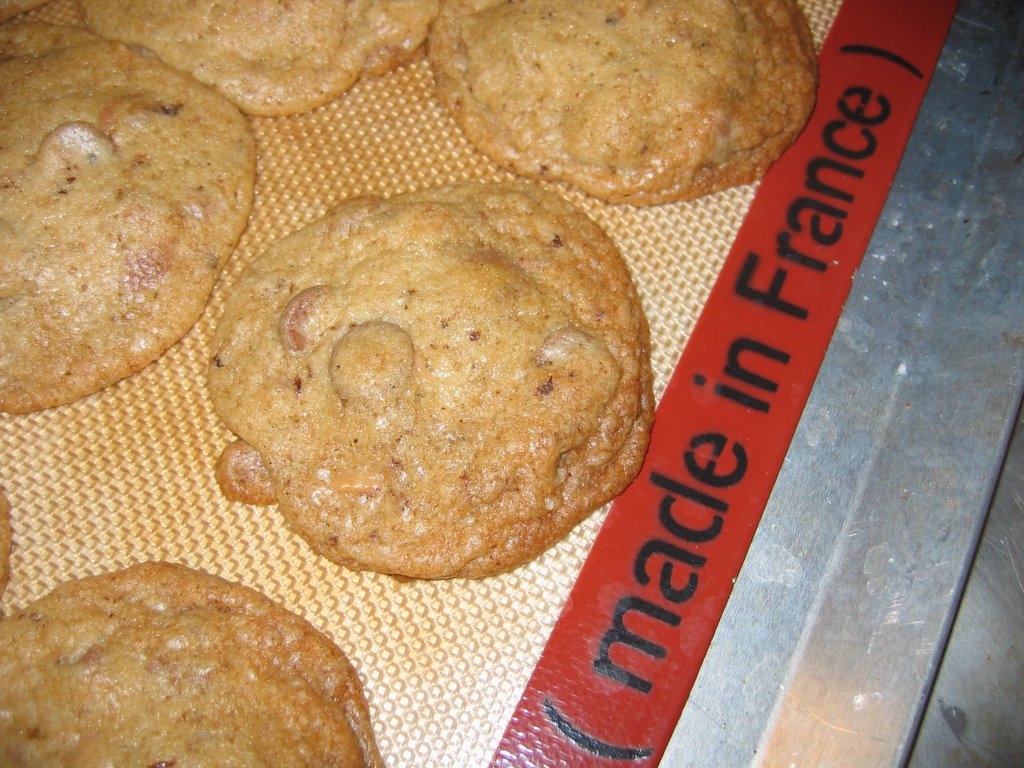 Toffee-Chocolate Chip Espresso Cookies
Ingredients:
2 1/4 cups all purpose flour
1 teaspoon baking soda
1 tablespoon espresso powder
1/2 teaspoon cinnamon
1 teaspoon salt
1 cup unsalted butter, softened
1 1/2 cups light brown sugar, packed
1 teaspoon double strength vanilla extract
2 eggs
1 12 ounce package milk chocolate morsels
4 ounces Heath (or other toffee bar) bits
Method:
Preheat oven to 375 degrees F.
Combine flour, baking soda, espresso powder, cinnamon and salt in a small bowl. In a mixing bowl, cream butter and sugar together until light and fluffy. Add vanilla, and the eggs, one at a time, beating to combine.
Gradually add flour mixture, beating thoroughly between additions, until all flour is used.
Mix in chocolate morsels and toffee bits, either by hand or with the mixer, depending on how well your mixer tolerates very stiff doughs.
Scoop with a small cookie scoop onto cookie sheets lined with silpats, and bake for 10 minutes. Allow to sit on sheets for three minutes, then remove to racks to finish cooling.
recipes cookies chocolate food & drink
Thursday, November 10, 2005
Book Review: Fashionable Food
 I have never been one to mind fashion.
When the preppy look was in at school, I was oblivious, and wore the wrong shoes, the wrong sweaters and the wrong jeans. I never wore a shirt with an alligator, and duck shoes (which I always thought were well-named as they made everyone look like they had huge feet and were waddling) never made it into my closet.
I never liked the popular bands, and all the teen idols that my peers were swooning over made me curl my lip, roll my eyes and pantomime gagging.
I just never understood fads--I was always on the outside looking in, trying to comprehend just what was so appealing about whatever the "in" thing of the moment was about.
So, one might find it a little odd that I had so much fun reading Sylvia Lovegren's Fashionable Food: Seven Decades of Food Fads. Except, it isn't odd at all; Lovegren examines each decade of food fads with the jaundiced eye of a cynical observer who is just as puzzled by human food behavior as I was by teen clothing and music choices.
Written with a sharp wit and a light touch, Fashionable Food takes the reader on a romp through the kitchens, restaurants, women's magazines and other food media of the twentieth century, from the Roaring Twenties up through the mid-1990's. Along the way, she takes us on a few side trips, where she explores the "exotic" cusines introduced by immigrants--primarily Chinese, Japanese and Italian--and examines how they slowly became imbedded into American food culture.
Sprinkled throughout the text are period menus and recipes, mostly culled from vintage women's magazines and cookbooks; these visceral illustrations of the food follies of the past illuminate her prose in hilarious and often alarming ways.
For example, she prints a recipe (which I think I am going to have to make, just to see how hideous the result can be) for "Italian Spaghetti," circa 1924, wherein the cook is instructed to "boil the spaghetti one hour in salted water."
When I read that, I could feel my frontal lobe slam into my forehead.
Boil spaghetti for an hour?
What, did they make pasta out of lead in the 1920's? Was wheat more muscular? Can spaghetti even retain a coherent shape if boiled that long?
The author doesn't answer these questions, because she notes quite dryly that the "recipe has not been tested."
There is a lot to fear in this book. If the thought of boiling spaghetti for an hour doesn't strike enough terror into the heart of the reader, the amount of "dainty" foods discussed therein will.
Dainty.
I shudder just to type the damned word.
But, apparently, back in the 1920's and 30's, women liked dainty food. It made them feel--dainty--I guess.
Nothing, except perhaps a moose or an elephant loitering in my general vicinity is going to make me feel dainty. Certainly not such delicacies as bird's nest salad, which consisted of balls of pastel-tinted cream cheese in iceberg lettuce nests. Nor anything having to do with marshmallows.
Speaking of marshmallows, as I was describing one recipe from the book--"Sweet Potato-Marshmallow Surprise" (which consists of mashed sweet potatoes wrapped around large marshmallows, then rolled in crushed cereal and baked)--Zak asked me when marshmallows were invented.
After having read about so many culinary depredations that involved those sticky, pillowy, tooth-achingly sweet confections recounted in Lovegren's narrative, I quipped, "Too early in human history."
After we finished laughing, I thought about it. While most of the book is concerned with the foolish food foibles of past eras, Lovegren doesn't just focus on the negative; she also celebrates the positive. She has no qualms about praising a particular dish for being tasty even if it has fallen from favor. And while she rightly bemoans the preponderance of packaged convenience foods in American cookery as she chronicles the rise in its use through the century, she doesn't hesitate to note that sometimes, some foods made with mixes or cans were not bad, and were perhaps even good.
What I found most interesting about the narrative was how long Americans have had a love affair with processed foods--it is not something that arose after World War II as many modern cooks might suppose. American cooks were taking advantage of boxed, canned and powdered foods long before the 1950's, though indeed, that decade was the era of Poppy Cannon's best-selling, The Can-Opener Cookbook.
The other point of interest was the staying power of some dishes--the inexplicable three decade long popularity of tomato aspic boggles the mind, while the perennial popularity of meatloaf--a staple of the Depression and wartime kitchens--comes as no surprise.
There is much to admire in the book, and it is a great deal of fun, but it also isn't really a serious history, filled with footnotes and sprinkled with analysis. However, I don't think that Fashionable Foods was ever meant to be a scholarly book--it was contrived to entertain the cooking enthusiast while giving them a taste of American food history.
My greatest criticism is about the recipes--far too many of them have been "adapted" by Lovegren to fit the nutritional awareness and tastes of current cooks. I think that changing these recipes at all violates the spirit of the book--the idea is to capture the flavor of the past as it was, not as we would wish it to be.
All in all, I had a great deal of fun reading Lovegren's sometimes snarky prose, and so I will forgive her instinct to tweak the recipes she encountered in her research to fit modern sensibilities. It was enough that she made me laugh aloud and sigh with nostalgia, then blush with embarrassment and goggle in disbelief, that I won't hold it against her that she changed some recipes, yet left that horrific injunction to "boil spaghetti one hour in salted water" intact.
Besides--I still have to try that recipe.
Just to see what will happen.
books book review food history food & drink
Kitchen Update: Cabinets, Part II
 Most of the carpentry on the cabinets is done; all that is left is to put knobs on a few more drawers.
Our kitchen designer ended up having to order more knobs, because when she got a look at the width of some of the drawers, she decided they would look and work better with two pulls rather than one.
To the right there, you can see the view to the window. The sink will be mounted under the window, with the dishwasher left in the space to the viewer's right.
The range and vent hood go in there to the left.
 Now, here to the left is the area that will be my desk--the laptop is going to live there with all of my recipes on it. It will have internet hookup so I can research ingredients and recipes if I need to. Above, you can see one of the glass-fronted doors with the really pretty Arts and Crafts style mullions. In that cabinet, I will probably display some of my Fiesta serving pieces. (If you can remember back when I posted "before" pictures, this is the area where the much-reviled Fruit of the Looms lamp was hanging.)
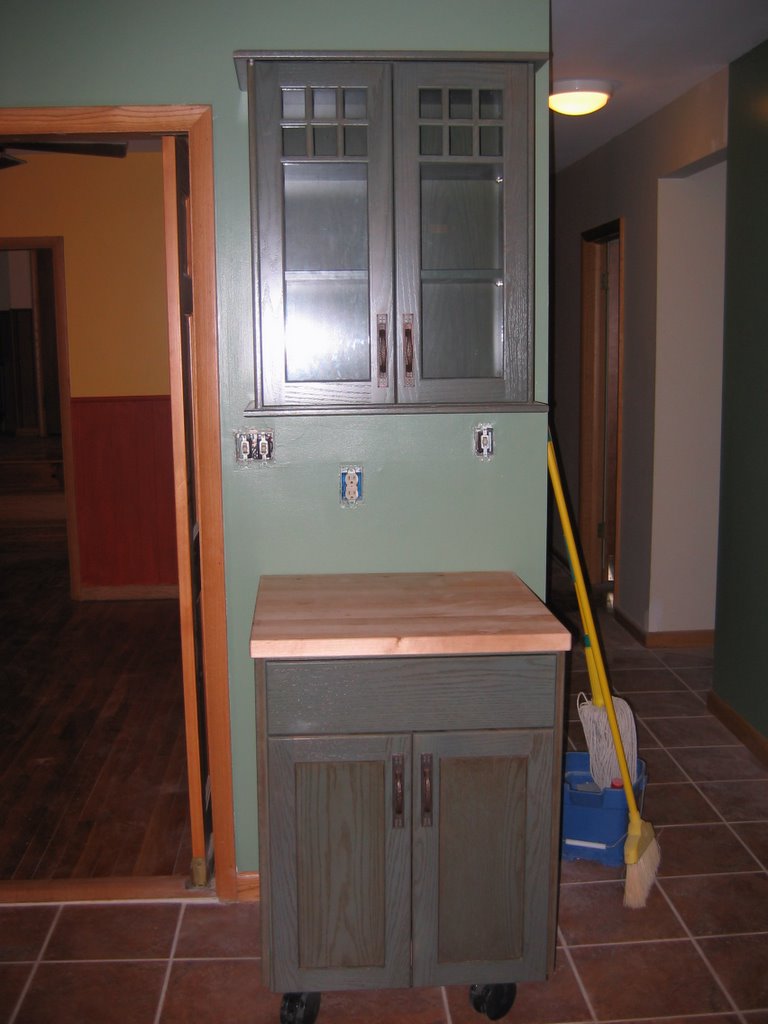 To the right is the wall opposite the desk--this is where the single glass-fronted cabinet was hanging.
Again, I will put Fiesta serving pieces and the like. Down below, I may keep baking necessities, though I am not certain yet. The butcher-block topped island has wheels, though, so it can be stored against the wall, but if I need a secondary work space near the sink or stove, I can wheel it out to where I want it.
You cannot see them in this picture, but to the right of that cabinet and island are the built in bookcases for the cookbooks.
 Here on the left is a view of the wall opposite the range--with the cabinetry that will cradle the refrigerator. The cabinets over the refrigerator go all the way back, so there is plenty of storage space there.
To the left of the refrigerator cubby is a shorter set of cabinets--a very small microwave will be undermounted there. I don't use my microwave for anything but thawing, melting butter, melting chocolate and reheating leftovers, so I didn't want to take up space with a large one.
You can tell from this picture, that on either side of the windows is an open cabinet with a rounded valance--I don't yet know what I am going to put in there, but I have quite a few pretty Fiestaware pieces, so something will look nice in there!
 Finally, here are some closeups of the hardware for the cabinets. Below, you can see the handles we chose to be mounted vertically on the hanging cabinets, and to the right are the knobs for the drawers. Our designer told us that generally, people put knobs on cabinets and horizontally mounted handles on drawers, but we reversed the norm.
If you look at the handle/pull below, you can see why--the cut outs on the bronze repeat the motif of the mullions in the glass doors. The effect would not be as obvious if they were used horizontally on drawers on the base cabinetry as it is when used vertically on hanging cabinets.
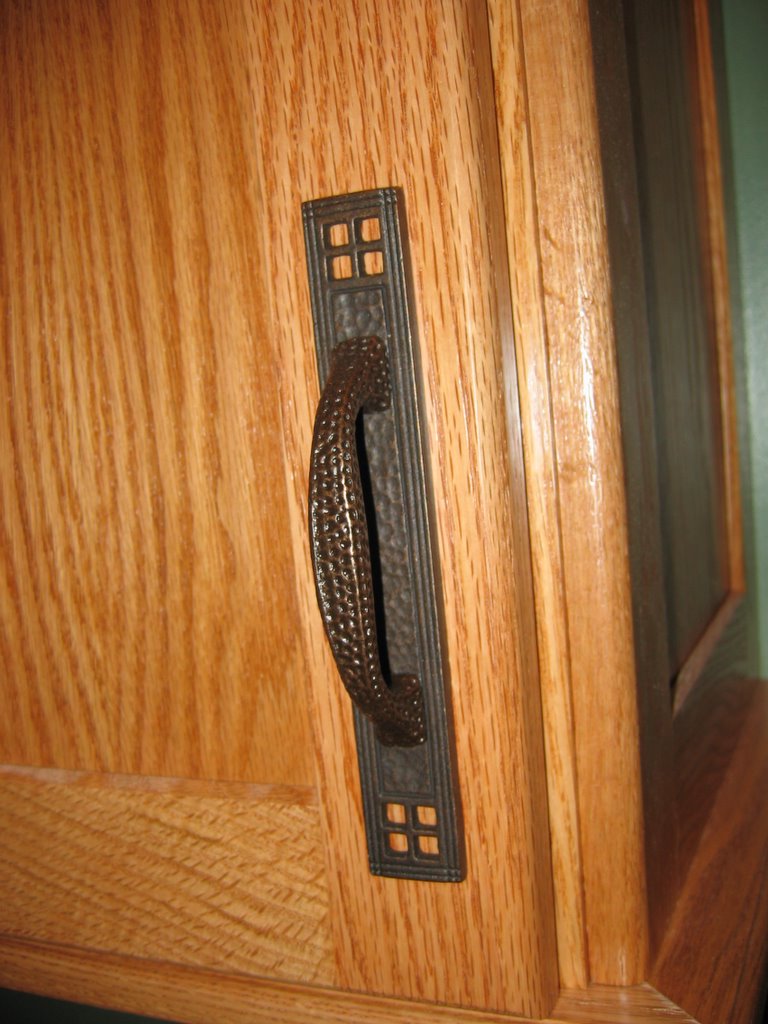
So far, everything is looking beautiful, and I am amazed at how much storage capability I am going to have once the kitchen is done. The way the cabinets are finished on the top, I can place larger cooking utensils and serving pieces up there for display. They can be out of the way, yet still be decorative.
Right now, the man who is going to do the quartz countertop is measuring and making the template. The sink and faucets are in, but are still in their boxes--I will refrain from photographing them until they are installed.
Wednesday, November 09, 2005
The Chinese Cookbook Project VII: Not a Cookbook, But...
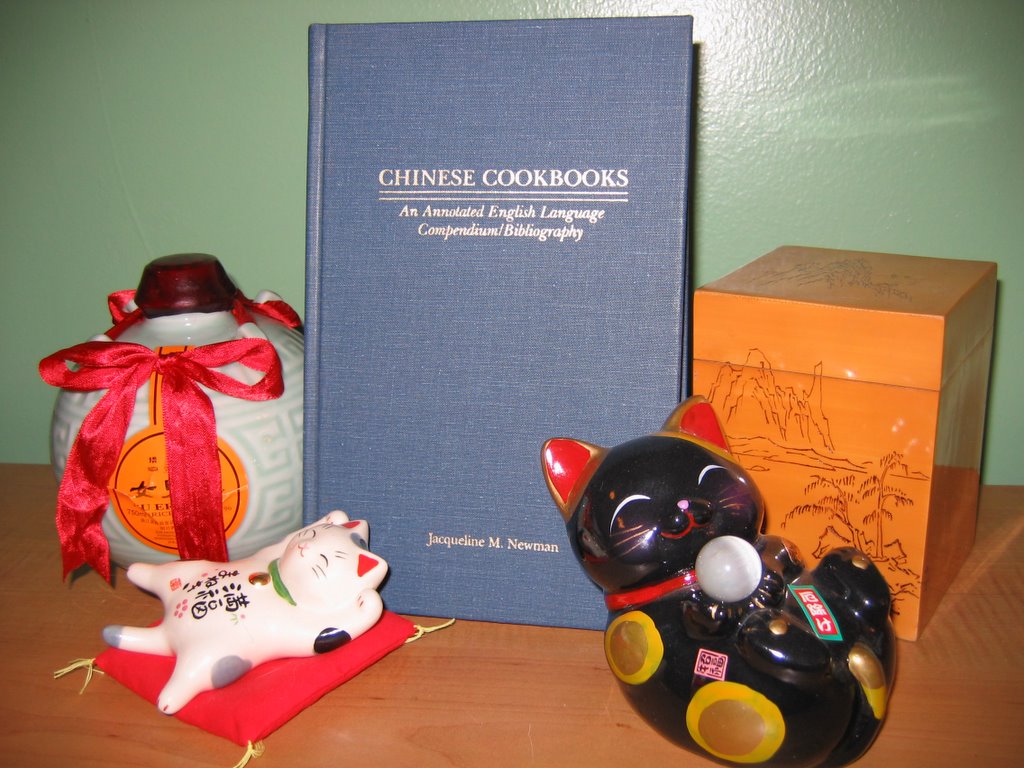 A minority of the books I am gathering in my Chinese cookbook collection are not actually cookbooks, but touch on some aspect of Chinese food culture. I have historical treatises, translations of old Chinese works on the subject, books about learning to read Chinese characters that involve food, and pictorial reference works on ingredients and dim sum.
However, the most important book I have picked up for this collection that isn't specifically a cookbook is Jacqueline M. Newman's Chinese Cookbooks: An Annotated English Language Compendium/Bibliography. Published in 1987, this work is sadly not only out of print, but exceedingly rare on the used book market, in large part because it was put out by Garland Publishing as a social science reference book. Most copies of it are thus to be found in libraries and private reference collections, and so when they do appear on the market, it is rare to find a copy for less than seventy-five dollars or so.
I lucked out when I found a copy of it on ebay about a month and a half ago--signed by the author--for under twenty dollars. Needless to say, it is sitting on my desk as I type.
What is so special about this book?
Well, Jacqueline Newman, herself a collector of Chinese cookbooks, and a professor of Family, Nutrition and Exercise Sciences at Queens College, CUNY, and as such, she recognized the emerging importance of the study of cookery in the social sciences. She put this compendium together as a tool for anyone undertaking to study the history and development of the Chinese cookbook in English. This study is important for many reasons: for one thing, it shows how food traditions change over time among an immigrant population, it shows how immigrant cultural identity is often influenced by and affects food culture in general, and it can trace the amount of acceptance of Chinese foodways among the larger culture and how it changes over time.
Cookbooks do not just teach us how to cook. Even if they are confined to a bare description of dishes and cooking techniques (which is not true of most cookbooks), these details can teach a careful scholar a great deal about the author of the book and the cultural milieu from whence it was written. When the author gives cultural details and personal stories as backgrounds for the recipes, the amount of information the cookbook conveys rises exponentially.
In compiling her compendium and annotated bibliography, Newman recognized the importance of cookbooks, and essentially put together a valuable research tool.
Newman has been a scholar of Chinese cookery for many years and has written other books on the subject as well; most recently, she penned the excellent reference work, Food Culture in China, a volume of the Greenwood Press' "Food Culture Around the World" series. She also has edited the critically acclaimed and always interesting magazine on Chinese food and culture, "Flavor and Fortune." In the pages of that magazine and many others, including professional journals, she has published a plethora of works on the subject of Chinese food with topics ranging from history, cookery and culture, to cookbooks and medicine.
In addition to being an author, Newman has served on the board of directors of several national and international organizations related to food and cookery, including The James Beard Foundation and the American Institute of Food and Wine. She has also served as a judge on the Chinese Restaurant News' committee to rank the top 100 Chinese restaurants in the United States in 2004.
But back to the book itself--while it isn't a cookbook, I have found it to be quite useful in my pursuit of a my goal of collecting the important works of Chinese cookbooks written in English; Newman's insights have been quite useful, particularly as they pertain to the earlier works, many of which are rare and difficult to find. It is also good to have an idea of the exact contents of a book before deciding whether to purchase it or bid on it sight unseen; while ebay sellers provide photographs of the covers of books, they are often quite sketchy as to the contents. In the sense that I can get a mental picture fixed in my mind of the contents of a book, I can better judge whether I wish to aquire it or not, or if it is likely to contain useful information in my never-ending quest to understand the complexities and subtleties of Chinese cuisine.
books book review Chinese cookbooks food history
Tuesday, November 08, 2005
Well Dressed Pork, Tofu and Gai Lan
 Remember that naked post I made a few days ago about the recipe for gai lan stir fried with pork and pressed tofu, and how bummed I was that the batteries for the camera were dead so I had no pictures?
Well, I made it again today, and this time the camera was working! And, even more exciting, I refined the recipe a little, so you get a second look at the recipe itself.
Which is cool--because I actually like this second version even better.
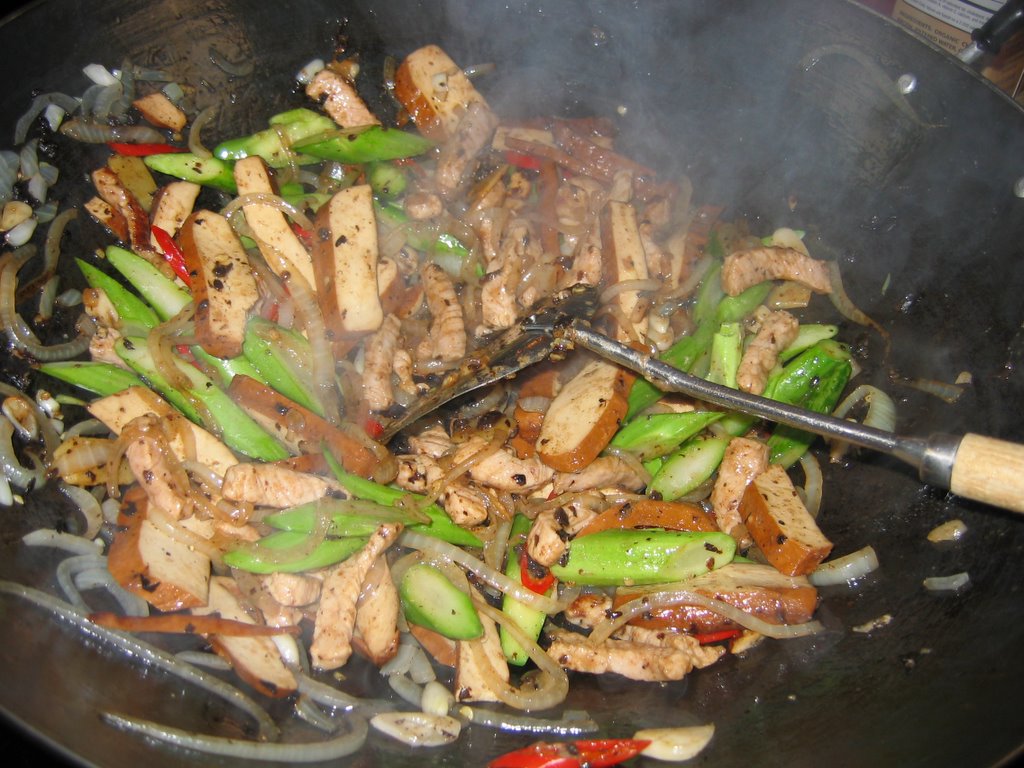 I added some bean sauce and oyster sauce to the recipe, and took out the Sichuan peppercorns. I also added about a half a teaspoon more of sugar, which I mixed in with the two thick sauces that were added at the end, in addition to the sugar that was put into the pork marinade.
And finally, I used dark soy sauce instead of thin soy sauce to marinate the pork and to cook with.
This results in a dish with a darker, thicker, heavier sauce; in hindsight, (or is that hindtaste--no, that sounds awful) I should have also added a splash of chianking vinegar to offset the extra sugar.
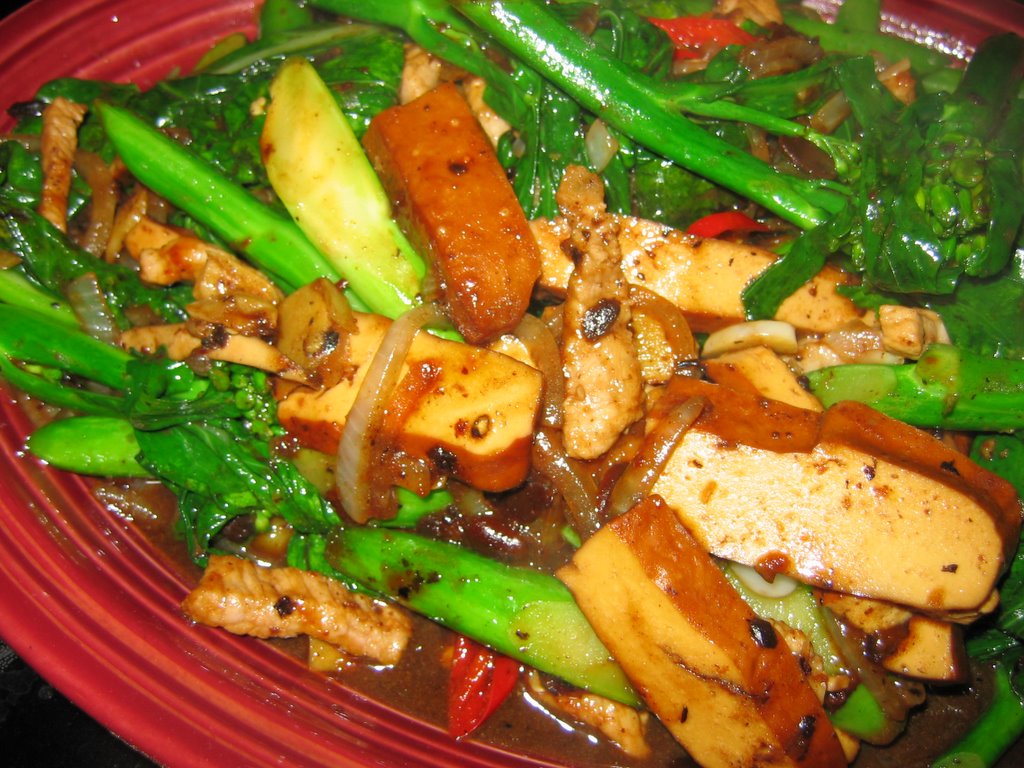 In any case, both versions of the recipe are quite good, but in different ways. The first one is zingier, with lots of dancing heat from the chiles and Sichuan peppercorns, while the second version is much darker and sweeter, full of mysterious flavors that resist identification.
That is one of the things I have discovered I like about the bean sauce--it defies the palate. It teases the diner. It gives a definate, savory, sort of meaty flavor, and yet it is nothing that is easily identifiable, unless the person is very familiar with bean sauce. But even so, if used judiciously, a teaspoon or so at a time, it really punches up the flavor of a Chinese sauce and is very, very hard to single out. Paired with oyster sauce--a classic pairing with gai lan, by the way--and it is a one-two punch that can really push a dish over the top.
I do like having two different ways to cook the same basic main ingredients; versatility in the kitchen keeps boredom away from the dining room.
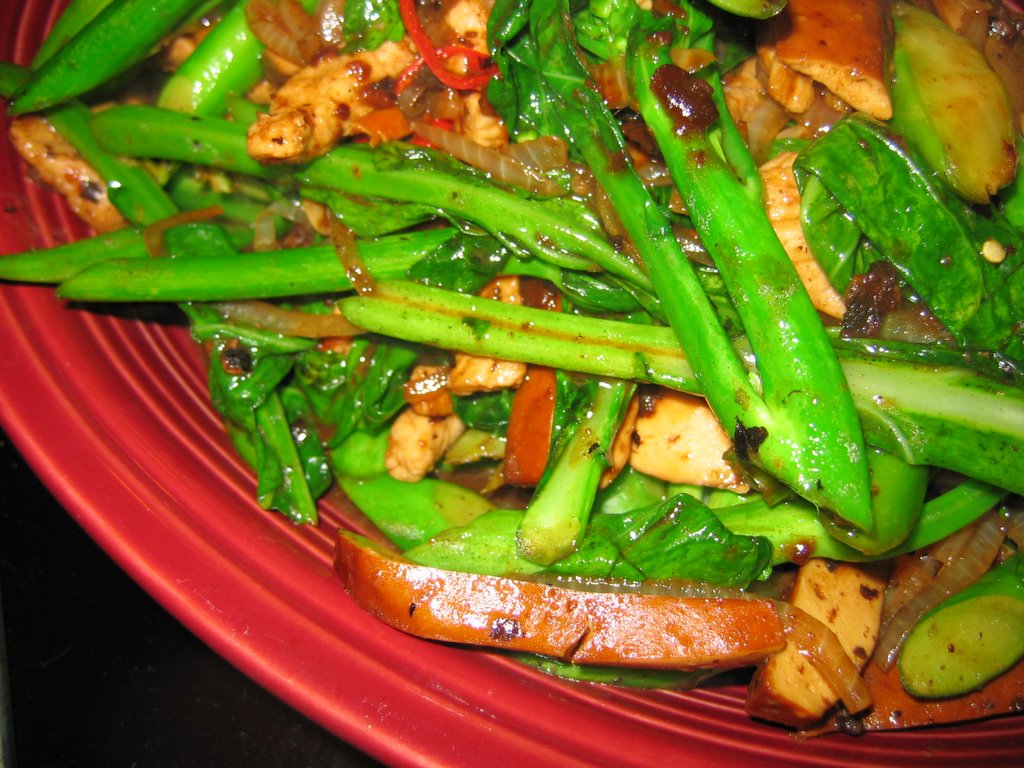 Well-Dressed Pork, Tofu and Gai Lan
Ingredients:
2 small, but thickly cut pork loin chops, sliced into thin shreds--about 1 1/2"x 1/2"
1 1/2 tablespoons Shaoxing wine, or sherry
1 tablespoon cornstarch
1 teaspoon brown or raw sugar
1 teaspoon dark soy sauce
3 tablespoons peanut oil
1 large onion, peeled and thinly sliced
1 heaping tablespoon fermented black beans, mashed
5 cloves garlic, peeled and sliced thinly
1/2" cube fresh ginger, peeled and thinly sliced
2 red jalapeno chiles, thinly sliced on the diagonal
1/2 teaspoon fresh coarsely cracked black peppercorns (optional)
1 8 ounce package thick cut dry spiced tofu, cut on the diagonal into thin shreds
1-2 tablespoons dark soy sauce
1 tablespoon Shaoxing wine
1 pound gai lan, washed and trimmed
1/4 cup chicken broth
2 tablespoons bean sauce
1/2 teaspoon brown or raw sugar
1 tablespoon oyster sauce
1 teaspoon chiangking vinegar (mix the last four ingredients in a small bowl and have ready by the wok)
Method:
Mix together pork slices, wine, cornstarch, sugar and first amount of dark soy sauce, and set aside to marinate for at least twenty minutes. (You can do this while you prepare all the other ingredients for cooking.)
To prepare the gai lan--trim the bottom bit of the stalks where it was cut from the roots, and discard. After washing, dry thoroughly in a salad spinner. Cut off large leaves, and then cut them into 3-4" lengths. Cut off any thick stems--thicker than 1/2" or so--and if the peel is very tough, peel them. Then cut these thick stems diagonally into slices.
Heat up your wok, when it releases its breath in a wisp of white smoke, then add peanut oil and allow it to heat for a minute, until it shimmers from the convection currents. Add onion, and stir and fry until they wilt and turn distinctly golden.
Add the ginger, garlic, chile and black beans all at once (with the black peppercorns if you are using them), and stir and fry until the whole is very fragrant. (At this point is usually when the stomach starts to growl--I swear that nothing is better than the smell of garlic, onions and fermented black beans cooking.) This should take about one minute.
Add the meat, reserving any liquid marinade that isn't clinging to the meat. Spread the meat into a single layer on the bottom of the wok, and let it sit, undisturbed until you can smell it browning--because of the sugar in the marinade this is faster than usual. At that point, start stirring and frying. Add tofu, and keep stirring and frying until most of the pink is gone from the meat. Add the extra marinade, if there is any, the soy sauce and the Shaoxing, and if there is any browned bits in the bottom of the wok, scrape them up.
Add the gai lan stem slices, and stir and fry for about a minute or two. Spread the gai lan leaves over all, and add the chicken broth, then stir vigorously but carefully. The idea is to get the already cooked stuff up on top of the gai lan and get it down into the wok where the leaves will wilt into a velvety-sweet texture and be coated by the sauce. After the leaves begin to show signs of wilting add the contents of the little bowl of bean sauce, sugar and oyster sauce, and stir to combine well.
The dish is done when the leaves have wilted and gone from a dull dark green to a vibrant, glossy dark green. The sauce should be thick and cling to the ingredients very tightly.
Remove from heat and slide into a warmed serving platter.
Note to Vegetarians and Others Who Do Not Consume Pork:
This would be really good with just the tofu and gai lan, or if you want, you can have tofu, gai lan and either fresh mushrooms or reconstituted dried black Chinese mushrooms. If you use the dried mushrooms, you can use 1/4 cup of the soaking liquid in place of the chicken broth, or you could use vegetable broth.
food recipes Chinese cooking pork tofu
Monday, November 07, 2005
Kitchen Update: Cabinets!
 About one half of the cabinets are hung and installed!
Oh, it is exciting to leave the house, with the kitchen being a mess of unpacked cabinetry and come home to see it all taking shape.
There on the left you see the right side of the windows. There is an open cabinet, then the larger cabient, then the half cabinet--under that will be my microwave--and then on the extreme right is the enclosure with small cabinets overhead for the refrigerator.
 Now in the picture on the right, we have the other side of the room--again, an open cabinet, then two larger, covered cabinets.
All of the base cabinets have pull outs--the one up above is in what would normally be a dead space where you couldn't utilize the area because of the dishwasher that is going in beside it. However, there is a very clever series of pull-outs that utilize all of that space, including that corner.
The corner cabinet on the right over there has lazy susan shelves.
 Here on the left again, you can see the enclosure for the refrigerator, and beyond it, the honey-colored oak door to the kitchen that goes into the dining room--that was already in the house--I am just happy that the woods match so well.
I also like how there is room to display/store larger items up on the top of the cabinets--that is excellent. I had that in my old kitchen in Pataskala, and I really, really liked that look. It was homey, and it gave me a chance to put some of my odder looking stuff out where it could be seen, but wasn't taking up useful space.
 There on the right are the windows, and the cabinets there. You can see the blank spot where the dishwasher will go and to the left of that--the whole space on top will be taken up by an undermounted black cast iron sink--one big, deep sink, with no partitions. That way, I can wash my woks and stockpots easily.
 Finally, there is the corner where the built in bookcases are living. I felt bad for the guys who were putting those in--they were really tight to fit, but they got them. There will be oak baseboards that go straight across the bottom there.
Tomorrow, I expect they will finish with the cabinets and then install the hardware on them. I will definately photograph those--they are very, very pretty, and quite functional. And I will post pictures of the pullouts on the base cabinets.
After this--they will have the space measured for the countertop and it will be installed, then the tile backsplash, under-cabinet lights and appliances and vent hood.
And then, it will be finished.
This is just too exciting to watch. It is like a drama unfolding!
An American Classic, Sans Box: Macaroni and Cheese

As I admitted in my recent post, "True Kitchen Confessions," I will, now and again, use packaged convenience foods when I need to whip up a super-quick snack or meal.
And I will resort, now and again, to the boxed macaroni and cheese, though never Kraft, and not often--and--in my defense, I never do it without adding shredded up real cheese to the sauce.
Which, of course, begs the question of why I bother with the boxed stuff in the first place?
The truth is, I resort to it so I can avoid making a bechamel sauce.
Bechamel. The very name of it makes me shudder.
My mother used to use bechamel (though she never used the French name--that would be too fancy--it was just "white sauce") to make scalloped potatoes and potatoes au gratin, and potato soup and chipped beef on toast--and to be honest, I never liked it. There was something just so damned cloying about it--it was like warm clotty milk on my tongue. She never really flavored it beyond salt and pepper, which was likely the reason I disliked it; any child whose preferred teething food was raw scallions is not apt to like a flavorless milky sauce.
So, I started off on the wrong foot when it came to bechamel, one of the six great "mother sauces" of the French tradition, the sauce from whence comes the sauces mornay, soubise, cardinal and nantua. (The six leading, or "mother" sauces of French cuisine are the basic building-blocks of a sauce repretoire; from each of these simple sauces, many other sauces are derived by the addition of other ingredients; these sauces are sauce espagnole, demi-glace, tomato sauce, bechamel, veloute, and hollandaise.)
I continued my adversarial relationship with bechamel when I attended culinary school. There, in my stocks and sauces class, I discovered that I not only disliked the flavor and texture of bechamel, but that it was my mortal enemy.
When I went into the class, I could make mayonnaise by hand with my eyes closed. I could make tomato sauce without breaking a sweat and I knew the names and compositions of all of the mother sauces and feared neither veloute nor hollandaise. But when it came to making the humble bechamel, I stumbled, much to the amazement of my beloved Chef Aukstolis and the rest of the class.
It came about because I followed the recipe, instead of my instinct, again. The recipe instructed me to "temper" some of the warm milk into the roux, and then mix that into the simmering milk, and whisk until combined and thickened.
Now, my way of thickening a cream soup (I still avoided bechamel at all costs, mind you--but a cream soup is much the same idea), involved bringing the soup to a bare boil, and making the roux fresh and having it at a boil as well, and then dumping the roux in and whisking like mad. I never got lumps that way (except for the bits of potato or broccoli that were supposed to be giving the soup texture) and it was fast.
Well, the recipe was assuming that either my roux would be cool or my milk. But neither were--they were both bubbling away happily. So, when I went against my instinct, and ladled hot milk into the hot roux, it made a godawful weird mess. When I then mixed this mess into the boiling milk, it made lumps that no amount of whisking would break apart. Chef Aukstolis stood at my elbow and shook his head. "What is that?" he bellowed.
"Lumpy bechamel," I answered heartily, though I wanted to crawl away and die.
"Bechamel is not lumpy," he declared. "Strain it through a chinoise mousseline and start over."
My shoulders slumped, and I spent another hour straining and scraping, then cleaning the chinoise, and then making another bechamel under the hawk's eyes of my chef. And once again, he told me to follow the instructions--which I did--and once more, made an unholy mess.
He snorted. People were watching me--the woman who could whisk up hollandaise perfectly every time without breaking a sweat, the woman who had, in her previous class, made forty small souffle by hand, and who had argued with her chef about how to fry okra--and not only survived, but was proven -right- here she was, falling down with bechamel on her face, while everyone else was making gallon after gallon of the stultifying bland sauce.
"What is wrong with you?!" Aukstolis growled.
"Bechamel hates me, and I hate it," I answered with a catch in my throat, as I scurried away to scour pots, something that I knew I could do without making an utter failure of myself. Besides, if I started crying, the tears wouldn't hurt the dishwater.
Chef Aukstolis was my favorite chef, even if he did assign bechamel to me for my practical final for the class. When he told me, I deflated and everyone in the class giggled. But, I squared my shoulders, and, following the instructions to "temper" the milk and roux, I once again made milk soup with lumpy goo dumplings. Chef Aukstolis watched me, shaking his head. He saw me strain it, and when he tasted it, he said, "There are supposed to be no lumps in bechamel."
"I know," I murmurred meekly, bowing my head in defeat.
He snorted, and turned away, and I slumped off, my practical done. Since I couldn't help anyone else, I slunk back over to the dish sink and started scrubbing. If I'd a tail, it would have been drooping between my legs.
I tried really hard not to sniffle.
Fifteen minutes later, Aukstolis was bellowing for me and had a gallon of milk in his hand. He shoved it at me, and shoved me (gently) to the stove. "I just got a call from the French kitchen upstairs. They are about to serve in fifteen minutes and the bechamel got scorched. They need a gallon, right now! Go!"
I melted the butter in record time and brought the milk to a boil. I whisked in the flour and brought the roux blonde to a brisk bubble and ignored the injunction to "temper" the two, and dumped the pot of roux into the pot of milk. I whisked like mad, my heart racing, as I stared at the clock.
Aukstolis growled from the door. "You have two minutes, Fisher, to save the French kitchen!"
I nodded, and kept my mind on the whisking, and prayed to Saint Escoffier to guide my hands, and watched as the milk thickened into a a smooth, velvety sauce.
I nearly wept with joy.
I poured the sauce into a cambro (a brand of plastic container used for storage in the restaurant industry), and ran up to Aukstolis. "Where do I take it?" I asked.
He whipped a virgin tasting spoon from behind his back and tasted it. His eyes lit up and he smiled, like the dawn breaking over a great mountain, and squeezed my shoulder in his ham-sized hand. "You did it, kid. I knew you could. Congratulations. You got an A on your practical."
I blinked. "You mean?"
He nodded. "I knew that if you believed that someone really needed the sauce right now, you would not let them down. I knew you could do it--you just had a block in your mind against bechamel."
Chef Aukstolis should have been a shrink. He played upon my "Big Damned Hero" complex and got me to make bechamel sauce--in less than fifteen minutes, from start to finish.
I looked dumbly at the sauce in my hands, while the rest of the class broke out into applause. "So, I don't have to run this up to Chef Deitrich?"
Aukstolis shook his head. "No, but you can if you want to. I bet he can use it for something today--let someone else scrub those pots for a while. You've earned a five minute break."
So, off I scurried, my heart flying ahead of my feet. When I reported to Chef Deitrich, he took the bechamel with good grace, tasted it and nodded. "I see you finally succeeded." (Yes, the chefs gossiped all the time about the students) He patted my shoulder. "Good girl, now, run along. I will put this to good use."
I felt as if I had conquered a nation, when in truth, all I had done was make a gallon of white sauce.
So, now and again, when I don't feel like making roux and boiling milk, I will use Annies Organic Macaroni and Cheese stuff, but to me, that isn't really proper macaroni and cheese. It is a pale substitute for the real thing, which must contain bechamel, and come out of an oven, bubbling, with crispy browned edges of piping hot melty cheese. It must contain at least three cheeses, though as far as I am concerned, you can add up to five different kinds and not jump the shark on this dish. And it should have a bit of heavy cream, you know, just because it makes it better.
I also add other stuff, like herbs, garlic, chiles, spices and sometimes some shreds of bacon or ham, because well, there just isn't enough fat in the dish to start out with. But, as I usually eat it in small portions with a huge salad for dinner, I don't feel too bad about the richness of it all.
To me--that is really what macaroni and cheese is all about--a homey, comforting casserole that is all about ooey-gooey cheesy richness that should make your arteries clog just looking at it. It is a special every-now-and-then sort of treat, and the only boxes required is the one that the pasta comes in and the box grater that I use to shred the cheese, otherwise known as "the knucklebuster."
I don't really have a recipe for real macaroni and cheese, because I have never used a recipe to make it. I just haul off and make it with what is on hand and in whatever amount goes with the number of diners who will be consuming it. But, even though there isn't a recipe, I can tell you how it goes, just so you can try to make it, too.
First, melt a tiny bit of butter in a saucepan large enough to make however much bechamel you will need to moisten your pasta. Meanwhile, start your pasta water boiling, and pick your pasta shape. I like penne myself, or medium sized shells.
In that melted butter, saute a bit of minced up garlic, shallot, diced onion, minced chipotle, minced sundried tomato, roasted red pepper, or whatever flavoring you want to add to the dish. Saute them to the desired degree of doneness. Add the same amount of milk as you want bechamel, and bring to a simmer. In a small frying pan, make roux. This is accomplished by melting butter and adding an equal to slightly larger amount of flour, and cooking, stirring constantly until the flour stops smelling raw--about three minutes.
Bring your milk to a boil, and while your roux is still bubbling, whisk it in, and keep whisking until your milk turns into a thick, rich bechamel sauce. Add a dollup of heavy cream, and a suirt of dijon mustard if you want and keep warm.
Grate up at least three kinds of cheese. I like to use a nice white aged New York or Vermont cheddar--very sharp--along with either edam or gouda, and some parmesan. Not the green can stuff--but you don't have to use the real Italian stuff, either--just use some domestic parmesan that comes cut in a wedge. If you want to add more cheeses, be my guest, have fun and go wild--havarti is nice, as is jarlsburg.
How much cheese? Well, that depends on how much bechamel and how much pasta. By the way, start cooking that pasta. Raw pasta makes really awful macaroni and cheese. And heat up your oven to 375 degrees.
So, what to do with the cheese? Remember that warm bechamel? Well, stir in about half of your cheese gradually, stirring constantly until it melts. Congratulations, you now have mornay sauce. Isn't that fancy? Keep it warm. (You can enrich it with sherry and some minced fresh herbs, but some would say that is gilding the lily and less is more. I say, more is more.)
Now, your add ins--you can add slivers of cold cooked ham, crumbles of cooked bacon, sauteed mushrooms, barely blanched fresh broccoli--that is really good, btw, fresh tomato slices--use your imagination. Have them ready, or just make it plain. Plain is also good, but remember--too much is always better than not enough.
Your pasta is cooked, so drain it. Don't overcook it--baked pasta dishes with already soggy pasta are depressing. You aren't cooking for your toothless Great Uncle Martin are you? No--well, then you want your pasta to have a bit of tooth to it.
Take your baking dish and spray it with canola oil spray or some such to keep the stuff from sticking. Cover the bottom with a thin layer of mornay sauce and sprinkle in a good layer of pasta. Sprinkle in any add-ins and a little layer of the un-melted cheese, then pour on the mornay. Continue this layering business until you end up with mornay, and a good heavy layer of cheese on top. Parmesan on top will give a nice crispy crusty bit that is just delightful.
Slap that casserole in the oven, and let it bake for about twenty to thirty-five minutes, or until it is bubbly-hot, and browned on the edges and in places on the top. In the last five minutes of baking, you can add a sprinkle of some freshly minced herbs such as chervil, thyme, chives or parsley, but you don't have to.
There.
Even though it contains the dreaded bechamel, real macaroni and cheese is simple.
You don't need that box. Throw it out--step up to the plate--and make something really, really good for supper.
food & drink culinary school cheese
Sunday, November 06, 2005
Organic Food in the News
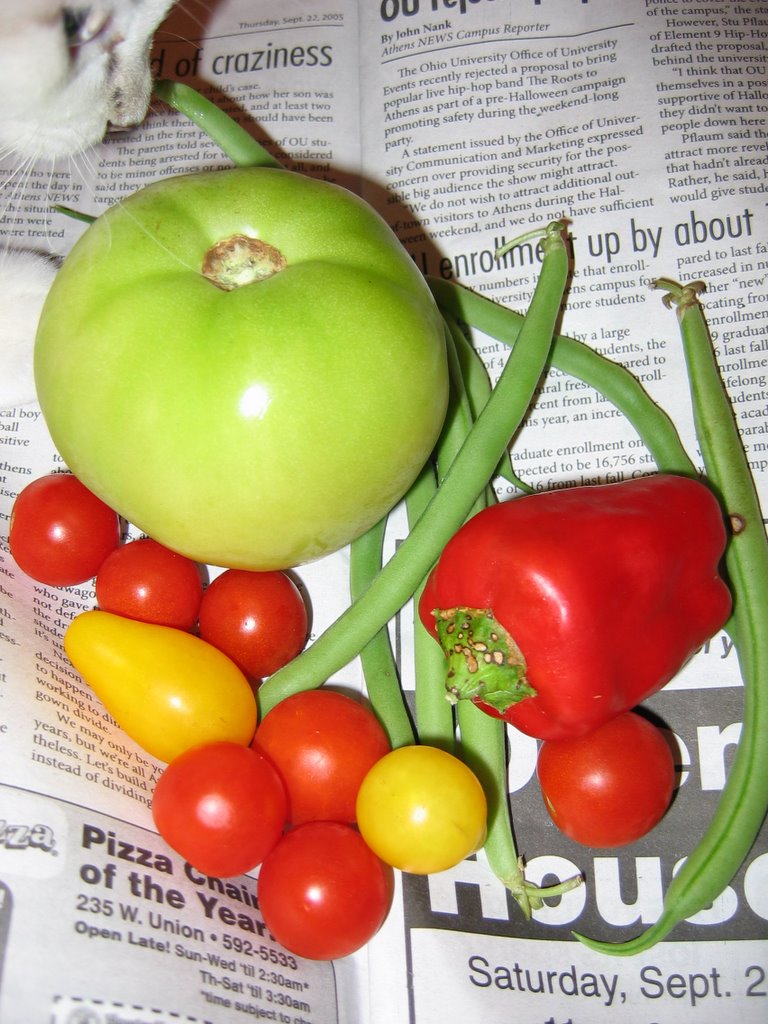 The recent kerfluffle between the Organic Consumers Association and the Organic Trade Association over how to go about strengthening standards for the USDA Certified Organic label has spawned a spate of recent news articles and editorials.
Here are a few highlights:
Two days ago, the New York Times editorial board gave their opinion on the use of synthetic chemicals in organic food. Not surprisingly, they are against the use of synthetic chemicals in the making of processed organic food, but more importantly, they stand f0r the use of very strict standards for any product which is called, "organic."
The editorial strongly states that:
"'Organic' is not merely a label, a variable seal of approval at the end of the processing chain. It means a way of raising crops and livestock that is better for the soil, the animals, the farmers and the consumers themselves - a radical change, in other words, from conventional agriculture. Unless consumers can be certain that those standards are strictly upheld, "organic" will become meaningless."
A more nuanced and carefully drawn article entitled, "'What is Organic?' Powerful Players Want a Say" appeared in the New York Times on November 1st. The author of this article takes pains to present as many sides to this issue as possible, and even admits that most of the thirty-eight synethic chemicals are "relatively harmless ingredients like baking powder, pectin, ascorbic acid and carbon dioxide." However, a source for the article slames the use of synthetics with "unpronouncable names" on food-contact surfaces.
Sadly the reporter makes no mention of what those unpronounceable chemicals are doing on the food contact surfaces of processing facilities. These are sanitizers, meant to clean the surfaces and keep them free of bacteria and other contaiminants which can cause foodborne illnesses.
The article does make one thing clear--the demand from American consumers for organic foods (at hopefully lower prices) does create a problem for those who attempt to fulfill this market need; in order to produce enough organically grown processed foods, there are choices to be made--should producers make decisions that keep costs high, but keep to the spirit of the organic movement, or should they attempt to lower costs, even if that means that they bend the letter of the rules that govern the production of organic foods?
Newsday gets into the organic act by printing an Associated Press article about parents who are troubled about pesticide residue in thier kids' food turning to organic foods in record numbers.
Gerber, a leading baby food manufacterer, is producing its own line of organic baby foods under the Tender Harvest label, while Earth's Best baby foods, which is commonly found at Whole Foods and Wild Oats markets, just jumped into the mainstream by landing a distribution deal with Toys R Us and Babies R Us.
Many parents cite a recent goverment-funded study that shows that the pesticide levels in the bodies of children plummetted after they were switched to an organic diet, to bolster their decision to feed thier kids organic food.
The organic food processing industry has responded to this market growth by expanding the number and kinds of processed snack foods that wear the USDA Certified Organic label.
"Snacks are a priority for Susan Guegan, 44, a mother of four boys in Boulder, Colo. Guegan made their food from scratch when they were babies. Now she buys organic versions of the cookies and hot dogs they ask for.
"They love Oreos," she said. "They'll say, `Can we get this?' I'm like, `Can you read me the ingredients?' They'll laugh and try to say some of them. I'll say, `You can put that back.'" "
What is my take on all of this?
American consumers cannot have everything when it comes to organic foods.
On the one hand, they want organic food because they percieve it as safer, particularly for thier kids to eat. I cannot help but agree that I don't want pesticides, which are after all, nerve-toxins, in my daughter's food.
However, at the same time, they demand more and more -processed- organic food items such as ready-to-eat cereals, snack-foods, frozen entrees, instant macaroni and cheese, among others, all of which require some amount of food additives in the form of stabilizers, humectants, gelling agents, and leaveners, so that the products have a decent shelf life and are palatable.
They want hormone-free milk from happy cows, and grass-fed beef and free-range chicken and hot dogs made from pigs who ate organic corn.
And they want it all, right now.
Oh, and they want it cheaply.
But, unfortunately, the world doesn't work that way, and capitalism doesn't work that way, and therein lies the issue:
American consumers cannot have it all.
If they want organic food that has no synthetic or non-synthetic chemicals in it, then they should buy only whole foods and minimally processed foods, preferably from local sources whom they can know and trust to produce high quality safe food.
If they want milk of the same caliber, then they need to research the issues surrounding the production of organic milk, and make their choices accordingly. (And good luck to anyone seeking raw milk in most of the United States.)
If they want organic versions of snack foods and pre-packaged convenience foods, then, they should be aware that chemical food additives come along with the deal because, well, let's face it--cheese does not naturally come in dry, powdered form that can be turned into cheese sauce with the addition of butter and milk, and nor is bread meant to have a shelf life of over one week.
If they want their organic foods to be less expensive, they have to understand that larger and larger agribusiness corporations are going to jump into the game and demand and likely get market share, because it is easier for them to produce large amounts of processed food cheaply than it is for smaller Mom and Pop organizations.
I think that part of the tension that is happening here is that the organic movement was originally one of idealogy and is an outgrowth of the counterculture. Organic business pioneers were firmly entrenched in the counter-cultural ideals of individualism, independence and commitment to growing and producing organic food no matter what the cost, because they believed in it. Many early organic consumers were the same way--in fact, many of the early organic consumers, noting a lack of organic processed foods, began making them for themselves at home, and then went on to become entrepeneurs and produced foods for others. They started out as do-it-yourselfers who grew their own gardens, milked their own goats and raised their own chickens, all in the name of a healthier food supply and a stronger environment.
Today's organic consumer is not a do-it-yourselfer. They likely have not dabbled in growing their own food, they haven't visited a farm, and very often have no clue what "sustainable" means when it comes to food, but they do know one thing--they want organic food, and they want it now. And they want it to come to them in their grocery stores, and they want it to be just like the products they are used to buying, only better, and by the way--could it please be cheaper?
Of course, not every consumer who buys organic products fits my description.
But judging by the things I read in the media, I fear that more and more of the folks who demand organics are ignorant of the ideals that started the organic movement. I hope very much that I am wrong, because if that is the case--I fear that "organic" will cease to be relevant when it comes to a philosophy of sustainable, environmentally sound agriculture, and will simply become a marketing tool that plays on consumer's fears regarding our food supply.
food & drink organic food food additives news
Saturday, November 05, 2005
Weekend Cat Blogging: True Kitty Confessions
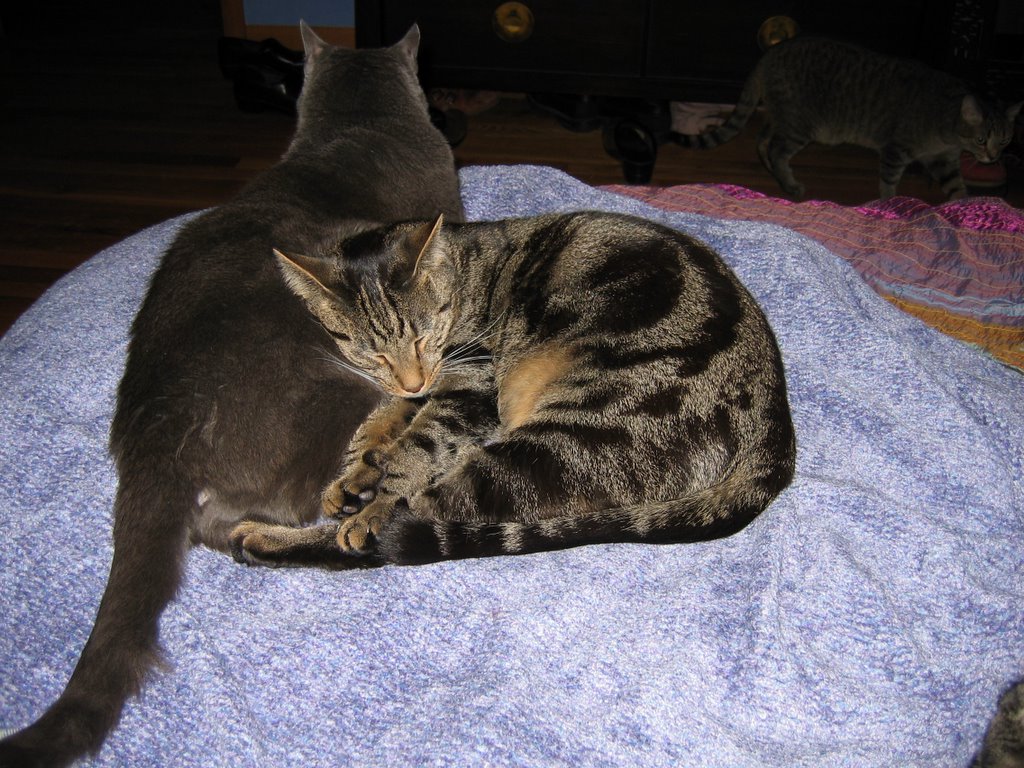 Now it is time for the kitties to make thier confessions.
Not all of them were willing to confess to anything today--Jack was under the bed, camping out in his JackCave, where he wears a cape and pretends to fight crime, and Tristan was busy hiding under the other bed, where dreamed of a parade of little Siamese catamites who would cater to his every little drag-queen whim.
But, the rest of them are present and accounted for and they promised that they would each present me with at least one confession to translate and transcribe for you here.
Ozy confesses that he is too cool to look at the camera, and instead, would rather present his backside for the world to peruse. "It's my best side, anyway," he says with great pride. "That's because I am careful to keep my racing stripe clipped really close there, on that right flank. That way, I look unique and trendy." (Translation: Ozy shaves the hair on one side of his flank. Why, we don't know, but I am sure he thinks it makes him look stylish.)
Gummitch confesses that while he loves everyone in the entire world, it is just too much trouble to purr. "I love Mommy, and Daddy, and Ozy, and the little Kitten, and Tristan and that other kitten who got bigger, what is his name, oh, right, Lennier, and Jack, even if he is twitchy and weird, and Grimmy, even if she swipes at me, and I even liked Minna even though she hated me. But no matter how much I love everybody in the entire Universe, including those tall scary people who come to eat at Mommy's table who I run from, even though I love them, I don't purr loud because I don't want to bother anyone, because bothering people isn't loving and all I want to do is love everyone." (Translation: Gummitch's purr motor is apparently broken. He has the softest purr of any cat I have ever known. So, even while you pet him and cuddle him and love him and give him snacks, do not be surprised if you never hear him purr, because I believe that maybe he just can't really.)
 Lennier confesses that he is dreaming of water. Lots of water. Running water. Still water. Water in bowls, water in tubs, water in showers, falling from the sky, water on the floor, and on his paws and his head.
He says, while striking an elegant pose, "I am of water, and the holy land of water, and that's to come runs in, to be the first among the strand."
(Translation: Lennier is a big freak who cannot wait to jump into a bathtub after it has been vacated, and who will partake of a shower with a beloved human. He will lay down in one inch of standing water and will dunk his head under a very fast running faucet. The little bugger likes water, and has no clue that cats are supposed to be averse to the stuff. This is yet one more bit of proof that he is an alien in disguise, and not really a cat at all.)
 The kitten, who has finally grown into her final name (does anyone get the idea that we have a hard time giving cats names--Mei Mei is still her nickname, but Ari didn't stick), which is Tatterdemalion, confesses to being a lesser minion of Satan.
"I am demon-spawn," she thinks, as she plots what sort of mischief to dive into next. "It is my duty, as an imp, to execute the three "D's:" destroy, defile and discombobulate."
(Translation: She means what she says--while her head doesn't spin around and she doesn't vomit green jello, she does carry about her a whiff of brimstone and she does engage in amazing feats of levitation and deviltry which point to her rather less than savory origin.)
(Which is to say, she is a perfectly normal, active and hilarious kitten whom we adore.)
 Grimalkin may look like she is hung over and strung out on catnip here, but she is really just taking a catnap.
She confesses that while she does feel very overwhelmed by her responsibilities as the eldest female cat of the household, the duties of which are onerous and difficult, she will strive to do her utmost to fulfill them with style, grace and courage.
As she accepts this mantle of mature responsibility, she says, "I just want everyone to know that I love everyone, especially my predecessor, whose soul rests in heaven now."
(Translation: What she really means to say is, "I hated her and I am glad she is gone, even if it made Mom and Dad really sad. You see, I have made up for it with lots of extra antics, japes and larks, and I make them laugh more than they ever thought possible, so that means I am better than old whatshername who was just cranky and stuck-up.")
Friday, November 04, 2005
Putting History in a Piecrust
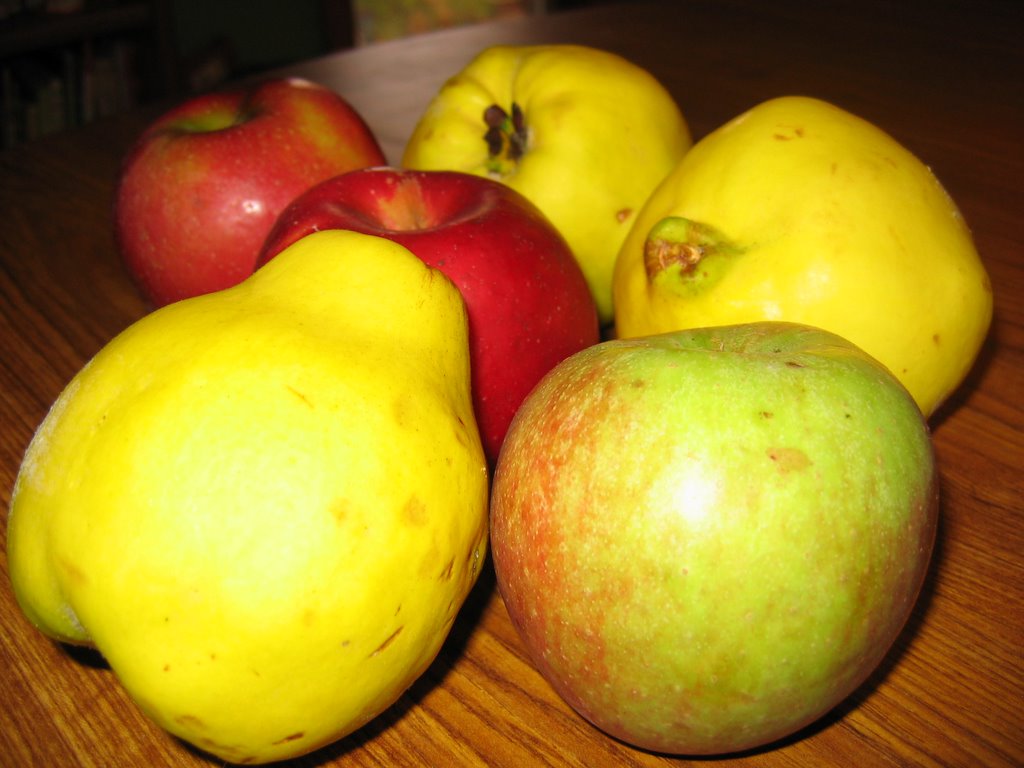 I have always loved old cookbooks, and cooking from them.
It is related to my belief that if I can cook and taste the flavors of a culture, I can come closer to understanding the people of that culture.
In cooking and eating foods that people ate hundreds, sometimes thousands, of years ago, I feel as if I can get an immediate sense of what it might have been like to live in the times and places where those foods were commonplace and beloved. It gives me a visceral lesson in the ways in which our ancestors lived, worked, played and ate. Knowing what sustained them, sustains me and my understanding of who they were.
Many ancient foods are still very popular today, though our ways of cooking with them and eating them may have changed over time.
However, there are exceptions; apple pies were popular in fifteenth century England, for example, and versions that the denizens of of the Tudor courts would have found recognizeable are still being baked in England and the United States to this day.
One addition to the apple pie that was commonplace in England, and especially in Colonial America, however, has regrettably fallen from favor since the eighteenth century: the quince.
Quinces are pome fruits, and are cousins to the pear and the apple. While pear slips are often grafted to hardier and smaller quince rootstock in commercial orchards, these two pomes are not kissing cousins--they will not cross-pollinate. Nor will the quince cross pollinate with the apple, however, these little twisty-branched trees are self-fertile, meaning, you should only need one tree to produce fruit.
And no wonder the apples and pears will not kiss their cousin; a quince look like nothing more than knobby, arthritic pears with a weight problem. Instead of the graceful wasp-waisted and voluptuous hipped profile of most pears, quinces balloon from their lumpy, assymetrical waists into a gourd-like shape which is not improved by their lightly fuzzy green-mottled yellow skin.
They are, in a word, ugly.
What they lack in looks, however, the quince makes up for in fragrance, flavor and cooking properties. A single ripe quince can easily scent an average sized room with a delicious, flowery, honey-like aroma. This fragrance survives being cooked, which is a very good thing; because of the rather rock-like nature and extreme acidic flavor of the average quince's flesh, they are generally only eaten after being cooked, either into a jelly, a confection known as "quince cheese" or baked into a pie filling.
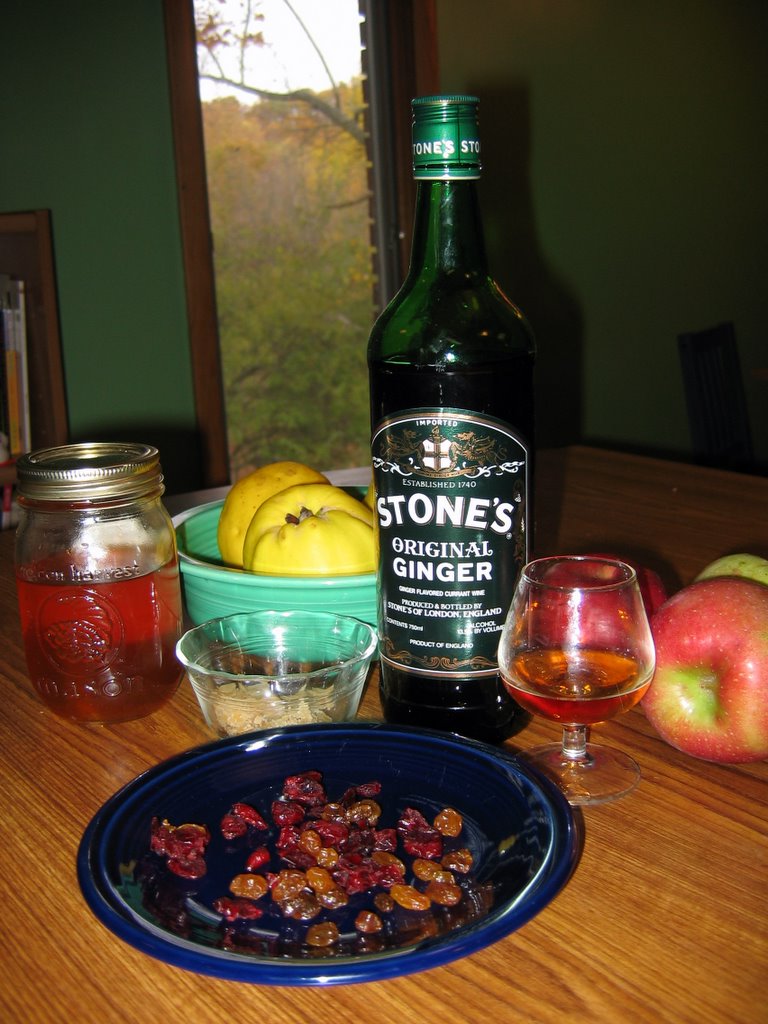 Ah--pie filling--now we come to the crux of the issue.
The first time I ever heard of a quince, was at Monticello, the home of Thomas Jefferson. It was mentioned in his journals, where he wrote that it was often made into a most excellently flavored jelly, but that he had also had it added to apple pie, where it made a very good effect.
That visit happened back when I was about thirteen, and I remember walking under quince trees in the orchard as we toured the extensive gardens on the grounds. Having read that bit about quinces in Jefferson's writings before I had come to see his home, I was thrilled to walk under the very trees he had mentioned, however, I was also saddened because it was high summer and all of the fruits looked like small green, mishappen apples.
So, I vowed that one day, I would come across a quince, and thus put it into an apple pie and see what happened.
And so, on Wednsday, when I was at the Farmer's Market buying apples to use in a pie for dessert, one farmer had three baskets of very odd-looking yellow fruits. Before I could bother to read the sign, my hand shot out to scoop up one of the homely darlings, and hold it to my nose. I inhaled the scent of a field of wildflowers spiked with a cidery tang. My eyes lit up, and then I saw the sign which confirmed the knowledge that finally, at last, I held in my grasp a quince.
I held in my very own fingers, the golden apple which Paris gave "To the Fairest"--Aphrodite--and thus won Helen. (I wonder what Aphrodite wanted with such a funny looking sour fruit for--she doesn't seem the baking or jelly-making sort.)
Of course I bought a basket of four of them and brought them home, where I resolved to put them in my apple pie. Because the fruit is so very sour (a fact which I confirmed as soon as I cut the first bit of peel and bit into it, whereupon tears sprung to my eyes), I decided to add a few more ingredients to balance the tartness. I added one quarter cup more of cider, more golden raisins and crystallized ginger, and to enhance the slight pinkish tint that the quince would give the filling, some dried cranberries.
I also decided to crack open the bottle of English ginger-steeped currant wine (Stone's Original Ginger) which I had been unable to resist at the Asian market, and add a good dollup of that. It was an excellent choice; for one thing, Stone's has a long history, with its recipe going back to 1740, and for another, the very sweet, gingery cordial perfectly balanced the flowery sour notes of the quince and the predominantly tart apples I had chosen.
What I ended up with, by using my recipe for the Honey and Cider-Sweetened Apple Pie, was a pie with more depth of flavor than I thought was possible. Even though I used only two cups of chopped quince (a single large fruit) to seven and a half cups of apples, the fragrance, flavor and even the pale rosy tint of the quince came right through. The ginger wine supported the dried and crystallized ginger flavors while the apples still took center stage, with the raisins and cranberries playing supporting parts that made a beautifully harmonizing symphony of swirling tastes and textures in the mouth.
I think it was probably the best apple pie I have ever made, and it is certainly the best I have ever eaten; everyone who ate the pie agreed.
I think it is a shame that quinces aren't utilized more often in modern cookery, because what they lack in outward beauty, they more than make up for with their inner magnificence.
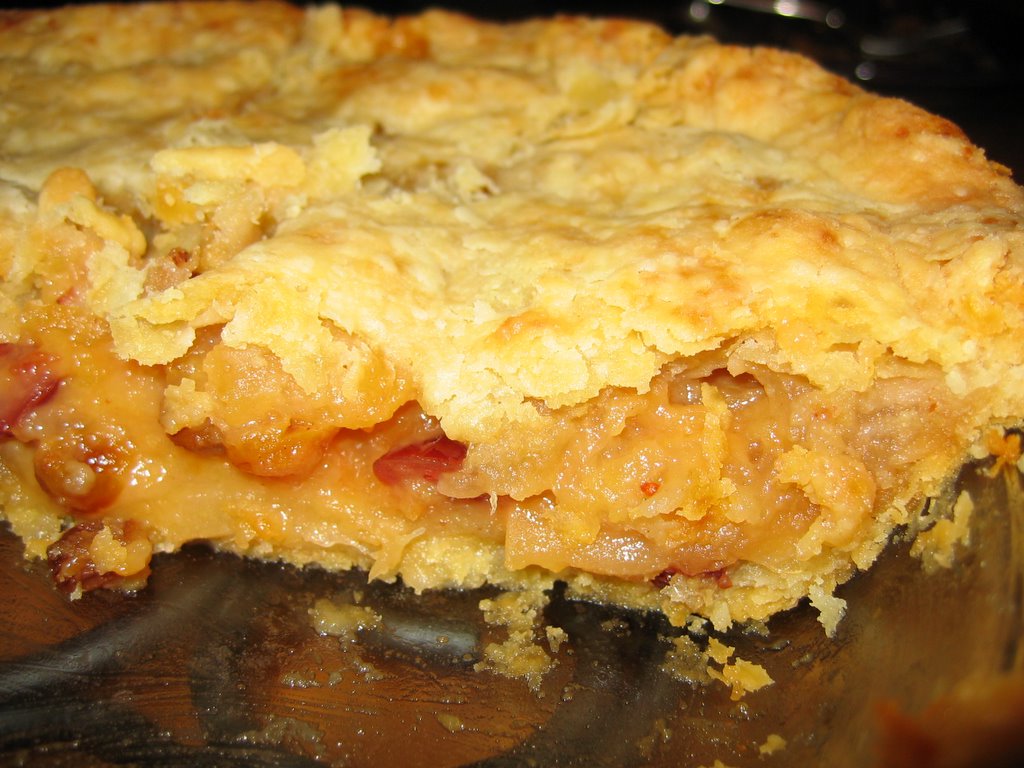 Eighteenth Century Quince-Apple Pie
Ingredients:
Barbara's Lard-Butter Crust
2 tablespoons butter
2 cups of peeled, sliced quince
1/4 cup apple cider
1/4 cup Stone's Original Ginger
7 1/2 cups of peeled, sliced apples (use at least three different kinds of apples, and include two McIntoshes in the mixture)
3/4 cup apple cider
1/4 cup honey
1/4 cup Stone's Original Ginger
3 tablespoons minced crystallized ginger
1/2 cup golden raisins
1/4 cup dried sweetened or unsweetened cranberries
2 tablespoons all purpose flour
1/2 teaspoon ground dry ginger
1/2 teaspoon ground cinnamon
pinch cardamom
pinch salt
Method:
Preheat oven to 375 degrees.
Start cooking the quince first: over medium heat, melt butter into a large saucepan or dutch oven; allow to brown slightly. Add quince and the first measures of cider and wine, and cook, stirring, until the quince begins to fall apart and turn pinkish.
Add apples, the second measures of cider and wine, honey, ginger, raisins and cranberries, and cook cook, stirring for about five minutes.
Put strainer over a smaller saucepan and drain apples, allowing cider, honey and juices to fall into pan. Set aside fruit mixture.
Cook, stirring, over medium high heat, until liquid reduces to 1/2 cup and thickens to a syrup that will coat your spoon. You will notice at this time that as soon as you remove the syrup from the heat and allow it to begin to cool, it will gel. This is what it is supposed to do. (with the added pectin of the quince, this mixture will gel very, very quickly. Watch it carefully so that it doesn't burn or turn into gummy candy!)
Put apples in a bowl, and pour syrup over and stir together thoroughly. Add remaining ingredients and stir to combine.
Roll out dough as directed, and line a 9" pie pan with the bottom crust. Pour apple filling in and top with second crust, as directed in pastry crust recipe.
Place in oven on center rack and bake for thirty minutes, then rotate pie pan 180 degrees. Continue to bake until crust is golden brown and the juices that eminate from the steam vents is thick and tawny gold in color--this will take anywhere from 35-45 minutes.
When pie is done, remove from oven and place on wire rack, and allow to cool to room temperature (or nearly so) before eating.
Note:
This is very good served with barely sweetened freshly whipped cream that has been flavored with Stone's, with finely minced crystallized ginger sprinkled over the cream.
It tasted so good that way, we neglected to take photographs of it plated before we started scarfing it down.
food & drink apple pie recipes quince ginger
Kitchen Cabinets Unveiled
 Okay, the cabinets are not hung yet, but they did get carried up from our garage and unpacked today, and as you can see, they are very, very pretty.
They would have started installing them, except the man in charge of our kitchen construction was called out on an emergency job, and he couldn't make it today. Our kitchen designer, Shawna, didn't want a different person taking over--she wanted Tad to be the one to see the project through from the beginning to the end, so she sent some guys to just bring the cabinets up and unload them so that Tad and his crew could just start right in on Monday.
There on the left are the bookcases; they are going to go into that hole you could see in the wall next to that door behind them.
And you can also see how the colors are going to work together--the moss green cabinets are a glazed oak, and in the foreground, you can see the honey-stained oak as well, that will match the floors throughout the rest of the house, which are the same wood and color.
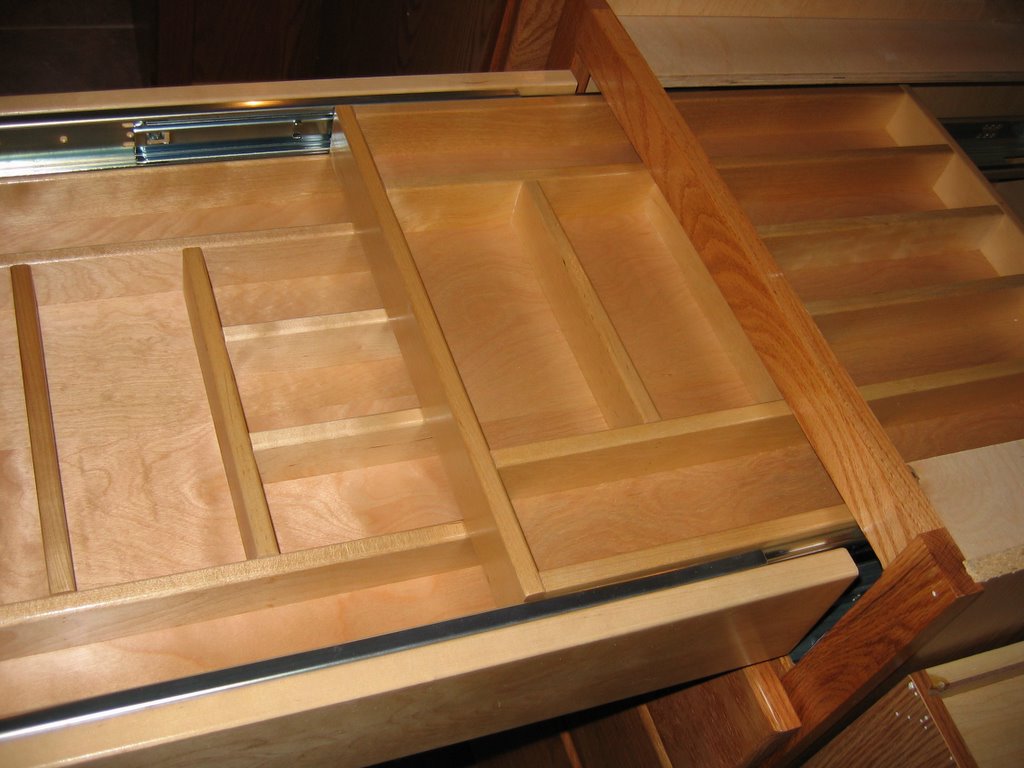 Here is the slideing compartment in the silverware drawer--you can see that we can stack two drawers worth of silverware in the space of one drawer's worth--no wasted space. I really, really like that.
And the hardware is of really great quality--the action is very smooth.
BTW--the cabinets are made by KraftMaid, and the doors are mostly the solid wood you see here, though there are also some doors with glass doors, which are still packed carefully in boxes in the dining room, waiting to be put on the cabinets after they are hung. They look like this.
Here you can get a good look at the honey oak next to the wall paint and the floor, as well as get a nice glance at the shape of the doors themselves.
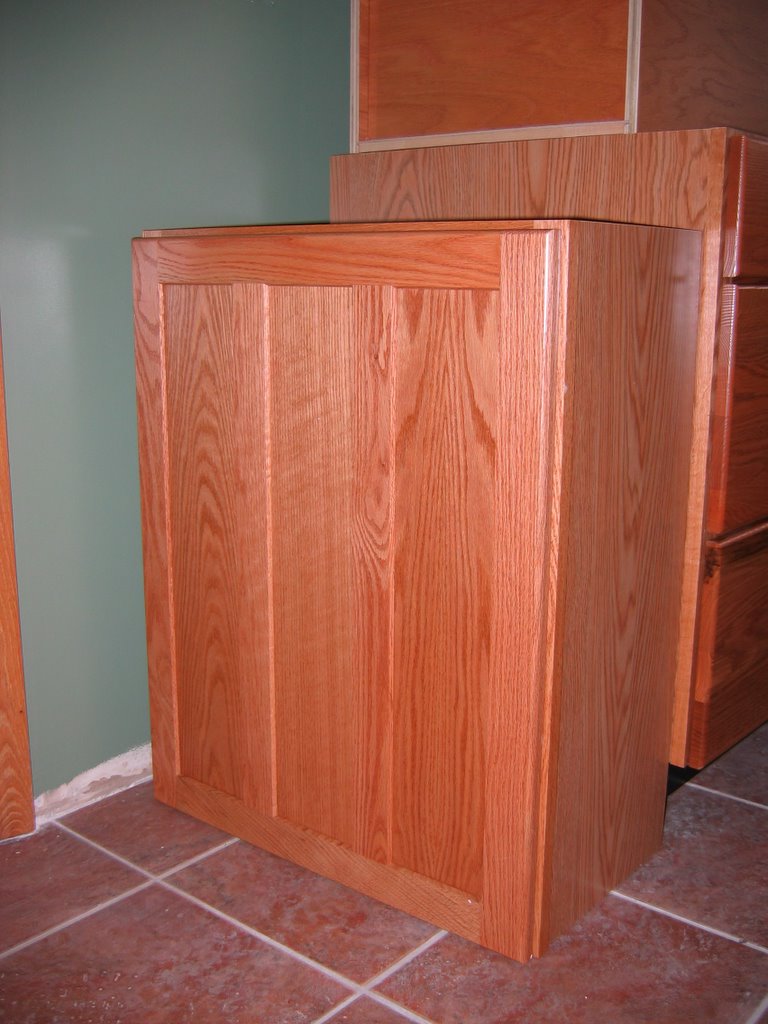 They are very simple; the decorative look we are going for in this room is Arts and Crafts, so the hardware is going to be really different--cast bronze in two different styles--knobs for the drawers and handles for the doors. When they have installed them, I will take photographs--the styles we chose are not on the website, that I can tell anyway.
So, that is the excitement for today. The entire world of our house seems to be covered in white fine dust, but the cabinets are here, they are soon to be installed in our walls, and then the countertop installer will come and measure for the counters, and the shape of the room will finally be apparent.
Then, the countertops go in, then the tile backsplash, then the appliances and finally, the vent hood and decorative accents.
It is coming along beautifully. I am so excited--it is so thrilling to see with my own eyes, the vision I had come into being.
Thursday, November 03, 2005
True Kitchen Confessions
I am sure she didn't mean to create a meme.
But, after reading Amy's amusing (and somewhat familiar) culinary confessions over at Cooking With Amy, I decided that it might be a good idea for me to 'fess up to a few things concerning my kitchen habits and cooking adventures.
Like Amy, I'll invite others to post their own confessions as they feel moved to (rise up and testify brothers and sisters--can I hear an "amen?") in the comments section; I understand it is quite cathartic.
Barbara's True Kitchen Confessions:
As I mentioned on Amy's comments, I like fried bologna sandwiches with onions and hot sauce. Or at least, the last time I had one I did. I haven't eaten one in years because I don't go out of my way to buy bologna, even the good kosher stuff with lots of garlic. That, and I don't want Zak to divorce or disown me for how my breath smells afterwards.
I read cookbooks more than I cook from them. Why is this? Well, I think I may be constitutionally incapable of following any recipe exactly--this both caused problems and served me well in culinary school. Luckily, most of my chefs respected my experience and independent nature and let me go my own way, succeeding or failing on my own merits. (The fact that I nearly always succeeded probably helped.) Besides--when I do follow recipes from cookbooks exactly--I more often than not have a critical failure, and very often, I could see it coming and went against my instincts and followed the recipe anyway. And then, disaster, or at least a mess.
So why do I read the cookbooks--because they are fascinationg social documents that tell me much about how people live, eat, work, play and interact within a given culture. That, and while I may never cook exactly from them, I use cookbook recipes as springboards to create delicious food.
I have many cookbooks which I have never cooked from directly, but which I will not let go of because they are such good documents of social and personal history.
I talk to the food while I cook.
This too, caused some issues in culinary school, because the other students thought I was nuts. However, more than one chef instructure told them to leave me alone, because it obviously worked for me and the food, because the results were excellent. And more than one chef, I will notice, muttered to his ingredients while working with them.
It is akin to a Witch's incantation over a brewing cauldron, I suspect.
Besides, if people think you are nuts, they won't bug you, which is sometimes a precious thing in an overcrowded, very busy, bustling kitchen.
I will eat anything (except brains) once or twice before declaring I don't like it. Even sea cucumber and jellyfish. (The former I don't much care for and the latter I love.) Even scary-looking things have been happily tasted and generally, later, adored.
Any food item which is mucousy in texture is apt to engage my gag reflex, but I can overcome it if whatever it is tastes absolutely wonderful. Good sea urchin sushi (unagi) is a perfect example--the first time I had it, I didn't realize it had the texture of raw egg yolk, and I had put the entire piece of sushi in my mouth. The owner of the sushi bar, who had suggested I try it was standing over me--and I dare not show that my throat was trying to reject it wholesale in front of her--I didn't want to hurt her feelings. So I forced it down, and once it was down, analyzed the flavor--which was deeplypceanic with a tang of iodine. I decided I liked it, and ate the second piece with glee, and many smiles to the nice sushi bar lady.
I like to read culinary reference books for fun. You know, like The Oxford Companion to Food, Larousse Gastronomique and On Food and Cooking. Reading stuff that makes other people go to sleep while sipping good coffee is an evening's high entertainment for me. No wonder the kids at culinary school gave me the nickname, "The Culinary Nerd," a label which I wore proudly.
I'll put chiles in anything, including brownies and chocolate truffles.
I'll put garlic in nearly anything.
I will feed whosoever shows up at suppertime; there is almost always enough to go around, and if there isn't, I will improvise. No one leaves my table hungry. No one, no way, no how.
I like working in soup kitchens and feel it is a holy mission to do so, and I think anyone who feeds the poor and hungry get more out of it than the people they serve, though in a less tangible way.
I hoard food. Where this comes from, I am not certain. Partially it is because of my farmer grandparents' teachings of self-reliance and the necessity of having food "to fall back on." Maybe it is because both sets of grandparents lived through the Depression. Maybe it was because my Dad was laid off for a year and we ate a hell of a lot of beans and it got monotonous. Maybe I just saw "Gone With the Wind" too many times, and Scarlett's declaration, "As God as my witness, I swear I will never go hungry again!" became a part of my psyche. I don't know, but I do tend to have an overstocked larder, and thus, almost always have something I can cook up at any given time into any given dish.
I have about eight different kinds of chile peppers in my freezer. There can never be too many chiles. End of story.
I do use some few packaged processed food items like ramen from time to time in order to make a quick meal or snack. I don't feel guilty about it, either. Okay, well, not too guilty.
I am generally very frugal and try to use leftovers as creatively as possible. What we do not eat goes to our dogs, though I confess that I rather wish that they were hogs instead of dogs, because then, we could slaughter and eat them, and finish the food recycling circle.
My cats are terrible for getting up on tables and counters. I try to stop them from doing this to no avail, though in truth, they have been trained not to do in front of me. Which means that they mostly stay down on the floor when I am cooking, but if I should leave the room and not return promptly, they may ravage whatever is left in their reach. Therefore, I leave no foods out that they can get into.
I sometimes thaw things out by leaving them in warm water in the sink. I know it is bad, I should use cold water, but well, I do it anyway. This from a woman who made more than a 100% in her Food Safety class in culinary school. My chefs would be ashamed.
I do not always do the dishes right away, and sometimes my kitchen is a wreck.
I do not always wash my woks as soon as I empty them, and sometimes the seasoning suffers for it; however, I am getting better about washing them as I soon as I scrape the food onto the serving platter. I just nab a bite while it still has wok hay, scrub and slap the wok on the stove to dry. This actually is time saving; food is easier to clean off while the wok is still hot.
My refrigerator sometimes spawns science experiments, meaning sometimes things get forgotten and it turns into who knows what. Sometimes my refrigerator is downright scary and most of my chef-instructors would want to take a wooden spoon to me for it--things I would never do in a restaurant I will do at home. Oh, well.
I probably drink too much coffee.
I probably eat too much chocolate.
I should probably try and lose some weight, but am not likely to.
I keep meaning to write a cookbook, but never quite get around to it, because I don't know what I would focus on. Any suggestions in this area are appreciated.
I love teaching other people how to cook, and love nothing more than to see a student excel at a new-found skill. It all comes down to the old proverb, "Give a man a fish and you feed him for a day; teach him to fish and you feed him for a lifetime." In my universe, the proverb goes thusly, "Cook a man a meal and you feed him for a day, teach him to cook and you feed him and his family and friends for a lifetime."
Rachel Ray's media saturation and her voice work my nerves, but her basic mission, which is to reach out to the folks who don't have time to cook elaborate meals and generally eat frozen crap or takeout and get them to cook for their families makes me admire her nonetheless. I can't help it--I cannot knock a woman who holds that ideal central to herself--I cannot help but think we are kindred spirits. Even if she is so perky it hurts.
I don't really like the Food Network anymore, and haven't for a long time.
Emeril makes me grind my teeth because his personality is so grating, however I love Anthony Bourdain. He makes me laugh, and his personality, while arrogant, is more akin to my own. He isn't bombastic, just plain-spoken and his incisive comments generally are spot-on.
I used to be anorexic. Being pregnant with Morganna cured me of this, but I always fear its return. Also--I hate to see bulemic and anorexic people hurt themselves in this way, and I go out of my way to speak out against such behaviors whenever I see them.
I don't drink wine very often and know very little about it because I just don't get into it. That is a hard one to admit--but there we are. I think it comes down to the fact that while I like some of it, and some of it tastes good, I just don't see the big deal about studying up on it, because I don't see a lot of difference in the flavors of it. Also, I have a skin condition known as rosacea which is triggered by drinking wine, so I just don't bother very often. And why read about something that I can't regularly drink for fear of turning my face into a big red explosion?
I don't like food snobs. I don't know how else to say it, but I came from the lower-middle class. And as a farmer's granddaughter, I know perfectly well that folks who grow the food know damned good and well what good food tastes like, and eat just as well or better than a lot of folks who are much more well off. I don't like declarations that this or that recipe is "the best" for any given item (which is why Cook's Illustrated sometimes bugs the crap out of me), nor do I care for people who look down on those less fortunate for eating "crap," when more often than not, it is all that person can afford. I do applaud those who try to make good quality food available to those who do not have much money, such as the farmers who take WIC coupons at our Farmer's Market here in Athens.
I don't like food writers who make unqualified claims or who don't do enough research before making sweeping generalizations. That bugs me as much as food snobbery does.
I hate the taste of caviar, but I do like salmon roe.
Dom Perignon really does taste good, my rosacea be damned.
I adore raw fish and good quality raw beef, and will eat it when the opportunity presents, even if there is some risk of doing so. (Last night, when I trimmed the silverskin from the whole beef tenderloin, I ate some slivers of it raw. It was to die for, but hopefully not literally.)
I love tofu, but only as itself. I don't very often like it masquerading as something else, like ice cream, hot dogs or turkey. Tofurky is not a good thing, in my opinion. It is scary.
The idea of meats cloned in a lab vat does not bother me, but genetically modified corn, which is wind-pollinated and thus can contaminate fields of organically grown, non-GMO corn, does piss me off to no end.
Luther Burbank is one of my heroes, as is Norman Borlaug. Don't know who they are? Plant breeders, essentially, who have helped supply a lot of food to a lot of people. (No, I don't think that all genetic monkeying with food is bad. I dislike knee-jerk fear of GMO's.)
Julia Child is my own personal patron saint. Without her influence no one would be writing food blogs in America today. I firmly believe that without her, we would probably still be eating Campbell's soup casseroles and following the lead of Poppy Cannon. Who is Poppy Cannon? Exactly.
Finally--I do wish we could really come together and feed everyone in the world. I know that it is horrendously idealistic of me, but there we are. I hate to see anyone go hungry.
But, after reading Amy's amusing (and somewhat familiar) culinary confessions over at Cooking With Amy, I decided that it might be a good idea for me to 'fess up to a few things concerning my kitchen habits and cooking adventures.
Like Amy, I'll invite others to post their own confessions as they feel moved to (rise up and testify brothers and sisters--can I hear an "amen?") in the comments section; I understand it is quite cathartic.
Barbara's True Kitchen Confessions:
As I mentioned on Amy's comments, I like fried bologna sandwiches with onions and hot sauce. Or at least, the last time I had one I did. I haven't eaten one in years because I don't go out of my way to buy bologna, even the good kosher stuff with lots of garlic. That, and I don't want Zak to divorce or disown me for how my breath smells afterwards.
I read cookbooks more than I cook from them. Why is this? Well, I think I may be constitutionally incapable of following any recipe exactly--this both caused problems and served me well in culinary school. Luckily, most of my chefs respected my experience and independent nature and let me go my own way, succeeding or failing on my own merits. (The fact that I nearly always succeeded probably helped.) Besides--when I do follow recipes from cookbooks exactly--I more often than not have a critical failure, and very often, I could see it coming and went against my instincts and followed the recipe anyway. And then, disaster, or at least a mess.
So why do I read the cookbooks--because they are fascinationg social documents that tell me much about how people live, eat, work, play and interact within a given culture. That, and while I may never cook exactly from them, I use cookbook recipes as springboards to create delicious food.
I have many cookbooks which I have never cooked from directly, but which I will not let go of because they are such good documents of social and personal history.
I talk to the food while I cook.
This too, caused some issues in culinary school, because the other students thought I was nuts. However, more than one chef instructure told them to leave me alone, because it obviously worked for me and the food, because the results were excellent. And more than one chef, I will notice, muttered to his ingredients while working with them.
It is akin to a Witch's incantation over a brewing cauldron, I suspect.
Besides, if people think you are nuts, they won't bug you, which is sometimes a precious thing in an overcrowded, very busy, bustling kitchen.
I will eat anything (except brains) once or twice before declaring I don't like it. Even sea cucumber and jellyfish. (The former I don't much care for and the latter I love.) Even scary-looking things have been happily tasted and generally, later, adored.
Any food item which is mucousy in texture is apt to engage my gag reflex, but I can overcome it if whatever it is tastes absolutely wonderful. Good sea urchin sushi (unagi) is a perfect example--the first time I had it, I didn't realize it had the texture of raw egg yolk, and I had put the entire piece of sushi in my mouth. The owner of the sushi bar, who had suggested I try it was standing over me--and I dare not show that my throat was trying to reject it wholesale in front of her--I didn't want to hurt her feelings. So I forced it down, and once it was down, analyzed the flavor--which was deeplypceanic with a tang of iodine. I decided I liked it, and ate the second piece with glee, and many smiles to the nice sushi bar lady.
I like to read culinary reference books for fun. You know, like The Oxford Companion to Food, Larousse Gastronomique and On Food and Cooking. Reading stuff that makes other people go to sleep while sipping good coffee is an evening's high entertainment for me. No wonder the kids at culinary school gave me the nickname, "The Culinary Nerd," a label which I wore proudly.
I'll put chiles in anything, including brownies and chocolate truffles.
I'll put garlic in nearly anything.
I will feed whosoever shows up at suppertime; there is almost always enough to go around, and if there isn't, I will improvise. No one leaves my table hungry. No one, no way, no how.
I like working in soup kitchens and feel it is a holy mission to do so, and I think anyone who feeds the poor and hungry get more out of it than the people they serve, though in a less tangible way.
I hoard food. Where this comes from, I am not certain. Partially it is because of my farmer grandparents' teachings of self-reliance and the necessity of having food "to fall back on." Maybe it is because both sets of grandparents lived through the Depression. Maybe it was because my Dad was laid off for a year and we ate a hell of a lot of beans and it got monotonous. Maybe I just saw "Gone With the Wind" too many times, and Scarlett's declaration, "As God as my witness, I swear I will never go hungry again!" became a part of my psyche. I don't know, but I do tend to have an overstocked larder, and thus, almost always have something I can cook up at any given time into any given dish.
I have about eight different kinds of chile peppers in my freezer. There can never be too many chiles. End of story.
I do use some few packaged processed food items like ramen from time to time in order to make a quick meal or snack. I don't feel guilty about it, either. Okay, well, not too guilty.
I am generally very frugal and try to use leftovers as creatively as possible. What we do not eat goes to our dogs, though I confess that I rather wish that they were hogs instead of dogs, because then, we could slaughter and eat them, and finish the food recycling circle.
My cats are terrible for getting up on tables and counters. I try to stop them from doing this to no avail, though in truth, they have been trained not to do in front of me. Which means that they mostly stay down on the floor when I am cooking, but if I should leave the room and not return promptly, they may ravage whatever is left in their reach. Therefore, I leave no foods out that they can get into.
I sometimes thaw things out by leaving them in warm water in the sink. I know it is bad, I should use cold water, but well, I do it anyway. This from a woman who made more than a 100% in her Food Safety class in culinary school. My chefs would be ashamed.
I do not always do the dishes right away, and sometimes my kitchen is a wreck.
I do not always wash my woks as soon as I empty them, and sometimes the seasoning suffers for it; however, I am getting better about washing them as I soon as I scrape the food onto the serving platter. I just nab a bite while it still has wok hay, scrub and slap the wok on the stove to dry. This actually is time saving; food is easier to clean off while the wok is still hot.
My refrigerator sometimes spawns science experiments, meaning sometimes things get forgotten and it turns into who knows what. Sometimes my refrigerator is downright scary and most of my chef-instructors would want to take a wooden spoon to me for it--things I would never do in a restaurant I will do at home. Oh, well.
I probably drink too much coffee.
I probably eat too much chocolate.
I should probably try and lose some weight, but am not likely to.
I keep meaning to write a cookbook, but never quite get around to it, because I don't know what I would focus on. Any suggestions in this area are appreciated.
I love teaching other people how to cook, and love nothing more than to see a student excel at a new-found skill. It all comes down to the old proverb, "Give a man a fish and you feed him for a day; teach him to fish and you feed him for a lifetime." In my universe, the proverb goes thusly, "Cook a man a meal and you feed him for a day, teach him to cook and you feed him and his family and friends for a lifetime."
Rachel Ray's media saturation and her voice work my nerves, but her basic mission, which is to reach out to the folks who don't have time to cook elaborate meals and generally eat frozen crap or takeout and get them to cook for their families makes me admire her nonetheless. I can't help it--I cannot knock a woman who holds that ideal central to herself--I cannot help but think we are kindred spirits. Even if she is so perky it hurts.
I don't really like the Food Network anymore, and haven't for a long time.
Emeril makes me grind my teeth because his personality is so grating, however I love Anthony Bourdain. He makes me laugh, and his personality, while arrogant, is more akin to my own. He isn't bombastic, just plain-spoken and his incisive comments generally are spot-on.
I used to be anorexic. Being pregnant with Morganna cured me of this, but I always fear its return. Also--I hate to see bulemic and anorexic people hurt themselves in this way, and I go out of my way to speak out against such behaviors whenever I see them.
I don't drink wine very often and know very little about it because I just don't get into it. That is a hard one to admit--but there we are. I think it comes down to the fact that while I like some of it, and some of it tastes good, I just don't see the big deal about studying up on it, because I don't see a lot of difference in the flavors of it. Also, I have a skin condition known as rosacea which is triggered by drinking wine, so I just don't bother very often. And why read about something that I can't regularly drink for fear of turning my face into a big red explosion?
I don't like food snobs. I don't know how else to say it, but I came from the lower-middle class. And as a farmer's granddaughter, I know perfectly well that folks who grow the food know damned good and well what good food tastes like, and eat just as well or better than a lot of folks who are much more well off. I don't like declarations that this or that recipe is "the best" for any given item (which is why Cook's Illustrated sometimes bugs the crap out of me), nor do I care for people who look down on those less fortunate for eating "crap," when more often than not, it is all that person can afford. I do applaud those who try to make good quality food available to those who do not have much money, such as the farmers who take WIC coupons at our Farmer's Market here in Athens.
I don't like food writers who make unqualified claims or who don't do enough research before making sweeping generalizations. That bugs me as much as food snobbery does.
I hate the taste of caviar, but I do like salmon roe.
Dom Perignon really does taste good, my rosacea be damned.
I adore raw fish and good quality raw beef, and will eat it when the opportunity presents, even if there is some risk of doing so. (Last night, when I trimmed the silverskin from the whole beef tenderloin, I ate some slivers of it raw. It was to die for, but hopefully not literally.)
I love tofu, but only as itself. I don't very often like it masquerading as something else, like ice cream, hot dogs or turkey. Tofurky is not a good thing, in my opinion. It is scary.
The idea of meats cloned in a lab vat does not bother me, but genetically modified corn, which is wind-pollinated and thus can contaminate fields of organically grown, non-GMO corn, does piss me off to no end.
Luther Burbank is one of my heroes, as is Norman Borlaug. Don't know who they are? Plant breeders, essentially, who have helped supply a lot of food to a lot of people. (No, I don't think that all genetic monkeying with food is bad. I dislike knee-jerk fear of GMO's.)
Julia Child is my own personal patron saint. Without her influence no one would be writing food blogs in America today. I firmly believe that without her, we would probably still be eating Campbell's soup casseroles and following the lead of Poppy Cannon. Who is Poppy Cannon? Exactly.
Finally--I do wish we could really come together and feed everyone in the world. I know that it is horrendously idealistic of me, but there we are. I hate to see anyone go hungry.
Wednesday, November 02, 2005
Hacking a Dish From Memory: Mongolian Beef
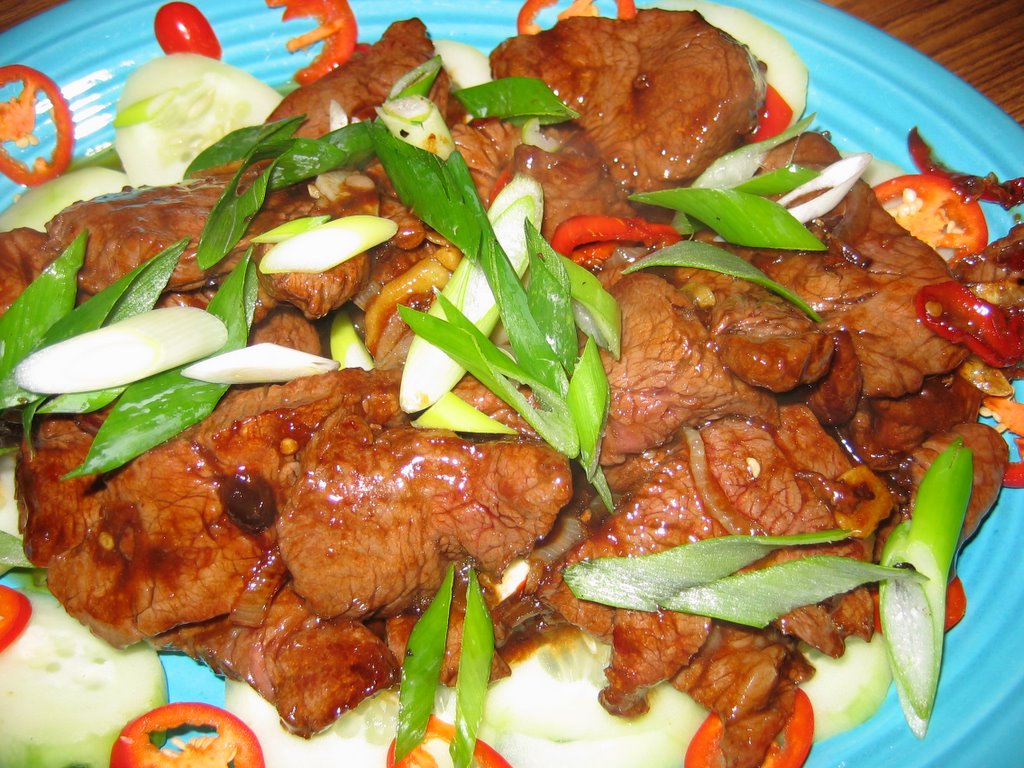 About a week ago, Kate at the Accidental Hedonist posted about the obsessive folks who attempt to perfectly recreate MacDonald's foods at home, and she said, "Why?"
Well, I posted in favor of hacking recipes from restaurants, but not McDonalds. Never Mickey D's--that I don't get. Because if you want a Big Mac, go out and get one, dammit. By the time you spend all the money to try and find the "perfect" ingredients, then you will have spent more than it would cost to just buy one. Turning fast food into slow food is just weird.
But trying to recreate a dish you have had in a favorite restaurant is a sport. Or at least, it is to me. It is an exercise in patience, cunning, research skills, deductive reasoning and most importantly, taste memory.
Like the entree pictured above.
I haven't tasted that dish in over a decade, but have longed for it every day of those years.
It was my favorite dish on the menu at the Chinese restaurant in Huntingon, West Virginia, where I worked as a waitress. It was one of the most expensive items on the menu and was an amazing combination of flavors, textures, complexity and simplicity. I sold a lot of orders of it to people who would ask what I liked best, and then who would become hooked on it after one bite and would order it over and over.
It was called on the China Garden menu, "Mongolian Beef," and while it was certainly beef, I doubt seriously if it had anything to do with Mongolia. I have never found anything else on any other Chinese restaurant menu labelled "Mongolian" that tasted like this dish. I suspect that it was a dish that Huy made up himself and just labelled it with a name that he thought people would like. Or, that it was a dish that was similar to the stuff that other restaurants call Mongolian Beef, but that Huy's sauce was just superior and his presentation was unusual.
And it was very different from the typical run of the mill Chinese restaurant food that one would expect to find in Huntington West Virginia (which was true for much of their menu). For one thing, it involved small medallions cut from the beef tenderloin. Very few Chinese places use such expensive cuts of beef. For another thing, the beef was presented over a bed of cold cucumber slices, with a sauce that was spicy and sweet, savory and brown, a little tangy and very, very flavorful, but without tasting obviously like any combination of Chinese sauces. It was garnished with scallions, but it also had slices of onion cooked in the wok to a browned "wok-hay" filled fragrance that would just make one's mouth water.
When you ate it, the interplay between the crisp cucumbers and the meltingly tender, medium-rare beef with its perfectly seared crust was amazing. The sauce was a wonder--it clung perfectly to the steak, yet was generous enough and hot enough coming out of the wok to partially cook the cucumbers so that they had a velvety outside and a crunchy inner core. The cooked onions were a sweet background note while the scallions burst like a green and pungent symphony on the tongue.
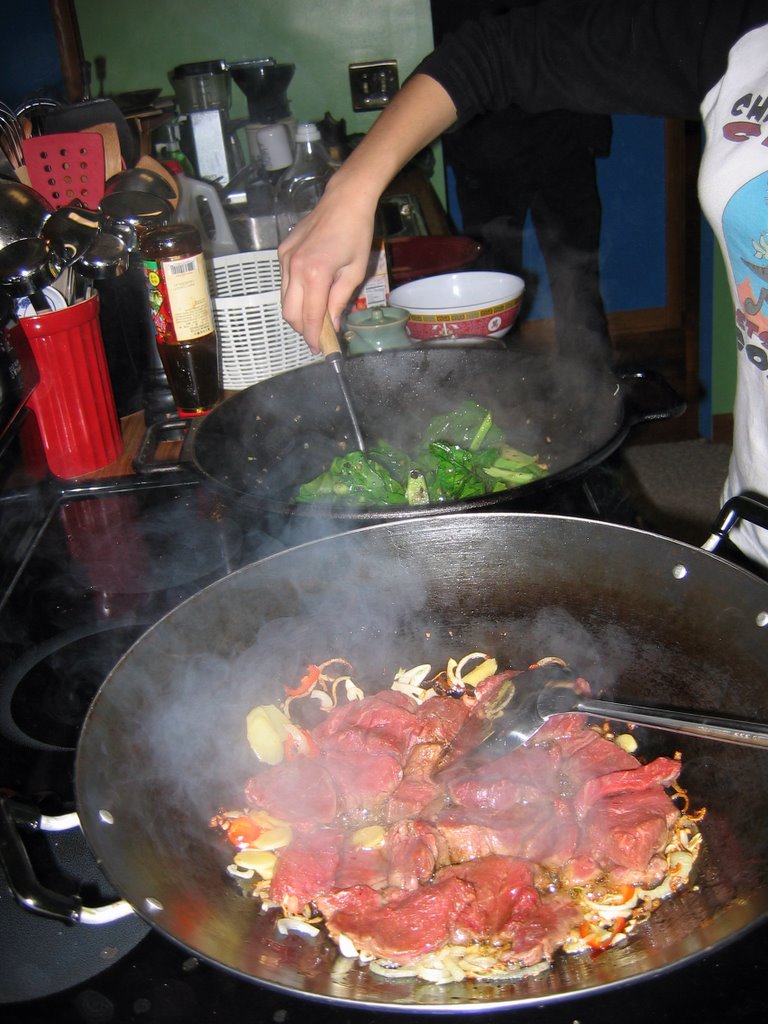 On our anniversary on Sunday, I decided that I was going to buy a tenderloin from Bluescreek Farms, roll up my sleeves and just cook the Mongolian Beef and stop fretting over it.
Part of the reason I decided to take the plunge now is because I found a couple of recipes in Grace Young's The Breath of a Wok, and Ken Hom's Easy Family Recipes from a Chinese American Childhood which had sauces in them that I had learned over the years would create much the same flavor complex as was present in the China Garden original dish. In addition, I had started cooking with bean sauce, and the flavor of it, as I licked it straight off of a spoon brought the "aha!" moment--it was a component of the mysterious brown sauce that enrobed Mongolian Beef so magnificently.
Taste memory is a very useful thing for a cook or chef to have or develop. I have a naturally good memory for flavors and scents, and for all that I have terrible allergies and sinus issues, I have a very sensitive nose and I am quite good at discerning flavors and scents, particularly when it comes to seasonings. This skill got honed when I learned how to cook Indian food; I trained myself by eating at a very good Indian restaurant often and then going home and tasting just bits of spices and then comparing those flavors to those in the dishes I had eaten and slowly began to understand how the spices created such symphonic bouquets in the mouth.
I have continued my training with my explorations of Chinese ingredients as well--I make a point now of picking unfamiliar sauces or condiments and bringing them home, then researching recipes that use them and then, before I break out the wok, I taste them straight from the bottle or jar.
When I did that with bean sauce the other day is when I had the final puzzle piece for the Mongolian Beef. It was the missing flavor element I had been looking for.
Or, at least, it was close enough.
So, we were having friends over tonight, and I decided that was what I was going to make, along with Hot and Sour Soup and Gai Lan with Waterchestnuts (which you can see Morganna cooking next to me in the background there--we cannot wait for the new stove which will have more room for two woks to be going at the same time). I figured that if I was going to buy an entire tenderloin, then we should share it with some folks rather than make utter pigs of ourselves.
As it was, while I cut the tenderloin into medallions, I was worried that there was too much beef, but it tasted so good that we ended up with only one little piece left. I stopped cutting at just the right place--we have a nice sized filet mignon sitting comfortably in the freezer, waiting for a rainy day.
So, what am I going to do now that I have that beloved favorite dish in my grasp?
Share it with you, of course.
Since I know that Huy has retired and the restaurant is no longer open, I feel as if I can do so without feeling guilty at all.
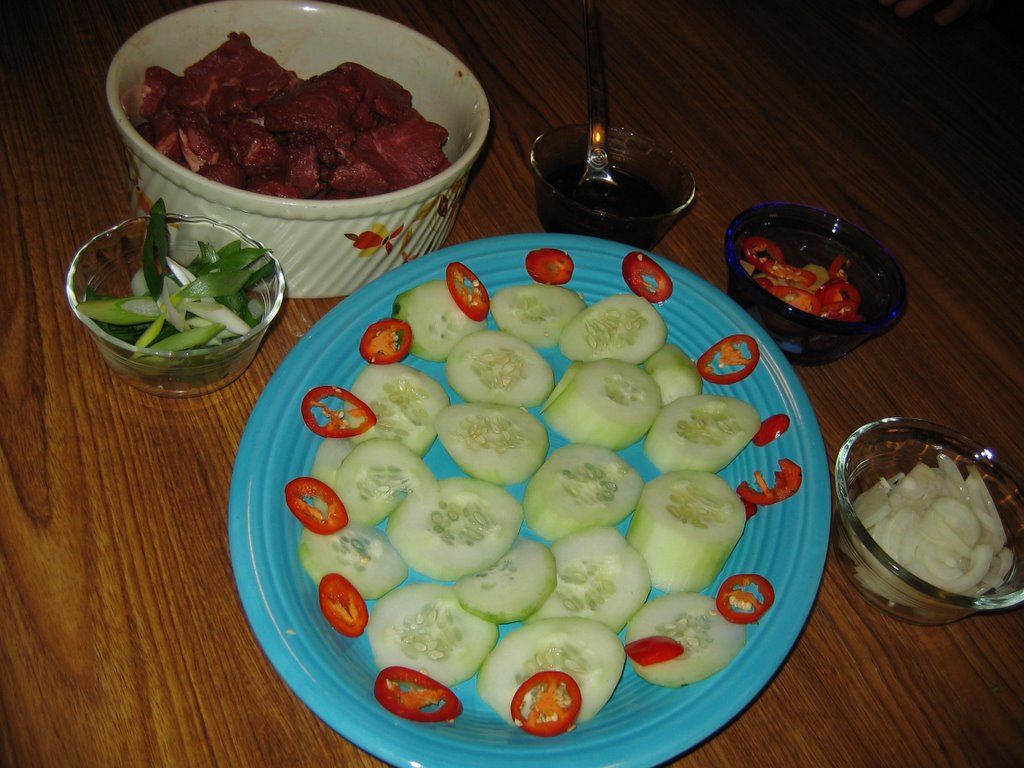 Mongolian Beef
Ingredients:
1 1/2 pounds beef tenderloin, silverskin trimmed
1 tablespoon thin soy sauce
1 tablespoon dark soy sauce
1 1/2 tablespoons cornstarch
1 cucumber peeled and sliced into 1/4" thick diagonal slices
1 ripe jalapeno cut into thin diagonal slices
2 1/2 tablespoons peanut oil
1 medium onion cut in half and sliced thinly
1 1/2" cube of ginger, peeled and thinly sliced
2 ripe jalapenos, sliced thinly on the diagonal
2 cloves garlic, peeled and thinly sliced
Sauce Ingredients:
(Mix together in a small bowl and have ready)
1 tablespoon hoisin sauce
2 tablespoons oyster sauce
1 1/2 tablespoons bean sauce
2 teaspoons raw sugar
1 teaspoon chili garlic sauce (or to taste)
2 teaspoons Shaoxing wine
1 teaspoon Chinkiang rice vinegar
1 scallion trimmed and cut into 1/2" long diagonal slices
Method:
Cut tenderloin into 1/2" thick medallions. Toss with two soy sauces and cornstarch and allow to marinate at least twenty minutes.
After cutting cucumber and first jalapeno, use them to completely line a serving platter, with the cucumber in the center, and the jalapeno as decoration along the edges as shown above.
Heat wok until it is smoking. Add peanut oil and heat until it shimmers. Add onion slices and stir fry until they turn golden. Add ginger, jalapeno and garlic to wok and stir and fry until garlic begins to turn golden.
Add meat in a single layer, and let sit undisturbed for at least one minute, or until the meat is seared well on the bottom. Begin stir frying with the goal of simply searing the outside of the meat, while the inside stays medium rare.
When meat is fully browned on the outside, add sauce ingredients all at once, and stir quickly until it thickens.
Pour immediately onto the platter over the cucumbers and sprinkle the scallion bits over the steak.
Serve right away with steamed rice and some sort of crunchy leafy green vegetable. Like Gai Lan.
food recipes Chinese cooking beef ginger
Tuesday, November 01, 2005
What Does My Kitchen Look Like Now, Part II
 They started painting today; tomorrow or the next day, they will start putting in the cabinetry. You can see the color to the right there--a nice pale sage/moss green. It looks well with the golden oak woodwork and the reddish terra cotta tile floor.
Tomorrow, Dan and Heather will also take away the old kitchen appliances, cabinetry and countertops in a large rented truck. Dan stopped by just as I was dishing up supper to tell us this--I was scooping out the pork ribs into a serving bowl, heard his voice downstairs and started laughing.
I swear that my little brother can smell pork cooking from ten miles away; I don't know how many times he has shared our supper because he happened by.
T'was no matter--I know he partakes of no pork at his house, out of respect for Heather's Muslim beliefs--and besides, I always cook enough to feed a couple more people anyway. Just in case.
So, I dished up a fourth bowl of rice and though Dan manfully tried to refuse, he sat and had dinner anyway.
Which is just fine.
But wait--there is more!
I just found out that the stove which I had been told would take eight to ten weeks to get to us is in--sitting about at Clintonville Electric, just waiting for the range hood to come in, before everything is loaded on a truck and brought to us and installed.
It seems that the delay happened because another customer had ordered the same exact stove in the same exact British Racing Green that we had--a day or so before we had. And so, they took precidence, and the stove that was in the warehouse went to them.
However, they apparently cancelled that order days ago--and so--the stove is ours.
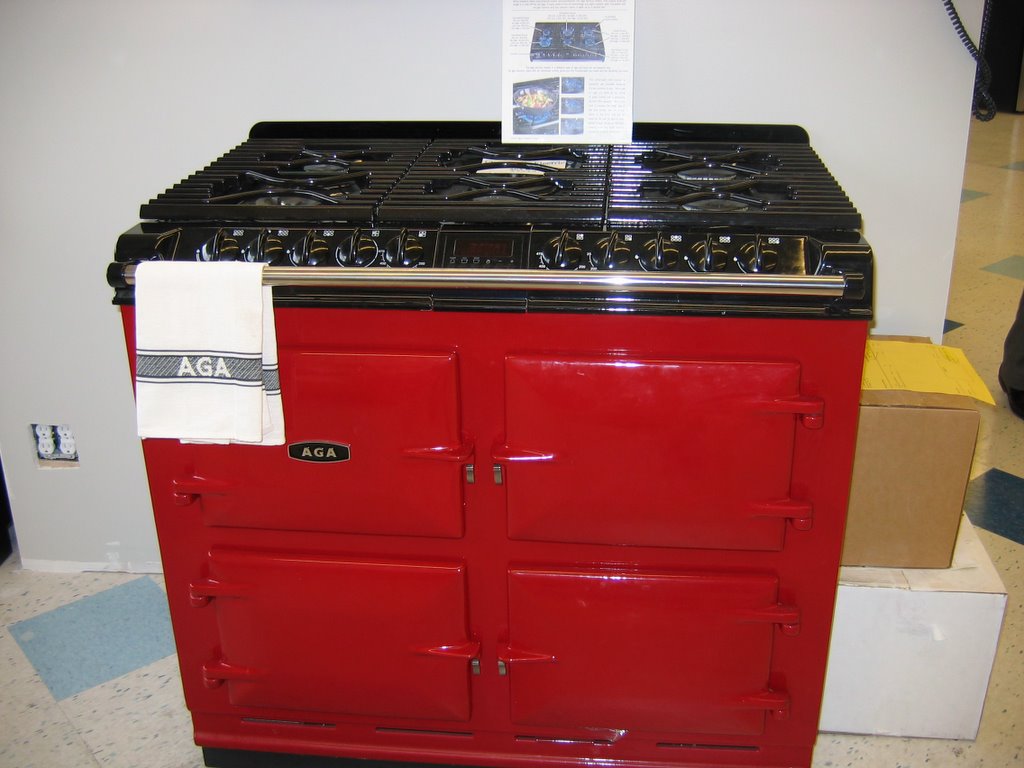 Here on the left, you can see what it will basically look like, save for the color. It is an AGA Six-Four, which is a dual-fuel range with a six-burner gas cooktop and four electric ovens--one warming oven, one broiler and one higher-heat oven and one lower heat oven.
The cooktop includes one burner that has 27,500 btus, which I cannot wait to set my wok on. I suspect that once I set my wok on it and start cooking I will never want to leave my spot in front of that burner.
It is a beauty. I can barely contain myself from vibrating apart with excitement as I anticipate cooking on it.
Things are coming together much faster on this kitchen than I had hoped.
I will keep everyone up to date as developments occur.
Country Folk Fusion: Pig and Greens
 I've expounded before, early on in the writing of this blog, about the propensity for Applachian country folk to love the pairing of pork with greens.
I have also made note of the Chinese folk's love of greens and pork in a past posting, and have always wondered internally that perhaps pig meat and greens are a commonality that should be exploited in bringing folks from these disparate backgrounds together.
Because, in truth, it is possible that we are not so different after all.
Pigs were an important protein source for early settlers in the Applachian mountain region, because frankly, pigs can take care of themselves. Settlers would let their pigs forage in the woods, and pen them up only at night, or in some cases, only in cold weather. The pigs, big, wily omnivores that they are, took right good care of themselves--the only natural enemies they had were men and bear--and essentially provided a worry-free domestic meat source for the hardy folk who carved homes out of the densely wooded hills and valleys.
By the time that the Southern Applachian states were "tamed and civilized" to the point that there were roads, schools, and motor cars everywhere, pork was still revered and eaten as as staple meat because of the force of tradition, and its economic strength--even if you didn't raise your own hogs, pork was cheap, and thus often on the table, and was considered an integral part of Appalachian foodways.
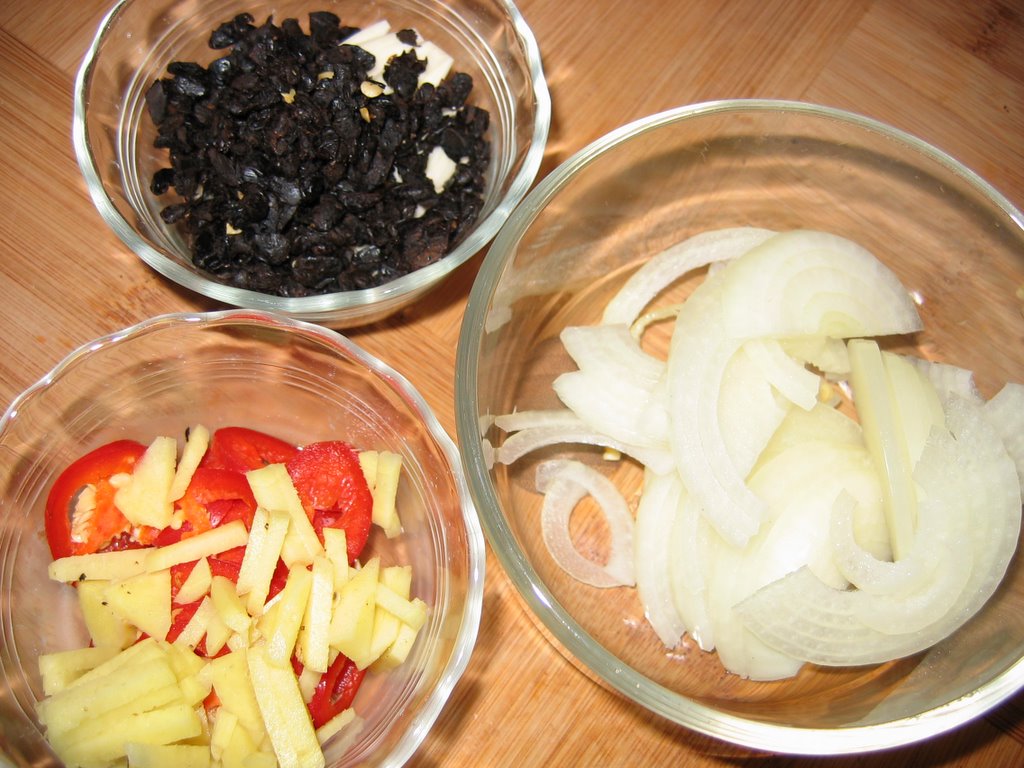
Strange as it may seem to those of us who grew up eating bacon in our green beans and ham hocks in our greens, the country folk in China feel the same way we do about our pigs.
Pork was and is still the traditional meat source in Chinese culture, in large part, again, because pigs are effecient in terms of feed ratio to meat output and because pigs were easy to raise. Their ability to thrive off of table and kitchen scraps made them a valuable part of the farm, and as a result, among all of the regional cuisines of China, there are seemingly endless ways to cook every part of the pig, including its snout, trotters and ears.
Not to mention its chitlin's. (Small intestines, for those who don't speak hick.)
I was reminded of this love affair with all things porcine, when I was leafing through Irene Kuo's excellent book, Key to Chinese Cooking. A recipe for braised pork spareribs with fermented black beans and wine caught my eye. Fermented black beans are a favorite country Cantonese ingredient and are used to add a delicious savory tang to many dishes featuring pork.
As I read it, my mouth watered, and I remembered a favorite dish from childhood--my mother's braised country ribs with turnips or potatoes.
It was a fantastic comfort food supper: thick, meaty country-style pork ribs were browned along with lots of onion slices, and then water, salt and pepper was added, and the mixture was cooked on low heat for a long time, until the meat was falling from the bones it was so tender. At that point, Mom would peel turnips and potatoes and add them to the cooking liquid. By the time they were soft, the gravy had begun to reduce, leaving Mom to have to add only a bit of artificial thickener like a flour slurry.
Considering the triumph of my careful fusion between French and Sichuan foods, I resolved to try out Irene Kuo's recipe, only I was going to add some of those completely sweet and delish Japanese turnips when I was nearly finished cooking.
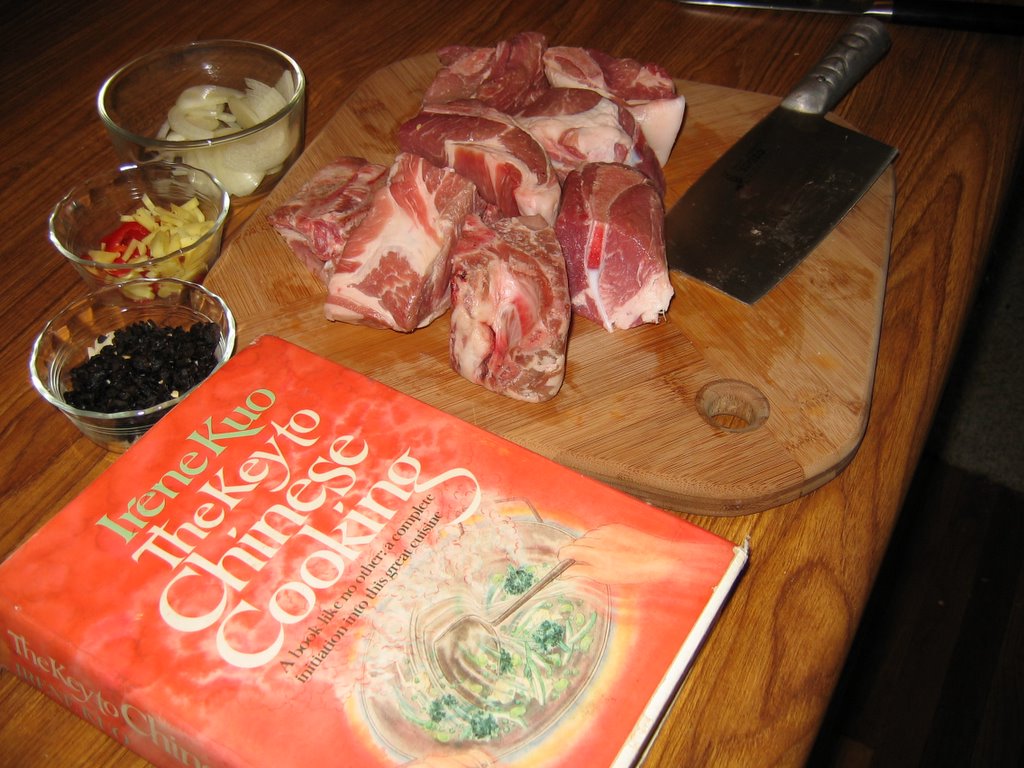 I also added onions to brown along with the ribs, just as my mother always did. The sweetness of caramelized onions perfectly enhances the natural sweetness of the pork.
Country style pork ribs are meatier and fattier than spare ribs; they are also huge--about six to seven inches long, two inches thick and two and a half inches wide. In order to have them sized for serving with chopsticks, I decided it would be prudent to chop them in half lengthwise--which I managed by employing my heaviest Chinese cleaver.
I set the ribs upright, so I was cutting down into the bone from the top, not across their longitudinal axis, and with a good, swift stroke, cut them clean in half. Hacking bones with a cleaver requires some strenth, care and willpower--there can be no hesitation. One simply gets on with it and does it, while keeping the free hand well away from the cutting surface.
After that, it was a simple matter of dusting the meat with flour, heating oil in my pressure cooker, and browning them thoroughly on every side, then taking them out and setting them on a plate while I browned the onions, chiles, and ginger, then added the garlic and chopped black beans and let them all cook until they were fragrant. I deglazed the p0t with Shaoxing wine, and put the ribs back in, added a bit of dark soy sauce and chicken broth to barely cover the meat and brought it to a boil.
I think locked the lid in place, turned the heat down and cooked until they were fork tender--about thirty minutes. After releasing the pressure, I opened the lid and added the peeled Japanese turnips that I had cut into bite-sized chunks, and let them cook in the rich sauce while it reduced. Just before serving, I thickened the sauce a bit with a cornstarch slurry.
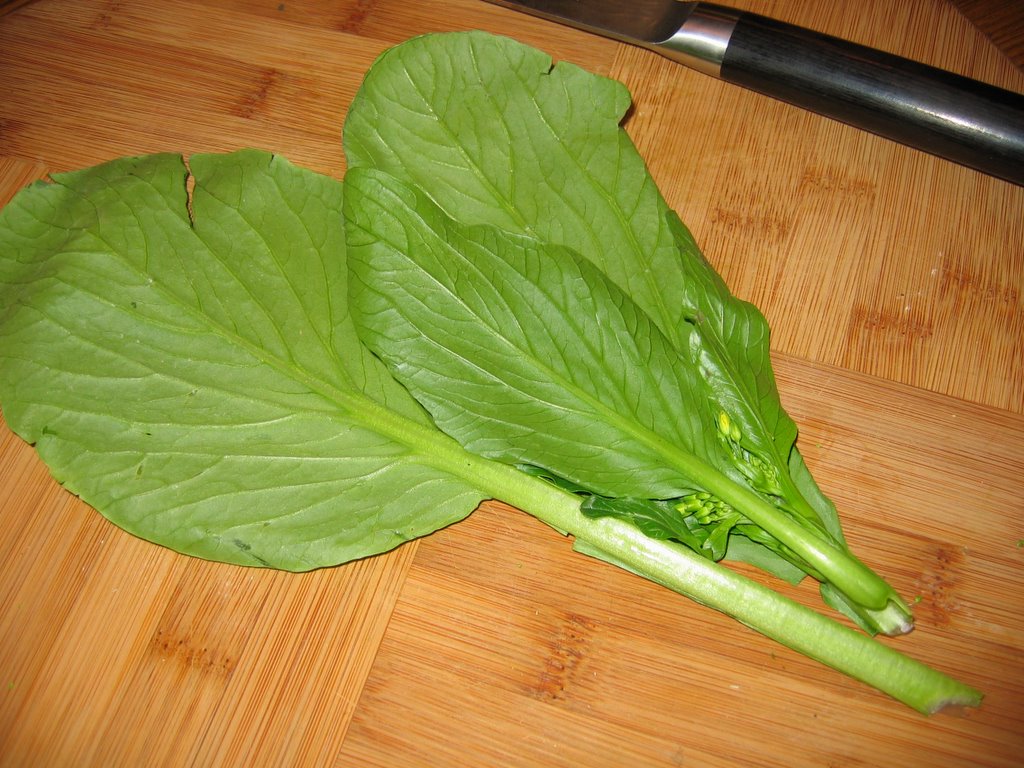 A perfect foil for the absolutely rich and meltingly tender meat is stir-fried crisp greens and fresh water chestnuts with garlic and ginger.
Choy sum, pictured to the right, looks bloody well like gai lan. It has the same leave structure, a similar stem structure and the same small yellow flower clusters. It looks so much like gai lan that if you are buying it packaged in plastic bags, and cannot really feel the stalks up or smell them, you may well not be able to tell the difference.
I know I didn't--when I bought this bunch of choy sum, I thought for certain I was buying gai lan. In fact, was so certain of it, I was ready to cook it as gai lan last night, and it was only after I had prepped the seasoning and water chestnuts, and had opened the bag to wash the greens.
 As soon as I touched them, I knew that we didn't have the dense-crisp, sweet, mustardy gai lan, but instead the more mildly flavored, watery-crisp, slightly tangy choy sum.
So, I grabbed some garlic and sliced it up and added it to the ginger, and put the oyster sauce back in the fridge. Its distinctly oceany tang would completely overwhelm the choy sum, even as it perfectly complements the more robust gai lan. For choy sum, I use just a whisper of soy sauce, a pinch of sugar and some chicken broth, along with the aromatics. Any other seasonings would probably overpower the flavor of the greens themselves.
In stir frying choy sum, one must be aware that it cooks down very quickly--the high water content of the green causes the structure of the green to collapse rapidly as the water escapes in hisses of steam as soon as the greens are put over high heat. This means that one must work quickly, and be prepared to remove the wok from the fire as soon as the greens look -almost- done. Not done--because it will continue to cook under its own residual heat--but nearly done.
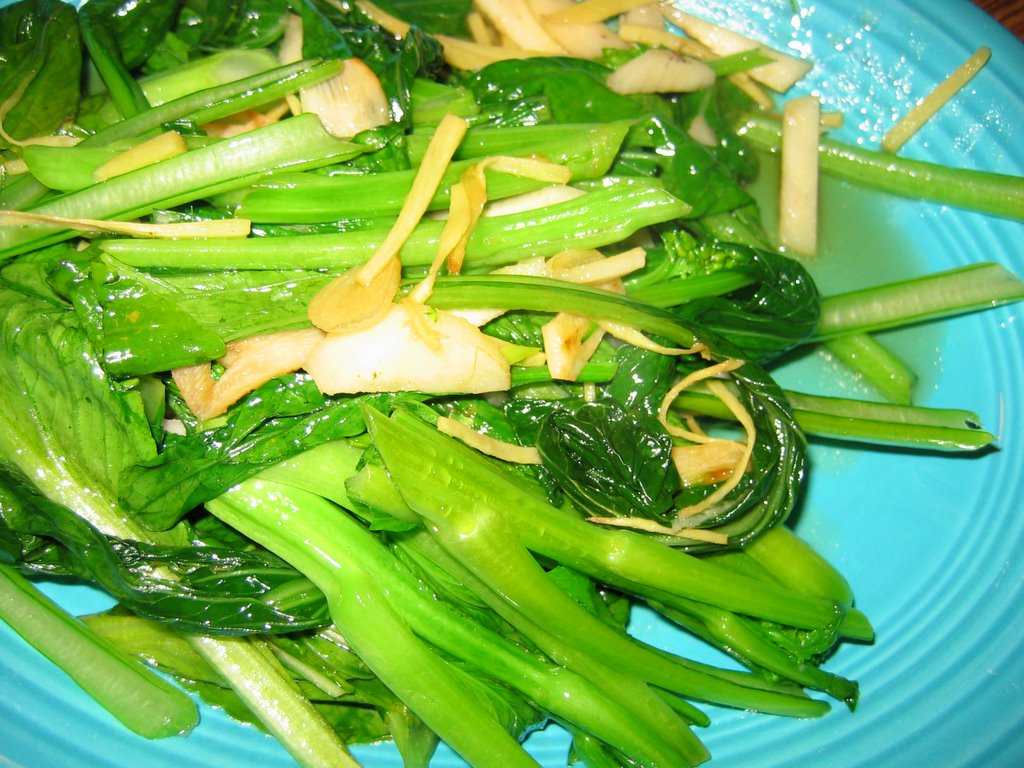 Stir Fried Choy Sum with Ginger and Garlic
Ingredients:
2 tablespoons peanut oil
1 1/2" cube fresh ginger, peeled and sliced thinly, then shredded
4 garlic cloves, peeled and sliced thinly then shredded
1 pound choy sum, washed and dried thoroughly, bottom of stalks trimmed and discarded, with remainder of stems and leaves cut into 4" lengths
fresh water chestnuts, peeled and shredded (optional)
1/2 teaspoon raw sugar
1 teaspoon thin soy sauce
1/4-scant 1/2 cup chicken broth
Method:
Heat wok until it smokes. Add oil and heat until it shimmers and is about to start smoking. Add ginger and garlic, stir fry until very fragrant, about forty seconds.
Add choy sum all at once, and stir fry very vigorously--water will escape from the greens immediately. Add remaining ingredients, including water chestnuts if you are using them, and stir and fry until the leaves are wilted and the stems are just starting to wilt.
Immediately remove from heat and scrape into a heated serving platter and serve right away.
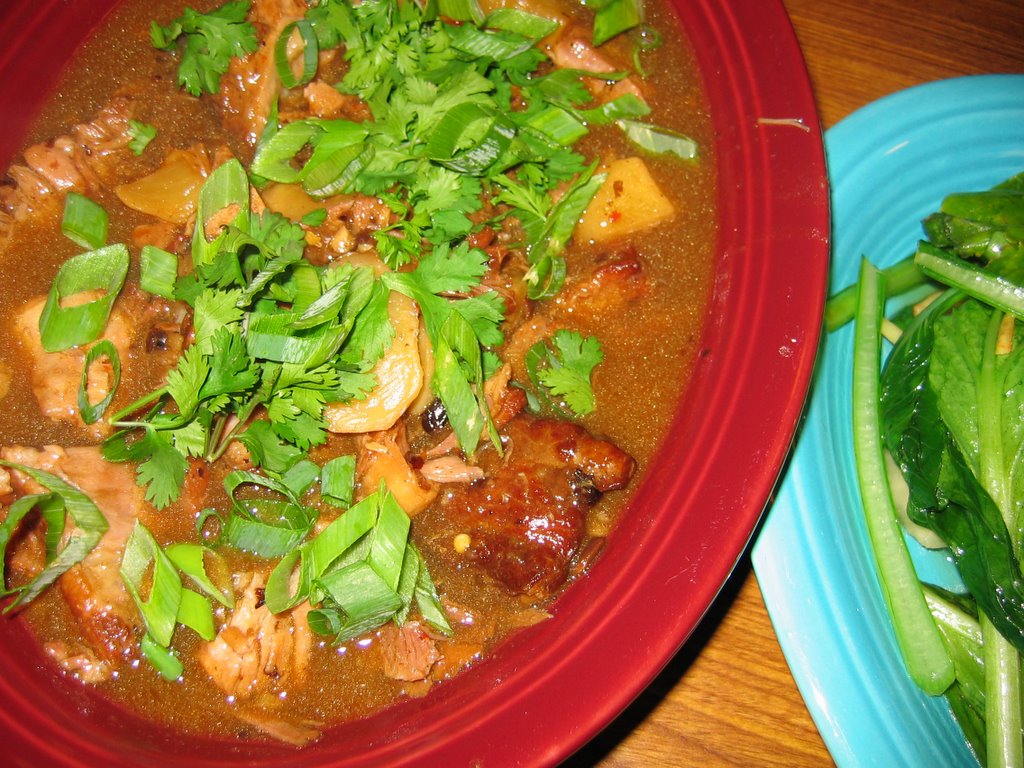 Braised Country Ribs with Fermented Black Beans and Chiles
Ingredients:
4 meaty thick country style pork ribs, cut in half crosswise
flour for dredging
2 tablespoons peanut oil
1 onion, sliced thinly
2 ripe jalapenos, thinly sliced
1" cube fresh ginger, peeled and sliced thinly
5 cloves garlic, peeled and sliced thinly
2 1/2 tablespoons fermented black beans, roughly chopped
1/2 cup Shaoxing wine
1/2 quart chicken or vegetable broth
1 tablespoon dark soy sauce
4-5 medium sized Japanese turnips, peeled and cut into chunks
cornstarch slurry
1 scallion top sliced thinly on the bias
1/4 cup fresh cilantro roughly chopped
Method:
Dredge ribs in flour, coating it thinly. Shake off excess.
Heat oil in the bottom of pressure cooker or stovetop casserole or dutch oven. When it is nearly smoking, add ribs in a single layer, and allow them to brown deeply on that side, then turn them, repeating until all sides are golden brown. Do this in several batches as needed--if you crowd the pot it will lower the temperature too much and will make it harder to get that nice golden crust.
Remove the ribs and set them aside on a plate. Add onions to the pot, and stir, cooking until they turn a deep golden brown color. Add the ginger and chiles and continue cooking until onions are reddish brown. Add garlic and black beans and stir until fragrant.
Deglaze the pot with the wine, scraping up any browned bits left on the bottom. Add ribs back to the pot and add the chicken broth and soy sauce.
Bring to a boil. If using a pressure cooker, close lid, lock down and bring to full pressure. Turn down heat and cook at high pressure for about thirty minutes. If you are just using a regular pan, turn down the heat and cover the pot, and cook covered until the ribs are fork tender--it will probably take a couple of hours.
When the ribs are done, uncover the pot or pressure cooker and add turnips. Cook, uncovered, until turnips are fully tender, and the sauce has reduced slightly.
Thicken sauce with cornstarch slurry, and remove meat and turnips to a heated serving bowl, with plenty of sauce. (As you pull the meat out of the pot, many of the bones will fall free--this is fine and to be expected. You can purposefully remove the bones before serving--this makes it a little easier to pick up chunks of pork with chopsticks, though in truth most of the Chinese folks I know like to nibble on the bones of ribs and spareribs, so you can leave them, too.)
Just before serving, sprinkle with scallion tops and cilantro.
food recipes Chinese cooking pork ribs braised greens

