
Cook Local, Eat Global
Weekend Cat Blogging: The Old and the Restless
 Ozy and Lennier sharing a chair.
Ozy is doing what he does best: sleep. Lennier is doing what he does best: avoid sleep.
He’s exactly like a toddler–he will fight sleep until the bitter end.
More later!
Learning Kofta
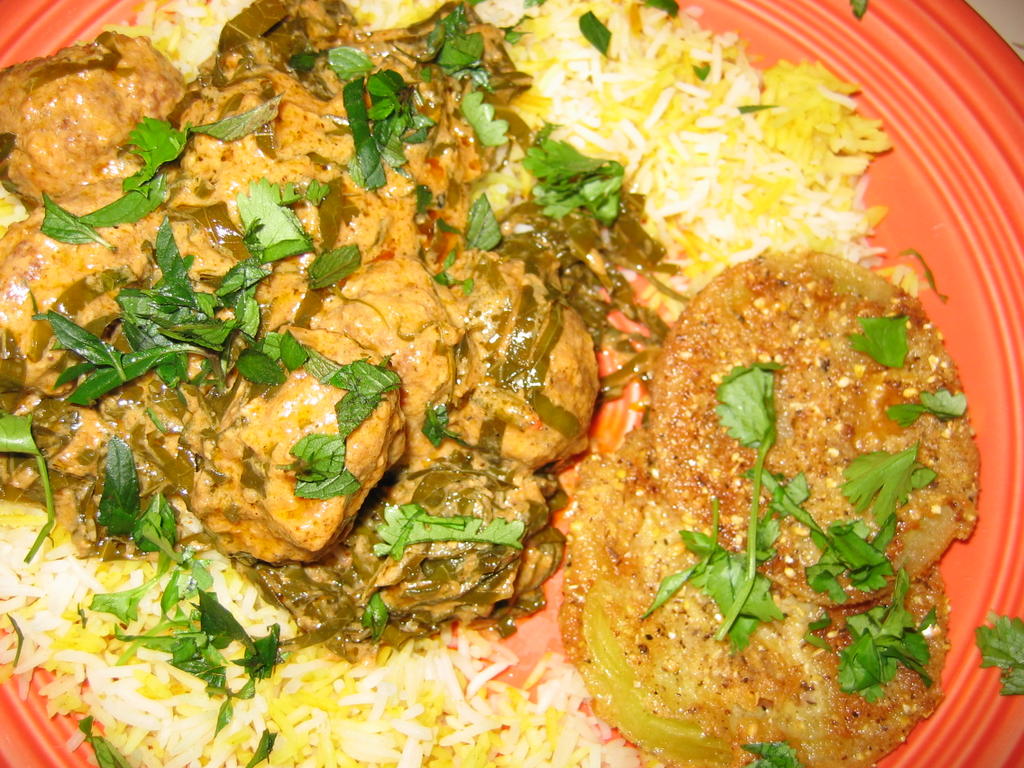 As I have mentioned before, Morganna is taking a class called “World Foods” at school which is a clever way to get kids to take Home Economics, learn to cook, and learn about other cultures all at the same time. It is a pretty good class, and the kids get to cook and eat foods from the countries that they voted on learning about at the beginning of the class. Each student also chooses a country to do a final project on that will include a written and oral report, a physical cultural display about the country, culture and cuisine, and a sample dish cooked from that cuisine.
Morganna chose India, so from now one, each week, we will cook at least one Indian meal. The last time we did this, Morganna learned how to make masoor dal tarka; this time, she learned how to make lamb kofta. We decided to add the greens directly to the dish to make saag kofta, which is very like the palak kofta I learned from my Pakistani friends.
“Palak” means spinach; “saag” is a general term which means “greens.” In most Indian restaurants in the US, if you see “saag gosht” it technically means “meat cooked with greens,” but usually it is meat cooked with spinach. The only other greens I have had in a restaurant have been fenugreek greens, in which case, the specific term, “methi” is used in the title of the dish.
Kofta can be made of minced meat or vegetables; I decided to start with minced lamb kofta, because the meat is easier to work with for a beginner. Interestingly, the word, “kofta” is from the language of the Persians who conquered the northern part of India centuries ago. It is the same exact word that is used in Iranian cuisine when describing similar meatball dishes. Much of the cuisine of northern India is related to Persian foods and so there is a great correlation between the foods of the near east and the Indian subcontinent.
Whether they are made of meat or vegetables, I learned that the best kofta are very light, and tender in texture; they are nothing like the tough, sometimes rubbery meatballs that are often served in the west. I learned the trick of how to make light kofta from one of my client’s mothers–she said to never pack the meat down tightly and to handle the kofta as little and as gently as possible when shaping them and when browning them, to move them as gently as possible, as the minced lamb ones do not have any binder in them at all. (This also makes them tender.)
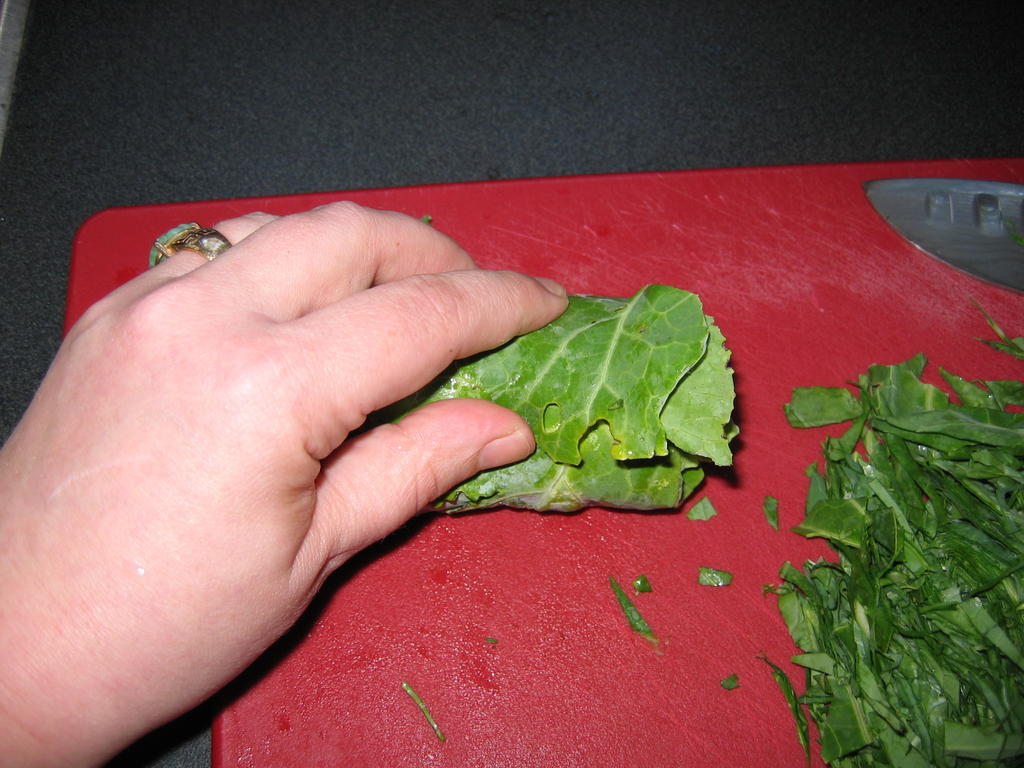 One of the keys to making good Indian food is to be relaxed and do good prep work; precision is almost as important in Indian cookery as it is for Chinese food. In order to present the greens well, they should be minced, shredded or ground in some way; I chose to cut them in a chiffonade–long, narrow ribbons which look pretty and make an easily eaten dish when cooked. The simplest way to cut the greens this way is to prepare the collards for cooking in the usual way: wash and drain them thoroughly, then tear out the tough central vein. Stack the leaf pieces up neatly, the roll up tightly like a big fat cigar.
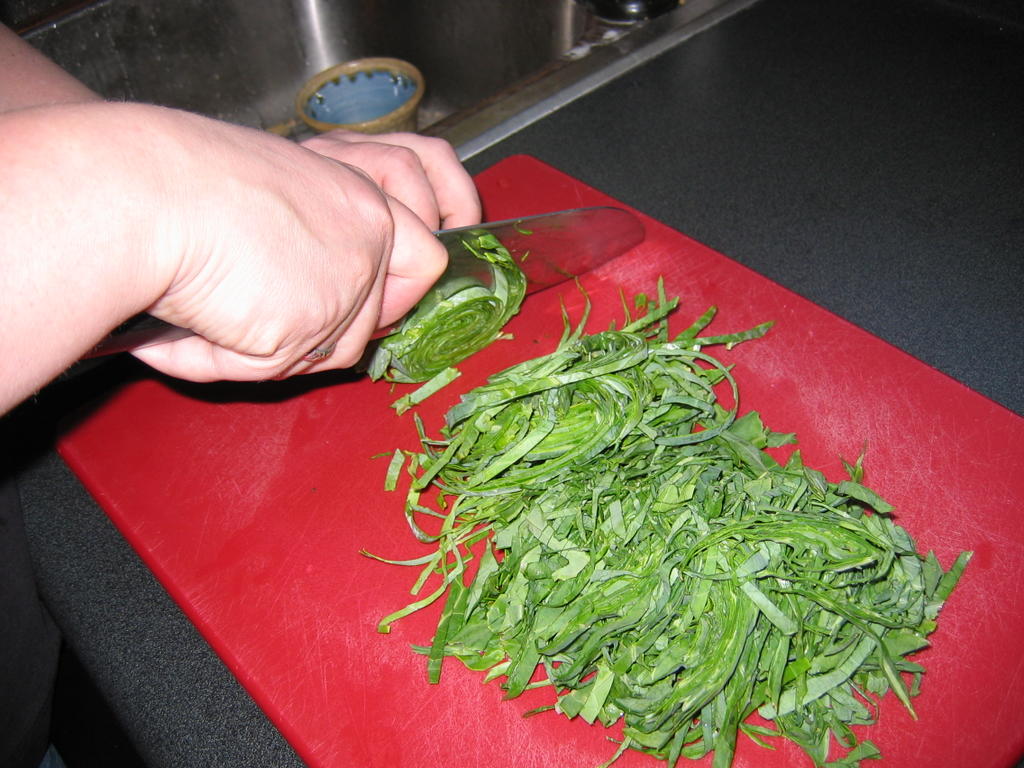 Lay the roll seam side down on the cutting board and then cut as narrow slices of it as possible. These coiled slices will unfurl into tiny green ribbons that look beautiful and cook in the curry sauce quite quickly. This chiffonade technique can be used with any leaves, from large cabbages to basil to Thai kaffir lime leaves. All that is needed is patience, a sharp knife and nimble fingers, and the hard work pays off–chiffonade makes a lovely presentation of cooked greens, of raw lettuces in a salad or as a garnish sprinkled over a soup or sauce.
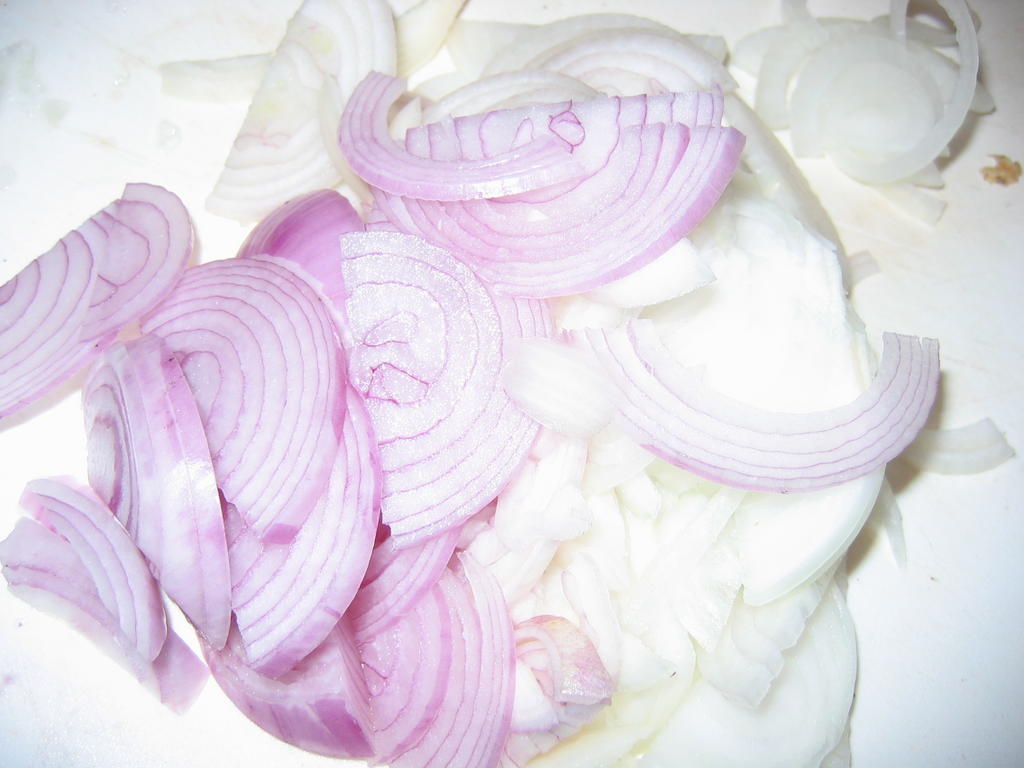 Another necessity for careful preparation when cooking Indian foods is to slice the onions very thinly. The reason for this is that in Indian cookery, particularly the cooking of the northern part of the country, it is crucial to brown the onions very well; they should be a dark golden-reddish brown when they are done. If you slice the onions too thick, then they take a long time to brown, and sometimes, because American onions are so juicy, they may not brown at all. So, I always try and cut them so thin that you can see through the slices. Morganna didn’t do too badly at it, as you can see on the left. The purple ones are very pretty–it was almost a shame to cook them up! I almost felt that we should have made a dish to use them raw just to keep the lovely transluescent pearly violet color.
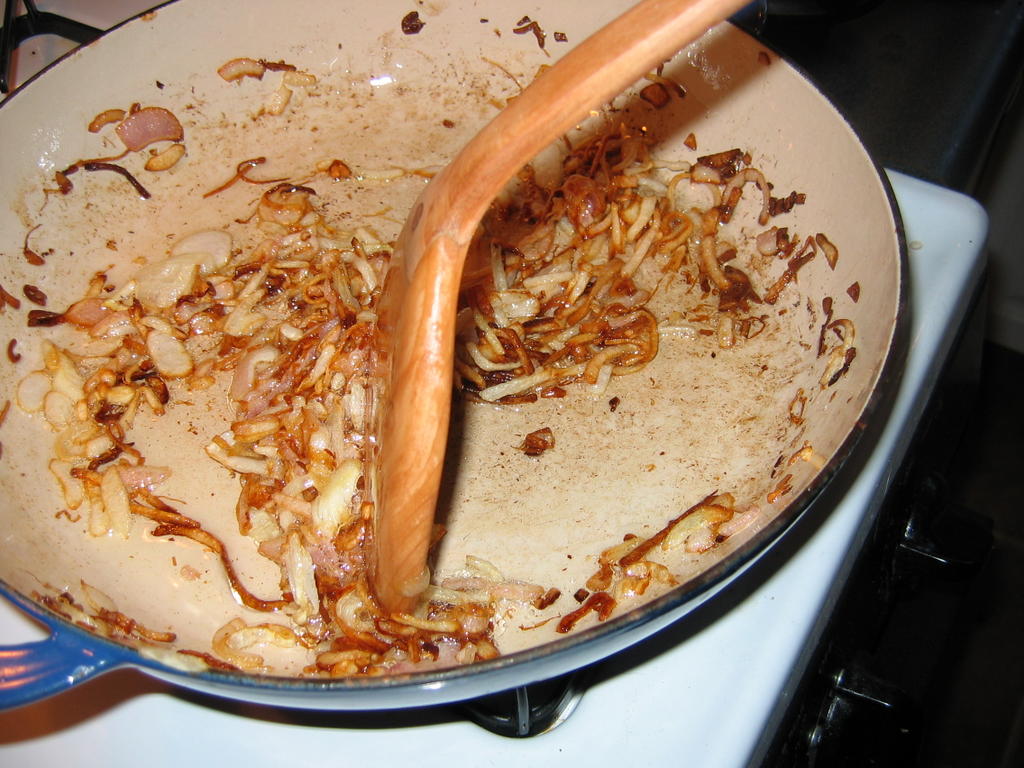 Browning the onions in oil or ghee takes a heavy pan on medium heat (we used the Le Crueset skillet), some salt, a good stirring implement and patience. If you turn the heat up too high, you risk burning the onions, and once they are burnt, you cannot undo it. You must throw them away, clean out your pan and start over. And since proper browning takes fifteen to twenty minutes–you really don’t want to start over. But, I predict that you will likely burn a pan of onions at least once. The phone will ring and you will turn away to answer it, or a cat or child will drag your attention away for a few moments, and when you turn back, the onions will have gone from dark golden to perfect mahogany to black in mere seconds. (Yes, they can go wrong just that quickly. I have burned onions at least twice that way.)
Basically, you heat your oil or ghee until it is quite hot, and then put the onions in a single layer, and start stirring. When the first bits of juice are coaxed out–about two to three minutes into the cooking process, I sprinkle a bit of salt–no more than a half a teaspoon or so over them. The salt draws more of the water out of the onions, and as it boils away, that allows the browning process to begin. Keep stirring, and do not stop. It helps if you have music on so you can sing, or maybe dance in front of the stove while you do this. Morganna and I practiced belly dance hip thrusts and rolls while cooking the onions.
When the onions turn golden, start paying particular attention. They will have shrunk down in volume a great deal–much of an American onion is water after all, and after they turn distinctly golden, they will very quickly darken. They will turn dark gold, then reddish gold. You will be tempted to take them from the heat then, but wait until they are reddish brown or mahogany colored to turn off the fire, and quickly scrape the onions into a waiting bowl. Do not hestitate! If you leave them on the heat for just a few more seconds, they are likely to blacken and turn into an acrid, bitter mess that will destroy the flavor of both the kofta and the curry sauce, as the onions are used to flavor both.
The dark brown onions are important, not only because they give a special flavor to curries, but also because they are a component in coloring them as well. An Indian friend told me that she could always tell when an American had made Indian food because they never browned the onions deeply enough, so the curries tasted one-dimensional, and were weakly colored.
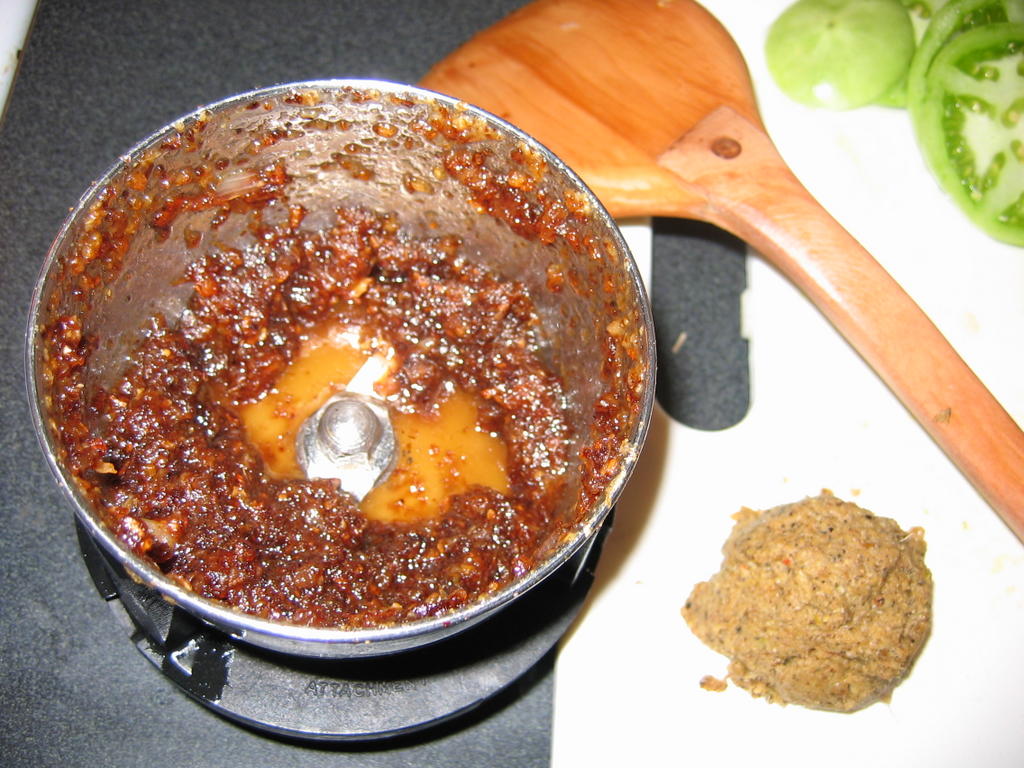 After they cooled, we put the onions into the Sumeet grinder and ground them into a thick, sweet-smelling dark red paste. The volume at this point has reduced by three-quarters the original volume. If you ever look at Indian recipes and they seem like they have way too much onion in them, this is why–they are cooked down to a very concentrated color and flavor–the browned essence of onion, if you will.
After they are ground up, the onions are portioned out; one third of them go into the kofta, and two thirds of them are set aside for the curry sauce. Pictured next to the onions, you can see the ball of curry paste that we made for the sauce: a mixture of ginger, garlic, fresh red Thai chile, cumin, coriander, black pepper, black cardamom and cinnamon. As in the onion paste, one third of the spice paste was gently kneaded into the kofta, along with about a half teaspoon of salt, while the rest was saved for the curry sauce.
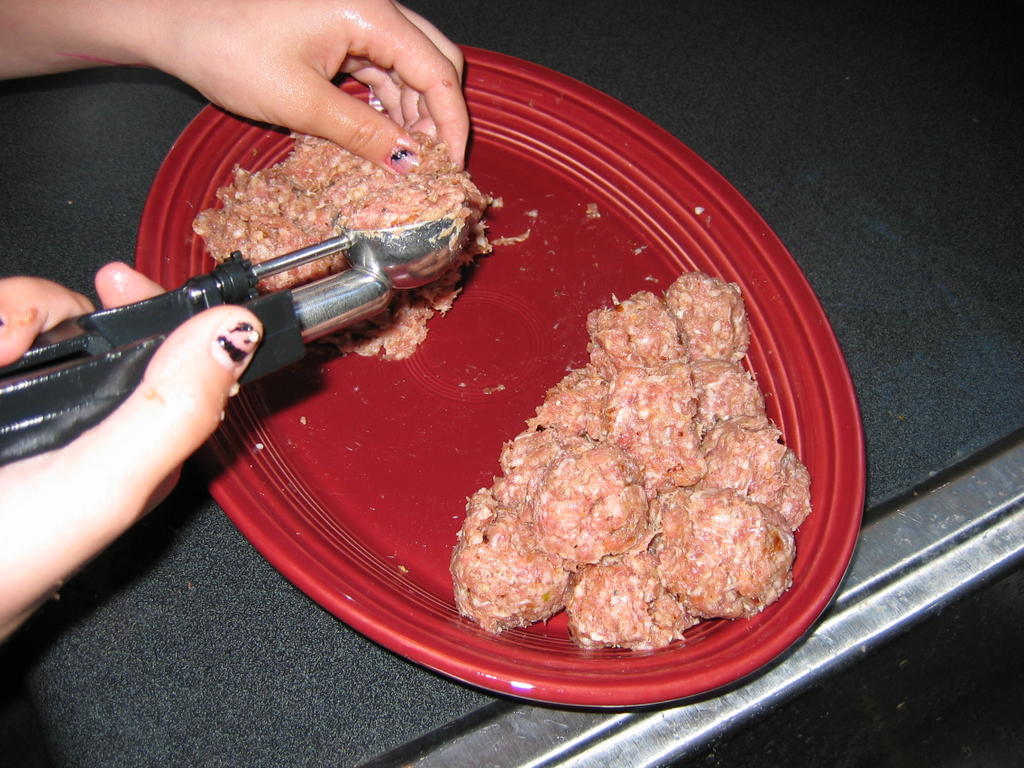 Shaping the kofta is another crucial point in the recipe; if you handle the meat mixture too much or too roughly, packing the kofta as you portion or shape them, they will toughen and will lose their delicate texture. Pictured at the right, you can see Morganna carefully portioning the meat out into rough ball shapes with a cookie scoop. Using a one-tablespoon volume scoop, she lightly presses a level amount into it, the squeezes the lever, releasing. She portioned out all of the meat before we began the process of shaping the kofta.
Some kofta are shaped round like typical meatballs, while others have sausage shapes. The ones I like to make are egg-shaped, or ovoid. I start by smoothing the rough portions into balls by lightly rotating them between my palms. To keep the meat from sticking, I dampen my palms with water. To shape the spheres into eggs, I roll them back and forth gently a couple of times between my palms.
 At no time do we compress the meat, and so the end result is a very light, very tender meatball that is filled with juice and flavor. Minced chicken is also very good cooked and shaped in this way, though, of course, I would use different spices in the paste for that.
Fresh herbs can be added to the spice paste, and of course, the spices themselves can be changed to reflect personal tastes. Sometimes, I add more chile, and sometimes I like to add fresh mint, minced finely. Cilantro is also good, and I really like a bit of fenugreek greens, but they are impossible to get fresh here in Athens.
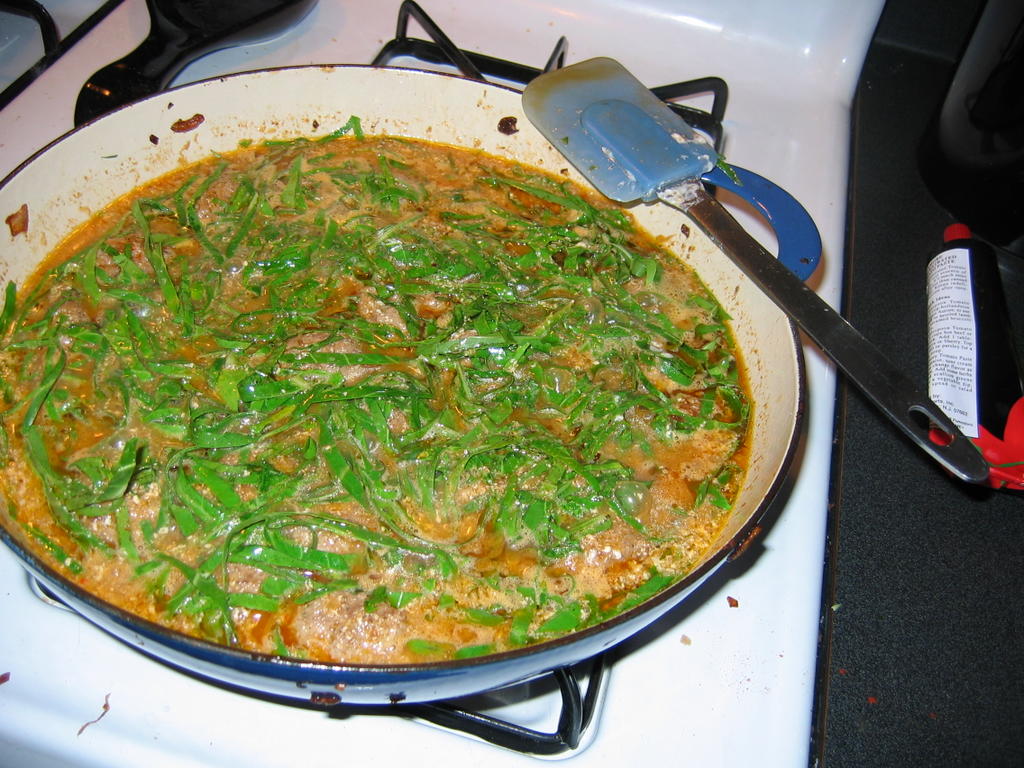
Once the kofta are shaped, the next hurdle is browning them–this takes a heavy pan (non-stick is great for this) a light touch, patience and nerves of steel. Morganna quickly became frustrated with trying to gently turn the kofta so they could brown evenly without breaking them apart. Once the browning is done and the liquid is added to start the curry sauce and to poach the kofta to complete doneness, the process becomes simple: add the sauce ingredients and allow the liquid to reduce until it forms a clinging sauce, then enrich it further with a bit of half-and-half or cream and an extra dollup of full-fat yogurt.
Served with turmeric colored basmati rice with a sprinkling of minced fresh mint with fried green tomatoes on the side, the saag kofta were a wonderful supper. Morganna took the leftovers with her to school, and shared them with her friends, all of whom were quite enthusiastic in their liking of them.
Perhaps this weekend, I will teach her how to make aloo methi, (potatoes with fenugreek greens), if I can pick up some fresh fenugreek in Columbus tomorrow.
The recipe looks more complicated than it is–or rather, it is more difficult to write it out in a detailed way, than it is to make. I haven’t used a recipe in years to make different kinds of kofta, but neither have I bothered to write down how I do it, either. It wasn’t until writing this post that I realized how daunting a process making a simple curry of meatballs and greens might seem to someone reading this.
Now I understand why I was so intimidated by Indian food for so many years. It is second nature to me now, but when I took my first steps toward serious study of it, I was certain I would never be able to cook without referring constantly to a cookbook. Now, I am much more comfortable with it.
I just hope that my detailed posts don’t scare people away from trying to cook Indian food themselves.
 Saag Kofta (Lamb Meatball Curry with Greens)
For the Greens:
1 pound collard greens, washed and trimmed, with the thick vein removed.
Method:
Cut the greens into a 1/8 inch chiffonade as described and illustrated in the body of the post. Set aside until it is time to add them to the sauce.
Ingredients for the Curry Paste:
1″ cube fresh ginger, peeled and sliced
5 cloves garlic, peeled and sliced
2 or 3 fresh red Thai chiles (or to taste)
1 tablespoon toasted cumin seeds*
1 tablespoon toasted coriander seeds
1 black cardamom pod
1/2 teaspoon black peppercorns
Method:
In a mortar and pestle, a food processor, blender or food grinder like the Sumeet (I love the Sumeet–if you cook Indian, Thai and Mexican food, you need to get one), grind the spices into a thick, damp paste. If you use a blender and have to add water, add as little as possible.
Separate out the curry paste into thirds by rolling it into a ball, then into a log. Cut the log into three pieces, and set one aside, and squish the remaining two together.
Ingredients for the Onions:
1 large or 2 medium onions, sliced as thinly as possible
1/2 teaspoon salt
1 1/2 tablespoons vegetable oil or ghee (I used canola oil for this recipe)
Method:
Follow the instructions in the body of the post to cook the onions and grind them.
After they are ground, scoop out one third of the very thick, liquidy paste, and add to the one third of the curry paste. Save the remaining two thirds of the onions to go with the two thirds of the curry paste in the sauce.
Ingredients for the Kofta:
1 pound ground lamb
1/3 of curry paste
1/3 of browned onion paste
1/2 teaspoon salt
4 tablespoons oil or ghee
Method:
Pat the meat out into a thin, flat layer in a bowl or on a cutting board. Mix together the onion paste with the curry paste and salt until a thin paste is formed and spread this over the meat, then carefully roll the meat up or fold it up. Then, gently knead the meat mixture together using as little pressure as possible to mix it thoroughly and evenly.
Shape the kofta as directed in the body of the post.
Heat oil or ghee over medium heat in a heavy-bottomed pan or skillet (nonstick is great, especially for the first time or two you cook this recipe) that is big enough to hold all of the kofta, the greens and the sauce.
Set all of the kofta into the pan, and gently turn them as they brown by either shaking the pan or very carefully turning them with a spatula. Be very gentle or the tender kofta will fall apart. (Probably the first couple you try to turn by hand will crumble, but you will quickly get the knack of it–it just requires a light touch and precision. Morganna learned it quickly–so can you.)
When the kofta are well browned on all sides, commence with making the sauce, and bringing it all together.
Ingredients for the Curry Sauce:
Reserved curry and onion pastes
1 cup chicken or vegetable broth (traditionally water or milk is used here, but I like the flavor the broths bring to the sauce)
1 cup full fat yogurt, cream layer removed and reserved
1/2 teaspoon ground turmeric
1/4 teaspoon paprika (I discovered that smoked Spanish paprika adds a nice flavor)
Prepared collard greens
1/4 cup cream from yogurt
1/4 cup half and half or heavy cream
salt to taste
handful fresh mint leaves, minced
Method:
After the kofta are cooked, turn down heat, tilt pan and spoon out about half the fat. Return pan flat to the burner and add onion and curry paste and, stirring carefully to avoid breaking the kofta (once the brown crust forms on them, they are a bit less fragile and are easier to handle), cook the pastes until they are very fragrant, about two minutes. Pour in the broth, and scrape up any browned bits at the bottom of the pan.
Stir yogurt, and add to the sauce, stirring to combine. Add the turmeric and paprika. Turn down the heat, and allow to simmer until the sauce has begun to reduce. Add the collards, sprinkling them over the kofta, and stirring them down into the sauce. Continue simmering uncovered until the sauce reduces almost to nothing.
Add the cream layer from the top of the yogurt container, and the half and half or cream, stirring it into the sauce. Taste and correct seasoning as needed with salt.
Sprinkle with mint before serving.
Those Darned Chemicals, Part III: What are Food Additives, and Why Worry About Them?
Since I am doing this series (and I am glad to see that people are enthusiastic about it) on the topic of what synthetic chemicals are allowed in processed foods given the USDA Certified Organic seal of approval, I think I should probably talk a little bit about food additives in general and what they are doing in our food in the first place. Then, I’ll discuss health issues surrounding the idea of food additives and why some people should be concerned about some additives, while other ones are likely to be completely harmless.
After that, we will return to our regularly scheduled annotated listing of the permissible food additives in the special seal-of-approval foods.
Strictly speaking, food additives are any substances which are added to food items to change its flavor, increase its shelf life, to improve its texture, or to improve its appearance. Humans have been using food additives for thousands of years, particularly for thier preservative function: salt, sugar, vinegar and spices have all played thier part in preserving food in the form of pickles, cured meats, jams and jellies, cross-culturally, for centuries. Technically speaking, smoke is a process, not a food additive, but for the purpose of my current project where the presence of carbon dioxide and ethylene gas in organic foods are being debated by consumer groups, I would consider woodsmoke, a traditional way to help dry and preserve meat, to be a food additive.
Preservatives act in many different ways to extend the shelf life of a given food item. Some of them create a hostile environment to bacteria, molds and fungi, thus making it harder for them to successfully live and grow on or in a food so that they cannot cause it to spoil. Bacteria, molds and fungi are living organisms which require water, food, a balanced pH, and a comfortable temperature in which to live, grow and reproduce–change or remove one or more of these requirements, and you disrupt the ability of some or all of these organisms to thrive on your food and make it unsafe to consume. (Some harmful bacteria require oxygen to live, while others thrive in oxygen-free environments, which is why I did not add air to the list of necessities for bacterial life, though in many cases, removing oxygen from an environment will protect food from some bacteria.)
Table salt, a household staple which most people consider to be a mere ingredient in food, is actually one of the first and still most commonly used food additives, both in the home and in food processing plants. It was also probably the very first preservative used by early man. As a preservative, it inhibits the growth of bacteria and other harmful organisms by drying out the food product, making it an inhospitable environment. It also makes food taste good, and when used in sufficient concentrate, changes the texture and appearance of the food item.
Salt is a naturally occurring chemical, and can be mined from the earth in the form of rock salt, or be obtained by evaporating sea water. It is a necessary part of our diet; our own blood and mucus membranes are saline.
Some preservatives are anti-oxidants; they retard the effects of oxygen on plant and animal tissues and slow down the process of oxidized decomposition. Anti-oxidants added to food include ascorbic acid, also known as vitamin C, another necessary nutrient.
Changing the texture of food is accomplished by food additives that act as leaveners, anti-caking agents, anti-foaming agents, thickeners, emulsifiers, bulking agents and humectants.
Leaveners have been in use in the kitchen since early man first came into contact with wild yeast by leaving dough out before cooking it on a griddle and discovered that the bubbly dough cooked up lighter and with a delightful flavor and texture. Leaveners include yeast, which is a living organism, which was the first and only leavener in use for centuries, and various chemical leaveners which work by way of an explosive exothermic reaction when an acid and a base come into contact with liquid and/or heat. Chemical leaveners first came into use in the nineteenth century and changed the way in which baking was accomplished both in the home, and by professional bakers, and many new bread, cookie, cake, and cracker recipes were the result. (Prior to the discovery of chemical leaveners, the way in which one got a cake to rise was through the use of well-beaten egg whites, a process that required lots of muscle and stamina in the days before electric mixers.)
Anti-caking agents are added to powdered food products to keep them from clumping; anti-foaming agents are similarly self-explanatory–they keep liquid food products from foaming. Thickeners are usually based on some sort of starch which absorbs some of the liquid in a food and makes the rest of the liquid thicker. (Thickeners have been and are used in home and restaurant cookery in the form of flour, cornstarch, arrowroot powder, tapioca starch, beurre manie and roux; in jams and jellies, pectin, which occurs naturally in fruit, acts to thicken the sugar and fruit juice solution.)
Emulsifiers are used to keep oil particles suspended in water; if you have ever made mayonnaise at home, you have employed egg yolks as an emulsifier. Bulking agents are non-nutritive additives that increase the bulk of a product without changing its caloric or nutritive value. Humectants straddle the fence between acting as preservatives or as texture-altering additives; they are hydrophilic and hydroscopic ingredients that keep foods moist. In baking, sugar is considered to be hydroscopic, and baked goods with a considerable amount of sugar stay moist longer than those which do not–in such cases, sugar can be seen as acting as a humectant.
When we get to the categories of additives which are used to change the flavor and appearance of foods, we step into the controversial realm of artificial flavors and colors. However, before we deal with the artificially derived flavors and colors, we should examine the additives that have been used for centuries to do the same things. Salt, sugar and vinegar have been used in many cultures not only to preserve foods, but also to alter their flavors. Spices and herbs have been similarly used. Natural plant extracts have also been in use in many cultures for thousands of years to change the color of foods to make them more festive or visually appealing. Turmeric, paprika beet juice, spinach juice and caramelized sugar are just a few examples of plant-based coloring agents that have been used to dye foods in the past and present.
Artificially derived flavors and colors, however, have become sources of worry to many consumers, and often with good reason. Among the lists of banned food additives, the largest category is the artificial colors that have been found to be detrimental to health, with synthetic (and some natural) flavorings following closely in number. Many of these additives were found to be carcinogens, or just plain toxic, and have thus been removed from the list of government-approved food additives in the US. (However, they may still be legal to use in other parts of the world. When eating processed food in other countries, be cautious.)
A lot of really great information on what food additives are, and what they are used for and information on how safe they really are (or are not) with sound medical/scientific/nutritional advice on which ones to avoid and which ones to not worry about can be found at the website of the Center for Science in the Public Interest. This organization works hard lobbying Congress, educating the public and working with the FDA and the USDA on issues of food safety; instead of using scare tactics, they provide consumers with factual information that they can use to make good nutritional choices for themselves and their families. When the CSPI sends out an action alert, it is filled with as many facts as possible, allowing the consumer to judge whether or not the issue is one to be concerned over, which is more than I can say for recent conduct of the Organic Consumers Association.
And now, back to Those Darned Chemicals!
Annotated List of Allowable Food Additives:
Iron, in the form of ferrous sulfate, is an ionic compound which is made by the oxidization of pyrite (a naturally occuring mineral) or by treating iron with sulfuric acid. Iron is a necessary nutrient which used to enrich various products as regulated by the federal government (flour and breakfast cereals are among the products mandated to be enriched) as well as products that are recommended for iron enrichment by medical or nutrition professionals.
Bleached lecithin is derived from egg yolks or soybeans, either by a mechanical or chemical process. (Only bleached lecithin is considered synthetic by the NOSB–unbleached lecithin is considered non-synthetic; they are, however, both allowed in USDA Organic Certified foods.) Lecithin is found in all cell walls, and is used as an emulsifier and can be completely metabolized by humans, and is considered to be completely non-toxic. It is widely used in foods and pharmaceuticals that require an emusifying agent or a lubricant.
Magnesium chloride is only allowed by NOSB as a food additive if it has been derived from sea water; in order to do this, the sodium chloride (table salt) is removed from the solution, and then the water is evaporated. The white powder that is left behind is magnesium chloride, which is called nigari in Japanese. In Japan, it has been used for centuries as a coagulant in the making of tofu from soy milk; the tofu processed in this way has a very smooth and fine texture amd is called silken tofu.
Mono- and diglycerides are esters (an organic compound where an organic group is replaced by a hydrogen atom in an oxygen acid–I know, this probably just turned into mumbo-jumbo) of glycerol and fatty acids. Depending on how many fatty acids esterize with the glycerol, one can have monoglycerides, diglycerides or triglycerides, which are found in animal fats and plant oils. (Including in humans.) Triglycerides, when ingested, are broken down enzymes into mono- and diglycerides and free fatty acids, which can then be used as energy by the body. In food processing, mono- and di-glycerides are commonly used as emusifliers and humectants–they are what keeps many commercial peanut butters from separating. However, NOSB specifically states that they can only be used in USDA Certified Organic foods in the process of drum-drying of foods.
Nutrient minerals, are chemical elements such as chromium, cobalt, copper, fluorine, iodine, iron, magnesium, manganese, potassium, selenium and zinc, are considered by medical and nutritional professionals to be necessary nutrients for sustaining human life. They are naturally found in the earth and in various plant and animal food sources, and can be derived from these sources or synthesized in various ways. They are allowed by the NOSB in USDA Certified Organic foods as required by federal regulation for enrichment or as recommended by nutritional or medical experts. (Iodized salt is a good example of a food product enriched in order to enhance health; enriched wheat flour is another example.)
Nutrient vitamins, such as vitamin A, the B-complex vitamins, vitamins C, D, E and K, are all organic (meaning, they contain carbon) molecules that are required in very small amounts for humans (and other animals) to thrive. Some are naturally occurring in foods, while others, such as vitamin D, are synthesized in the human body when the skin is exposed to sunlight. Since their discovery in the early twentieth century, vitamins have been used to enrich foods; accordingly the NOSB allows their use to enrich USDA Organic Foods if required by federal regulation or if it is recommended by nutritional or medical professionals.
That is all for today; I don’t want to make too many huge posts with large amounts of reading to digest at a time. Tune in again tomorrow for the fourth episode of Those Darned Chemicals when you will hear Morganna say, “My Mom is a geek, “and Zak will reply, “And this surprises you how?”
And then Barbara will say, “You all can order pizza for dinner, dammit. This geek ain’t cookin’ unless she gets some more respect around here!”
Gastronomica and Julia
 Being such a culinary nerd, I have read and subscribed to a lot of cooking magazines over the years. In point of fact, I have several large file boxes filled with back issues of Fine Cooking, Cook’s Illustrated, Chile Pepper, Eating Well, Culinary Trends, Food & Wine, and Bon Appetit sitting around in the spare bedroom waiting for me to establish a permanent home for them. There are even a few scattered issues of Chocolatier, Saveur and Gourmet tucked into those boxes.
(I suppose that I should admit now that I never liked Gourmet and find Bon Appetit to be shallow and boring, while Saveur is pretentious and fluffy. Other folks like those magazines, and that is fine, but I find them to be, well, not all that.)
The only culinary magazine that I have unpacked from the confines of cardboard are my dogeared issues of Gastronomica–they live proudly in my office, in the bookshelf next to my desk.
Published quarterly by the University of California Press, Gastronomica isn’t just a cooking magazine–actually–it isn’t really a cooking magazine at all, but instead it bills itself as a “journal of food and culture.” The billing isn’t hype–every article, poem and review in each quarterly issue is written from the liminal places where food and humans intersect in a cultural context. For someone like myself who gets really into the sociological and anthropological importance of food, cooking, feasting and fasting in human cultures, Gastronomica is the motherlode.
The Summer 2005 issue is dedicated to Julia Child, whom everyone knows is the woman who taught Americans how to cook and eat. One wonders if there is anything left to write about her; streams of verbiage dedicated to singing her praises flowed like wine from the pens and keyboards of every writer of note after her death last year, but somehow the editors at Gastronomica found authors who could engage us with more insights into Our Lady of the Kitchen.
I have not been bored by a single article, essay, interview, personal memory or poem in the issue, and have been moved to laughter and tears more than once. Laughter, because I could not help but laugh at a friend’s description of Julia doing Dan Akroyd’s famous sketch where he impersonated Julia, and tears, because the sonnets her husband Paul wrote for her birthdays were so filled with adoration that it made my heart quite still.
I know that there are those who make fun of Julia, or who do not much care for her television presence, but I really do think that she was one person who really changed the course of American cuisine forever. She taught people how to eat, how to cook and how to be themselves–fearlessly–and I cannot help but love her for it. Were it not for her, I am certain that there would be no Food Network (though at this point, there are some who would say that would be no great loss), nor do I think would we have celebrity chefs who are loved like rock stars. I don’t think that Americans would be embracing as many ethnic foods as we do today were it not for Julia teaching us all about French cuisine. And I doubt that without her guidance, there would be as many cooking magazines, or let’s face it, food blogs out here to choose from today.
So, here’s to Julia, and to Gastronomica, the finest journal about food and culture in the world. If you cannot find a copy at the newstand (I seldom can) order it from their website, or heck, go all out and subscribe. That is, if you are a culinary nerd who likes to read geeky articles like, “Oishinbo’s Adventures in Eating: Food, Communication and Culture in Japanese Comics”, or”Back from the Ashes: Resurrecting the Vineyards of Pompeii.”
Like me.
I just think that stuff is cool.
Those Darned Chemicals, Part II: What is Really Going On Here?
Before I continue with my alphabetical list of the thirty-five synthetic food additives that the USDA currently allows food producers to include in products that are granted the USDA Certified Organic label, I want to talk about how I view food additives in general.
Food additives are a necessity for most processed foods. Some of them are harmless compounds which act as anti-oxidants, which help extend the shelf life of the food item. Some are actively beneficial to the functioning of the human body and are added to enrich the nutrient value of the product: vitamins and minerals fall into this category. Others are used as flavor enhancers, thickeners or leaveners, which improve the products taste, mouthfeel and texture; these products have their counterparts in our own kitchens in the form of sugars, salt and spices, cornstarch or roux and yeast, baking powder and baking soda.
Some food additives I take umbrage with, and avoid: high fructose corn syrup is one of them, and transfats in the form of partially or fully hydrogenated vegetable oils is another. The studies I have read on these additives which appear in nearly non-organic processed food item in American grocery store shelves, have made me suspect that these ingredients are injurious to my health and the health of others, and so I refuse to eat food which contains them.
So, I do understand why consumers might be skeptical about the role of food additives in processed food, as I myself am not a great consumer of processed foods for the very reason that I believe that they contain ingredients which may be harmful. However, it seems more sensible to me to simply avoid most processed foods entirely than to find fault with the food additives which are necessary in order to create palatability, leaven the product, enhances its nutrative value and lenthen its shelf life.
In researching this current conflagration over the use of synthetic chemicals in the production of processed foods which are certified as organic by the USDA, I have found among that list of additives many items which are used for reasonable purposes, which are not harmful to health, and some in fact, which are health-enhancing.
How, for example, can anyone object to vitamins and minerals being added to a product?
This makes me wonder how many people are actually aware of what they are protesting about. I do hate to sound like I am coming down on the side of the USDA (which I have reason to mistrust for their handling of the BSE crisis) and the big food corporations (whom I mistrust for many reasons) , but I see a distinct dearth of actual information available to consumers from the Organic Consumer Association regarding this list of additives. Mind you, I had to search diligently on the USDA website to get the list, but I -did- find it there, with all the information I needed to do further research on the topic myself.
I do not like outright lies; but I find half-truths even more odious and insidious.
Spin is ugly no matter who is doing the spinning.
I have been receiving information and calls to action from any number of different outlets regarding these additives, asking me to communicate with my congresscritters and email the USDA and all sorts of very responsible, civic-minded, good voter citizen actions. However, none of the information that has been sent me in this very active campaign sponsored by the OCA has contained the whole truth of what exactly it is that I am supposed to be protesting.
This worries me.
It seems to me that if the OCA were truly concerned with what people put into their mouths, then they would give out as much information as possible on these additives and let people make up their own minds about it. They would perhaps urge people to boycott brands that utilized these additives, and specifically state scientific research which concluded that these additives were detrimental to health.
But it seems to me that there is another agenda here. It looks as if the OCA is stirring up people’s mistrust of government agencies (a mistrust which is not always unreasonable–look at FEMA’s recent laughable performance in emergency managment) and sometimes misguided fears regarding all things chemical, synthetic and “unnatural.” They seem to want people to be fearful, in order to accomplish a goal–one best articulated by Ronnie Cummins, the
national director for the OCA, who voices fears that the National Organic Standards Board (the independant advisory committee which drafted the rules governing what is and is not considered to be organic for the USDA, and which decides what additives are permissible) may be dismantled and abolished.
In the Alternet article I posted yesterday, he is quoted as saying that the NOSB is “the primary thing that stands between us and the corporate agribusiness takeover of the organics industry.” (Italics mine.)
I believe in that phrase, he has shown the OCA’s agenda; they wish to block large corporations from participating in the organic food marketplace.
One way to do that is to attack the way in which they manufacture food. Over and over, spokespersons for the Organic Trade Association have said that these food additives, some of which are labelled as synthetic, but which are derived from natural sources, allow the food companies to produce organic processed food to fulfil consumer demands for same, at as low a price as possible. Alternative ingredients, which fall under the definition of “natural,” are more expensive, and would drive the cost of producing these foods up.
And to whom would that rise in price fall?
The consumers, of course.
And people already complain about how expensive organic foods are.
I’ll leave my ruminations with that little fact for the readers to chew on while I return to my annotated list of food additives.
Annotated List of Allowable Food Additives:
Calcium phosphates (di-, mono- and tri-) is a mineral salt found in teeth and bones, and is often found as naturally occurring rock in various Middle Eastern countries. As a food additive it is used as a leavening agent, oxidizing agent, yeast food, nutritional supplement, anti-caking ingredient, and dough conditioner. Dough conditioners are ingredients used to help make yeast doughs rise higher and lighter–they contain carbohydrate yeast foods which help the yeast multiply more rapidly and produce more carbon dioxide, and they are particularly useful to make whole grain breads rise up light and airy as opposed to heavy and leaden. Dough conditioners often contain calcium and oxidizing agents, which helps strengthen the dough. Dough conditioners are often used by commercial bakeries in Europe and are becoming more commonly accepted in American bakeries; it is sold to American home bakers under the name of Lora Brody, a well-known cooking instructor. (I have a couple of cans of it myself and have used it frequently.)
A naturally occurring gas, carbon dioxide is part of the Earth’s atmosphere, and is used in food production to add bubbles to beverages, (a process called strangely enough, carbonation) and as a packing gas. It is utilized in packing fresh produce in sealed environments; in keeping out the oxygen, it limits the potential for oxidization, wilting and decomposition of such fragile produce as salad greens. There are two listings for carbon dioxide in the NOSB database–one for natural carbon dioxide and another for synthesized version; chemically, the two are identical in form and function, and chemically speaking, are indistinguishable.
Chlorine is used in the food industry as a bleaching agent for flour, and oxidizing agent and as a preservative, however, the NOSB allows its use in USDA Certified Organic products only as a disinfectant for food processing equipment, and only if residual chlorine levels on the equipment do not exceed the maximum residual disinfectant limit under the Safe Drinking Water Act. Chlorine is present in all public municipal drinking water systems where it is used as an anti-microbial agent.
Ethylene has been covered in my first post on this subject, but I will reiterate that it is a gaseous plant hormone that is emitted by various fruits and vegetables as a natural part of the fruit-ripening process and is used to ripen fruits while they are in storage. Bananas will not ripen off the tree without application of ethylene gas; ethylene that is produced naturally by a fruit, or in a laboratory, are chemically indistinguishable.
Glycerine is a naturally occurring substance in the human body, where it is known as glycerol; it is an important component of triglycerides, a component of body fat. When body fat is burned as fuel, glycerol is released into the bloodstream; it is then converted into glucose by liver and is burned for energy. In food products, it is most often used as binder, a humectant (an agent which is helps retain moisture) and as a solvent. Glycerine can be produced from animal fat or vegetable oils, and is the by-product of saponification, which is the reaction between a base and a fat which produces soap. It is also a by-product of the creation of biodiesel: a form of fuel that is derived from vegetable oils and is used as an alternative to petrochemicals.
Hydrogen peroxide is commonly used as a hair bleach and in low concentrations in medical applications such as disinfection, wound cleaning and debriding, and as a household cleaner. In food production, it is used as preservative, though I cannot find any information on exactly how it functions chemically in that capacity. Although sufficient quantities of food-grade (35%) hydrogen peroxide can be fatal when ingested, it is sometimes used in alternative medicine to treat various health issues. NOSB has allowed the use of hydrogen peroxide without restriction in the production of USDA Certified Organic foods.
That is it for today. Tomorrow, look for another episode of “Those Darned Chemicals,” when you will hear Zak say, “I thought iron was supposed to be good for you!”
And then you will hear Barbara say, “Why didn’t I study my chemistry more diligently?” as she tears her hair out by the roots.
And then Morganna will say, “Are you still writing about those darned chemicals Mom? When’s dinner?”

Categories:
- Admin (rss) (55)
- Blogs and Blogging (rss) (81)
- Book Reviews: Cookbooks (rss) (43)
- Book Reviews: Non-Cookbook Food Books (rss) (38)
- Cats and Cat Blogging (rss) (47)
- Chinese Cooking Lessons (rss) (32)
- Culinary School Stories (rss) (18)
- Dairy Pruducts: Cultured and Barbaric (rss) (4)
- Documentary Filmmaking (rss) (1)
- Essays, Rants and Reflections (rss) (260)
- Fighting Hunger (rss) (12)
- Food and Kids (rss) (45)
- Food in the News (rss) (126)
- Food Media (rss) (98)
- Food Preservation (rss) (18)
- Food Safety (rss) (45)
- Gardening (rss) (30)
- Herbs and Herb Blogging (rss) (20)
- Holidays (rss) (50)
- Kat Blogging (rss) (22)
- Kitchen Science (rss) (36)
- Leftover Makeover (rss) (8)
- Life, the Universe and Everything (rss) (131)
- Local and Sustainable (rss) (227)
- Local Athens Food and Foodies (rss) (42)
- Meatless Mondays (rss) (32)
- Menu For Hope (rss) (5)
- Nutrition, Diet and Health (rss) (84)
- On The Farm (rss) (8)
- Recipes: Almost Vegetarian, Vegetarian and Vegan (rss) (294)
- Recipes: American Regional (rss) (37)
- Recipes: Appalachian Hillbilly (rss) (33)
- Recipes: Bread, Pasta, Grains (rss) (95)
- Recipes: Canning and Preserving (rss) (8)
- Recipes: Chinese (rss) (123)
- Recipes: Comfort Food (rss) (120)
- Recipes: Cookies (rss) (16)
- Recipes: Desserts (rss) (48)
- Recipes: French (rss) (25)
- Recipes: Fruits and Vegetables (rss) (302)
- Recipes: Greek, North African and Middle Eastern (rss) (31)
- Recipes: Indian (rss) (137)
- Recipes: Italian (rss) (42)
- Recipes: Japanese (rss) (7)
- Recipes: Jewish (rss) (4)
- Recipes: Korean (rss) (6)
- Recipes: Meat, Poultry and Fish (rss) (220)
- Recipes: Mexican/Native American/ Latin American/Caribb (rss) (27)
- Recipes: Original (rss) (108)
- Recipes: Thai (rss) (27)
- Recipes: Tofu (rss) (17)
- Recipes: US Regional (rss) (16)
- Recipes: Vietnamese (rss) (8)
- Restaurant Stories (rss) (28)
- Sewing, Quilting, Arts and Crafts (rss) (16)
- Simple Chinese Recipes (rss) (30)
- Slow Food and Heritage Foods (rss) (10)
- Spice Blogging (rss) (44)
- The Chinese Cookbook Project (rss) (14)
- The Chinese Pantry (rss) (39)
- The Documentary (rss) (2)
- The Kitchen Saga (rss) (17)
- The Locavore's Bookshelf (rss) (15)
- The Unsung Adventures of The Culinary Nerd (rss) (6)
- Tools and Toys (rss) (35)
- Uncategorized (rss) (10)
- With a Side of Politics (rss) (48)
Archives:
- August 2012 (9)
- July 2012 (12)
- September 2011 (3)
- August 2011 (7)
- July 2011 (8)
- June 2011 (16)
- May 2011 (17)
- April 2011 (11)
- December 2010 (9)
- November 2010 (5)
- February 2010 (1)
- December 2009 (5)
- November 2009 (7)
- October 2009 (10)
- September 2009 (16)
- August 2009 (14)
- July 2009 (14)
- June 2009 (7)
- May 2009 (17)
- April 2009 (10)
- March 2009 (25)
- February 2009 (13)
- January 2009 (10)
- December 2008 (5)
- November 2008 (5)
- October 2008 (6)
- September 2008 (13)
- August 2008 (8)
- July 2008 (11)
- June 2008 (18)
- May 2008 (13)
- April 2008 (14)
- March 2008 (16)
- February 2008 (17)
- January 2008 (19)
- December 2007 (25)
- November 2007 (18)
- October 2007 (24)
- September 2007 (16)
- August 2007 (15)
- July 2007 (15)
- June 2007 (10)
- May 2007 (14)
- April 2007 (16)
- March 2007 (17)
- February 2007 (20)
- January 2007 (13)
- November 2006 (1)
- October 2006 (8)
- September 2006 (14)
- August 2006 (25)
- July 2006 (30)
- June 2006 (28)
- May 2006 (34)
- April 2006 (29)
- March 2006 (24)
- February 2006 (30)
- January 2006 (38)
- December 2005 (40)
- November 2005 (37)
- October 2005 (32)
- September 2005 (25)
- August 2005 (30)
- July 2005 (28)
- June 2005 (21)
- May 2005 (8)
- April 2005 (22)
- March 2005 (17)
- February 2005 (29)
- January 2005 (10)
Search Site:
Links:
- Lily’s Wai Sek Hong
- 101 Cookbooks
- A cat in the kitchen
- A Veggie Venture
- Accidental Hedonist
- Cha Xiu Bao
- chez pim
- Chocolate & Zucchini
- Chopstick Cinema
- Chowhound.com
- Chubby Hubby
- Cook sister!
- Cooking with Amy
- da*xiang
- Eat Local Challenge
- Eating Liberally
- Ecocentric
- Eggbeater
- Epicurious
- Farmgirl Fare
- Fatfree Vegan
- Foodgoat
- ForkandBottle.com
- Green Olive Tree
- Hooked on Heat
- Jaden’s Steamy Kitchen
- Kalyn’s Kitchen
- Lucullian delights
- Mahanandi
- Matt Bites
- MeatHenge
- mmm-yoso!!!
- New York Times – Dining & Wine
- Pizza Goon
- Rasa Malaysia
- Ruhlman
- Sailu's Kitchen
- Serious Eats
- SF Gate: Food & Dining
- Simply Recipes
- Soul Fusion Kitchen
- Tastespotting
- The Amateur Gourmet
- The Cleaner Plate Club
- The Food Section
- The Grub Report
- thecookscottage
- U.S. Food Policy
- Wandering Chopsticks
- Washington Post Food and Dining
- Wasted Food
Meta:


Powered by WordPress. Graphics by Zak Kramer.
Design update by Daniel Trout.
Entries and comments feeds.