
Cook Local, Eat Global
Naturally Sweet Apple Pie
 When I was a kid, apple pie was my least favorite fruit pie.
Sounds blasphemous, doesn’t it?
It is positively unpatriotic to not like apple pie. It is like hating your mother, or burning a flag or admitting to having atheistic thoughts while sitting in front of the baptismal font.
It just isn’t often done, certainly not back in the day. It might have led to one being investigated by the House Unamerican Activities Committee or something.
But, the fact is–I really didn’t love apple pie. I always thought it was kind of insipid, boring and way, way, way too sweet.
Besides, way too many people made apple pies with that godforsaken canned colorless glop that was mostly sugar and apples that apparently came from places where apples had no flavor.
It wasn’t until I was older that I began to appreciate the goodness of a well-made apple pie.
Grandma used to tell me that the best apple pies are made with more than one kind of apples; she always liked to use Jonathans, Grimes Golden and nice tart McIntoshes. I remember her telling me to limit the McIntoshes to one or two to a pie, because when they are cooked, they break down completely into a pulp; she liked that quality because it helped thicken the pie filling so she didn’t have to use too much flour and blunt the apple flavor.
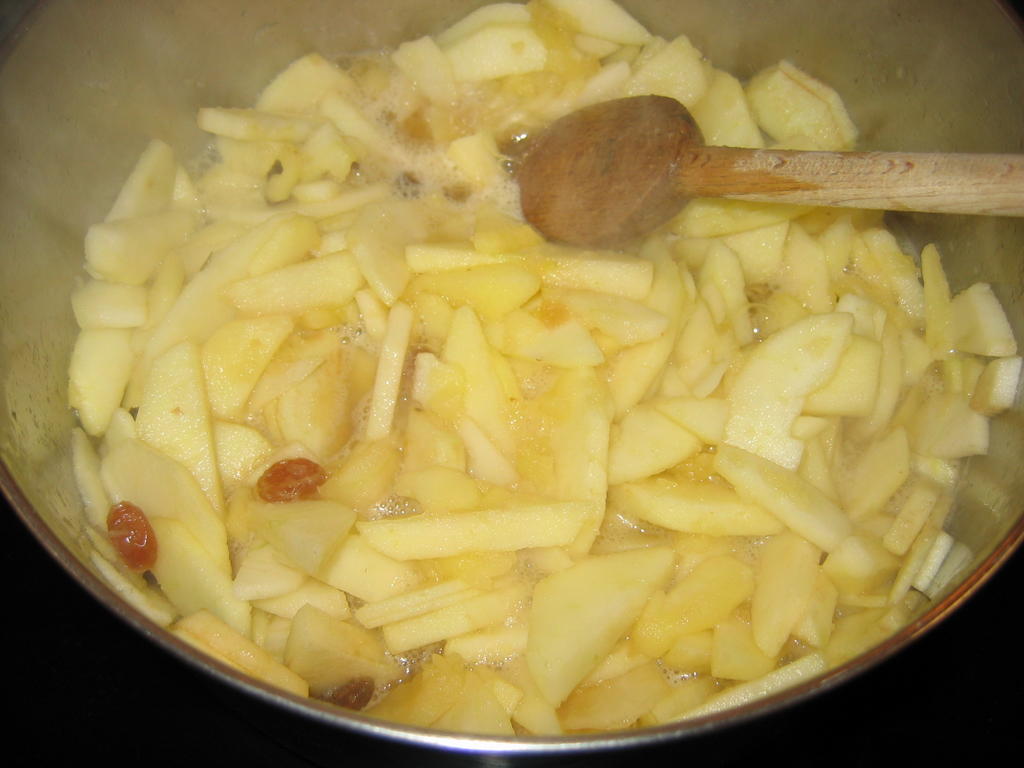 But even Grandma’s apple pies were too sweet for my taste, generally, because Grandpa liked really sweet desserts. I remember she used to put from three-quarters to one cup of brown sugar in her apple pies, and I always thought that it weakened the complex flavors of the apples themselves.
I still think that most apple pie recipes use way too much sugar, so I decided that I would experiment with using as little sweetener as possible and still make a really good apple pie.
I had read in Ken Haedrick’s excellent book, Pie, that one could use apple cider in order to really add a lot of apple flavor to the filling of apple pie; since I add cider to my fried apples in lieu of a lot of sugar, I wondered if I could reduce the sweetening in a pie using the same technique. Haedrick’s recipe called for cooking the apples lightly in cider and three quarters of a cup of sugar before draining them and putting them in the pie crust. The reserved cider and juices were them to be reduced down to about one-quarter cup and poured over the apples.
 I wasn’t sure about cooking the apples, but since I had just read about doing the same thing in the most recent issue of Cook’s Illustrated, I decided to give it a go, and see what happened.
But, instead of following the recipe to the letter, I changed it significantly, in order to make an apple pie that more truly suited my taste. Instead of sugar, I used honey, and used only one third of the amount called for. I added crystallized ginger, powdered ginger and golden raisins to the filling, and instead of the all butter crust both the Haedrick and CI recipes called for, I used my typical half-lard, half-butter crust. (And I used utterly magnificent locally produced lard from Harmony Hollow Farms–it was softer than the lard I had been buying from Bluescreek Farms, and very rich. This made it difficult to work with, but the crust was gorgeous–shatteringly crisp and flaky with a voluptuous flavor. I will buy all of the lard I use from Harmony Hollow from now on.)
The resulting pie was quite phenominal. The crust was exceptional, and the filling, which contained four kinds of apples: Ginger Gold, Molly Delicious, Paula Red and McIntosh, was complex and very fragrant. It was both sweet and tart; the honey lent it depth and a lovely golden color and the cider, which was cooked down to a thick jelly, combined with the McIntosh pulp to create a gloriously thick juice that required only a modicum of flour to bind it.
 Honey and Cider Sweetened Apple Pie
Ingredients:
Pastry for double crust pie
9 1/2 cups of peeled, sliced apples (use at least three different kinds of apples, and include two McIntoshes in the mixture)
3/4 cup apple cider
1/4 cup honey
1 tablespoon minced crystallized ginger
1/2 cup golden raisins
2 tablespoons all purpose flour
1/2 teaspoon ground dry ginger
1/2 teaspoon ground cinnamon
pinch cardamom
pinch salt
Method:
Preheat oven to 375 degrees F.
Prepare pastry dough as directed and while it is resting in the refrigerator prior to rolling it out, begin the apple filling.
Combine the apples, cider, honey, crystallized ginger, and golden raisins in a large pot and over medium high heat, bring to a boil and cook, stirring for about five minutes. (The McIntoshes will begin to break down immediately.)
Put strainer over a smaller saucepan and drain apples, allowing cider, honey and juices to fall into pan. Set aside apples.
Cook, stirring, over medium high heat, until liquid reduces to 1/4 cup and thickens to a syrup that will coat your spoon. You will notice at this time that as soon as you remove the syrup from the heat and allow it to begin to cool, it will gel. This is what it is supposed to do.
Put apples in a bowl, and pour syrup over and stir together thoroughly. Add remaining ingredients and stir to combine.
Roll out dough as directed, and line a 9″ pie pan with the bottom crust. Pour apple filling in and top with second crust, as directed in pastry crust recipe.
Place in oven on center rack and bake for thirty minutes, then rotate pie pan 180 degrees. Continue to bake until crust is golden brown and the juices that eminate from the steam vents is thick and tawny gold in color–this will take anywhere from 35-45 minutes.
When pie is done, remove from oven and place on wire rack, and allow to cool to room temperature (or nearly so) before eating.
Birthday Waffle Breakfast
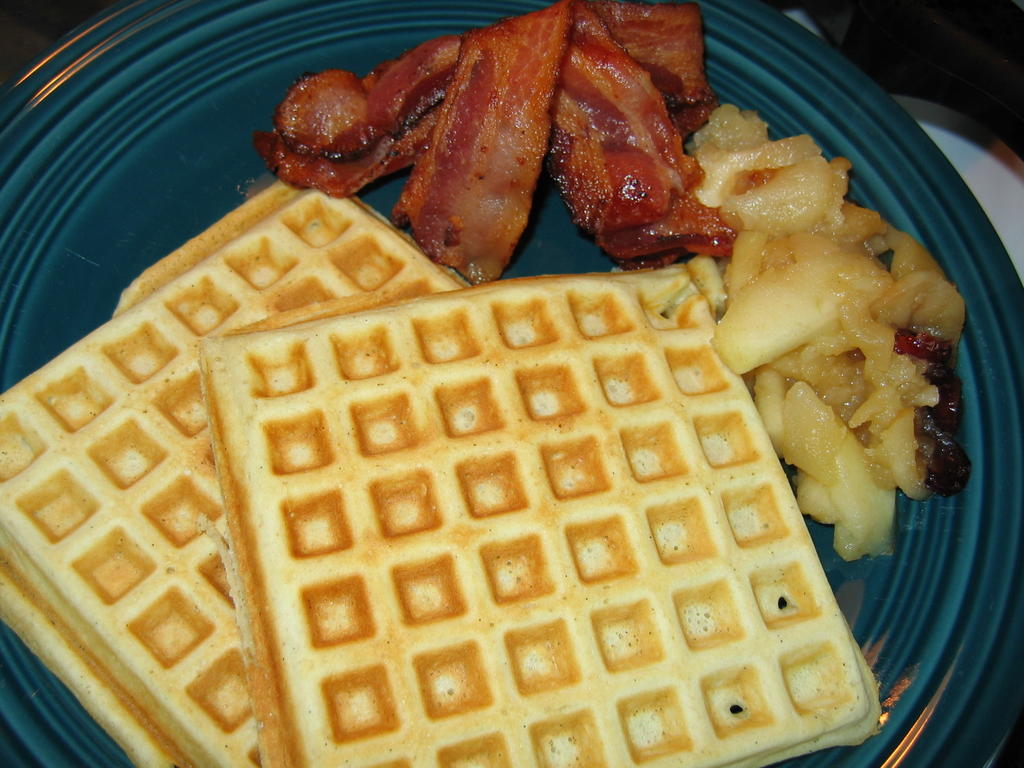 Most people get cake to celebrate a birthday.
Not Zak.
He wanted waffles and bacon.
And, because I am a good wife, that is what I got up early this morning and made for himself, his Dad and Grandpa.
Oh, and I had some, too. (And I made fried apples, because I insist that everyone eat a fruit or a vegetable of some sort at every meal.)
Yes, I recycled this photograph from an earlier post about waffles, but that is because, while I used a new and improved waffle recipe, the breakfasts looked entirely the same.
They just tasted vastly different.
I found the ultimate waffle recipe–that is, if you don’t want to make yeast-raised waffles, which is an entirely different animal than what most of us think of as waffles.
So, here is a link to the article and recipe that I used, though I changed the flavorings a bit (I used double strength vanilla extract and added the scrapings of vanilla bean and a pinch of cardamom–surprise, surprise).
It was originally printed in Fine Cooking Magazine, which is my favorite cooking magazine and is the only one to which I subscribe. Pam Anderson, (not Pamela Anderson–I doubt she cooks much) the genius who came up with this recipe, has never failed me–her recipes always work as advertised. She uses cornstarch in order to help crisp up the waffles, and does the intelligent thing of using the sugar to stabilize the eggwhite foam which also helps make the waffles light and fluffy.
Since the article and recipe (you have to click on the “next” at the bottom of the article to get to the recipe) are beautifully illustrated, I decided to just cook this morning and not bother with detailed photographs.
It was all done pre-coffee, after all.
So–if you have a waffle iron, copy this recipe and enjoy–and write back to let me know how it went.
I am going off with the birthday boy to enjoy the rest of our day.
More on Zak’s birthday pie, later.
Layers of Love
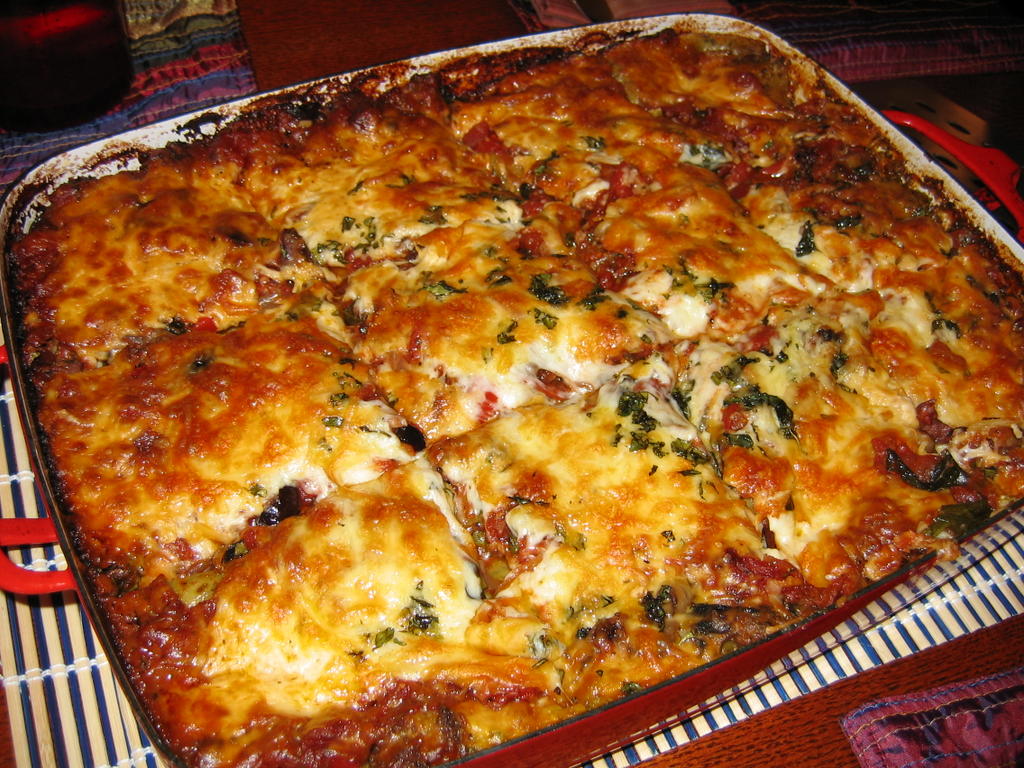 Lasagne is just one of those universally comforting foods. Everyone likes it, and no matter who makes it, lasagne is nearly always at least good, if not phenominal.
Even bad lasagne manages to be pretty tasty.
I have no idea of the derivation or history of lasagne, nor do I know when it became such a part of American cookery that everyone’s mother, whether of Italian descent or not, has a recipe for it that is beloved among friends and family.
What I do know is that if you make it, people will come to the table in droves, and feast until they are filled with noodles, sauce and cheesey lusciousness, almost to the point of bursting.
I enjoy making lasagne, and I seldom make it the same way twice. My ignorance of the original provenance of the dish gives me license to be creative and to work with whatever seasonal produce is at hand to create any number of variations on the dish, all of which are quite flavorful. Lasagne is an empty canvas upon which I can project my own imagination and culinary creativity.
The problem usually comes when people ask for the recipe.
At which point, I am usually stuck with going, “Uh–yeah. I don’t have one. I just make it.”
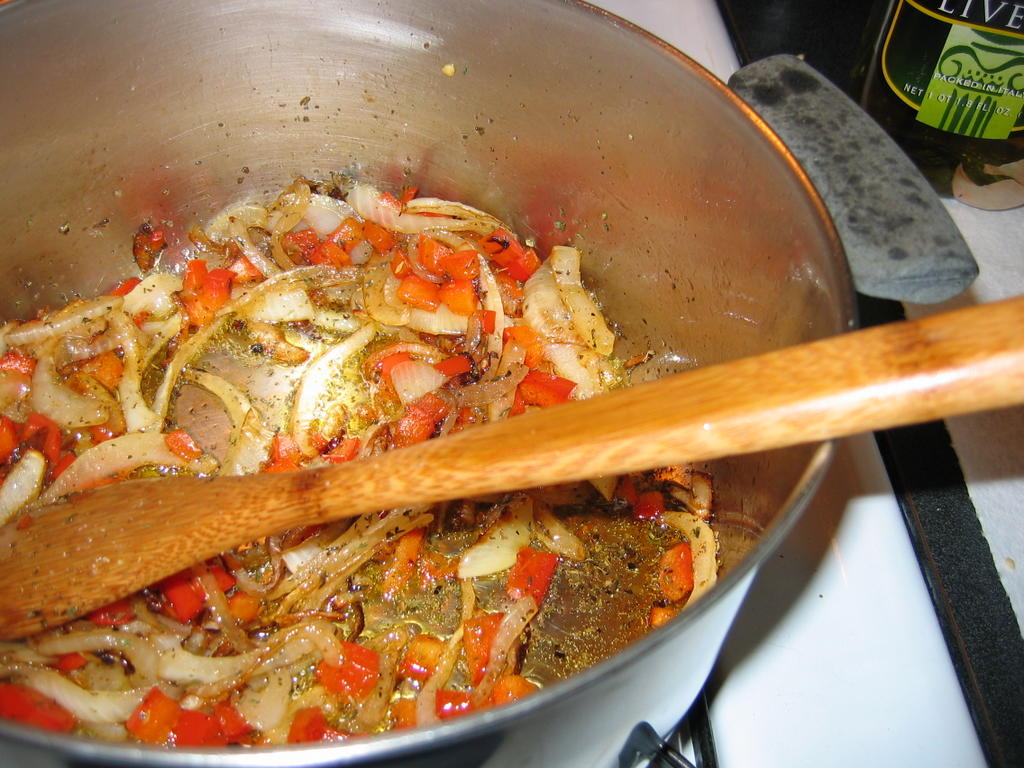 This is frustrating to a lot of folks, but, well, I have never bothered to write any of it down, and since I change fillings every time, it is rather foolish to try and write down the quintessential “Barbara” version of lasagne.
Because, there is no quintessential “Barbara” version of lasagne.
Would I count the pans of lasagne I made and froze for my sister in law while she was pregnant with her first child, so she could reheat them for a quick supper after the baby was born? (That one had roasted red peppers, fried zucchini and sauteed mushroom filling in a chunky bolognaise sauce.) Would it be the version I made in culinary school filled with roasted vegetables and sauced with a gorgonzola bechemel? Or what about the version I made to wish Heather a bon voyage when she went to Indonesia for the summer? (Homemade beef Italian sausage, pesto ricotta filling and mushroom-wine sauce.)
I do know it wouldn’t be the vegan version I made with luscious faux bechemel and beautiful fresh tomato marinara and roasted vegetables that was utterly ruined by the tofu-cheese crap that my clients insisted I put on it. The stuff turned to rubber and smelled funny and made a perfectly respectable lasagne utterly repulsive. I had even managed to make a divine version of “ricotta”-spinach filling using silken tofu, spinach, sauteed mushrooms and a dab of shiro miso to give it a bit of a cheesy flavor. (White miso, when used judiciously and sneakily, can oddly enough manage to taste rather akin to parmesan cheese. That is a weird, but true food fact that I learned through much trial and error.)
Actually, if I had been allowed to make and serve it without the tofucheez, the vegan lasagne was quite flavorful, and would have been a decent addition to my own cooking resume.
But, I digress. The point is, that with the exception of the funky foot-stinky rubberized tofu, all of my versions of lasagne are good, even if I never repeat them more than twice in my life.
Since I don’t feel constrained by tradition, I can change lasagne to suit the temperment or dietary restrictions of those who are eating it; each layered pan of noodles, sauces and fillings is a labor of love. I like to think of the wide, long noodles as comfy sheets and the fillings as pillows that I am tucking into bed as I construct the dish; there is something inherently nurturing about a dish that is put together the way a mother tucks in her children at night.
I like the flavors of my lasagne to be distinct and separate and to wrap and enfold themselves around the diner’s tastebuds in a dancing embrace. I like to think of those eating my lasagne as being wrapped in patchwork quilts made up as many flavors, textures and colors that I stitch together into one cohesive dish.
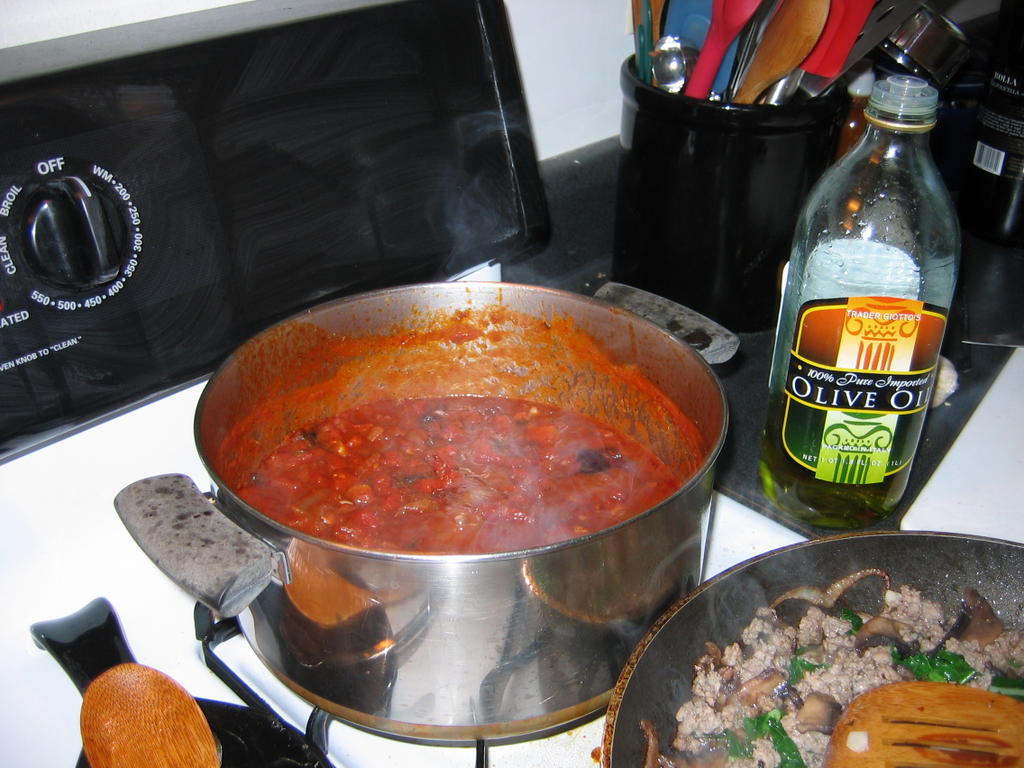 When I determined to make lasagne yesterday, I had a crisper drawer full of roma tomatoes from the CSA–heavy with juice and sugar from the long, hot dry summer. Zak’s Dad and Grandpa were coming to visit, and I had fresh mushrooms, peppers and a wedding-bouquet sized bunch of basil.
I could have made any number of pasta dishes for them, but lasagne never fails to please anyone. Besides, I seldom make the dish unless we have guests or we are going to a potluck–it is quite simply too difficult to make only a small amount of it.
The sauce started with the peeled and seeded fresh tomatoes: this task sounds more difficult than it is. You simply score an “X” on the pointed end of the tomato, and plunge it into boiling water. Tongs are good for this operation; bare hands, not so much. I usually blanch them for about forty to sixty seconds, then pluck them out and dunk them into a bowl of ice water. While
I blanch the rest of the tomatoes, I leave the first ones in the ice water bath.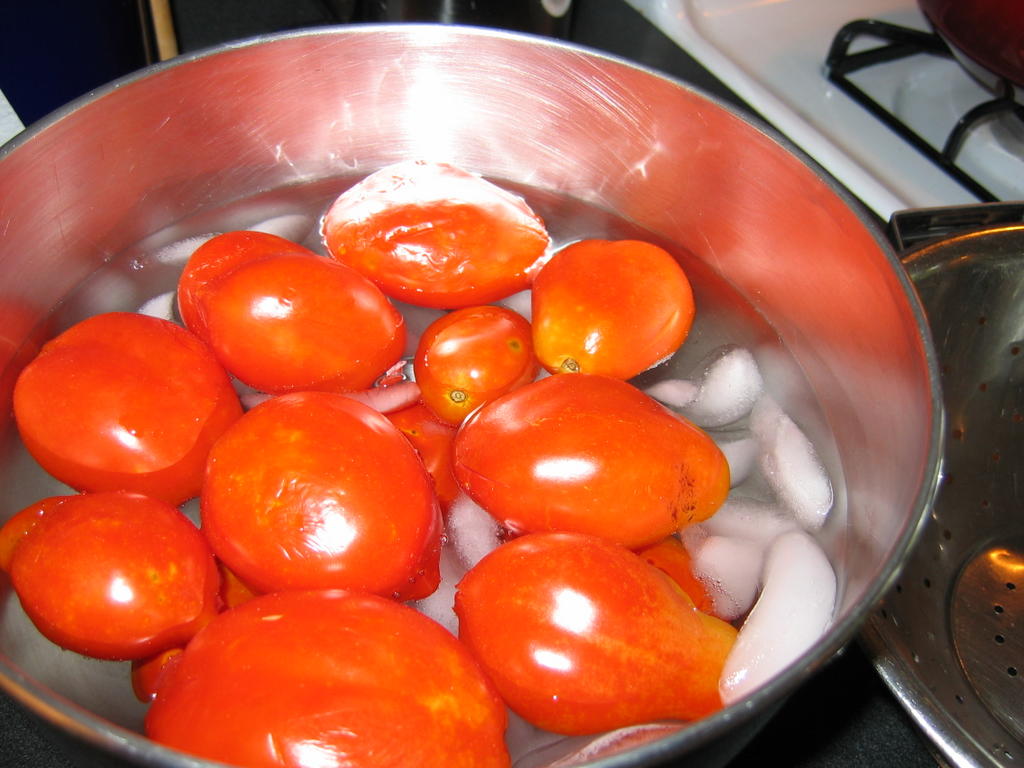
When they are finished with the spa treatment, the tomatoes a cinch to peel. Just go to where you scored them, pick up a flap of skin and pull. They slither out of thier skins like shimmying strippers slipping off crimson spandex. The next step is to core them–the tip of a paring knife makes short work of that operation.
Finally, I seed them by cutting the tomatoes in half across the middle, and scooping out the seeds with my fingers.
At this point, I cut them into large chunks and they are ready to go.
Of course, they are more work than just opening up a can of tomatoes, already peeled, seeded and diced. But they taste wonderful when they are perfectly ripe and fresh. It is well worth the small amount of extra effort to start with perfect roma tomatoes.
I had no Italian sausage, so I made some out of Bluescreek Farms’ ground pork and a melange of Italian seasonings–I used a combination of fresh and dried fennel seeds, fennel leaves, basil, salt, pepper, oregano, thyme garlic and rosemary, with just a tiny hint of chile pepper. (This is out of deference to Grandpa who cannot handle hot spices anymore.) I decided to cook the sausage filling with a caramelized onion, some garlic, of course, sliced portabello mushrooms, red wine and shredded fresh lacinato kale. (The kale adds a bitter complexity to the mixture that complements the slightly sweet spices of the pork beautifully.)
And then, Morganna and I made the ricotta filling together.
Ricotta is a wonderful, soft fresh farmer’s cheese–and contrary to some people’s belief, it is cheese. It is just not pressed into a form, nor left to age, but it is a cheese nonetheless. It is made with milk, rennet and salt, just as other cheeses are. I love the classic ricotta filling with egg, spinach and parmesan cheese, and used that filling for many years. But when you have a wedding-bouquet sized bunch of basil in the house, you -have- to do something with it. Besides, just like everyone loves lasagne, everyone loves pesto, too.
So, Morganna made pesto and then stirred it, along with chopped spinach and egg, into the ricotta cheese, and there was the filling.
With that, we come to the noodles.
I have always used the traditional wavy-edged, classic American “you-gotta-cook-em-before-you-layer-em” noodles. But Morganna and Zak brought home Rossi Pasta “no-bake-em” noodles, so I felt honor-bound to try them.
Putting the lasagne together was less like tucking the fillings into bed and more like layering planks over pillows, but true to Rossi’s instructions, the dish turned out very tasty. The texture of the noodles after they have cooked (you add a mere 3/4 cup of water to the dish to cook the pasta while the lasagne bakes) was fantastic with one exception: the first layer was crisp and browned excessively on the bottom. I think that the next time I make the dish using these noodles, I will put water into the bottom of the dish and a heavier layer of sauce.
So, I guess by now, you all want the recipe.
I hate to say it–but too bad.
I have no real idea quite how I put it all together, except as I described it to you.
So, here is the deal–make a nice sauce from fresh tomatoes, or if it is winter, used canned tomatoes. Use a lot of caramelized onions and sweet bell peppers in it. Make two kinds of filling: one of some combination of roasted or sauteed vegetables, with or without meat-and one based on something creamy like ricotta cheese. (Or if you are vegan–tofu with veggies and a dab of miso.)
Have some good quality Italian cheese like parmesan, which is nice and nutty, and good melting cheeses like mozzerella and provolone, and shred them up.
And either cook up some noodles, make some fresh, or use the “no-bake-ems.”
Layer it all together lovingly in a pan, starting with a spray of olive oil and a splash of sauce, then the first noodles, and ending with a big blanket of melty cheese. Then bake it for about an hour. For about half of that time, leave the pan tightly covered with foil. Then uncover it so the cheese can brown into that wonderful chewy crust that certain people fight over.
When it is mostly done baking, mince up a double handful of fresh herbs like basil and oregano, and sprinkle them over the gooey cheese, then bake it for ten more minutes.
Turn the oven down to 170 degrees, and let it sit for as long as you can manage. Ten minutes in the oven and then ten minutes out will ensure that you are more likely to serve it without it falling apart into a puddle of weirdness.
Ten minutes out of the oven will make it so that the mess that happens when you serve it is at least somewhat appetizing looking.
Serving it straight out of the oven results in absolute glop, and burnt mouths.
But, even when glop and burnt mouths are in the offing, for some reason the folks eating it are happy.
That is because lasagne is nothing more than love made manifest.
Stretching Dinner
 Sometimes at my house, an unexpected guest arrives around dinner time; I notice that this happens more often now that Morganna is living with us.
This is not a bad thing at all–in fact, I am convinced that it is a good thing to have friends dropping by. It forces a degree of spontenaeity in the kitchen which can lead to new and exciting variations on tried and true recipes.
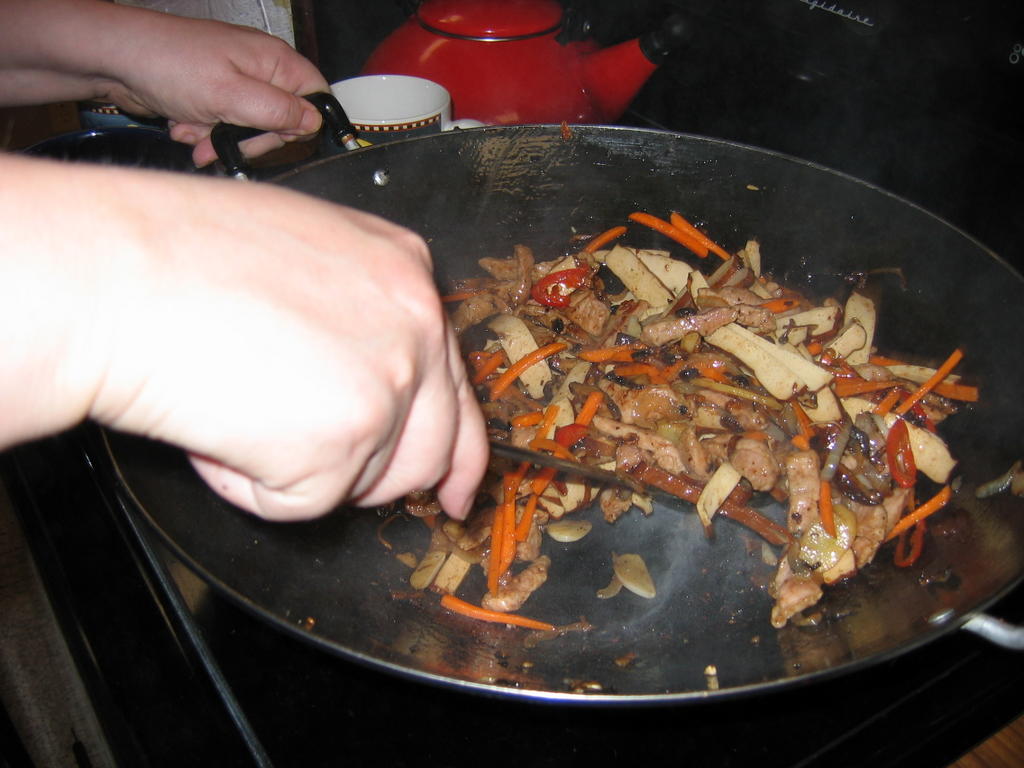
Saturday night, for example, I had planned to make Shredded Pork with Pressed Tofu, which is one of Morganna’s favorite dishes. Since Dan and she had been out being pixie-led (for those unfamiliar with fairy lore, “pixie-led” is a term that one uses to describe being so lost that you end up going in circles) in the woods all day, and since Heather was going over to some friends’ home to eat, of course, Morganna asked if Dan could come to dinner.
I had thawed out enough pork for three people, but not four, and I only had one package of the spiced dry tofu.
However, I did not let this get in the way of saying “Yes.” (Besides, I know how much Dan likes pork and how, since he is married to a Muslim, seldom he gets to eat it.)
 I just decided to add various vegetables to the traditional, minimalist recipe, and change the seasonings to create a new dish.
I had considered adding bitter melon, but neither Zak nor Morganna thought it was a good idea, and after tasting the finished dish, I concur–the bitterness of the melon would not have gone well with the flavor of the pressed tofu–it would have overwhelmed it. I ended up adding shredded onions, carrots, sweet peppers and Chinese black mushrooms to the dish to great effect. The mushrooms, in particular, added a wonderful meaty quality to the dish and added a great deal of fragrance and flavor to the completed sauce. I also added fermented black beans, in order to change the sauce a bit more; the saltiness, musky quality of the beans offset the sweetness of the pepper and carrot.
What we ended up with was a totally different recipe that was flavorful and new, that helped stretch two fairly small pork chops and a small package of tofu to feed four people. (Along with big bowls of steamed rice, of course!) It tasted good to eat again, so I will immortalize it with a name to commemorate Dan and his day:
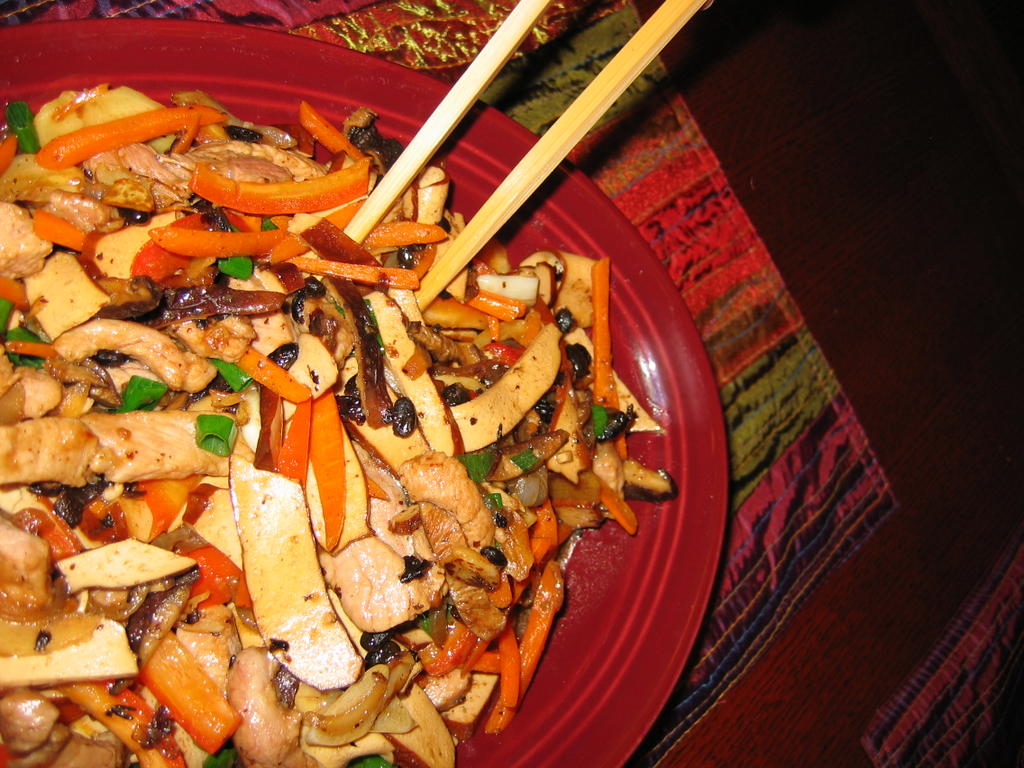 Dan’s Pixie-Led Pork
Ingredients:
8 ounces pork loin chops, shredded into 1″x1/4″ pieces
1/4 cup Shao Hsing wine
2 tablespoons cornstarch
3 tablespoons peanut oil
1 medium onion, cut in half longways and cut into thin slices
2″ piece of ginger, peeled and sliced thinly
6 cloves garlic, peeled and sliced thinly
2 ripe jalapeno peppers, thinly sliced diagonally
2 tablespoons fermented black beans, lightly crushed
1 6 ounce package pressed spiced dry tofu, shredded in pieces about the size of the pork
5 Chinese black mushrooms, soaked in hot water and Shao Hsing wine, stems removed and caps shredded
2 tablespoons thin soy sauce
2 tablespoons mushroom soaking water
1 tablespoon Shao Hsing wine
1/2 cup carrots, peeled and shredded
1 small sweet red pepper, shredded
3 scallion tops, shredded or thinly sliced on the diagonal
1 teaspoon sesame oil
Method:
Marinate pork shreds in wine and cornstarch while preparing other ingredients.
Heat wok until it smokes. Add oil and heat until very hot. Add onion and stir and fry until the onion begins to turn lightly golden brown. Add ginger, garlic, chile and fermented black beans. Continue stir frying until the mixture is very fragrant–about one minute or so.
Add meat to wok; reserve any liquid marinade left in the bowl. Spread meat out onto bottom of wok and allow to brown on bottom about one minute, then stir and fry vigorously. Add tofu and mushrooms and continue to stir fry until meat is very nearly done. Add soy sauce, mushroom soaking water and wine, then add carrots. Stir fry about forty seconds, then add sweet pepper shreds.
At this point, add any liquid marinade, and stir and fry until sauce thickens and clings to the components of the dish. Add scallions, stir and fry about ten seconds, and then drizzle with sesame oil.
Serve with steamed rice.
Note:
This, stir fried with additional scallions, leftover cold steamed rice and a couple of eggs makes a fantastic fried rice. Especially if you add a little bit of oyster sauce and chile sauce at the end.
Weekend Cat Blogging: Kitten Has a Brand New Name
 Indrid the Kitten is still with us, though he did catch a bit of a sniffly-virus and had to go to the vet. Now, he is breathing easier, and is back to his merry japes and larks and kittenesque games.
However, he is such a sweet-tempered little fellow, that Morganna decided that “Indrid,” which comes from a creepy telepathic alien thing from John Keel’s book, The Mothman Prophesies, was an awful name for him.
So, she decided instead to name him after a different alien–the good-natured ever-helpful and caring Minbari diplomatic assistant, Lennier from the television show “Babylon 5.”
Here you can see Lennier playing on the steps that go down to the front door from the kitchen. I think he looks rather like some sort of Chinese Foo beastie in this picture, what with the contorted pose and wild eyes.
I would write more, but I have to run upstairs and finish painting the ceiling in our bedroom, and then work on changing faucets in the bathroom. I promise to post more on food and fun in the next couple of days, after all of this rennovation work is finished.
And sometime soon, I will have to post before pictures of the main kitchen and talk about the remodelling that will soon be happening there, too! (Wait ’til you see the stove!)
For more listings of weekend cat bloggers, visit Clare and Kiri at Eatstuff, and check out her listing of all the weekend cat bloggers posts there.

Categories:
- Admin (rss) (55)
- Blogs and Blogging (rss) (81)
- Book Reviews: Cookbooks (rss) (43)
- Book Reviews: Non-Cookbook Food Books (rss) (38)
- Cats and Cat Blogging (rss) (47)
- Chinese Cooking Lessons (rss) (32)
- Culinary School Stories (rss) (18)
- Dairy Pruducts: Cultured and Barbaric (rss) (4)
- Documentary Filmmaking (rss) (1)
- Essays, Rants and Reflections (rss) (260)
- Fighting Hunger (rss) (12)
- Food and Kids (rss) (45)
- Food in the News (rss) (126)
- Food Media (rss) (98)
- Food Preservation (rss) (18)
- Food Safety (rss) (45)
- Gardening (rss) (30)
- Herbs and Herb Blogging (rss) (20)
- Holidays (rss) (50)
- Kat Blogging (rss) (22)
- Kitchen Science (rss) (36)
- Leftover Makeover (rss) (8)
- Life, the Universe and Everything (rss) (131)
- Local and Sustainable (rss) (227)
- Local Athens Food and Foodies (rss) (42)
- Meatless Mondays (rss) (32)
- Menu For Hope (rss) (5)
- Nutrition, Diet and Health (rss) (84)
- On The Farm (rss) (8)
- Recipes: Almost Vegetarian, Vegetarian and Vegan (rss) (294)
- Recipes: American Regional (rss) (37)
- Recipes: Appalachian Hillbilly (rss) (33)
- Recipes: Bread, Pasta, Grains (rss) (95)
- Recipes: Canning and Preserving (rss) (8)
- Recipes: Chinese (rss) (123)
- Recipes: Comfort Food (rss) (120)
- Recipes: Cookies (rss) (16)
- Recipes: Desserts (rss) (48)
- Recipes: French (rss) (25)
- Recipes: Fruits and Vegetables (rss) (302)
- Recipes: Greek, North African and Middle Eastern (rss) (31)
- Recipes: Indian (rss) (137)
- Recipes: Italian (rss) (42)
- Recipes: Japanese (rss) (7)
- Recipes: Jewish (rss) (4)
- Recipes: Korean (rss) (6)
- Recipes: Meat, Poultry and Fish (rss) (220)
- Recipes: Mexican/Native American/ Latin American/Caribb (rss) (27)
- Recipes: Original (rss) (108)
- Recipes: Thai (rss) (27)
- Recipes: Tofu (rss) (17)
- Recipes: US Regional (rss) (16)
- Recipes: Vietnamese (rss) (8)
- Restaurant Stories (rss) (28)
- Sewing, Quilting, Arts and Crafts (rss) (16)
- Simple Chinese Recipes (rss) (30)
- Slow Food and Heritage Foods (rss) (10)
- Spice Blogging (rss) (44)
- The Chinese Cookbook Project (rss) (14)
- The Chinese Pantry (rss) (39)
- The Documentary (rss) (2)
- The Kitchen Saga (rss) (17)
- The Locavore's Bookshelf (rss) (15)
- The Unsung Adventures of The Culinary Nerd (rss) (6)
- Tools and Toys (rss) (35)
- Uncategorized (rss) (10)
- With a Side of Politics (rss) (48)
Archives:
- August 2012 (9)
- July 2012 (12)
- September 2011 (3)
- August 2011 (7)
- July 2011 (8)
- June 2011 (16)
- May 2011 (17)
- April 2011 (11)
- December 2010 (9)
- November 2010 (5)
- February 2010 (1)
- December 2009 (5)
- November 2009 (7)
- October 2009 (10)
- September 2009 (16)
- August 2009 (14)
- July 2009 (14)
- June 2009 (7)
- May 2009 (17)
- April 2009 (10)
- March 2009 (25)
- February 2009 (13)
- January 2009 (10)
- December 2008 (5)
- November 2008 (5)
- October 2008 (6)
- September 2008 (13)
- August 2008 (8)
- July 2008 (11)
- June 2008 (18)
- May 2008 (13)
- April 2008 (14)
- March 2008 (16)
- February 2008 (17)
- January 2008 (19)
- December 2007 (25)
- November 2007 (18)
- October 2007 (24)
- September 2007 (16)
- August 2007 (15)
- July 2007 (15)
- June 2007 (10)
- May 2007 (14)
- April 2007 (16)
- March 2007 (17)
- February 2007 (20)
- January 2007 (13)
- November 2006 (1)
- October 2006 (8)
- September 2006 (14)
- August 2006 (25)
- July 2006 (30)
- June 2006 (28)
- May 2006 (34)
- April 2006 (29)
- March 2006 (24)
- February 2006 (30)
- January 2006 (38)
- December 2005 (40)
- November 2005 (37)
- October 2005 (32)
- September 2005 (25)
- August 2005 (30)
- July 2005 (28)
- June 2005 (21)
- May 2005 (8)
- April 2005 (22)
- March 2005 (17)
- February 2005 (29)
- January 2005 (10)
Search Site:
Links:
- Lily’s Wai Sek Hong
- 101 Cookbooks
- A cat in the kitchen
- A Veggie Venture
- Accidental Hedonist
- Cha Xiu Bao
- chez pim
- Chocolate & Zucchini
- Chopstick Cinema
- Chowhound.com
- Chubby Hubby
- Cook sister!
- Cooking with Amy
- da*xiang
- Eat Local Challenge
- Eating Liberally
- Ecocentric
- Eggbeater
- Epicurious
- Farmgirl Fare
- Fatfree Vegan
- Foodgoat
- ForkandBottle.com
- Green Olive Tree
- Hooked on Heat
- Jaden’s Steamy Kitchen
- Kalyn’s Kitchen
- Lucullian delights
- Mahanandi
- Matt Bites
- MeatHenge
- mmm-yoso!!!
- New York Times – Dining & Wine
- Pizza Goon
- Rasa Malaysia
- Ruhlman
- Sailu's Kitchen
- Serious Eats
- SF Gate: Food & Dining
- Simply Recipes
- Soul Fusion Kitchen
- Tastespotting
- The Amateur Gourmet
- The Cleaner Plate Club
- The Food Section
- The Grub Report
- thecookscottage
- U.S. Food Policy
- Wandering Chopsticks
- Washington Post Food and Dining
- Wasted Food
Meta:


Powered by WordPress. Graphics by Zak Kramer.
Design update by Daniel Trout.
Entries and comments feeds.