
Cook Local, Eat Global
Duck Sauce Cookies?
 It all started one Yule eve, many years ago (okay, only five years ago) when I had made about six batches of different kinds of cookies that day.
And it was late, but I felt that I had one more batch of cookies in me, so I eyed my ingredients store, and cast about for ideas.
Butter, eggs, sugar and flour were plentiful. Being as those are the backbone of any cookie recipe, I felt confident that I could, indeed, make another different batch of cookies to make it a total of seven.
I had made espresso chocolate toffee chip, Cakes of Aphrodite, raspberry almond bars, Clifford Tea Cookies (a brown sugar and pecan refrigerator cookie), Snickerdoodles and Irish Cream brownies. I didn’t want to make anything else with chocolate, nor did I want to make plain sugar cookies. I didn’t have it in me to make gingerbread and roll it out and cut, bake and decorate the resulting dark cookies–besides, I had no molasses. (That little fact becomes important later.) I wanted to make another drop cookie–one that was preferably chewy and kind of heavy.
I realized I wanted to make oatmeal cookies.
But I had no oatmeal.
What I did have, however, was Ginger-Cashew granola from Trader Joe’s that had chunks of crystallized ginger in it.
“Granola is made from oats”, said I to myself. I pulled out the granola and set it down.
I don’t like brown raisins in cookies. Actually, in all honestly, I don’t much care for the darned things at all. There is a funny taste to them that reminds me of the prune juice I was forced to drink as a child to, ah, keep things moving in my innards, as it were. That hideous black stuff kept me from liking many sorts of dried fruit for years.
But what I do like are golden raisins–they are sweeter and more delicate in flavor. They also are a more attractive color, being as they are not oxidized, so they don’t look like rat droppings.
I pulled out the yellow box of golden raisins and set them beside the granola. And, for good measure, because they were right next to the raisins on the shelf, I pulled out the dried cranberries. And, because they were there, some sliced almonds, and the crystallized ginger. With the ginger, I remember saying aloud, “If some is good, more is better.”
 I went to my cookbook shelf, and dragged out my cookie books, and dug about to look for a likely oatmeal cookie recipe to adapt.
It was then that I found out that most oatmeal cookie recipes have molasses in them, to add moisture and rich flavor to what has the potential to be a terribly dry, crumbly and somewhat bland cookie. Being as I am one of those folks who believes in moist and chewy oatmeal cookies, which are endowed with a deep flavor, I was not happy to realize that I had no molasses.
So, I figured, “I know–I will substitute honey,” thinking that the flavor wouldn’t be as dark, but the lighter flavor would go well with the crystallized ginger. So, I dove back into the cupboard and rummaged around until I found the honey jar, which had maybe a teaspoon of the golden fluid smeared to the bottom and sides of the glass.
Not nearly enough.
I could have gone to the store which was just up the road, but I knew it would be filled with last minute shoppers, and at this point, I was too stubborn to consider it. I had to have something that would work to substitute for the molasses. If not honey, then something else. Maple syrup?
A grand idea. Into the refrigerator I peeked, then peered, then dug, with both hands, pushing aside bottles, jars, plastic containers of leftovers and cartons of milk.
There was barely a teaspoon of maple syrup to be found. I briefly thought of combining the remaining honey with the syrup, but realized that in no way would I come up with the three tablespoons required by the recipe. Cursing my frugal nature which leads to me saving every last droplet of whatever commodity graced a jar, I shoved the syrup back to the back of the fridge, and began muttering.
I seemed to recall that I had bought apple jelly a few months earlier which I had used to glaze a fruit tart, but in all of my excavations, I hadn’t found it. As I frantically spun jars in the refrigerator door with my flailing hands, I saw no jar of apple jelly, but many jars of strawberry, cherry, raspberry and blackberry preserves. Rejecting all of them because I knew that their fruit flavors would overwhelm the cookies and quite likely give them an odd pinkish or purple cast, I sighed.
Then, I saw something that looked sort of like orange marmalade or apricot preserves. Either one would be good, though I couldn’t recall having bought anything resembling either option in the past two years. But it didn’t matter. I was desperate.
I grabbed the jar and turned it around to read the label, which cleared the mystery right up.
“Duck Sauce,” it read, quite clearly.
Then, I remembered. I had bought it for a dim sum class where I made spring rolls. Some students insist upon dipping perfectly delicious and innocent spring rolls into duck sauce before dipping them in hot mustard in order to eat them, so I had bought some to present on the side.
I put the jar down, frowning, then picked it up again, and read the ingredients.
“High fructose corn syrup (no big surprise there), peaches, pineapple, peach juice, modified food starch, water….”
I began to feel pretty good. It was sweet, fruity, but not overwhelmingly so, and the high fructose corn syrup would make the cookies really hydroscopic–meaning moist, and apt to draw moisture from the air, rather than drying out and becoming stale as soon as they were breathed on.
Then, I read further:
“…Soy sauce, garlic, ginger, vinegar, chiles and salt. No preservatives, no MSG.”
Soy sauce? Garlic? The ginger didn’t bother me much–after all, I had already dragged out dried powdered ginger, granola that featured crystallized ginger bits as well as a bag of nothing but crystallized ginger to go into the cookies. Vinegar didn’t bug me much because after all, it is used in strudel dough to relax the gluten structure to allow the baker to stretch it into paper-thinness.
But soy sauce. And garlic?
So, I opened the jar and tasted it.
Not bad. Mostly fruity and sweet with some tanginess from the vinegar. The salt from the soy sauce was noticable, but heck, cookies have salt in them, right? There was also a definate garlic undertone, but as I was distinctly lacking in options, I decided that no one would know if I didn’t tell them. The chiles–eh–I could barely taste them in the sauce on my finger, so I reckoned that if it was in cookies with bunches of granola, nuts, ginger and fruit in it all jostling about for the eater’s attention, no one would be the wiser.
So, out came the jar, and it was plopped down beside the other ingredients, and I made the cookies.
And lo, they were good. Very good, in fact. The duck sauce gave them a mysterious, wonderful flavor that no one could place. When they inevitably asked what it was, I always flashed a gunshot grin and said, “Duck sauce.”
Which inevitably gave rise to the question, “Why in the world would you think to put duck sauce into cookies?”
Well, now you know.
Desperation.
BTW–the official name of these cookies, given to them by Zak, is rather, uh, not family-oriented. He called them the F—ing Duck Sauce Cookies, with the alternate title, F—a Duck Cookies.
But, in the interest of not being too offensive, for the blog, I just call them
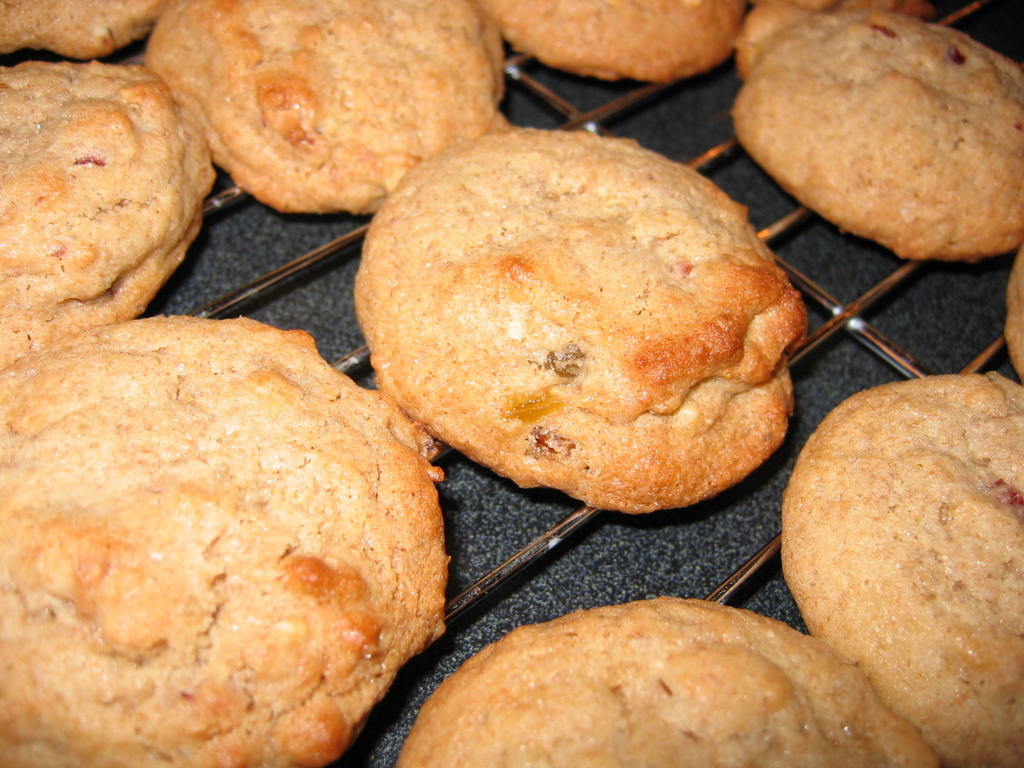 Duck Sauce Cookies?
Ingredients:
1 cup butter, softened
1 cup raw sugar
1 cup firmly packed brown sugar
1/2 teaspoon ground dried ginger
1/2 teaspoon cinnamon
2 eggs
3 tablespoons duck sauce
1 teaspoon vanilla extract
1 1/2 cups all purpose flour
1 1/2 cups whole wheat flour
1/2 teaspoon baking soda
1/2 teaspoon salt
1 3/4 cups granola
1/3 cup golden raisins
1/3 cup dried cranberries (unsweetened are best)
1/2 cup crystallized ginger, cut finely
1/2 cup sliced almonds
Method:
Preheat oven to 375 degrees F.
In a standing mixer, cream butter and sugars until light and fluffy. Add eggs, duck sauce and vanilla, and beat until fully incorporated.
In another bowl, combine flours, soda and salt, and mix thoroughly. Add flour, a little at a time, to dough, beating well and scraping down sides of bowl. Mix together remaining ingredients in a bowl, and if your mixer is a heavy-duty model, slowly incorporate them into the dough, mixing thoroughly. If your mixer is too wimpy to handle a dough that stiff, mix them in by hand with a wooden spoon. (This is great exercise for your forearm muscles.)
Using a small cookie scoop, drop by rounded teaspoonsful onto ungreased cookie sheets.
Bake 8-10 minutes, or until golden brown on the edges and slightly browned on the tops. Allow to cool for a minute or two on the sheets, then transfer to wire rack to finish cooling.
Makes about 55 cookies.
I Dunno, Lad, But It’s Green….
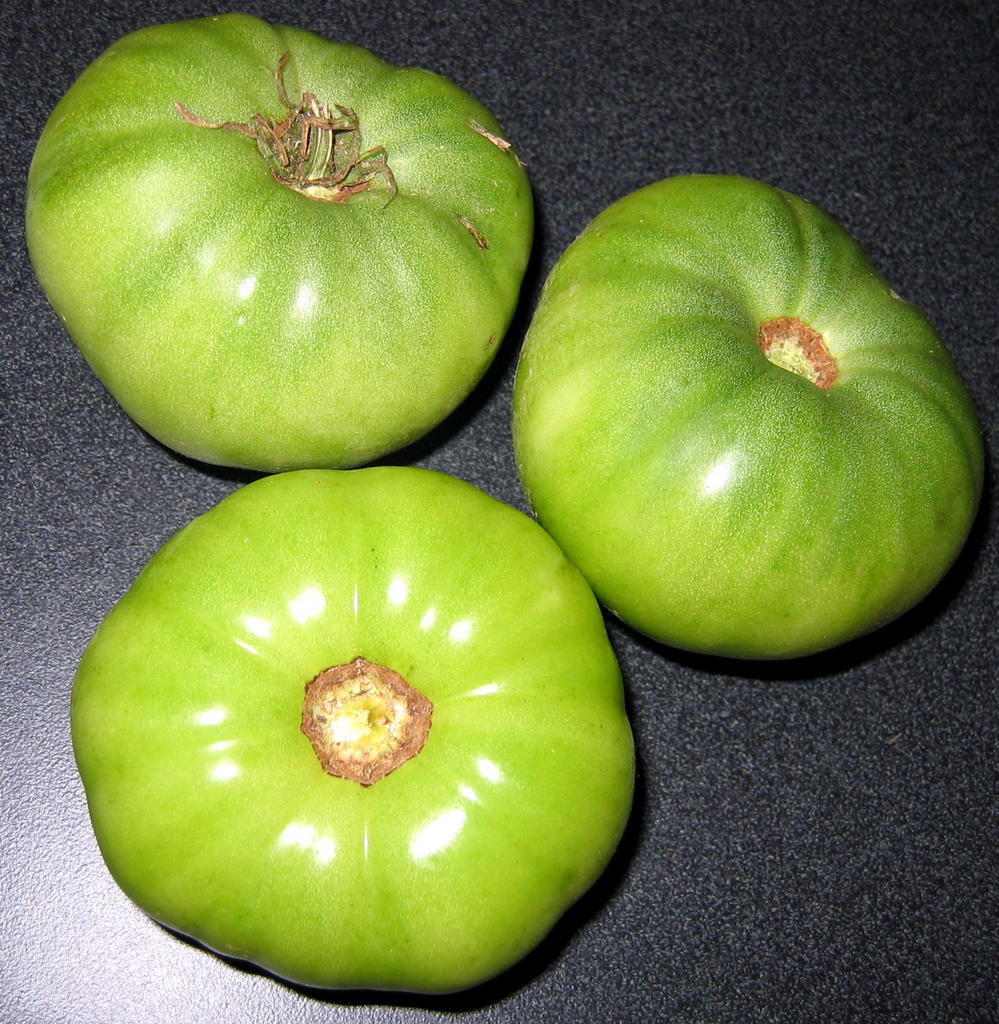 Every time my Mom visits me and ’tis the season, I cook her up a pan of fried green tomatoes (green as in unripe, not green as in a tomato that is green when ripe)–yet another classic southern dish that gives away my hillbilly Applachian heritage. But I do it, because both she and I love the darned things, and no one else we know does.
Now, I can’t rightly figure that out. They are tangy on the inside, and crispy, crunchy and full of browned goodness on the outside, so what is not to like? I don’t get why it is anyone would -not- like them. I mean, okay, if a person just plain old doesn’t like tomatoes in the first place, well, I can forgive them for being afraid of them fried and green, but hell, for the rest of the world who looks upon them with distaste, I have this to say:
They are fried! How can you argue with that?
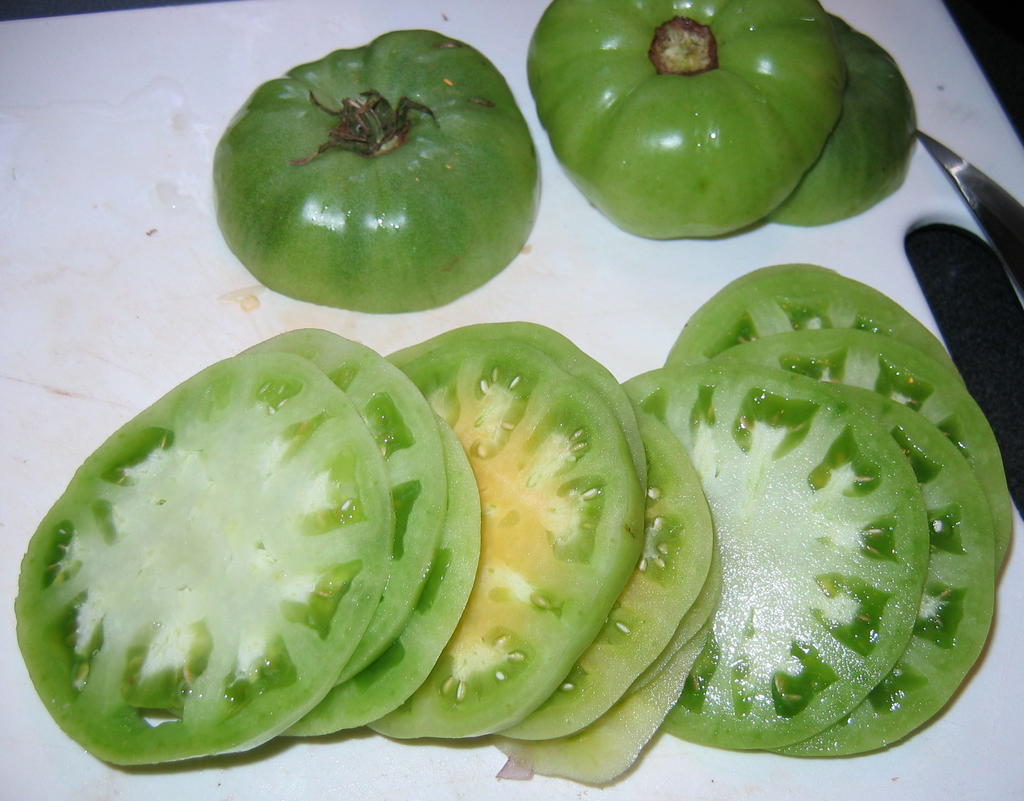 In truth, I have to admit to being fearful of them when I was a small child. They just looked odd on the plate to me. I loved ripe tomatoes, and would gulp down slices of beefsteaks at every meal once the season started, and in fact, would eat them to the exclusion of all other food if I could get away with it. But the green ones, for all that the color was compellingly beautiful–like transluescent jade shaded with hints of white and gold–smelled funny to me. There was an acrid scent to them that made my youthful tastebuds wary, and it wasn’t until I was much older that I mustered up the courage to try them.
Once I did, it was all over, and the gene that in southern folks makes us up and bread any innocent edible thing and fry it up in bacon fat and consume it with much gusto was activated, and I haven’t looked back since.
Which is good, because hell, if I looked back, I might see the size of my backside which has billowed with the consumption of all that bacon-grease fried goodness.
Because here is the deal–you don’t fry them in olive oil, or canola oil or any damned fancified cold pressed walnut oil business. No. That is just not the right and proper way to fry green tomatoes. Do you think Fannie Flagg would approve? Well, I bet she wouldn’t, and I know that no one in my family would approve, either.
It is bacon grease or nothin’ when it comes to the green tomato frying. If you are a vegetarian–okay, use the olive oil, and I will forgive you. Or if you are Muslim, okay. But for the rest of y’all, use the bacon grease, and stop snivelling. Live a bit, and eat something that tastes really damned good. No, of course these are not health food–but not everything has to be health food. Just eat a plate of them once a year and relish them, and let them give your tongue and stomach great joy.
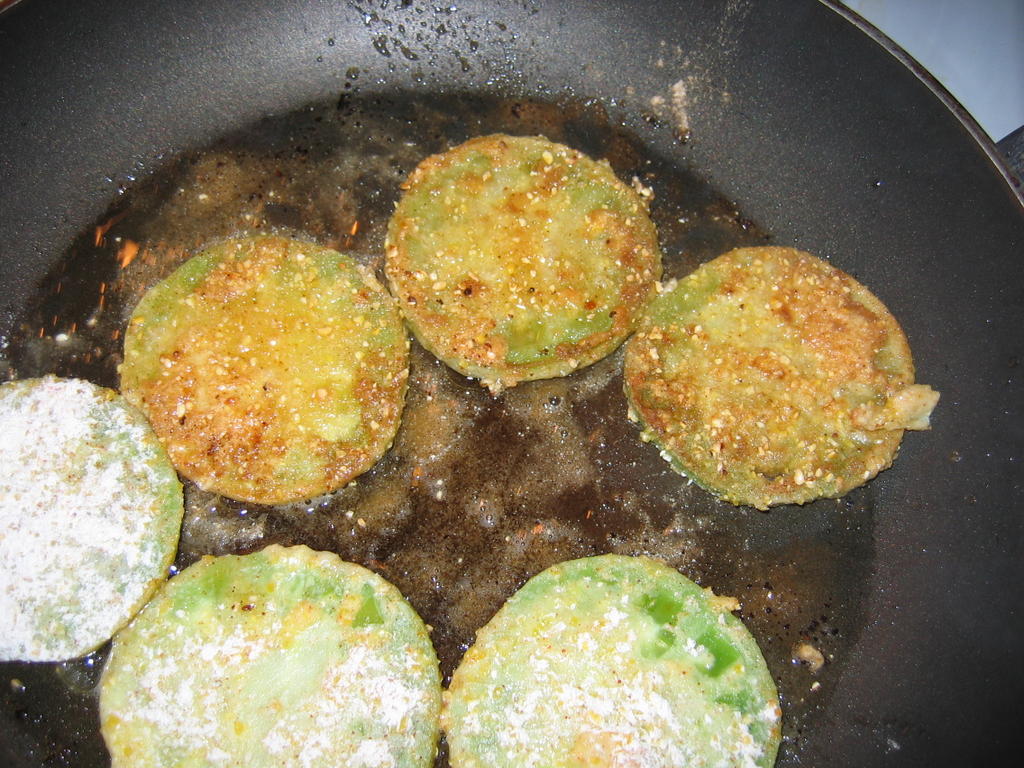 How do you fry ’em?
Well, it is easy.
Get some green tomatoes, cut them into thin slices with serrated knife, and then follow my recipe. I give the breading mixture in proportions–because I don’t have any idea how many tomatoes you are going to be frying, so you can scale the recipe yourself. Just keep the ratios of the ingredients the same, okay?
Oh, and fry them in small batches and eat them hot, as soon as you get them out of the pan, preferably. Don’t try the trick of putting them in a warm oven to hold them. You lose the incomparable crispness that is part of their delectability–the whole point is to contrast the tangy tenderness of the tomato flesh with the crisp brown crunchiness of the crust. The best way to do this is to make a panful, then sit down and eat, and if you want more, get up and cook another panful.
Repeat as necessary.
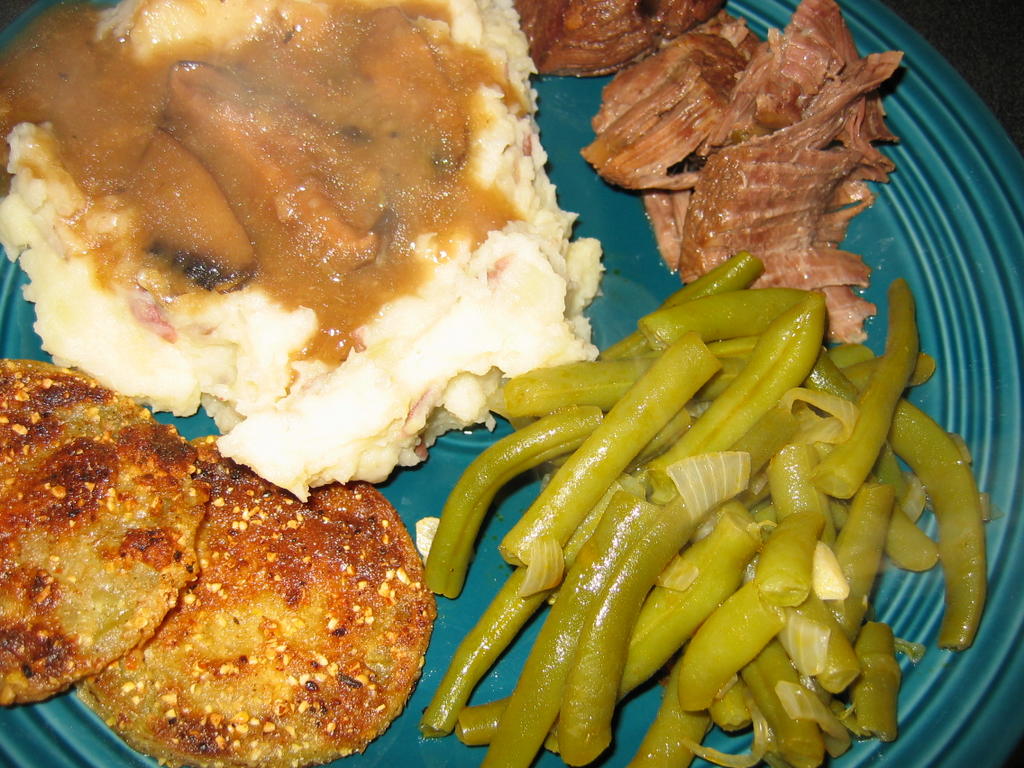 Fried Green Tomatoes
Ingredients:
1 part stone ground yellow cornmeal
1 part masa harina or corn flour
1 1/2 parts all purpose flour
salt and pepper to taste
ground dried chipotle to taste
Spanish smoked paprika to taste
bacon grease as needed (About one tablespoonful per 12″ skillet’s worth of tomatoes)
Green (unripe) tomatoes, cored and cut into very thin slices
beaten eggs as needed
Method:
Mix up dry ingredients in a shallow bowl or on a plate.
Melt bacon grease in a skillet on medium high heat.
Take your very thinly sliced (1/8″ is ideal) green tomatoes, and dip in beaten egg to coat. Shake off excess, then dredge in dry ingredients, liberally coating both sides in the stuff that will magically turn into something wonderful when you put it in the hot fat.
Immediately place the tomato slice into the hot fat, and repeat with as many tomato slices as will fit in the pan comfortably without crowding them, all in one single layer.
Fry until brown on the bottom, then flip each slice carefully so as to lose as little of the fragile coating as possible. (It takes about a minute to brown the tomatoes on the first side.) Cook until the other side is just as golden brown as the first, and flip onto a paper-towel lined plate to drain for a few seconds, then put onto a serving plate and eat up.
Notes:
Hot sauce is great on these.
Salsa is also beautiful.
A sprinkling of freshly minced herbs is nothing to sneeze at, either.
You can add any dried herb or spice to the dredging mixture, but you do not want to go too far overboard and lose the native tartness of the tomatoes.
I bet these would kick butt as the base for some sort of canape thing, but I haven’t been able to resist eating them as soon as they come out of the pan so I can experiment with them.
A Note from the Blog Administrator: Comment Spam
I suppose it is inevitable.
Once you get a certain amount of readership on a blog, comment spam will ensue.
Until a few days ago, Tigers & Strawberries had been blissfully untouched by the phenomina, but that has changed.
This morning, I awoke to twenty-seven bogus comments from a variety of “commenters,” all advertising for a culinary school blog which has a sum total of two content-free posts.
So here is a free clue to all of the identities that add up to the same person who wants people to desperately read his or her blog:
Emily, jordan, sara, trinity, jasmine, anna, natalie, amber and anonymous–if you want people to read your blog, please put some content up there worth reading. If you did so, other bloggers might promote you for free, without you having to send a spambot out to plaster links to your blog all over other people’s comments.
Comment spam, even when it includes the words, “Your blog is great, I have bookmarked it (no shit–I kinda figured that out when I got twenty-seven comment notifications in my email, dumbass), and will return to it again and again,” is still rude, annoying and irritating. The kind words ring very false when it is obvious that all you are doing in making a comment is shilling for your own blog.
Another clue: if you post a comment to another blog that has something incisive and interesting to say that is in context to the blog post in question, then people will read it and click on the link to your profile or blog and read what you have to say there. Lots of readers here have found me in that way.
And if you have employed a spambot or two to plaster your link all over my blog–I have employed the option of word-verification in order to thwart that possibility.
So, to regular readers and commentors, I apologize for the inconvenience of the extra step you have to take to post your words to my blog. As for spammers–this way, at least, you have to work for your ill-gotten gains.
That said, hopefully, I won’t have to make such a post again.
Lingering Scents
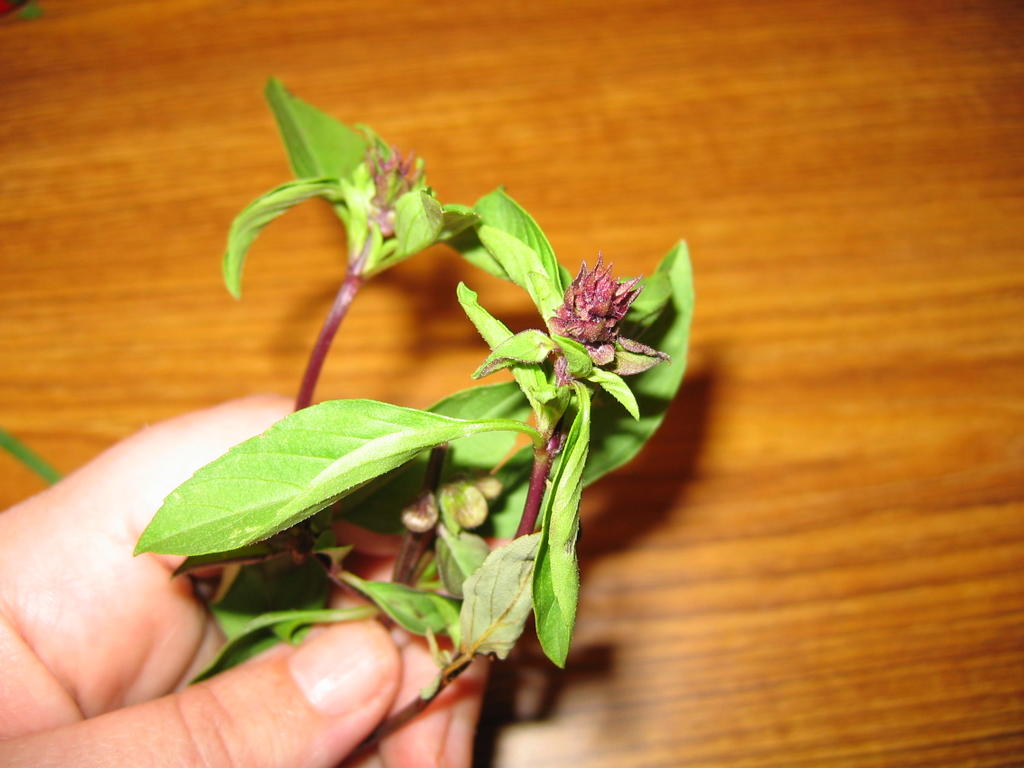 It is good to wake up to the lingering mingled scents of last night’s stir fry. Since I have two kitchens, and currently the upstairs kitchen has the more powerful stove, I do all of my stir-frying upstairs. There is inadequate ventilation, so if what I cook is strongly-scented, it hangs around at least until early morning.
Apparently, a lot of people object to cooking smells in their homes. I didn’t realize this until I worked as a personal chef and people would exhort me to use their noisy ventilation hoods to “get rid of the cooking smells.” I always thought that was odd; to me, kitchen smells are homey and inviting, but then, I grew up in kitchens, so maybe I am biased. Even when I complied with the request to turn on the vent hoods and put up with the grinding noises the fans made, some clients would burn Yankee Candles (which I kindly refer to as “Stankee Candles,” though not to my clients, of course) all over the house.
Me, I preferred the natural food smells to the vile chemical concoctions of Stankee, but they were paying me, so I held my breath and cooked.
This morning I awoke to the heavenly melange of Thai Basil, shallots and garlic with just a hint of chile and of course, fish sauce. Some might object to the fish sauce smell, but really, it was mostly overpowered by the first three scents, and besides, as I mentioned recently, the stuff grows on you.
The spicy-sweet smell of the Thai basil is particularly potent; I took two bunches of it from my CSA at the farmer’s market on Saturday, and then over the past two days, have stir fried two highly-flavored dishes with it. On Sunday, I made Spicy Basil Chicken and yesterday evening, I made Drunken Noodles, so I probably have two day’s worth of stir-fried basil smell wafting through my upstairs.
Thai basil is a lovely plant, with violet-green square stems, and deep royal purple colored blooms. The leaves are dark green, sometimes shaded with purple, and are gracefully almond-shaped. They do smell somewhat like the more familiar Italian basils, but the licorice-green scent is nearly overpowered by the strong cinnamon and lemon overtones. There is a medicinal tang to the aroma of freshly plucked Thai basil that I find to be quite compelling, and like Pavlov’s dog, I need only get a whiff of it to start drooling. (Unlike Pavlov’s dog, I can wipe my mouth on a napkin, kleenex or sleeve in order to avoid public embarrassment. Thumbs are very cool.)
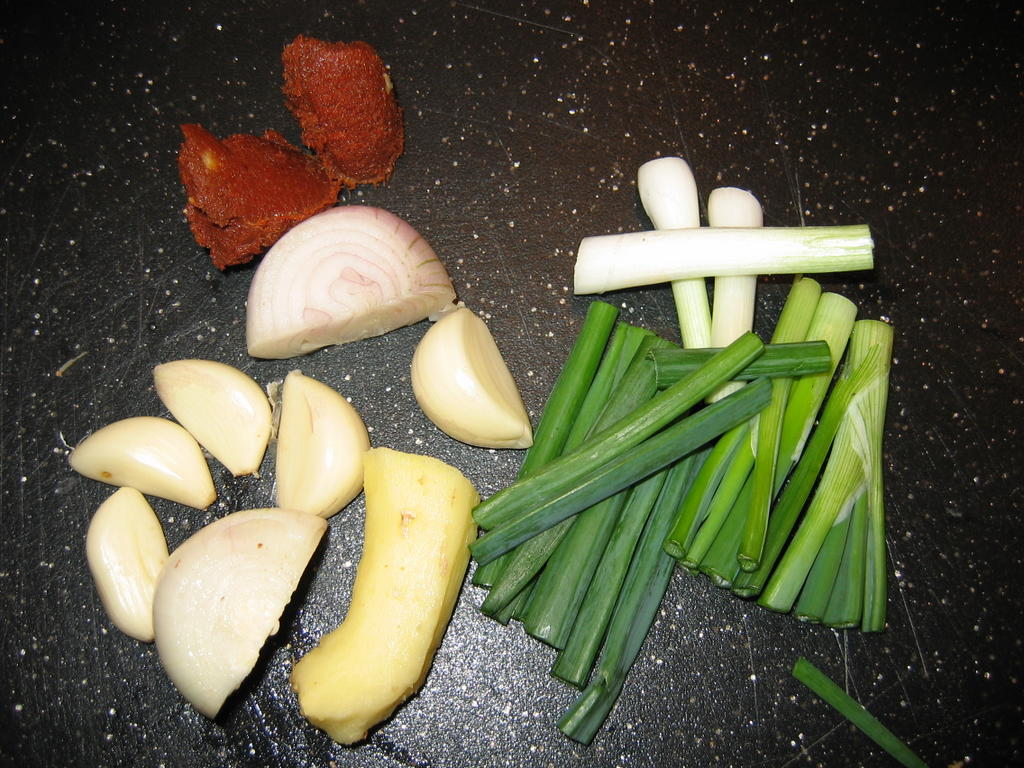 I cannot fathom quite why anyone who loves good food (and presumably anyone who would hire a personal chef would fall into this category) could not abide cooking smells in thier home. To me, the scent of food is just as important as the flavor of it; in fact, the two go hand in hand.
We only have taste buds that discern sour, salty, sweet and bitter. That is it, though there are some scientists who say that our tongues can also taste the meaty, complex flavor which that Japanese call “umami,” but the jury is still out on whether that is a singular flavor or a complex of several flavors that is picked up not only by the tongue but also the olfactory organs in our nose.
Speaking of the allmighty olfactory organs, our nose plays as much part as our tongues in the enjoyment of food, and it is through scent that we learn distinctions between different flavors. If you notice, I described the differences between Italian basil and Thai basil in terms of smells; that is because most of their flavor profile is based in their scents. That is why herbs, spices, garlic, ginger, chiles, citrus zest and onions are collectively referred to as “aromatics” in culinary parlance.
 Aromatics are used to flavor foods and to give each dish its own distinctive character.
These seasonings also are the main culprits when it comes to smells which hang about in the nooks and crannies of the kitchen. Seafoods, particularly fish, shrimp and squid, will linger on in the kitchen for a time, as will the scent of meat and vegetables of the brassica family: cabbage, kale, collards and broccoli, for example.
If you do a lot of stir-frying, as I do, the combination of very hot oil and highly scented ingredients leads to aerosolized essential oils; once the basil, ginger, garlic or chiles hits the wok, their essences leak into the cooking oil which is then dispersed into tiny droplets throughout the air. These droplets settle eventually, leaving a bit of a film that a lazy housekeeper might miss in her cleanup efforts, thus leading to the lingering cooking smells that so many have issues with. Steam also carries cooking smells, probably farther than the afformentioned nearly-microscopic oil droplets, and is likely the reason that I can wake up down the hall from the kitchen in my bedroom and be greeted by the delectable fragrance of Thai basil, shallots and garlic from last night’s stir fry.
I love that.
By late morning, the smell will disappear, and it is up to me to cook up another lingering aroma for tomorrow.
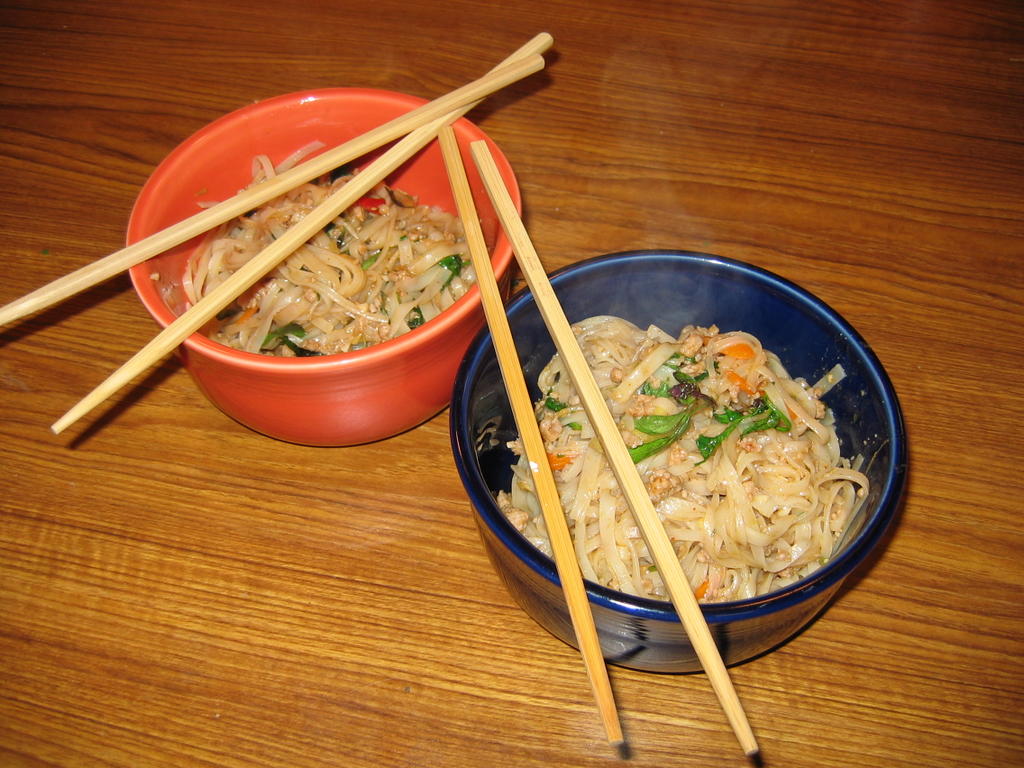 Drunken Noodles
Ingredients:
1 pound narrow rice noodles (not the thread-shaped ones, but the narrow ribbon kind)
1 whole chicken breast, boned, skinned and trimmed
¼ cup Shao Hsing wine or dry sherry
2 tbsp. cornstarch
3 whole scallions, trimmed
5 large cloves garlic, peeled
1†cube fresh ginger, peeled and sliced
2 tsp. chili garlic paste
1 small shallot, peeled
3 Thai bird chilis, sliced thinly (optional)
Peanut oil as needed for stir frying
4 tbsp. fish sauce or to taste
1 can thinly sliced bamboo shoots, drained, rinsed, and drained again
½ cup julienne sliced carrots
¼ cup julienne sliced red sweet pepper
½ cup fresh pineapple cut into small chunks
¼ cup fresh pineapple juice
¼ cup chicken broth
4 tbsp. oyster sauce or as needed
1 tsp. thick Thai soy sauce (optional)
1 cup mixed fresh herbs–cilantro, mint and Thai basil, in any proportion or combination you like
zest of one lime
freshly squeezed lime juice to taste
Method:
Soak rice noodles in warm water until they become white and pliable. Drain well in a colander, and set aside.
Using two-cleaver method, or one chef’s knife, mince the chicken breast finely. I do not recommend using a food processor or using ground chicken from the store, as the texture of the chicken should be irregular, with some pieces larger than others, to give more textural interest to the dish. When minced, toss with wine and cornstarch and set aside.
Using a mini food processor, grind up scallions, garlic, ginger and shallot.
Heat oil in wok, and add ground up aromatics along with optional bird chili slices. Stir and cook for one minute, until very fragrant. Add chicken, reserving as much of the wine as possible, and stir and fry until nearly done, about two minutes. Add fish sauce. Add vegetables and fruits and stir fry one more minute.
Add noodles, then pour in juice and chicken broth, and vigorously turn and stir the noodles to combine with the meat and vegetables, as well as to let them soften and cook in the combined liquid and oil. Keep stirring! If you stop, the noodles will try and stick to the bottom of the pan, and some of them will get soft and some will stay chewy. Cook until noodles are uniformly soft, then pull off of heat.
Add herbs and stir to wilt.
Add oyster sauce and soy sauce, stirring and turning noodles over and over to combine ingredients. Add lime zest and juice to taste and serve immediately.
Notes:
I learned to make this dish when I was in culinary school in Providence, RI. The Thai restaurant where I always used to eat, Siam Square, had a great chef and a wonderful waiter, who went very far in educating my palate to the subtleties of Thai food, and between them, I learned a great deal about cooking Thai food. Mostly by eating and asking roundabout questions; the waiter would never tell me straight on what was in a dish. He would only let me guess, and would tell me if I was right. It became a game, then, to see if I could learn how to cook my favorite dishes. I am happy to say, that eventually, I was successful, though I admit to adding the pineapple to this dish as my own touch.
According to Kasma Loha Unchit, author of my favorite Thai cookbook, It Rains Fishes, drunken noodles are so named because they are so spicy that they are used either to cure hangovers, or they are so hot that they induce diners to drink a lot of beer to quench the fire. In either case, I have to say this: they are good, and while the version I learned used minced chicken, Kasma’s version uses mixed seafood instead. She also uses fresh wide rice noodles instead of the narrow dried rice sticks.
The version I made last night that is pictured here, lacked the bamboo shoots as my cupboard was oddly bereft of them, and since I had no chicken, I used ground pork instead. I also dispensed with the soy sauce, as I had none handy, so the noodles turned out paler than usual. I used five very spicy Thai chiles grown here in Athens, along with the curry paste, and probably two and a half cups of Thai basil along with a half cup of cilantro, because they needed to be used up before going wilting into utter disreputability.
The verdict is thus: the soy sauce was not missed, the pork is loved even more than the chicken, the chiles were grand and the excessive use of herbs was fantastic. The three of us ate most of that pound of noodles, with only enough left over for Morganna to take to school for lunch tomorrow.
Seasonal Sunday Morning
 Late summer used to be one of the saddest times of year for me.
In the middle of the orgiastic harvest, when the fields are knee-deep in ripe tomatoes, when melons are heavy on the vine, and are so sweet that you can smell them from two rows away, when corn and beans and squash are ready by the bushel to be picked and preserved, I would have to go back to school.
As soon as the apples start to ripen, and my Grandpa would trade out some of his tomatoes for the first baskets of McIntoshes from a neighbor’s orchard, and it was time to make gallons of applesauce and can it for winter, I’d be stuck in a classroom.
And it wasn’t even that I disliked school.
I was one of those mutant children who loved it.
But it was horrible, having to leave Grandma and Grandpa’s house and trudge back to the city, do my back to school clothes shopping, buy up notebooks and pencils and pens, and then sit in a stuffy hot classroom and know that back on the farm all sorts of interesting things were happening. Grandma would be canning tomatoes, or pickling beets or making corn relish, and there I would be, declining Latin verbs or memorizing the periodic table of the elements.
 And the weather wouldn’t even have the good grace to cool down; no, the late August, early September classrooms were always beastly hot, and the sun was always out, and the sky was always blue, and I -knew- that miles away, there were apples fresh from the tree or melon straight off the vine, cool and full of icy sweet juice, and I was nowhere near them.
That is what I always think about when I see the first McIntosh apples of the season, and now I smile–the dying of summer is no longer so depressing to me as once it was. The turning of seasons is a glad thing, a sweet dance of time which we all must take part in.
Now, McIntosh apples remind me of the first time I convinced Zak to taste one, fresh from the tree at the local orchard. He had sworn for years that he didn’t like apples, but it turned out that he had only had ones from the grocery store in Miami, Florida before. Miami is the place to go to eat citrus or tropical fruit, but not so much apples. But he had only had Red Delicious–a fruit which is certainly red, but I think that their deliciousness is debatable.
I had just bought a basket of McIntoshes and several gallons of fresh cider from Lynd’s Fruit Farm in Pataskala, Ohio, and unable to wait until we were home, had bitten into one. The skin snapped beneath my teeth, and the floriforous juice trickled into my mouth, and its scent filled the air. Of course I moaned, being as I am not inhibited about expressing my appreciation for incredible flavors.
“Sounds like it is pretty good,” he said. “Smells pretty good, too.”
“Try a bite?” I said, handing him the apple casually. I declined to make any Eve jokes as he took the apple and bit into it while holding the steering wheel in the other hand.
I never got that apple back. Which was okay–there were plenty more where that one came from.
So late August and early September now are joyful times for me–times when the first apples come ripe and I can indulge my passion for fried apples.
 Fried apples are an Appalachian dish, and they aren’t supposed to be very healthy. The original version I grew up with was sliced apples cooked in either butter or a bit of bacon fat, to which a good bit of sugar and some cinnamon was added. The only other things permissible ingredients were a pinch or two of some other apple pie spices like nutmeg or cloves, and that was it.
You melt the butter or bacon grease in a saucepan or frying pan, and add some thinly sliced apples. Once they start bubbling and hissing a bit, you add sugar, which draws out the apple juices, and you turn the fire down. Then, as they begin to soften and “cook down,” or release their juices, you add a little bit of cinnamon, and then cook until they are glazed with butter, reduced juice and melted sugar.
They are delicious on biscuits, on the side of pork chops, with breakfast sausage, or next to fried chicken.
I like them with waffles.
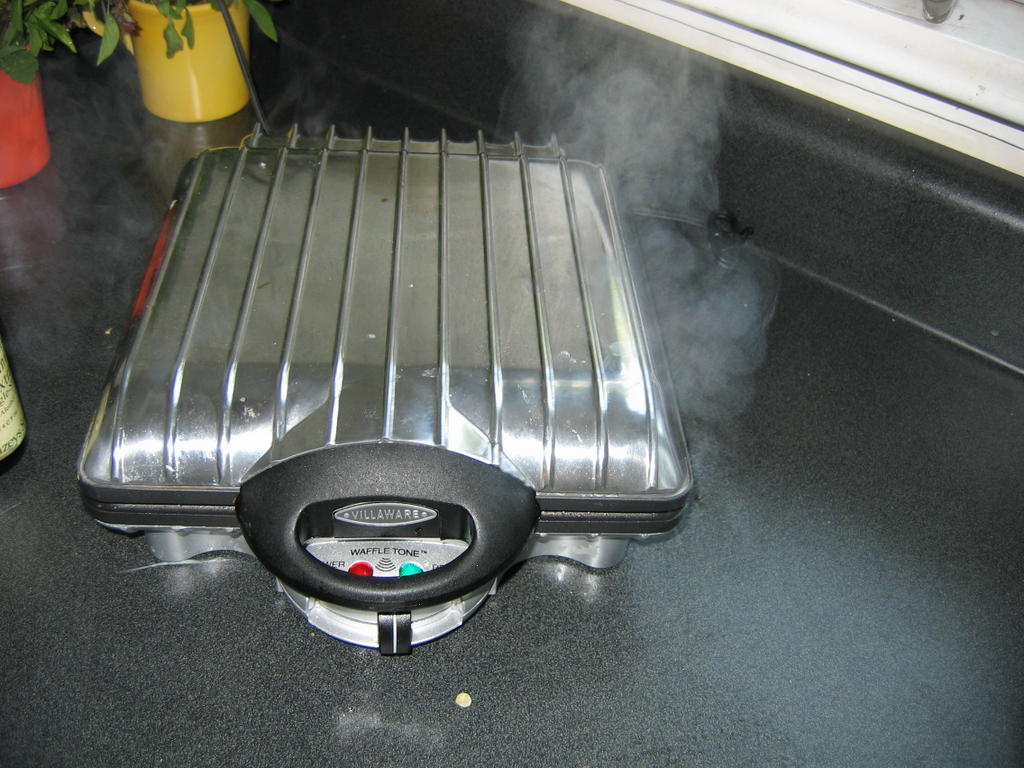
Now, I am not going to give you a waffle recipe here. I am still working at perfecting one–the ones I had this Sunday had the scrapings of a vanilla bean and some cardamom in them, and they tasted divine, but the texture was still not right. I wanted them to be crisper on the outside and lighter on the inside. I heard tell that a bit of cornstarch with the flour will help with that, so the next time I pull out that waffle iron, and I’m going to give that a try.
When I have gotten really good at this waffle thing, I will post the recipe.
But, until then, let me give you my lighter on the butter and sugar version of fried apples to which you can add dried fruit and nuts as you like.
I like these with waffles, or mixed in with steel-cut oats or with french toast or on top of pancakes. McIntosh apples fall apart when cooked, so if you make these, only use one MacIntosh and use an apple that cooks firmer for the rest of them. I used two Ginger Golds and one McIntosh, and the batch turned out perfectly. The Ginger Golds kept their shape, and were nice and tart with a tangy flavor that is quite distinctive. The McIntosh fell apart and thickened the glaze, and added its flowery essence to the mixture.
I use apple cider to make up for the lack of sugar–it adds moisture and natural apple sweetness without all of the sugar that the traditional dish required.
 Gingery Fried Apples and Cranberries
Ingredients:
1 1/2 teaspoons butter
1 MacIntosh apple, peeled, cored and sliced thinly
2 Ginger Gold apples, peeled, cored and sliced thinly
1 tablespoon crystallized ginger, minced
1 teaspoon sugar
1/2 cup fresh apple cider
1/4 cup dried cranberries
1/4 teaspoon powdered ginger
1/8 teaspoon cinnamon
Method:
Melt butter in a saucepan and add apples and ginger, and bring to a simmer, stirring gently. Sprinkle sugar over the apples, and cook stirring frequently, until a bit of juice begins to cook out of the apples.
Add cider, cranberries and spices and cook, stirring now and then, until the apples are soft and some of them have broken down into a thick sauce. Make certain to allow most of the cider to boil away, and allow the cranberries to plump and soften somewhat.
Serve immediately, while still quite hot.
Notes:
Sliced almonds are good added just as the cider is almost boiled away. Golden raisins are also a good addition.
For a sinful topping for french toast, add a tablespoon or so of cream cheese and a teaspoon of Irish Cream liquor.
A shot of rum is also delicious.

Categories:
- Admin (rss) (55)
- Blogs and Blogging (rss) (81)
- Book Reviews: Cookbooks (rss) (43)
- Book Reviews: Non-Cookbook Food Books (rss) (38)
- Cats and Cat Blogging (rss) (47)
- Chinese Cooking Lessons (rss) (32)
- Culinary School Stories (rss) (18)
- Dairy Pruducts: Cultured and Barbaric (rss) (4)
- Documentary Filmmaking (rss) (1)
- Essays, Rants and Reflections (rss) (260)
- Fighting Hunger (rss) (12)
- Food and Kids (rss) (45)
- Food in the News (rss) (126)
- Food Media (rss) (98)
- Food Preservation (rss) (18)
- Food Safety (rss) (45)
- Gardening (rss) (30)
- Herbs and Herb Blogging (rss) (20)
- Holidays (rss) (50)
- Kat Blogging (rss) (22)
- Kitchen Science (rss) (36)
- Leftover Makeover (rss) (8)
- Life, the Universe and Everything (rss) (131)
- Local and Sustainable (rss) (227)
- Local Athens Food and Foodies (rss) (42)
- Meatless Mondays (rss) (32)
- Menu For Hope (rss) (5)
- Nutrition, Diet and Health (rss) (84)
- On The Farm (rss) (8)
- Recipes: Almost Vegetarian, Vegetarian and Vegan (rss) (294)
- Recipes: American Regional (rss) (37)
- Recipes: Appalachian Hillbilly (rss) (33)
- Recipes: Bread, Pasta, Grains (rss) (95)
- Recipes: Canning and Preserving (rss) (8)
- Recipes: Chinese (rss) (123)
- Recipes: Comfort Food (rss) (120)
- Recipes: Cookies (rss) (16)
- Recipes: Desserts (rss) (48)
- Recipes: French (rss) (25)
- Recipes: Fruits and Vegetables (rss) (302)
- Recipes: Greek, North African and Middle Eastern (rss) (31)
- Recipes: Indian (rss) (137)
- Recipes: Italian (rss) (42)
- Recipes: Japanese (rss) (7)
- Recipes: Jewish (rss) (4)
- Recipes: Korean (rss) (6)
- Recipes: Meat, Poultry and Fish (rss) (220)
- Recipes: Mexican/Native American/ Latin American/Caribb (rss) (27)
- Recipes: Original (rss) (108)
- Recipes: Thai (rss) (27)
- Recipes: Tofu (rss) (17)
- Recipes: US Regional (rss) (16)
- Recipes: Vietnamese (rss) (8)
- Restaurant Stories (rss) (28)
- Sewing, Quilting, Arts and Crafts (rss) (16)
- Simple Chinese Recipes (rss) (30)
- Slow Food and Heritage Foods (rss) (10)
- Spice Blogging (rss) (44)
- The Chinese Cookbook Project (rss) (14)
- The Chinese Pantry (rss) (39)
- The Documentary (rss) (2)
- The Kitchen Saga (rss) (17)
- The Locavore's Bookshelf (rss) (15)
- The Unsung Adventures of The Culinary Nerd (rss) (6)
- Tools and Toys (rss) (35)
- Uncategorized (rss) (10)
- With a Side of Politics (rss) (48)
Archives:
- August 2012 (9)
- July 2012 (12)
- September 2011 (3)
- August 2011 (7)
- July 2011 (8)
- June 2011 (16)
- May 2011 (17)
- April 2011 (11)
- December 2010 (9)
- November 2010 (5)
- February 2010 (1)
- December 2009 (5)
- November 2009 (7)
- October 2009 (10)
- September 2009 (16)
- August 2009 (14)
- July 2009 (14)
- June 2009 (7)
- May 2009 (17)
- April 2009 (10)
- March 2009 (25)
- February 2009 (13)
- January 2009 (10)
- December 2008 (5)
- November 2008 (5)
- October 2008 (6)
- September 2008 (13)
- August 2008 (8)
- July 2008 (11)
- June 2008 (18)
- May 2008 (13)
- April 2008 (14)
- March 2008 (16)
- February 2008 (17)
- January 2008 (19)
- December 2007 (25)
- November 2007 (18)
- October 2007 (24)
- September 2007 (16)
- August 2007 (15)
- July 2007 (15)
- June 2007 (10)
- May 2007 (14)
- April 2007 (16)
- March 2007 (17)
- February 2007 (20)
- January 2007 (13)
- November 2006 (1)
- October 2006 (8)
- September 2006 (14)
- August 2006 (25)
- July 2006 (30)
- June 2006 (28)
- May 2006 (34)
- April 2006 (29)
- March 2006 (24)
- February 2006 (30)
- January 2006 (38)
- December 2005 (40)
- November 2005 (37)
- October 2005 (32)
- September 2005 (25)
- August 2005 (30)
- July 2005 (28)
- June 2005 (21)
- May 2005 (8)
- April 2005 (22)
- March 2005 (17)
- February 2005 (29)
- January 2005 (10)
Search Site:
Links:
- Lily’s Wai Sek Hong
- 101 Cookbooks
- A cat in the kitchen
- A Veggie Venture
- Accidental Hedonist
- Cha Xiu Bao
- chez pim
- Chocolate & Zucchini
- Chopstick Cinema
- Chowhound.com
- Chubby Hubby
- Cook sister!
- Cooking with Amy
- da*xiang
- Eat Local Challenge
- Eating Liberally
- Ecocentric
- Eggbeater
- Epicurious
- Farmgirl Fare
- Fatfree Vegan
- Foodgoat
- ForkandBottle.com
- Green Olive Tree
- Hooked on Heat
- Jaden’s Steamy Kitchen
- Kalyn’s Kitchen
- Lucullian delights
- Mahanandi
- Matt Bites
- MeatHenge
- mmm-yoso!!!
- New York Times – Dining & Wine
- Pizza Goon
- Rasa Malaysia
- Ruhlman
- Sailu's Kitchen
- Serious Eats
- SF Gate: Food & Dining
- Simply Recipes
- Soul Fusion Kitchen
- Tastespotting
- The Amateur Gourmet
- The Cleaner Plate Club
- The Food Section
- The Grub Report
- thecookscottage
- U.S. Food Policy
- Wandering Chopsticks
- Washington Post Food and Dining
- Wasted Food
Meta:


Powered by WordPress. Graphics by Zak Kramer.
Design update by Daniel Trout.
Entries and comments feeds.