
Cook Local, Eat Global
A Childhood Favorite Resurrected
 When I was a child, my favorite breakfast was a small pile of blueberry pancakes. Bacon was optional, but syrup was necessary, and a tall glass of ice cold milk was the beverage of choice.
In those days, blueberry pancakes were either made by my mother, or later, myself, from a mix, or they came freshly made with real blueberries from a diner or restaurant like Bob Evans.
Grandma made real pancakes from scratch, but she never put blueberries in; blueberries were one of the things that we never grew on her farm. It is a surprise to me that we did not, being as they seemed to be easy enough to grow, but I guess they just were not part of my Grandpa’s world growing up, and he didn’t much care for them, so why bother learning to grow them?
Of course, this led me to believe that the only way to have blueberry pancakes was to make them from a mix that included dried blueberries, or worse yet, artificial blueberry nugget things that to this day contributed to my mother’s belief that she despised blueberries. Because of the smell of the artificially flavored mixes, she stopped cooking blueberry pancakes for me, and it fell to me to cook them for myself.
Which I didn’t much mind, but as I grew older, I started thinking that maybe Mom was right. They really didn’t taste very good at all, and the texture of them was godawfully mealy, cottony and spongy, and when they soaked up the artificially maple-flavored corn syryp they were doused in, they generally fell apart.
So, about the time I was in high school, I stopped cooking them, and only ate them when I was at a diner, and even then, though they used real berries, I found that I didn’t really like them all that much.
This summer, now that I had in my possession another quart of blueberries filled to bursting with rich flesh and juice that balanced floral sweetness with a jolt of acidity, I decided I had to try and make real pancakes with them.
My first attempts turned out quite well, but it is when I really began to experiment with the recipe and tweak it and make it my own that I was truly pleased with the results. The recipe I used and then changed about came from Marion Cunningham’s The Breakfast Book, a fine little tome with recipes and instructions for making griddle breads, quick breads, egg dishes, waffles, creals, potatoes and meat dishes for that most maligned and distregarded of meals–breakfast. I played with it a good bit and finally came up with my own recipe for nine-ten four inch diameter pancakes. They are delicately crisp on the outside, fluffy and moist on the inside, with a plethora of meltingly-sweet blueberries cooked in the center. Knowing that lemon is a lovely foil for the flavor of blueberries I added cardamom, which has a slightly lemony flavor, and the zest of one lemon, which plays a wonderful game of tag with the cardamom on the tastebuds.
What is even more exciting: these pancakes are simple enough to make that I didn’t miss the mix, and in fact, I feel that they are so easy that they can bring spontenaity back into the morning kitchen.
Though, I have to admit, that I think that these lovelies would make a fine late night repast for night owls as well, as they are not so heavy as to disturb the stomach if one went to bed soon after ingesting them, while at the same time, they would give one plenty of energy to stay up and finish a writing project or just watch a trilogy of foodie movies one after the other. (My three favorites are “Mostly Martha,” “Eat, Drink, Man, Woman,” and “Babette’s Feast.”)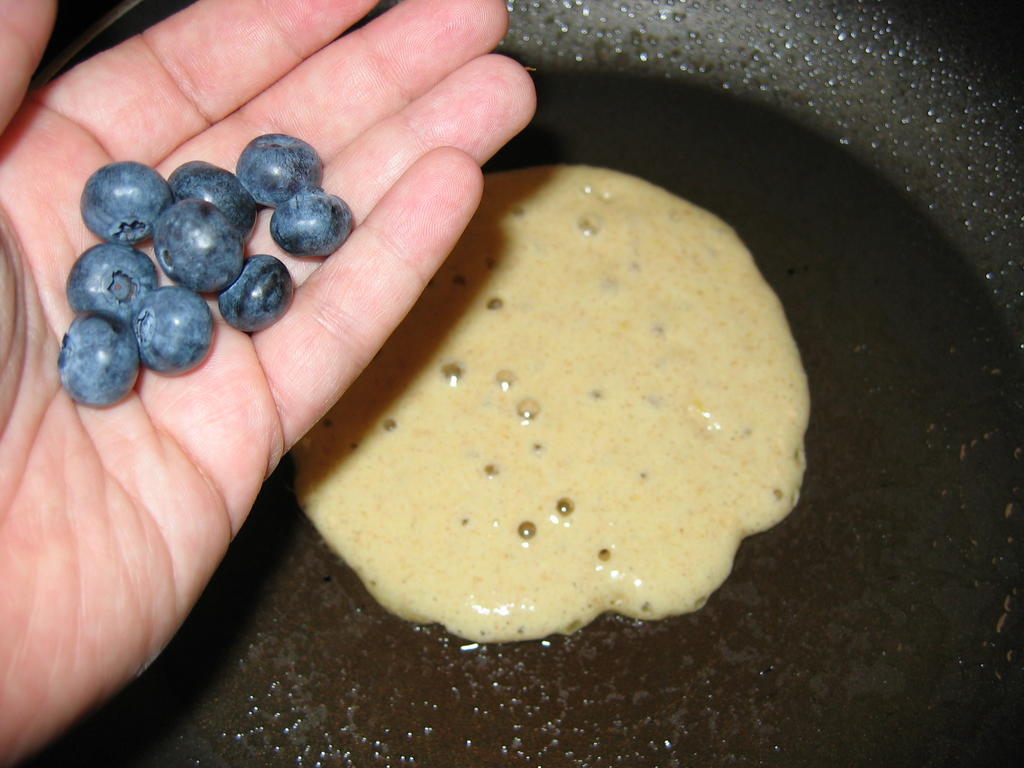 Fresh Blueberry Pancakes
Ingredients:
1 cup all purpose flour
1/4 cup whole wheat flour
1 tablespoon sugar
1/4 teaspoon cardamom
1/8 teaspoon cinnamon
1/4 teaspoon salt
4 teaspoons baking powder
finely grated zest of one lemon
2 eggs
1 cup milk
1 teaspoon vanilla extract
5 tablespoons melted butter, cooled slightly.
Canola oil spray
1 cup or so fresh blueberries, picked over, rinsed and dried completely
Method:
Preheat your oven to 170 degrees F and put your serving plates in there to warm. Also, warm up your real maple syrup, if you use it. My stove has a nice little warming area just for such activities, so I put syrup into a cute little cobalt blue Fiestaware cream pitcher and let it warm on top of the stove while I cook.
Mix together all dry ingredients, including lemon zest, in a medium sized bowl.
Mix together eggs, milk and vanilla until well combined.
Add egg mixture to the flour mixture, and using a silicone spatular or similar flexible utensil, mix until well combined.
Once batter has come together completely, whisk in butter until a smooth, fairly thick batter is achieved.
Heat up a cast iron or non-stick skillet or griddle on medium high heat. (If you use nonstick, be sure and use the spray oil stuff first to keep from burning off your teflon coating.) When the pan is heated, remove from heat, and spray with the canola oil and put back on the heat.
Using a 1/2 cup capacity ladle, pour out a measure of the batter into the center of the skillet, and allow it to cook until there are some bubbles coming up and bursting, and leaving round holes on the top of the batter. (The flat-bottomed ladle pictured is really handy for this, because you can scrape the bottom of the ladle on the batter bowl, and thus reduce the amount of glumpy mess you make by drooling batter onto the stove, the counter and everywhere. Very handy things, flat-bottomed portioning ladles.)
At this point, pick up about twelve blueberries, and scatter them one by one onto the top of the batter. Using your fingers or a spatula, pat the berries down into the batter. Wait until the bubbles pop and leave holes all over the pancake, including the center before flipping it.

After flipping it, I like to pat the pancake down a bit to get the blueberries well and truly in contact with the hot skillet. This assures that they will cook to a melting, syrupy texture full of deep violet juice. Generally, I cook the second side between thirty to forty-five seconds.

After the second side is cooked, lift it up with the spatula, check to see that it is cooked if you don’t trust your pancake sense to know when it is done, and then open up the oven door and flip the pancake onto one of the serving plates.
Using a paper towel, wipe off the skillet, repspray it and repeat the steps of making the pancakes until you have either made enough or run out of batter.
This makes about nine or ten smallish pancakes.
Notes:
Always warm your plates and hold the pancakes in a hot oven, especially if you are cooking for a crowd.
Always warm your syrup–nothing is nastier on nice warm, fluffy pancakes than cold syrup.
Oh, and please only use real maple syrup on these. That corn syryp crap is nasty.
Persian Cherry Pilaf
 Persian cuisine is an ancient one that is more familiar than one might think; if you have eaten in a typical Indian restaurant in the United States which serves Northern Indian food, you have eaten dishes which have their roots in Persia.
The Persians conquered the lands of Northern India in the sixteenth century, and brought their language, customs, clothing, architecture, music and most importantly as far as I am concerned, their food. If you have partaken of a korma in an Indian restaurant, you would not feel in the least bit odd eating a koresh, which, like an Indian korma, is a rich braised dish that sometimes includes ground nuts or dairy products in it. If you have eaten a rice pillau or a layered biryani in an Indian restaurant, then the complex layered pilafs of Persian food would taste quite familiar and comforting to you.
Most of my knowledge of Persian food is indeed “reverse engineered” from my study of the foods of Northern India, but I have had experience with Persians and Persian dishes for much of my life.
One of my friends from elementary school to high school, Nina, was Persian-American. Her mother was born in Persia, or as we think of it, Iran, and came to the United States with her husband to go to graduate school. They ended up staying, and becoming naturalized citizens. Nina and her mother were both dancers and singers, and both of them were wonderful cooks. She always had interesting lunches that she brought to school with her, kept warm in a thermos. When she opened up her thermos, I always hoped to have a taste of whatever wonderfully fragrant dish was hidden inside. Usually it was some sort of rice dish, sometimes with tiny lamb meatballs that were seasoned delicately.
Those little tastes of Nina’s mother’s cooking captured my imagination and held my attention for decades and a few years ago, I decided to set out to learn a few things about Persian cookery. When I started studying in earnest, I realized that much of what I had learned about Indian cookery was applicable to Persian foods.
One dish that has become an instant favorite in my household is called “Albalu Polow,” and it is a layered rice pillau or pilaf that is mainly flavored with sour cherries. The recipe I learned is from Najmieh K. Batmanglij’s fine book, A Taste of Persia.
When I was at the farmer’s market Wednsday, and saw the quart baskets of sour cherries lined up, I recalled Najmieh’s recollections of the sour cherry harvest in her parent’s home. “The crates were placed in the garden by the stone fountain and gently sprinkled to wash off the dust. Then they were transferred to brown wicker baskets to be made ready for jam making. But my three sisters and I saw to it that only half of them became jam. We soaked all our sense in sour cherries: we hung double stemmed ones over our ears for earrings; we pinned clusters to our clothes for broochesl we squeezed the juice onto our lips to make them red. And, of course, we ate them, masses of them, fresh, juicy and luscious. We feasted on cherries. At lunch there would be rice with sour cherries and meatballs….” (pg 108 A Taste of Persia.)
My thoughts filled with the idea of pilaf made with fresh sour cherries, I bought two quarts, and rushed home. It didn’t matter to me that I had only made the dish with dried sour cherries before–here was a chance to taste heaven on a plate.
Long ago, I had begun the process of adapting the recipe, not only to my own tastes, but to a different cooking style. I ended up reworking the recipe considerably in order to be able to utilize my rice cooker. Though this simplified the recipe, I also ended up adding a few ingredients here and there in order to make it taste just the way I would like. For example, I used less sugar in the cooking of the cherries in order to make a syrup to flavor the pilaf, and I added caramelized onions to the dish. I changed the meat for the meatballs from ground beef to ground lamb, and I added more seasoning to them over the years. The only seasoning the original recipe called for was cinnamon, onion and salt; I eventually added freshly ground pepper, a bit of garlic, some cilantro (which I learned may have originated in Persia), and coriander.
At any rate, here is my version of Persian Cherry Pilaf, which Zak (who swears this is one of his favorite foods ever) declares is even better with fresh cherries. The flavor is sweet, tart and rich with the aroma of spiced lamb. The cherry juice stains the rice a roseate hue, and the fruits themselves soften to a velvety texture from being cooked twice. The almonds add crunch and a pale color, while the cilantro adds an herbal fragrance and sparkles of green to the dish.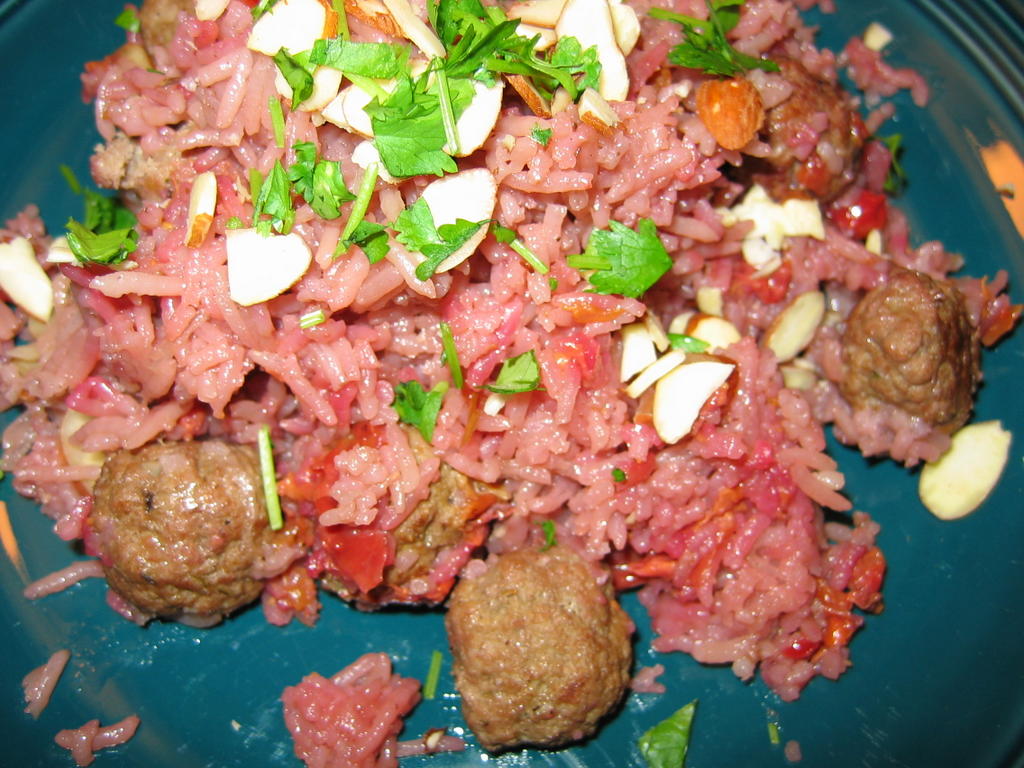
Persian Cherry Pilaf (Albalu Polow)
Ingredients:
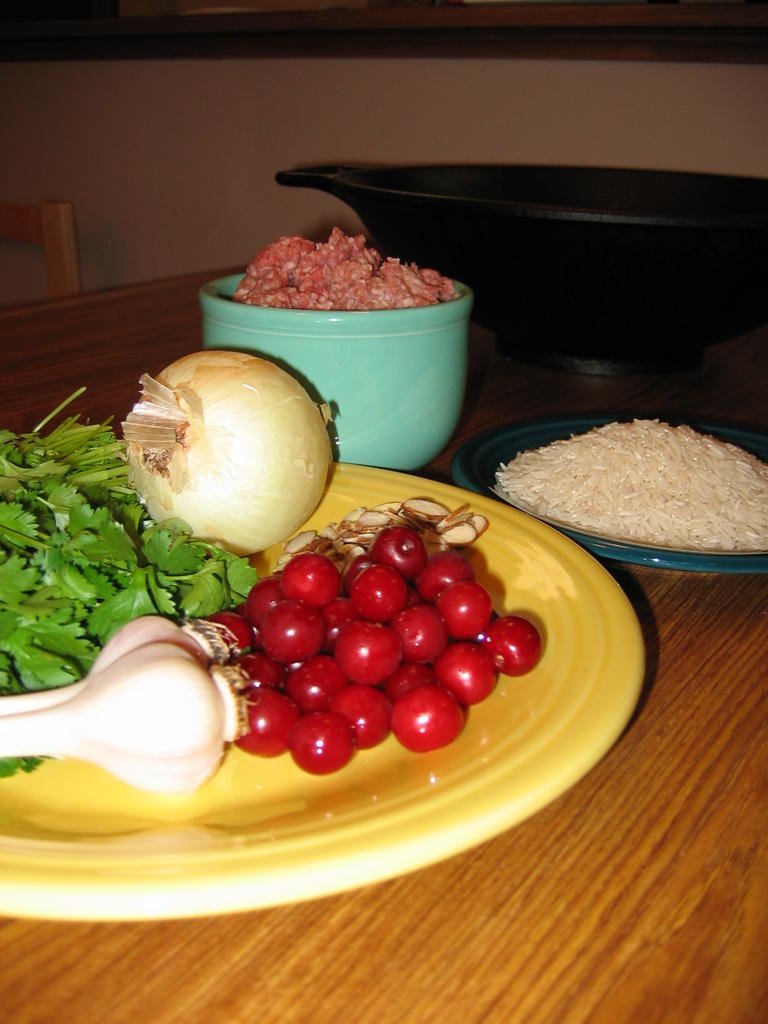
1 pound ground lamb
1 large onion–3/4 sliced and reserved, and 1/4 minced
1 small clove garlic, minced
1 handful fresh cilantro stems and leaves
1/2 teaspoon coriander seed
1/4 teaspoon whole peppercorns
1 teaspoon salt
1/2 teaspoon cinnamon
4 cups pitted tart cherries (pit over the cooking pot in order to save as much juice as possible)
1/4 cup sugar
2 cups water
1/8 cup olive oil
3 cups basmati rice, rinsed and drained
3 cups chicken broth
1/2 teaspoon salt
1/4 cup sliced almonds
1 handful cilantro leaves, minced
Method:
Grind up minced onion, garlic, cilantro and spices into a fine paste. Mix together with ground lamb until smooth. Form into meatballs about the size of hazelnuts.
In a medium saucepan, heat cherries, water and sugar to a boil. Turn down heat and simmer for about twenty minutes. Carefully drain cherries, reserving juice in a measuring cup–there should be more than two cups–probably close to three cups of juice.
In a heavy-bottomed frying pan, heat olive oil on medium heat. Add meatballs, and carefully brown on all sides. They are delicate, so instead of stirring them, I like to just shake the pan to turn them. When they are about halfway done and the lamb fat has begun to render out of them, add onions, and cook until the meatballs are completely brown and the onions are dark golden, shaking the pan or stirring gently as needed to keep them from burning.
With a slotted spoon or wire skimmer, pull meat and onions out of the pan and put in the bowl of a rice cooker.
Put frying pan back on the fire and allow olive oil and lamb fat to heat up. Add drained rice to it, and stir, cooking until every grain of rice is coated with oil. Scrape it into the bowl of the rice cooker and gently mix together with the meatballs and onions. Add drained cherries and mix again.
Measure out your cherry juice and add enough chicken broth to equal 4 1/2 cups total of liquid. Dissolve salt into the liquid. Pour into rice cooker bowl and set bowl into cooker, close lid and hit the “Cook” button.
Allow rice to cook. When the timer shows ten minutes left, add almonds, sprinkling them on top.
When the timer goes off, open the cooker, and when the steam stops pouring out, stir the rice gently to fluff it. There will be a crust of dark red rice on the bottom that is rich and caramelized. That is the best part.
I serve it sprinkled with a few more almonds and garnished with the minced cilantro.
This is really good with a salad of mixed greens garnished with fresh goat cheese and dressed with a simple vinaigrette made with olive oil, a bit of salt and pomegranate molasses, which is the concentrated juice of pomegranates. It makes an awesome, if somewhat rich, salad dressing.
Utensibility
 So, I was wondering what to talk about today, and was thinking about it, and then I was wandering the blogosphere, and hiked over to check out Becks & Posh, and saw that they are having a meme thingie that has to do with our favorite appliances/utensils and whatnots in the kitchen.
And the idea is to talk about our one money-is-no-object, best-beloved thingiedingie that we would not give up if our lives depended on it.
And this stumped me.
So, I consulted with a panel of experts, and this is what we came up with.
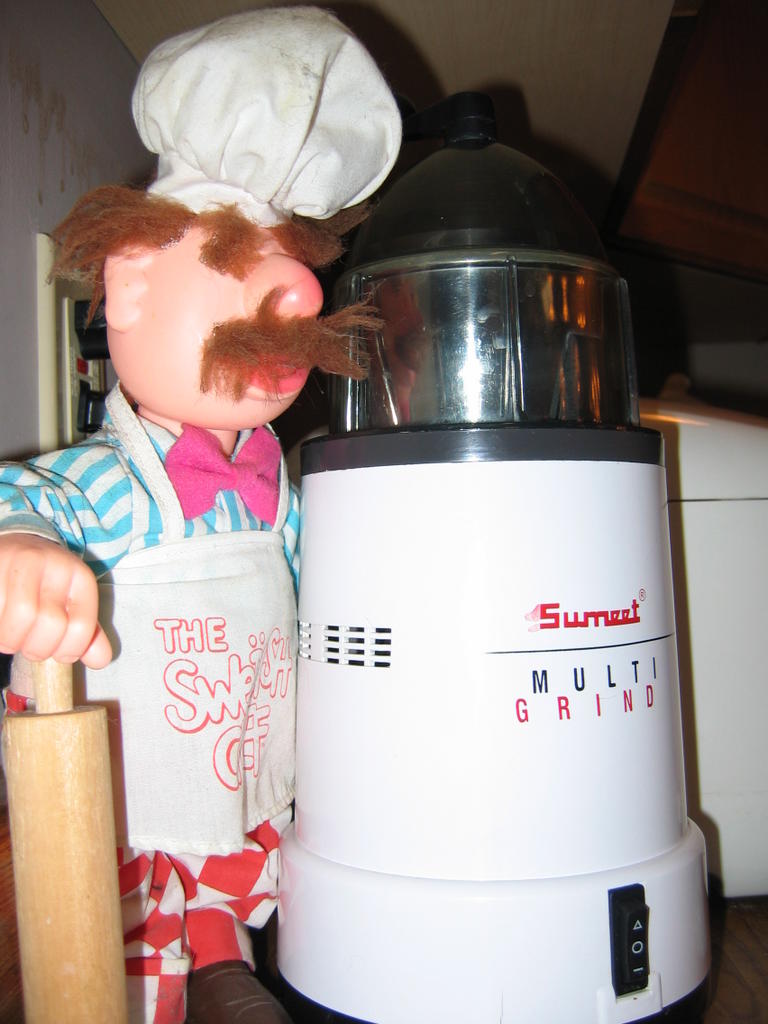
The Swedish Chef agrees with me that the bestest thingiedingie in my entire kitchen is the Sumeet Multi-Grind.
(You always wondered what happened to Swedish Chef when they cancelled “The Muppet Show” didn’t you? Well, I’ll tell you; he was in a few movies, and he catered a few swinging Hollywood parties, but then he fell on hard times. There was a deal offered to him to head up a Food Network show, but the language barrier was too high, and they replaced him with Emeril. Despondant, he headed up to New England where he worked for a while with Martha Stewart, but she fired him because she said he didn’t have a green card. He tried to tell her that Muppets didn’t need green cards, but she insisted that he had to go. I think that his insistence on singing his little song just worked her very last nerve and she was looking for an excuse to get rid of him. Thinking to end his days as an instructor at Johnson & Wales, he worked there until he was accidentally thrown into a dumpster by a student who thought he was just a puppet of some kind. I found him there, dragged him out and gave him a good home in my kitchen. He’s worked for me ever since. He keeps my pots from boiling over.)
What was I talking about? Oh, right. The Sumeet!
I know I have talked about the magnificence of the Sumeet before. But I don’t care. I love the thing. And I am the only person I know who has one. But everyone should have one. Well, actually, not everyone needs one, but if you cook a lot of Indian, Thai or Mexican foods, as I do, it is the single bestest electric appliance that ever was invented. It is better than a blender. It is cooler than a Cuisinart. It is cannier than a KitchenAid.
Because it can grind up wet or dry spice pastes so fast your head will spin, and the hand that you usually use to grind stuff up with a mortar and pestle with thank you.
It can grind soaked lentils. It can grind dried corn into cornmeal.
More importantly, it can take a bunch of disparate ingredients, such as are illustrated here, including whole spices, nuts, fresh herbs, garlic, chiles and ginger and turn them into a silky-smooth spice paste–without the addition of any water–in less than two minutes.
It has a 400 watt, 1/2 hp motor, and I have had the thing for oh, six years now and it has shown no inclination to stop working. And I have worked the poor dear to death; I have used it to cook for catering jobs, personal chef clients, and culinary classes, and it still keeps going and going and going.
On top of everything else, it is simple to clean up. The two pieces that come into contact with the food come apart, then can be rinsed off and tossed in the dishwasher.
How cool is that? But wait! That is not all–it isn’t so terribly expensive as all of that!
It is only, get this–$80.00.
Zak paid more than that back when he bought it for me years ago, but the price has come down!
So, you can order one here, which is something I highly suggest that you do if you ever make Thai curry pastes (wow–green curry that doesn’t take an hour of pounding with a mortar and pestle), Mexican moles or any kind of Indian food. It is also good for Indonesian, Burmese and some Chinese foods.
Heck, the first thing I used it for was to make a paste out of fresh sage, thyme, rosemary, garlic, shallots, chipotles and butter to stuff under our Yuletide turkey the day after the thing arrived all the way from India.
It is a wonder of modern technology, I swear.
And, if you act now, you can hear about my favorite not so bloody expensive nifty gifty in the kitchen! No, not the little rolling pin that the Swedish Chef is holding, that is his. No, the Microplane grater that South Park’s most swingingest Chef is cradling in his hot little hand.
 Yes, Chef knows a good thing when he sees it, and he likes the way that the Microplate grates up any kind of citrus zest. It takes only the colored part of the peel where the yummy citrus oils live, and leaves the white, bitter pith every time. Those other kinds of zesters always get some pith and that isn’t any fun.
And, as if that wasn’t enough you can grate other stuff with it, too! You can grate hard cheeses, or even more fun, chocolate with it! Oooh. All this for only $12.95.
And it is easy to clean, too. Rinse under water and pop it in the dishwasher. Woohoo! That really makes Chef excited–he likes to avoid dishpan hands if he can.
So there you are.
A Blueberry Update
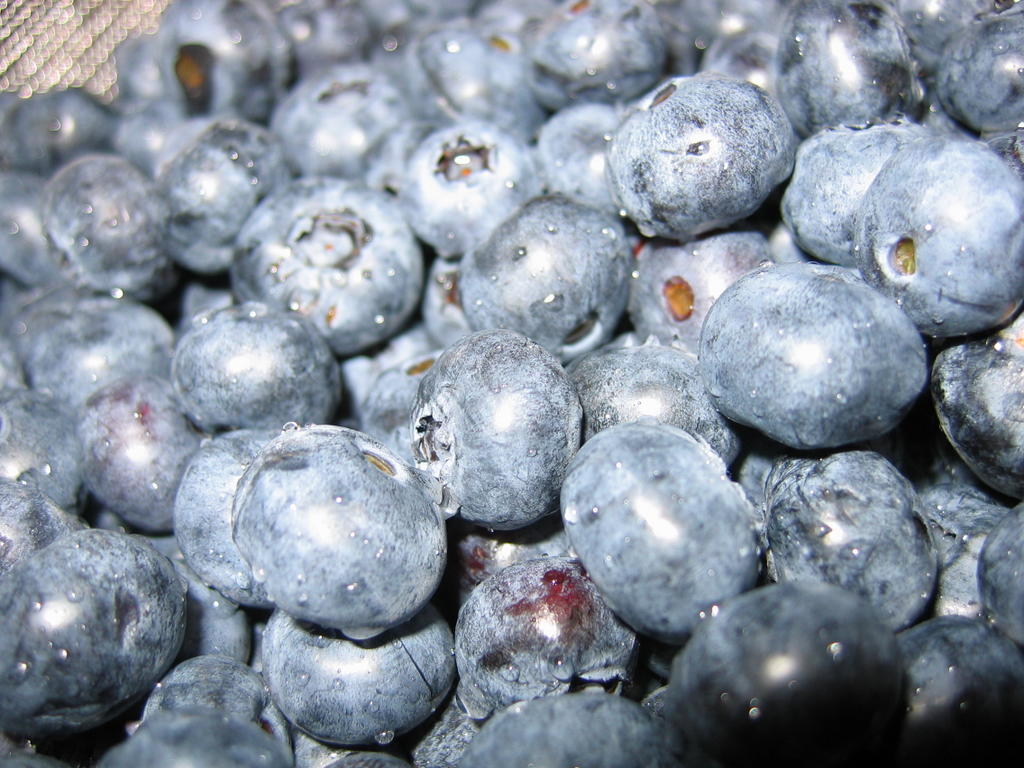 Well, as noted previously, in the post entitled, Am I Blue? my father’s stated opinion on blueberries is that they are his least favorite berry of all time. My mother simply said, “I hate them.”
Which is all fine and dandy, except for the fact that I had baked a big batch of Blueberry Crumb Scones instead of birthday cake for my Dad.
I heard from them today on the issue.
I was told, “Those scones were damned good.”
Apparently so. Dad has had three of them and Mom has had two. That leaves three for them to fight over.
Apparently, neither of them had ever had such flavorful, tart blueberries, and to be honest, they’d not had exemplary scones, either. In fact, I am not certain that my mother had ever had any kind of scone, and Dad only had one once, a long time ago and he said it was “kind of dry.”
So.
The upshot of it all is that I do not have to bake a birthday cake.
Though, I did say that they should have lied to me and said they’d hated them so I would be honor-bound to bake a cake anyway.
I guess I should be grateful to have honest parents.
And now, I am off to throw some rice in the rice cooker, braise some ma po tofu and stir fry some bok choi so we can have dinner.
A Beef with the USDA
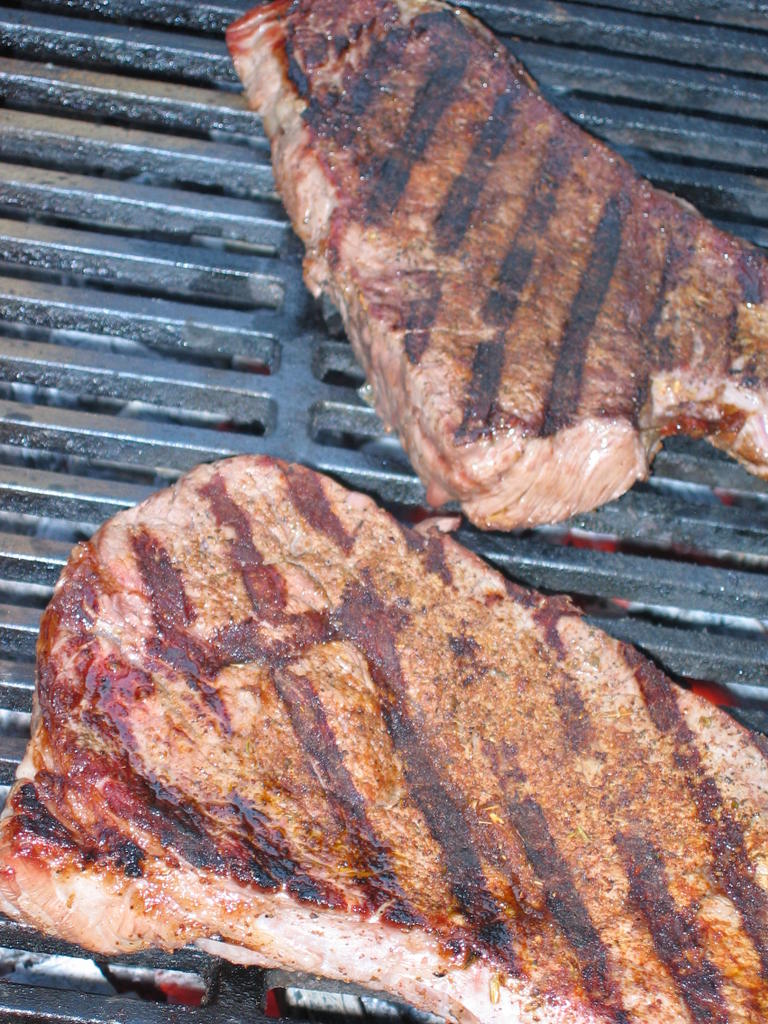 Some folks might think that it is weird choice for me to illustrate a post about the recent revelation of a second case of BSE (Bovine Spongiform Encephalopathy) in the United States with photographs of the steak we had for dinner here last night. I mean, shouldn’t I be eschewing beef, and running out to become a vegan the way that author and former cattle rancher, Howard Lyman (most famous to for his controversial appearance on the Oprah Winfrey show back in 1996 that reaped a lawsuit against Oprah by the National Cattleman’s Association) has done?
Well, no, not necessarily. That is to say–if folks feel better eating a vegan diet, then they are welcome to do that, but I am more into a moderate, varied diet that includes a great deal of vegetables and grains, but does not exclude animal products, including beef.
See, here is the deal. I agree with Kate at Accidental Hedonist, when she says that panic about the US beef supply is not yet warranted, but anger at the USDA’s handling of BSE is. She points out quite correctly that the USDA has implimented exactly none of the World Health Organization’s guidelines to help curb the spread of BSE. Testing standards for BSE are laughable and the materials that are allowed to go into the making of supplemental cattle feed (which at least no longer are allowed to include bovine brain or nerve tissue) are dubious at best and horrifying at worst. The number of cattle undergoing testing for BSE is still miniscule in comparison to the number of cows which are slaughtered for food. Essentially, what the USDA and the FDA are doing is kowtowing to the demands of the demands of the powerful agriculture and trade lobbies which do not really want to change their factory farming methods which result in higher profit margins in order to serve the needs of Americans for a safe food supply.
There are some who claim that the USDA’s foot dragging on the BSE issue is a massive conspiracy to cover-up the “fact” that BSE is a problem in US. While that contention cannot currently be proven, I do find it likely that political expediency and profit motive are getting in the way of the USDA putting together a coherent, workable method of safeguarding the US meat supply from BSE. Parke Wilde over at the excellent blog US Food Policy, posted an AP story outlining the political machinations at the root of Friday’s announcement that a second cow in the US has been confirmed with BSE.
Kate suggests that those of us who are concerned should call and write our elected representatives and nag them about the issue, and I completely agree. In addition to bugging your Congresspersons, you can also try irritating Secretary of Agriculture Mike Johanns by phone or by email. Just keep your queries polite, succinct and to the point, and don’t just contact these folks once. Call or write them back, and let them know you are still thinking about the issue. Make a big deal out of the fact that you vote, if you do. And when you do write or call them, it wouldn’t hurt if you could show some knowledge about BSE, its effects, and how it is transmitted.
Which brings me to my next point: do you know how hard it is to find unbiased information on BSE?
It is nearly impossible.
Go type “BSE information” into Google, and then look at the top ten sites listed. The first site listed, BSEInfo.org, is copyrighted by Cattlemen’s Beef Board & National Cattlemen’s Beef Association. And surprisingly, even though a second cow has been confirmed to have BSE in the US, the very first topic, “About U.S. Beef Safety,” states “Because of progressive steps taken by the U.S. government over the past 15 years, all U.S. beef is safe from BSE.”
I think that they need to update their website.
The second website listed is copyrighted by The University of Illinois at Urbana-Chapaign and is actually a decent source of unbiased information on BSE. The next two websites are divisions of the USDA and the FDA, and are gateways into rabbit-warrens of doublespeak and poor website design. Besides, after reading about the political shenanigans involved in the testing of the second BSE cow in the US, I can’t imagine anyone could consider any governmental agency involved in overseeing the cattle industry as being anything resembling unbiased.
Then, there are a couple of sites based in the UK, and they give pretty good information. Then, there is the CDC site, which once again, being a governmental agency, is probably not unbiased.
The last two sites of the top ten Google sites for BSE information are the websites of the Iowa Beef Center and the American Association of Meat Processors.
Seven out of ten of the top sites found on Google when one seeks information on BSE represent either the U.S. government or beef producers, neither of which are likely to be what I would call reliable sources for unbiased factual information on BSE in the United States.
So, where does one go for information?
I am rather fond of this site, Priondata.org. It does get a bit technical, but that is fine with me. It does have areas set up specifically to serve as clearinghouses of information for non-scientifically minded sorts such as journalists, so really, lay-persons should be able to understand what they are talking about. It includes information on the latest research, (which includes tests on a virus which appears to kill prions in mice) as well as news stories on BSE and other prion diseases.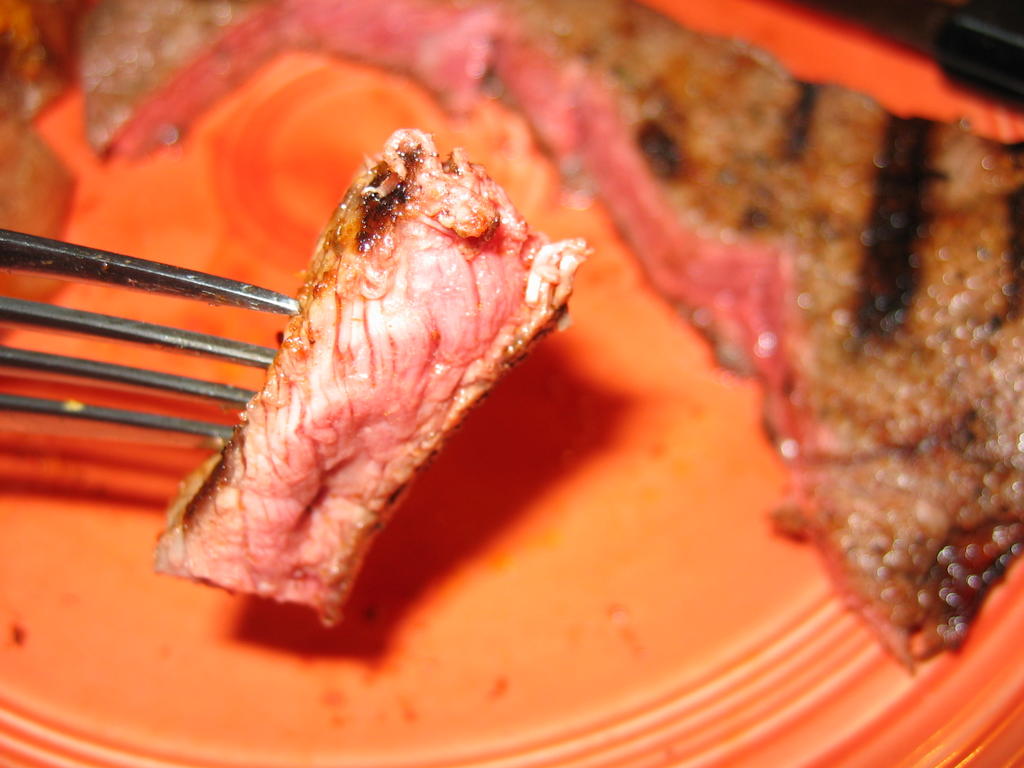 But other than arming oneself with knowledge, and communicating our displeasure with how our government has handled the issue thus far, what else can we do? Should we stop eating beef? Should we run away screaming from hamburgers? Should we become vegans and say to hell with it all and throw in the towel?
Well, all of those are very personal decisions that we each have to make, but I have no intention of ceasing my consumption of beef altogether. For one thing, the likelihood of a prion disease being transmitted to me, even if our meat supply was rife with BSE is very small.
For another thing, I gave up buying grocery store beef several years ago. My reasons for doing so had little to do with BSE, and much to do with my own personal ethics and political beliefs.
I took to buying all of my beef, pork, lamb, goat and veal from local farmers. Now, I buy all of my chicken locally as well.
And to be honest, what really caused me to make this choice in changing how I ate was not ethics, or health or politics. It was flavor.
The meat that I am getting from local organic farmers who pasture raise their animals and feed them on grass tastes better than anything I have ever bought in a grocery store. It tastes like the meat I grew up eating on my grandparents’ farm.
The fact that it costs slightly more is immaterial to me; I just eat less meat. But the meat that I am eating is of such a high quality, I don’t miss it. In fact, I relish it all the more because it is more precious to me, and tastes better.
And I feel pretty confident about the meat that I am buying. I know the farmers, I know thier farming practices, and I know the slaughterhouses and how they work. These folks would never have sent a downer cow (a cow that is too sick to walk) to the slaughterhouse to be chopped up and put into the human food chain. They are just as disgusted as I am with the practices of factory farming that include feeding herbivores feed rendered from dead animals.
There are smaller farmers out there, producing good wholesome beef, even near the larger cities. And I suspect that as demand rises for these products more farmers will take up the slack.
If you are interested in finding alternative sources for beef, there are a few ways to go about it. Check this website, LocalHarvest, for listings of farmers, farmer’s markets and CSA’s near you. It is a meant to serve as a national database to connect consumers with local food producers, and has grown greatly in scope over the past several years. Other websites meant to connect consumers with farmers are cropping up, such as Food and Farm Connections. These sites can give you places in your area to start looking for small local producers of grass fed beef and other safely and ethically-raised animals.
Or go to your local farmer’s market. If you don’t see anyone there selling beef, ask around. If you cannot find anyone doing direct marketing of beef to consumers this year, if enough people ask, someone will step up to the plate and start offering meat next year.
Sure, looking for local beef producers means going out of your way, and yeah, it is more expensive. But, it is a positive step that you can take if you are spooked by the recent stories on BSE in the United States.
Besides–if you do get a bite of a steak like the one we had last night–I think that your taste buds will make up your mind for you. After tasting really good quality meat, it is hard to go back to the stuff they sell at the local Safeway, which may or may not be so safe.

Categories:
- Admin (rss) (55)
- Blogs and Blogging (rss) (81)
- Book Reviews: Cookbooks (rss) (43)
- Book Reviews: Non-Cookbook Food Books (rss) (38)
- Cats and Cat Blogging (rss) (47)
- Chinese Cooking Lessons (rss) (32)
- Culinary School Stories (rss) (18)
- Dairy Pruducts: Cultured and Barbaric (rss) (4)
- Documentary Filmmaking (rss) (1)
- Essays, Rants and Reflections (rss) (260)
- Fighting Hunger (rss) (12)
- Food and Kids (rss) (45)
- Food in the News (rss) (126)
- Food Media (rss) (98)
- Food Preservation (rss) (18)
- Food Safety (rss) (45)
- Gardening (rss) (30)
- Herbs and Herb Blogging (rss) (20)
- Holidays (rss) (50)
- Kat Blogging (rss) (22)
- Kitchen Science (rss) (36)
- Leftover Makeover (rss) (8)
- Life, the Universe and Everything (rss) (131)
- Local and Sustainable (rss) (227)
- Local Athens Food and Foodies (rss) (42)
- Meatless Mondays (rss) (32)
- Menu For Hope (rss) (5)
- Nutrition, Diet and Health (rss) (84)
- On The Farm (rss) (8)
- Recipes: Almost Vegetarian, Vegetarian and Vegan (rss) (294)
- Recipes: American Regional (rss) (37)
- Recipes: Appalachian Hillbilly (rss) (33)
- Recipes: Bread, Pasta, Grains (rss) (95)
- Recipes: Canning and Preserving (rss) (8)
- Recipes: Chinese (rss) (123)
- Recipes: Comfort Food (rss) (120)
- Recipes: Cookies (rss) (16)
- Recipes: Desserts (rss) (48)
- Recipes: French (rss) (25)
- Recipes: Fruits and Vegetables (rss) (302)
- Recipes: Greek, North African and Middle Eastern (rss) (31)
- Recipes: Indian (rss) (137)
- Recipes: Italian (rss) (42)
- Recipes: Japanese (rss) (7)
- Recipes: Jewish (rss) (4)
- Recipes: Korean (rss) (6)
- Recipes: Meat, Poultry and Fish (rss) (220)
- Recipes: Mexican/Native American/ Latin American/Caribb (rss) (27)
- Recipes: Original (rss) (108)
- Recipes: Thai (rss) (27)
- Recipes: Tofu (rss) (17)
- Recipes: US Regional (rss) (16)
- Recipes: Vietnamese (rss) (8)
- Restaurant Stories (rss) (28)
- Sewing, Quilting, Arts and Crafts (rss) (16)
- Simple Chinese Recipes (rss) (30)
- Slow Food and Heritage Foods (rss) (10)
- Spice Blogging (rss) (44)
- The Chinese Cookbook Project (rss) (14)
- The Chinese Pantry (rss) (39)
- The Documentary (rss) (2)
- The Kitchen Saga (rss) (17)
- The Locavore's Bookshelf (rss) (15)
- The Unsung Adventures of The Culinary Nerd (rss) (6)
- Tools and Toys (rss) (35)
- Uncategorized (rss) (10)
- With a Side of Politics (rss) (48)
Archives:
- August 2012 (9)
- July 2012 (12)
- September 2011 (3)
- August 2011 (7)
- July 2011 (8)
- June 2011 (16)
- May 2011 (17)
- April 2011 (11)
- December 2010 (9)
- November 2010 (5)
- February 2010 (1)
- December 2009 (5)
- November 2009 (7)
- October 2009 (10)
- September 2009 (16)
- August 2009 (14)
- July 2009 (14)
- June 2009 (7)
- May 2009 (17)
- April 2009 (10)
- March 2009 (25)
- February 2009 (13)
- January 2009 (10)
- December 2008 (5)
- November 2008 (5)
- October 2008 (6)
- September 2008 (13)
- August 2008 (8)
- July 2008 (11)
- June 2008 (18)
- May 2008 (13)
- April 2008 (14)
- March 2008 (16)
- February 2008 (17)
- January 2008 (19)
- December 2007 (25)
- November 2007 (18)
- October 2007 (24)
- September 2007 (16)
- August 2007 (15)
- July 2007 (15)
- June 2007 (10)
- May 2007 (14)
- April 2007 (16)
- March 2007 (17)
- February 2007 (20)
- January 2007 (13)
- November 2006 (1)
- October 2006 (8)
- September 2006 (14)
- August 2006 (25)
- July 2006 (30)
- June 2006 (28)
- May 2006 (34)
- April 2006 (29)
- March 2006 (24)
- February 2006 (30)
- January 2006 (38)
- December 2005 (40)
- November 2005 (37)
- October 2005 (32)
- September 2005 (25)
- August 2005 (30)
- July 2005 (28)
- June 2005 (21)
- May 2005 (8)
- April 2005 (22)
- March 2005 (17)
- February 2005 (29)
- January 2005 (10)
Search Site:
Links:
- Lily’s Wai Sek Hong
- 101 Cookbooks
- A cat in the kitchen
- A Veggie Venture
- Accidental Hedonist
- Cha Xiu Bao
- chez pim
- Chocolate & Zucchini
- Chopstick Cinema
- Chowhound.com
- Chubby Hubby
- Cook sister!
- Cooking with Amy
- da*xiang
- Eat Local Challenge
- Eating Liberally
- Ecocentric
- Eggbeater
- Epicurious
- Farmgirl Fare
- Fatfree Vegan
- Foodgoat
- ForkandBottle.com
- Green Olive Tree
- Hooked on Heat
- Jaden’s Steamy Kitchen
- Kalyn’s Kitchen
- Lucullian delights
- Mahanandi
- Matt Bites
- MeatHenge
- mmm-yoso!!!
- New York Times – Dining & Wine
- Pizza Goon
- Rasa Malaysia
- Ruhlman
- Sailu's Kitchen
- Serious Eats
- SF Gate: Food & Dining
- Simply Recipes
- Soul Fusion Kitchen
- Tastespotting
- The Amateur Gourmet
- The Cleaner Plate Club
- The Food Section
- The Grub Report
- thecookscottage
- U.S. Food Policy
- Wandering Chopsticks
- Washington Post Food and Dining
- Wasted Food
Meta:


Powered by WordPress. Graphics by Zak Kramer.
Design update by Daniel Trout.
Entries and comments feeds.