
Cook Local, Eat Global
The Spice is Right IV Theme: It’s Too Darned Hot!
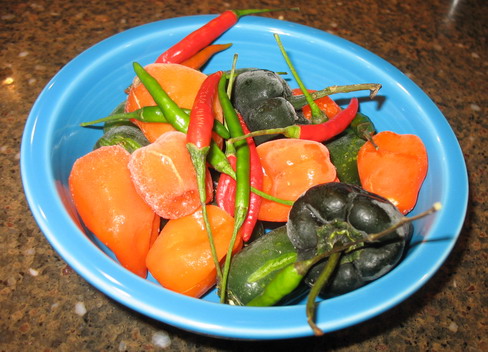
Yes, July is that time of year, and what is coming up are those days when it is just too darned hot! Too darned hot to move, too darned hot to breathe, too darned hot to walk, talk, garden or cook. It is just plain old sticky. (At least it is around here.)
So, in honor of that, I decided that for the theme of the next edition of The Spice is Right, to concentrate on something that is even hotter than July–chiles!
A lot of people think I am nutty for wanting to eat spicy food when it is hot, but I say that all those folks who live in tropical climates like Thailand, India, Vietnam, parts of Africa, the Carribean and parts of South American are all on to something. They know that chiles make you sweat and when it is hot, sweat is what cools you down.
So, here it is–your chance to show us what you like to do with chile peppers in the kitchen. You can use chiles in whatever form you like for this event: fresh, frozen, roasted, dried whole and reconstituted, dried and powdered, dried and flaked, or ground or whatever. You can use them alone or in a blend with other flavors. You can use chile sauces, pickled chiles, or chile jam–whatever floats your boat, and makes your culinary imagination soar.
As always, include in your entry your name, the name of your blog, a link to the entry and the name of the country you are from if you want me to mention it. Entries must be posted on your blog between today and midnight EST July 15th. Remember to include a link back to this post in your blog in case some of your readers see it and want to come play, too.
And, as usual–if you have any questions, email me or post a comment and I will be happy to help you.
Have fun!
The Spice is Right III: The Perfumed Garden Roundup
I think that I set a more difficult challenge for this month’s The Spice is Right event than I had before, because there were fewer entries. That’s okay; next month’s theme will be simpler; I will announce it later today.
Until then, let’s take a look at the beautiful dishes sent in from participants around the globe that combine spices with edible flowers to make a bevy of floral treats worthy of the garden party of an empress!
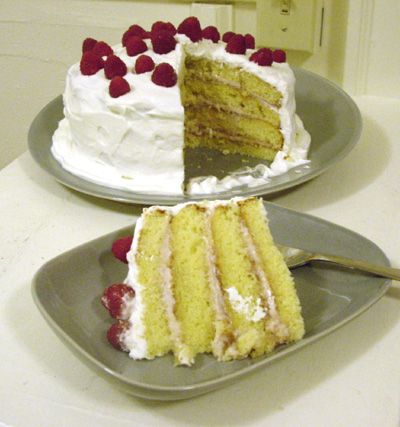
Benjamin of The Cognitive Pantry was the early bird with this luscious entry: “Lemon Layer Cake with Rasberry Curd Filling and Rosewater Whipped Cream.” You don’t even need to look at the lovely photograph to know that this dessert is the perfect way to celebrate. Celebrate what? Mother’s Day, a birthday, graduation, a bridal shower, an anniversary, the coming of raspberries into season–anything. In fact, I would make up holidays just as an excuse to serve this special cake! Isn’t it just beautiful? Thanks to you, Benjamin, I am going to have to dust off my layer cake pans and bake up something pretty next month when the raspberries become ripe.
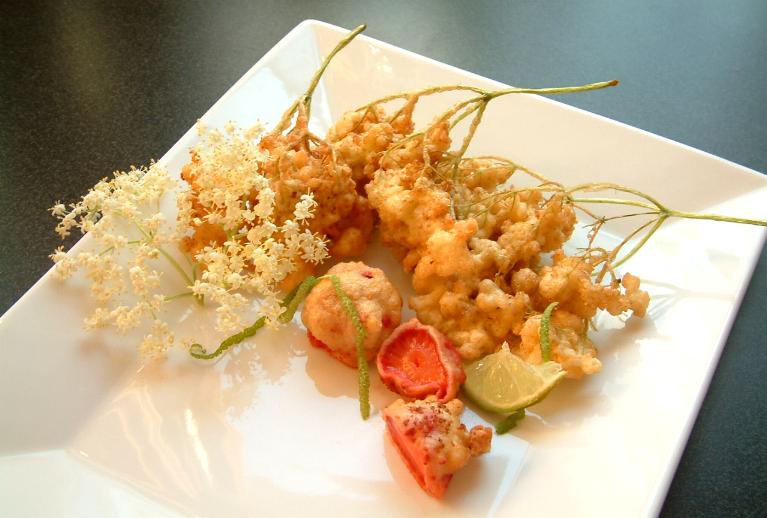
Elderflowers are deliciously scented additions to the edible flower repretoire, and Gizella of Aubergine shows us how to use them to make delicious springtime fritters: “Coated Elder Blossoms with Cinnamon Dust.”. She also tells us a bit about the history of elder trees, and their medicinal and culinary uses, and some facts like the Italian liquor, Sambuca is made from elderberries combined with anise. She also warns us that the leaves and raw berries are poisonous, so we had best leave those alone!
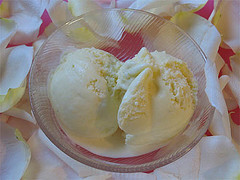
Roses are my favorite edible flower, but Jasmine of Confessions of a Cardamom Addict really hit on one of my best beloved spice combinations to use with rose: cardamom. (One can hardly be surprised at her choice considering the name of her blog!) She put her new ice cream maker to good use by making “Rose-Cardamom Ice Cream,” a treat that could also be called “Seduction in a Bowl.”
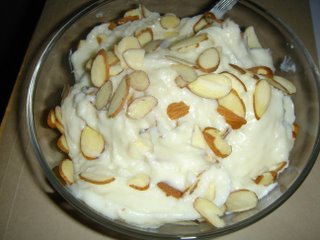
I love to learn about the history of foods, especially if they have some ritual or religious significance, and Mackey of The Edible Garden did an entry that taught a bit about a dish which is meant to break the ritual Muslim fast of Ramadan every evening during the monthlong observance. She presents to us “Fereni Starch Pudding,” a lovely sounding dish that is eaten before the main meal of the evening after the sunup to sundown Ramadan fast. Once again, she chooses rosewater and cardamom as her flower and spice combination, and once again, I applaud that flavor mixture–it is a heavenly one.
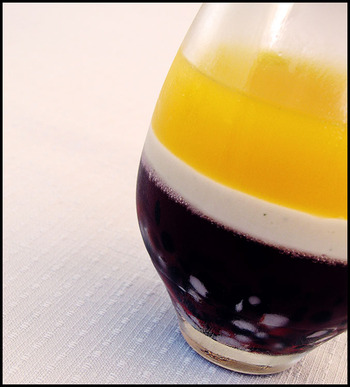
Kitarra, the queen of Cooking Debauchery gives us a taste of summer in her beautiful dessert called, “Summer Sunsets.” Are these little layered fruit gelees with basil cream not gorgeous? They look like gemstones! And she uses two of my favorite fruits–passion fruit and cherries! She flavored the cherries with rosewater, and then for the spice she made sweetened fresh basil cream, and then the passion fruit was enhanced with orange flower water. Wow. That sounds spectacular! Get on with your bad self, Kitarra!
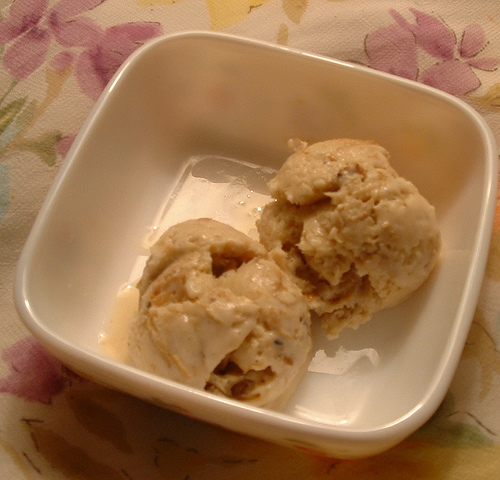
Nupur has my number over at One Hot Stove. She -knows- what I like, and boy does she throw down and make a tasty version of it: Cardamom Rose Kulfi. Kulfi has been a passion of mine ever since I read about the kulfi walas who went about on foot carrying jars of ice water and salt across their shoulders on either side of a pole yoke, in which were secreted smaller jars filled with delectable home-made Indian ice creams. For, indeed, that is what kulfi is–Indian ice cream–and when I finally got to taste kulfi, I understood why Madhur Jaffrey had written so glowingly about it, and the men who made it and then took to the streets to sell it. Nupur flavors her version with gulkand, a rose petal preserve made in India by combining fragrant rose petals with sugar and letting it cook in the hot sun. Thank you for a great recipe, Nupur!
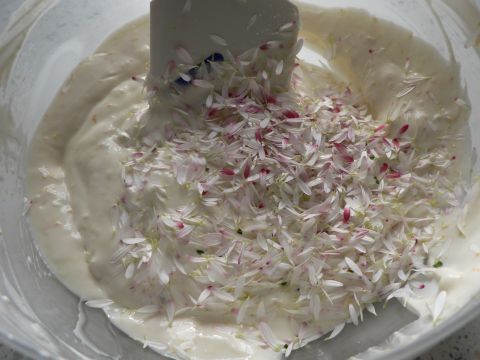
I’ve never eaten daisies before, but Ulrike of Kuchenlatein may change that state of affairs with the creme fraiche and mascarpone-based “Daisy Spread” recipe she presents for our delectation. The flower petals, all delicate white gently splashed with pink, look like fairy confetti as they are stirred into the dairy ingredients, and I can just imagine the fragrance wafting through the air. Lemon and orange zest add to the floral bouquet of the spread, and I cannot help but think it would be a wonderful addition to an early summer tea luncheon or brunch buffet. Ulrike is no stranger to flower cookery; she also gives a recipe for a rose petal champagne jelly on her blog that is a crimson-colored delight.
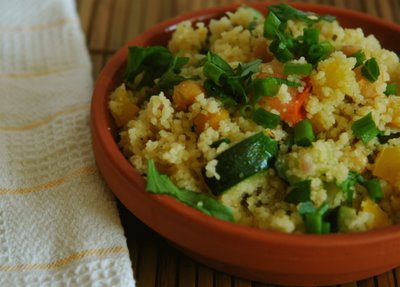
Meeta, the blogger of What’s For Lunch, Honey, wasn’t sure if her “1001 Kisses from my Couscous” would qualify for this Spice is Right, but I am of the opinion, that any dish with a name that involved that many kisses was fine with me! Once again, she uses rosewater, which appears to be the number one choice of our spice bloggers this time around, but instead of making a sweet, she brings us a savory dish. Her couscous includes garden’s worth of vegetables and herbs, plus the rosewater, and it sounds like a light supper fit for the Queen of May. I can also see this served at an afternoon bridal luncheon, on a sunny lawn dotted with rose-bedecked pavilions, with the twittering notes of a flute hovering in the azure sky. Thank you for the lovely interlude, Meeta!

Elizabeth of Blog from Our Kitchen is from Canada, but like me, she is deeply enamored of the foods of India, so it isn’t surprising that she would choose to present a “Saffron and Cardamom-Flavored Srinkund with Violas and Gingermint.” Interestingly, her very next post is one where she scolds her nasturtium plants from flowering too late to participate in the event! (They are still pretty and will taste delicious, Elizabeth, even if they won’t be featured here.) Srikund, for those who are not familiar with it, is a yogurt-based dessert similar to a very soft cheesecake, unrivaled for its smooth texture. I cannot help but think that this version with saffron, cardamom and violas has to be among the most lovely renditions of it ever.
Ramya doesn’t have a picture of her “Cooling Rose Drink” at Cascading Flavors, but the ingredient list is so delicious sounding, I think that is good enough! A full herbalists’s cabinet of botanical loveliness, her drink includes rose distillate, water melon, mint, wild carrot, vetiver grass and water lily–doesn’t this sound like a thirst-quencher than a devi of the forest would conjure? I think it sounds lovely, but just in case we were not satisfied with that, Ramya also sent in a link to her “Banana Blossom Chutney,” a mixture of banana flowers, dal, chiles, coconut, tamarind and spices. It sounds like a lovely addition to any Indian meal, Ramya!
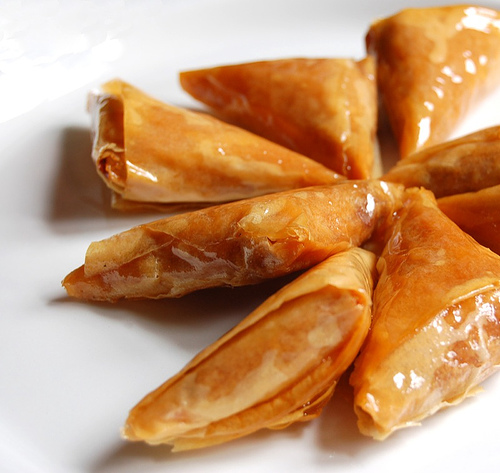
I am very glad to see Haalo of Cook (almost) Anything at Least Once present a recipe for us from Morocco. Why? Because the cooks of the Middle East and North Africa are great lovers of the perfumed garden and will use edible flowers and flower essences with great abandon in their kitchens. Haalo presents to us graceful little phyllo pastry packets filled with almond paste and dipped into a syrup flavored with Orange-Flower-Water called, “Honey-Dipped Briouats with Almond Paste.” Just reading her description brings the scent of honey, almonds and orange flowers to life in my mind, and I can imagine sitting in a courtyard cafe in Casablanca sipping Arabic coffee and nibbling these delicacies….
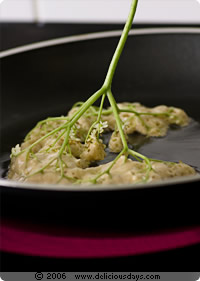
Nicky from Delicious Days in Munich joins us for the first time to give us another look at elderberry blossoms. She presents a different take on the blossom fritters, which she calls, “Hollerküchln,” and which include beer to flavor the batter! That sounds really tasty, but she doesn’t stop there–oh, no–she adds a recipe for “Elderflower Cordial,” which looks and sounds like something that the Erlkoenig (The Elf King) would drink in his great hall under the mountain. Thank you for the lovely entries, Nicky, and I hope to see you next time around, too!
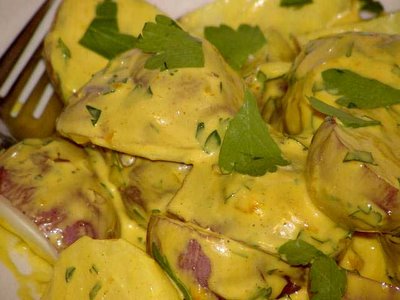
I adore baby potatoes in just about any form, including raw. But they are best cooked in some way that accentuates their waxy texture and sweet flavor, and Debi of Dejamo’s Distracted has come up with a lovely recipe that would enhance all of the best qualities of these little gems of the earth. “Baby Red Potatoes With Saffron Mayonnaise” brings out all of the goodness of baby potatoes, and frames them with delicious home-made mayonnaise flavored with saffron (the stamens of Crocus saativus). See how beautiful those little red-jacketed rounds look enrobed in rich golden sauce? I wish you weren’t so far away, Debi, or I’d be sneaking over to your kitchen for a bite!
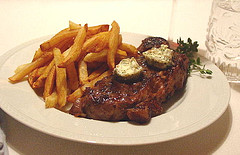
Gabriella, the blogger who writes, My Life As A Reluctant Housewife, doesn’t present one recipe utilizing lavender. No, she loves lavender so much, she presented five–count them–five recipes using the flowers of this beautiful herb in creative and delicious-sounding ways. My favorites are the pictured “Steak with Thyme Lavender Butter” and the “Chicken with Lavender and Lemon,” but all of them sound really good. I know that Zak would be all about the Lavender Coconut Flan, as flan is one of his favorite foods ever, but I can also see him chowing down on “Foccacia with Lavender and Garlic” or “Cod with Lavender and Miso.” I think that Gabriella should be crowned with a wreath and lavender and named Queen of the Perfumed Garden for all of her work developing these wonderful recipes.
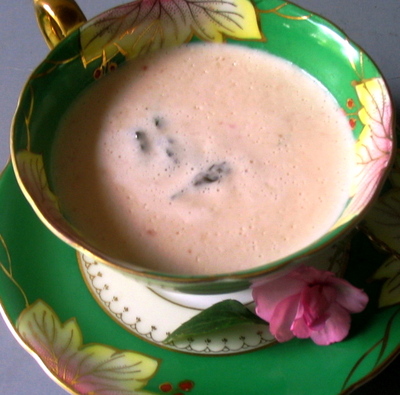
Lindy of Toast brings us a unique dish from American history: “Radish Cream Soup With Lavender.” She found the recipe in Cooking in the Shaker Spirit, by James Haller, and just -had- to try it. The Shakers were a sect of visionary Protestants who lived communally, with men and women separate (in the same communities, working together, but in separate dormitories) whose worship included singing, ecstatic dance and the seeing of visions who thrived during the 19th century. The Shakers were known for their furniture making, gardening, as seedsmen, and for thier cookery, which was always frugal, but utilized many more herbs than was considered normal at the time period. They were innovators in many ways. Thus–look at the lovely pink, creamy radish soup with lavender: isn’t it just gorgeous? I think I will have to try to make some soon.
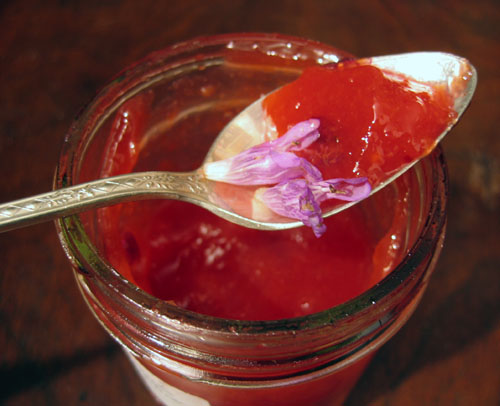
Oh, more cherries! Sour ones at that–my favorite fruit in all the world! Danielle of Habeas Brulee presents a lovely way to use a surfeit (can there ever be such a thing) of sour cherries: “Sour Cherry Sage Flower Jam.” Is that not just the prettiest thing to see? Ruby-red jam glistening with delicate fuschia trumpet-shaped sage blossoms. It is too lovely to use on mere toasted bread. It calls for crumpets, for scones, for airy, cloud-like biscuits, with Earl Grey tea, I think. Yes, the bergamot fragrance of the tea would add to the flavor of the jam which combines the tartness of the cherries with the dark, medicinal tang of sage. I bet the entire house smelled like heaven while that jam was cooking down! Thank you, Danielle!

I don’t know how I missed this entry for Raspberry Sour’s absolutely amazing and sexy “Chocolate Rose Cakes” at The Sour Patch, but I am sorry I did. Because I am all shivery just looking at the picture and reading her description. You have to, HAVE to try this recipe for rose-water scented, coffee flavored molten chocolate cakes. You hear that? Roses, coffee and chocolate. Three of my favorite things in the world. I swear, if she had just thrown in some cardamom, I might have fainted dead away just from reading the description! (Oh, and there is Amaretto whipped cream, too. I forgot. How could I forget? Oh, Gods, I am doomed. I have to have an excuse to make this recipe sometime, somewhere, somehow. Maybe my Dad’s birthday at the end of the month? Maybe for a dinner party? Oh, dear, when, when, when?)

From Vaishali of Happy Burp (I love the name of the blog!), we have one more late entry, which is just the creamiest, dreamiest summer sip you can imagine: “Low-fat Sweet Lassi With a Hint of Rose.” Yeah, you heard right–it is cooling, it is nutritious (it being mostly yogurt), it tastes like rose, and it is low fat. It sounds like the cure for those heat-filled dog days of summer that are coming along in the next few months. I think that the only thing that would make it more perfect would be a pinch of cardamom, just because. But then, it might be -too- good.

Finally, we have my own entry, “Lavender-Cardamom Pancakes with Rose-Infused Strawberries,” a sweet and delicate breakfast fit for a Faerie Queen, but equally loved by mere mortals such as myself and my family. I experimented with some white whole wheat flour and was pleased with the results, and as always, I loved the the floral boost rosewater gave to the already heady perfume of the strawberries.
There we have it, folks–The Perfumed Garden. It is filled with the aromas of spices and flowers from around the world, mixed with seasonal fruits, vegetables and roasted or grilled meats. It is something even more beautiful than I could imagine, and I want to thank each and every blogger who helped make this event a success.
If any late entries come in for this event (I am made to understand that there may be one or two), instead of making a separate post for those, I will edit them into this post, so keep an eye out and check back once or twice, because more recipes may be in the offing.
Stay tuned for the announcement of next month’s theme, coming right up in mere moments!
Lavender-Cardamom Pancakes with Rose-Infused Strawberries
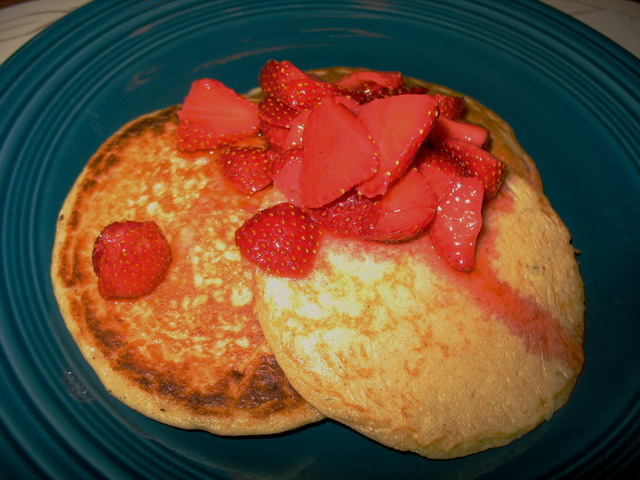
When I set my mind towards this month’s The Spice is Right: The Perfumed Garden, I wanted to make a savory recipe, such as roasted chicken with rose petals or a lavender-infused potatoes au gratin, but I never really got around to it. The one thing I did make, I wasn’t completely happy with: it was a lamb stew with spring vegetables that included lavender along with herbes de Provence and tarragon, but I found that the wine I used with it was too sweet, and the flavor of the stew was unbalanced. Had I been able to use a generous grinding of fresh black peppercorns in it, the imbalance would have been corrected, and perhaps even more than corrected, made delicious, but, with my allergy to pepper, that was not to be.
So, today, on the deadline day, here is the hostess, making her recipe and hoping for the best!
I ended up making brunch for Zak, Morganna, her best friend, Britanny (who is staying with us for a week) and myself. I decided on pancakes and based my recipe upon the one I blogged about last summer: Fresh Blueberry Pancakes. However, I changed it about a great deal, and in doing so, made an entirely new recipe.
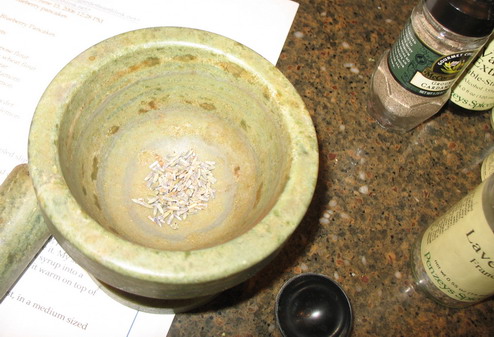
I left out the lemon zest and substituted 1/2 teaspoon dried lavender buds, which I ground into a powder in my mortar and pestle. I kept the cardamom, as I love the way it tastes with lavender, and substituted out the cinnamon for dried ginger, which is another favorite partner for lavender.
As for the flour, I experimented some more.
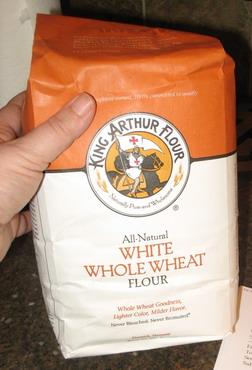
I have finally gotten my hands on some of the King Arthur Flour Company’s “White Whole Wheat” flour. It is whole wheat, compeltely unbleached, but instead of being made with red winter wheat the way most whole wheat or graham flour is, this flour is ground from softer white winter wheat. It is reputed to have a milder, less robust flavor than regular whole wheat and is supposed to have superior baking qualities, rather akin to all-purpose flour.
King Arthur’s website suggests that bakers substituted this flour for half of the all-purpose flour in any recipe in order to boost the nutritional quality of the baked good without compromising taste and texture.
I had been waiting until I found a local supplier of this flour to try it; I have ordered flour from King Arthur directly, but have had some bad luck with backs bursting during shipping, which makes an awful mess. The company has always been good about replacing the broken bags, but still–it is messy and wasteful.
I was thrilled to see it at Kroger’s this past week, so I snapped up a bag of it and decided to use it the next time I had a chance.
Which was today.
I used it half and half with the all-purpose flour, and did not detect much difference in the result. The pancakes were still light and fluffy, though they had a bit more of a chew than the blueberry recipe I based it on, which only had 1/4 cup of traditional whole wheat flour in it to give a nutty flavor. The flavor was very mild, however, and it made a good backdrop for the lavender and spice flavors to come through.
As for the strawberries, I thought of cooking some sliced ones into the pancakes, but knowing how much juice they release under heat, I decided against it. Instead, I cut up a quart of them, added a tablespoon of raw sugar and a half tablespoon of rosewater, and allowed them to macerate while I made the pancakes. The rosewater at that level is barely detectable as its own flavor (unless you make a habit of analyzing flavors, as I do), but it greatly enhances the inherent floral sweetness of the berries themselves.
All in all, the pancakes were a success. I feel confident that I will be making them again in the near future, and after this trial, I am looking forward to more baking and cooking tests of the white whole wheat flour.
Lavender-Cardamom Pancakes with Rose-Infused Strawberries
Ingredients:
1 quart strawberries, hulled and sliced
1 tablespoon raw sugar
1/2 tablespoon rosewater
1/2 +1/8 cup all purpose flour
1/2+1/8 cup white whole wheat flour
1 tablespoon raw sugar
1/4 teaspoon cardamom
1/8 teaspoon ground ginger
1/2 teaspoon dried lavender buds, ground into a powder
1/4 teaspoon salt
4 teaspoons baking powder
2 eggs
1 cup milk
1 teaspoon vanilla extract
5 tablespoons butter, melted and allowed to cool slightly
canola oil spray
Method:
Mix together sliced strawberries, raw sugar and rosewater in a bowl; allow to sit undisturbed while making the batter and pancakes.
Heat oven to 170 degrees, and warm plates as well as a serving platter therein.
In a large bowl, mix together all dry ingredients well. In a measuring cup or smaller bowl, mix together the milk, eggs and vanilla until well combined. Mix the two together with a rubber spatula until a smooth batter forms. Whisk in butter until the batter is thick and very smooth.
Heat skillet over medium heat, and spray with canola oil spray.
Pour batter onto skillet in equal amounts (I use about a 1/4 cup of batter per cake) and cook until bubbles come to the surface of the batter, break and stay open around the edges. Flip pancakes with a spatula, and cook for a few seconds more on the second side, at least until the hissing of steam escaping stops. Check underneath for a golden brown color–if it is too pale keep cooking a bit longer.
When done, remove from pan and put on serving platter in oven to keep warm and continue until all the batter is used.
Makes about a dozen 4″-6″ diameter pancakes.
Top with a generous amount of macerated berries.
Why Do People Only Love Cute Animals?
The ethics of meat eating are a curious, tangled concept that I suspect many have struggled with over the years. I know that I am very fascinated with the ways in which people separate out what animals are good for eating versus those which are taboo, and how cultures and individuals navigate these societal “rules” concerning the eating of the flesh of animals, especially when cultures with differing rules on meat intersect on a personal or global basis.
With the rise of the Internet, I have found it easy to get a glimpse at what other people think about meat eating, and I find myself confused at all of the logical inconsistencies, hypocracies and emotional outbursts that people put forth in the defense of this or that position on the eating of animal flesh.
As longtime readers know, one of my greatest irritations is with those who like to eat meat and will eat meat, but who say, “I can’t stand eating meat that looks like it came from an animal.” This is hyppocracy at its height in my mind; if you are unable or unwilling to face up to the fact that meat comes from animals who had to die so you could eat them, then you have no business eating meat.
To me, this attitude is nothing but disrespect to the animals who die to make meat wrapped up in the pretense of sensitivity, and I believe that this sort of attitude tacitly supports the hideous treatment of animals in CAFOs (concentrated animal feeding operations–the typical method of meat, milk, and egg production in industrial agriculture) and their attendant slaughterhouses. Why do I believe this? Because for people who don’t want to face up to the death of animals involved in meat, the less they see of these creatures before they come wrapped in sanitary plastic to the grocery store, reduced down to their constitutent parts, the better.
And frankly, that is how CAFOs and large slaughterhouses run–on secrecy. Michael Pollan had a hard time getting to see CAFOs when he did his research for The Omnivore’s Dilemma, but he -did- see them. What he absolutely was not allowed to see was the action that takes place in an industrial slaughterhouse.
I do not trust any industry that keeps their working secret, much less an industry that is supposed to be producing food for me. Slaughterhouses should be run so cleanly and ethically (the technology is available to run these places ethically) that they would not mind having glass walls so that observers could peer in night and day and see the inner workings for themselves.
But, alas, I fear that until more people either stop eating meat altogether (and I advocate that for a great many people, including those who whine about not wanting to think about the animals who died so they could eat hot dogs), or switch to eating locally produced, ethically raised and slaughtered animals, or until consumers put pressure on the government to pressure the meat industry to produce their meat under ethical guidelines, we are going to continue to see animals suffer grieviously under the current CAFO system.
I am very glad to see more information coming to light about the methods used by CAFOs to produce the vast majority of the meat eaten in the US, because I do believe that most humans do not like to see animals suffer unduly. And suffer they do in the current model of meat production. Chickens, cows and pigs are raised under barbarous conditions, and are treated in ways that make them unhealthy, and cause many to die before they are slaughtered. Egg production and milk production on the industrial model are no less harmful; any time an animal, a living, breathing, being, is treated not as a living creature but as a commodity, or what is often called, “a production unit,” in the industrial farming jargon, they are turned into an object, and as we know, objects cannot suffer. However, even if the CAFO operators would like to believe that their animals are objects which cannot suffer, what is coming to light from many sources, including Pollan’s book, Peter Singer’s newest book, The Way We Eat, and elsewhere, is that these animals are suffering, and suffering on a grand scale that is difficult to imagine.
So, what has this to do with “cute” animals?
Well, it is just that I have, in the past few weeks, run across some items on the internet that gave me pause, and made me wonder about how exactly an individual makes their own ethical decisions regarding meat, the production of it, and whether or not they will eat it.
And the conclusions I am coming to are these: people, for the most part, do not think about what they eat, nor do they make decisions about what they eat based upon rational thought. Primarily, people react emotionally, and in doing so, they do not apply any logical consistency to their arguments, and instead, simply react in a knee-jerk fashion when it comes to their food.
Americans, by and large, have very strict culturally defined standards of what animals are for eating and what animals are not for eating. Because our population is not homogenous, these culturally defined standards are fluid from place to place, and differ according to whether you are talking to a rural person or a city person, a person of Anglo-Saxon background, or one from another ethnic group, or whether you are talking to someone from one region of the country vs. another, but one thing seems to hold quite strongly across many of these groups: it is bad to eat cute animals.
The root of the cute animal rule seems to lie in how strongly we Americans attach to our pets, especially cats and dogs. We consider our cats and dogs to be part of our families, and it disgusts us to think of them or animals like them being eaten by other people in other cultures. It becomes a sort of cannibalism in our eyes for someone to even consider eating a cat or dog, and we are repelled, and our emotional reactions are visceral and often violent.
Cats and dogs are generally undeniably considered to be cute animals. We infantilize them when we keep them as pets, treating them as perpetual children, and we are attracted to their child-like loyalty and the devotion they show to us in return.
I want to make clear that I do not in any way think that this sort of love for animals is wrong; I love my cats and dogs very much, and would take it very personally if someone were to steal them, kill them and eat them. But, I also do not think that it is my business to tell people in other countries, who have other customs, that they may not eat cats and dogs, just because I love my own. That is a kind of culinary cultural imperialism that I find to be both odious and arrogant, and I do not think it is anyone’s right to engage in such behavior.
But, let us continue on.
This adoration for cats and dogs extends to other animals among some Americans. Rabbits, which are often kept as pets in the US, are also very cute creatures, with soft fur, long ears, fuzzy tails and big eyes. However, rabbits are also raised as food livestock on farms, and eaten, and although rabbit consumption tends to be low in urban areas in the US, the eating of tame or wild rabbits in rural areas has been a tradition since our pioneer days.
However, if you look at some posts around the food blogs on the Internet, and read the comments, you can find many people who are vociferously opposed to the eating of rabbits, strictly on the basis that they are “pet animals” (thus, cute), and because of that, are sacrosanct and are not to be eaten.
Rabbit is still commonly eaten all over the world, and enjoyed, but to many Americans, the idea of eating a cute little bunny, a creature who is the harbinger of spring and Easter, and who is embodied as the wise-cracking, beloved Warner Brothers animated icon, Bugs Bunny, is just this side of barbarism.
Many urbanites hate the thought of eating deer, which remind them of Bambi (damn you, Walt Disney and your cuteness fetish!), and they rail against hunters for being drunken, out of control “Bubbas” who sweep through the forests with high caliber weapons and shoot at anything that moves, just so they can get a ten-point buck head to stuff and put over their mantlepiece.
Well, the truth is, there are a very few hunters who fit that description. Most of them are ethical folks who are among the most concientous of gun owners who take safety seriously and who love nothing more than to be outside in the woods. They also tend to have a much more realistic view of their quarry than the folks who live in cities and decry hunting; hunters recognize that without regulated hunting, whitetail deer populations would continue to soar and many deer would starve every winter, because they lack natural predators other than mankind in their habitat.
Hunters understand that humans have created an inbalance in nature when it comes to deer, and thus, it is our responsibility to try and correct that imbalance.
They also know that venison tastes delicious, and is a healthier alternative to eating corn-fed, saturated fat laden CAFO beef, even if the deer are pretty and remind us of Bambi.
And then, we come to horses.
Even more than rabbits, or deer, when the subject of eating horses comes up, it sends Americans into a tizzy. Horses are part of our national mythos–they are a symbol of the Old West, of pioneer expansion, of cowboys riding the range, of the Native Americans of the plains hunting buffalo, of the great cavalry charges of the Civil War. They are still part of our pomp and circumstance; horse-drawn hearses bear our dead presidents to their resting place, instead of the more ordinary and thus less romantic and symbolic motorized variety. They appear in parades, they are the stuff of which many adolescent young girl’s dreams are made. Race horses of the past loom large in our collective consciousness, and are lionized in memory.
All of this symbolic baggage surrounding the horse leads people to react completely emotionally when it comes to the fact that 90,000 unwanted horses are killed in the US each year, and are slaughtered and sent to other countries in order to be used as meat. These 90.000 horses, many of which did not have much of a life to look forward to, have a lot of Americans up in arms over the practice of horse slaughter, if the 315 comments on a recent Slashfood post on the subject are any indication. There is actually a bill before Congress to make the practice of slaughtering horses illegal; interestingly, this bill is opposed by The American Quarter Horse Association and The American Association for Equine Practitioners.
The wording of H.R. 857 opens with an emotional paen to the mythology of the American horse: “Horses have played a significant role in the history and culture of the United States. Horses in the United States are not raised for food or fiber. As a non-food and recreational animal, horses should be protected from slaughter.â€
The main reason the bill was brought forward by Rep. Ed Whitfield, a Republican of Hopkinsville, Ky., is because of the trauma that horses who are bought up at auctions around the country undergo on the sometimes 24-hour trailer ride to the slaughterhouse. Horses, which are often sick and injured, are loaded up into double-decker livestock trailers, which were designed for carrying pigs or cattle, and are driven across country, often on rides 24 hours long, to get them to one of the few still operating slaughterhouses in the US. He readily admits that it isn’t the methods of slaughter, or the slaughter itself that bother him, but it is the inhumane way that the horses are treated on the way to slaughter and the suffering they undergo before their deaths that upset him and pushed him to bring this bill forward to Congress.
I love horses. I remember going three times a week to the stable in my youth, and taking riding lessons, even though I suffered horribly from allergies to horsehair and horse dander. I used to load up on my allergy meds, take my two hour lessons, and then ride home in the front seat of the car next to my mother, with my eyes swollen shut, with hives on my face, arms, hands and neck, and a nose so runny I would go through half a box of tissues before we got home. Every week, my Dad would look at me, shake his head and say, “You going to quit?” and I would answer, “No” as I went off to a shower and to rest until the swelling, hives and sneezing subsided.
I have volunteered in horse rescue, and have donated money to the cause of helping save unwanted horses that would otherwise go to slaughter; however, I do not think that the slaughter of horses should necessarily be outlawed in the United States.
I really hate to see horses suffer, just as I hate to see any animal suffer, but I don’t really understand why someone would object to the cruelty of how horses are transported to slaughter when cows and pigs are transported the exact same way, and are often in just as bad health.
Why is it bad for a horse to suffer, but not a cow?
Why is it okay to eat a pig, but not a rabbit?
Why is it fine to let chickens suffer in battery cages where they have no room to move so we can eat eggs, but it is wrong to hunt a deer which has lived in freedom its entire life?
I have no problem with people who see animals suffering and so they become vegetarians. I think that is a perfectly sensible reaction to the plight of animals as they live in our current industrial model of agriculture. In fact, if I did not have access to ethically raised beef, pork, lamb, goat, chicken, eggs and dairy, I would be a vegan myself, as I -refuse- to knowingly support the way that CAFOs treat animals with my money. However, I have taken the time and the energy to identify and support alternative means of agriculture in my local area, so I don’t have to resort to veganism.
But, I do have a problem with people who decry the ill-treatment of horses destined for dinner plates in Europe, Japan or Canada, or who freak out over other people eating rabbits in the US, just because they are cute and fluffy, or who get incensed when people in other countries eat cats and dogs, while they themselves buy pork, beef, veal and chicken at the grocery store and support the hideous suffering of these animals in CAFOs.
I have a big problem with that, because what these people are saying is this: “I don’t like to think about cute animals, like cats, dogs, rabbits, deer and horses suffering, so I oppose it, but I will keep silent on all the suffering that pigs, cows and chickens do in the process of industrial agriculture because they taste good and I am too lazy to seek an alternative means to eat.”
So, it is okay for pigs, cows and chickens to suffer, mainly because they -aren’t cute enough- to warrent being treated well?
What kind of twisted, messed-up logic is that?
What makes cows -uncute- as compared to horses or deer? Ever seen a calf? They are as cute as Bambi any day. Ever pet one? I have–they are sweet. In fact, many fully-grown cows are adorable–look at a Gurnsey or Jersey milk cow. Look at those big eyes with the movie-star lashes. They are gorgeous.
Pigs are challenging, but as babies, they are among the cutest creatures on earth. And while some of the adult members of the species can be mean and vicious (they will attack people if they take it in mind to, and can kill if you aren’t paying attention), there are some who are very charming creatures, if you ignore the smell of their manure. And pigs, when housed such that they can stay clean, have a dignity and intelligence to them that is palpable.
And chickens. Why are they not cute? They sure are cute as babies, all fuzzy and yellow and peeping. When fully plumed, some breeds of chicken are colorful and striking. Some of them are funny-looking, and many of them are downright cute. They are soft, too, and like to be petted, and some of them can sing. Did you know that? They can. I know, because I used to sing with them, and cuddle them every morning when I gathered eggs.
I have had extensive interactions with most types of farm animals, and they all have qualities about them that are attractive. They may not all be cute, nor are they all friendly critters, but they all have traits to them that make it so humans can relate to them as other beings. They can be affectionate, they feel pain, they feel pleasure, they are gregarious and they are all creatures who deserve respect, care and dignity.
Here’s the way I think about it: no animal, even if it is destined for a dinner plate, (perhaps, especially if it is going to become an entree) should lead lives of unrelieved suffering. End. Of. Story.
Nor should they be mistreated on their way to the slaughterhouse, nor should they be killed in an inhumane fashion.
It is as simple as that. We cannot, in fact, must not, make artificial demarcations in our minds between which animals are allowed to be eaten and which are not, based only on emotional beliefs. We must look carefully at the situation of all animals, and decide how they are to be treated not only in their deaths, but in their lives. If we punish individuals for making dogs and cats suffer, then why do we tolerate the wholesale suffering of our food animals? It doesn’t make sense, and worse than that–it means that we can make artificial divisions in our minds that are not based upon logic, or fact, but instead an emotion.
Where does such thinking end? Does this sort of inhumane treatment of -some- animals end with just animals, or can it desensitize us to suffering such that we can turn our heads and ignore the suffering of other humans, because they are not valued by us, or are too different from us to warrent care?
Not caring about the suffering of some animals is a slippery slope that I do not think that most people want to go down.
What is my solution to this issue?
I propose that more people turn away from CAFO-produced foods. Whether they start supporting smaller farmers who use more ethical means to produce meat, eggs and dairy foods, or whether they become vegans does not matter to me. There is no one way for consumers to vote with their food dollar, and I think that indidviduals can come to a decision that fits with their own food preferences, budget and belief system.
I also propose that if there is to be legislation involving the slaughter of any animal, that instead of banning the slaughter, that it demands humane treatment for -all- animals both at the slaughterhouse, and in transport to the slaughterhouse; such a law should also be strictly enforced with fines and jail sentences for those in violation of such a law. I also would like to see better government oversight and involvement in CAFOs, because not only are these facilities bad for animals, they are bad for the humans who eat the animals, too. They are dens of disease and environmental degradation, and as such, should not be tolerated by consumers. I’d love to see our government, instead of listening to large agriculture industry lobbiests instead be bombarded by demands from consumers that they clean up CAFOs, and maybe even one day put them out of business.
I also propose this–love the animals who not only are our companions, but who also feed us. Look at the pigs, cows and chickens. See them. Really see them. Look at where they live and how they live. Really see it, and know it for what it is. Look them in the eye, and then look at what is on your plate. They give their lives so we can eat–doesn’t that mean that they deserve respect and yes, love?
If you love the animals you eat, really love them, and know them, and stop looking away and simply accepting the way in which they are treated in our names both in life and in death, then I guarantee you will change the way you see the world, yourself and the other creatures who live in it. You will have increased the compassion in the world, and in doing so, you will have taken a postive step toward making the world a better place for all of us to live in.
The Deadline for The Spice is Right III: The Perfumed Garden Approaches
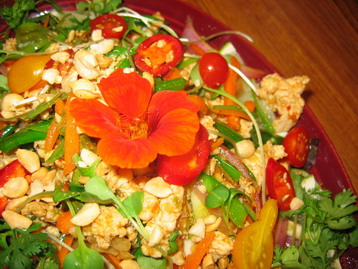
This is just a super-quick reminder that the deadline for this month’s The Spice is Right event is tomorrow evening at midnight EST. You still have plenty of time to join the fun and play the game if you are interested; the rules are here.
Look for another post today, on the subject of eating cute animals.
Or not eating them, as the case may be.



Categories:
- Admin (rss) (55)
- Blogs and Blogging (rss) (81)
- Book Reviews: Cookbooks (rss) (43)
- Book Reviews: Non-Cookbook Food Books (rss) (38)
- Cats and Cat Blogging (rss) (47)
- Chinese Cooking Lessons (rss) (32)
- Culinary School Stories (rss) (18)
- Dairy Pruducts: Cultured and Barbaric (rss) (4)
- Documentary Filmmaking (rss) (1)
- Essays, Rants and Reflections (rss) (260)
- Fighting Hunger (rss) (12)
- Food and Kids (rss) (45)
- Food in the News (rss) (126)
- Food Media (rss) (98)
- Food Preservation (rss) (18)
- Food Safety (rss) (45)
- Gardening (rss) (30)
- Herbs and Herb Blogging (rss) (20)
- Holidays (rss) (50)
- Kat Blogging (rss) (22)
- Kitchen Science (rss) (36)
- Leftover Makeover (rss) (8)
- Life, the Universe and Everything (rss) (131)
- Local and Sustainable (rss) (227)
- Local Athens Food and Foodies (rss) (42)
- Meatless Mondays (rss) (32)
- Menu For Hope (rss) (5)
- Nutrition, Diet and Health (rss) (84)
- On The Farm (rss) (8)
- Recipes: Almost Vegetarian, Vegetarian and Vegan (rss) (294)
- Recipes: American Regional (rss) (37)
- Recipes: Appalachian Hillbilly (rss) (33)
- Recipes: Bread, Pasta, Grains (rss) (95)
- Recipes: Canning and Preserving (rss) (8)
- Recipes: Chinese (rss) (123)
- Recipes: Comfort Food (rss) (120)
- Recipes: Cookies (rss) (16)
- Recipes: Desserts (rss) (48)
- Recipes: French (rss) (25)
- Recipes: Fruits and Vegetables (rss) (302)
- Recipes: Greek, North African and Middle Eastern (rss) (31)
- Recipes: Indian (rss) (137)
- Recipes: Italian (rss) (42)
- Recipes: Japanese (rss) (7)
- Recipes: Jewish (rss) (4)
- Recipes: Korean (rss) (6)
- Recipes: Meat, Poultry and Fish (rss) (220)
- Recipes: Mexican/Native American/ Latin American/Caribb (rss) (27)
- Recipes: Original (rss) (108)
- Recipes: Thai (rss) (27)
- Recipes: Tofu (rss) (17)
- Recipes: US Regional (rss) (16)
- Recipes: Vietnamese (rss) (8)
- Restaurant Stories (rss) (28)
- Sewing, Quilting, Arts and Crafts (rss) (16)
- Simple Chinese Recipes (rss) (30)
- Slow Food and Heritage Foods (rss) (10)
- Spice Blogging (rss) (44)
- The Chinese Cookbook Project (rss) (14)
- The Chinese Pantry (rss) (39)
- The Documentary (rss) (2)
- The Kitchen Saga (rss) (17)
- The Locavore's Bookshelf (rss) (15)
- The Unsung Adventures of The Culinary Nerd (rss) (6)
- Tools and Toys (rss) (35)
- Uncategorized (rss) (10)
- With a Side of Politics (rss) (48)
Archives:
- August 2012 (9)
- July 2012 (12)
- September 2011 (3)
- August 2011 (7)
- July 2011 (8)
- June 2011 (16)
- May 2011 (17)
- April 2011 (11)
- December 2010 (9)
- November 2010 (5)
- February 2010 (1)
- December 2009 (5)
- November 2009 (7)
- October 2009 (10)
- September 2009 (16)
- August 2009 (14)
- July 2009 (14)
- June 2009 (7)
- May 2009 (17)
- April 2009 (10)
- March 2009 (25)
- February 2009 (13)
- January 2009 (10)
- December 2008 (5)
- November 2008 (5)
- October 2008 (6)
- September 2008 (13)
- August 2008 (8)
- July 2008 (11)
- June 2008 (18)
- May 2008 (13)
- April 2008 (14)
- March 2008 (16)
- February 2008 (17)
- January 2008 (19)
- December 2007 (25)
- November 2007 (18)
- October 2007 (24)
- September 2007 (16)
- August 2007 (15)
- July 2007 (15)
- June 2007 (10)
- May 2007 (14)
- April 2007 (16)
- March 2007 (17)
- February 2007 (20)
- January 2007 (13)
- November 2006 (1)
- October 2006 (8)
- September 2006 (14)
- August 2006 (25)
- July 2006 (30)
- June 2006 (28)
- May 2006 (34)
- April 2006 (29)
- March 2006 (24)
- February 2006 (30)
- January 2006 (38)
- December 2005 (40)
- November 2005 (37)
- October 2005 (32)
- September 2005 (25)
- August 2005 (30)
- July 2005 (28)
- June 2005 (21)
- May 2005 (8)
- April 2005 (22)
- March 2005 (17)
- February 2005 (29)
- January 2005 (10)
Search Site:
Links:
- Lily’s Wai Sek Hong
- 101 Cookbooks
- A cat in the kitchen
- A Veggie Venture
- Accidental Hedonist
- Cha Xiu Bao
- chez pim
- Chocolate & Zucchini
- Chopstick Cinema
- Chowhound.com
- Chubby Hubby
- Cook sister!
- Cooking with Amy
- da*xiang
- Eat Local Challenge
- Eating Liberally
- Ecocentric
- Eggbeater
- Epicurious
- Farmgirl Fare
- Fatfree Vegan
- Foodgoat
- ForkandBottle.com
- Green Olive Tree
- Hooked on Heat
- Jaden’s Steamy Kitchen
- Kalyn’s Kitchen
- Lucullian delights
- Mahanandi
- Matt Bites
- MeatHenge
- mmm-yoso!!!
- New York Times – Dining & Wine
- Pizza Goon
- Rasa Malaysia
- Ruhlman
- Sailu's Kitchen
- Serious Eats
- SF Gate: Food & Dining
- Simply Recipes
- Soul Fusion Kitchen
- Tastespotting
- The Amateur Gourmet
- The Cleaner Plate Club
- The Food Section
- The Grub Report
- thecookscottage
- U.S. Food Policy
- Wandering Chopsticks
- Washington Post Food and Dining
- Wasted Food
Meta:


Powered by WordPress. Graphics by Zak Kramer.
Design update by Daniel Trout.
Entries and comments feeds.