
Cook Local, Eat Global
Weekend Cat Blogging: Schmoo And Totoro

I feel like this photograph needs little in the way of comment.
You all know Schmoo.
And I would hope that you know Totoro.
This is what happens when the two meet.
(I would like to thank Brittany and her quick reflexes for this photograph. I was at work when she took it.)
Athens Community Gardens Popularity Soaring
Last night while Kat was asleep on my lap, I decided to read the local newspaper online.
I was thrilled to see the featured front page article was on the rapid growth in the popularity of Community Food Initiatives’ community gardens here in Athens. Garden plots allotted this year in the West Side gardens rose sharply from last year’s 60 to 110, in part because of the worsening economy, but also because of the strong desire among Athens residents to eat local, sustainable, organic produce.
Community Food Initiatives, or CFI as it is commonly called around here, is a non-profit organization whose stated goal is to work toward food self-sufficiency among Athens county residents. Their projects include a seed saving program, the community gardens in Athens, a community composting program and various workshops to help teach and support new gardeners in the area.
I think that what CFI does is very important; as more and more Americans return to the tradition of growing their own food, there will be a great need for experienced gardeners to help teach the neophytes the ways of the spade and hoe. Without this sort of friendly educational support, the likelihood is that many new gardeners will fail in their endeavors, loose interest and stop trying to raise their own food.
Even more important than teaching gardening skills are the community-building aspects of CFI’s work.
Gardening advice can be gotten from books, magazines and the internet.
But having a living person in the garden plot next to yours teach you his traditional method of growing vegetables can lead to a lasting friendship which is beyond price.
Experimenting With White Whole Wheat Flour: Cherry Pie
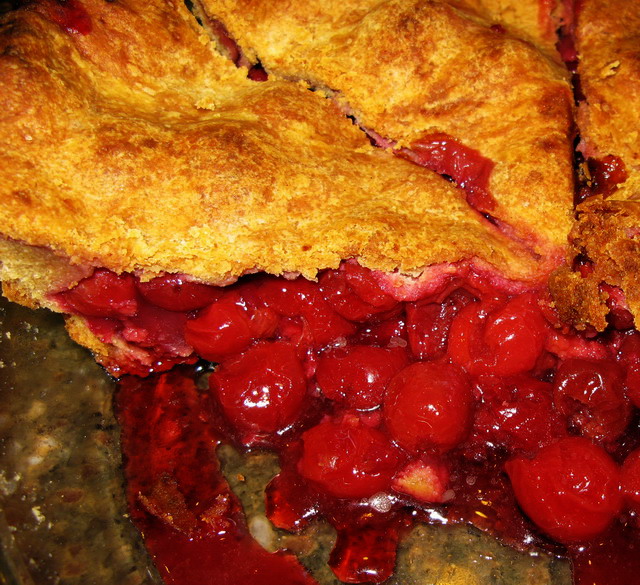
I’ve been meaning to try baking with King Arthur Flour’s white whole wheat flour for quite some time. White whole wheat flour is ground from a different variety of wheat–hard white winter wheat, to be exact–than the usual whole wheat flour which comes from hard red winter wheat. Lacking the tannin that comes with the coloring of the bran in red wheat, whole grain flour ground from white wheat is supposed to be milder in flavor and paler in color. (Not that the color of whole wheat bothers me, mind you–even when I was a kid, I preferred my bread to be brown–it had more flavor that way.)
But alas, I didn’t get down to experimenting until yesterday, when I decided to make my first cherry pie of the season using fresh local sour cherries, only a little bit of sugar, butter from grass fed cows and of course, the white whole wheat flour. Instead of just replacing a portion of the all purpose flour in my recipe with white whole wheat, I decided to try making pie with just the whole wheat.
And you know–it turned out pretty darned tasty.
I added an extra tablespoon of raw sugar to the dough to make up for the less mild flavor of the whole wheat flour, and added a tiny bit extra of water–about two tablespoons worth–to make up for the fact that the whole wheat flour is drier. Those were the only changes I made to my usual dough recipe and when the pie was in the oven, it smelled amazingly good. /it smelled like I had made the crust out of nuts or something, so intense was the deep brown aroma that wafted through the house.
How did it taste?
I really liked the flavor–it was sweet and nutty, with a strong wheat flavor–like bulgar wheat, in fact. It complimented the sour cherries rather well–their tart, sweet flavor and velvety texture went well with the rustic crust.
My one complaint was that the crust wasn’t very flaky, probably because of the gluten content in the flour. Next time, I will go half and half with the white whole wheat and all purpose flour and see if I can strike a balance between whole grain goodness and flavor and the flakiness that all purpose flour provides.
But, even so, I can see using this all whole wheat crust for something other than a fruit pie. Like a quiche, one with potatoes, kale, mushrooms and a mixture of strong cheeses like extra sharp cheddar and aged gouda. I also think this crust would be great for a Jamaican meat patty–imagine a turnover baked from this nut-like pastry dough filled with meat seasoned with allspice, Scotch bonnet peppers, scallions, garlic and thyme.
Or what about a samosa pie? Bake the curried potato and pea filling for samosas into a pie. Or mattar paneer. Oooh. Mattar paneer pie.
Geez, I am drooling just thinking about it.
Anyway, here is the recipe for the low-sugar all whole wheat cherry pie I made yesterday. If any of you try it out, let me know what you think. I mean, I know that pie isn’t an intrinsically healthy food, but it is kind of nice to eat it and not feel too awfully guilty over it.

Sour Cherry Pie With Whole Wheat Crust
Ingredients:
6 cups pitted sour cherries
scant 1/2 cup raw sugar
1/4 cup cornstarch
1 teaspoon vanilla extract
2 tablespoons butter, cut into small cubes
2 3/4 cups white whole wheat flour
2 tablespoons raw sugar
1 teaspoon salt
1 cup very cold butter
1/2 cup ice water, plus two to four tablespoons if needed–start with the 1/2 cup and go from there
Method:
Preheat oven to 400 degrees F.
Toss cherries, sugar, cornstarch and vanilla extract in a bowl. Set aside.
In a large bowl, mix flour, sugar and salt together well. Cut butter into very small pieces, and scatter over the top of the flour. Using a pastry cutter, cut the butter into the flour until the pieces resemble coarse crumbs, with the largest being the size of a a large pea.
Add the 1/2 cup of water, and with your hands, bring the flour and butter mixture together until it forms a dough. If you need more water, sprinkle more over the dough a tablespoon at a time. Handle the dough as little as possible, gathering it together and patting it into a ball. Do not compress it or squeeze it together.
Cut the dough into two roughly equal pieces. Pat these pieces into discs about 1″ thick. Wrap them in saran wrap and place them in the refrigerator to firm up.
Roll out one disc of dough for your bottom crust. Place in a pie pan and trim so that 1/2″ inch from the rim of the pie pan. Add cherry mixture and sprinkle the two tablespoons of butter cut into small pieces over the filling. Roll out the second disc, drape over the pie and trim to the same size as the bottom crust. Pinch dough together at the edges and flute using your fingers and thumb to make a decorative edge.
Cut a few holes in the center of the pie for steam to vent.
Put into the oven for thirty minutes. After thirty minutes, turn the oven down to 375 degrees F. and turn the pie 180 degrees. If the edges of the crust are browning too much, cover them with strips of foil to protect them. Bake for 35 more minutes or until crust is deep golden brown and the cherries are bubbly and the juices are thickened.
My Take On The Toque
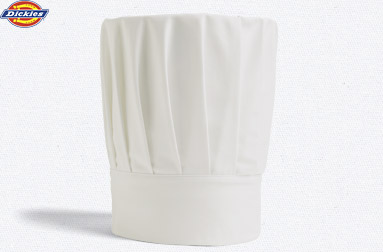
You know, I am going to own up to something right here and right now: I utterly loathe and despise the toque, which is the proper name of the classic chef’s hat. Whether it is tall and straight sided with a bazillion pleats which mythically refer to the number of ways a proper chef knows how to prepare eggs, or the balloon-like mushroom cloud version, or especially if it is the idiotic floppy deflated-balloon version, I bloody well hate them all.
They are about the dumbest looking headgear known to humankind, and I know of very few people who look good in them.
The least objectionable ones of the lot are the tall, stiffly pleated ones like the one pictured above. Some chefs manage to look dignified while wearing those toques; however, some less fortunate persons look as if they have a tall cake perched upon their heads.
The balloon-like toques are universally ugly, I don’t care what anyone says. It looks like a fabric light bulb tucked on top of someone’s head.
And the floppy ones?
It is completely impossible to look like anything other than a goofball wearing one of those misbegotten wastes of fabric. The best one can hope for when wearing one is those is that no one will ever enter the kitchen and see you, at worst, even the most upright and handsome individual is turned into a chef from the shallow end of the gene pool. Besides, no one can take a cook or a chef seriously as a culinary professional while they have a lopsided deflated mushroom cloud on his head. Looking like a cartoon character does nothing to enhance one’s professional image.
If you watch a lot of celebrity chefs on television, or see photographs of them in newspapers and magazines, you will notice that very few of them wear the toque, even when cooking. Or, if they do wear them in the kitchen, they don’t let anyone take a photograph of them while they are so attired.
Take a look at photos of Marco Pierre White, Thomas Keller, Mario Batali, Gordon Ramsay and Eric Ripert. Do you see them wearing white monstrosities upon their heads? Not really often. Like, ever.
I wonder why that is?
Could it be because it doesn’t matter how good looking you are, or how trim the cut of your chef’s coat, you are doomed to dweebdom if you put a tall cylindrical white hat on your head?
Do you think?
I was forced to wear toques of a sort in culinary school–I say of a sort, because I don’t think that a disposable cylinder of white corrugated cardboard counts as a hat of any kind–and I hated them intensely. The faculty and staff did their best to instill in each of us a sense of pride in our uniforms, including the paper toques, telling us that we should walk with our heads up and shoulders back, because we were upholding a centuries old tradition that was sacred in its importance.
Right.
So, where did the tall toque hat come from? The story I was told in culinary school was that chefs long ago were, along with other learned persons, intellectuals and artisans, sometimes persecuted for being so smart and skilled. So as to save themselves from death, a number of them hid out with some Greek Orthodox priests. In order to not be noticed overmuch, they took to wearing the sacred vestments of these priests which included–you guessed it–really tall cylindrical hats. Now, the priests wore black, and so as to not offend God or the priests, the chefs took to wearing grey vestments and and hats.
Later, in the middle of the 19th century, great French chef Marie-Antoine Carême redesigned the chef’s uniform, making the hat and coat white to denote cleanliness.
When our chefs in school railed against the then current trend of chefs and cooks wearing chef’s jackets with baseball caps in the kitchen, saying that they should instead be wearing the traditional toque, because that was the mark of a chef, and besides baseball caps were designed for playing baseball, not cooking–well, I’d always wonder about what the toque was “designed” to do.
If the origin story is to be believed, it was designed to hide the identity of chefs in order that they might not be persecuted. They were not designed to be practical in the kitchen–if they really evolved from the traditional headgear of Greek Orthodox priests, the hat was meant to make them appear taller, so they could be seen easily from the back of a church, not to mention it gives them a look of otherworldliness.
Being as kitchens are nowhere near as big as churches and chefs have no need to cultivate the air of otherworldliness, what purpose does a toque serve, really?
Sure, it is supposed to keep hair out of food, but really, any number of other caps, scarves, hats and other headgear do that more efficiently. I find that a baker’s cap works perfectly for tucking hair up and out of the way. It also does something that most toques suck at–it absorbs sweat to keep it out of your eyes.
And, one is not doomed to utter gooberosity just by putting it on one’s head.
Bandannas work well, as do the reviled baseball caps–and all three of these head coverings do not tower over a cook’s head.
And frankly, in the close quarters of most kitchens, where there are low-hanging bits of equipment, pot racks and vent-hoods–and in the case of where I work, ceilings–a tall toque is really not practical at all.
So if the toque doesn’t really absorb sweat, and is in the way and looks utterly stupid, why in the world would any chef want to wear it?
Why, indeed.
It strikes me as really silly to cling to an ugly, uncomfortable, impractical bit of headgear as part of a chef’s uniform, just because of “tradition.” And if you look at a lot of the top chefs in the world, it seems that they agree with me, because I don’t see them wearing toques.
Of course, you notice they all wear chef’s jackets, though. That is because they are eminently practical pieces of clothing. Worn over a t-shirt, a double-breasted chef’s jacket not only looks dashing and trim (if it is well-tailored, that is) it puts a total of five or six (if they wear a bib apron) layers of cloth between the chef and the heat of the stove. If a cook or chef were to splatter hot grease upon his or her chest, or roux or a bit of boiling stock, the dangerous liquid would have to soak through all of that cloth to get to his or her skin and burn it. And, in the case of an ugly splash of sauce, the double-breasted jacket allows the chef to easily unbutton the jacket and rebutton it with a clean, new front presented to the world.
So you see, just because I argue against the use of the toque as a regular part of a chef’s uniform because it really isn’t practical, I am not completely thumbing my nose at tradition. I just happen to think that the jacket is a practical and handsome garment that I am proud to wear, while the toque–well, it just isn’t.
So, I don’t wear it.
Now that I have said all of this, I am sure someone is going to ask me what I cover my head with at work. That is a good question, since I have fairly long (down to my shoulders) hair.
Sometimes, I wear a plain black baker’s cap with all of my hair tucked under it. It goes perfectly with my black chef’s coat, black pants, black bistro apron and black Dansko clogs, while absorbing sweat, keeping my hair in control and looking mighty dashing to boot.
But the hat I wear most often at work is something that was never meant to be a chef’s hat at all. It looks basically like the prayer cap worn by Muslim men, called the “kufi.” The one I wear is from India, is grey-blue and instead of being plain, it is decorated heavily with black, gold and blue embroidery.
It absorbs sweat, it isn’t tall enough to get in the way, and it contains my hair.
All while looking really spiffy.
What more could I ask from a piece of kitchen headgear?
Americans Return to the Garden

After I wrote a post in May entreating Americans to return to our roots and once again become “a nation of farmers” by growing at least part of our food on whatever spot of earth we can find to cultivate, I was amazed at how strongly my ideas seemed to resonate with readers.
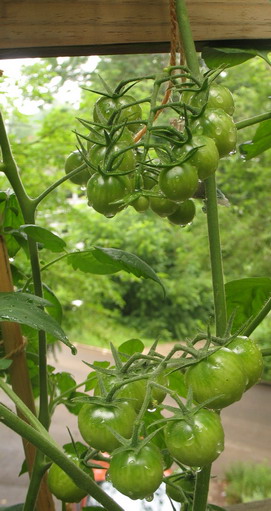
Yesterday as I watered the forty basil plants, (we like basil here–a lot), dozen chili pepper plants, various assorted tomatoes and other herbs up on my deck, I reflected on how good it made me feel to know that in a few months I’d be harvesting a lot of tasty food just outside my kitchen door. In a small way, it brought me back to my childhood summers at Grandma’s farm, and how wonderful it was to grow, harvest, cook, preserve and eat vegetables and fruits so fresh that they tasted of the sweet sun-warmed, rain-bathed earth itself.
Of course, I still look longingly at the huge hillside in our backyard, the one that -will- be terraced within the year, dreaming of the plenitude of food, herbs and flowers we will be growing in the future, but as I do so, I cannot help but think that not only is it beautiful to grow my own food, in the future, it will be an economical choice that will help cut down our food costs as well.
It seems that I am not the only one thinking these thoughts in the United States. Other folks have decided to grow food instead of lawns this year, and many of them cite the rising cost of food as the reason for their sudden interest in vegetable and fruit gardening.
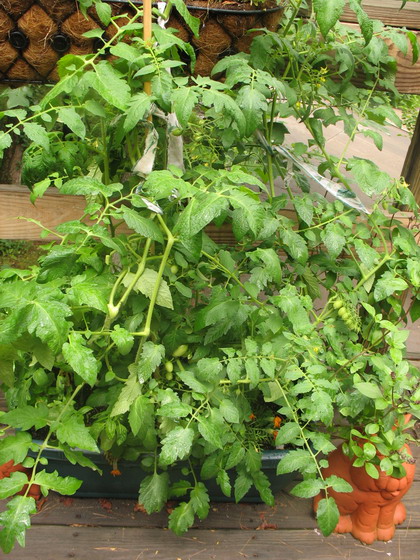
According to the New York Times, sales of vegetable and herb seeds and plants from the W. Atlee Burpee company have risen 40% in the past year–an amazingly precipitous jump that heralds a burgeoning interest in home food production that has not been seen among Americans since the 1970’s. Garden centers are selling out of vegetable and fruit plants and seeds and even potted fruit trees faster than they have in past decades as many new gardeners try out their green thumbs on full-blown kitchen gardens.
In the recent past, Americans have spent most of their gardening money and time on lawns, annual flowers, perennials, vegetables, trees and shrubs, in that order. According to a poll conducted on behalf of the Garden Writers Association, this year, American gardeners’ priorities have changed drastically as vegetables have jumped from fourth to second place.
To my ears, this is amazingly great news, because as far as I am concerned, anything that reconnects Americans to the source of our sustenance as well as getting them outside, moving and exercising in the fresh air and sunlight is wonderful. Gardening not only helps with grocery bills and overall health and fitness, it can also help us develop spiritually. There are so many lessons to be learned while digging in the dirt, pulling weeds and harvesting fruits, and I think that Americans will be the better for relearning these lessons.
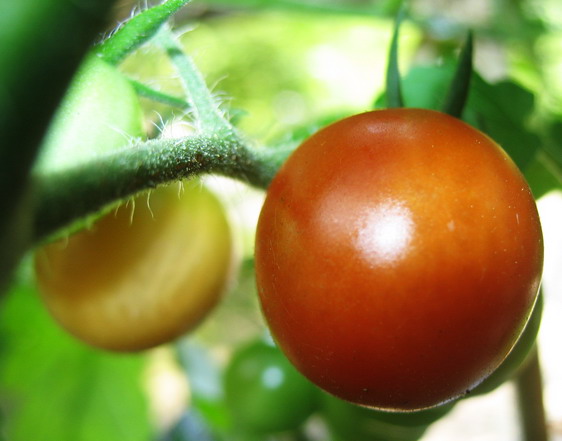
Reading the New York Times article brought a smile to my face and to my heart, and I just wanted to share it with everyone here.
And while I am at it, I wanted to share some resources for gardening how-tos and inspiration, because as I imagine that many new gardeners could use a little advice on how to grow vegetables, herbs and fruits most efficiently.
For starters, look at this new article from the LA Times about a technique that allows gardeners to get great harvests with no digging and very little watering. In drought-prone areas of the country, ideas like the ones outlined in this article can help make the difference between puny yields and a bountiful harvest.
Then, check out the supplementary website for the gardening book, Food, Not Lawns. The articles there are interesting and informative and give you an idea on what the book is about, which is a call on how to turn our lawns, which are resource-guzzling areas of essentially wasted space, into productive kitchen gardens and orchards
There is always The Mother Earth News, a great magazine that is chock-full of advice on gardening, frugal living, food preservation, composting, livestock husbandry, energy production, solar power and other green topics. I was first exposed to “Mother” as the publication is known by its fans back when I was a kid, because my grandparents subscribed to it and all of us learned a great deal from it. You can order their complete back issues on CD Rom from their website and I cannot think of a better resource for all things green than that.
Grandpa also introduced me to Rodale’s Organic Gardening by my Grandpa who switched from conventional petrochemical agriculture to organic methods and ended up with higher yields in the long run, not to mention not having to worry about pesticides killing his grandkids if we came across them in the barn.
A book of interest to those of you who are looking to grow food for the first time would be Gardening When It Counts: Growing Food In Hard Times. I haven’t gotten a copy of it yet, but I have read many glowing reviews of it, and when my copy of it comes in, I will definitely review it here.
Eliot Coleman’s Four Season Harvest: Organic Vegetables from Your Home Garden All Year Long
is a manual for growing vegetables all year around through the use of inexpensive unheated hoop houses and cold frames. Coleman is a market gardener in Maine, and he sells his vegetables all through the year, and he shows how sunlight and protection from the wind are more important for growing vegetables than temperature.
Coleman also has another useful book–The New Organic Grower–which is great primer on the subject of growing vegetables organically in either a home kitchen garden or a market garden setting. It contains all sorts of useful knowledge for both beginning and advanced gardeners.
Finally, there is Edward C. Smith’s The Vegetable Gardener’s Bible: Discover Ed’s High-Yield W-O-R-D System for All North American Gardening Regions--a very useful guide to growing vegetables in a small or large garden. I really like this book myself and have used the principles outlined in it in my garden when we lived in Pataskala to great effect.
Those are just some of the possible resources for all the new gardeners out there–can any of you suggest others?

Categories:
- Admin (rss) (55)
- Blogs and Blogging (rss) (81)
- Book Reviews: Cookbooks (rss) (43)
- Book Reviews: Non-Cookbook Food Books (rss) (38)
- Cats and Cat Blogging (rss) (47)
- Chinese Cooking Lessons (rss) (32)
- Culinary School Stories (rss) (18)
- Dairy Pruducts: Cultured and Barbaric (rss) (4)
- Documentary Filmmaking (rss) (1)
- Essays, Rants and Reflections (rss) (260)
- Fighting Hunger (rss) (12)
- Food and Kids (rss) (45)
- Food in the News (rss) (126)
- Food Media (rss) (98)
- Food Preservation (rss) (18)
- Food Safety (rss) (45)
- Gardening (rss) (30)
- Herbs and Herb Blogging (rss) (20)
- Holidays (rss) (50)
- Kat Blogging (rss) (22)
- Kitchen Science (rss) (36)
- Leftover Makeover (rss) (8)
- Life, the Universe and Everything (rss) (131)
- Local and Sustainable (rss) (227)
- Local Athens Food and Foodies (rss) (42)
- Meatless Mondays (rss) (32)
- Menu For Hope (rss) (5)
- Nutrition, Diet and Health (rss) (84)
- On The Farm (rss) (8)
- Recipes: Almost Vegetarian, Vegetarian and Vegan (rss) (294)
- Recipes: American Regional (rss) (37)
- Recipes: Appalachian Hillbilly (rss) (33)
- Recipes: Bread, Pasta, Grains (rss) (95)
- Recipes: Canning and Preserving (rss) (8)
- Recipes: Chinese (rss) (123)
- Recipes: Comfort Food (rss) (120)
- Recipes: Cookies (rss) (16)
- Recipes: Desserts (rss) (48)
- Recipes: French (rss) (25)
- Recipes: Fruits and Vegetables (rss) (302)
- Recipes: Greek, North African and Middle Eastern (rss) (31)
- Recipes: Indian (rss) (137)
- Recipes: Italian (rss) (42)
- Recipes: Japanese (rss) (7)
- Recipes: Jewish (rss) (4)
- Recipes: Korean (rss) (6)
- Recipes: Meat, Poultry and Fish (rss) (220)
- Recipes: Mexican/Native American/ Latin American/Caribb (rss) (27)
- Recipes: Original (rss) (108)
- Recipes: Thai (rss) (27)
- Recipes: Tofu (rss) (17)
- Recipes: US Regional (rss) (16)
- Recipes: Vietnamese (rss) (8)
- Restaurant Stories (rss) (28)
- Sewing, Quilting, Arts and Crafts (rss) (16)
- Simple Chinese Recipes (rss) (30)
- Slow Food and Heritage Foods (rss) (10)
- Spice Blogging (rss) (44)
- The Chinese Cookbook Project (rss) (14)
- The Chinese Pantry (rss) (39)
- The Documentary (rss) (2)
- The Kitchen Saga (rss) (17)
- The Locavore's Bookshelf (rss) (15)
- The Unsung Adventures of The Culinary Nerd (rss) (6)
- Tools and Toys (rss) (35)
- Uncategorized (rss) (10)
- With a Side of Politics (rss) (48)
Archives:
- August 2012 (9)
- July 2012 (12)
- September 2011 (3)
- August 2011 (7)
- July 2011 (8)
- June 2011 (16)
- May 2011 (17)
- April 2011 (11)
- December 2010 (9)
- November 2010 (5)
- February 2010 (1)
- December 2009 (5)
- November 2009 (7)
- October 2009 (10)
- September 2009 (16)
- August 2009 (14)
- July 2009 (14)
- June 2009 (7)
- May 2009 (17)
- April 2009 (10)
- March 2009 (25)
- February 2009 (13)
- January 2009 (10)
- December 2008 (5)
- November 2008 (5)
- October 2008 (6)
- September 2008 (13)
- August 2008 (8)
- July 2008 (11)
- June 2008 (18)
- May 2008 (13)
- April 2008 (14)
- March 2008 (16)
- February 2008 (17)
- January 2008 (19)
- December 2007 (25)
- November 2007 (18)
- October 2007 (24)
- September 2007 (16)
- August 2007 (15)
- July 2007 (15)
- June 2007 (10)
- May 2007 (14)
- April 2007 (16)
- March 2007 (17)
- February 2007 (20)
- January 2007 (13)
- November 2006 (1)
- October 2006 (8)
- September 2006 (14)
- August 2006 (25)
- July 2006 (30)
- June 2006 (28)
- May 2006 (34)
- April 2006 (29)
- March 2006 (24)
- February 2006 (30)
- January 2006 (38)
- December 2005 (40)
- November 2005 (37)
- October 2005 (32)
- September 2005 (25)
- August 2005 (30)
- July 2005 (28)
- June 2005 (21)
- May 2005 (8)
- April 2005 (22)
- March 2005 (17)
- February 2005 (29)
- January 2005 (10)
Search Site:
Links:
- Lily’s Wai Sek Hong
- 101 Cookbooks
- A cat in the kitchen
- A Veggie Venture
- Accidental Hedonist
- Cha Xiu Bao
- chez pim
- Chocolate & Zucchini
- Chopstick Cinema
- Chowhound.com
- Chubby Hubby
- Cook sister!
- Cooking with Amy
- da*xiang
- Eat Local Challenge
- Eating Liberally
- Ecocentric
- Eggbeater
- Epicurious
- Farmgirl Fare
- Fatfree Vegan
- Foodgoat
- ForkandBottle.com
- Green Olive Tree
- Hooked on Heat
- Jaden’s Steamy Kitchen
- Kalyn’s Kitchen
- Lucullian delights
- Mahanandi
- Matt Bites
- MeatHenge
- mmm-yoso!!!
- New York Times – Dining & Wine
- Pizza Goon
- Rasa Malaysia
- Ruhlman
- Sailu's Kitchen
- Serious Eats
- SF Gate: Food & Dining
- Simply Recipes
- Soul Fusion Kitchen
- Tastespotting
- The Amateur Gourmet
- The Cleaner Plate Club
- The Food Section
- The Grub Report
- thecookscottage
- U.S. Food Policy
- Wandering Chopsticks
- Washington Post Food and Dining
- Wasted Food
Meta:


Powered by WordPress. Graphics by Zak Kramer.
Design update by Daniel Trout.
Entries and comments feeds.