
Cook Local, Eat Global
Minna is Home
 I wanted to share the good news: Minnaloushe’s liver enzyme counts are back to normal levels. This fast reversal came about because we caught her anorexic behavior in time to provide aggressive treatement (force-feeding) and whatever it was that started the lack of interest in food is no longer an issue, as she has been eating both soft and dry food in large amounts, twice a day. She is also drinking water well, and there is no sign of permanent kidney or liver damage.
We brought her home today; we have to isolate her for a while in order to monitor her eating, drinking and output; we will probably keep her isolated from the other cats until she has regained her weight. She seems much more herself–Zak is up in the room where we are keeping her, playing flute for her. (She loves his flute music–the shakuhachi that she is pictured with there–a Japanese end-blown bamboo flute–is one of her favorites. She likes to sit on his lap or wrapped around his shoulders while he plays.)
So that is good news! Look for part IV of “Those Darned Chemicals” later tonight; Part V, which should just be the last of the annotated list of the troublesome food additives will come either tomorrow or the next day.
Thank you all for your support and concern–I am just glad that we don’t have to force feed her for weeks on end.
October Flavors
 October is my favorite month.
Autumn finally regales us with her glory, as she enrobes herself in a cloak of fiery color and shakes out her hair in a flurry of damp, chill breezes.
The nights grow subtly longer, and crickets, nightbirds and toads sing a lullaby to summer as clouds skitter across the somber face of the moon.
Crisp atumnal air calls out for deep, assertive flavors, a prelude to the heavier meals of winter when all the world sleeps, and our bodies crave comfort and warmth.
Root vegetables arise from the fecund earth, filled with sweetness, thier skins in jewel tones from amber to amethyst to rubine; the late fruits of the now-drooping tomato plants glimmer like smooth jade. Russet-skinned apples and pears hide honey-sweetness beneath thier dull skins like secrets held close to the heart of a confidante. The cool nights coax autumn greens into unfurling verdant leaves to the sky, thier flavors a suble blend of bitter salt tears and pungent pepperiness that is tempered by a kiss of sugar that appears magically after the first frost.
 Pork lends itself perfectly to the seasonal fruits and roots of October, and is as at home in the autumn kitchen as it is on the summer grill.
A simple spice rub and dusting of flour before sauteeing pork loin chops brings out their flavor, while a pan sauce of reduced wine, vegetable broth, soy sauce and honey creates a sparkling russet glaze that enrobes the meat in moisture. On another night, apple cider replaces the wine and dried cranberries will add a piquant note of whimsy to a dish which is always good, but never tastes exactly the same way twice.
Versatility in the kitchen relieves boredom of the palate.
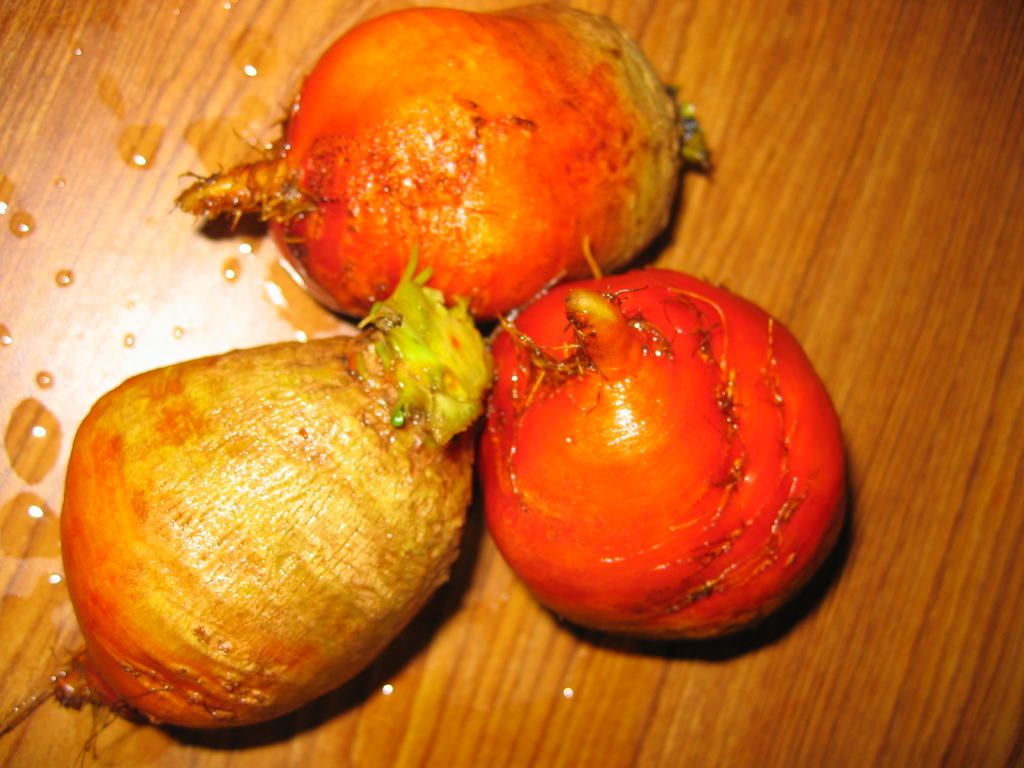 When I was a child, I had a love-hate relationship with beets. I loved the color of them; the garnet-wine hue was intensely attractive to me, and I liked the way that they turned transluescent when they were cooked and glowed on a white plate like rondels of stained glass.
But I hated the way that they tasted. I didn’t even like them pickled, though I loved helping Grandma when she put them up in jars, glistening in rows like gemstones captured in glass. I liked the smell of them, and the way the juice stained our hands pink; my eyes ate the vivid color of them, but my tongue would have nothing to do with them. I tried them every year and hated them, until one year, sixteen years ago, I began to crave them.
I was pregnant with Morganna and my mother-in-law was cooking Harvard beets–baby beets in a sweet and sour sauce. The smell caused me to salivate immediately and I remember diving into the pot with a fork, and plucking one out before it was fully cooked and popping it in my mouth.
It burst beneath my teeth in a shower of honey and vinegar, with juice tinged with the flavor of the earth itself.
I moaned, and from that time on, I have adored beets in many guises.
Golden beets are just as beautiful as the more usual red ones, though they are colored like topaz instead of garnet. They are also just as sweet, and I like to roast both kinds in the oven, just drizzled with olive oil, until they are tender, then peel them and feature them in salads. Together, the colors are evocative of a sunset as they glisten against a bed of autumn greens like arugula or mizuna. Paired with sweet honey pears, walnuts and goat cheese, then dressed with a simple balsamic vinaigrette, beets make a gorgeous salad filled with all of the flavors of autumn: bitter and sweet, earthy and peppery, milky, mild and tangy.
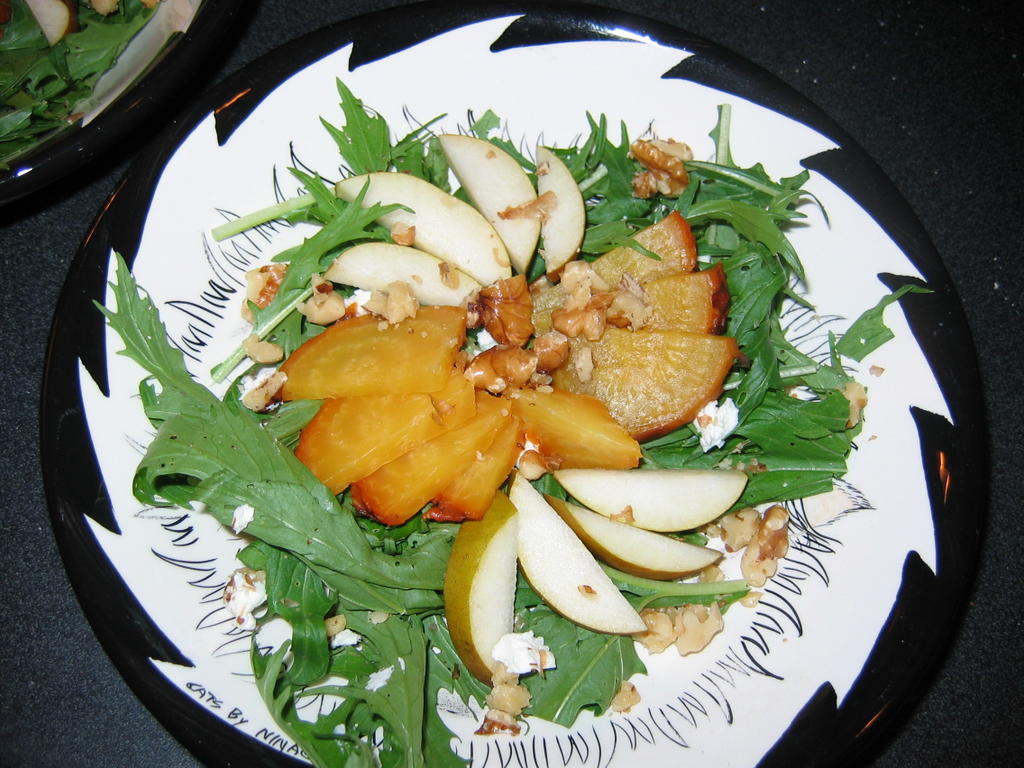 October Beet Salad with Mizuna and Pears (serves 3)
Ingredients for the Salad:
2 medium sized beets
1 tablespoon olive oil
2 honey pears, washed, dried, cored and thinly sliced
1/4 cup crushed walnuts
3 tablespoons crumbled goat cheese
3 cups mizuna leaves, washed, dried and torn into bite-sized pieces
Method:
Heat oven to 375 degrees. Line a baking pan with foil, and rub with a little of the olive oil.
Trim greens and large roots from beets, scrub skin thoroughly. If you are worried about juice staining your hands, wear latex gloves while handling beets. (Golden beets stain less.) Dry beets and put into baking pan, then drizzle with olive oil.
Put pan into oven and roast, uncovered, until beets have wrinkled, somewhat dried out looking skins and have shrunken a bit and are easily pierced with a fork. (Depending on the size of your beets, this can take from forty-five minutes to an hour.)
Remove from oven, allow to cool enough to handle. Using a paring knife and your fingers, peel off skin–it should be quite easy to remove. Cut beets in half laterally, then slice them into thin half-moon shapes.
Place one cup of mizuna leaves on each salad plate, and sprinkle one tablespoon of crumbled goat cheese over each plate. Arrange slices of beets and pears attractively over the greens, and sprinkle with walnuts.
Just before serving, drizzle with balsamic vinaigrette.
Ingredients for Balsamic Vinaigrette:
1 part balsamic vinegar
3 parts extra virgin olive oil
1 part honey
tamari soy sauce to taste
Method:
Mix vinegar, oil and honey together; I like to put them in a bottle, put the lid on it and shake them to combine.
Season to taste with soy sauce; the flavor should be sweet and sour with the pepperiness of the olive oil, with the salt from the soy sauce just a hint in the background.
Notes:
Mizuna is a type of Japanese mustard green. It is very mild and has attractive, very jagged leaves that are long and narrow. It grows in clumps, and has a thick central rib that is very crisp and has an icy sort of flavor, while the leaves themselves are peppery. It is very good raw; I am not as fond of it cooked.
My dog, Liriel, and our cat, Minna, both love mizuna and will beg for it when I bring it home from the farmer’s market. As long as I give them leaves, they will eat them.
The beets are very good marinated in the vinaigrette, and could be served as a chilled dish on their own that way. Or you could heat them and call the vinaigrette a sweet and sour sauce.
About Minnaloushe
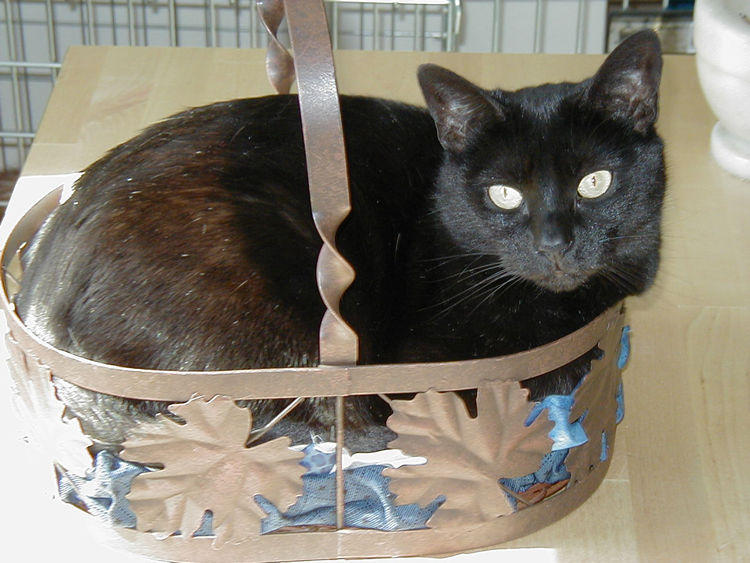 I know it isn’t weekend cat blogging time, but I have some not so good news about Zak’s beloved girl cat, Minnaloushe.
She is at the vet hospital right now; she has Feline Hepatic Lipidosis, commonly known as “Fatty Liver Syndrome.”
It happens when a cat stops eating for whatever reason; when they do this, and their bodies resort to metabolizing fat to survive, the liver ends up with fat deposited in its tissues. For whatever reason, cats are not efficient at metabolizing body fat, so it tends to build up in the liver and cause liver failure.
We have lost a cat in the past to this, over a decade ago, before vets knew much about it and how to treat it.
It is, however, treatable, and since we caught it so early, Minna has a good chance to pull through. What we have to do is force-feed her and give her IV fluids until her body stops metabolizing itself to survive. At that point, the liver damage is reversable. It just means that we may end up feeding her either through a stomach tube, or forcing food from a syringe into her mouth, for six or eight weeks.
I just thought I should let my readers know. For one thing, lots of you are cat lovers and know how Zak and Morganna and I dote on our kitties, and you would understand. For another thing, I don’t know how much time I will be able to devote to the blog if we are going to be running a kitty convalescence center in addition to getting our kitchen redone and keeping all and sundry fed and happy.
I will still finish “Those Darned Chemicals,” though, and I have lots of other stuff planned, including a new installment of “The Chinese Cookbook Project.” So, stay tuned and wish us all luck.
Thanks.
Preserving the Harvest: Basil, Chiles and Tomatoes, Oh, My!
 Summer is officially gone; October’s chill is in the air, the sun has hidden her face behind a veil of grey clouds, and night descends earlier with each turn of the Earth. The trees are flecked with scarlet and gold, and the air thrums with the beat of wings and the calls of geese as they fly toward warmer climes.
But the gardens of Athens county are yet prolific; the Farmer’s Market is filled with produce that sings to summer’s faded glory while trumpeting the autumn harvest. Wedding bouquet bunches of basil are cheaper than flowers, chiles of every size and color tempt from baskets and boxes, and tomatoes, both ripe and green are to be had from every farmer for next to nothing.
Of course, I have been buying these last hurrahs of summer up; for the past several weeks, at every trip to the market–generally a twice weekly journey–I pick up at least two bunches of basil, sometimes three. When I get home, I plunk them into a quart-sized recycled yogurt container of water and sit them on the counter to wait until I have a few spare moments.
 When I am not busy with dinner or with anything else in the kitchen, I pull out the Cuisinart and make a batch or two of pesto. It is the simplest thing in the world to do: first, I toast some pine nuts (if I have them, and usually do), and throw them into the processor bowl. Then I peel garlic, and toss it in as well. Then I pluck all the leaves from the basil and throw that in on top, then grate some parmesan cheese on top of it all. I sprinkle about a half teaspoon of salt and some generous grindings of black pepper over the cheese, put the lid on, and pick up the bottle of extra virgin olive oil.
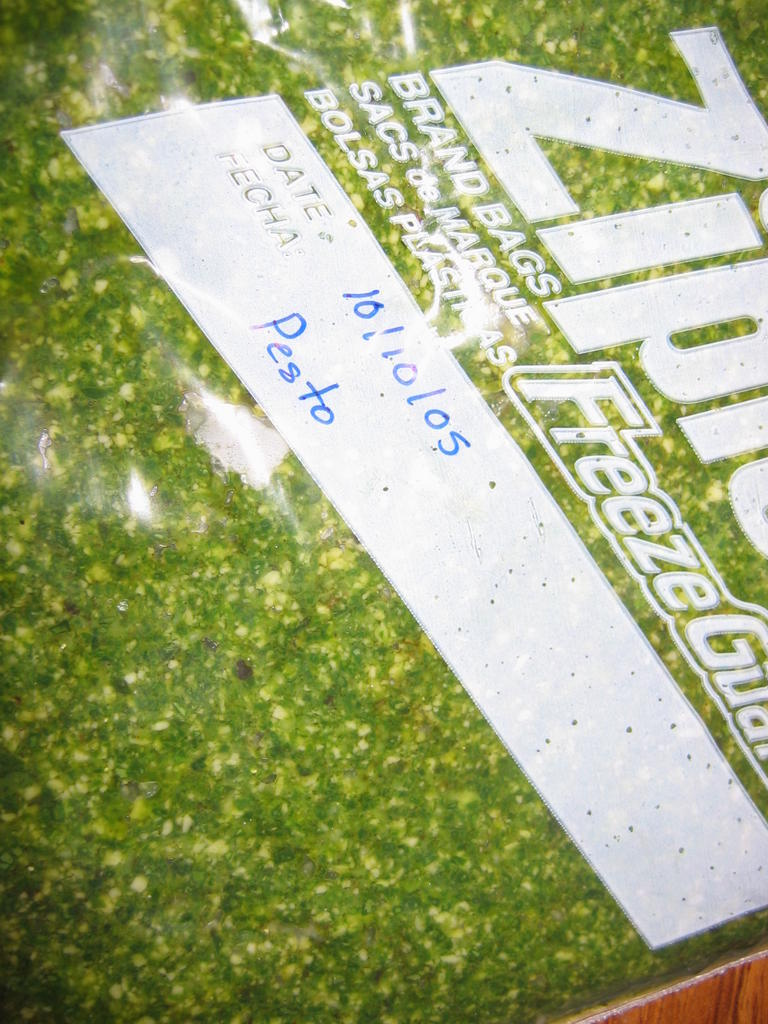 Then, I turn on the machine and start pouring the oil in a slow, steady drizzle. When a thick, brilliant green paste results, I stop the oil and the food processor. When I make pesto for freezing, I don’t make it as liquid as I do normally, because I never know what I am going to do with it. If I am going to use it for a pasta sauce, liquidy is better, but if I am going to use it to season a soup or as a pizza topping or to stuff a chicken breast, then I want it to be fairly thick. It is easier to thin a paste than to add bulk, so, I leave the pesto fairly thick.
Then it is a simple matter of scooping it with a silicone spatula into a couple or three freezer bags. (Here’s a big tip–label it first with a Sharpie pen–it is easier to write legibly if there is nothing in the bag.) After the bag has as much as I want in it (about a cup), I lay it flat on the counter, and squeeze out the air by spreading the pesto into a smoothly between the two pieces of plastic, then zip the bag shut. These stack easily in the freezer and take up very little room. Also, if you only want a little bit of pesto you can easily break or cut off a hunk and put the rest of it, still frozen, back into the freezer.
I have tried freezing it in ice cube trays and then popping out the green cubes and packing them in bags, but it really is a big pain in the butt to get the pesto out of the tray. It is pretty messy getting it, too, now that I think on it.
At this point, I have a dozen batches of pesto safely nestled in the freezer, waiting to bring the voluptuous flavor of summer into a blustery winter evening.
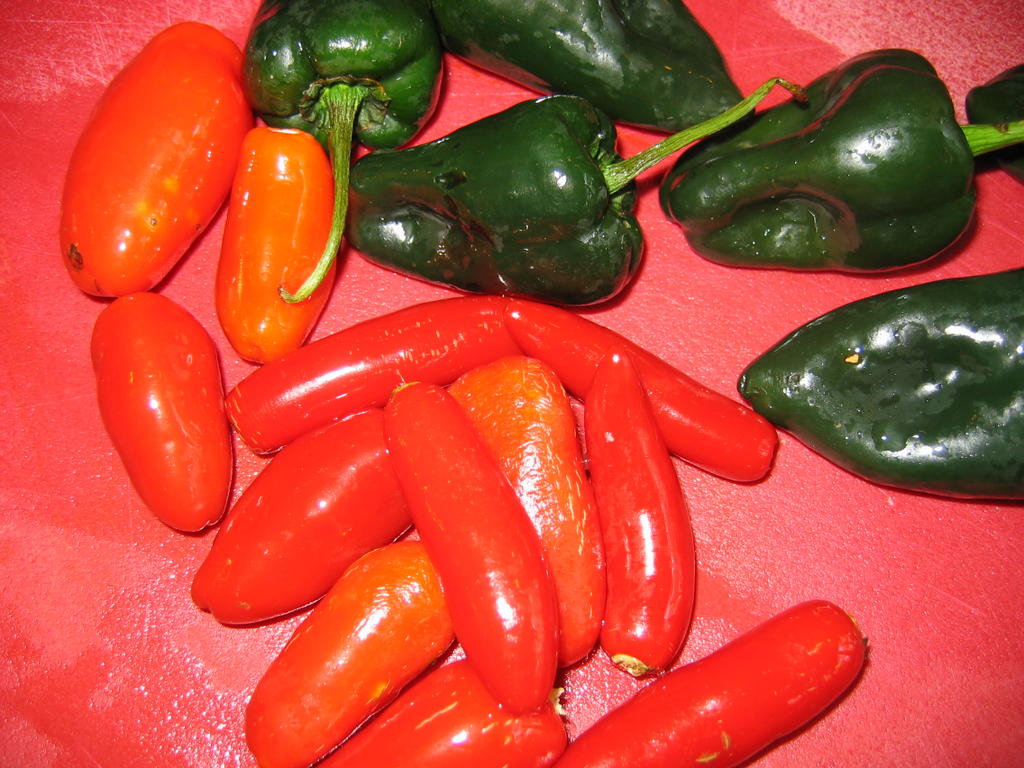 Chiles bring the heat of summer to my winter kitchen every year. I used to process them by mincing or chopping them up and then packing them in bags, but I found that it was hard for me to judge how much chile to use for any given recipe. I never measure chiles by teaspoons, but always by whole or half chile increments.
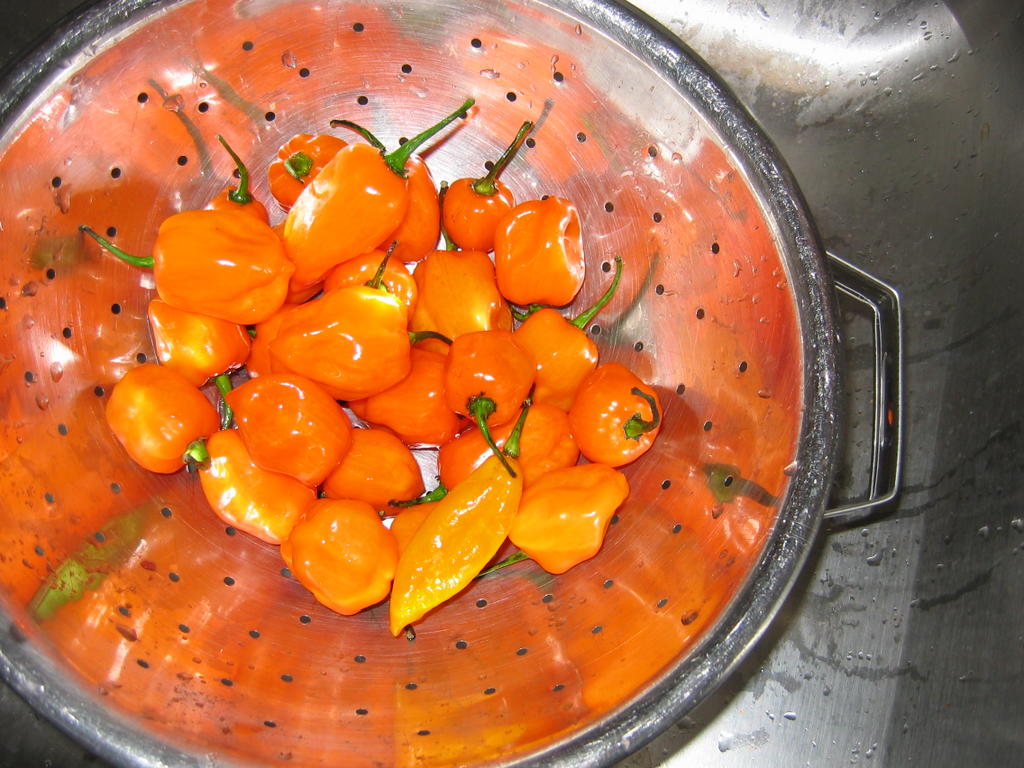
So, this year, I tried something new and just washed and dried the chiles, then removed their stems and stuck them in bags and froze them whole, separated by variety.
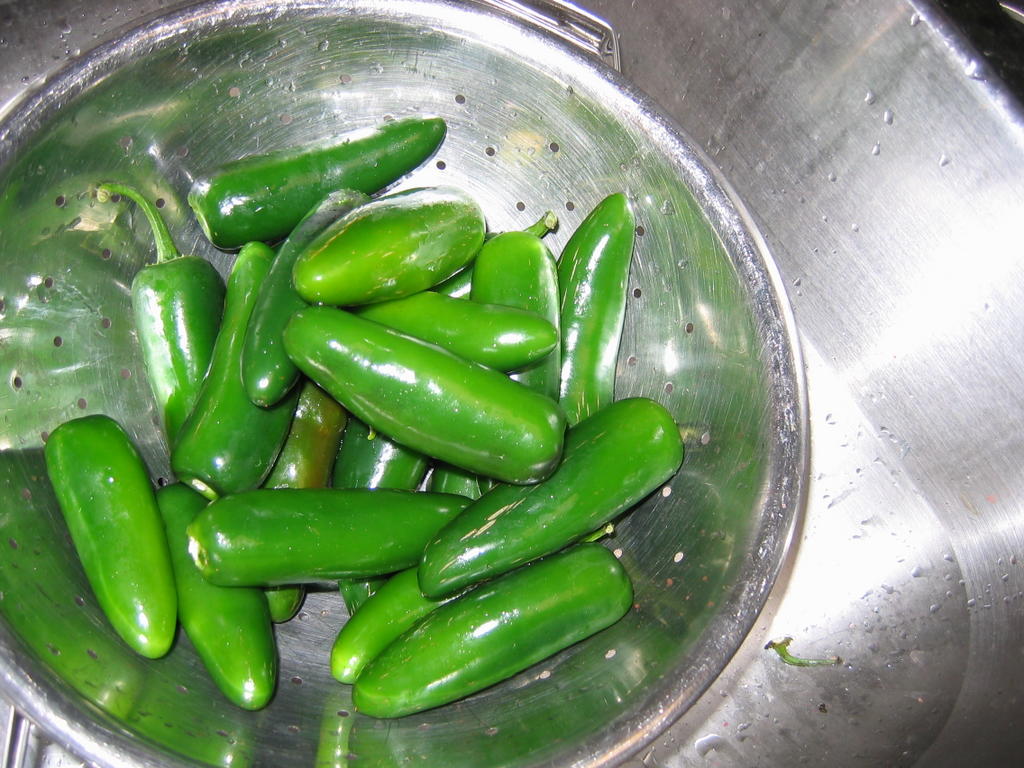 And what a variety there was: I ended up with a quart of Thai bird chiles, half a quart of serranos, a quart of ripe and green jalapenos, a quart of habaneros and a quart of cayenne.
 When we made kofta the other night, I used a whole, frozen Thai chile in it, to see how my new trick worked out, and it was easily chopped up in the Sumeet, and added just the
right amount of flavor to the curry paste. I
think it worked marvelously.
I will have to try one of the larger chiles, like the green jalapenos, to see if I can cut them still frozen, or if I need to let them thaw a bit first.
I also still have some poblanos and New Mexico green chiles to process; those will be a bit more complicated. I have to light the grill (which means I have to wait for the rain to stop) and blacken them completely on all sides, then let them steam, covered in a bowl. When they are cool enough to handle, I will peel off the burned skin, and then cut the roasted flesh into strips and pack those into freezer bags and use them in Mexican sauces over the winter.
I was given a huge bag of fresh tomatoes from Morganna’s friend Donny’s garden. His Mom had enough tomatoes, and wanted to be rid of them, so I was the thankful recipient of about twelve pounds of them. Since Zak and Morganna only really like tomatoes in salsa or pasta sauces, I decided to use them to make a basic marinara, and freeze that to use as the basis for any number of pasta dinners this coming winter.
Going from fresh tomatoes to sauce is kind of a messy journey, which is why we only have an illustration of the final product. While I was in the midst of peeling and seeding these very ripe, rich red babies, I was up to my elbows in tomato juice. Since Morganna was still visiting her grandfather and Zak was doing some computer work for a friend, there was no one else to take pictures, so you will have to make do with my description of the process, and hope that I luck into another big basket of tomatoes on a day when I have another photographer handy.
In that case, I will post more photographs.
But, at the end of all the tomato-juice follies, I ended up with three quarts of basic marinara that I can dig out of the freezer some night this winter when I have no clue what to cook, and just want something quicky and easy.
Next year, I think I will actually start canning some of the harvest. I really enjoy making fresh tomato sauces and salsas, even if it is messy, and I love the flavor of fresh jellies and jams. I have the equipment to start canning, so why not? I used to help my Grandma do canning and freezing all the time.
But not this year. This year, it is up to my friend the freezer and I to try and preserve the brilliant colors, flavors and scents of summer, so that when the icy wind blows and snow pours from the sky, I can cook up a meal that will remind us that warmth and sunlight always follows winter’s chill embrace.
 Fresh Tomato Marinara
Ingredients:
10-12 pounds fresh tomatoes
2 1/2 tablespoons olive oil
1 large onion, diced finely
1 red sweet pepper, diced finely
1 teaspoon dried thyme
2 teaspoons dried oregano
1 teaspoon dried powdered rosemary
1 tablespoon dried basil
1/2 teaspoon dried marjoram
1/4 teaspoon ground fennel seeds
pinch red pepper flakes
1 head garlic, minced
1 cup dry red wine
salt and pepper to taste
2 bay leaves
1 can tomato paste (optional)
fresh herbs (optional)
Method:
Bring a large pot of water to a boil. Wash the tomatoes thoroughly.
On the bottom of the tomatoes, opposite the stem, score a small X just through the skin with a paring knife. When all the tomatoes are scored, drop them into the boiling water, and let cook for about a minute. Drain into a colander, and when cool enough to handle, pick at the raised skin where you scored the tomatoes, and peel the skin off.
After they are skinned, cut out the core with a paring knife. To seed the tomatoes, cut them in half horizontally–between the stem and the bottom. This exposes all the seed pockets. Holding the tomato halves upside down over a bowl, use your fingers to scoop the seeds from the pockets. (Don’t get anal retentive about this–some seeds will get away from you. Don’t worry, no one will die from a few seeds in your pasta sauce.)
Discard the seeds, and set the now gnarly-looking, deformed tomatoes into a bowl until it is time to put them in the sauce.
In a big, heavy-bottomed pot, heat olive oil. Add onions and pepper and cook until golden. Add all dried herbs and spices, and continue cooking and stirring until the onions begin to brown slightly. At this point, add the garlic, and stir until the garlic is very fragrant.
Pour in the wine, and allow the alcohol to boil off.
When the alcohol is gone, add the tomatoes: if you want to, you can dice them, but I like chunky sauce, so I just pick them up in my hands, and holding them over the pot, squish them, pulverizing them into mushy bits, then letting them fall into the pot. Add salt and pepper and bay leaves; when you add them, keep in mind that you are going to simmer away most of the water, so do not salt so it tastes right at that moment. Undersalting is the rule of the day. If you want, you can add tomato paste to thicken the sauce even more, and to add a sweeter tomato flavor.
Turn the heat down to low, and simmer until the juice is reduced down, and the sauce is as thick as you like it.
When it is done, mince up as many fresh herbs as you like and add to the sauce and correct for salt.
This makes about three quarts of sauce. To freeze, cool down sauce, pack in bags, leaving about one and a half inches of headspace. Carefully push out the air and seal the bags closed, then lay them flat in the freezer. This ensures that they will take up very little room once they are frozen and they will stack nicely.
Note:
Roma or plum tomatoes make the best pasta sauces, but I was given just plain old garden tomatoes. And as ripe and wonderful as they were, they made a lovely sauce.
You can add other vegetables to this, but I like making a plain sauce and then later, when I use it, I can customize it into a mushroom sauce, a veggie sauce or a spicy arrabiata, depending on what I add to it after it is thawed. Or, I can brown some sausage, or make meatballs, or ground pork or veal for a quick meaty sauce.
Public Enemy Number One: The Kitten
 The only reason the little git yet lives is because he is so damned cute.
I was nearly finished with Part Four of the seemingly never-ending series of “Those Darned Chemicals” when Mr. Pain in my Tuchus decided to step on the switch to the power bar/surge protector on my computer.
And I lost the whole blessed post.
The little twit.
And he just skittered under my desk again. (Only to be chased out with a well-placed hiss from me and muttered threats of beheading.)
I wonder how he would taste, sauteed with butter and garlic?
Or perhaps I should stir fry him with garlic, and scallions with just a hint of sesame oil at the end?
I am going to leave off with the writing now and recreate the post on Monday. I have too many other things to do today to worry about it.
I can’t believe it! He went back there AGAIN! ARGH!!!!!

Categories:
- Admin (rss) (55)
- Blogs and Blogging (rss) (81)
- Book Reviews: Cookbooks (rss) (43)
- Book Reviews: Non-Cookbook Food Books (rss) (38)
- Cats and Cat Blogging (rss) (47)
- Chinese Cooking Lessons (rss) (32)
- Culinary School Stories (rss) (18)
- Dairy Pruducts: Cultured and Barbaric (rss) (4)
- Documentary Filmmaking (rss) (1)
- Essays, Rants and Reflections (rss) (260)
- Fighting Hunger (rss) (12)
- Food and Kids (rss) (45)
- Food in the News (rss) (126)
- Food Media (rss) (98)
- Food Preservation (rss) (18)
- Food Safety (rss) (45)
- Gardening (rss) (30)
- Herbs and Herb Blogging (rss) (20)
- Holidays (rss) (50)
- Kat Blogging (rss) (22)
- Kitchen Science (rss) (36)
- Leftover Makeover (rss) (8)
- Life, the Universe and Everything (rss) (131)
- Local and Sustainable (rss) (227)
- Local Athens Food and Foodies (rss) (42)
- Meatless Mondays (rss) (32)
- Menu For Hope (rss) (5)
- Nutrition, Diet and Health (rss) (84)
- On The Farm (rss) (8)
- Recipes: Almost Vegetarian, Vegetarian and Vegan (rss) (294)
- Recipes: American Regional (rss) (37)
- Recipes: Appalachian Hillbilly (rss) (33)
- Recipes: Bread, Pasta, Grains (rss) (95)
- Recipes: Canning and Preserving (rss) (8)
- Recipes: Chinese (rss) (123)
- Recipes: Comfort Food (rss) (120)
- Recipes: Cookies (rss) (16)
- Recipes: Desserts (rss) (48)
- Recipes: French (rss) (25)
- Recipes: Fruits and Vegetables (rss) (302)
- Recipes: Greek, North African and Middle Eastern (rss) (31)
- Recipes: Indian (rss) (137)
- Recipes: Italian (rss) (42)
- Recipes: Japanese (rss) (7)
- Recipes: Jewish (rss) (4)
- Recipes: Korean (rss) (6)
- Recipes: Meat, Poultry and Fish (rss) (220)
- Recipes: Mexican/Native American/ Latin American/Caribb (rss) (27)
- Recipes: Original (rss) (108)
- Recipes: Thai (rss) (27)
- Recipes: Tofu (rss) (17)
- Recipes: US Regional (rss) (16)
- Recipes: Vietnamese (rss) (8)
- Restaurant Stories (rss) (28)
- Sewing, Quilting, Arts and Crafts (rss) (16)
- Simple Chinese Recipes (rss) (30)
- Slow Food and Heritage Foods (rss) (10)
- Spice Blogging (rss) (44)
- The Chinese Cookbook Project (rss) (14)
- The Chinese Pantry (rss) (39)
- The Documentary (rss) (2)
- The Kitchen Saga (rss) (17)
- The Locavore's Bookshelf (rss) (15)
- The Unsung Adventures of The Culinary Nerd (rss) (6)
- Tools and Toys (rss) (35)
- Uncategorized (rss) (10)
- With a Side of Politics (rss) (48)
Archives:
- August 2012 (9)
- July 2012 (12)
- September 2011 (3)
- August 2011 (7)
- July 2011 (8)
- June 2011 (16)
- May 2011 (17)
- April 2011 (11)
- December 2010 (9)
- November 2010 (5)
- February 2010 (1)
- December 2009 (5)
- November 2009 (7)
- October 2009 (10)
- September 2009 (16)
- August 2009 (14)
- July 2009 (14)
- June 2009 (7)
- May 2009 (17)
- April 2009 (10)
- March 2009 (25)
- February 2009 (13)
- January 2009 (10)
- December 2008 (5)
- November 2008 (5)
- October 2008 (6)
- September 2008 (13)
- August 2008 (8)
- July 2008 (11)
- June 2008 (18)
- May 2008 (13)
- April 2008 (14)
- March 2008 (16)
- February 2008 (17)
- January 2008 (19)
- December 2007 (25)
- November 2007 (18)
- October 2007 (24)
- September 2007 (16)
- August 2007 (15)
- July 2007 (15)
- June 2007 (10)
- May 2007 (14)
- April 2007 (16)
- March 2007 (17)
- February 2007 (20)
- January 2007 (13)
- November 2006 (1)
- October 2006 (8)
- September 2006 (14)
- August 2006 (25)
- July 2006 (30)
- June 2006 (28)
- May 2006 (34)
- April 2006 (29)
- March 2006 (24)
- February 2006 (30)
- January 2006 (38)
- December 2005 (40)
- November 2005 (37)
- October 2005 (32)
- September 2005 (25)
- August 2005 (30)
- July 2005 (28)
- June 2005 (21)
- May 2005 (8)
- April 2005 (22)
- March 2005 (17)
- February 2005 (29)
- January 2005 (10)
Search Site:
Links:
- Lily’s Wai Sek Hong
- 101 Cookbooks
- A cat in the kitchen
- A Veggie Venture
- Accidental Hedonist
- Cha Xiu Bao
- chez pim
- Chocolate & Zucchini
- Chopstick Cinema
- Chowhound.com
- Chubby Hubby
- Cook sister!
- Cooking with Amy
- da*xiang
- Eat Local Challenge
- Eating Liberally
- Ecocentric
- Eggbeater
- Epicurious
- Farmgirl Fare
- Fatfree Vegan
- Foodgoat
- ForkandBottle.com
- Green Olive Tree
- Hooked on Heat
- Jaden’s Steamy Kitchen
- Kalyn’s Kitchen
- Lucullian delights
- Mahanandi
- Matt Bites
- MeatHenge
- mmm-yoso!!!
- New York Times – Dining & Wine
- Pizza Goon
- Rasa Malaysia
- Ruhlman
- Sailu's Kitchen
- Serious Eats
- SF Gate: Food & Dining
- Simply Recipes
- Soul Fusion Kitchen
- Tastespotting
- The Amateur Gourmet
- The Cleaner Plate Club
- The Food Section
- The Grub Report
- thecookscottage
- U.S. Food Policy
- Wandering Chopsticks
- Washington Post Food and Dining
- Wasted Food
Meta:


Powered by WordPress. Graphics by Zak Kramer.
Design update by Daniel Trout.
Entries and comments feeds.