
Cook Local, Eat Global
Book Review: The Unprejudiced Palate
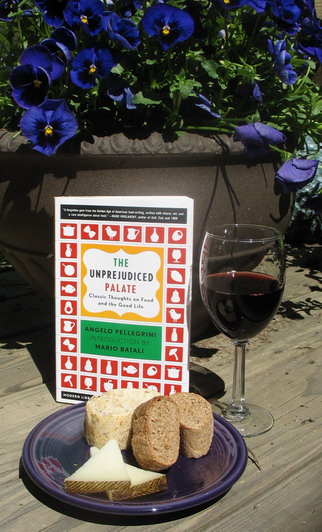
Although first published over fifty years ago, Angelo Pellegrini’s The Unprejudiced Palate: Classic Thoughts on Food and the Good Life is one of those works which rings as true today, as when the author first put pen to paper.
The slender volume, which mostly contains Pellegrini’s injunctions and instructions on how to grow, cook and enjoy simple food, is more than it appears to be. It is a call to an authentic life, full of gustatory and sensual pleasures, tempered by the joy in physical labor well done.
Pellegrini was an interesting man; he was born in the early years of the twentieth century as a poor peasant in Tuscany, who at the age of eleven, immigrated with his family to the United States, where they settled in the Pacific Northwest. There, his father worked in the lumber camps, while he and his mother and siblings learned to adapt to the plentiful food and opportunity that their new home afforded.
This gave Pellegrini a unique perspective on food. Born into wrenching poverty where food was monotonous and scarce, he later came to a land of such plenty that at first, it was beyond his ability to believe and understand. Watching Americans waste food astonished him as a child; as an adult such flagrant over-consumption disgusted him.
He states early in his work, “Frugality, or the absence of waste, made a universal law, would mean abundance potentially available to everyone….I consider frugal habits as desireable as temperate habits in the achievement of the good life. The good things of the earth are intended for our use; when we waste them, we sink below the level of the dog who buries a bone for the morrow when is belly is full.”
All of Pellegrini’s opinions are stated at least that strongly, though sometimes, he is even more passionate. Particularly when he espouses his ideal of every household growing some of its own vegetables, fruits and herbs, his language blossoms with ardent description. Digging into the earth, he claims, roots a person and a family in their home, and it is labor that is honest, and which gives more dividends than can be counted. Hard work is never to be shirked from, particularly when perfectly ripe, fresh artichokes, tomatoes and basil are one of the results.
Many of the thoughts expressed in The Unprejudiced Palate predate the current trend of eating local and in season; but the ideals are the same. Written at around the time that the United States was moving away from family farms and toward huge factory farming conglomerates, the book contains the seeds of mistrust for this very efficient, yet perversely wasteful, method of agriculture. As a child, Pellegrini went on a field trip with his schoolmates to visit several of the new-style very large farms, where milk cows were confined in what he described as a “very clean barn” where they contentedly chewed hay and corn and were milked several times a day, and a hen-house that was similarly clean, but where the lights were kept on continually to fool the chickens into laying more eggs.
Clearly impressed with the cleanliness and size of the facilities, Pellegrini nonetheless mentioned the very soulless character of the farms and how it disturbed him that the chickens and cows were likely to be worn out at a younger age from producing so much milk and eggs.
However, one should not mistake the author for an animal-rights activist by any stretch of the imagination. A great lover of meat, Pellegrini mentions hunting songbirds as a child and selling them the wealthy so they may be served at their tables, and so that he himself might have money for shoes that he might go to school. He tells a funny tale of using a sling to kill blackbirds on the farm of a college girlfriend, and then cooking and serving them to her horrified parents. At that point, he realized that perhaps that the distance between their birth cultures was too great to consider marriage, and the pair soon drifted apart, likely to the relief of the young lady’s parents who had been astonished by the poetry-spouting, wine-imbibing young Italian man at their table.
There is a great deal of poetry in the book. Pellegrini has a way with words, even if he didn’t learn language until his second decade of life. Of course, as a professor of English Literature, it is not surprising that Pellegrini’s command of English is great; what is surprising is how much of the music, color and passion of his native Tuscan comes through in the work, particularly when he gives instructions on cooking this dish or that, or speaks of how drinking wine with meals from an early age begets a healthy temperence where alcohol is concerned.
Throughout the book, though he espouses the superiority of the immigrant’s cooking and philosophy of life, Pellegrini addresses the American housewife, encouraging her by saying that with the abundance of good food at her disposal, there is no reason she could not become one of the best cooks in the world. He presages America’s culinary awakening by noting that it takes time to grow a cuisine and since the US is not even two hundred years old, it is no wonder that many of her citizens are gastronimically backwards. In his opinion, at the time of writing, the national cuisines of the US had not really had time to be created, though he hopefully notes that he sees glimmers of growth occurring in every state he has visited.
All in all, it is a fascinating book, one that is well worth picking up and reading. Though it is a very small book, I suggest taking your time with it, and sipping it slowly, savoring the mellifluous language of Pellegrini’s thoughts and arguments, instead of gulping it down in one sitting.
A literary Big Mac this is not; it is more like a banquet of ideas meant to be enjoyed over a leisurely time, preferably in the company of a glass of wine and a loaf of simple, but exquisite bread.
ISP Outage, Again
This is just a quick note to let you know that we had an outage at my ISP yesterday, so that is why there was no post, nor any email going out.
I will be catching up tomorrow.
We got lucky–the reason the outage happened was because the local electric company had a fire at the top of a pole which housed the local ISP, Time Warner Cable’s digital lines, and some telecom lines. The ISP is still down, Time Warner is up, which is why I am writing this now, and the phones are mostly back. I am just happy that more people did not lose electricity or phone.
More later!
Sometimes, You Just Have To Make Cookies….
Try as I might to be a good Mom, and feed wholesome, nutritous food to myself and my family, I have discovered that sometimes, you just have to make a batch of cookies.
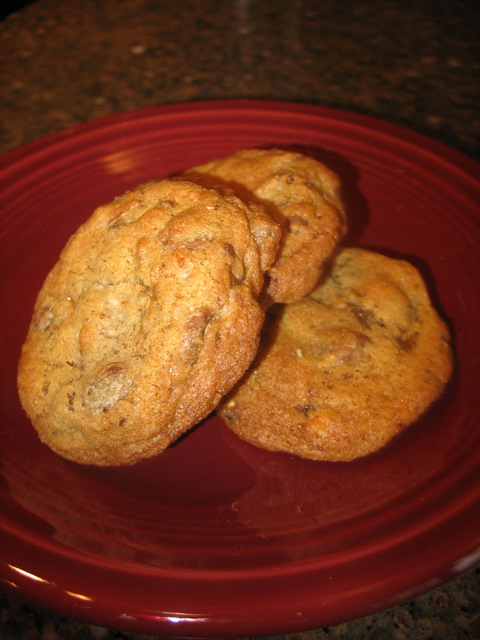
Sometimes, that is just all that will do to quell the cravings of the teenager who comes home, hugs me and says, “Mom, can we bake cookies tonight?” ( I am also firmly of the belief that much of the pleasure in cookies rests in the making of them, particularly when this is a social, bonding sort of event between friends and family members.)
Do I really want cookies sitting around the house?
No.
But, on the other hand, neither do I want to turn cookies into a forbidden substance which are then made all the more alluring by virtue of them being frowned upon as an unallowable vice. (And, besides, I am grateful that my daughter wants to do stuff with me–that is not the case with all daughters and mothers.)
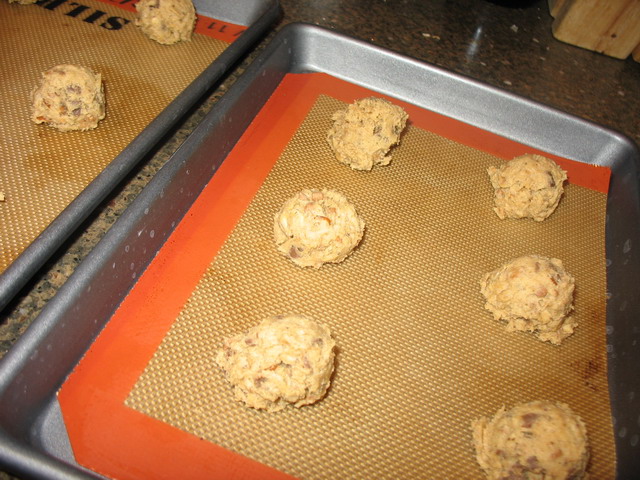
So, sometimes, cookies just want to be made, need to be made, and must be made.
But which cookies?
We discovered something last night.
When one is hungry, every cookie recipe in the cookbook looks and sounds like the best thing on earth. The only thing that would make them better is for them to grow effortlessly upon a tree in the front yard, with an endless fountain of milk alongside. Even cookies filled with ingredients that one does not care for, such as raisins, sweetened flaked coconut and carob, are made endlessly appealing through the simple application of hunger and good food photography.
Brownies were the first choice.
Specifically my Aztec Gold Brownies which are flavored with a great deal of dark chocolate, espresso powder, cinnamon and ground chipotle pepper.
However, I didn’t feel like making those, and no other brownies appealed to Morganna, because as she said, “I don’t really want something chocolately.”
When I pointed out the obvious contradiction of her position (“I want Aztec Gold Brownies, but I don’t want anything chocolatey”), she defended herself by saying that Aztec Gold Brownies were anything but “just chocolatey.” They are also bitter, sweet, spicy and hot, in addition to chocolately, with the chocolate somehow coming in last among all of the flavors, even though it is a dominant ingredients.
There is no logic when it comes to deciding on what cookie it is that will feed a craving, so I gave up on trying to understand my child’s taste. To me, the brownies are indeed chocolately, but with a complex series of flavors mixed into them, which adds depth and drama to what looks like a plain old brownie.
Back to the difficult decision on what cookies to make.
Snickerdoodles were rejected out of hand, because Morganna doesn’t much care for them, even if I haven’t blogged about them yet and they are an important bit of family history passed down from her great-great Grandma Fisher. She suggested the Aphrodite Cakes, but I refused on the grounds that by the time I had made them, cooled them and iced them, she would be long abed and asleep, and then Zak would eat them all before morning, and she would get none.
This was not pleasing to her. (I cannot imagine why.)
Then she said she wanted spice cookies, and I instantly thought oatmeal cookies with spices would be good, but no, she was not into that.
We looked in the cookbooks at our disposal (many), and Morganna came to the conclusion that too many things sounded good for her to make a decision.
There was nothing for it.
Only one cookie would do. Only one cookie could come to the rescue in this turbulent trying time:
Coyote Chip Cookies.
No, you don’t make them out of coyote droppings.
Nor is it necessary, when setting out to make a batch, for the cook to “catch a coyote, and put it through a chipper-shredder” in order to make “coyote chips.”
No, no, nothing like that. (Besides, chipper shredders are much better at making salads than cookies….)
The fanciful name came from a reader, who, when I described these cookies on an lj community, who said, “You have to call them, “Coyote Cookies,” because they are so chaotic and they have everything in them.” Coyote, of course, is a Trickster in many Native American cultures, and these cookies are tricksters, too. Are they chocolate chip cookies? Or spice cookies? (Or, if I had my way, are they oatmeal cookies?) What all do I taste in here?
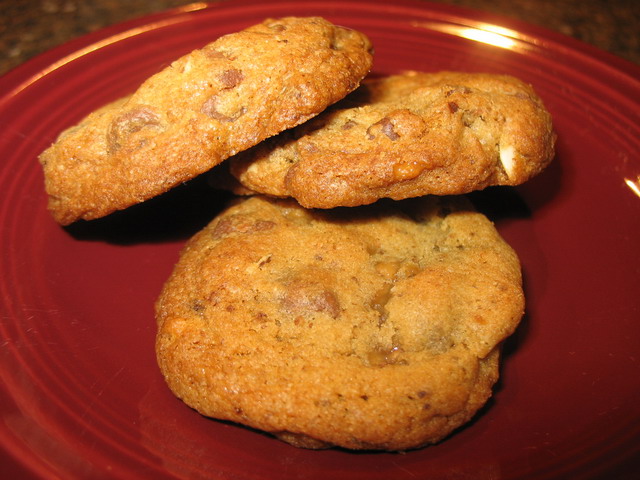
A good thought, I decided, for indeed, there is some of everything in them, and the flavors swirl together in a complex dance of texture and taste on the tongue. There is chocolate, coffee, almonds, toffee, spices and other good things in there.
(There would be more of everything, but Morganna vetoed my desire to put rolled oats in for extra chew and nutritional value. I think I may sneak them in next time after all, because I think that the cookies could be improved with just a bit of extra chewiy-chompiness.)
The recipe is based on the good old, tried and true, Nestle Tollhouse Cookie recipe that is ubiquitous, but after the basic dough is constructed, my recipe diverges wildly on flavorings and add-ins, such that the cookies become a veritable chewy, crunchy, sweet, and spicy storm of little bites.
So, without further ado, here is a cookie recipe for those times when you just have to make cookies, but you aren’t sure what kind to make….
Coyote Chip Cookies
Ingredients:
2 1/4 cups all purpose flour
1 teaspoon baking soda
1 1/2 tablespoons espresso powder
1/2 teaspoon cinnamon
1/8 teaspoon ground cloves
1 teaspoon salt
1 cup unsalted butter, cold from the fridge–not softened (This keeps them chewier and denser)
1 1/2 cups light brown sugar, packed
1 teaspoon double strength vanilla extract
2 eggs
1/2 cup sliced almonds
1/2 cup cinnamon morsels
1/2 cup toffee chips
1/2 cup rolled oats (optional)
1 12 ounce package milk chocolate morsels
Method:
Preheat oven to 375 degrees F.
Combine flour, baking soda, espresso powder, cinnamon and salt in a small bowl. In a mixing bowl, cream butter and sugar together until light and fluffy. Add vanilla, and the eggs, one at a time, beating to combine.
Gradually add flour mixture, beating thoroughly between additions, until all flour is used.
Mix in almonds, cinnamon chips, toffee bits, oats and chocolate chips, either by hand or with the mixer, depending on how well your mixer tolerates very stiff doughs.
Scoop with a small cookie scoop onto cookie sheets lined with silpats, and bake for 10 minutes. Allow to sit on sheets for three minutes, then remove to racks to finish cooling.
Of course, I am wondering how I can improve these cookies. What else can be added to the trickster-chaos? No one in the household likes sweetened flaked coconut, but I wonder if I could get away with plain old dehydrated coconut? What about some sort of fruit, or would that clash utterly with the chocolate? (Bananas, perhaps? Or apricots, for indeed, they are high in iron….)
Ooh–I know! Dried sour cherries! They go with chocolate! And almonds, coffee, spices and toffee!
The fun never ends.
Eating For Two, Cooking For Four
One of the first things I noticed when I first became pregnant, was that my tastes were changing.
This happened when I was pregnant with Morganna, too, of course, but I don’t remember specifically how that all worked except for a few things: I wanted cheese all the time, I craved beets, which I normally hated, and I wanted to eat liverwurst, another less than beloved item, constantly.
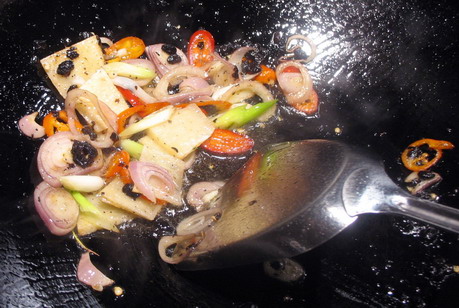
This time around, I discovered a great many food aversions as my nausea deepened. Red meat, particularly beef, normally a beloved food, became a source of extreme repugnance. The smell of the meat as I cut it to stir fry was nearly unbearable; I found myself unable to eat it after a time, because the smell was so overwhelmingly foul that I simply could not bring myself to eat it. At those times, luckily, I had added tofu to the dishes, thinking that I would be better served to try and eat that, and luckily, I was correct. I would guzzle up the tofu, and leave the meat in the serving dish with a curled lip.
Pork became problematic, as well, though it fared better than beef. Cured pork products such as ham and bacon, were still good, as was sausage. Ma Po Tofu, made with minced pork and large cubes of tofu flavored with preserved vegetable, fermented black beans and broad bean chile paste, still tasted divine, though, again, I ate more of the tofu than the pork. Stir fried pork dishes were still good, so long as I added pressed tofu to them so that I could eat just a few pieces of pork, and finish filling up on tofu, vegetables and rice.
I realized a few days ago, that with this pregnancy, I seem to be returning to my childhood food preference patterns, and I find this curious; I cannot help but wonder if other women experience the same phenominon.
When I was a child, I still loved strong flavors–my mother often tells the story of how she let me teeth on cleaned, whole scallions, which I would gum happily, with green-tinted drool pouring down my chin. Apparently my breath was worthy of a dragon, but I was happier chewing on the onion than on a zweiback biscuit like other babies. (I still think that zweiback and arrowroot biscuits are wretched things. I cannot see how kids can bear them.) It just meant that Mom had to brush my teeth and gums a few extra times a day and use a bit of bleach to get the green stains out of my bibs and t-shirts….
But even as I grew, I always loved the strong flavors of onions, green onions, ramps, garlic, and sweet peppers. I was especially fond of olives and garlicky kosher dill pickles. I am told that I would gnaw on a whole one of those for hours before finally finishing it, with a great sigh of contentment. Strong cheeses were also a favorite, though it seems that even at an early age, I was allergic to bleu cheeses, which I loved even then. I remember getting powerfully sick off of some bleu cheese spread my mother let me eat at the age of two. My father thought it was just that it was too rich, however, later, we discovered that I am allergic to the mold that makes the cheese taste so wonderfully tangy.
There were other distinctive patterns to my eating. I loved most vegetables, if not cooked, then raw. My mother tended to overcook peas and broccoli, so I didn’t care for them cooked, but would eat them with relish raw. The same was true for turnips. Brussels sprouts I never learned to like, and unpickled beets were not favored (though pickled, they were quite good and I always loved their beautiful carmine color), but other than that, there was not a vegetable that I did not like. Green beans were a favorite, as were tomatoes, cooked and raw. Corn, particularly fresh from the stalk and uncooked or lightly boiled or roasted, was wonderful to me, a boon companion of long summer days. Carrots I would dig from the garden, wipe off the mud and eat out of hand, and lima beans, zucchini, yellow crookneck squash, eggplant, cauliflower, raw cabbage, hot peppers, kale, acorn squash, sweet potatoes, and dried beans such as pintos, navy, great northern and kidney beans were all eaten with great gusto.
The problem was, I didn’t much care for meat.
I would eat as little as I could get away with, with the exception of sausages, bacon or ham, chicken, turkey and fish–all of which I positively adored. But red meats I tended to dislike greatly, and would try to get out of eating, and if my parents didn’t watch me closely, I would end up feeding much of my portion to my faithful dog, Rufus, who sat by my side, ready to help me get rid of that incriminating dried out porkchop or greasy hamburger.
I even hated steak with a great passion, which confused many of my relatives. I made exceptions for pork or beef pot roasts, so long as a great deal of gravy was involved–which should give a clue to the problem. I didn’t like dried out, overcooked meat–but I didn’t know that at the time. At the time, I just knew that it had no flavor compared to vegetables, and it just wasn’t worth taking up space on my plate when I could have more vegetables if I didn’t have to eat meat.
I liked grain products, too–especially whole wheat bread, and I loved rice. Mom only made Minute Rice, which is not that good, but I loved it anyway, and ate it with glee, especially when I had it with bits of leftover pot roast shredded on top with some gravy. That was my favorite leftover dinner. Pasta was great, especially Mom’s homemade chicken and noodles with mashed potatoes. Spaghetti was great, too, but I never liked the meat sauce Mom made. Too much meat, not enough tomato, so I ate the pasta and left most of the sauce behind–a habit which caused quarrels at the dinner table.
Meat was such an issue in our house that my mother finally took me to the doctor when I was about six or seven, to ask him what was wrong with me that I didn’t like to eat enough meat. (Of course, her idea of “enough” was a bit daft–my mother learned to cook by watching her mother who cooked for farmworkers, fieldhands, and a husband and children who had worked a full day on the farm. So, my mother’s idea of proper portions was skewed. I ate a lot at Grandma’s, it is true, but then, I was running, playing and working in the garden for hours, so I burned off calories and needed to eat more. At home, I was more sedentary than that and ate less.)
Dr. Staat was an old country doctor, with a handlebar mustache, little round spectacles and a pocketwatch in his suit under his lab coat. He looked like a character from a Mark Twain story, he was so old-fashioned, and he was very quiet.
While he examined me, (an examination which included him sticking a finger in my mouth and having me bite down to see if my teeth were strong) he asked my mother what the problem was, and she told him, “She never likes to eat meat. I always have to fuss at her to finish it, and half the time she’s stubborn and won’t eat it anyway, and I make her sit at the table until it is done, and she still won’t eat it.”
He nodded, went, “hmm” and then said, “So what -does- she eat? Candy?”
Mom said, “Well, she does eat candy, but not habitually–we don’t keep it around. But she does like bread, and she loves rice, though I have no idea why, and she likes vegetables.”
He turned a critical eye upon me. “Vegetables?” he said. “What vegetables do you eat, little one?”
I dutifully began listing vegetables, my favorites first, in a singsong voice. “Green beans, tomatoes, carrots, corn, spinach, pinto beans, potatoes, navy beans, lima beans, kidney beans, onions, pickles, cucumbers, squash, sweet potatoes….”
He held up a hand to interrupt me. “How do you eat them?” he asked.
“Cooked or raw, but I like ’em best from the garden. I don’t like canned corn, ” I confided. “It tastes funny.”
He nodded. “What is your favorite fruit?”
“Sour cherries!” I said, bouncing. “And blackberries, and strawberries, and grapefruit and oranges and I like to eat lemons, too, but Mamma thinks that is bad for me.”
He looked at my mother sidelone and looked back at me.
“Why don’t you like meat?”
“It tastes funny. It’s dry or greasy and I don’t a lot of it. But I like bacon, and ham, and chicken and fish is my favorite thing in the world.”
“What kind of fish?”
“Trout. Or bluegill or catfish. Anything we catch out of the pond at Grandma’s is good.”
“Do you drink your milk?” he asked.
I nodded avidly. “Every meal.”
“Do you drink pop?”
I shook my head, “Not very much, no.”
“Do you eat cheese?” he asked, as he folded up his stethascope and put it into the patch pocket of his lab coat.
I bounced witih enthusiasm. “I love cheese. Daddy gives me good cheese when he buys it. I’d eat cheese for every meal if I could.”
He nodded and turned his attention to my mother, as he sat back down behind the massive oak desk.
“Mrs. Fisher,” he sighed. “There is nothing wrong with her. She is healthy, she is obviously eating adequately, as she is not underweight, nor malnourished. She shows no signs of illness, her teeth are strong, her eyes are clear, her skin is healthy and her hair,” he nodded at my waist-length blonde hair, “is obviously healthy.”
“Well then,” my mother argued, “won’t she eat meat?”
Dr. Staat took off his glasses and pinched his nose between his thumb and forefinger. “Because she doesn’t like it much, that is why.” He shrugged his shoulders, and began cleaning his spectacles with a handkerchief he pulled from his vest pocket. “She doesn’t dislike all meat, just mostly red meat. There is nothing wrong with that–most Americans probably eat too much meat anyway. Besides, she gets plenty of protein from other sources, like milk, cheese and beans.” He put the spectacles back on, and leaned forward, piercing my mother with a stern glance.
“Do you know how many mothers come in here with children who refuse to eat vegetables at all, and beg me to tell them what to do?”
Mom shook her head, struck dumb.
“Hundreds. Count yourself lucky that your child likes so many vegetables, and eats them happily. It obviously has helped make her healthy. Now, go on and leave her alone about meat,” he said with a dismissive guesture. “She will start eating it when she is hungry for it and when she needs it, like when she has a growth spurt. Until then, leave her alone, count your blessings, and keep feeding her vegetables, especially raw ones. They have the most vitamins.” As she rose to go, taking my hand in hers, he offered this parting bit of wisdom, “I think you may also be overcooking your meat–and that is why she finds it distasteful. Perhaps you should try not cooking it so long.”
Dr. Staat knew what he was talking about. By the time my teen years came about and I was growing into the big-boned frame I have now, I took up eating meat, even if it wasn’t cooked very well. Though, if there were dried beans and meat at the same meal, I would eat more beans and less meat.
It seems that I am returning to this pattern, which is a bit of a problem, because both Morganna and Zak prefer meat.
My compromise position, is to eat primarily vegetarian foods when we eat out, and to cook dishes with a great deal of both meat and vegetables in them. They can eat most of the meat, and some of the vegetables, while I eat most of the vegetables, and some of the meat.
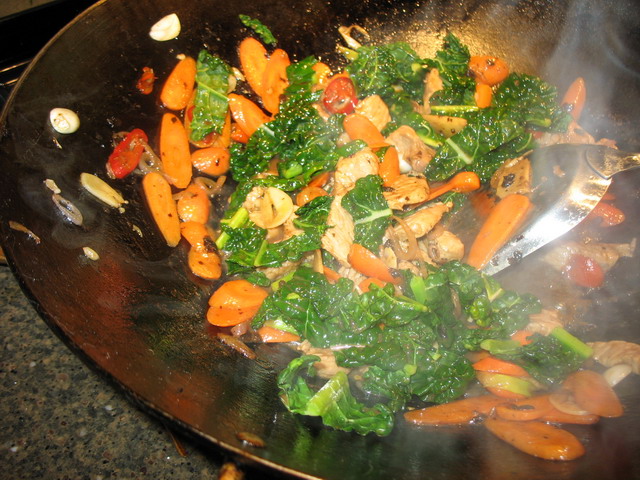
Last night, for example, I made a stir fry that featured a bit of pork loin, and two vegetables we had in abundance in the fridge: baby carrots and lacinato kale.
I flavored it with shallots, ginger, garlic, scallions, chiles and fermented black beans, and added a bit of light soy sauce, and Shao Hsing wine and sesame oil for flavor and color.
If I had some pressed tofu in the fridges, I would have added that, for I was craving it, but we were out of it. As it turned out, the meal was quite flavorful and all three of us enjoyed it. What kale they did not eat, I finished, and we all ate carrots happily. They ate most of the pork, and I had some, enough, and we were all made happy.
I think that the next few months of cooking will be a big adventure as I learn to balance the cravings of my body–which I am a big believer in following, so long as they are for wholesome foods–and the needs of the rest of my family. Right now, I am all about dried beans, while both Zak and Morganna will tire of them easily. That is no matter–I can fix a pot of them for myself, and eat them for breakfast and lunch, freeing up dinnertime for meals that we can all agree on harmoniously.
Here’s the recipe for the supper we had last night; it was quite satisfying, though it is an example of simply inventing a stir-fry out of whatever is in the fridge.
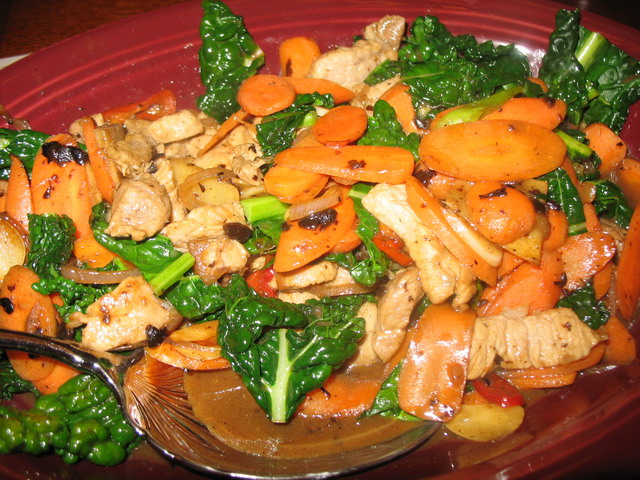
Pork with Kale and Carrots
Ingredients:
3/4 pound pork loin, trimmed and thinly sliced against the grain into pieces about 1″ by 1/2″, 1/4″ thick
1 tablespoon cornstarch
1 1/2 tablespoons Shao Hsing wine
3 tablespoons canola oil
1 large shallot, sliced thinly
4 large scallions, white parts sliced thinly on the diagonal, and green parts cut into 1″ lengths–keep them separate
2 ripe jalapenos, sliced thinly on the diagonal
1″ cube fresh ginger, peeled and thinly sliced
1 tablespoon fermented black beans, mashed lightly
3 large cloves garlic, peeled and sliced thinly
1 1/2 tablespoons light soy sauce
1 tablespoon chicken or vegetable stock or broth
1/2 pound baby carrots, peeled and thinly sliced on the diagonal
1/2 pound lacinato kale, washed and sliced into 3/4″ wide ribbons
1/4 teaspoon sesame oil
Method:
Mix together pork, cornstarch and wine, allow to marinate at least twenty minutes.
Heat wok on high heat until it smokes. Add canola oil. Allow to heat another thirty seconds and add all aromatics -except- garlic. Stir fry, tossing quickly, until the ginger and shallots brown slightly–about forty five seconds to a minute. Add garlic, and continue stir frying for about a half minute.
Add pork, reserving any liquid marinade still in bowl. Lay out on bottom of the wok in a single layer, and allow to brown undisturbed for about thirty seconds to a minute–depending on how hot your stove is. When you smell the meat begin to brown, start stir frying it. When most of the pink is gone, add the soy sauce and broth, and deglaze any marinade that has stuck to the sides or bottom of the wok.
Add carrots and stir fry until all of the pink is gone from the meat. Add kale and the reserved liquid marinade, and keep stir frying until the kale deepens in color and wilts slightly.
Drizzle with sesame oil, and give a few more turns of the wok shovel to mix it in completely. Take off heat, scrape into a heated serving platter and serve immediately with steamed rice.
The Spice is Right II Theme: Sweet Or Savory?
I am still blown away by the success of the first round of The Spice is Right; I want to thank all of the participants for making it such a fun, and rewarding event to host.
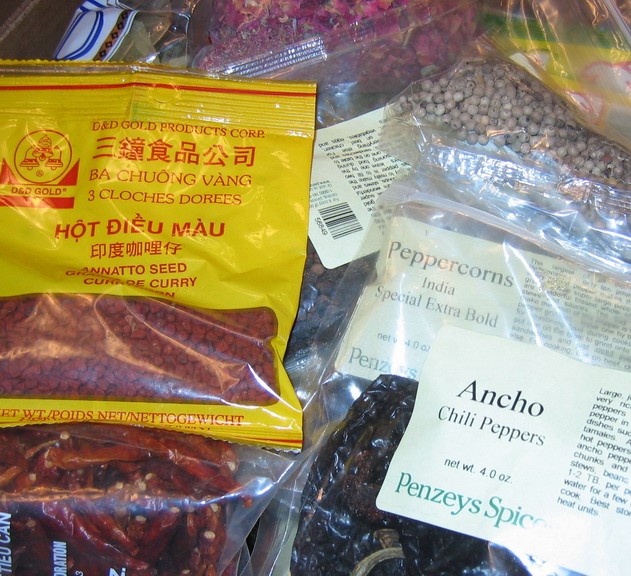
But now, we have to gear up for The Spice is Right II!
This time around the theme is “Sweet or Savory?”
What the heck does that mean? Well, in certain cultures, some spices are used primarily in sweet preparations, while in other cultures, they are used in savory foods. (Or, they are used in both.)
For example, in the US, most folks think of cinnamon as a “sweet” spice, and use it in pies, cookies, cakes, sweet yeast breads and other desserts and baked goods. Whereas, in Greece, say, it may be used in sweets, but it is also used to flavor meat, casseroles and stews. In India, it is used in sweets, but it is not considered “sweet” so much as “hot” and is used in masalas to flavor all sorts of savory foods with its warming aroma: dals, kormas, rice dishes, vegetable curries and keema.
So, your mission, should you choose to accept it, is to pick a spice, that is usually used in your native culture (If you are American, you can decide what I mean by your native culture–if you are Italian-American or African-American, then you take the food culture you grew up with) as either a savory or a sweet spice. You explain how it is used in your culture, and then, turn it all around, and use the spice in the opposing fashion.
So, as an example, I could pick cinnamon and tell you that it was most commonly used in my childhood in sweets, like Snickerdoodle cookies or cinnamon buns. And then, I would cook and present a recipe from another tradition that uses cinnamon in a savory context.
Do you dig it?
I hope so–it sounds fun, playing the old switcheroo.
The deadline is May 15th at midnight, and the rules are the same, except you don’t need to send me a photograph–just send a link. My software is so fast with sizing pictures, it is just as easy if I do it for you. (But you are welcome to indicate which picture you want me to use, if you wish.)
How does that sound? (Like fun, I hope!)
Once again–thank you all for such awesome entries. I hope to see you all again next month, and I would be honored if more folks come to play this time around. I love the fact that we had such a diverse group of international bloggers–and I hope that the trend continues as the months go by.

Categories:
- Admin (rss) (55)
- Blogs and Blogging (rss) (81)
- Book Reviews: Cookbooks (rss) (43)
- Book Reviews: Non-Cookbook Food Books (rss) (38)
- Cats and Cat Blogging (rss) (47)
- Chinese Cooking Lessons (rss) (32)
- Culinary School Stories (rss) (18)
- Dairy Pruducts: Cultured and Barbaric (rss) (4)
- Documentary Filmmaking (rss) (1)
- Essays, Rants and Reflections (rss) (260)
- Fighting Hunger (rss) (12)
- Food and Kids (rss) (45)
- Food in the News (rss) (126)
- Food Media (rss) (98)
- Food Preservation (rss) (18)
- Food Safety (rss) (45)
- Gardening (rss) (30)
- Herbs and Herb Blogging (rss) (20)
- Holidays (rss) (50)
- Kat Blogging (rss) (22)
- Kitchen Science (rss) (36)
- Leftover Makeover (rss) (8)
- Life, the Universe and Everything (rss) (131)
- Local and Sustainable (rss) (227)
- Local Athens Food and Foodies (rss) (42)
- Meatless Mondays (rss) (32)
- Menu For Hope (rss) (5)
- Nutrition, Diet and Health (rss) (84)
- On The Farm (rss) (8)
- Recipes: Almost Vegetarian, Vegetarian and Vegan (rss) (294)
- Recipes: American Regional (rss) (37)
- Recipes: Appalachian Hillbilly (rss) (33)
- Recipes: Bread, Pasta, Grains (rss) (95)
- Recipes: Canning and Preserving (rss) (8)
- Recipes: Chinese (rss) (123)
- Recipes: Comfort Food (rss) (120)
- Recipes: Cookies (rss) (16)
- Recipes: Desserts (rss) (48)
- Recipes: French (rss) (25)
- Recipes: Fruits and Vegetables (rss) (302)
- Recipes: Greek, North African and Middle Eastern (rss) (31)
- Recipes: Indian (rss) (137)
- Recipes: Italian (rss) (42)
- Recipes: Japanese (rss) (7)
- Recipes: Jewish (rss) (4)
- Recipes: Korean (rss) (6)
- Recipes: Meat, Poultry and Fish (rss) (220)
- Recipes: Mexican/Native American/ Latin American/Caribb (rss) (27)
- Recipes: Original (rss) (108)
- Recipes: Thai (rss) (27)
- Recipes: Tofu (rss) (17)
- Recipes: US Regional (rss) (16)
- Recipes: Vietnamese (rss) (8)
- Restaurant Stories (rss) (28)
- Sewing, Quilting, Arts and Crafts (rss) (16)
- Simple Chinese Recipes (rss) (30)
- Slow Food and Heritage Foods (rss) (10)
- Spice Blogging (rss) (44)
- The Chinese Cookbook Project (rss) (14)
- The Chinese Pantry (rss) (39)
- The Documentary (rss) (2)
- The Kitchen Saga (rss) (17)
- The Locavore's Bookshelf (rss) (15)
- The Unsung Adventures of The Culinary Nerd (rss) (6)
- Tools and Toys (rss) (35)
- Uncategorized (rss) (10)
- With a Side of Politics (rss) (48)
Archives:
- August 2012 (9)
- July 2012 (12)
- September 2011 (3)
- August 2011 (7)
- July 2011 (8)
- June 2011 (16)
- May 2011 (17)
- April 2011 (11)
- December 2010 (9)
- November 2010 (5)
- February 2010 (1)
- December 2009 (5)
- November 2009 (7)
- October 2009 (10)
- September 2009 (16)
- August 2009 (14)
- July 2009 (14)
- June 2009 (7)
- May 2009 (17)
- April 2009 (10)
- March 2009 (25)
- February 2009 (13)
- January 2009 (10)
- December 2008 (5)
- November 2008 (5)
- October 2008 (6)
- September 2008 (13)
- August 2008 (8)
- July 2008 (11)
- June 2008 (18)
- May 2008 (13)
- April 2008 (14)
- March 2008 (16)
- February 2008 (17)
- January 2008 (19)
- December 2007 (25)
- November 2007 (18)
- October 2007 (24)
- September 2007 (16)
- August 2007 (15)
- July 2007 (15)
- June 2007 (10)
- May 2007 (14)
- April 2007 (16)
- March 2007 (17)
- February 2007 (20)
- January 2007 (13)
- November 2006 (1)
- October 2006 (8)
- September 2006 (14)
- August 2006 (25)
- July 2006 (30)
- June 2006 (28)
- May 2006 (34)
- April 2006 (29)
- March 2006 (24)
- February 2006 (30)
- January 2006 (38)
- December 2005 (40)
- November 2005 (37)
- October 2005 (32)
- September 2005 (25)
- August 2005 (30)
- July 2005 (28)
- June 2005 (21)
- May 2005 (8)
- April 2005 (22)
- March 2005 (17)
- February 2005 (29)
- January 2005 (10)
Search Site:
Links:
- Lily’s Wai Sek Hong
- 101 Cookbooks
- A cat in the kitchen
- A Veggie Venture
- Accidental Hedonist
- Cha Xiu Bao
- chez pim
- Chocolate & Zucchini
- Chopstick Cinema
- Chowhound.com
- Chubby Hubby
- Cook sister!
- Cooking with Amy
- da*xiang
- Eat Local Challenge
- Eating Liberally
- Ecocentric
- Eggbeater
- Epicurious
- Farmgirl Fare
- Fatfree Vegan
- Foodgoat
- ForkandBottle.com
- Green Olive Tree
- Hooked on Heat
- Jaden’s Steamy Kitchen
- Kalyn’s Kitchen
- Lucullian delights
- Mahanandi
- Matt Bites
- MeatHenge
- mmm-yoso!!!
- New York Times – Dining & Wine
- Pizza Goon
- Rasa Malaysia
- Ruhlman
- Sailu's Kitchen
- Serious Eats
- SF Gate: Food & Dining
- Simply Recipes
- Soul Fusion Kitchen
- Tastespotting
- The Amateur Gourmet
- The Cleaner Plate Club
- The Food Section
- The Grub Report
- thecookscottage
- U.S. Food Policy
- Wandering Chopsticks
- Washington Post Food and Dining
- Wasted Food
Meta:


Powered by WordPress. Graphics by Zak Kramer.
Design update by Daniel Trout.
Entries and comments feeds.