
Cook Local, Eat Global
The Spice Is Right: Ancient Spices Round-Up Part III
We are in the home stretch of the Ancient Spices Round-Up series of posts. I never expected such a strong response to this little food blogging event, but I am thrilled to host such a great group of bloggers and their recipes.
Here are the final entrants into The Spice is Right I: Ancient Spices.
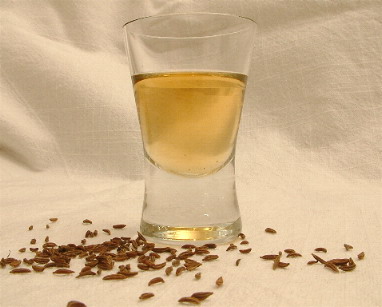
Gizella, the blogger behind Aubergine, weaves us the story of caraway. Yet another member of the umbelliferae family that includes cumin, dill, fennel, carrots and coriander, caraway seeds are used in many cuisines to flavor breads, soups, cheeses, sausages and sauces. She notes the mention of caraway in Shakespeare, where it flavors a sauce for apples offered to Falstaff in Henry IV. Her recipe, however, is closer to home than a Shakesperean recipt–she gives the recipe for a digestive Caraway Cordial which her grandmother dispensed for stomach aches and indigestion. It worked so well, her granddaughter always thought that perhaps the lady was a witch. Now, she knows that she was just a healer who trusted in the natural powers of spices and herbs, but isn’t so much more romantic to think that she was a good witch just like in a fairy tale?
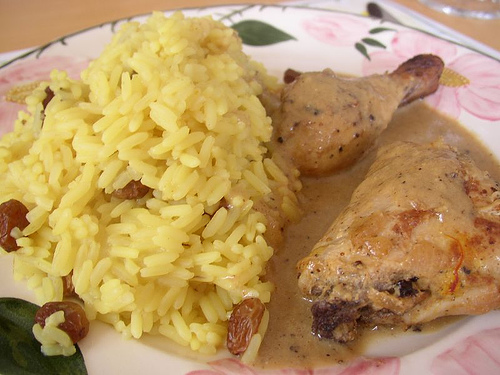
Zorra writes in from Switzerland in her blog 1x Umruhren Bitte, with more goodly things to know about cardamom. Like what? Well, like the Egyptians used to chew cardamom pods to clean their teeth, while the Greeks and Romans used it to make perfume. Since the scent of cardamom is so liltingly sweet, can I say that I appreciate the Greeks and the Romans and their taste in perfumery? In fact, I would like a perfume made of cardamom right now. Lacking that, however, I can content myself with the lovely Indian-inspired Cardamom Chicken recipe that Zorra made, which looks delectable plated up with golden raisin-studded turmeric rice.
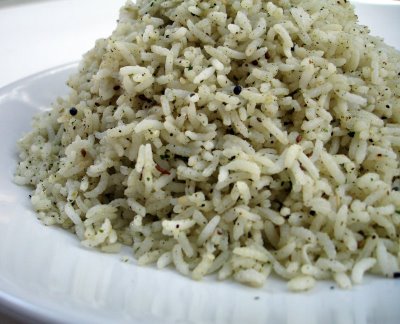
Sailaja of Sailu’s Food sees the very strong connection between food and health. With nearly every recipe she posts, she gives great information on the healing or nutritional properties of the ingredients, and I very much appreciate her attention to detail. What did she choose to write about when it came to ancient spices? Black Pepper, which she tells us is a remedy for ailments of the stomach and throat, and that it very useful brewed into a tea with gnger for a homemade cold and flu medicine. As great as that tea sounds, I am way more into trying her Miriyala Annam (Pepper Flavoured Rice), a recipe where the pungency of black pepper is offset by aromatic sesame seeds and curry leaves.
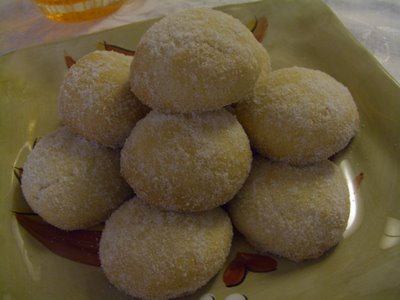
Sugar, Spice and Everything Nice’s author Sonali chose something that very few people would think of as a spice, but of course–it is: sugar. She points out that it was first produced in India, thousands of years ago, and its popularity has only exploded since then, unfortunately, often to the detriment of our health. But if used sparingly as a spice, a flavoring or a treat, and not as an every day staple food, sugar enhances our diets and pleases our palates. To showcase sugar, she presents Snowball Cookies, a recipe that is not too sweet, and happily, tastes very much like the Indian treat, Nankhatai.
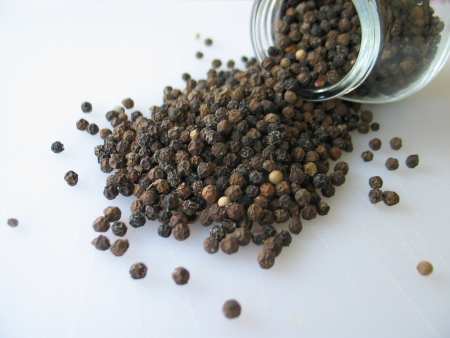
Gini of Salt and Pepper graced her entry with a photograph taken on her last visit to her home state of Kerala, India of black pepper growing on the vine. The immature berries look beautiful arranged like jade beads on long, curving stalks, while the ovoid leaves of a deeper green hue shade them from the bright sun. A lovely image. She tells us how pepper was grown and harvested as a cash crop when she was a girl, then gives us a recipe for Black Pepper Tamaraind Rasam. Rasam is a thin soup or sauce that is eaten either as a starter, like a broth, or over rice as a sauce in the southern states of India. It is definately South Indian soul food, and has healing powers similar to the ones that Western chicken soup is reputed to have.
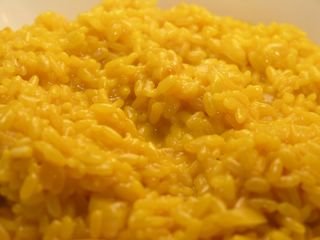
Anne, the lovely blogger of Anne’s Food, took up saffron, and showed us another way it can be used in the kitchen. As the third recipe utilizing this universally-loved spice, Risotto Milanese, a classic northern Italian dish, shows how very versatile these little crocus bits can be, and how pretty the results are. The brilliant yellow of saffron has been used for centuries not only to flavor and color food, but also to dye fabric, most noteably, the fabric used to make the robes of Buddhist monks. Which is all well and good, but really, I would rather save the saffron for a creamy, dreamy rice dish and have plain white robes any day.
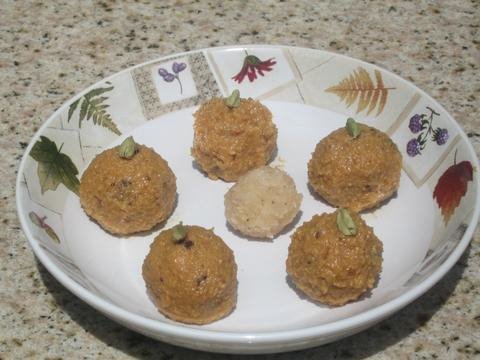
Santhi, the author of Me and My Kitchen, featured another entry for cardamom, which she calls the Queen of Spices. One thing I noticed that is in common with all four of the recipes to feature cardamom so far–they include milk of some sort. This tells me that cardamom has an affinity for dairy products, which makes me wonder if anyone has ever concocted a cardamom-flavored cheese? Something to think about anyway–but back to Santhi’s entry. Her recipe is for a traditional sweet of AndhraPradesh, her home state in India. They are Kova Kobbari Laddo – Coconut stuffed kova Laddos, and they are made of milk, sugar, coconut and cardamom. Wow!

Zoubida sure knows how to tempt a body. On her blog, Kitchen Culture, she made a seductive post about saffron, and paired it with chocolate. Yes, yes, I said chocolate. Zoubida is a wicked, wicked woman, and I love her for it! What do I expect from a woman who writes as if she is as obsessed with spices as I am, eh? We are all temptresses in the kitchen. But what did she make with the saffron? Quenelles de Chocolat Safrane. In English that means “Sinfully Rich Chocolate Mousse-Like Egg-Shaped Morsels with an Equally Wicked Saffron Cream Sauce.” Zoubida, for a Muslim, you really -know- how to end the deprivation of Lent. I bow to you, kitchen sister! (As I wipe the drool off the keyboard….)
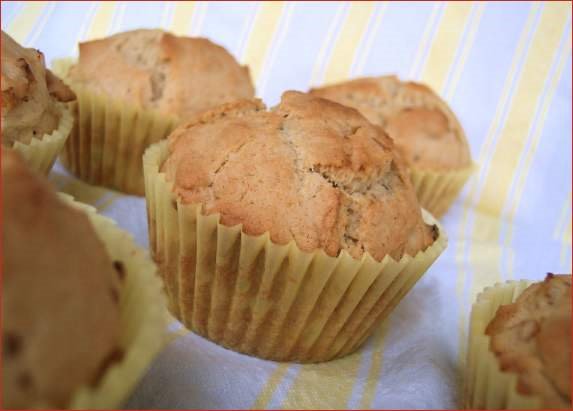
Katherine describes a unique method of grinding cardamom seeds while also getting out her frustrations and agressions at ToastPoint. She also sings the praises of Irma Rombauer’s admonition to use more butter in baking muffins, because low-fat muffins are dry and don’t taste as good. Well, I cannot argue with that, especially not considering how good Katherine is at whacking things in her kitchen! (Besides–what is there to argue about–butter does make food taste better.) What does she present to our recipe round-up? Apricot Cardamom Muffins, which look delicious and fragrant. (Did you know that apricots are high in iron? The things you learn when you are pregnant….)
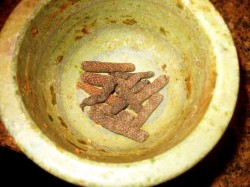
Finally, we come to my very own entry here at Tigers & Strawberries. (No, I am not putting a link to my blog here–if you are reading this post, you most likely already know where to find me.) I had to restrain my desire to post about Balinese long pepper for an entire month and a half or so because I wanted to save it for the first The Spice is Right. Why? Because it is a totally cool, very old, and by many in the modern world, forgotten spice. It used to be -the- pepper, and was the toast of Europe, the Middle East, India and beyond. And then, cultivation of our more familiar black pepper became simpler, and it edged out long pepper as the king of spices, and everyone forgot that long pepper even existed. But, it is interesting, tastes fantastic and deserves to be cooked more often. In order to highlight this spice, I used it as the main flavoring agent in a very simple preparation of asparagus: Asparagus with Meyer Lemon and Long Pepper.
And this concludes the first edition of The Spice is Right, the blog event were we get the chance to learn about spices common and rare, and we can share great recipes using those special little things which gift our foods with magical flavors and aromas.
The Spice Is Right: Ancient Spices Round-Up Part II
Rather than give a lengthy introduction here, I will assume you have read Part I of this post and know what it is I am up to–showcasing the amazing work of all of the food bloggers who decided to tell us all about “Ancient Spices.”
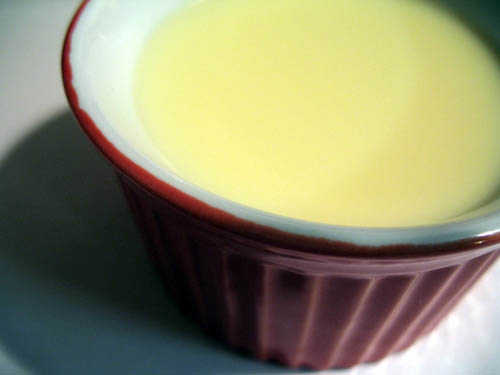
You’ve gotta love a woman who names her blog, Confessions of a Cardamom Addict. But, if that is not enough reason for you to love Jasmine, why not love the fact that she insisted on participating in the first Spice is Right, even though she sprained her ankle so badly she wasn’t supposed to stand or walk around, which means–horrors–no cooking. Since Jasmine loves to cook and hates to eat out all the time, she came up with a great way to keep on cooking and blogging: “cooking by proxy.” Basically, she had a friend come over and at her direction, cook. And what did he cook up? I bet you would never have guessed that the featured spice was cardamom: Cardamom-Almond Panna Cotta from a recipe inspired by the newly translated Italian cookbook, The Silver Spoon.
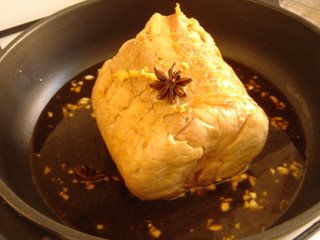
Macky, the gardener blogging The Edible Garden, decided that even though star anise is used more in Chinese than native Filipino dishes, it was a very common spice in the Philippines, and she wanted to experiment with it. So, she did, even though she had a terrible time figuring out which recipe of the many she found online to use. What she came up with looks lovely, and I bet smells even better: Star Anise Pork. A lovely braised dish that results in the pork being shredded and served with a reduction of the liquid that it was cooked in, with a garnish of cilantro leaves. Keep up the fabulous cooking, Macky!
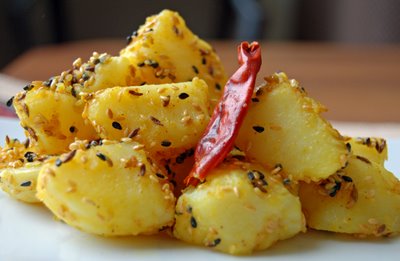
Ashwini at Food For Thought always has something beautiful cooking. She decided to focus on sesame, which thrilled me because most Americans think of sesame seeds as flavorless little granules that go on top of hamburger buns. In truth, it is one of the oldest spices from India, having been grown there for at least four thousand years. It is an important flavoring not only in Indian cuisine, but also in Chinese, Japanese and Korean cookery. The dish Ashwini prepared, she tasted in a restaurant in Bombay and set out to recreate it: Tilwale Aloo. Potatoes fried with sesame seeds, both white and black, cumin, garlic and chile sound fantastic to me.

Quince, lover of food and English literature and author of The Candied Quince, takes us on a tour of the history and mystery of mace, which is the lacy covering of the nutmeg, which is considered to be a separate spice. Sweet, and warming, mace is a very fragrant addition to the spice cabinet, and is used in savory dishes in the Middle East, though it is most commonly used in sweets in the West. Quince follows the tradition of using it in sweets by presenting it in an intoxicating recipe: Mace Cake with Strawberries & Cream.

Jen, The Canadian Baker, told us all about another of my favorite spices, ginger, which has a long history of not only culinary use, but has been used as a medicinal all over the world for centuries. Generally considered a warming food, ginger has been used to treat colds, indigestion and chills in many cultures, but my favorite use for it is as a nausea remedy. Ginger ale, candied or pickled ginger were the only things that helped quell my recent bouts with morning sickness. I wonder if I could convince my obstetrition that Jen’s Chewy Double Ginger Squares are a medicine, and thus are a necessary part of my diet? Probably not, but it is worth a try….
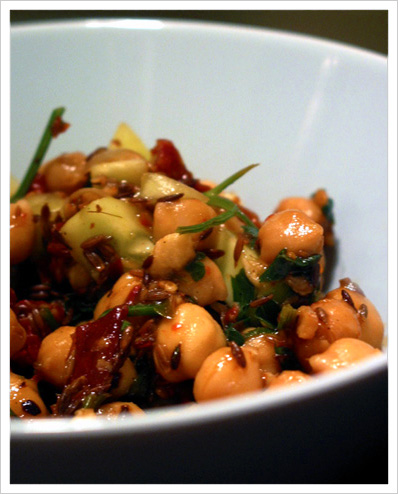
From Faith at Mekuno Cooking, we have another entry on cumin and beans. What is it with cumin and beans? I’ll tell you what it is–they taste really, really good together, that is what. And–here is the kicker–cumin and beans never get boring together, because depending on what you add in to it, you end up with completely different flavors, textures, colors and aromas. But the pairing is classic: the Indians, Mexicans and Middle Eastern folks simply cannot be wrong on this one. Faith poetically gives homage to the fact that spices are our link to history, since that which we keep in our cupboards differs little from the spices used in ancient times. The pairing of Chickpeas with Cumin & Garlic gives us a taste of the Mediterranean which can be as old as Julius Caesar or as updated as the day before yesterday.
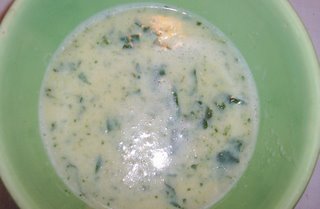
Lucette of Cooking Vintage took the opportunity afforded by the theme “ancient spices” to root around in her cupboard and pull out a jar of whole nutmegs that had been there since the mid-1980’s. Of an experimental bent, she bought a new jar, and grating a bit of a venerable nutmeg and a new one, tasted them side by side, alone. Her findings? Well, while she admitted that the new nutmeg was maybe a tiny bit more pungent, it wasn’t a very large difference in flavor, so she determined that her “oldie-but-goodie” nutmegs had withstood the test of time and were ready, willing and able to spice up her Spinach-Potato Soup.
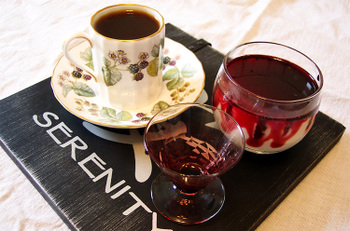
I swear that Kitarra of Cooking Debauchery, is a long-lost sister or cousin or something. For one thing, she pairs the words, “cooking” and “debauchery,” which, as someone once known as “The Voluptuous Chef,” is a concept I can get behind, she also uses some of my favorite ingredients in her entry for The Spice is Right. Cardamom once again steps forward, and is used to flavor panna cotta, but in a very different recipe that uses coconut milk, rosewater, cardamom, coffee and cherries. I literally swooned when I read the recipe for Cardamom Panna Cotta, and I probably will try to recreate it sometime in very near future.
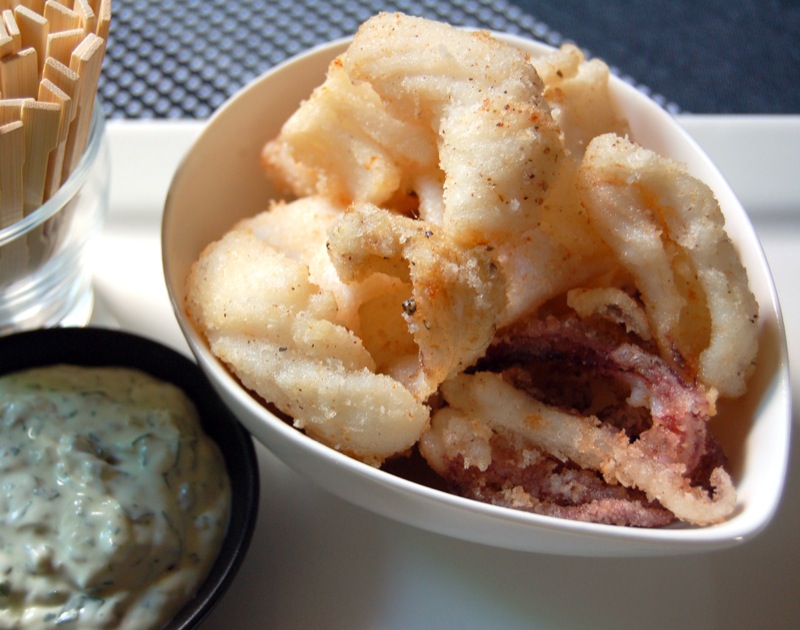
Haalo of Cook (almost) Anything At Least Once, sent in a great entry on pepper. I was surprised not to see more people posting on pepper, but I bet no one did it because they thought everyone would be writing about the king of spices. But, they didn’t, and so, Haalo got to do the honors, and that is fine and dandy, because she took advantage of the very fresh seafood of Melbourne, and created a simple, but very delectable recipe that really showcases the pungency of pepper: Salt And Pepper Calamari. The delicate sweetness of squid is perfectly complemented with the bite of pepper and the seabrine tang of salt–well done, Haalo!

Ulrike from Küchenlatein decided to focus on mustard. Most Americans think of mustard as that yellow stuff you put on hot dogs and hamburgers, which is not completely incorrect, just incomplete. Mustard is the seed of a very pretty plant with a lovely yellow flower (which is blooming all over Ohio right now), and has been used as a spice in many places around the world for thousands of years. And yes, those seeds are ground up into the familiar yellow condiment, though the brilliant yellow color of American mustard comes from turmeric more than from the mustard seeds themselves. Ulrike uses coarse-grained Dijon style mustard to flavor a creamy sauce for his Eggs in Mustard Sauce–a dish that looks as comforting as a flannel quilt on a winter morning.
The Spice is Right: Ancient Spices Round-Up Part I
I chose ancient spices as the theme for the first Spice is Right event because I thought it would allow participants to have a lot of fun deciding what exactly I meant by “ancient spices.” I wanted the first event to be wide open, lots of fun and offer a great diversity of entries, and I was not disappointed.
Even though there are definate trends in what folks considered an ancient spice–saffron, for example, was popular–the myriad ways in which it was used and the very different recipes in which it was presented have showcased the unique vision and cooking styles of the bloggers who took the time to participate.
Diversity is also apparent in the bloggers who took part in this event; I am happy to see a large contingent of food bloggers from India here, but I am also thrilled to note more than one participant from Germany and a Swedish food blogger taking part, as well as Canadians, Americans and folks otherwise from all over.
This post is the first in a series of three round-up posts; I sometimes find that really huge round-ups with more than a dozen or so photographs and paragraphs get a bit overwhelming to read. So, look for a second post tonight or tomorrow, and the third after that.
I want to thank you all for making this a success, and now, I will get out of the way and present the first batch of recipes and posts for your reading pleasure.
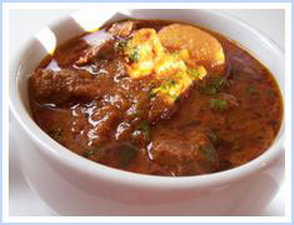
Meena, the energetic author of Hooked on Heat was the early bird in this event; she sent me the very first entry. She interpreted “ancient spices” to mean her earliest memories of the scent of her mother’s cooking, and that meant saffron. Specifically, she mentioned the intoxicating scent of saffron in her mother’s biryani, a delicious casserole of rice cooked with a korma curry. However, Meena, instead of presenting biryani for her entry, decided to showcase saffron in Kesari Gosht (Mutton/Lamb in a Saffron-flavoured Sauce) that both looks and sounds utterly divine.

I love the way that blog events open up our eyes to the efforts of new bloggers we would not have otherwise met. Julie, of Urban Drivel has only been blogging for a few months, but she gamely stepped up to the plate and sent in a delicious entry featuring curry powder. Why did she choose to feature curry powder? She lists a fantastic set of scientifically noted health benefits inherent in curry powder, that include protection from melanoma and Altzheimer’s. Rock on, curry powder! And if that was not enough to make us want to rethink an old standard of the spice rack, she includes a delicious recipe for Curried Chicken in Lettuce Cups.

Another food blogger new to my experience, Jocelyn of She Spills the Beans (love the blog title, btw!) chose to interpret “ancient” to mean a recipe from a very old culture, in this case, the Moghul empire period of northern India, which is the time in which the Persians ruled from the 16th through the 19th centuries. Ahh–a woman after my own heart, I say, for I have to admit a special fondness for the yogurt, fruit and spice-laden recipes of the Mogul court. Instead of the usual meat-heavy main dishes, Jocelyn, a vegetarian, instead found some lovely locally grown baby turnips at Whole Foods and made Baby Turnips and Greens in a Moghul-Style Sauce. They sure look pretty!

Alexandra of Catching Points joins a food blog event for the first time, and I am honored it is The Spice is Right. While she chose to highlight mint, which is technically an herb, and not a spice. I don’t mind, because she gives us such wonderful historical details in her post, such as the finding of a breads made with mint in Egyptian tombs dating to 1200-600 BCE, which points to its very early cultivation. That certainly qualifies as ancient! To really bring out the pure flavor of mint, she uses the fresh leaves in a drink which is very popular now, the Mojito.

My good friend and longtime reader, Elizabeth the writer of Blog From Our Kitchen, decided to feature nigella seed, also known as kalonji, a seed that has a long history of use in India, and the Middle East. She tells us that it is even mentioned in the book of Isaiah in the Old Testament, which is very interesting. (I am always fascinated with literary and biblical references to food.) The little black seeds are noted for their distinctive crunch and oniony flavor, so Elizabeth shows them to great effect in her recipe for Onion Pillau, a dish of seasoned basmati rice. (I bet that her pillau would pair beautifully with Meena’s lamb and Jocelyn’s baby turnips and greens for a lovely Indian supper.)
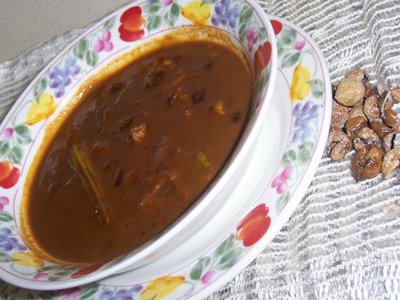
Vineela of Vineela’s Cuisine, brought to my attention a spice I had never heard of before: Sundakkai, which is known in English by the odd name of “Turkey Berry.” She tells us that after it is picked it is soaked in buttermilk, and then dried in the sun, and that it has a salty, bitter flavor. As fond as I am of bitter greens like endive and mustard greens, and as much as I like bitter melon, (which apparently is very like the flavor of Sundakkai), I will have to try to find some of these little fruits and give Vineela’s hot and sour tamarind gravy a try. The recipe for Sundakkai Vatral Kozhambu looks delightful, and I imagine that as Vineela says, it is delicious with steamed basmati rice.
R.L. of Cooking Within My Grasp sent an entry on coriander, which is the seed of the same plant that makes cilantro. Coriander, she tells us, makes up the bulk of many Indian spice mixtures, providing a citrus aroma that is warming and provides carminative benefits. (That means that it is good for helping digest legumes and other gas-producing foods.) The recipe for Coriander Flavored Rice includes some chile, black pepper, urad and channa dal and aromatic curry leaves in addition to the coriander; I think it must be a dish that is not only nutritious, but absolutely ravishing in scent.
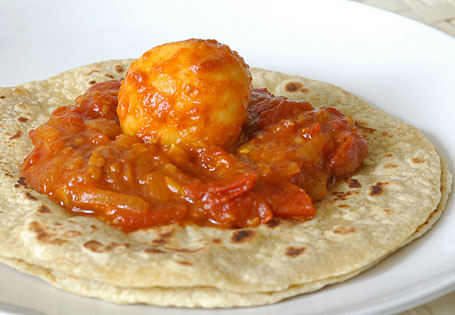
My dear Indira of Mahanandi has gifted us with a fascinating look at the cuisine of her native region, Andhra Pradesh. She tells us about a tamarind-chile sauce called pulusu, which she describes as tasting as if an ‘old western’ kind of faction war happened between tamarind and dried red chillies.” The two strong flavors compete for attention from the palate, with the only mediator being the vegetable cooked with them, in this case, baby potatoes. The recipe is simple to execute, and turns out looking gorgeous. I think that I will have to try Baby Aloo in Tamarind-Chilli Sauce (Aloo Pulusu) soon as new potatoes are one of my favorite seasonal vegetables.

Dejamo, the knitting author of Dejamo’s Distracted, picked one of my very favorite spices of all time, cumin. She chose it in large part because it had great personal meaning to her, but she also found that it has a very long history in the Middle East, India, China and the Mediterranean region. While it was used in Egypt for embalming, I am more interested in the health and life-giving properties she outlined in her excellent post, especially since that means I can eat lots of the Red Kidney Bean Curry, Rajma Masala, she made for us, which featured both ground and whole cumin seeds.
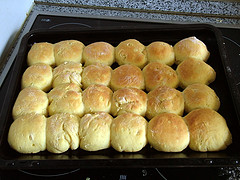
Petra of Foodfreak brings us a second look at saffron, which is the stamens of a lovely crocus flower native to Greece. She took her inspiration from a Elizabeth Rosin’s cookbook, Blue Corn and Chocolate, which outlines how the foods of the New World were adopted into the cuisines of the Old World, and then how, with immigrants, the fusion foods migrated back into the New World. All of this talk of moving over the ocean back and forth has made me hungry (pregnant women are always hungry), which is good, because Petra’s Saffron Potato Rolls look marvelous, and would perfectly sate my never-ending craving for carbs.
A Quick Note On Food Allergies
Okay, so we were out to eat today with our friend Kendra in Columbus, and we ended up eating at The Cheesecake Factory, mainly because she knew she could get something gluten-free to eat there.
Kendra suffers from celiac disease, and thus cannot tolerate gluten from wheat or barley products. Wheat is in a lot of places you would never think to look in most restaurant menu items and in processed food. This makes going out to eat with Kendra challenging–and for Kendra–it makes just eating feel like a game of Russian roulette.
I really wanted salmon, but I was worried about mercury levels in salmon–it being a top of the food-chain predatory fish. Mercury is very not good for wee, developing fetuses, so I decided to get shrimp instead.
So, I did.
And let me just say as an aside–the portion sizes at The Cheesecake Factory are obscene. The plates were so big they looked like feeding troughs, and the amount of food on them was daunting, even for a healthy-eating woman who currently has a pregnant lady metabolism. (Which means I eat a lot anyway, but when I am pregnant, and get those “I am starving” hunger pangs, I can really put away some food.)
I looked at the pile of food on my plate, and was horrified. I was even more scared of the amounts of mashed potatoes piled onto Morganna and Zak’s plates–I swear that they had a full cup and three quarters of mashed spuds on each plate, which just goes above and beyond necessity into the realm of ghastly.
Anyway, I started eating.
I have eaten shrimp hundreds of times in my life, and I love the stuff. And this recipe was okay–it was the Jamaican black pepper shrimp.
But about a third of the way through the pile of sauteed shrimp on my plate, I noticed my tongue felt really funky.
It felt for all the world as if it had been scraped raw. It was tingling and felt like it was starting to swell up.
I put my fork down and said, “I feel really weird, guys.”
When I described my symptoms, Kendra looked at me, her eyes big. In addition to having celiac, she also recently had a severe alaphalactic reaction to hazelnuts, so she, like me, knew darned good and well what I was going through.
A mild case of anaphalaxis–an allergic reaction to some food item.
As I reached for my purse to pull out the Benedryl that just happened to be there because I took it to the campout on Saturday in case my tree pollen allergy bothered me (it never did), I felt my throat start to swell up a little bit.
I had no idea how much to take–but I took 50 mg–it is a safe dose during pregnancy.
What is odd is that just an hour before I had talked about the fatal anaphalactic cases I had heard about in culinary school–one of which involved a student who ate a shrimp eggroll without knowing there was shrimp in it. He went back to his dorm room, fell asleep and died.
Needless to say, Morganna and Zak were quite frightened, as was Kendra.
I was nervous, but mostly puzzled and saddened–because if I turn out to have developed a shrimp allergy, I fear it may only be a matter of time before crab gets to me.
And it is one of my favorite foods of all time.
Anyway, we ended up driving home soon afterwards. All the way home, I paid attention to my symptoms, which lessened as the Benedryl kicked in–which tells me that it was most likely a real-live allergy and not just a sensitivity.
I am calling my doctor tomorrow–this was just a mild case–a shot across my bow, as it were. I want to see if they can do a blood test to determine if I have a severe enough allergy to warrent carrying an epipen–a dose of adrenaline, which is given to those who have severe food or insect allergies, to prevent a full blown case of anaphalaxis, which can be deadly.
At least I don’t have asthma–that makes everything worse.
Now, I just feel a little bit weird in the throat and tongue area. No shortness of breath or air passages closing or anything like that, so I think I will be fine now.
I just have to be careful from now on, and avoid shrimp. So, no more minced up dried shrimp in my Sichuan green beans or shrimp paste in my curry pastes.
Life is full of odd little adventures, that is for certain.
Look for at least the first part of the roundup for The Spice is Right sometime tomorrow–I have a lot of great entries to share with you all.
Ch-ch-ch-Changes!
That’s like from a song and stuff. I don’t normally stutter, but well, things have been a bit odd around here in Tigers & Strawberriesland, and I wanted to let everyone know why, finally.
First of all, I stepped down as an editor on the Well Fed blogs The Paper Palate, and the new Food Bound. I hated having to do this, because I worked hard putting these blogs together, creating the writer’s guidelines, putting together a staff and working with the writers–as well as doing a good bit of writing myself, but I had to do it, because I didn’t think it was fair to the folks at Well Fed for me to continue, since big changes were coming my way.
It seems, that at the age of forty, I have become pregnant. This was not planned–but it is not unwelcome, either. In fact, two years ago, Zak and I had tried to get pregnant, and did, only to suffer a miscarriage at about ten weeks. This was a devastating experience (here is a clue–if a friend or a loved one suffers a miscarriage–don’t try to comfort her by saying, “You can always have another.” It isn’t comforting and it doesn’t help–just so you know), but we did try for a full year and a half to get me pregnant again to no avail.
We had given up.
And six months later, I became pregnant, much to our surprise. At first, I was terrified–because I was taking medication for a sleep disorder that I was afraid would affect fetal development. I stopped taking it immediately, and then found out from the doctors that we were probably fine, so long as I didn’t take the medication until after the baby was born and I was finished breast-feeding.
Then, I was nervous, because, well, women who have had miscarriages–well, we become wary creatures.
Now that I am entering the second trimester, and have seen ultrasounds of the baby and the placenta, all developing normally–well, I am finally happy and excited.
I’m going to be a Mom again.
And Zak is thrilled–he gets to be a Daddy, finally. Not just a stepdad, but a real, live, Daddy.
So–that is the big news.
Now you know why I have had trouble writing about food–because food and I, for about a month and a half–well, we were not on good terms. When I am pregnant, I don’t have morning sickness; I have morningnoonandnight sickness. And it is that kind of nausea where you just want to die, but you never, ever throw up. There is no relief. So, I cooked really bland, boring foods–things that would least upset my fragile equilibrium. And frankly, rice and mashed potatoes and all of those things–they are not much fun to read about three times a week.
Hence book reviews, essays and though-provoking posts that are sort of about food, but don’t require lots of cooking.
I was also really, really tired all of the time, so that is why I haven’t been as assiduous about posting every day.
Now, you know. The mystery is solved.
As for how this will change Tigers & Strawberries–I think it will only broaden the scope of what I write about. There is a lot to talk about when it comes to food, nutrition, pregnancy and children. Kids nutritional needs are different than adults, and I definately do have thoughts on this topic, and now have a perfectly good reason to start airing those thoughts.
But don’t worry. It won’t all be bodily functions, breastfeeding and baby talk from here on out.
Now that the nausea is beginning to subside (thank God–I was beginning to fear that it would continue into the fourth month like it did with Morganna), I will return to my usual adventurous cooking, and will get down to the business of writing my step by step lessons on how to stir fry tofu and chicken, as I promised long ago.
So, there you have it. I have ‘fessed up and the mystery is solved.
Cheers!
Now, I have to post this and turn off the computer, before the power goes out!

Categories:
- Admin (rss) (55)
- Blogs and Blogging (rss) (81)
- Book Reviews: Cookbooks (rss) (43)
- Book Reviews: Non-Cookbook Food Books (rss) (38)
- Cats and Cat Blogging (rss) (47)
- Chinese Cooking Lessons (rss) (32)
- Culinary School Stories (rss) (18)
- Dairy Pruducts: Cultured and Barbaric (rss) (4)
- Documentary Filmmaking (rss) (1)
- Essays, Rants and Reflections (rss) (260)
- Fighting Hunger (rss) (12)
- Food and Kids (rss) (45)
- Food in the News (rss) (126)
- Food Media (rss) (98)
- Food Preservation (rss) (18)
- Food Safety (rss) (45)
- Gardening (rss) (30)
- Herbs and Herb Blogging (rss) (20)
- Holidays (rss) (50)
- Kat Blogging (rss) (22)
- Kitchen Science (rss) (36)
- Leftover Makeover (rss) (8)
- Life, the Universe and Everything (rss) (131)
- Local and Sustainable (rss) (227)
- Local Athens Food and Foodies (rss) (42)
- Meatless Mondays (rss) (32)
- Menu For Hope (rss) (5)
- Nutrition, Diet and Health (rss) (84)
- On The Farm (rss) (8)
- Recipes: Almost Vegetarian, Vegetarian and Vegan (rss) (294)
- Recipes: American Regional (rss) (37)
- Recipes: Appalachian Hillbilly (rss) (33)
- Recipes: Bread, Pasta, Grains (rss) (95)
- Recipes: Canning and Preserving (rss) (8)
- Recipes: Chinese (rss) (123)
- Recipes: Comfort Food (rss) (120)
- Recipes: Cookies (rss) (16)
- Recipes: Desserts (rss) (48)
- Recipes: French (rss) (25)
- Recipes: Fruits and Vegetables (rss) (302)
- Recipes: Greek, North African and Middle Eastern (rss) (31)
- Recipes: Indian (rss) (137)
- Recipes: Italian (rss) (42)
- Recipes: Japanese (rss) (7)
- Recipes: Jewish (rss) (4)
- Recipes: Korean (rss) (6)
- Recipes: Meat, Poultry and Fish (rss) (220)
- Recipes: Mexican/Native American/ Latin American/Caribb (rss) (27)
- Recipes: Original (rss) (108)
- Recipes: Thai (rss) (27)
- Recipes: Tofu (rss) (17)
- Recipes: US Regional (rss) (16)
- Recipes: Vietnamese (rss) (8)
- Restaurant Stories (rss) (28)
- Sewing, Quilting, Arts and Crafts (rss) (16)
- Simple Chinese Recipes (rss) (30)
- Slow Food and Heritage Foods (rss) (10)
- Spice Blogging (rss) (44)
- The Chinese Cookbook Project (rss) (14)
- The Chinese Pantry (rss) (39)
- The Documentary (rss) (2)
- The Kitchen Saga (rss) (17)
- The Locavore's Bookshelf (rss) (15)
- The Unsung Adventures of The Culinary Nerd (rss) (6)
- Tools and Toys (rss) (35)
- Uncategorized (rss) (10)
- With a Side of Politics (rss) (48)
Archives:
- August 2012 (9)
- July 2012 (12)
- September 2011 (3)
- August 2011 (7)
- July 2011 (8)
- June 2011 (16)
- May 2011 (17)
- April 2011 (11)
- December 2010 (9)
- November 2010 (5)
- February 2010 (1)
- December 2009 (5)
- November 2009 (7)
- October 2009 (10)
- September 2009 (16)
- August 2009 (14)
- July 2009 (14)
- June 2009 (7)
- May 2009 (17)
- April 2009 (10)
- March 2009 (25)
- February 2009 (13)
- January 2009 (10)
- December 2008 (5)
- November 2008 (5)
- October 2008 (6)
- September 2008 (13)
- August 2008 (8)
- July 2008 (11)
- June 2008 (18)
- May 2008 (13)
- April 2008 (14)
- March 2008 (16)
- February 2008 (17)
- January 2008 (19)
- December 2007 (25)
- November 2007 (18)
- October 2007 (24)
- September 2007 (16)
- August 2007 (15)
- July 2007 (15)
- June 2007 (10)
- May 2007 (14)
- April 2007 (16)
- March 2007 (17)
- February 2007 (20)
- January 2007 (13)
- November 2006 (1)
- October 2006 (8)
- September 2006 (14)
- August 2006 (25)
- July 2006 (30)
- June 2006 (28)
- May 2006 (34)
- April 2006 (29)
- March 2006 (24)
- February 2006 (30)
- January 2006 (38)
- December 2005 (40)
- November 2005 (37)
- October 2005 (32)
- September 2005 (25)
- August 2005 (30)
- July 2005 (28)
- June 2005 (21)
- May 2005 (8)
- April 2005 (22)
- March 2005 (17)
- February 2005 (29)
- January 2005 (10)
Search Site:
Links:
- Lily’s Wai Sek Hong
- 101 Cookbooks
- A cat in the kitchen
- A Veggie Venture
- Accidental Hedonist
- Cha Xiu Bao
- chez pim
- Chocolate & Zucchini
- Chopstick Cinema
- Chowhound.com
- Chubby Hubby
- Cook sister!
- Cooking with Amy
- da*xiang
- Eat Local Challenge
- Eating Liberally
- Ecocentric
- Eggbeater
- Epicurious
- Farmgirl Fare
- Fatfree Vegan
- Foodgoat
- ForkandBottle.com
- Green Olive Tree
- Hooked on Heat
- Jaden’s Steamy Kitchen
- Kalyn’s Kitchen
- Lucullian delights
- Mahanandi
- Matt Bites
- MeatHenge
- mmm-yoso!!!
- New York Times – Dining & Wine
- Pizza Goon
- Rasa Malaysia
- Ruhlman
- Sailu's Kitchen
- Serious Eats
- SF Gate: Food & Dining
- Simply Recipes
- Soul Fusion Kitchen
- Tastespotting
- The Amateur Gourmet
- The Cleaner Plate Club
- The Food Section
- The Grub Report
- thecookscottage
- U.S. Food Policy
- Wandering Chopsticks
- Washington Post Food and Dining
- Wasted Food
Meta:


Powered by WordPress. Graphics by Zak Kramer.
Design update by Daniel Trout.
Entries and comments feeds.