
Cook Local, Eat Global
Tiny New Potatoes And Garlic Scapes With Panch Phoron
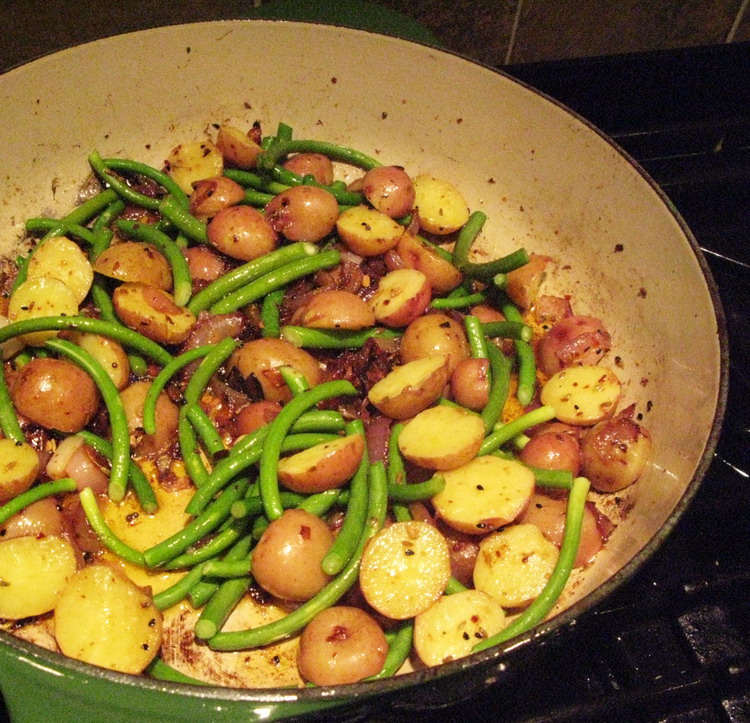
When I saw these tiny, marble-sized new potatoes at the farmer’s market, I had to have them, not only because they reminded me of my childhood, which they did.
Potatoes this small are sweet with a marvelous waxy texture that is beautiful either braised in a sauce or parboiled and then sauteed with seasonings. You hardly ever see potatoes this tiny at the markets, because it really isn’t all that cost effective to dig them up and sell them, but we used to eat them every spring at my grandparents’ farm. Grandma used to cook them in a cream sauce with tiny baby peas, whileI used to saute them in butter with plenty of green garlic and fresh herbs, primarily thyme and rosemary.
My nostalgic heart was moved by the idea of creamed new potatoes and peas, but this year, I wanted to do something different.
I wanted to cook them with garlic scapes–and I wanted to do it with Indian spices.
I did parboil the potatoes first, just to get them to soften properly. To do this all you need to do is after washing the little guys, put them into a pot of cold water and bring them to a boil. Cook them whole, with the skins intact, because the potatoes’ texture will be improved; if you cut the potatoes before cooking them, they will be inclined to soak up too much water and will become soggy and mushy.
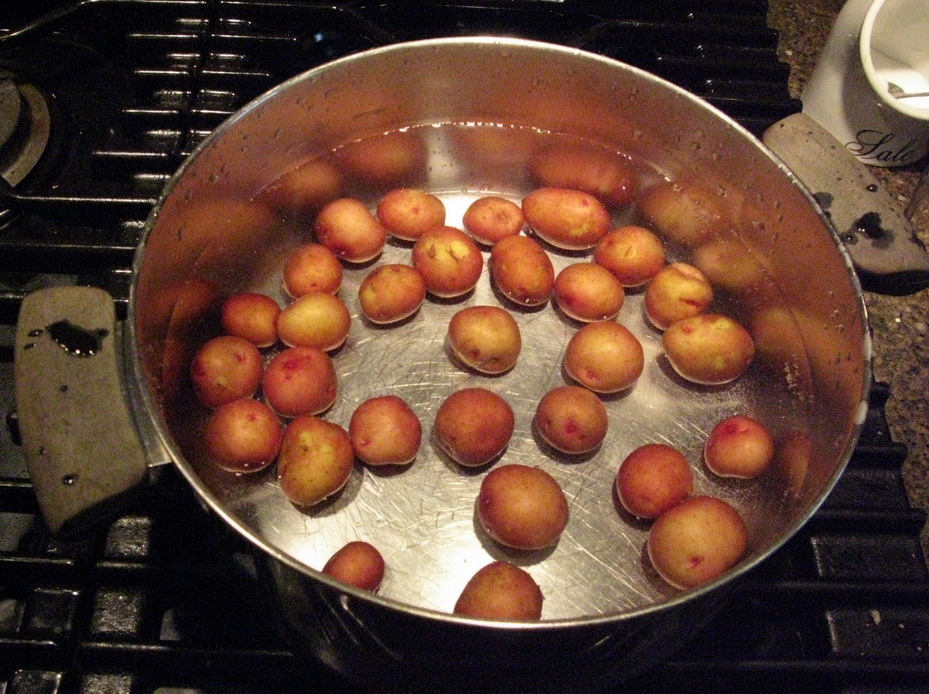
When the potatoes were just tender–not completely done, because I was going to cook them further in the saute pan–I added trimmed and cut up garlic scapes and let them blanch in the hot water for a minute before draining the whole lot into a colander.
Then I let the potatoes cool a bit until I could touch them and cut them each in half so that the cut sides could brown a bit when they were sauteed.
After that little bit of preparation, all that was left to do was to heat a mixture of canola oil and ghee in a pan, cook a red onion until it was halfway golden and add the potatoes, garlic scapes, panch phoron and some chili flakes then cook until everything was fragrant and golden.
No extra garlic is necessary because the garlic scapes subtly flavor the buttery-smooth potatoes, while still having the wonderful texture of young string beans. The panch phoron adds its own myriad toasted spice flavors and nutty texture while the onion sweetens everything deliciously.
And as an extra-added bonus–they taste just as good at room temperature or cold as they do hot. I know this because I plucked the leftovers out of the fridge this afternoon and lacking patience for the microwave, tried them chilled.
They were delicious–this recipe is definitely a keeper.
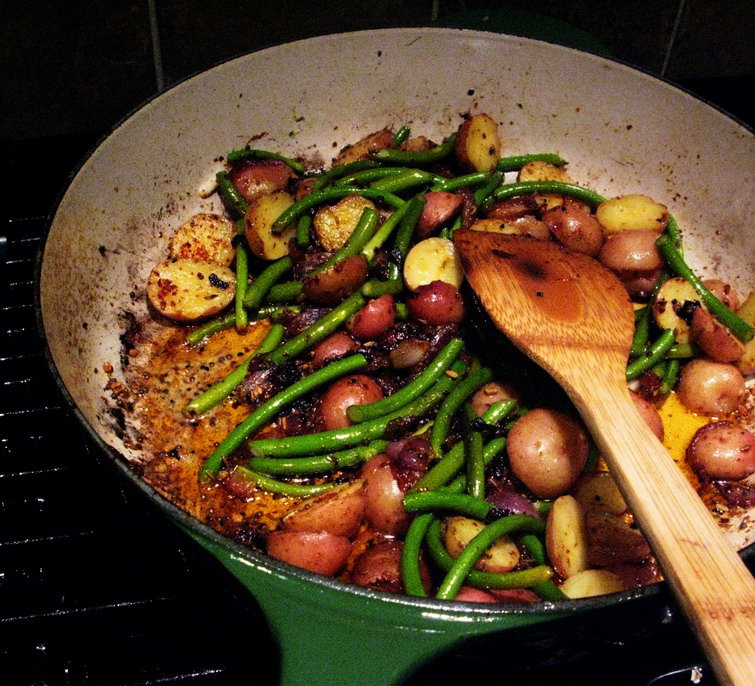
Tiny New Potatoes And Garlic Scapes With Panch Phoron
Ingredients:
1 pound tiny new potatoes, washed and unpeeled
1 teaspoon salt
1/2 pound garlic scapes, tops trimmed and cut into pieces 1 1/2″ long
2 tablespoons canola oil
2 tablespoons ghee or butter
1 cup thinly sliced red onion
1 1/2 tablespoons panch phoron
1 teaspoon or to taste Indian chili flakes
salt to taste
roughly chopped cilantro as garnish–optional
Method:
Put the potatoes in a large pot of cold water and add salt. Bring to a boil and cook until the potatoes are just tender–easily pierced with a fork, but when you try to shake the potato off the tines, it sticks and doesn’t move.
Turn off heat on the pot and add garlic scape pieces. Allow to sit with the potatoes in the hot water for about a minute, or until the color of the scapes deepens to a brilliant emerald hue.
Drain the vegetables and let the potatoes cool until you can easily handle them.
While the potatoes cool, heat canola oil and ghee or butter in a heavy-bottomed skillet. Add onion and cook, stirring until they turn lightly golden brown on the edges.
While the onions cook, cut each potato in half.
Add the potatoes and garlic scapes to the pan and cook, stirring until the onions turn almost completely brown and the potatoes brown along the cut sides and edges. Add the panch phoron and chili and cook, stirring until the mustard seeds pop and the chilies tint the cooking oil a pale orange red color.
Add salt to taste, and remove from heat. Sprinkle with cilantro leaves if you want and serve either hot or at room temperature with other Indian dishes or on its own as a light entree.
To make this recipe vegan, substitute canola oil for the ghee.
Vegan Parenting Under Fire–Again
I am beginning to wonder if the New York Times editorial board (the folks who write editorials, select freelance Op-Ed pieces and who maintain The Opinionator blog) hate vegans.
Last year, the Times published an anti-vegan screed by Nina Planck in which she shrilly likens feeding children a vegan diet to child abuse in response to the widely publicized conviction of two supposedly vegan parents in Atlanta of murder, involuntary manslaughter and child cruelty for starving their baby to death.
Then, on Monday, in The Opinionator, they posted about a case in Scotland where a 12 year old girl who has been on a “strict meat and dairy free diet” for her entire life has developed a severe case of rickets. Officials in the UK are calling for charges to be brought against the parents because they believe that the parents’ choice of a vegan diet for their child is the ultimate cause of the degenerative bone disease.
Now, while it is possible that the cause of the severe case of rickets, which has resulted in her developing extreme curvature of the spine (she is described as having the spine of an 80 year old woman) and several bone fractures, is caused only by her parent’s choice of diet for her, it is not likely.
Rickets is generally caused by a vitamin D deficiency. The results of rickets are bone weakness as vitamin D is necessary for the human body to absorb calcium, which as we know, is the main building block that leads to strong bones and teeth. Rickets used to be very, very common in the western world, and entire families of children could be seen with the twisted spines, short stature, bowed legs and deformed pelvises which are characteristic of this serious disorder. Malnutrition was certainly a factor in these widespread cases of rickets, but the greatest causal factor of rickets tended to be lack of exposure to sunlight. This is one of the reasons why cases in rickets rose precipitously after the Industrial Revolution, when previously rural populations moved into urban environments and instead of working in the fields in the sunlight, they worked in dark factories for long hours, bereft of sunlight.
When it was discovered later that rickets was caused by lack of vitamin D in the form of sunlight, liver, or oily fish, enterprising health officials began calling for the addition of vitamin D to all cow milk sold in both the UK and the US. Since most children at that time drank large amounts of cow milk, it was considered to be an excellent preventative measure to enrich it. And, not surprisingly, after vitamin D because ubiquitous in milk, the incidence of rickets decreased to the point that it is now a very rare disorder in the developed nations of the west.
So, with this background information in mind, let us examine this current case of the twelve year old Scottish girl. Is it true that her parents’ insistence upon her eating a vegan diet the sole cause of her disease?
Now, depending on where in Scotland the girl lives, it is quite possible that she hasn’t had enough exposure to sunlight–the highlands, especially, tend to be fairly dark and drear in the weather department.
If that is the case, then it isn’t just the diet which is the cause of her rickets.
Now, it could be said that whether the rickets came about because of lack of sunlight or diet, it doesn’t matter. Rickets is not a sudden-onset sort of disorder–it happens over a span of time and to get to the point where the spine is curved dramatically and small fractures have occurred in the girl’s bones would take years. If this is a case of the parents “not noticing” the girl’s deformity or refusing to take her to doctors who would certainly notice and attempt to divine the cause of her disorder, then what we have here is not a case of a vegan diet being to blame, but neglectful parenting is to blame.
Parents who do not notice the gradual abnormal curvature of a child’s spine, or who ignore her pain (rickets is not asymptomatic–the bones hurt and are painful to the touch–and the fractures that occur often with the disease are also painful), or who do not take the child to a competent physician for regular checkups are neglectful and ignorant at best, uncaring and abusive at worst. What they feed their child or not feed her is beside the point once they reach this level of carelessness or neglect.
So, let me reiterate once again that just because some vegan parents are ignorant, lazy, misinformed, careless, neglectful or abusive, that does not mean that all vegan parents are like them!
Just as not every omnivorous parent feeds their children diets of junk food which result in childhood obesity and type II diabetes, not every vegan is causing malnourishing their children.
So, please, let us not be like some of the commentors on the NY Times blog or the Times of London website and instantly decry every vegan parent in the world because of this sad case, and recognize that human ignorance and carelessness comes in all shapes, sizes and philosophies.
Worth Cracking a Coconut: Murghi Hara Masala (From 660 Curries)
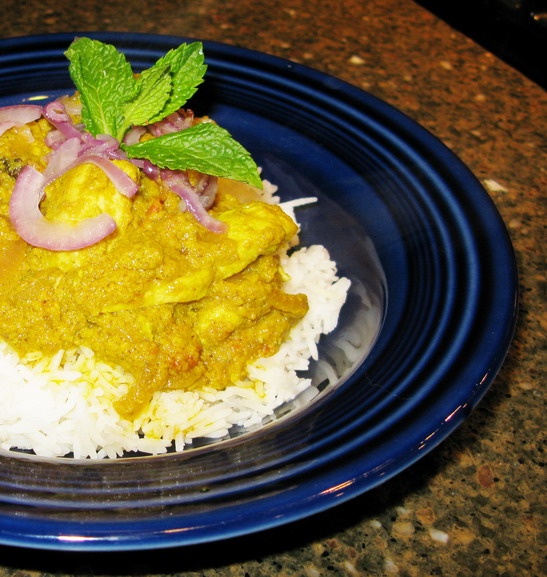
This recipe comes from Raghavan Iyer’s sister’s neighbor in Mumbai, and it is a fabulous combination of flavors and aromas. Imagine fresh mint and cilantro, fresh coconut, yogurt and garam masala cooked into a thick yellow-hued curry with sauce that clings to the strips of chicken breast. I did add some whole spices to the cooking oil–cardamom and cinnamon–because I love the way they scent the air when I am cooking.
Iyer says that you can substitute dehydrated (unsweetened) coconut flakes for the fresh coconut, but I thought that this recipe sounded so scrummy that I just had to buy a fresh coconut and take a crack at cracking it, prying the meat from the shell, and grating it.
I have to admit that most of the work of this recipe revolved around the coconut. And let me say right now that just because I was stubborn and went through the time, trouble and effort to play with the fresh coconut doesn’t mean you have to. You can take Iyer’s advice and use dehydrated coconut that has been soaked in water, instead of the freshly grated coconut meat.
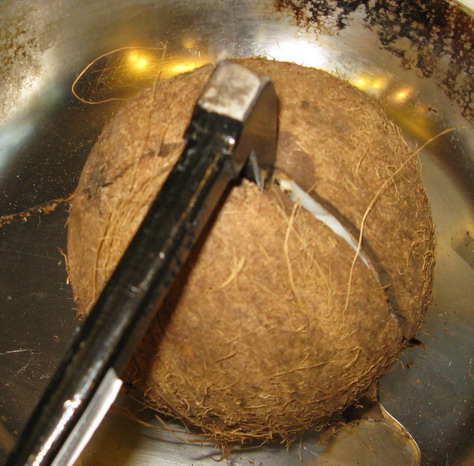
Now you are going to want to know how to go about cracking open a coconut. As you can see from the photograph, the process is somewhat violent in nature and definitely messy. Be prepared to get down and dirty with this process. Or, if not dirty, at least, a bit sticky and disheveled.
Also the sound that a coconut shell makes as it cracks is a little bit disturbing if you have a good imagination and have been reading about ancient weapons like war hammers and morning stars. I highly suggest not mixing the reading of the bloodier parts of European history with the work of cracking a coconut. You can do one, or the other, but probably not both.
At least, not without a moment to pause, reflect, and perhaps become a little queasy, especially if you are the squeamish sort.
A lot of folks use a hammer and nail to open a coconut by pounding the nail into the three “eyes” or black indentations on one end of the coconut and whapping at it with the hammer until it cracks. Then, the hard shell can be pried apart by using a screwdriver as a lever or chisel, with the ever present hammer as a means of thwapping, whapping and violent disresembling.
I didn’t do it that way. I couldn’t find a good nail, so I used my nail puller, which has a pointy, beak-like chiselish end made of steel that can stand up the force of a nice big hammer. It is also bigger than a nail, so I figured it would make a nice big crack in the shell. And it did–eventually. Not before I made a lot of a mess and noise, but the coconut eventually succumbed to my superior force and will, and fell apart. After the coconut was pried apart in pieces, then I used a table knife and a bit of swearing and sweating to prise the white meat from the hairy shell, and then–and then–I could finally cut the meat into bits and put it into the Sumeet to be ground finely.
It was a procedure that I would rather not repeat any time in the near future, but I have to say it made a damned fine curry.
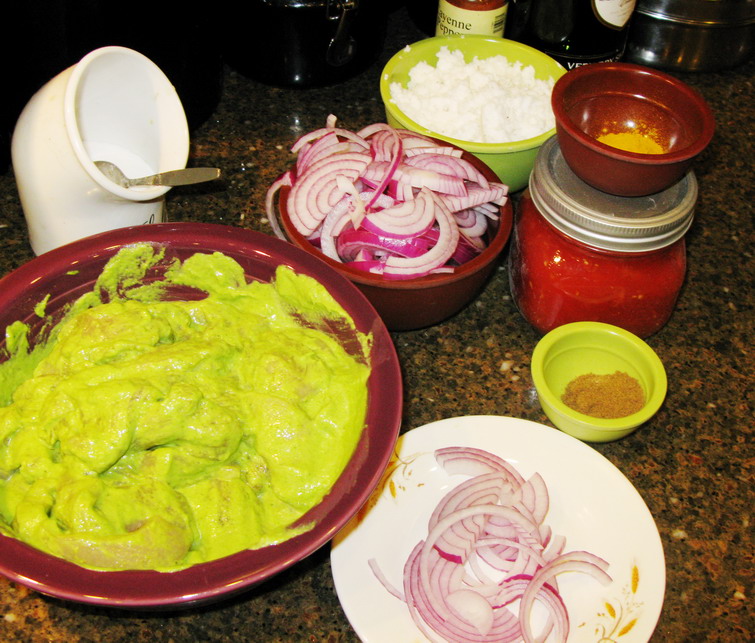
One thing about this recipe–in the book the ingredients list looks short, but that is because Iyer refers the cook back to a recipe for hara masala–a blend of cilantro, mint, garlic and ginger. It isn’t a hard recipe–here is how it goes: 1 cup firmly packed fresh cilantro leaves and stems, 1 cup firmly packed mint leaves, 8 medium sized garlic cloves and 1 1/2′ cube fresh ginger, peeled and cut into thin slices. Basically, you just chop this stuff up in a food processor until it makes a brilliant emerald colored, extremely fragrant paste. The chicken curry only requires 1/2 cup of this paste, so you can freeze the rest in an airtight freezer bag to be used later in another recipe.
In this recipe, the hara masala is mixed into well-beaten yogurt and is used as a marinade and also as the basis of the sauce. My one criticism of this curry is the color of the sauce can be a bit odd–the brilliant green yogurt marinade is eventually cooked with tomatoes and turmeric, which results in an odd somewhat greenish-brownish yellow shade that is a little weird. I found that adding just a bit more turmeric helps bring the color of the curry around to a prettier hue.

Really if the worst I can say about this delicious, fragrant curry of tender chicken in a thick, clingy sauce that is what the British would call “very moreish” , is that it has a somewhat funny color–well–then I guess it is pretty exemplary. It is the second recipe I have tried almost completely unaltered, from the book, 600 Curries, and I found that as much as I loved the lamb, I loved the Murghi Hara Masala even more.
I hope that some of you give this recipe a try and let me know what you think of it. And, again, if I were you, I’d take the alternative route and use the dehydrated unsweetened coconut flakes instead of wrestling a fresh coconut all over your kitchen, especially if you have not dealt with one before. The next time I make this curry–and there will be a next time–I will try the dehydrated coconut and see if it makes a curry as tasty as the fresh did.
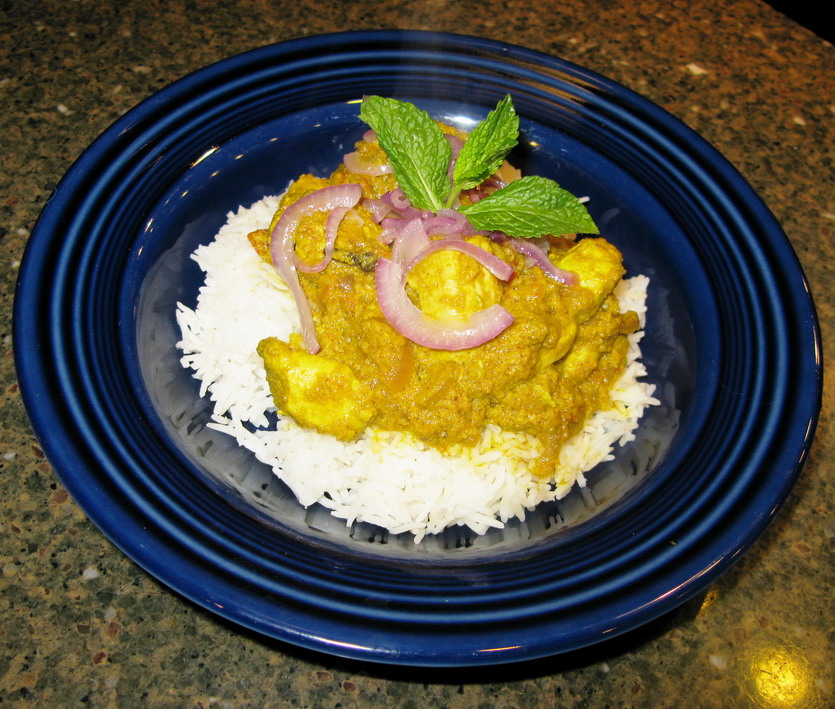
Murghi Hara Masala
Ingredients:
1/2 cup hara masala–see body of the post above for recipe
1/4 cup plain yogurt whisked until smooth
1 1/2 teaspoons coarse kosher or sea salt
2 pounds boneless skinless chicken breasts, trimmed and cut into slices about 3/4″ wide
4 tablespoons canola oil or ghee
1 large red onion, thinly sliced
1 large tomato, peeled, seeded and chopped–I substituted 6 ounces of home-canned tomatoes here
2 teaspoons garam masala–I used my own house blend here that includes cinnamon, cloves, nutmeg, mace, cumin, coriander and a bit of fennel seed–or you could use Penzey’s Punjabi garam masala, or your own mixture or another pre made brand.
1/4 teaspoon ground turmeric–I ended up using half again as much to help make the color of the curry prettier
1/2 cup shredded fresh coconut or 1/4 cup dried unsweetened coconut flakes, rehydrated with 1/4 cup of boiling water–let it sit for fifteen minutes and drain.
Method:
Mix the hara masala, the yogurt and the salt together and whisk until it all is thoroughly combined into a lovely pale jade cream. Add the chicken strips to the marinade, and stir them up to make sure to coat every bit of chicken meat with the yogurt mixture. Cover and put in the fridge for at least 30 minutes, but no longer than an hour or two.
Heat two tablespoons of the oil in a large, heavy bottomed skillet and add half the onion, and cook until the slices wilt and turn a rich brown around the edges. Add the tomato, the garam masala and turmeric. (When you cook the onion, you can add a 1″ stick of cinnamon and about four cardamom pods to scent the oil beautifully.)
Cook, stirring now and again until the tomato releases some of its liquid and softens up–about five minutes.
Add the chicken and all of the marinade, scraping it out of the bowl if necessary. You don’t want to waste one little bit of this stuff, trust me. Cook, stirring as needed to keep the chicken from sticking until the chicken is very nearly cooked through–about seven minutes.
While the chicken simmers, heat another, small skillet over medium heat and add the remaining oil. Add the second half of the onion and cook, stirring until it wilts and turns golden brown on the edges. Add the shredded coconut and keep stirring until it has lightly browned–this should take between two and three minutes. add 1/2 cup of water and scrape the skillet to deglaze it, scraping up every little bit of browned onion and coconut you can. Transfer this mixture to a blender and puree into a pinkish paste, then add to the chicken. Give it a stir or two, let it simmer for the remaining minute or so it will take to finish cooking the chicken and serve with steamed basmati rice and a great selection of vegetable dishes.
This recipe makes enough for about six hungry adults, especially if you have lots of side dishes.
Is Local Food Healthier?
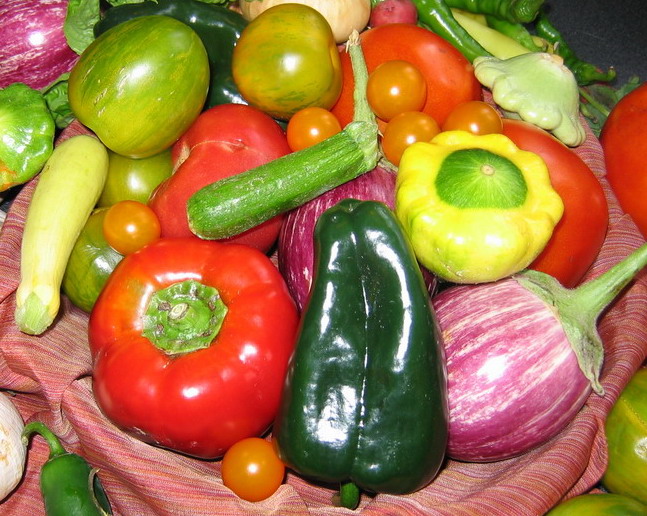
New York Times health blogger, Tara Parker-Pope, posted about a new two-year study to be undertaken at the University of North Carolina to determine the public health impact of consumers moving toward a diet composed of more locally grown and produced foods.
This study will be the first to look at the health implications of eating locally grown fruits and vegetables, and I look forward to the results, since I am pretty certain already that the locally grown food we eat at our house has made us all healthier. I do remember in my nutrition classes learning that after a fruit or vegetable is picked, pulled, cut or otherwise removed from the parent plant, it begins to lose vitamins and other phytochemicals which are necessary for proper health. And, unfortunately, the “fresh” vegetables and fruits you see in supermarkets, no matter how beautiful, are not particularly fresh. Many of them were picked two weeks or more ago.
Some vegetables, such as winter squash, potatoes, onions and apples can all be stored for a long period of time without a noticeable loss of nutrient value, but other vegetables like leafy greens, or broccoli, or sugar snap peas, all lose their nutrients pretty quickly. And vegetables like tomatoes, which are picked green and then are forced to ripen in transit by the application of ethylene gas, never even get the full compliment of nutrients they would have had if they had ripened on the vine. (Not to mention that they taste like water and plastic.)
Marion Nestle, author of the weighty but useful tome, What To Eat, discusses these issues in her book and on her blog; I trust her works because she writes not from the perspective of a hippy-dippy idealist, (not that there is nothing wrong with being a hippy-dippy idealist–I have been one myself, and still am some days) but from the scientific point of view of a distinguished and well-respected professor of nutrition. She backs up her statements with the latest scientific studies, so when she tells you that the “fresh” foods in the grocery store produce department are lacking in vitamins and minerals because they really aren’t that fresh, you can trust her words are based on fact, not belief.
When you eat locally, buying from a local farmer, most often the food you purchase was picked that very morning. The foods at farmer’s markets generally are so much more fresh–in the truest sense of the word–than what you can find in grocery stores, that it stands to reason that when you eat them, you are getting more vitamins, minerals and phytochemicals which can help fight cancer, than you would be getting otherwise. At a farmer’s market, the only time a tomato is picked green is so you can take it home and make fried green tomatoes or green tomato pickle from it. Vine-ripened tomatoes are not only superior to grocery store tomatoes in vitamin content, they are worlds beyond them in taste and texture, so much so that you cannot really compare the two.
Large amounts of vitamins and minerals help boost human immune systems, and I have to say this–Kat has only had one major illness, no recurrent colds, no ear infections or other maladies common among infants and toddlers. Morganna still has allergies, but she doesn’t get colds or the flu very often, and neither Zak nor I have been sick in quite some time–I had one sinus infection a couple of months ago, but that was the first one in FIVE YEARS. This is astounding, since I used to have one ever six months when I was younger.
There is also the issue that it seems that once people start shopping at farmer’s markets, they seem to start eating a diet with more varied fruits and vegetables than before, in large part because they are exposed to interesting, different varieties of these foods than they see in grocery stores. And, I have anecdotal evidence from watching the eating and shopping patterns of some friends of mine who have been influenced by the foods they eat at my house to change their shopping patterns, that once you get a taste of really fresh produce, you will want more, and will eat more of it. (This also goes for high quality dairy products, eggs and meat as well.) Nothing compares to the sweet fragrance of just picked ripe local strawberries, and once you taste that, the cottony giants at the supermarket will never satisfy you again.
Frankly, anything that gets people to eat more fruits and vegetables and a little less meat is fine by me.
There is also the issue of food safety.
When you have food being shipped across our country and into our country from across the world, there is a significant risk of food contamination. Why?
Because other countries do not have to abide by the same safety standards in agriculture that farmers in the US do. When I was in culinary school, there was a local outbreak of e coli that was traced to raw scallions from Mexico, where they were irrigated with raw sewage. The usual washing procedures are not sufficient to safely remove all traces of any bacteria present in a scallion, because of the way they grow–in layers and concentric rings which can trap soil and more disturbingly, bacteria.
And, of course, there is the current outbreak of a rare form of salmonella that has been traced back to tomatoes grown either in the US southwest or Mexico.
This outbreak has caused local Texas health officials to state that it is perfectly safe to eat raw home grown tomatoes of any kind, but that full-sized and Roma tomatoes bought from grocery stores should not be eaten raw.
When you grow your own food, or when you buy it locally from a farmer you know and trust, you know exactly what went into growing it. When you grow it yourself, you know what was used to fertilize it, where the water came from that irrigated it, and who picked it. You know if it came into contact with possibly contaminated animal manures, you know how much or little it needs washed before eating and you know exactly how ripe or unripe it is.
I have been saying for a while now that for food security issues, that smaller, localized food production is safer. When you have huge farms growing one food and shipping it off to all corners of the country and globe, if there is ever anything wrong with that food, a hell of a lot more people are in danger of food-borne disease than would be otherwise. There is also the issue that tracing the source of illness is harder in a huge food system like this.
For these reasons and more, I am looking forward to the new study on the health impact of local food. While I believe that local food is healthier and I have a lot of circumstantial evidence to support my contention, there is a difference between believing something and knowing it for a fact.
Besides, there is nothing wrong with more knowledge in the world.
This Is Why I Have Been Absent From The Blog

This has been a super-busy week.
We had a load of prep to do at work, and at home, we had to get our butts in gear, and get our ducks in a row and all those cliches, because we were going to be inundated by grandparents, grandparents and more grandparents, all coming together in order to witness Morganna Arianna Marks graduate from Athens High School.
And then, Morganna’s friends and relations came together to celebrate.
They came and ate dinner at Salaam, which was cool–and in honor of Morganna’s status as the graduate, I let her choose which dinner specials I would make for the evening. (We had Chicken Tikka Masala, Persian Cherry Kofta, Channa Masala, and Grouper a la Grecque, as well as Dates a l’Aziz as an appetizer, and for dessert, Chai Creme Brulee and Turkish Coffee Truffles.) It was a nice, relaxing evening–meaning, our business was kind of slow–so I got to sit with the party, and hold Kat so Zak could eat. Kat loved watching our belly dancer, Leah, dance–and she had fun standing on the floor and wiggling along with her. It was really, really cute.
It was nice to have a relaxing Saturday night after a busy Friday night when we had about twenty-five people lined up out the door, down the alley and around the corner waiting to come in as soon as we opened. Ten minutes after the door opened, the dining room was filled. I am not kidding. It was cool.
And let me brag on my kitchen staff here–they rocked the place. No table got food late, we screwed absolutely nothing up and we rode the wave of the rush on a steady diet of Turkish coffee and 80’s music. Talcon kicked ass and took names on the dishes, Galen rocked the salad station and Morganna worked her butt off on the hot entrees, while I expedited, and manned the oven station and dished out dinner specials.
It was fun. We were high on adrenaline, Prince and Cyndi Lauper. We were singing and dancing while we pumped out the food in a steady, easy stream.
We were having so much fun that a guest, on his way back from the restroom, stopped at the kitchen door to dance and sing a bar or two of “Girls Just Wanna Have Fun” with us.
It was cool.
So, look for more posts in the coming week, although I will still probably be busy prepping at work, since this coming weekend is Ohio University’s graduation, and well–that is a big restaurant event here in town. So, maybe you will hear more from me this coming week.
I sure hope so–even though I am sure I am going to be riding some big waves in the kitchen this week!

Categories:
- Admin (rss) (55)
- Blogs and Blogging (rss) (81)
- Book Reviews: Cookbooks (rss) (43)
- Book Reviews: Non-Cookbook Food Books (rss) (38)
- Cats and Cat Blogging (rss) (47)
- Chinese Cooking Lessons (rss) (32)
- Culinary School Stories (rss) (18)
- Dairy Pruducts: Cultured and Barbaric (rss) (4)
- Documentary Filmmaking (rss) (1)
- Essays, Rants and Reflections (rss) (260)
- Fighting Hunger (rss) (12)
- Food and Kids (rss) (45)
- Food in the News (rss) (126)
- Food Media (rss) (98)
- Food Preservation (rss) (18)
- Food Safety (rss) (45)
- Gardening (rss) (30)
- Herbs and Herb Blogging (rss) (20)
- Holidays (rss) (50)
- Kat Blogging (rss) (22)
- Kitchen Science (rss) (36)
- Leftover Makeover (rss) (8)
- Life, the Universe and Everything (rss) (131)
- Local and Sustainable (rss) (227)
- Local Athens Food and Foodies (rss) (42)
- Meatless Mondays (rss) (32)
- Menu For Hope (rss) (5)
- Nutrition, Diet and Health (rss) (84)
- On The Farm (rss) (8)
- Recipes: Almost Vegetarian, Vegetarian and Vegan (rss) (294)
- Recipes: American Regional (rss) (37)
- Recipes: Appalachian Hillbilly (rss) (33)
- Recipes: Bread, Pasta, Grains (rss) (95)
- Recipes: Canning and Preserving (rss) (8)
- Recipes: Chinese (rss) (123)
- Recipes: Comfort Food (rss) (120)
- Recipes: Cookies (rss) (16)
- Recipes: Desserts (rss) (48)
- Recipes: French (rss) (25)
- Recipes: Fruits and Vegetables (rss) (302)
- Recipes: Greek, North African and Middle Eastern (rss) (31)
- Recipes: Indian (rss) (137)
- Recipes: Italian (rss) (42)
- Recipes: Japanese (rss) (7)
- Recipes: Jewish (rss) (4)
- Recipes: Korean (rss) (6)
- Recipes: Meat, Poultry and Fish (rss) (220)
- Recipes: Mexican/Native American/ Latin American/Caribb (rss) (27)
- Recipes: Original (rss) (108)
- Recipes: Thai (rss) (27)
- Recipes: Tofu (rss) (17)
- Recipes: US Regional (rss) (16)
- Recipes: Vietnamese (rss) (8)
- Restaurant Stories (rss) (28)
- Sewing, Quilting, Arts and Crafts (rss) (16)
- Simple Chinese Recipes (rss) (30)
- Slow Food and Heritage Foods (rss) (10)
- Spice Blogging (rss) (44)
- The Chinese Cookbook Project (rss) (14)
- The Chinese Pantry (rss) (39)
- The Documentary (rss) (2)
- The Kitchen Saga (rss) (17)
- The Locavore's Bookshelf (rss) (15)
- The Unsung Adventures of The Culinary Nerd (rss) (6)
- Tools and Toys (rss) (35)
- Uncategorized (rss) (10)
- With a Side of Politics (rss) (48)
Archives:
- August 2012 (9)
- July 2012 (12)
- September 2011 (3)
- August 2011 (7)
- July 2011 (8)
- June 2011 (16)
- May 2011 (17)
- April 2011 (11)
- December 2010 (9)
- November 2010 (5)
- February 2010 (1)
- December 2009 (5)
- November 2009 (7)
- October 2009 (10)
- September 2009 (16)
- August 2009 (14)
- July 2009 (14)
- June 2009 (7)
- May 2009 (17)
- April 2009 (10)
- March 2009 (25)
- February 2009 (13)
- January 2009 (10)
- December 2008 (5)
- November 2008 (5)
- October 2008 (6)
- September 2008 (13)
- August 2008 (8)
- July 2008 (11)
- June 2008 (18)
- May 2008 (13)
- April 2008 (14)
- March 2008 (16)
- February 2008 (17)
- January 2008 (19)
- December 2007 (25)
- November 2007 (18)
- October 2007 (24)
- September 2007 (16)
- August 2007 (15)
- July 2007 (15)
- June 2007 (10)
- May 2007 (14)
- April 2007 (16)
- March 2007 (17)
- February 2007 (20)
- January 2007 (13)
- November 2006 (1)
- October 2006 (8)
- September 2006 (14)
- August 2006 (25)
- July 2006 (30)
- June 2006 (28)
- May 2006 (34)
- April 2006 (29)
- March 2006 (24)
- February 2006 (30)
- January 2006 (38)
- December 2005 (40)
- November 2005 (37)
- October 2005 (32)
- September 2005 (25)
- August 2005 (30)
- July 2005 (28)
- June 2005 (21)
- May 2005 (8)
- April 2005 (22)
- March 2005 (17)
- February 2005 (29)
- January 2005 (10)
Search Site:
Links:
- Lily’s Wai Sek Hong
- 101 Cookbooks
- A cat in the kitchen
- A Veggie Venture
- Accidental Hedonist
- Cha Xiu Bao
- chez pim
- Chocolate & Zucchini
- Chopstick Cinema
- Chowhound.com
- Chubby Hubby
- Cook sister!
- Cooking with Amy
- da*xiang
- Eat Local Challenge
- Eating Liberally
- Ecocentric
- Eggbeater
- Epicurious
- Farmgirl Fare
- Fatfree Vegan
- Foodgoat
- ForkandBottle.com
- Green Olive Tree
- Hooked on Heat
- Jaden’s Steamy Kitchen
- Kalyn’s Kitchen
- Lucullian delights
- Mahanandi
- Matt Bites
- MeatHenge
- mmm-yoso!!!
- New York Times – Dining & Wine
- Pizza Goon
- Rasa Malaysia
- Ruhlman
- Sailu's Kitchen
- Serious Eats
- SF Gate: Food & Dining
- Simply Recipes
- Soul Fusion Kitchen
- Tastespotting
- The Amateur Gourmet
- The Cleaner Plate Club
- The Food Section
- The Grub Report
- thecookscottage
- U.S. Food Policy
- Wandering Chopsticks
- Washington Post Food and Dining
- Wasted Food
Meta:


Powered by WordPress. Graphics by Zak Kramer.
Design update by Daniel Trout.
Entries and comments feeds.