
Cook Local, Eat Global
Carola: Simply Good Potatoes
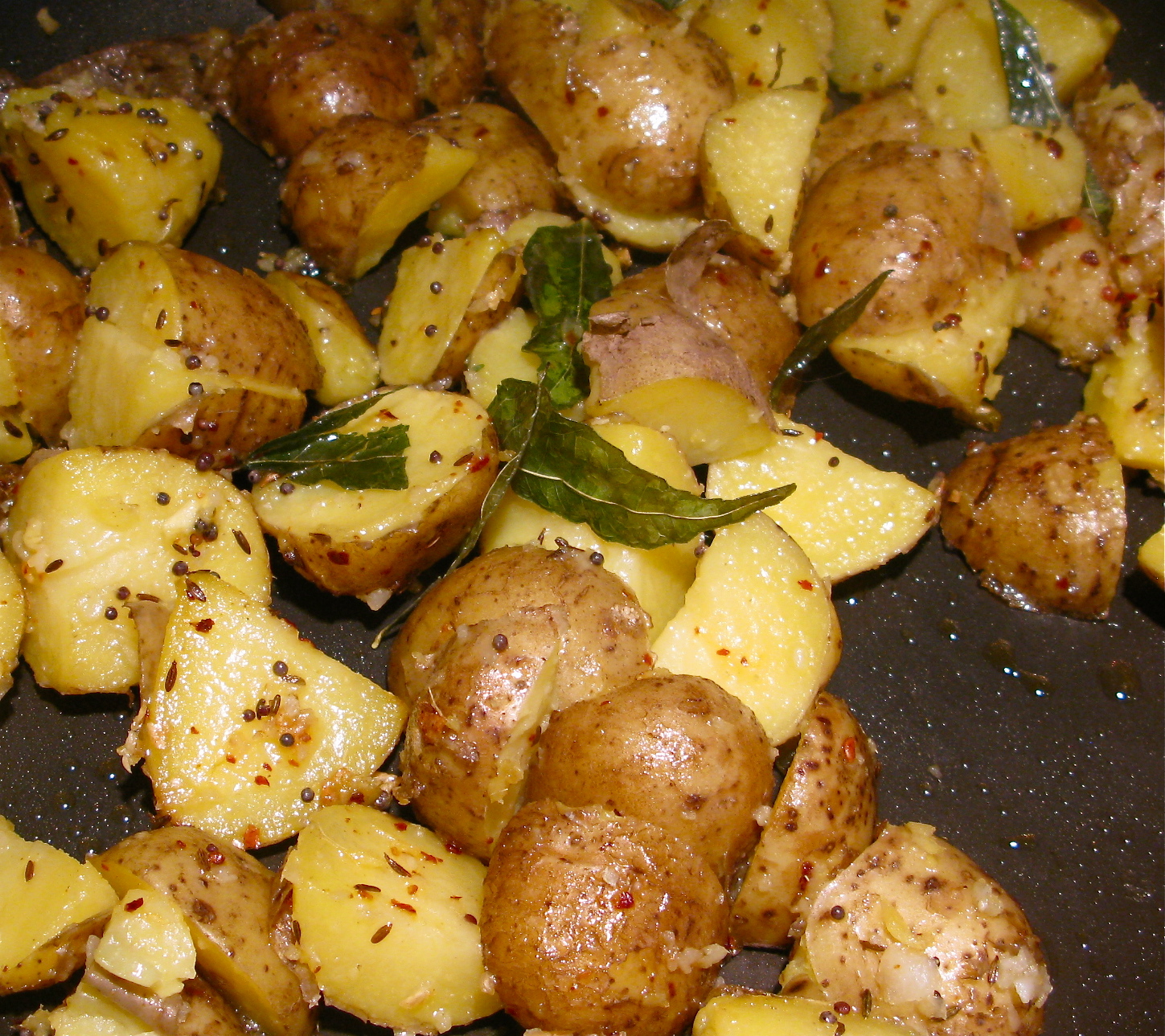
“Carola” is one of my favorite all-time potato varieties.
Which might seem weird to some folks–I mean, a potato is a potato, right?
Well, no. At least when it comes to locally grown or home-grown potatoes, there are distinct flavor and texture differences between potato varieties.
The same can not always be said of supermarket potatoes. There are differences in texture and color, but I cannot say the same for flavor. Many supermarket potatoes seem to have no flavor whatsoever, which leads to the addition of copious amounts butter, sour cream and other flavor enhancers in an attempt to create flavor where none exists naturally.
I grew up eating “Kennebec” potatoes grown on my Grandpa’s farm, and to this day, they are my favorite potato for mashing. They have an earthy, nutty flavor and mash up creamy and fluffy, never starchy and sticky. I use a few garlic cloves boiled with the potatoes and then mashed with them to give a hint of sweetness to the mixture and then enhance it all with smaller amounts of butter and Greek yogurt than I usually use when I make mashed potatoes with random russets or reds from the grocery store.
But, I’m not talking about Kennebecs here–I’m talking Carolas, which I love even more than my old friend from Maine. Carola is a potato variety originally from Germany, and it is considered a “midseason” potato with an exceptionally creamy texture and a sweet, lightly nutty flavor that is amazing when parboiled and then sauteed.
The skins are thin and tender with an earthy, never bitter flaver, and the sunny yellow flesh not only carries other flavors with it, but always retains its nutty sweetness whether roasted, fried or boiled.
My favorite method of cooking these potatoes, especially when they are tiny babies (about 1″ round) is to parboil them whole and when they are fork tender, drain and dry them, then saute them in butter with minced fresh German Extra-Hardy garlic and perhaps some fresh rosemary or thyme leaves. Salted and lightly peppered, these wee potatoes are a highly anticipated late spring and summer treat at our table.
When the Carolas grow a bit larger, I still cook them by the same method, but instead of sauteeing them whole, I cut them into quarters after parboiling and draining them. This keeps the flesh from absorbing too much water, and improves the texture of the potato mightily.
I also roast the larger potatoes in a hot oven by tossing the quartered pieces with olive oil, salt and Aleppo chili pepper flakes, then cooking them until crisp and brown. Sometimes I sprinkle the potatoes with fresh minced garlic and rosemary during the last five to ten minutes of cooking, but not always. Sometimes, plain potatoes are just plain old spectacular without adornment.
But, sometimes, even a potato as fantastic as the Carola wants a bit of gussying-up, so last night, I decided to take my usual parboiling and sauteeing method a step further and give it a zing of flavor from the Indian subcontinent.
The recipe is still very simple and the flavors are clean and fresh, with a musky, earthy depth provided by the fresh curry leaves and cumin and mustard seeds, and a richness from the crispy browned garlic and ginger.
Give this technique a try–and if you can find Carolas at your farmer’s market, please use them for this recipe. (I am also told that Carola potatoes make great potato salad, but I cannot speak to the veracity of that statement myself, having never tried it. But, I suspect it to be true–if any readers have ever used them in a potato salad, please let me know how they worked.)
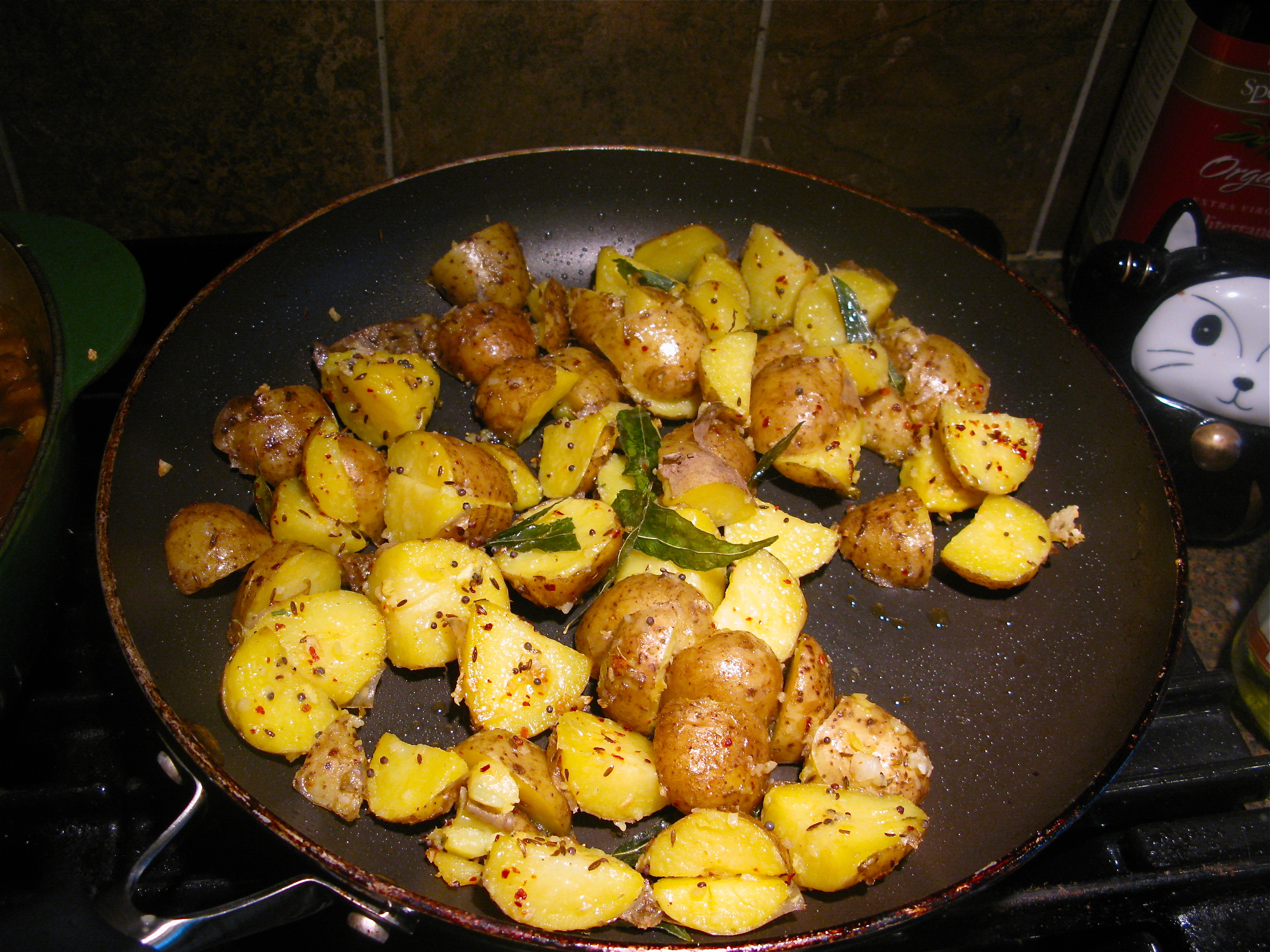
Indian Style Carola Potatoes
Ingredients:
1 pound young Carola potatoes, well scrubbed
2 tablespoons ghee or butter
10 fresh or frozen curry leaves
2 large cloves garlic, minced
1/2″ piece fresh ginger, peeled and minced
1 teaspoon cumin seeds
1 teaspoon black mustard seeds
salt to taste
Aleppo chili pepper flakes to taste
Method:
Put the potatoes into a deep saucepan and cover with cold water. Bring a boil and cook until fork tender. Drain and dry the potatoes well. If the potatoes are larger than about 3/4″ in diameter, quarter them.
Melt the ghee or butter in a deep saute pan over medium heat. Add the curry leaves, and cook until they are fragrant–about a minute. Add the garlic, ginger and spice seeds, and cook, stirring constantly, until the garlic and ginger are fragrant, but not at all browned–about a minute.
Add the potatoes and cook, stirring and tossing, until the mustard seeds sizzle and pop and the garlic and ginger turn golden, and the potato skins crisp up a bit. This takes about five minutes of constantly moving the potatoes around in the skillet–I both stir and toss, but one or the other works just fine as well.
Add salt and Aleppo pepper flakes to taste and serve hot. These are good with grilled meats or as part of a vegetarian meal with Channa bhatura or Mixed Mushrooms and Greens Dal.
I Say Tomayto, You Say Tomahto…
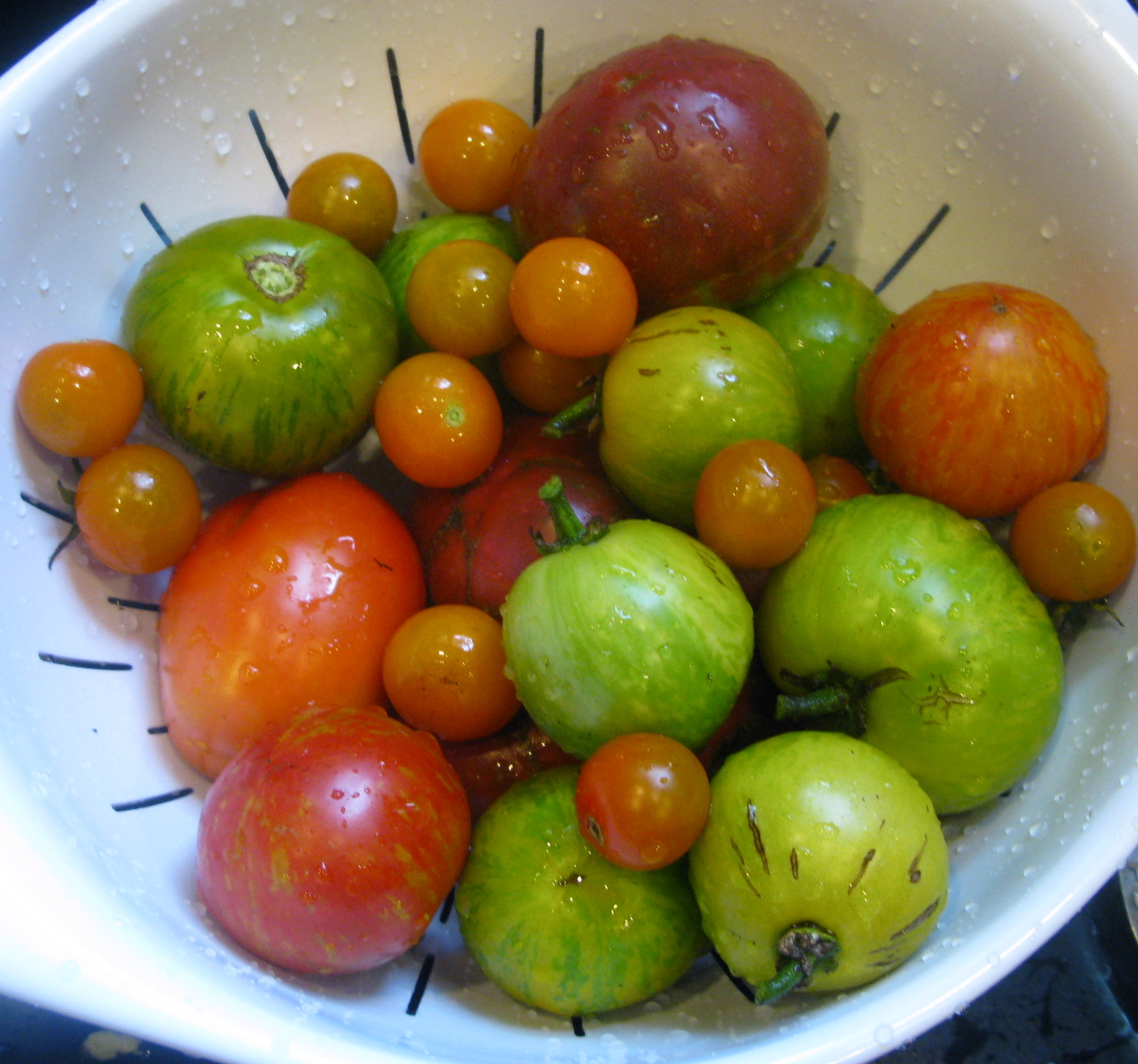
But however you pronounce it, tomatoes are among American’s favorite garden vegetables.
I adore them, myself. But only ones grown in the summer, in gardens, locally. Those tomato-shaped and vaguely tomato-scented things in the grocery store that are as hard as baseballs and vibrantly colored as as insipid and watery in flavor as they ever were, though it is true they have improved in looks over the past couple of decades.
Here’s a recent harvest from our community garden plot.
Above you can see four of the varieties we are growing.
The green ones are ripe, though they are green inside and out–those are an open-pollinated variety called “Green Zebra.” Often considered an heirloom because it is open-pollinated, (which means you can save the seeds from one year to the next and they will breed true–when you plant them, you will get plants that bear the green and yellow, zesty fruit you had the year before) the Green Zebra was developed in 1983 by Tom Wagner in Everett, Washington. Characterized by a yellow and green striped skin and a kiwi-green interior, these small tomatoes are tangy and zesty in flavor with a good acid/sugar balance, and look beautiful sliced or cut into wedges in salads.
“Green Zebra” is a prolific tomato that ripens earlier than many larger than cherry tomato-sized cultivars. My two plants are LOADED with fruit and I have to pick them every other day to avoid them over-ripening and rotting on the vine.

I have to admit to trying the little red and orange striped tomatoes pictured with Green Zebra above because they’d look pretty on the plate together. This stripey variety is a new hybrid from Burpee called “Red Lightning,” and is meant to be an improvement on the heirloom, “Red Zebra.” I will say the vines are heavy with fruit, so heavy that they pulled my stakes down to the ground and broke them. I left them to clamber after that, feeling too tired to play with staking them all over again. These fruits ripen slower than Green Zebra, and the flavor is milder and sweeter. Overall–it is a pretty fruit, but not the tastiest I’ve ever eaten. I may try to grow it again in different soil and see if that improves the flavor–if it doesn’t, I won’t grow it again.
The tiny orange-yellow cherry tomatoes are Kat’s favorites–the celebrated hybrid “Sungold.” This is one of the most prolific of cherry tomatoes I’ve ever grown, and it is hardy, tough, tolerant of container plantings, tolerant of too much rain (though if there is a lot of rain once fruiting commences, the tender skin of these tomatoes will crack easily) and mildew infestations, and will produce until finally done in by a good hard frost. As for the flavor of these little glowing gems–in the sunlight they look positively incandescent, and that’s saying a lot because I really dislike yellow as a color–they are sweet as candy. This, I suspect, is why Kat loves them so much. But it is a musky sweetness that isn’t just like eating tomato-flavored sugar–thus I like them, too. They are pretty as well; on the inside they sport a green gel around the seeds that contrasts with the golden flesh and skin.
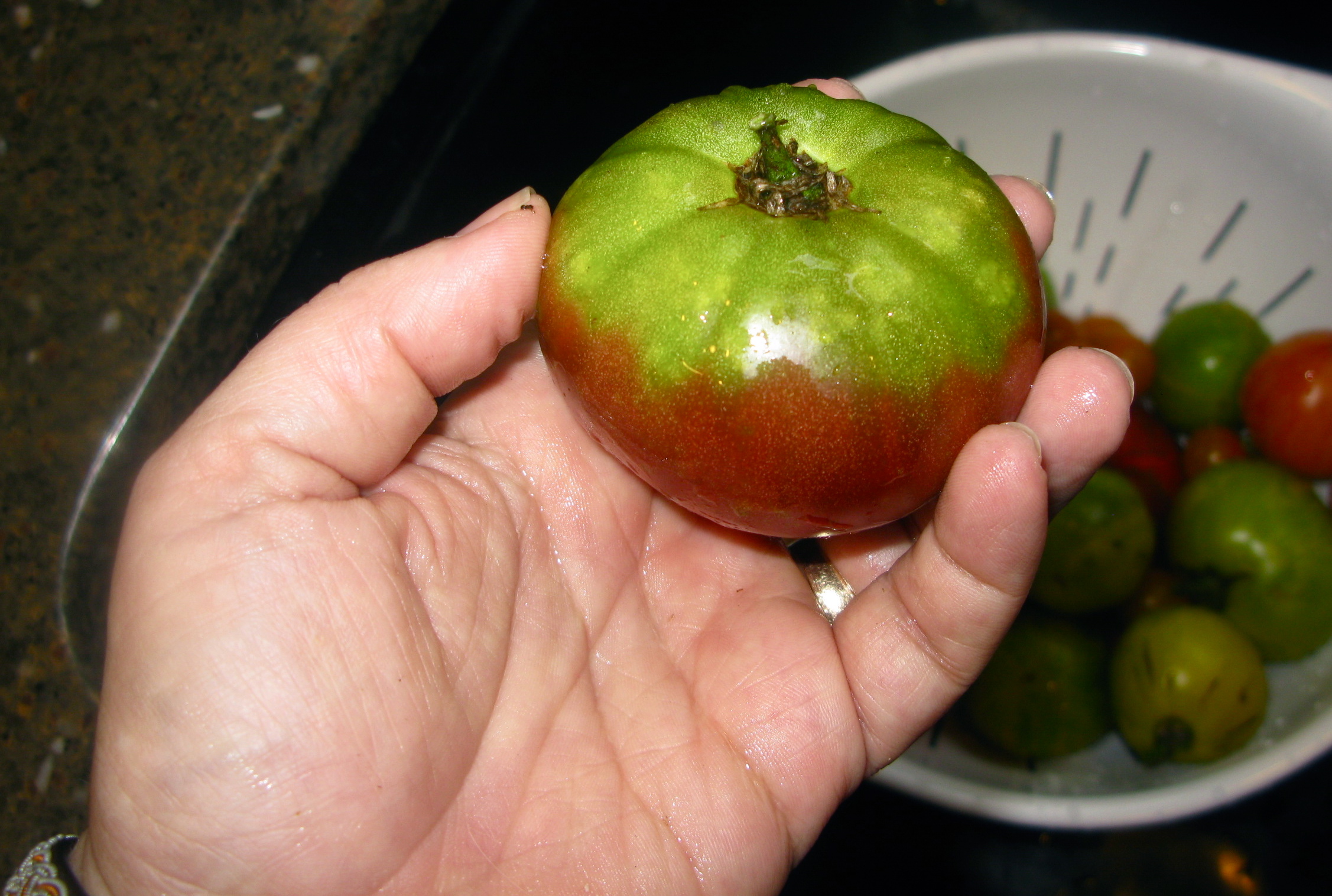
My favorite tomatoes that I grew this year, however, are the “Cherokee Purple.” These huge plants with stalks as big around as my thumb, are loaded with heavy beefsteak-style fruits that are burgundy red on the bottom, with contrasting green shoulders. “Cherokee Purple” is my favorite heirloom variety of all (with Black Krim coming in at a close second)–the dark violet-red varieties all seem to have a deep, musky, rich flavor and scent that is out of this world delicious. Not too sweet, not too acidic, these tomatoes are delicious on their own, but they really shine when made into salsa or gazpacho, especially when mixed with other tomato varieties because they add a depth of flavor that is irresistibly seductive.
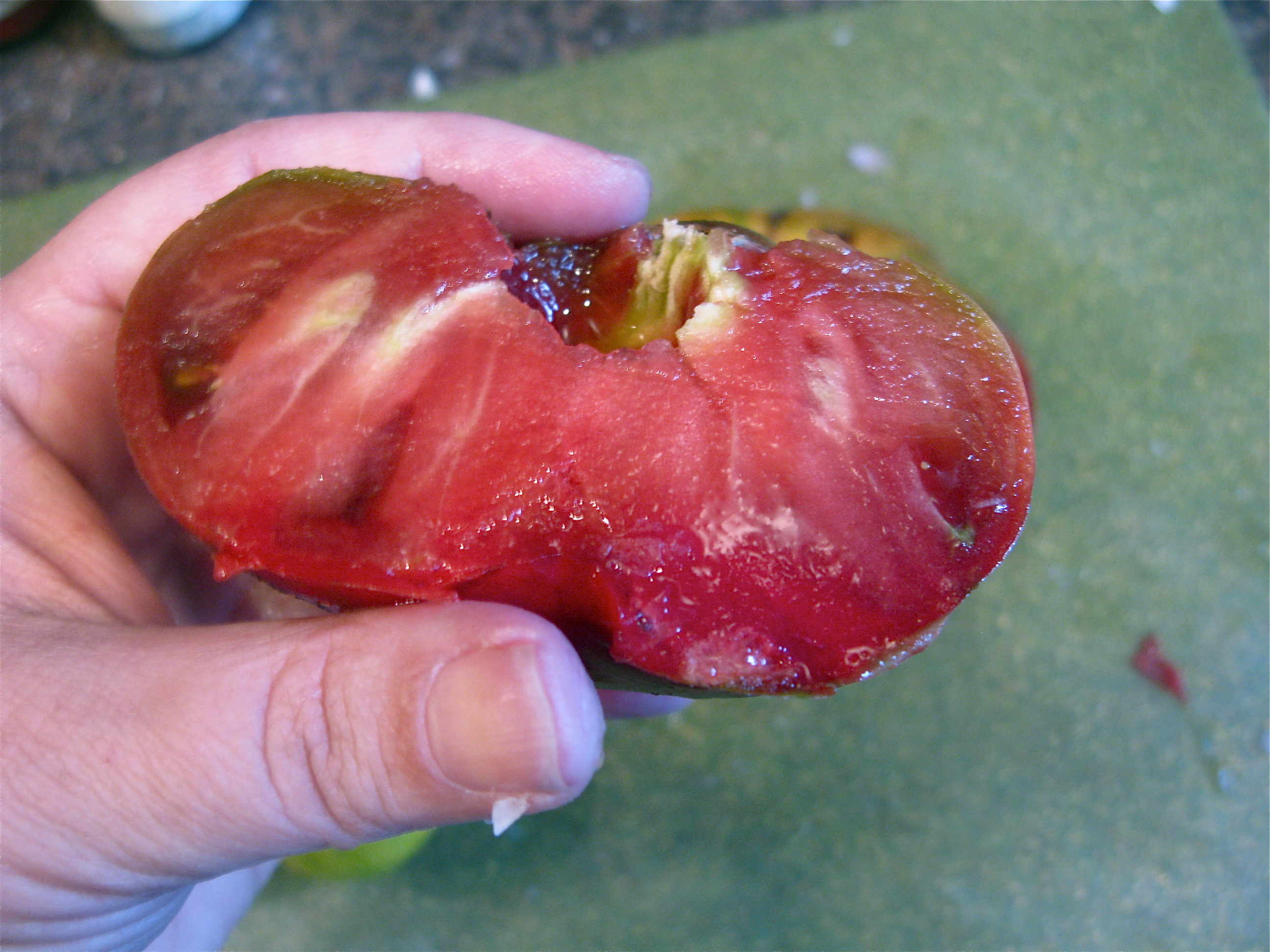
Some people may find these purple and black types of tomatoes to be ugly–they do tend to have odd shapes and their colors are not what one expects if one is only used to red and every now and then, yellow tomatoes. I, however, find them to be not only tasty beyond belief, but beautiful, but then, I do have a rather unusual aesthetic sense when it comes to food. I like bright, bold color combinations in food, which goes along with my love for bright, bold flavors.
I’m also growing the heirloom “Amish Paste” tomatoes in my plot, but mine have just now started ripening. Morganna’s however, are fruiting like there’s no tomorrow. She declined to stake her tomato plants and so they are clambering all around the ground in a big tangle of vines–which I have to say is how my Grandpa grew his tomatoes, too–and they are vigorous and healthy with no sign of any mildew problems whatsoever.
How do the growth rates and disease resistance compare between the heirloom, open pollinated varieties and the hybrids in our garden plots?
One of the big advantages to growing hybrids is that many of them have been bred with disease resistance in mind–but truly–all of my tomatoes have succumbed to mildew problems due to a rainy two and a half months in the late spring and early summer. I say succumbed, but, really, it hasn’t slowed the growth of the plants or their fecundity. They are still growing huge stalks with lots of fresh green growth above the mildew-damaged branches and they are fruiting madly. And this is equally true for both the hybrid and the heirloom varieties–they all seem tough and hardy, and very resilient in the face of Colorado Potato Beetle infestations and damp conditions.
So, for me, the jury is still out on whether hybrids are better growers than heirlooms. This means that I’ll continue to grow the varieties that I think taste the best and do the best in our garden conditions. Next year, I may also just let my tomatoes ramble about like Morganna has done, though I’m not as sure about that as I’d like to be. I have to note that slugs love tomatoes as much as we humans do, and I’ve seen at least three of her scarlet fruits eaten hollow by slugs who had no trouble getting to them as they were on the ground, as if waiting to be devoured by those slimy little devils.
Now that I’ve had my say on tomatoes–what are your favorite varieties to grow and why?
Production Has Begun
Longtime readers will recall that oh, a year or so ago, it was mentioned that my friend and videographer, Dan Trout, and I were working on a documentary film about the food community here in Athens, Ohio.
I am pleased to announce that the cogitation, pre-production equipment gathering and research phase is finished and as of last week, actual filming has begun.
And, as you can see, we have a name for our production company–which I suggested as it uses both of our last names to good effect and it’s tangentially about food. Dan took my idea and turned it into a really readable, memorable and cute graphic for all of our business cards, release forms, letterhead and suchlike stuff.
Dan went out shooting b-roll footage last Wednesday and then he and I went out on Saturday to the Farmer’s Market to shoot specific images to use in the trailer for the film, which does have a working title (Simple Gifts: The Athens Food Model) and to talk with some of the people we want to interview on camera.
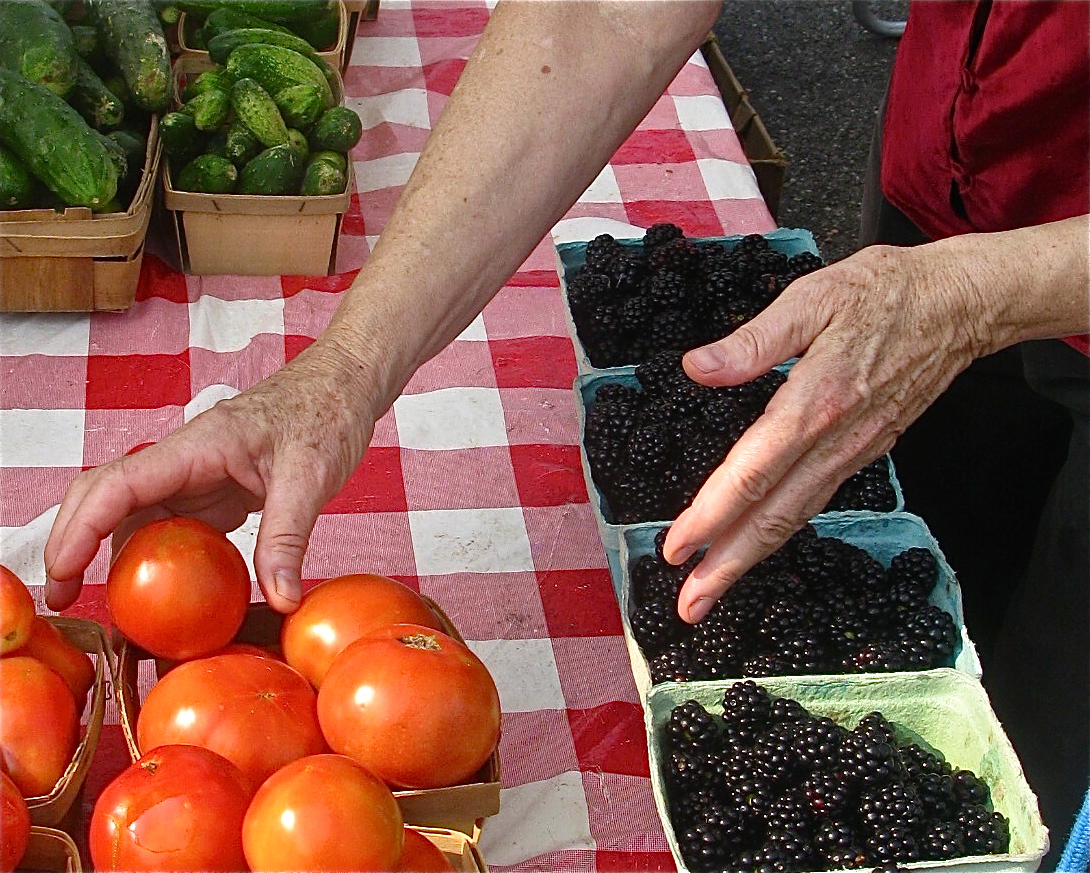
I was unprepared for the enthusiasm with which our project was met by pretty much every person with whom we spoke. I was sick with nervousness; I had awakened overly early in the morning and was unable to go back to sleep because I was dreading talking to people because I had the fear that no one would want to talk with us, or that they would think that the project wasn’t worthwhile.
I was so wrong–it turned out that it was just my nagging self-doubts at play in my head. From the very first farmer I spoke with (Star of Shade River Farm), everyone was unfailingly positive, and many were exceptionally enthusiastic. Even farmers who started out as somewhat suspicious warmed up when we described our project as an independently produced feature-length documentary that shows how Athens grew this amazing local food system, with the aim of showing people in other communities how they can do the same thing. Once we got it across to people that we wanted to empower other communities to look at how Athens managed it and then start a similar system in their areas, farmers were ready for us to come to their farms and talk.
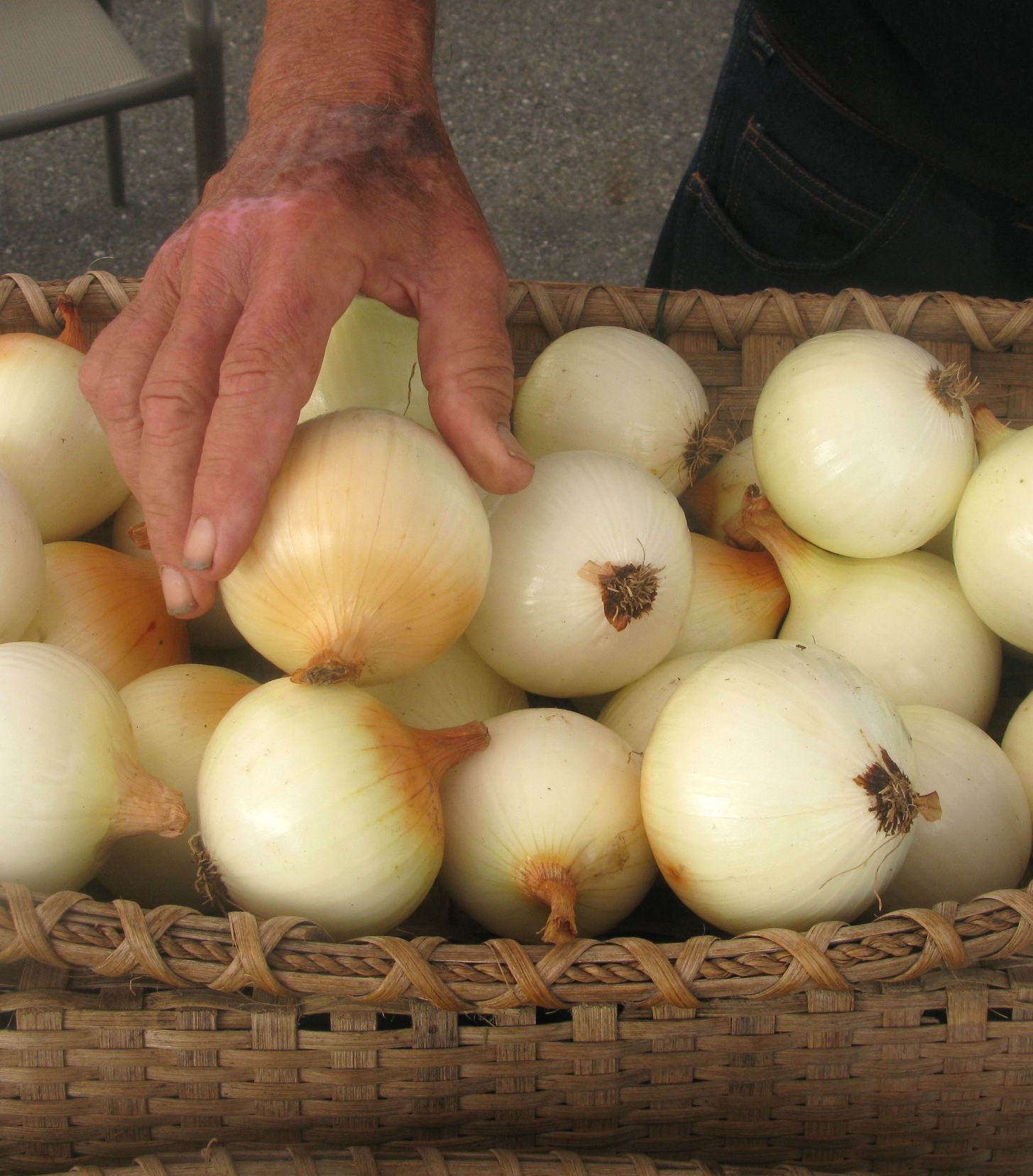
They -want- us to tell their stories, not only for the sake of these stories themselves–but so that other people can make their own stories and successes elsewhere.
That meant a great deal to both Dan and I. In fact, it rather blew us both away. It was truly breathtaking.
Between getting contact information from farmers and community organizers and business owners, I took some still photographs to use in marketing and packaging. Dan tells me that much of his footage caught the same look as my photographs–which capture much of the feel we want for our film. We want it to be beautiful and uplifting–not only because Athens is a beautiful place, but also as an antidote to many of the recent food-related documentary films that are out there, which, let’s be honest, are pretty bleak.
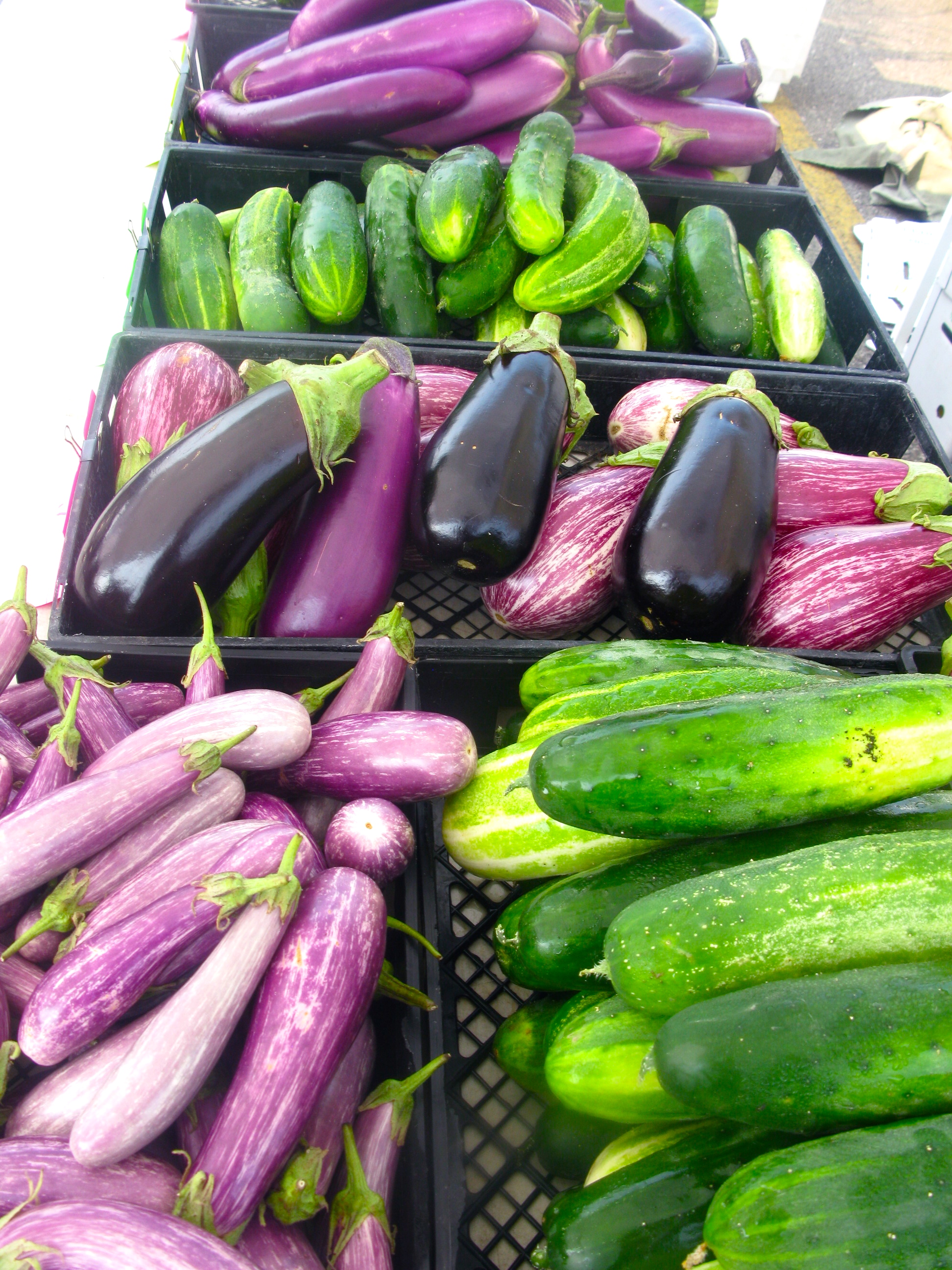
We have a pretty full schedule of shooting set up for the next couple of weeks; our goal is to have a trailer put together and ready to present by the end of August or the beginning of September. We are taking a full year–a cycle of the seasons to complete our filming, and then begins the long, arduous editing process.
This project, which is being independently funded and produced, is going to be a long, time-consuming work, but it is work that I believe has worth in the world. Feeling the excitement of the food producers here in Athens as we described our project, seeing their faces light up as we talked, showed me that this can mean a lot not only to Dan and I, not only to Athens and to the food community here, but to viewers out there in the world. The story of our town’s food system can really make a difference in the lives of people in other small communities.
We want viewers to feel uplifted, cheered and empowered by this documentary. We want them to see that there are things they can do to change their own communities, that the power to grow a sustainable local food network lies in their own capable hands.
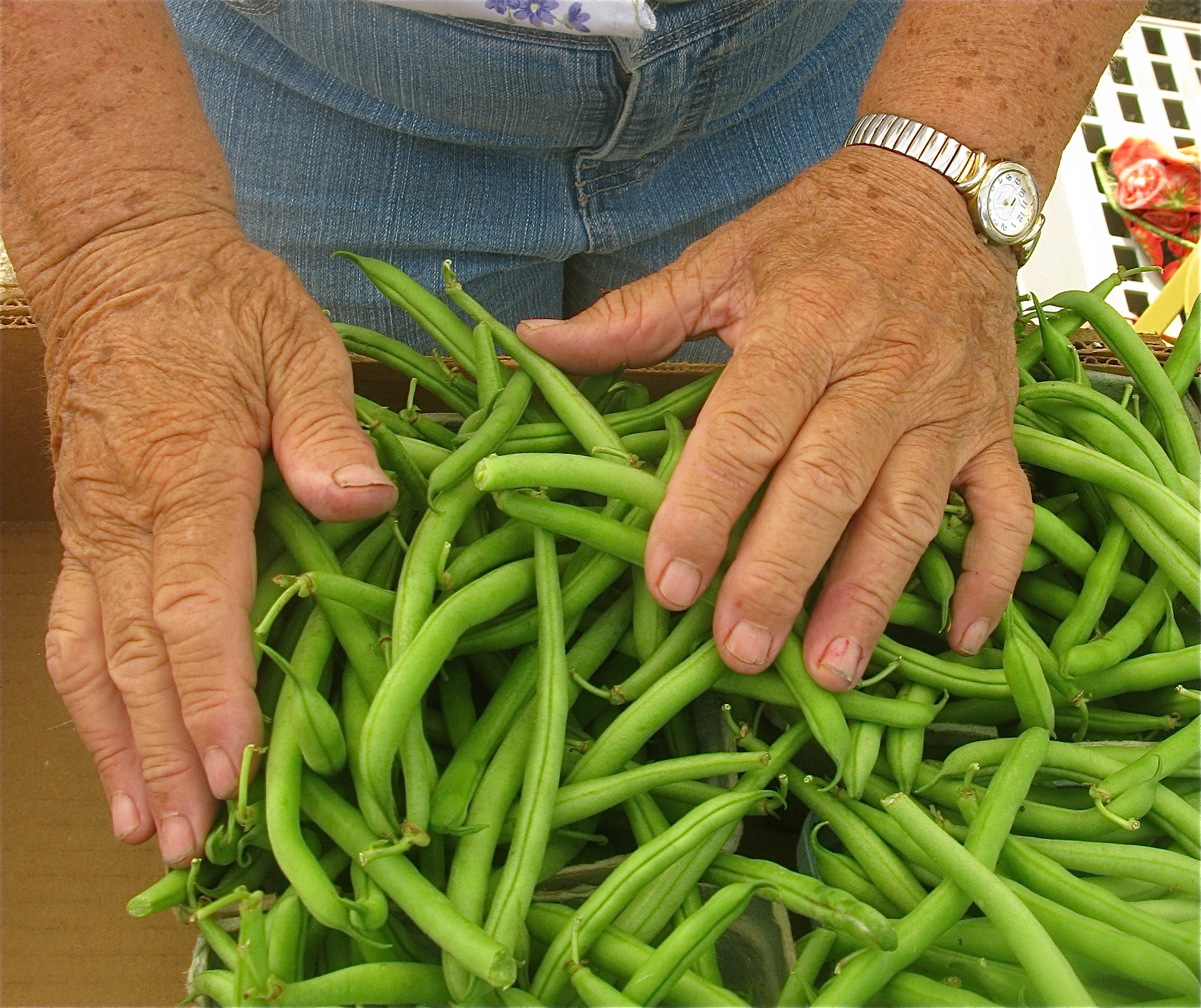
Not in the hands of the government, or of corporations.
But simply in the hands of ordinary citizens. Individuals who do seemingly ordinary things, but who, when working together, can build something extraordinary.
A New Food Journal: Lucky Peach
I love food magazines.
Well, let me clarify: I love the idea of food magazines, though the reality of them usually don’t stand up to my own preconceived–and some would say idiosyncratic–notions of what a periodical about food and cooking should be. Back when I was the editor for “The Paper Palate” which is a now defuct blog in a series of networked food blogs (The Well Fed Network) that covered food in the paper media which included newspapers and magazines, I -had- to read a lot of food magazines. A LOT of them–many of which I would not normally pick up and glance through, much less read.
I mean, really–can any of you regular readers see me willingly pick up “Cooking With Paula Deen” unless circumstances forced me into it? (Circumstances being that I had to “review” the magazine and I was being paid to do so. Not paid enough–no one could pay me enough to look through that magazine more than one or two times in my life. Ugh.) Or how about “Every Day With Rachael Ray?” Rachael Ray–the woman who has put her name on a special “Garbage Bowl,” that you need to buy to use to put scraps in while you’re cooking. (Look–just use a frickin’ regular bowl, people. Or a counter-top compost bin. Or toss it in your sink if you have a disposal. Anything that you have around, for jeebus’ sake–but don’t go and buy a bowl because Rachael “designed” it to hold garbage! Ai ya!)
Well, it should be obvious to most readers that I’m not going to like either of the aforementioned magazines, and not just on principle, but because there’s nothing for me in either of them, but look, I don’t even like the venerable and beloved Cook’s Illustrated. When I was first really learning my cooking chops, I bought the magazine, but a few things started to bug me after a couple of years. One was the superior and somewhat condescending tone of the writers and the editor when they talked about their “best” recipes. The second thing that started getting under my skin was the fact that they started repeating recipes–they’d do a “best” recipe for brownies one year and then a couple of years later, do another “best” recipe for brownies. How many “best” recipes for pot roast do we need in the world? Or chocolate chip cookies. And, how can two different recipes both be the “best” recipes for any given dish?
What finally tossed me over the edge into an eternal loathing of Cook’s Illustrated was the way that the writers and editors treated Asian recipes–which is to say they wrote in a condescending, and culturally insensitive manner about cuisines that they really didn’t know diddly-squat about and I did. And that, my friends torqued my gizzard so badly that I wrote a big long rant about it and has kept me from reading the magazine (or watching their television shows) ever since.
So, I’ve fessed up–I don’t like very damned many cooking magazines. I love “Fine Cooking,” because they actually teach technique in addition to recipes and when they feature recipes from other cultures, they don’t play stupid games like suggesting substituting dill pickles from Safeway for Sichuan pickled vegetable. Instead, Fine Cooking’s authors and editors treat each recipe and cuisine with the respect they deserve, recognizing that food is one of the ways people from every culture define and share their innermost, cultural selves.
And Gastronomica is a pretty awesome read, though it can get way cerebral at times, more so than even I, an intellectual elitist, can bear. But its still fun, enlightening and thought-provoking, with lovely illustrations.
(There are other food magazines that I like, but I’m not going to go into them all right now–if you want to know the others I like, ask in the comments section.)
So, you get the picture, right? I’m a hard-nosed, cranky, jaded and apologetically picky reader when it comes to food magazines, and now that I don’t have to write about them all the time, I can read them or not as I please.
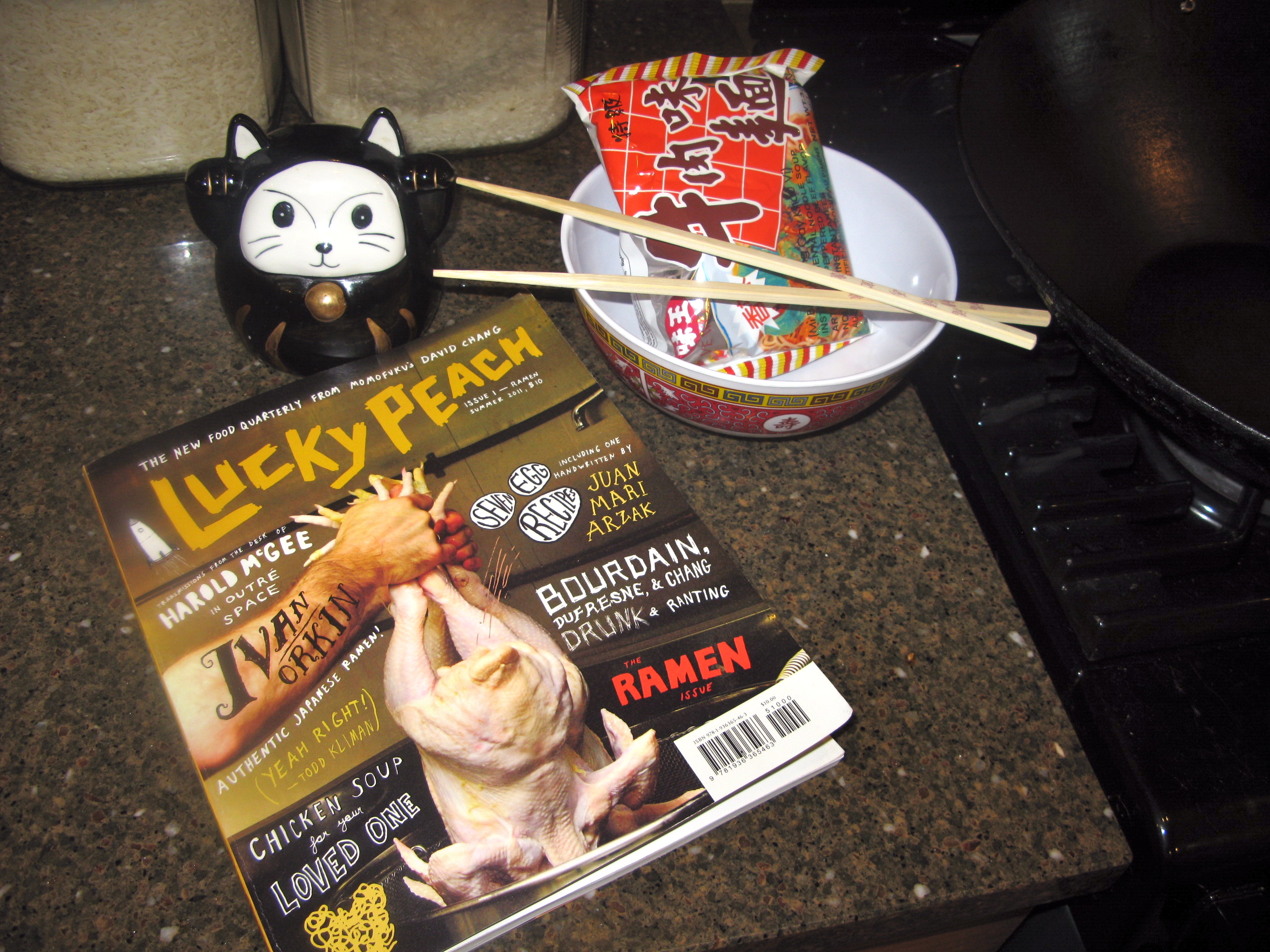
Which brings us to the subject of our post today–the new quarterly food journal from Momofuku’s obsessive, outre and outspoken chef, David Chang, “Lucky Peach.”
Have I eaten in one of Chang’s restaurants?
No.
Have I read about him?
Yes.
Have I read his cookbook?
Yes.
Do I like what I read?
Oh, yes.
Chang is one of those people whose obsessions run along parallel to my own, and so I feel a kinship with him. He seeks deep flavors, rich flavors that speak not only to the belly, but to the heart and mind of his diners. He’s constantly searching for ways to communicate these flavors to the wider world and bring cultural understanding by culinary means.
And, he just bloody well likes a damned good bowl of noodles.
So, he has restaurants, right? But he wants to reach folks who don’t eat at his restaurants. So, what does he do?
He starts a magazine, which he names after his first restaurant. (Momofuku means, “lucky peach.”) Actually, originally, the project was going to be a television show, but then that turned into an iPad app (which I don’t think is available yet, but when it is, I’ll be looking into it), and the idea of a quarterly journal came about. And then, some great writers came on board, including Peter Meehan, Harold McGee, Anthony Bourdain and Ruth Reichl, and some great-looking “outsider” style art and photography were tossed into the mix along with stylish but readable graphic design and out came a food magazine that by damned–even the bitchy old culinary nerd here likes.
Yeah, I liked it.
It’s not pretentious, the writing is fresh, new and not too hip to function. Perfectly good, but socially improper Anglo-Saxon words are sprinkled throughout which doesn’t bother me at all, because I’ve worked in quite a few kitchens in my time and I know exactly how chefs and line cooks talk. (“Colorful” does not even begin to describe the language of the restaurant kitchen.) There’s lots of drinking, laughing and bragging in these pages, but also deep wisdom on what exactly a dish of noodles should be and mean.
Oh, yeah, noodles. The first issue is all about ramen. Yeah, ramen. Not just the instant ones (though they are present and accounted for therein), but bowl upon bowl of the hand made ones cranked out and slurped up in little dives and airy restaurants and smoky joints all over Japan and now the world. It was the topic of ramen that made me pick up this first issue, and it was the article by Ruth Reichl on the topic of the instant noodles that made me keep the magazine in hand and pay for it.
Look–take it from me–it’s a great read from cover to cover. It will make you think, laugh out loud and most importantly, hungry.
There is no higher praise for a food magazine than that.
But wait! There’s more.
Recipes! What’s a food magazine or journal without recipes? (Gastronomica. Though, to be fair, they have recipes now and again, too.)
Anyway, there will be no “best” recipe for brownies to be seen in Lucky Peach. Nor any super-quickie 25 minute meals. Nope. Instead you get cool (and admittedly somewhat esoteric) stuff like a recipe for proper home made alkaline ramen noodles. (Don’t know what those are? Read Harold McGee’s article about them on page 82.) Pork belly and pork shoulder cooked so they can be sliced and served with ramen. The until now unpublished recipe for Momofuku’s ramen broth, v. 2.0.
And, some really weird recipes using instant ramen noodles that I’m not too sure about, but not every recipe in every magazine has to be a winner. Besides, these instant ramen recipes are pretty fun to read if not eat.
Go out, now and pick up a copy, sit down and feed your head, heart and belly on the words and pictures therein. Even if you’re not as picky a reader as I am, I bet you’ll still like Lucky Peach.
Finding Food Wherever You Are
Leave it to me to find food wherever I go.
That’s the thought that ran through my mind as I was playing with Kat in the golden shallows of Lake Winnipesaukee at my in-laws’ home in rural New Hampshire.
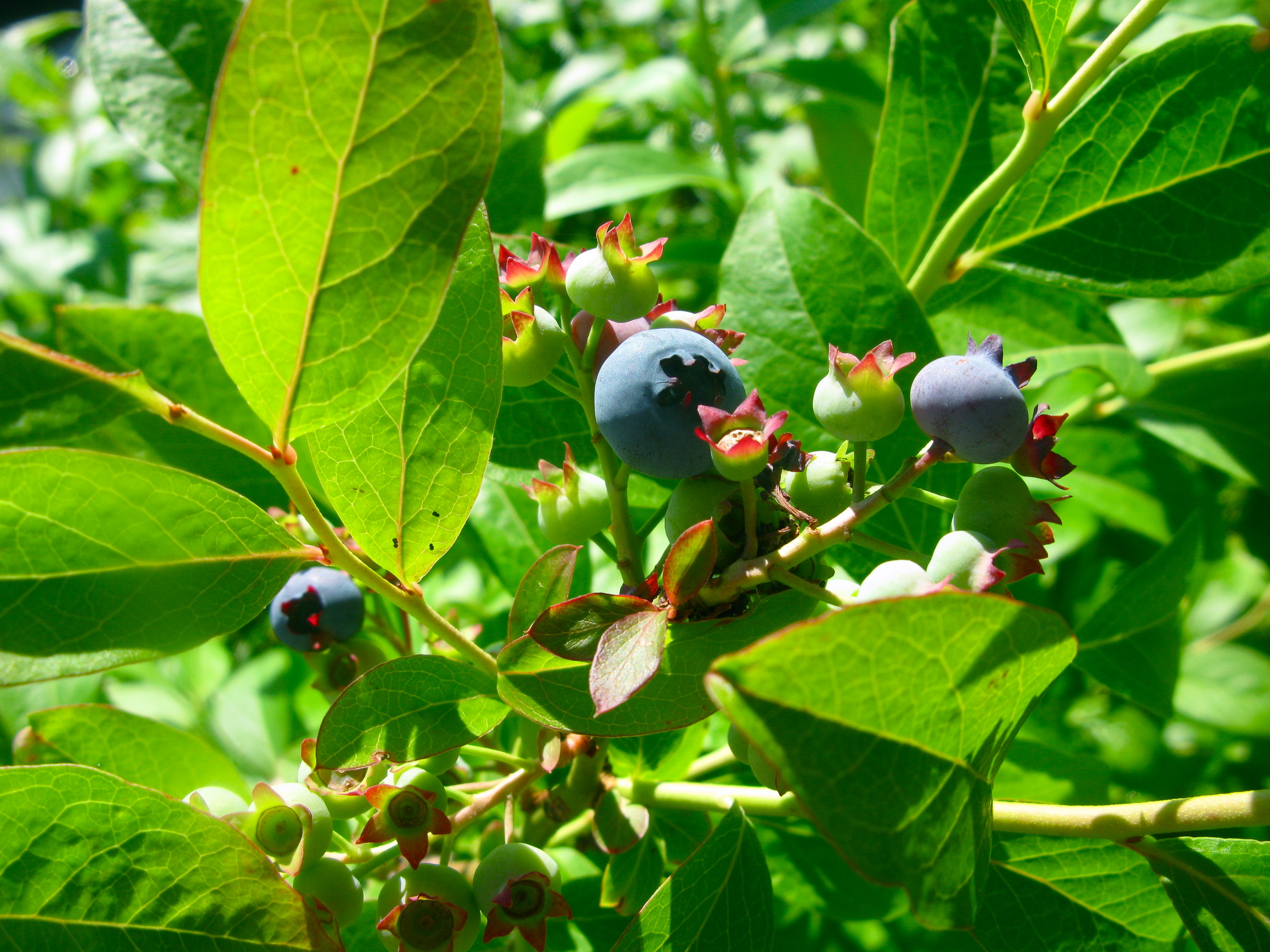
No, I hadn’t seen a fish and thought it. Well, we had seen fish–minnows which were too small to be eaten, but that’s beside the point. No, what had inspired the thought was the lovely dusky blue that caught my eye as I raised my head to brush hair from my eyes after being splashed by a well-aimed kick from my daughter.
I blinked and my eyes focused and I was staring right at a cluster of real, live blueberries that were growing on a large, pretty shrub that has been growing on the shore of the lake that was home to the dock where Zak’s parents’ boat was moored. I tipped my head to one side, noted the shape of the leaves (ovoid and shiny dark green) and the pretty little white bell-shaped flowers and then glanced up and down the shore.
The entirety of the shoreline that bordered the Kramers’ property was lined with these shrubs, some low and bushy, and others tall and tree-like. And as I paced up and down the shoreline, holding Kat’s tiny hand in my own, I noted that each of those bushes showed not only blossoms, but berries in various stages of ripeness, all of them smaller than domesticated blueberries, and all of the ripe ones most certainly a beautiful shade of indigo frosted with slate.
Squealing with joy, I picked the ripe ones I saw, popped one in my mouth and realized that all of those food writers who had declared that the wild blueberries of New England were superior in flavor to their larger, sometimes prettier domesticated cousins were right. These wee blue morsels were delicious–like little flavor bombs. Juicy and sweet and tart all at one time, the wild blueberries were an unexpected treasure.
Kat loved them enough that her greedy fingers threatened to clean out the entire handful I had found and picked, but I guarded some in a lightly held fist and hauled the two of us out of the water and we ran across the yard, calling out to my in-laws gleefully, “Wild blueberries! Did you know that you have wild blueberries?”
Of course they didn’t know.
They hadn’t noticed anything fruitful in the least about those bushes and in fact had been cutting them back in order to provide more access to the clear dancing waters of the lake.
I couldn’t say much, because I hadn’t realized they were blueberries either, though I had never visited the area during the fruiting or flowering seasons when the bushes looked like something other than pretty branches with shiny ovoid dark green leaves on them. (In other words, like generic shrubbery.)
But there is something to be said about being observant of the environment–and taking note of what plants grow wild right at your doorstep or around the corner or in your yard. My father in law, Karl, knew he had wild blackberries growing among the boulders that bordered his yard, but noted that the deer usually got the berries before he did. I pointed out that the easiest way to harvest the berries from the blueberry bushes was by wading in the water and most deer will not do that. The only competition he was likely to have for harvesting his wild treasures was from the birds–and if he wanted to, a bit of bird netting would foil them.
My yard is ringed by wild blackberries, young pawpaw trees and there is a mulberry tree at the end of our driveway. I could harvest these fruits, but the truth is, I let the birds and raccoons have the fruit. Blackberries I can buy from the local farmers, pawpaws generally give me indigestion and mulberries don’t have enough flavor to make them worth my while, even though they are pretty fruits. In these cases, it just makes sense to let the birds have the harvest.
But if I had wild blueberries–yeah, you bet Id’ pick and eat them! They really are superior in every way to the ones that are grown here in Ohio–and that’s saying a lot because I love blueberries.
So what is the point of this short post, other than to announce we are home from vacation?
The point is this. Keep your eyes open–because you never know where or when you will find an edible treasure growing right under your nose.

Categories:
- Admin (rss) (55)
- Blogs and Blogging (rss) (81)
- Book Reviews: Cookbooks (rss) (43)
- Book Reviews: Non-Cookbook Food Books (rss) (38)
- Cats and Cat Blogging (rss) (47)
- Chinese Cooking Lessons (rss) (32)
- Culinary School Stories (rss) (18)
- Dairy Pruducts: Cultured and Barbaric (rss) (4)
- Documentary Filmmaking (rss) (1)
- Essays, Rants and Reflections (rss) (260)
- Fighting Hunger (rss) (12)
- Food and Kids (rss) (45)
- Food in the News (rss) (126)
- Food Media (rss) (98)
- Food Preservation (rss) (18)
- Food Safety (rss) (45)
- Gardening (rss) (30)
- Herbs and Herb Blogging (rss) (20)
- Holidays (rss) (50)
- Kat Blogging (rss) (22)
- Kitchen Science (rss) (36)
- Leftover Makeover (rss) (8)
- Life, the Universe and Everything (rss) (131)
- Local and Sustainable (rss) (227)
- Local Athens Food and Foodies (rss) (42)
- Meatless Mondays (rss) (32)
- Menu For Hope (rss) (5)
- Nutrition, Diet and Health (rss) (84)
- On The Farm (rss) (8)
- Recipes: Almost Vegetarian, Vegetarian and Vegan (rss) (294)
- Recipes: American Regional (rss) (37)
- Recipes: Appalachian Hillbilly (rss) (33)
- Recipes: Bread, Pasta, Grains (rss) (95)
- Recipes: Canning and Preserving (rss) (8)
- Recipes: Chinese (rss) (123)
- Recipes: Comfort Food (rss) (120)
- Recipes: Cookies (rss) (16)
- Recipes: Desserts (rss) (48)
- Recipes: French (rss) (25)
- Recipes: Fruits and Vegetables (rss) (302)
- Recipes: Greek, North African and Middle Eastern (rss) (31)
- Recipes: Indian (rss) (137)
- Recipes: Italian (rss) (42)
- Recipes: Japanese (rss) (7)
- Recipes: Jewish (rss) (4)
- Recipes: Korean (rss) (6)
- Recipes: Meat, Poultry and Fish (rss) (220)
- Recipes: Mexican/Native American/ Latin American/Caribb (rss) (27)
- Recipes: Original (rss) (108)
- Recipes: Thai (rss) (27)
- Recipes: Tofu (rss) (17)
- Recipes: US Regional (rss) (16)
- Recipes: Vietnamese (rss) (8)
- Restaurant Stories (rss) (28)
- Sewing, Quilting, Arts and Crafts (rss) (16)
- Simple Chinese Recipes (rss) (30)
- Slow Food and Heritage Foods (rss) (10)
- Spice Blogging (rss) (44)
- The Chinese Cookbook Project (rss) (14)
- The Chinese Pantry (rss) (39)
- The Documentary (rss) (2)
- The Kitchen Saga (rss) (17)
- The Locavore's Bookshelf (rss) (15)
- The Unsung Adventures of The Culinary Nerd (rss) (6)
- Tools and Toys (rss) (35)
- Uncategorized (rss) (10)
- With a Side of Politics (rss) (48)
Archives:
- August 2012 (9)
- July 2012 (12)
- September 2011 (3)
- August 2011 (7)
- July 2011 (8)
- June 2011 (16)
- May 2011 (17)
- April 2011 (11)
- December 2010 (9)
- November 2010 (5)
- February 2010 (1)
- December 2009 (5)
- November 2009 (7)
- October 2009 (10)
- September 2009 (16)
- August 2009 (14)
- July 2009 (14)
- June 2009 (7)
- May 2009 (17)
- April 2009 (10)
- March 2009 (25)
- February 2009 (13)
- January 2009 (10)
- December 2008 (5)
- November 2008 (5)
- October 2008 (6)
- September 2008 (13)
- August 2008 (8)
- July 2008 (11)
- June 2008 (18)
- May 2008 (13)
- April 2008 (14)
- March 2008 (16)
- February 2008 (17)
- January 2008 (19)
- December 2007 (25)
- November 2007 (18)
- October 2007 (24)
- September 2007 (16)
- August 2007 (15)
- July 2007 (15)
- June 2007 (10)
- May 2007 (14)
- April 2007 (16)
- March 2007 (17)
- February 2007 (20)
- January 2007 (13)
- November 2006 (1)
- October 2006 (8)
- September 2006 (14)
- August 2006 (25)
- July 2006 (30)
- June 2006 (28)
- May 2006 (34)
- April 2006 (29)
- March 2006 (24)
- February 2006 (30)
- January 2006 (38)
- December 2005 (40)
- November 2005 (37)
- October 2005 (32)
- September 2005 (25)
- August 2005 (30)
- July 2005 (28)
- June 2005 (21)
- May 2005 (8)
- April 2005 (22)
- March 2005 (17)
- February 2005 (29)
- January 2005 (10)
Search Site:
Links:
- Lily’s Wai Sek Hong
- 101 Cookbooks
- A cat in the kitchen
- A Veggie Venture
- Accidental Hedonist
- Cha Xiu Bao
- chez pim
- Chocolate & Zucchini
- Chopstick Cinema
- Chowhound.com
- Chubby Hubby
- Cook sister!
- Cooking with Amy
- da*xiang
- Eat Local Challenge
- Eating Liberally
- Ecocentric
- Eggbeater
- Epicurious
- Farmgirl Fare
- Fatfree Vegan
- Foodgoat
- ForkandBottle.com
- Green Olive Tree
- Hooked on Heat
- Jaden’s Steamy Kitchen
- Kalyn’s Kitchen
- Lucullian delights
- Mahanandi
- Matt Bites
- MeatHenge
- mmm-yoso!!!
- New York Times – Dining & Wine
- Pizza Goon
- Rasa Malaysia
- Ruhlman
- Sailu's Kitchen
- Serious Eats
- SF Gate: Food & Dining
- Simply Recipes
- Soul Fusion Kitchen
- Tastespotting
- The Amateur Gourmet
- The Cleaner Plate Club
- The Food Section
- The Grub Report
- thecookscottage
- U.S. Food Policy
- Wandering Chopsticks
- Washington Post Food and Dining
- Wasted Food
Meta:


Powered by WordPress. Graphics by Zak Kramer.
Design update by Daniel Trout.
Entries and comments feeds.