
Cook Local, Eat Global
Summer Strawberry And Snap Pea Salad
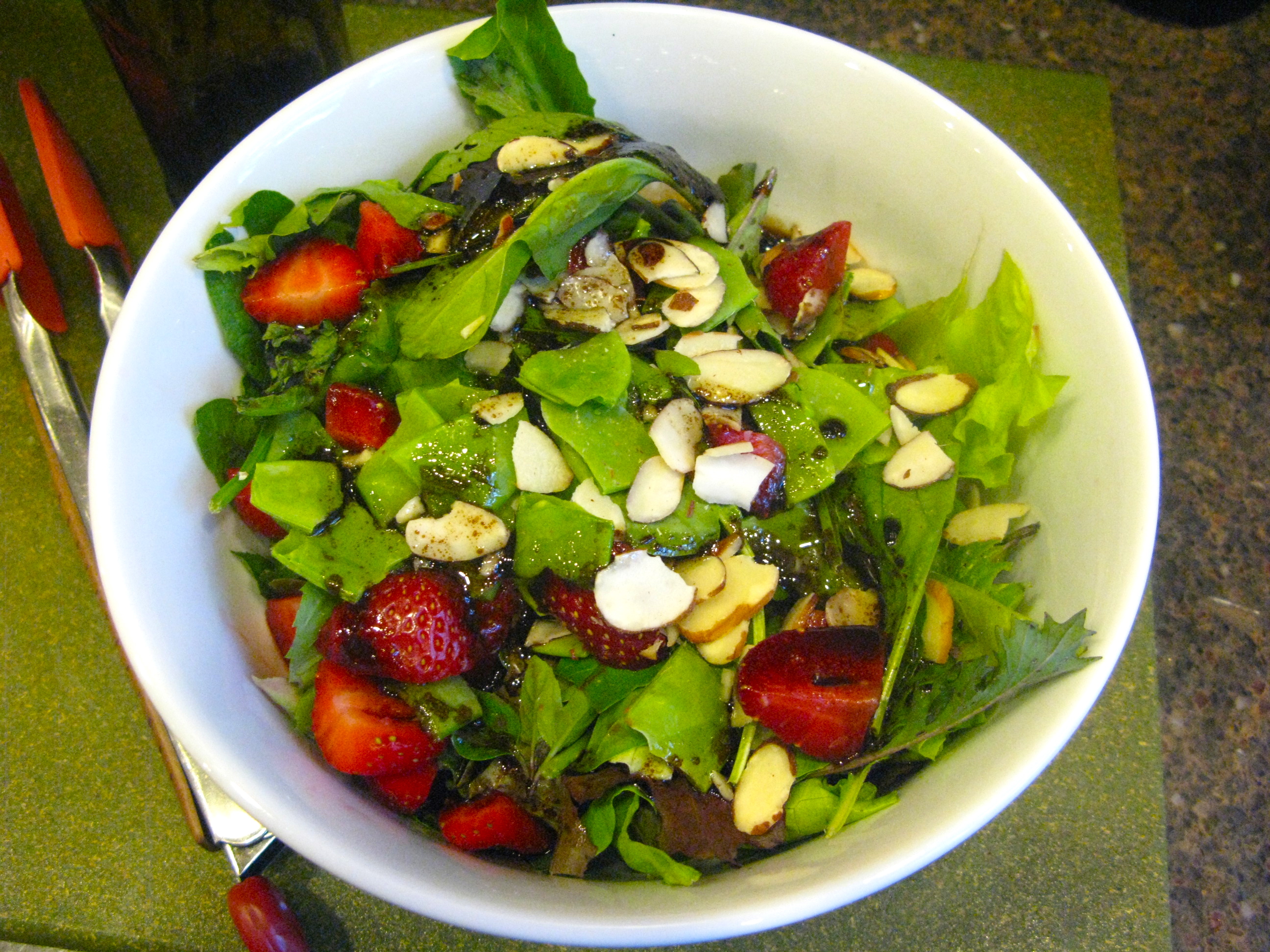
Mixing and matching fruit and vegetables in salads is great fun; it’s even more fun when the combinations are suggested by what is ripe that moment in your garden.
Strawberries and snap peas both ripened in my garden plot at the same time, though I have to admit that the strawberries pictured above didn’t come from my garden. Mine were stolen by someone who passed by; he was caught and confronted by another gardener and simply shrugged, tossed the strawberries he picked into his backpack and sauntered away. No worries, we’re going to be erecting a fence now. Kat and I were left with one ripe berry apiece
BUT, it was the sight of the peas and strawberries ripening at the same moment which gave me the idea for combining the two with some of the beautiful salad greens which were also ready for harvest and herbs to make a delicious June seasonal salad.
I happened to have some strawberries at home from a local farmer, as well as some of the last of the season’s thin asparagus spears, so I decided to add them to the salad.
I like asparagus perfectly well raw, but blanching it brings out a brighter shade of green in the spears, as well as enhancing the flavor a bit. The same goes with snap peas–lightly blanching them brings out the color and enhances the sugary flavor.
To add a bit of extra crunch, I lightly toasted some sliced almonds and sprinkled them on top of the salad, right before tossing the lot with a simple olive oil and balsamic vinaigrette.
A word about balsamic vinegar–the nicest version you can afford really makes a difference in this salad. The rich and lightly sweet flavor of a premium, naturally fermented balsamic vinegar perfectly enhances the strawberries. When flavors are simple as in this salad, it pays to use the best ingredients you possibly can.
Summer Strawberry and Snap Pea with Balsamic Vinaigrette
Ingredients:
6 cups of fresh salad greens, washed, dried and well chilled (Include spinach if you can)
1 cup sugar snap peas, stringed and washed
1/2 cup thin asparagus spears, trimmed to 1 inch pieces and washed
1 cup sliced, hulled strawberries
1/4 cup fresh herb leaves, roughly chopped (I used cilantro, spearmint, basil and lovage)
1/2 cup lightly toasted almond slices
1/3 cup balsamic vinegar
1 cup good extra virgin olive oil
2 tablespoons honey
salt to taste
Put salad greens into a chilled salad bowl and set aside.
Bring water to boil in a large pot. Add snap peas and cook just until they turn a bright green color. Scoop them out with a skimmer and rinse under cold water in a colander. Add a couple of ice cubes to the colander and toss to chill. Remove snap peas and pat dry with paper towels. When dry, sprinkle over the salad greens.
Repeat process with the asparagus spears.
Sprinkle the strawberries and herbs over the salad greens.
Make vinaigrette:
Whisk ingredients together in bowl and season to taste with salt. Use about 1/2 to dress salad, keep the rest refrigerated. It will stay good for about two weeks.
From Garden to Table: Vietnamese Style Grilled Beef and Pork in a Bowl
Yeah, I know that the title of the recipe involves beef and pork, but really those aren’t the stars of the show. The stars of the show are all of the local vegetables and herbs that go into the bowl on top of the steamed broken rice, long before the grilled beef and pork even come into the picture.
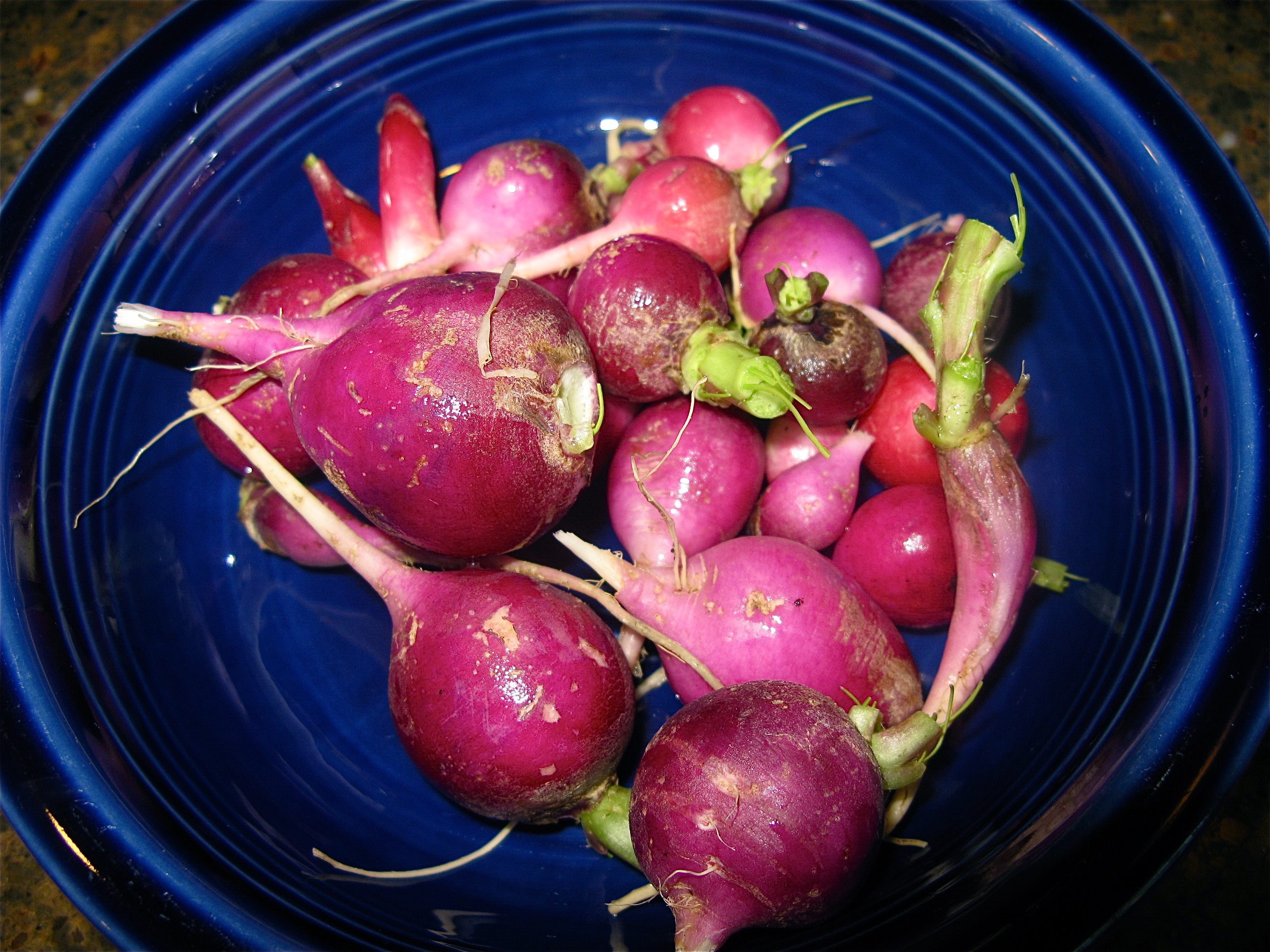
What vegetables, you ask? Well, some of our very own radishes, for one thing. Aren’t they the prettiest things? All shades of pink, rose, purple and carmine with icy white. Kat got to pull some of them her very own self–her favorites so far are the long narrow fuchsia and white ones called, “French Breakfast.” Mine are the large round violet ones: “Plum Purple.”
But those radishes only tell part of the story. Please note the plethora of mixed baby greens we sheared carefully from our salad bed in our community garden plot.
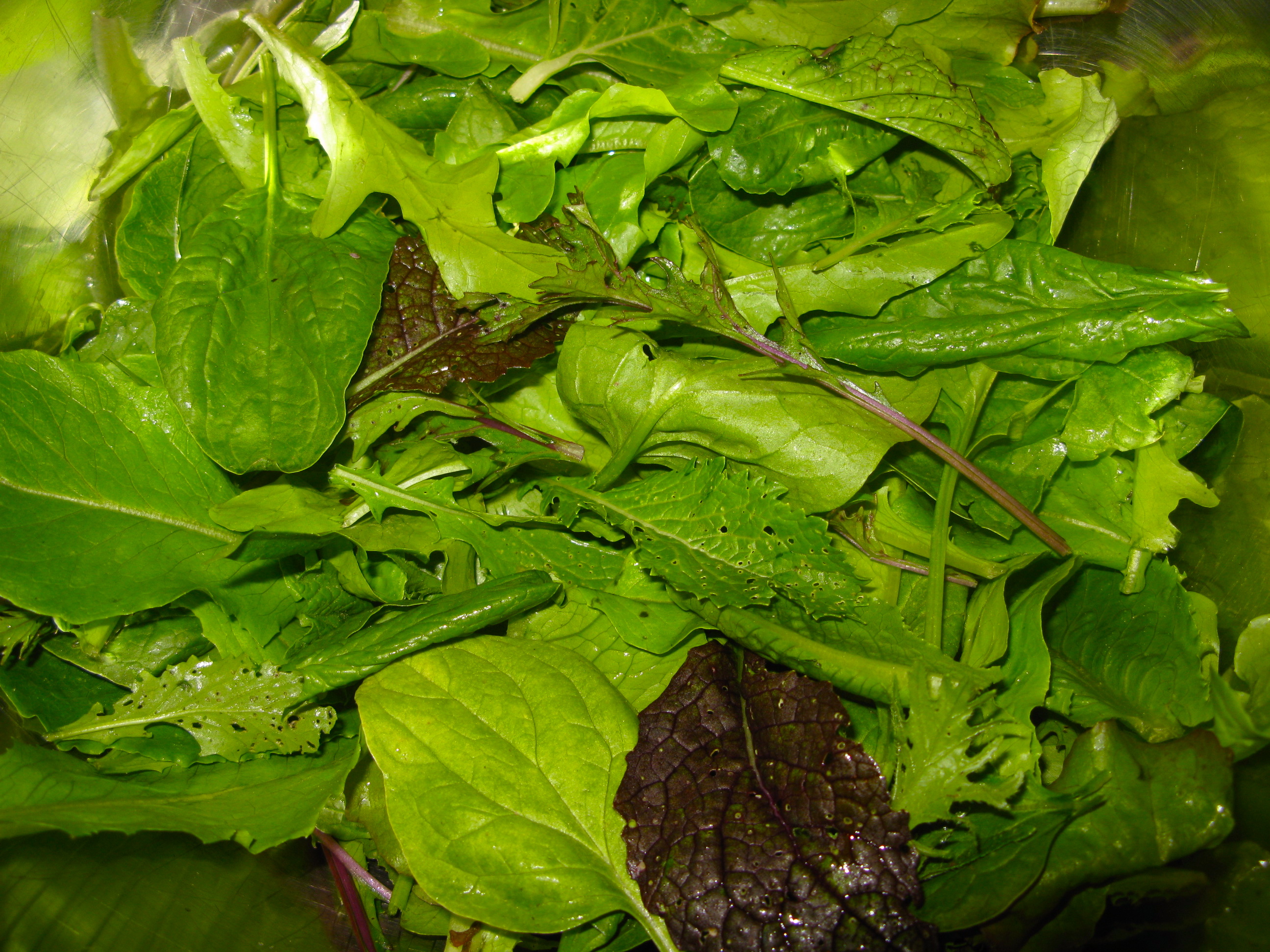
Purple mizuna, various baby lettuces and burgundy colored tatsoi are included in the big pile of salad greens Kat and I cut for dinner. Two days later, you could barely see where we had harvested–the plants grew that fast.
We also picked a great many herbs from the bed dedicated to them in the garden: spearmint, cilantro, basil, lemon basil and lovage.
And then, in addition to our own herbs and vegetables, we had fresh local tomatoes, (From Star at Shade River Farm–she starts them in the middle of winter in her solar greenhouse) cucumbers, turnips, red cabbage, carrots and scallions from the farmer’s market. Counting all of that and the steamed broken jasmine rice, this dish is way more vegetative than its name would imply.
But, it is based on the classic Vietnamese dish, Lemongrass Beef. Which, again, is a name that is somewhat misleading because the name doesn’t really tell you what all is going to be happening in your bowl, so maybe it’s traditional or something to just not talk about the rice, vegetables and herbs that outweigh the meat in the dish by many ounces.
When I say based on, I should clarify–it’s loosely based on Lemongrass Beef. The meat is grilled instead of stir-fried, and while the rub contains lemongrass, there is a finishing sauce I made to use while the meat is sizzling on the fire that contains very little that resembles the original recipe.
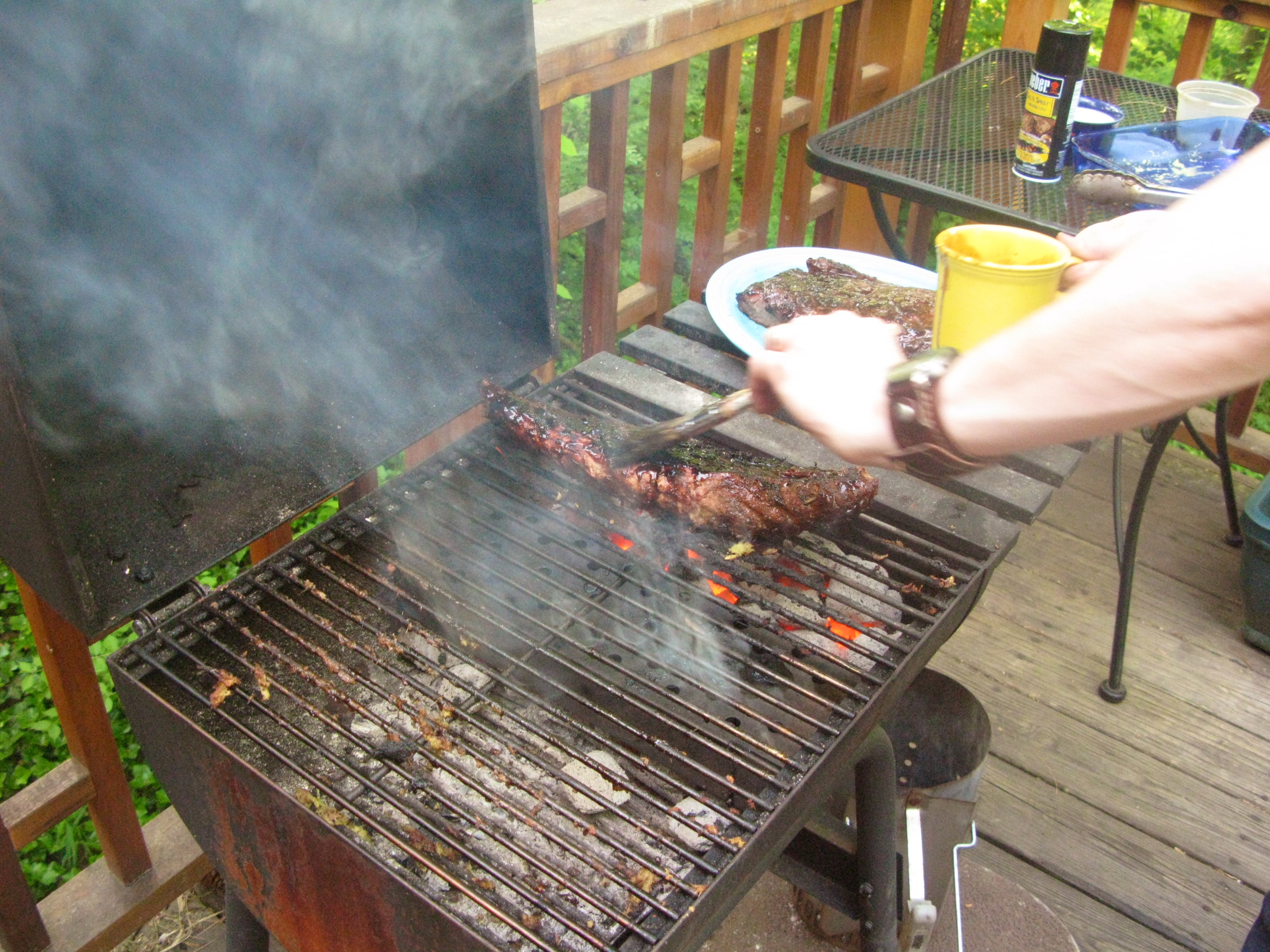
The sauce is made of a combination of fish sauce, soy sauce, lemon juice, honey, whiskey, vegetarian (or if you aren’t allergic to seafood like I am, regular) oyster sauce, and Thai sweet chili sauce.
A word about that last ingredient–it’s meant to go on grilled chicken and it’s lovely that way. But, I like it even better with pork, and it’s really good on top of a bowl of Lemongrass Beef. The sticky-sweet, lightly tangy and fiery scarlet sauce is so good that it is addictive–which is why we gave it the nickname, “Cracky-Crack Sauce” at our house.
The marinade/barbeque sauce really made the grilled meats taste fantastic. Don’t get me wrong–the rub I put on the beef and pork made them tender and taste fantastic–I mean, it’s fresh lemongrass, lemon juice, garlic, ginger and scallions–how can it make anything bad? But the sauce when added at the end, really gives it the extra added oomph that tips the meat over the top.
Finally, you need to make nuac cham–a spicy, fragrant Vietnamese sauce that is like one of the best salad dressings in the world. As the final touch, it enhances not just the grilled meats, but the rice, the vegetables and the herbs. It’s great stuff. AND, it’s easy to make and keeps nicely in the fridge for about a week, though I like it best the day it’s made or the day after. Also, before serving, I like to bring it to room temperature so that the fullness of flavor is expressed.
It sounds like lots of work–making two sauces, a marinade/rub, grilling meats, making broken rice or plain jasmine rice, and prepping the vegetables and herbs. But, really, the vegetables and herbs can be cleaned and cut a day before, the nuac cham can be made a day before, and the marinade and finishing sauce can all be made up to two days before. That leaves just the grilling, rice cooking and assembly for the day you serve the meal. That isn’t so bad, and the payoff is you get lots of fresh local vegetables and herbs, some rice and really tasty grilled meat in amounts that feed a whole crowd of your friends and family. The finished dish looks impressive and theirs something to please everyone.
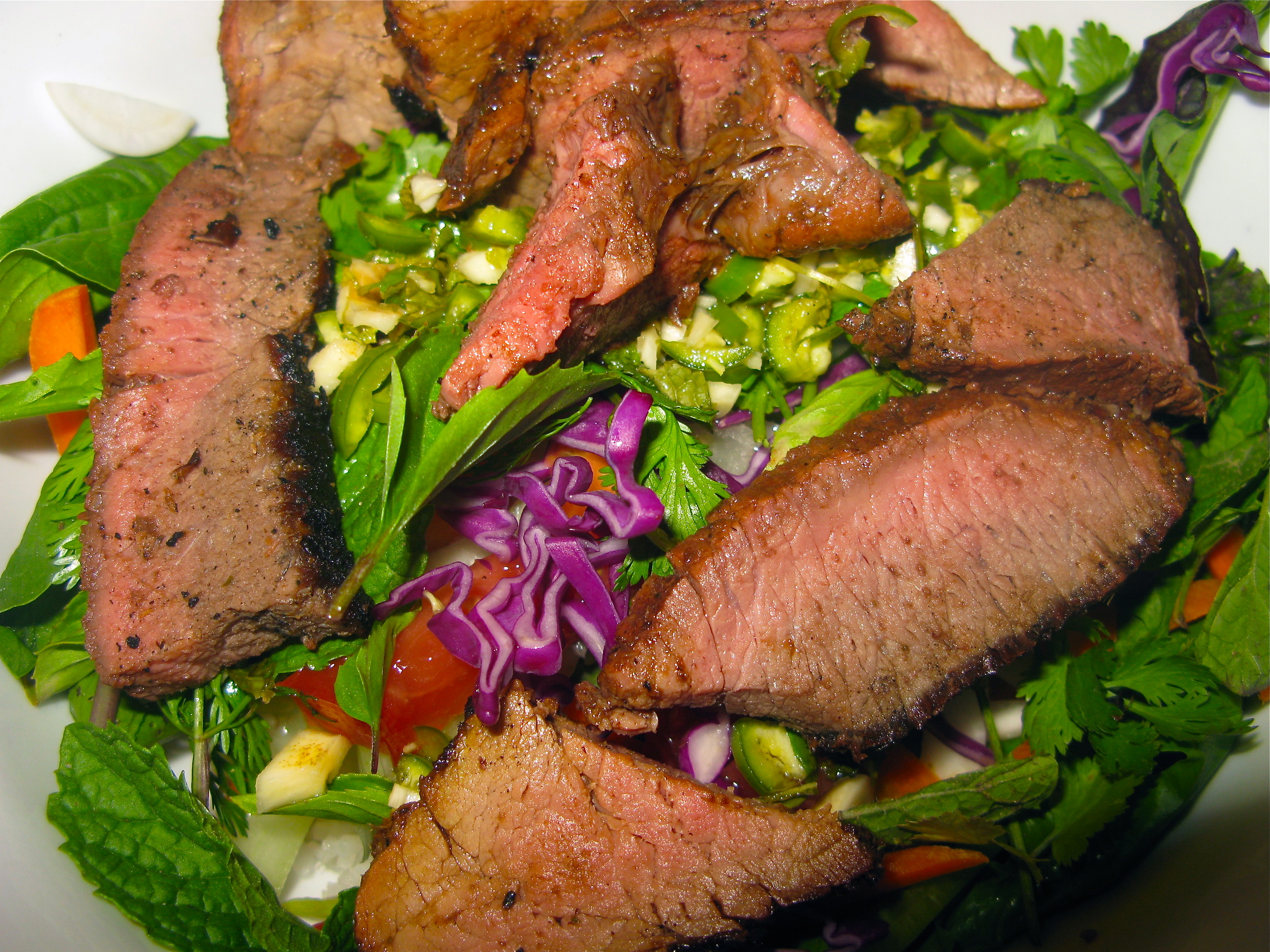
Vietnamese Style Grilled Beef and Pork
Ingredients for the Marinade/Rub and Meat:
4 stalks of lemongrass, bottom third only, tough outer leaves removed and sliced thinly
3 cloves fresh garlic, peeled
1″ piece fresh ginger, peeled
1 fresh Thai chili
2 scallions, white and light green parts, sliced
juice of 1 lemon
1 teaspoon fish sauce
pork tenderloin, trimmed and cleaned of excess fat and silverskin
1 1/2 thick piece of top sirloin/ London Broil
Methods:
Grind all solid ingredients into a paste, then mix with lemon juice and fish sauce.
Rub onto meats, then lay the meats into a shallow pan and seal with plastic wrap. Allow to marinate for at least three hours, preferably more, up to overnight.
Ingredients for Grilling Sauce:
1 tablespoon high quality fish sauce
1 tablespoon dark soy sauce
1/2 tablespoon lemon juice
1 tablespoon honey
1/2 tablespoon bourbon or whiskey
1 tablespoon vegetarian or real oyster sauce
2 tablespoons Mae Ploy sweet chili sauce
Method:
Whisk together and allow to sit at room temperature for at least an hour before use–if you make it a day or so ahead, warm up to room temperature before using it.
To grill the meats–prepare a charcoal grill for very hot indirect grilling, and cook the meats in the section not directly over the flame, turning at least twice until they are nearly done. At that time, move them closer to the actually burning coals, and brush several times on both sides with the sauce, allowing the outside of the meat char and crisp up a bit.
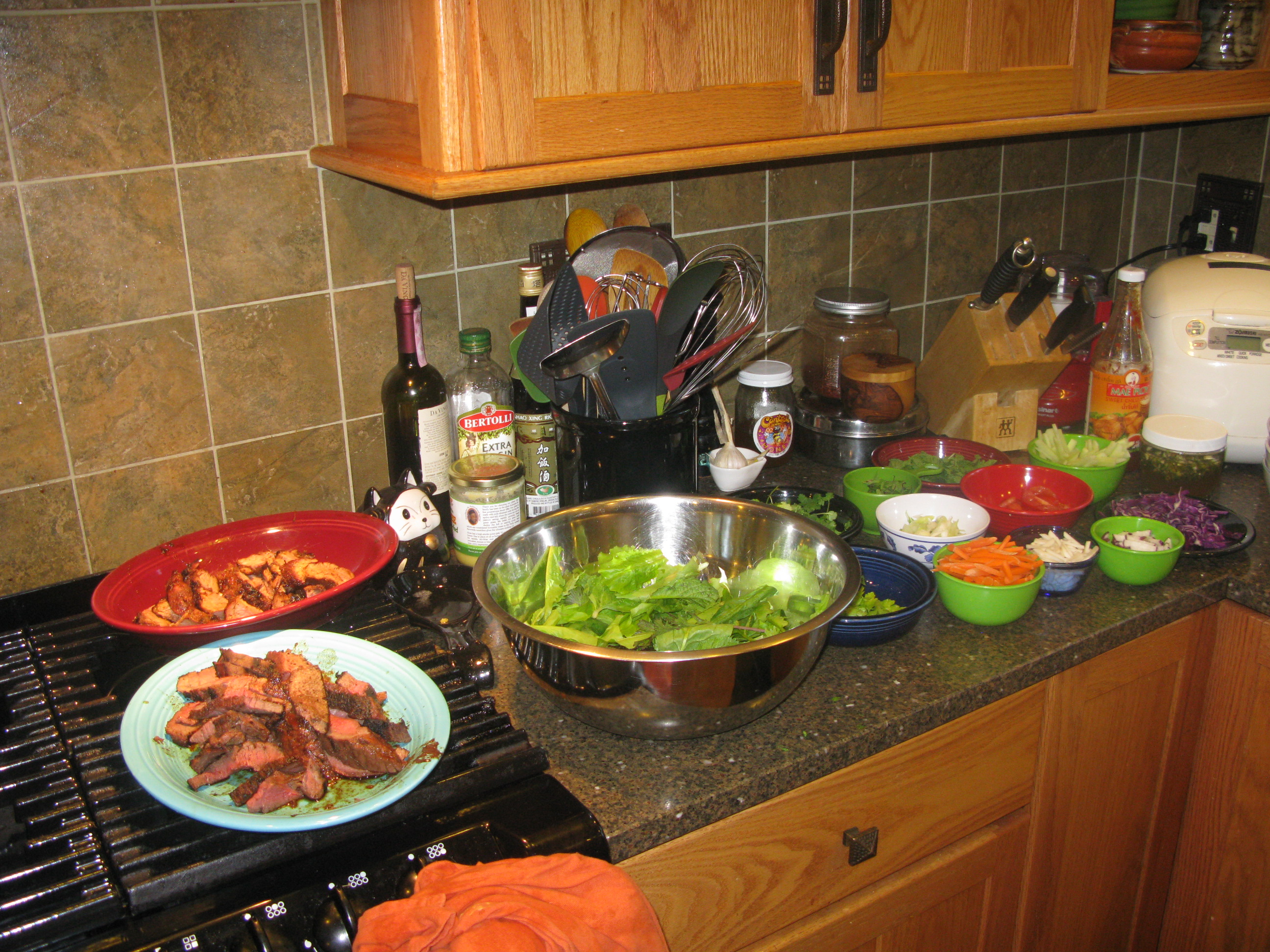
Ingredients for the Vegetables, Herbs and Rice:
3 cups broken jasmine rice
a big pile of mixed lettuces and other salad greens–at least 8 ounces, cleaned, dried and chilled
whatever fresh vegetables you want to use such as carrots, radishes, baby turnips, snow peas, cucumbers, and tomatoes, all cleaned, dried and chilled.
1 cup of cilantro leaves
1/2 cup of mint leaves
1 cup Thai basil leaves
1/4 cup lovage leaves
1 recipe nuac cham
sweet chili sauce
Method:
Cook the broken rice: In the rice cooker, put 3 cups of rice and water. (Always use equal parts rice and water for broken rice.) That is that. You put it in the rice cooker, shut the lid down on it, push the button and walk away.
If you are cooking on the stove top, the proportion of broken rice to water is exactly the same. Put the rinsed rice into a pot with three cups of water. Bring to a boil, give it a nice stir, clap a tight lid down on it, turn the heat down to the lowest setting possible setting and cook for twenty minutes. Let it sit for five minutes off heat, then fluff with a fork.
The lettuces and greens should be torn into bite sized pieces. Choose greens that are a good balance of color, texture and flavor. I like to add some baby bok choy or tatsoi and mizuna to the greens because they are very flavorful and have great textures.
The root vegetables should be peeled if needed, if not, they should be well scrubbed, and then cut into a thin julienne. Snow peas should be stringed and then cut into julienne to match the root vegetables. I like to peel the cucumbers and seed them, then cut into julienne. Tomatoes, if they are full sized, I just cut into thin wedges, while cherry tomatoes get simply sliced in half.
To serve, I slice the meats thinly on the diagonal and set them on platters on one end of the serving surface. I leave the rice in the rice cooker, with the lettuces in a large bowl near it on the other end. Then, the vegetables and herbs are in separate bowls arrayed in between the two ends, with the nuac cham and chili sauce after the meat.
Pass out bowls and let your guests fill them as they see fit. I find it’s tastiest to put the greens in first, then the steamy rice, then the vegetables and herbs covering the rice, with the meat on top, and the sauces drizzled joyfully over the top.
If you have leftovers, and that’s a big if, you can make a cold salad out of everything with a big dose of cold nuac cham as a dressing the next day. I ate it for breakfast and it was a delightful eye opener.
Indian-Appalachian Fusion: Spiced Creamed Peas and New Potatoes (With an Aside on the Creative Process)

I always knew it was early summer when creamed peas and new potatoes appeared on Grandma’s dining room table. Peas and new potatoes are ready at the same exact time, so there’s the seasonal reason the two are classically paired; it just also happens that the two taste perfect and heavenly together, much better than one would think when it comes to such simple ingredients.
Real new potatoes, with tissue-paper thin skins and a moist, waxy texture have a tiny bit of sweetness to them. They do have the beguiling earthiness of a mature potato, but they also have a hint of sugar to balance that earthiness and their texture, instead of being starchy, is creamy and nearly buttery, even without the added attraction of any dairy products.
And shelled garden peas, especially when harvested young, are astoundingly sugary, with the green herbal qualities that are like a deep breath of fresh spring air.
The two combined, and held together with a simple cream sauce (though Grandma had taken to using evaporated milk during WWII and continued thereafter) redolent with rich dairy aroma and velvety mouth feel, become poetic, a dish that is certainly more than the sum of its parts. For those of us who grew up eating country food, creamed peas and new potatoes is a key that unlocks golden memories of comfort and warmth around a family table, love made manifest in simple, good food that nourished both body and soul.
But you know me. I just can’t leave well enough alone. I’m always experimenting with this or that, and tweaking this ingredient or substituting that one. It’s just who I am. Always seeking the next great flavor.
And speaking of flavor, in my head resides what is essentially a library of flavor memories. This internal database contains the building blocks of every one of the recipes I’ve written and presented on this blog, and the process by which I create a new dish often consists of me thinking of an existing dish, remembering its flavor, and then mentally leafing through the flavor memory banks and “pulling out” a couple of new flavors that I suspect or know will combine with the current dish in novel or exciting ways. I cook the dish in my head, long before my hand touches a knife, and examine the process as I go. Sometimes, with new flavors will come new techniques which further changes the original recipe, modifying it sometimes beyond recognition.
Finally, I go to the kitchen and cook and see if the finished dish resembles the one in my head at all. Does it taste how I imagined it? How does it look? What does it smell like? How does it feel in the hand and on the tongue? What sounds does it make while its being cooked and then while being eaten? Does everyone like it? Why or why not?
I go through this process every time I do something new, and sometimes the process is quick and direct and other times, a recipe idea takes a very long, winding and somewhat twisted path from idea to finished dish. More often than not, my recipes turn out dishes that are like my culinary imaginings. Sometimes, they don’t–and sometimes, they turn out differently than I’d thought they would, but I end up liking the finished dish all the better for it.
I want to be clear–this version of creamed peas and new potatoes isn’t a real curry like aloo mattar. Nor is it a straight up interpretation of a classic dish. This is a dish born of imagining, of asking, “What if my Grandma’s next door neighbor had been from India?”
(Which is not so odd a thought. She had a Hungarian neighbor in New York, before they moved to West Virginia who taught her how to make goulash, a dish that appeared on our table for Thanksgiving every year along with the turkey and everything else.)
This version of creamed peas and new potatoes is a fusion of Indian spices and Appalachian ingredients, with a dash of imagination thrown in. The spices are gentle and subtle, leaving the creamy potatoes and sweet peas as the stars of the show.
It tasted so good that when I made it on Monday night, Jackie, Morganna, Brittney, Zak, Kat, Nora and I ate every last bit of it. There was nary a pea or scrap of potato skin left in the bowl.
It was worth every moment of thought that went into the dish.
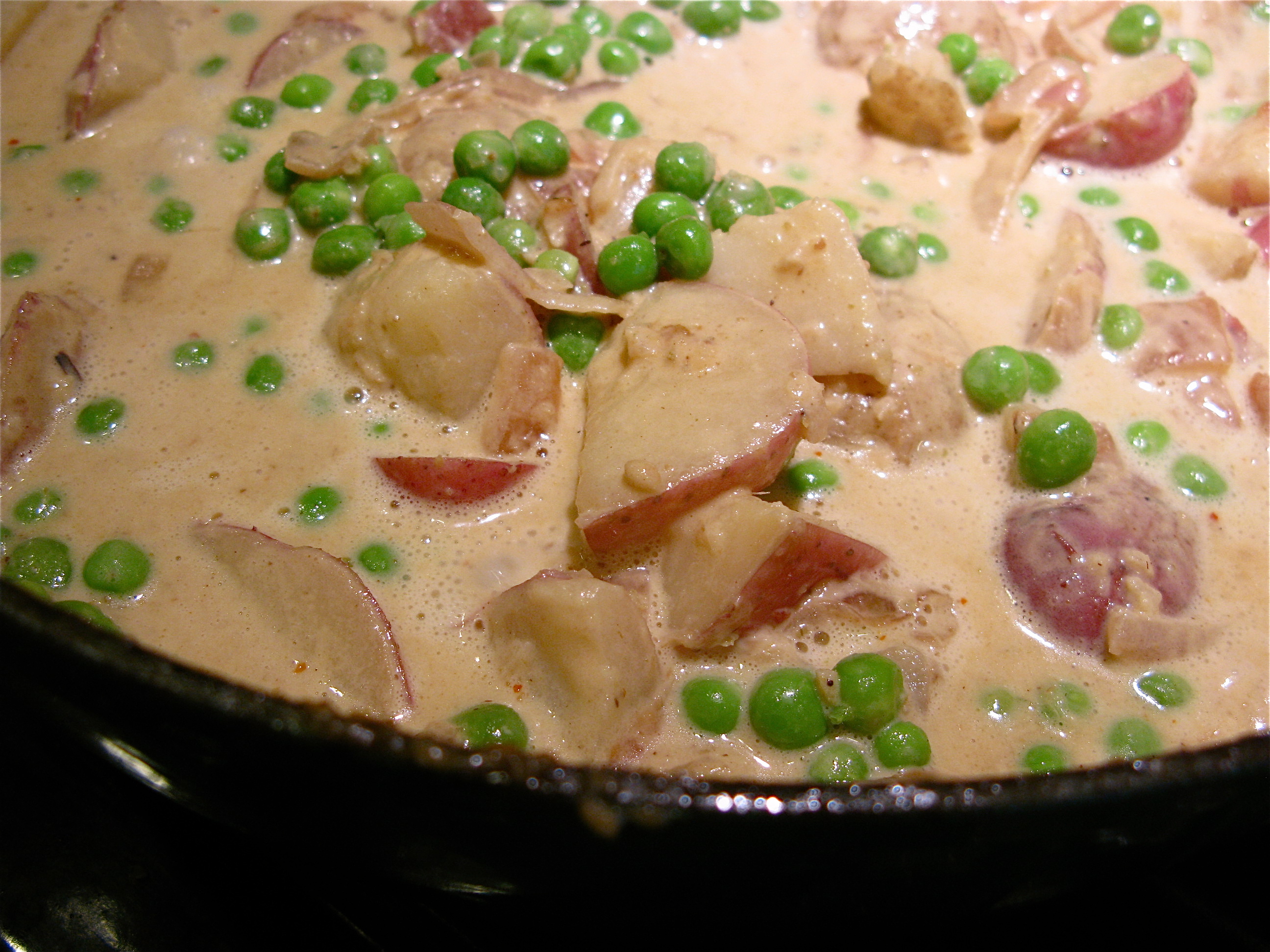
Spiced Creamed Peas and New Potatoes
Ingredients:
1 1/2 tablespoons ghee
1 large red onion, peeled and thinly sliced
1 teaspoon salt
1 small young elephant garlic clove or 3 cloves regular garlic, peeled
1″ long piece young ginger, peeled
1 teaspoon fennel seeds
1 1/2 teaspoons coriander seeds
1/2 teaspoon cumin seeds
1/2″ piece cinnamon bark
1 whole clove
5 whole green cardamom pods
1/4 teaspoon ground turmeric
1 1/2 cups light or heavy cream
2 pounds new potatoes, well scrubbed and cut in half, then boiled until tender and drained
2 cups fresh garden peas, shelled, rinsed, and parboiled until they are halfway cooked
1/2 cup Greek whole milk or 2% yogurt
salt to taste
1/3 cup roughly chopped cilantro leaves
1/4 cup roughly chopped mint (spearmint tastes best)
Aleppo pepper flakes for garnish (optional)
Method:
Heat ghee in a heavy bottomed deep skillet until it melts and lightly bubbles. Add the onions, sprinkle with salt, and then cook, stirring, until the onions lightly brown, turning golden. While the onion cooks, grind the garlic, ginger, the whole spices and turmeric powder together into a paste. The easiest way to do this is to grind up the spices first and then grind them again together with the garlic and ginger.
When the onions turn a darker shade of golden, add the garlic-ginger-spice paste and keep cooking, stirring constantly this time, until the onions are reddish brown and everything is fragrant. There will be spices clinging to the bottom of the pan.
Deglaze the pan with the cream, stirring and scraping up all the goodness from the bottom of the pan. Turn up the heat and reduce the cream by 1/3.
Put the potatoes and peas into the pan, and stir to incorporate. Whisk in the yogurt. Turn down heat and allow to simmer until the peas are fully tender and the sauce reduces and clings to the potatoes and peas. If the sauce thickens too much thin it with a bit of milk. Taste for salt and add as needed.
Stir in the herbs and Aleppo pepper flakes as garnish and serve immediately.
Miniature Chevre and Sour Cherry Cheesecakes
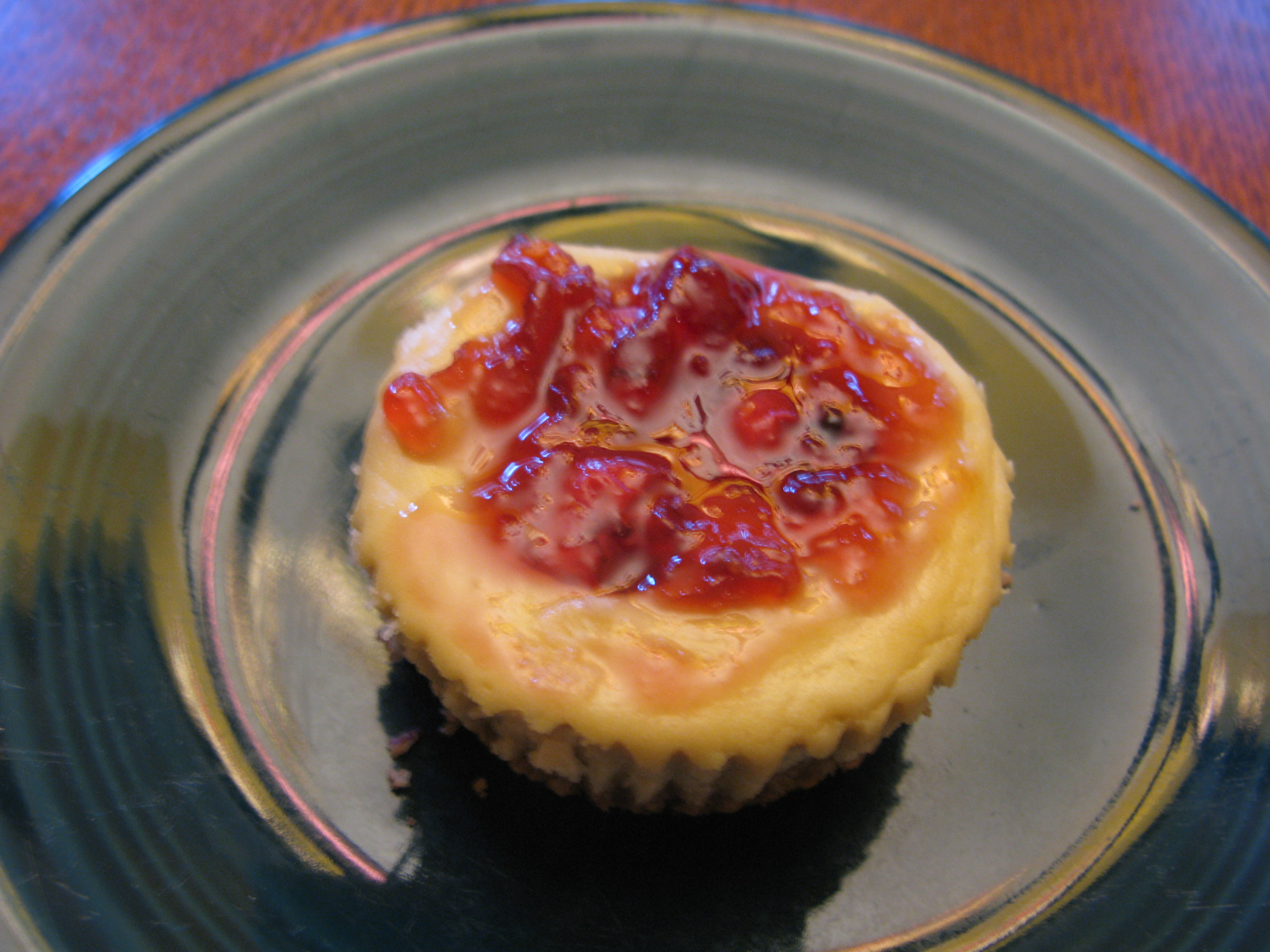
I got the idea of making chevre and sour cherry cheesecake from Jeni’s Splendid Ice Creams. They have a flavor called “Goat Cheese with Red Cherries” that is one of my very favorite of their summer ice creams–it’s rich, creamy, tangy and fruity all at once. When Zak and I were in Columbus last week, I had a scoop of it and decided that I had to use some of Integration Acre’s fresh chevre and some local sour cherries and turn it all into a cheesecake.
At first, I was just going to do my usual thing and make it into one big cheesecake. But, then, as last week turned into this week, and I remembered that Kat would be out of preschool all week, and I was coming up with activities for the two of us to do together, I knew she wouldn’t have a lot of patience for waiting for a cheesecake to take its normal 50 to 60 minutes to bake, and I’d have to contend with her asking questions for every minute of its baking that would go something like this:
“What’s it doing now, Mommy? Can I see it? Why not? Why’s it taking so long? Is it done yet? Why not? When can we eat it? Why not now?”
Then, of course, after it was baked, it would have to take its usual several hours to cool to room temperature, and then overnight in the refrigerator.
Kat’s head would have exploded with impatience by then, waiting for Mommy to finally cut into the cheesecake.
I needed to speed up the process a bit.
So, I decided to make miniature cheesecakes, which Kat now calls, “Fairy Cheesecakes,” because they are about the right size for a whole passel of fairies to share for a big celebration.
Since I didn’t have mini cheesecake pans with removable bottoms, I went the simple route: I used muffin pans with paper cupcake liners.
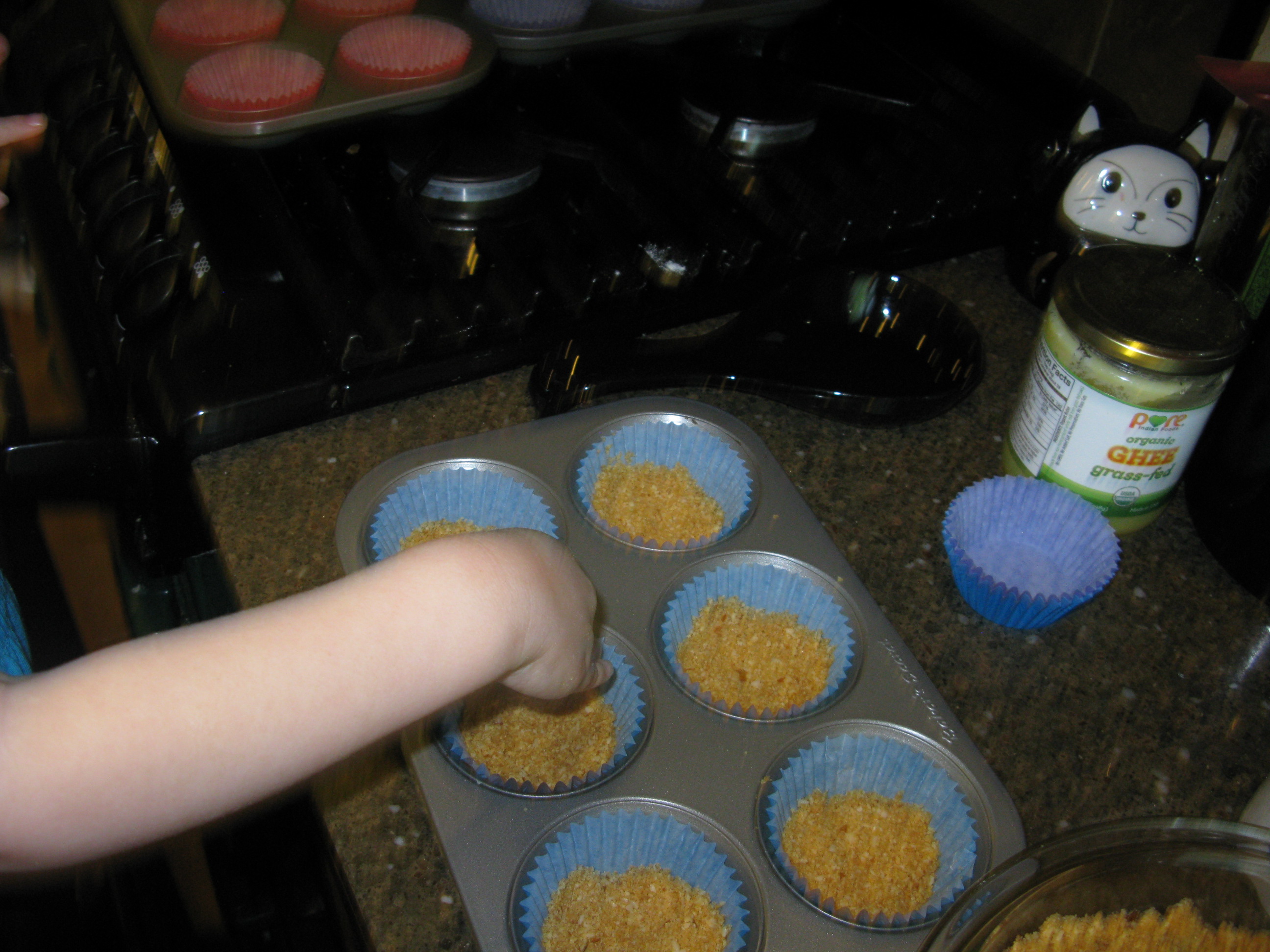
Baking cheesecakes in muffin pans is not only simple and you end up with cute, portable, single-portion sized cakes, but the little darlings bake in only 15 minutes–10 if you have a really awesome convection oven like I do. Think about that for a moment. Cheesecake that bakes in 15 minutes that is real, honest to God cheesecake–not a Jello-from-a-box faux cheesecake mix.
Not only that, but they cool quickly and will chill even faster in the refrigerator than their full-sized relatives.
Yep. I’m sold on little baby cheesecakes made in muffin pans.
One caveat–you must use paper liners. Otherwise, they’re nearly impossible to remove from the pans.
Finally, on to the recipe–it’s fast and easy, an makes a great summer time dessert, not only because chevre and sour cherries are seasonal summer favorites, but because the oven doesn’t have to be on warming the kitchen for more than an hour.
That’s fairy magic, right there!
Speaking of fairy magic, I’m very pleased to announce that I’ve finally hit upon a cheesecake recipe that Zak not only just likes, but adores. Previously, with all of my other cheesecakes, he’d have a bite, maybe two, and declare, “It’s pretty good,” and then he’d turn up his nose and refuse to eat any more. This wasn’t exactly a blow to my ego, but it was confusing because Zak loves graham cracker crusts, creamy fillings, fruits, puts thousands of tons of cream cheese on his bagels, and dammit, there was no good reason for him not to worship my cheesecakes like everyone else in the world!
These mini cheesecakes changed all of it. I think it has to do with the crust to filling ratio–not as much filling, so the flavors and textures are more balanced, the tanginess of the goat cheese balances the sweetness of the sugar, and the fluffy texture is beguiling to the senses. The sour cherries are just lovely, and he likes sour fruits, and the hint of cardamom, almonds and almond extract sealed the deal! Finally, a cheesecake for Zak!

Chevre and Sour Cherry Miniature Cheescakes
Ingredients:
1 cup graham cracker crumbs
1/3 cup roughly ground almonds
1/4 teaspoon ground cardamom seeds
4 tablespoons melted butter
12 ounces good, creamy (not chalky) chevre at room temperature
4 ounces cream cheese at room temperature
scant 3/4 cup raw sugar
2 well-beaten eggs
1/2 teaspoon almond extract
1/2 teaspoon vanilla extract
1/2 pint sour cherries, pitted
1 small jar sour cherry preserves
Method:
Preheat your oven to 350 degrees F.
Line 2 standard sized muffin pans with paper cupcake liners to make 12 small cheesecakes.
Mix graham cracker crumbs, chopped almonds and cardamom well. Add butter and mix and toss everything together until the crust starts to stick together nicely and form small to medium clumps.
Divide the crust ingredients evenly between all of the muffin cups and press lightly down on the bottom to form the crust.
To make the cheesecake batter, beat together the two cheeses and sugar until they are smooth and creamy. Add eggs, and extracts and beat well until the mixture is pale yellow and fluffy. Using a tablespoon, fill each depression on the muffin pans halfway with batter. Sink three pitted sour cherries into the batter in each cup, then cover them with more batter, smoothing the top a bit. Sink 3 more cherries into the tops of the cheesecakes, so that they are half-covered with the batter.
Bake for fifteen minutes–ten if you have a convection oven–and allow to cool in their pans on top of a wire rack until you can handle them. Then, remove from pans with the paper liners intact and set the individual cakes on the wire racks to finish cooling to room temperature.
When cool, top each cheesecake with a scant 1/2 teaspoon of sour cherry preserves, just glazing the top of the cakes.
Chill in a sealed container in the refrigerator until ready to serve.
Makes 12 cheesecakes, which is enough for 6-12 people, or one blog admin named Dan. (Dan, look for your cheesecakes in a day or so. I have to go to Columbus today, so I won’t be able to bake until tonight or tomorrow morning.)
We are BACK!
Hello all,
Dan here, as if Barbara has any luck at all, she’s asleep by now.
Sorry about the delay. Â I’ll let Barbara fill you in on the details as she sees fit tomorrow, but just to let you know where we went for a few days there…
We got hacked.
Someone had inserted some nasty code into the site and was using our server space and our bandwidth for a phishing scam.
Barbara and I became aware of this on June 9th, and shortly thereafterward, Dreamhost took our domain offline.
We’re back up and running now, and I’m pretty sure I’ve got all the bugs out of the system, (though I am going to be a little more vigilant over the next few days.)
I am pleased to say that I know WHEN the compromise took place, and the time between the phishing scam going live and being shut down was only a matter of hours. Â
Other commitments prevented me from fixing the problem and bringing us back online until today. I apologise for the inconvenience.
I am forwarding the material I have collected to the security firm that informed us of the breech so they can track down the culprits.
We return you now to your regularly scheduled Culinary Goddess, who had a post that she was all excited to share before this mess occured.
I’m going to bed…. 😉

Categories:
- Admin (rss) (55)
- Blogs and Blogging (rss) (81)
- Book Reviews: Cookbooks (rss) (43)
- Book Reviews: Non-Cookbook Food Books (rss) (38)
- Cats and Cat Blogging (rss) (47)
- Chinese Cooking Lessons (rss) (32)
- Culinary School Stories (rss) (18)
- Dairy Pruducts: Cultured and Barbaric (rss) (4)
- Documentary Filmmaking (rss) (1)
- Essays, Rants and Reflections (rss) (260)
- Fighting Hunger (rss) (12)
- Food and Kids (rss) (45)
- Food in the News (rss) (126)
- Food Media (rss) (98)
- Food Preservation (rss) (18)
- Food Safety (rss) (45)
- Gardening (rss) (30)
- Herbs and Herb Blogging (rss) (20)
- Holidays (rss) (50)
- Kat Blogging (rss) (22)
- Kitchen Science (rss) (36)
- Leftover Makeover (rss) (8)
- Life, the Universe and Everything (rss) (131)
- Local and Sustainable (rss) (227)
- Local Athens Food and Foodies (rss) (42)
- Meatless Mondays (rss) (32)
- Menu For Hope (rss) (5)
- Nutrition, Diet and Health (rss) (84)
- On The Farm (rss) (8)
- Recipes: Almost Vegetarian, Vegetarian and Vegan (rss) (294)
- Recipes: American Regional (rss) (37)
- Recipes: Appalachian Hillbilly (rss) (33)
- Recipes: Bread, Pasta, Grains (rss) (95)
- Recipes: Canning and Preserving (rss) (8)
- Recipes: Chinese (rss) (123)
- Recipes: Comfort Food (rss) (120)
- Recipes: Cookies (rss) (16)
- Recipes: Desserts (rss) (48)
- Recipes: French (rss) (25)
- Recipes: Fruits and Vegetables (rss) (302)
- Recipes: Greek, North African and Middle Eastern (rss) (31)
- Recipes: Indian (rss) (137)
- Recipes: Italian (rss) (42)
- Recipes: Japanese (rss) (7)
- Recipes: Jewish (rss) (4)
- Recipes: Korean (rss) (6)
- Recipes: Meat, Poultry and Fish (rss) (220)
- Recipes: Mexican/Native American/ Latin American/Caribb (rss) (27)
- Recipes: Original (rss) (108)
- Recipes: Thai (rss) (27)
- Recipes: Tofu (rss) (17)
- Recipes: US Regional (rss) (16)
- Recipes: Vietnamese (rss) (8)
- Restaurant Stories (rss) (28)
- Sewing, Quilting, Arts and Crafts (rss) (16)
- Simple Chinese Recipes (rss) (30)
- Slow Food and Heritage Foods (rss) (10)
- Spice Blogging (rss) (44)
- The Chinese Cookbook Project (rss) (14)
- The Chinese Pantry (rss) (39)
- The Documentary (rss) (2)
- The Kitchen Saga (rss) (17)
- The Locavore's Bookshelf (rss) (15)
- The Unsung Adventures of The Culinary Nerd (rss) (6)
- Tools and Toys (rss) (35)
- Uncategorized (rss) (10)
- With a Side of Politics (rss) (48)
Archives:
- August 2012 (9)
- July 2012 (12)
- September 2011 (3)
- August 2011 (7)
- July 2011 (8)
- June 2011 (16)
- May 2011 (17)
- April 2011 (11)
- December 2010 (9)
- November 2010 (5)
- February 2010 (1)
- December 2009 (5)
- November 2009 (7)
- October 2009 (10)
- September 2009 (16)
- August 2009 (14)
- July 2009 (14)
- June 2009 (7)
- May 2009 (17)
- April 2009 (10)
- March 2009 (25)
- February 2009 (13)
- January 2009 (10)
- December 2008 (5)
- November 2008 (5)
- October 2008 (6)
- September 2008 (13)
- August 2008 (8)
- July 2008 (11)
- June 2008 (18)
- May 2008 (13)
- April 2008 (14)
- March 2008 (16)
- February 2008 (17)
- January 2008 (19)
- December 2007 (25)
- November 2007 (18)
- October 2007 (24)
- September 2007 (16)
- August 2007 (15)
- July 2007 (15)
- June 2007 (10)
- May 2007 (14)
- April 2007 (16)
- March 2007 (17)
- February 2007 (20)
- January 2007 (13)
- November 2006 (1)
- October 2006 (8)
- September 2006 (14)
- August 2006 (25)
- July 2006 (30)
- June 2006 (28)
- May 2006 (34)
- April 2006 (29)
- March 2006 (24)
- February 2006 (30)
- January 2006 (38)
- December 2005 (40)
- November 2005 (37)
- October 2005 (32)
- September 2005 (25)
- August 2005 (30)
- July 2005 (28)
- June 2005 (21)
- May 2005 (8)
- April 2005 (22)
- March 2005 (17)
- February 2005 (29)
- January 2005 (10)
Search Site:
Links:
- Lily’s Wai Sek Hong
- 101 Cookbooks
- A cat in the kitchen
- A Veggie Venture
- Accidental Hedonist
- Cha Xiu Bao
- chez pim
- Chocolate & Zucchini
- Chopstick Cinema
- Chowhound.com
- Chubby Hubby
- Cook sister!
- Cooking with Amy
- da*xiang
- Eat Local Challenge
- Eating Liberally
- Ecocentric
- Eggbeater
- Epicurious
- Farmgirl Fare
- Fatfree Vegan
- Foodgoat
- ForkandBottle.com
- Green Olive Tree
- Hooked on Heat
- Jaden’s Steamy Kitchen
- Kalyn’s Kitchen
- Lucullian delights
- Mahanandi
- Matt Bites
- MeatHenge
- mmm-yoso!!!
- New York Times – Dining & Wine
- Pizza Goon
- Rasa Malaysia
- Ruhlman
- Sailu's Kitchen
- Serious Eats
- SF Gate: Food & Dining
- Simply Recipes
- Soul Fusion Kitchen
- Tastespotting
- The Amateur Gourmet
- The Cleaner Plate Club
- The Food Section
- The Grub Report
- thecookscottage
- U.S. Food Policy
- Wandering Chopsticks
- Washington Post Food and Dining
- Wasted Food
Meta:


Powered by WordPress. Graphics by Zak Kramer.
Design update by Daniel Trout.
Entries and comments feeds.